Ancient text
Book of Mary’s Repose
A text for line-by-line reading, with transliteration, translation, and resources.
A Marian Dormition apocryphon preserved at length in Ethiopic and in earlier Syriac, Aramaic and Georgian fragments, including a disputed palm-tree narrative.
Estimated reading time: 9 min Published Last reviewed:
Share article
Text
Introduction
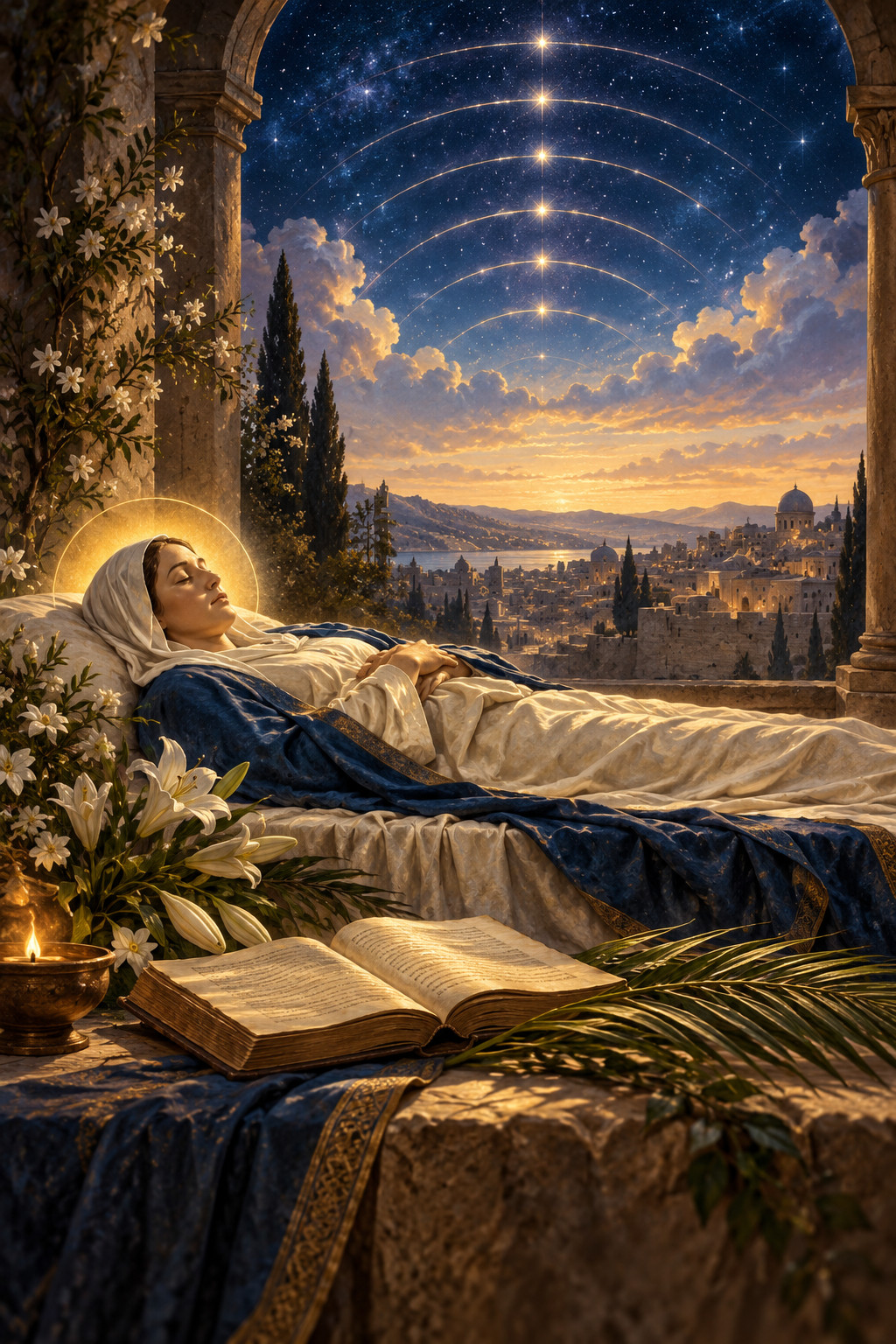
The Book of Mary’s Repose (Liber Requiei Mariae) is a Christian apocryphal account of the final days of Mary, the mother of JesusMary, mother of JesusThe recipient of Gabriel’s announcement of Jesus’s birth in Luke 1.Glossary · Click to read the explanation, and her destiny after death. It is known chiefly through an extensive Ethiopic (Geʽez) version, alongside earlier fragments in other languages. It is neither contemporary evidence for Mary's life nor a generic label for every Dormition or Assumption book. Its distinctive contribution is the combination of a death narrative with heavenly revelation, resurrection and intercession. This entry examines the story, its witnesses and disputed dating, particularly the palm-tree episode and its parallels. [1]
Which book is this?
Specialist catalogues identify the work as the Book of Mary’s Repose, conventionally called Liber Requiei Mariae. It belongs to the “Palm” or “Five-Books” family of Dormition accounts, although its witnesses do not necessarily share identical wording or divisions. An opening scene involves a book containing secrets given to Mary: this book within the story must not be confused with the modern scholarly title of the surviving work. It is also distinct from the Six-Books Dormition, of the “Bethlehem and Censers” tradition, despite shared episodes involving the apostles, Mary's death and her body. Calling a damaged Six-Books manuscript a “Five Books” work can itself be misleading: that narrative explicitly describes itself as consisting of six books, even where the last is lost. [1] [2]
Dormition means a “falling asleep,” a religious way of referring to death; Assumption refers, more specifically, to a narrative in which Mary's body is taken from the earthly realm. Accounts of her death do not all describe the latter in the same way. The extended Repose version includes both her death and the reunion of her soul and body in Paradise. These terms describe claims made within the narrative, rather than independent historical verification of the events. [1]
Revelation, death, and the heavens
A “great angel” visits Mary in JerusalemJerusalemJerusalem is a city of religious importance in Judaism, Christianity and IslamGlossary · Click to read the explanation, bringing a book of mysteries and announcing her approaching death. He instructs her to climb the Mount of Olives. There, in the story's theological framework, she recognizes the visitor as the “Great Cherub of Light,” who took bodily form as her son JesusJesus ChristJesus Christ is Christianity’s central figure, who lived in the first century CEGlossary · Click to read the explanation. The revelation addresses creation and heavenly regions, and imparts a secret prayer for the soul's passage through realms overseen by obstructing cosmic authorities. This visionary and esoteric language marks the work's particular outlook; it should not be generalized to all ancient Christianity. [1] [3]
The apostles are subsequently brought to Mary on clouds. Peter speaks at night about hidden truths but is rebuked by a heavenly voice for revealing mysteries to listeners who are unprepared; he turns instead to more accessible ascetic instruction. When death approaches, Mary recites the prayer and lies down. Christ arrives with Michael and other angels, receives her soul and directs the apostles to prepare the body for burial. The narrative depicts men it calls “the Jews” attacking the funeral procession, followed by miraculous punishment and the conversion of some opponents. Such language must be understood as Christian polemic within the story, not as independent evidence of what Jews actually did. [1]
Three days later Christ returns, carries Mary's body and the apostles into Paradise, and reunites her soul with her body. A vision of places of punishment follows, with Mary interceding for sinners. Paul the ApostlePaul the ApostlePaul was a first-century CE Christian letter writer whose letters preserve early Christian formulations.Glossary · Click to read the explanation debates the other apostles about how severe ascetic discipline should be and who may receive secret teaching; Christ ultimately approves Paul's more moderate approach. Peter and Paul also confront the Devil. Mary and the apostles ascend to the seventh heaven; finally, the apostles return to earth, while Mary remains beside her son. Salvation, intercession and the disclosure of mysteries are thus integral to the plot, not merely details appended to a funeral account. [1]
A short, qualified palm-tree witness
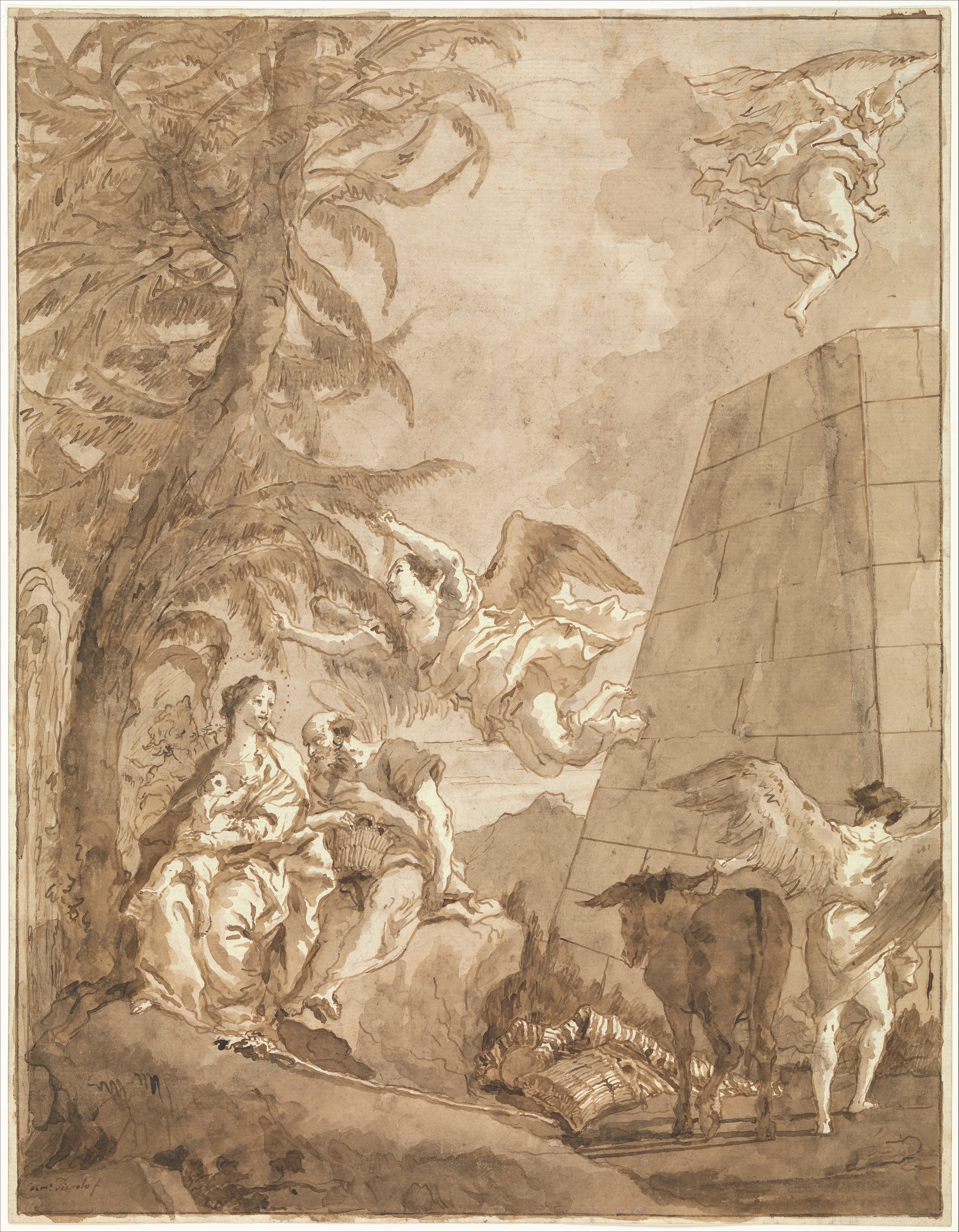
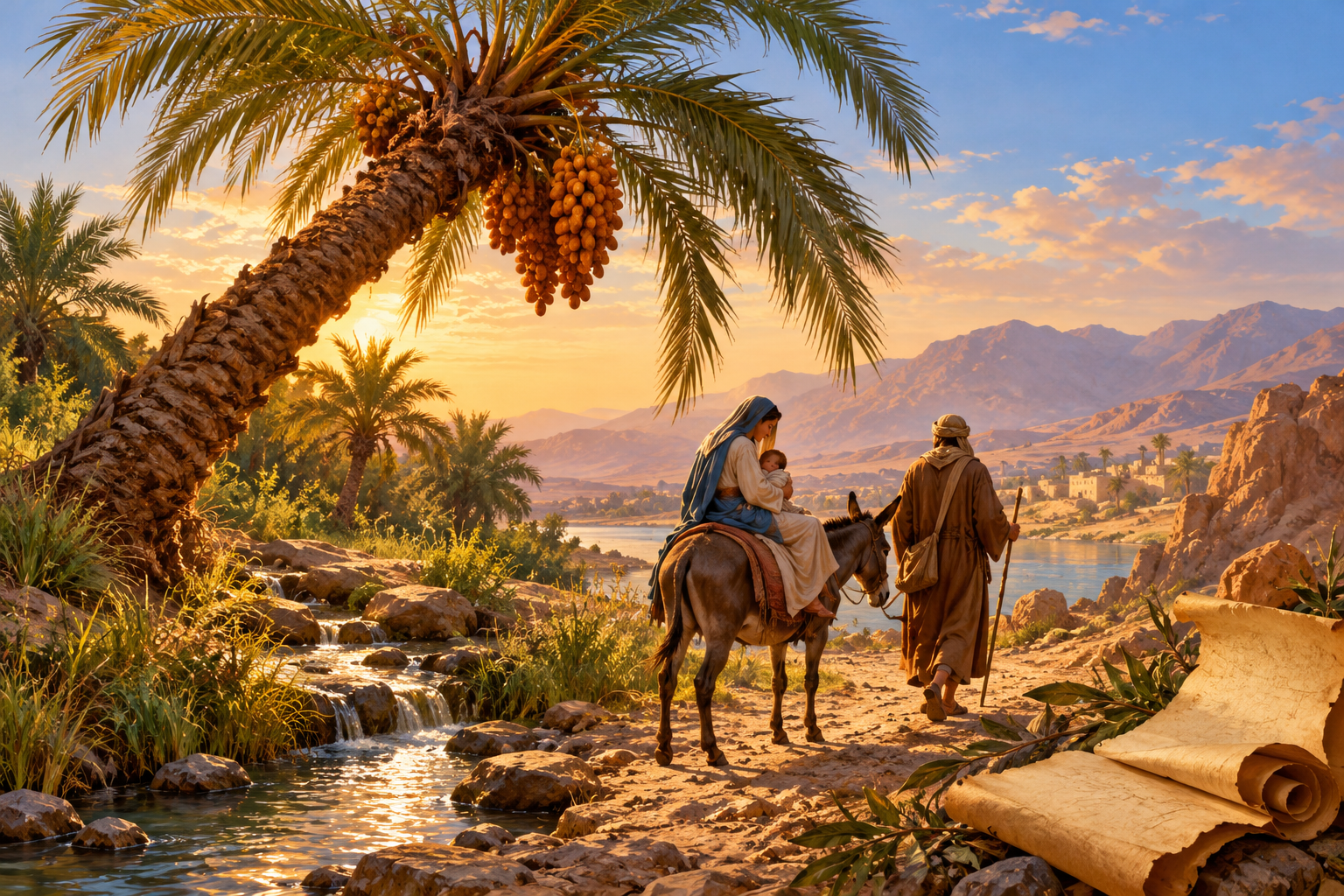
The narrative looks back to an earlier episode in its internal chronology: Mary, Joseph and the child Jesus flee Herod for Egypt. Joseph cannot reach the dates on a tall palm and, in some forms, harshly reproaches Mary and questions the child's parentage. Jesus commands the palm to bend down and feed his parents; the tree subsequently rises and becomes associated with Paradise. This is not an event said to take place at Mary's death. It is a recollection narrated to her by the angel as evidence of his identity and power. [9]
Section 7, as translated into English from Ethiopic by Stephen J. ShoemakerStephen J. ShoemakerScholar of early Christian Mary traditions and late-antique Near Eastern religion.Glossary · Click to read the explanation, contains the child's command in the following wording. These are the modern translator's English words, not a quotation copied from a Geʽez manuscript:
The same scholarly edition places a Georgian fragment beside the Ethiopic and reveals both a similar command and divergences: the number of Joseph's children, for example, varies, as does some narrative sequence. The editor flags corrupt portions and competing readings in the two Ethiopic manuscripts, especially just after the tree bends. The common action can therefore be described with confidence, but conjecturally restored sentences cannot be treated as the settled wording of an original. [9]
Witnesses and a cautiously reconstructed chronology
- Narrative time: the imagined period after Jesus' earthly life, interrupted by a flashback to the flight into Egypt. It supplies no date for the work's composition.
- Third or fourth centuries, as a hypothesis: Shoemaker suggested an early core for some Palm traditions from theological characteristics and comparisons with other apocalyptic literatureApocalyptic literatureLiterary works narrating the disclosure of transcendent knowledge about heaven, history and destiny to a human seer, often by an angel; not every end-time belief or catastrophe prophecy is an apocalypse.Glossary · Click to read the explanation. Internal parallels cannot date every chapter of the extant Ethiopic work; even a second- or third-century origin remains conjectural. [8]
- Fifth and sixth centuries: SyriacSyriacAn Aramaic literary language rooted in Edessa, first attested in non-Christian inscriptions and later prominent in Christian writing, scholarship, translation and liturgy.Glossary · Click to read the explanation manuscripts, including palimpsests, and Christian Palestinian Aramaic fragments attest parts of this tradition long before the surviving complete Ethiopic copies. They include British Library Add. 14,665, fols. 21–24, Add. 17,137, and fragments from SinaiSinai: peninsula and biblical mountainSinai is a peninsula in eastern Egypt; in the Torah the name also denotes the mountain of revelation to MosesGlossary · Click to read the explanation. They preserve portions of translated traditions, not a complete Greek exemplar against which every passage can be collated. [6] [7]
- Approximately the tenth century: Georgian Tbilisi A-144 preserves sections of the palm episode printed alongside the Ethiopic by Shoemaker. It is a valuable early witness to an episode, not a complete copy of the book. [3] [5]
- Fourteenth to eighteenth centuries: Vat. et. 268 (fourteenth century) holds a portion of §§105–131; London's BL Or. 692 (fifteenth century, fols. 56r–84r) preserves an extended Ethiopic text, while Paris Abbadie 158 (eighteenth century, fols. 87r–115v) supplies another witness. The date of a copy is not the date at which its narrative was invented. [5]
- Modern editions: Victor Arras issued an Ethiopic edition and Latin translation in 1973; Shoemaker later published an English translation and comparative study. In 2022 Christa Müller-Kessler re-examined early Syriac material that had received insufficient editorial attention. The present entry has not independently collated Arras's Geʽez text: the passage quoted above was read in Shoemaker's translation. [3] [6]
Dating and a significant scholarly correction
The early Syriac and Aramaic witnesses disprove the notion that the much later Ethiopic copies invented every part of the Repose story: substantial material is independently attested centuries earlier. They do not, however, prove that every sentence of the extended Ethiopic recension existed in the fifth century. Nor do differences of order, wording or extent automatically establish that one surviving manuscript was directly copied from another. Translation, abbreviation and editorial expansion must be tested against actual variants. [4] [6]
One debate illustrates how fresh manuscript evidence can change a historical judgement. In his earlier work, Shoemaker considered the Peter-and-Paul episode near the conclusion a possible later incorporation, partly because a related apocryphon also circulated separately in relatively late Arabic and Garshuni witnesses. Müller-Kessler subsequently published Syriac material from Add. 14,665, fol. 23, corresponding to §§125–128 of the Peter-and-Paul section and compared it with Christian Palestinian Aramaic evidence of the fifth and sixth centuries. Consequently, those passages as a whole cannot simply be dismissed as a medieval addition unknown to early witnesses. Yet a short Syriac fragment does not authenticate every episode or phrase in today's longer text. The evidence supports the inference of a lost, longer Greek antecedent without recovering its full wording. [4] [6]
There is a related dispute over the meaning and age of the bodily Assumption. The Ethiopic version explicitly reunites Mary's soul and body in Paradise. Several shorter witnesses break off before the end; their silence cannot demonstrate that an earlier story denied the body's ascent. Shared burial and post-burial motifs in different branches lend weight to an early bodily-Assumption tradition, while the precise ending of a lost exemplar remains a reconstruction rather than directly readable evidence. [4] [6]
The palm in Repose, Pseudo-Matthew and the Quran
In the Gospel of Pseudo-MatthewGospel of Pseudo-MatthewLatin work on Mary and Jesus’ childhood, distinct from canonical Matthew.Glossary · Click to read the explanation, chapters 20–21, the palm miracle takes place during the flight to Egypt: Mary wishes for dates, Joseph cannot reach them, the infant Jesus orders the tree to bend, water appears, and a palm branch is taken to Paradise. This cluster is particularly close to the remembered incident in Repose, although the two books situate and use it within different literary structures. A shared tree and sequence make a relationship worth investigating, but do not by themselves prove direct copying between the texts as now preserved. [9] [10]
In the QuranThe QuranThe central scripture of Islam, consisting of 114 Arabic surahs; its study distinguishes Quranic discourse from manuscript history, reading traditions, and historical inference.Glossary · Click to read the explanation, Sūrat Maryam 19:22–26, the palm appears at childbirth, not during the flight to Egypt. Mary is instructed to shake its trunk so that ripe dates fall, with water or a stream also in the scene. A short clause read in the Arabic of 19:25 is:
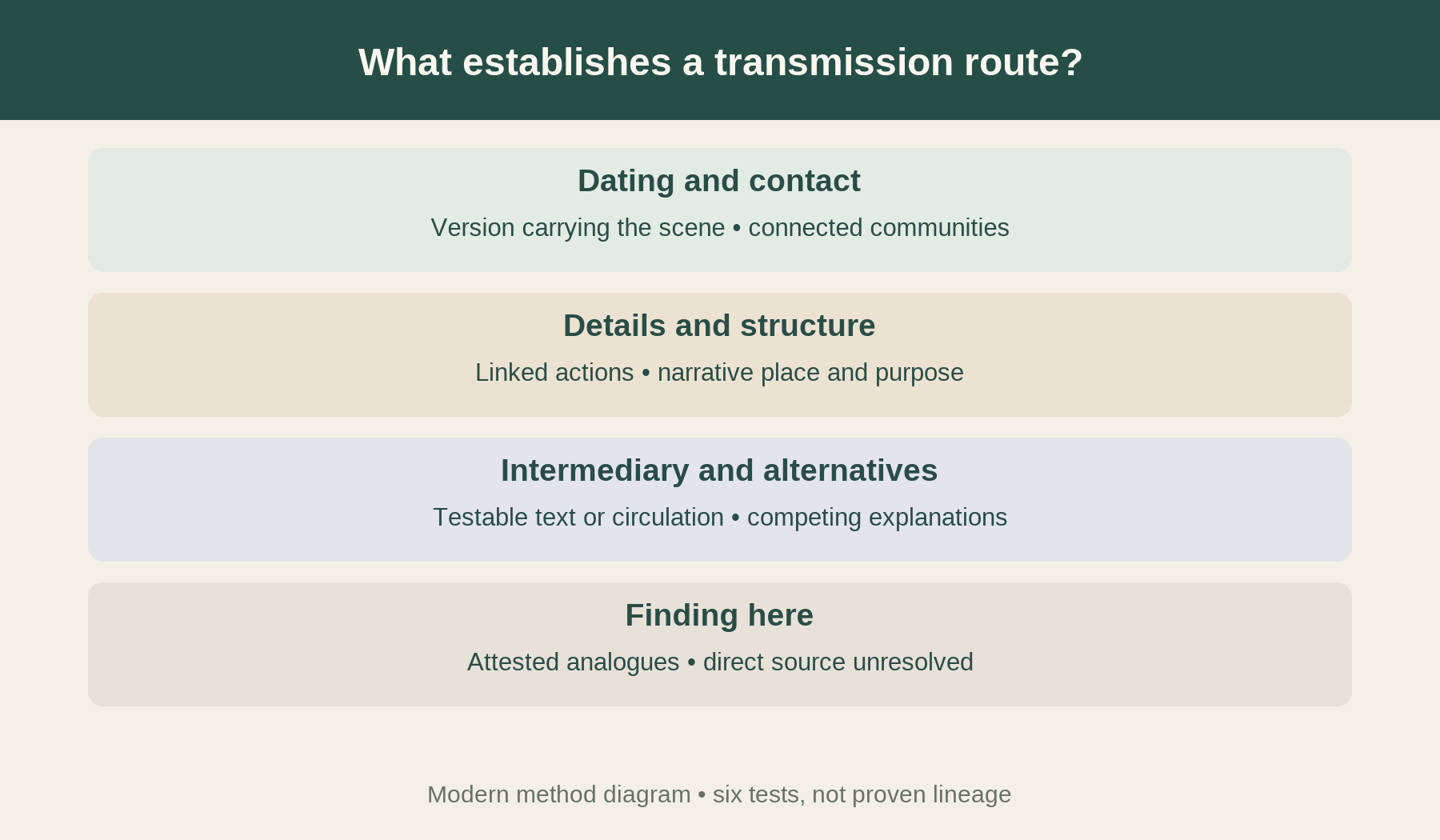
Joseph and an infant's command to bend the tree do not appear in those Quranic verses. The shared palm, fruit and miraculous help point to a field of circulating narrative motifs, not a named intermediary or demonstrable one-way borrowing. Shoemaker also explored the possible convergence of palm and nativity traditions in the environment of late-antique Palestinian shrines; this remains a proposal, not an established route of transmission. [11] [8]
What the evidence supports
The strongest conclusion is that Book of Mary’s Repose belongs to an early, multilingual narrative family, and that its long Ethiopic form transmits an elaborate theological plot that must not be reduced to the palm episode or equated with the Six-Books Dormition. Early fragments secure the antiquity of certain passages and have already changed assessments of the Peter-and-Paul material. The date of the work as a whole, the exact relation of Ethiopic to the missing Greek antecedent, and the possible paths linking its palm story to Christian and Quranic parallels remain open questions. They require fuller linguistic comparison and independent witnesses, not similarities alone. [1] [6] [9]
References and notes (11)
- Stephen J. Shoemaker and Sergey Kim, “Book of Mary’s Repose,” e-Clavis (2025): identification and detailed synopsis. The overall plot description relies on this specialist entry, not on a first-hand reading of every Geʽez chapter. Summary §1 and manuscript/edition bibliography; entry created March 2025 Return to the text ↑
- Ally Kateusz, “Six-Books Dormition of the Virgin,” e-Clavis: titles and Bethlehem-and-Censers family; no direct collation of the Syriac manuscript. Title and introductory summary paragraphs; created 2019, updated May 2024 Return to the text ↑
- Stephen J. Shoemaker, Ancient Traditions of the Virgin Mary’s Dormition and Assumption; Appendix A, English translation from Ethiopic based on Victor Arras’s 1973 edition, with Georgian fragments in parallel; the Geʽez source was not independently read. Printed pp. 290–296, Appendix A §§1–10, esp. §§1–4; PDF zero-based pp. 306–312 Return to the text ↑
- Shoemaker, cited monograph: early witnesses, the bodily-Assumption ending and his earlier caution about the Peter-and-Paul episode; read alongside Müller-Kessler’s later correction. Printed pp. 152–160 and p. 347 n. 167 Return to the text ↑
- Shoemaker and Kim, e-Clavis manuscript inventory: locations, dates and folio ranges of Ethiopic, Georgian and Syriac witnesses; catalogue consultation, not direct inspection of each folio. Bibliography / Manuscripts and Editions, especially Ethiopic, Georgian, Syriac Return to the text ↑
- Christa Müller-Kessler, “Obsequies of My Lady Mary (II),” Collectanea Christiana Orientalia 19 (2022), 45–70: edited early Syriac palimpsest portions; particularly §§125–128 and the reassessment of late-insertion claims. Read printed pp. 45–51, 56–57 and passages of transcription/translation on pp. 62–66; not every page or original palimpsest letter Return to the text ↑
- Christa Müller-Kessler, “Obsequies of My Lady Mary (I),” Hugoye 23 (2020), 31–59: corrects the attribution of palimpsest folios, separating two Repose leaves from four bearing Jacob of Serugh’s homily; no independent reading of the manuscript is claimed. Online article, introductory research history and folio identification/order Return to the text ↑
- Shoemaker, Ancient Traditions, arguments from theology, parallels and Jerusalem topography for early Palm traditions; proposed dating, not a fixed date for all chapters of the extant Ethiopic work. Printed pp. 109–115, 253–256, 284–286; selected relevant discussions read Return to the text ↑
- Original continuing note: Shoemaker, Ancient Traditions, Appendix A, Ethiopic §7 and Georgian parallels §§5–10. The quoted English is a modern translation from Ethiopic; Arabic and French wording has been freshly translated from that English, with corruption and conjectures distinguished. Printed pp. 292–296, esp. pp. 294–295 §§6–9 and editor’s nn. 17–21; contextual discussion pp. 32–35, 153–154 Return to the text ↑
- Gospel of Pseudo-Matthew, online English translation, chapters 20–21: flight into Egypt, bending palm, spring and branch taken to Paradise. The Latin witness was not read directly. Chapters 20–21, English version on New Advent Return to the text ↑
- Quran, Sūrat Maryam 19:22–26, especially Arabic text of 19:25; English and French meanings independently phrased, not a long reproduction of a modern translation. 19:22–26; direct short Arabic quotation at 19:25 Return to the text ↑
Archive records may be reviewed and refined as better evidence or sources become available. Suggest a correction
Suggest a correction · Suggest a source for this record
Cite this record
IL Archive, «Book of Mary’s Repose», https://ilarchive.com/en/texts/book-of-marys-repose
Continue reading