Ancient text
Arabic Infancy Gospel
A text for line-by-line reading, with transliteration, translation, and resources.
A varied Arabic Christian collection of nativity, Egyptian journey and childhood narratives: Oxford and 1299 Florence forms, Syriac affinities, Thomas parallels and dating limits.
Estimated reading time: 6 min Published Last reviewed:
Share article
Text
Introduction
The Arabic Infancy Gospel is a noncanonical Christian collection about Jesus’ birth, the Holy Family’s journey to Egypt, and miracles of his childhood. It is not a single text with an identical chapter sequence in every manuscript. Comparing its Oxford and Florence forms shows how stories were gathered and rearranged, and why a manuscript’s date must not be mistaken for the age of each episode. It is distinct from the Infancy Gospel of ThomasInfancy Gospel of ThomasAccounts of Jesus’ boyhood, distinct from the sayings Gospel of Thomas.Glossary · Click to read the explanation, although some stories overlap. [10]
The work and its two principal forms
Scholarly catalogues call the work the Arabic Infancy Gospel (CANT 58). The Arabic recension published by Heinrich Sike in 1697 from an Oxford manuscript is conventionally S; the Florence manuscript edited by Mario Provera in 1973 is L. Neither is an agreed archetype. S begins by attributing information to a book of Caiaphas, the high priest within the story, and by depicting the infant Jesus speaking in his cradle. L opens instead with a prophecy attributed to ZoroasterZoroaster / ZarathustraFoundational figure associated with Zoroastrian tradition and the Old Avestan Gathas. His priestly role, teaching and relationship to the poems are subjects of research; his lifetime and biographical details remain disputed.Glossary · Click to read the explanation and places the story of Caiaphas’s book much later. This relocation is evidence of redaction, not verification of the purported ancient attribution. [10]
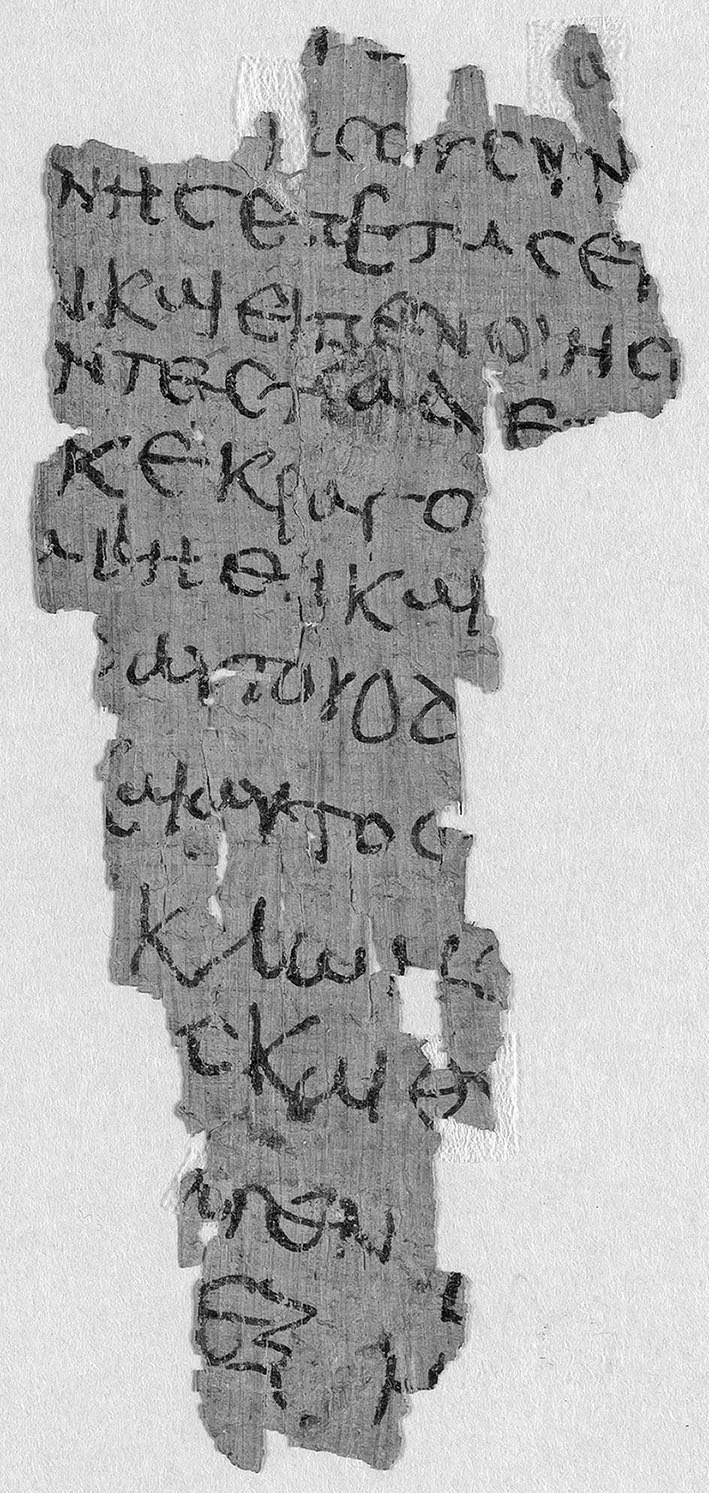
The Bodleian Library in Oxford holds the Arabic manuscript Bodl. Or. 350, fols. 1r–34r. It is undated, with a tentative fifteenth- or sixteenth-century dating. Florence’s Orientali 387 was copied at Mardin in 1299 CE; scholarly catalogues describe 54 miniatures illustrating its stories. Its earlier known copying date does not make every reading in L earlier than its counterpart in S, any more than a later manuscript picture documents a narrated event. [12] [11]
From the birth to Egypt and childhood
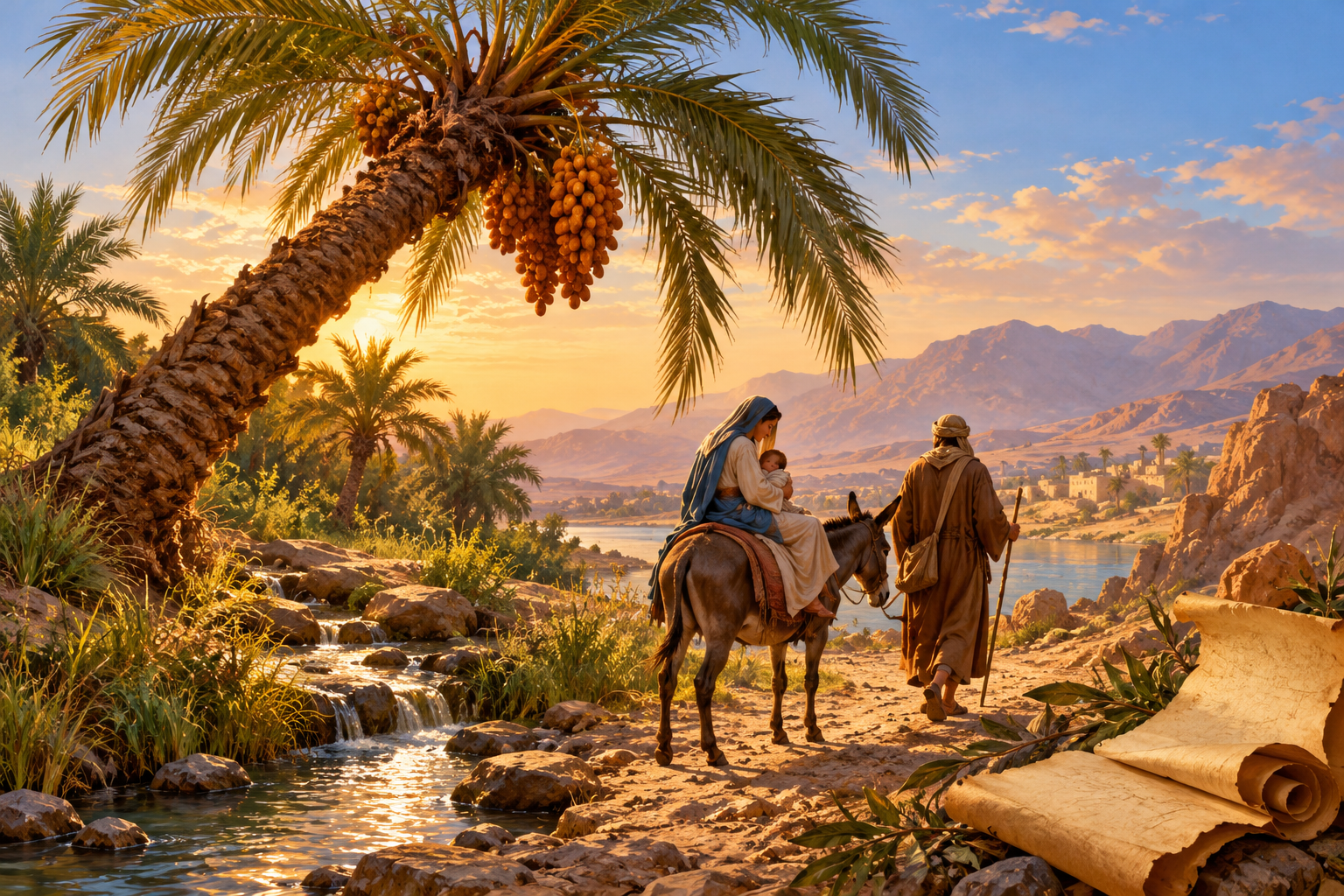
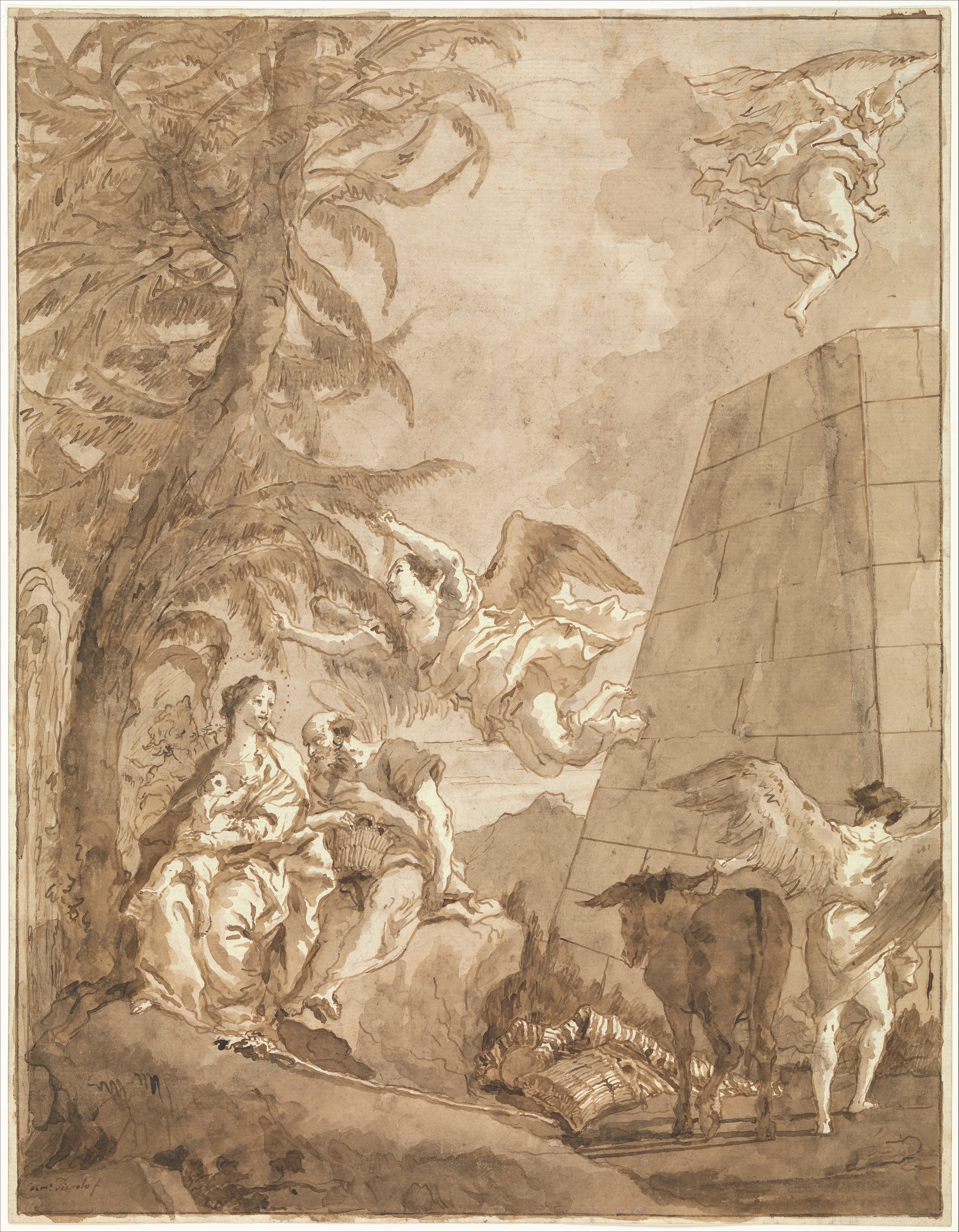
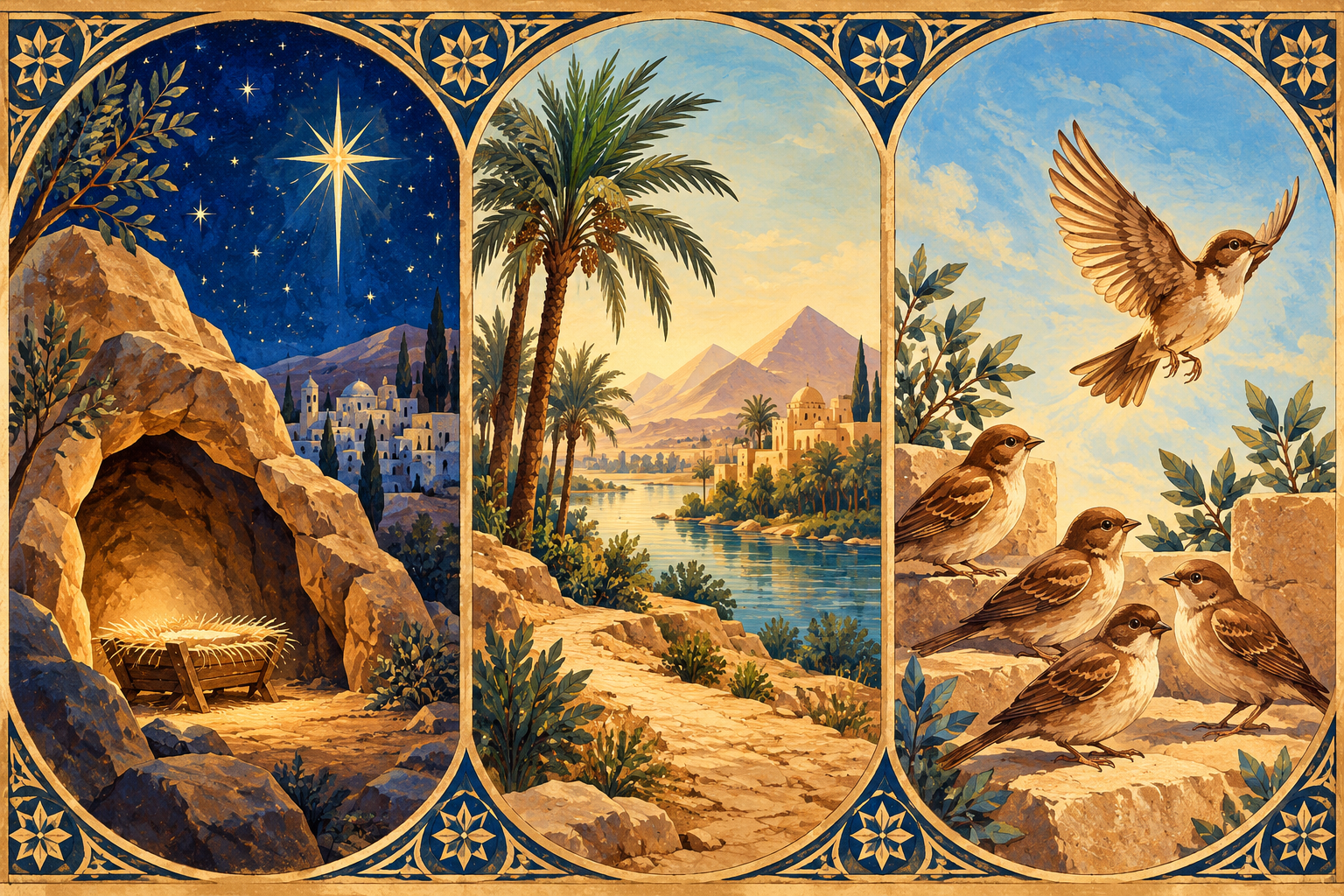
The account begins with Jesus’ birth in a cave near Bethlehem, where a woman attending Mary, Jesus’ motherMary, mother of JesusThe recipient of Gabriel’s announcement of Jesus’s birth in Luke 1.Glossary · Click to read the explanation is cured by touching the child, followed by shepherds and Magi. These episodes rework earlier birth traditions, notably the Protevangelium of James. The Magi receive a piece of swaddling cloth that miraculously survives fire. After the threat from HerodHerod the GreatLate-first-century-BCE king of Judaea in the journey-to-Egypt story.Glossary · Click to read the explanation, the family flees to Egypt. There the baby’s bathwater and swaddling clothes cure sufferers, and stories of exorcism and healing foreground Mary’s role as mediator of blessing in the narrative. The family encounters two robbers, Titus and Dumachus, and a prediction anticipates their association with the crucifixion. [10]
After the return to Judea, episodes concern Jesus at play, Salem the dyer whose differently coloured fabrics Jesus restores after they have all been dipped in one vat, Joseph’s carpentry and the making of a throne, and a boy who falls from a roof and is brought back to speak or live. Names can differ: the boy healed of leprosy is Thomas in L but Bartholomew in S, according to the comparative catalogue; the two identifications must not be silently reconciled. S also contains local Egyptian additions concerning Matariya and Memphis, whereas L continues into Jesus’ adult life, including Nain, Cana, the Passion, Resurrection, and Pentecost. Thus not every form of the work ends with childhood. [10]
Two separate episodes: clay figures and sparrows
In chapter 36 of S, Jesus plays with other children making clay images of donkeys, oxen, birds and other creatures, then commands his figures to move. Alexander Walker’s historical English translation contains this brief sentence: [9]
Chapter 46 returns to a different scene: twelve clay sparrows arranged around pools on the Sabbath, an objection by the son of Hanan, Jesus clapping his hands, and the birds taking flight. The same historical translation briefly says: [9]
These are Walker’s English translated words for S, not an Arabic manuscript transcription that we have independently collated. Tony Burke notes that Walker worked from a revised Latin rendering of Sike’s edition. The scenes must not be fused, nor may chapter numbers for S be passed off as numbers in L. A parallel to the moving clay animals occurs in L chapter 34, while the extensive Infancy Gospel of Thomas sequence later in S is not arranged the same way in L. [11]
Witnesses, language, and the proposed Syriac background
The two principal manuscripts preserve the text in Arabic. There are also Garshuni witnesses—Arabic written in SyriacSyriacAn Aramaic literary language rooted in Edessa, first attested in non-Christian inscriptions and later prominent in Christian writing, scholarship, translation and liturgy.Glossary · Click to read the explanation script—and closely related Syriac literature. Correspondences with the East Syriac History of the Virgin support an Arabic translation from it or from a common source; they do not establish one surviving Syriac manuscript containing all the later additions in S. Burke treats L as closer to the arrangement of the East Syriac compilation because it continues with adult episodes where S has inserted a long Infancy Gospel of Thomas sequence. [11] [13]
As Burke reports, Provera proposed a twelfth- or thirteenth-century translation from Syriac into Arabic on linguistic grounds. That dates a proposed stage of translation or editing, not the invention of every birth or childhood motif. Burke also records Stephen J. Davis’s disagreement with treating L as invariably superior and with explaining all of S’s additional material as Egyptian interpolation. The real dispute concerns which ordering best reflects an earlier stage; it does not erase the structural differences. L’s agreement with the History of the Virgin is stronger evidence than any claim to possess the lost definitive ‘original’. [11]
A brief chronology
- Narrated setting: the birth and childhood of Jesus in the first century CE, within the world of the story, not the writing date.
- Tradition layers: some birth and childhood stories predate the surviving Arabic copies; when all the components were first assembled remains unresolved.
- Twelfth–thirteenth centuries: Provera’s proposed Syriac-to-Arabic translation period, not a secure date for every tale.
- 1299 CE: L copied at Mardin; S is undated, possibly fifteenth–sixteenth century.
- 1697 and 1973: Sike’s publication of S and Provera’s edition of L, respectively—editorial dates, not dates of composition. [11] [12]
Related texts and limits of comparison
The separate Infancy Gospel of ThomasInfancy Gospel of ThomasAccounts of Jesus’ boyhood, distinct from the sayings Gospel of Thomas.Glossary · Click to read the explanation features twelve sparrows made beside a stream on the Sabbath and a boy who withers after disturbing the pools. This resembles S chapter 46, whereas S chapter 36 broadens the clay figures to other animals. The Arabic collection also shares episodes with the Protevangelium of James, the Gospel of Pseudo-MatthewGospel of Pseudo-MatthewLatin work on Mary and Jesus’ childhood, distinct from canonical Matthew.Glossary · Click to read the explanation, and the Armenian Infancy Gospel. Sharing an episode does not make these works identical or demonstrate a specific copying route. [14] [10]
A bird shaped from clay also appears in the QuranThe QuranThe central scripture of Islam, consisting of 114 Arabic surahs; its study distinguishes Quranic discourse from manuscript history, reading traditions, and historical inference.Glossary · Click to read the explanation, at 3:49 and 5:110, with the express motif of divine permission. S instead sets its episodes amid play, Sabbath objections and punishment. This is evidence that a narrative motifLiterary motifA narrative or imagistic element recurring within or across stories; its role and context matter, and repetition alone cannot prove borrowing.Glossary · Click to read the explanation circulated in different environments, not proof that the Quran drew on either surviving S or L manuscript. The study of birds from clay explores that comparison further; this entry chiefly establishes the Arabic collection’s identity and textual layers. [15] [16]
The best description, therefore, is a collection with several stages of transmission. Its principal forms can be described and their organization compared from the sources actually consulted here. A word-by-word collation of Arabic variant readings or a final manuscript stemma would require direct inspection of critical Arabic editions and individual witnesses; no such collation is claimed here.
References and notes (8)
- Alexander Walker, “Arabic Gospel of the Infancy of the Saviour,” historical English translation in Apocryphal Gospels, Acts and Revelations (1873); S, not L. Chapters 36 and 46 (also inspected 1, 37, 39, 40, 43, 44); S chapter numbers. Return to the text ↑
- Tony Burke, “Arabic Infancy Gospel,” e-Clavis: Christian Apocrypha (created 2017; updated through April 2023), recension synopsis and manuscript/edition bibliography. Full synopsis, S/L and Garshuni witness listings, editions and L miniatures; L/S numbers are distinct. Return to the text ↑
- Tony Burke, The Infancy Gospel of Thomas in the Syriac Tradition, manuscript study; reports Provera, Walker’s mediation and Stephen J. Davis’s disagreement, not a first-hand collation of Provera’s Arabic text here. Printed pp. 2, 88, 111–116 and relevant notes (PDF pages approximately 12, 98, 121–126, counted from 1). Return to the text ↑
- Tony Burke, NASSCAL manuscript entry, Oxford, Bodleian Library, Bodl. Or. 350; physical description, contents, tentative dating. Complete manuscript description: 36 folios; text at 1r–34r; tentatively fifteenth/sixteenth century; no online images listed. Return to the text ↑
- syri.ac, “New Testament Apocrypha,” bibliographic inventory of Arabic, Garshuni and Syriac witnesses and editions, not a reading of the manuscript images. Section 7, “Infancy Gospel,” compared with separate section 6 on Thomas. Return to the text ↑
- Infancy Gospel of Thomas, First Greek Form, historical English translation at New Advent; independent comparison for Sabbath birds and the boy disturbing pools, not a passage in L. First Greek Form, chapters 2–3, not S chapters 36 and 46. Return to the text ↑
- Quran 3:49, Quranic Arabic Corpus translation page; motif comparison without assuming use of any surviving Arabic manuscript. Quran 3:49; clay bird and divine permission in the verse. Return to the text ↑
- Quran 5:110, Quranic Arabic Corpus translation page; second textual occurrence of the bird motif. Quran 5:110; shaping and breathing into the clay bird by permission. Return to the text ↑
Archive records may be reviewed and refined as better evidence or sources become available. Suggest a correction
Suggest a correction · Suggest a source for this record
Cite this record
IL Archive, «Arabic Infancy Gospel», https://ilarchive.com/en/texts/arabic-infancy-gospel
Continue reading