Study
Birds from clay: Jesus, infancy accounts and the Quran
An extended study of a topic, with evidence and references.
Thomas’ sparrows, Arabic and Armenian infancy accounts, Al Imran and Al Maidah: actions and dates, from an ancient papyrus to transmission questions.
Share article
Text
Introduction
Why does the Quranic account of a bird made from clay resemble Christian stories about Jesus’ childhood, and where do the stories differ? This study compares what each version says and separates the history of a story from the dates of its surviving copies. A Greek papyrus from the fourth or early fifth century CE predates the seventh-century QuranQuranCentral text of Islam, used here as evidence of its religious discourse.Glossary · Click to read the explanation. It does not, by itself, identify the route by which the image reached the Quran’s audience or the particular text known there.
We read the Quran, the infancy accounts and the papyrus as witnesses to a narrative history. Resemblance alone neither judges religious truth nor proves direct copying.
In Al Imran: a sign within a mission
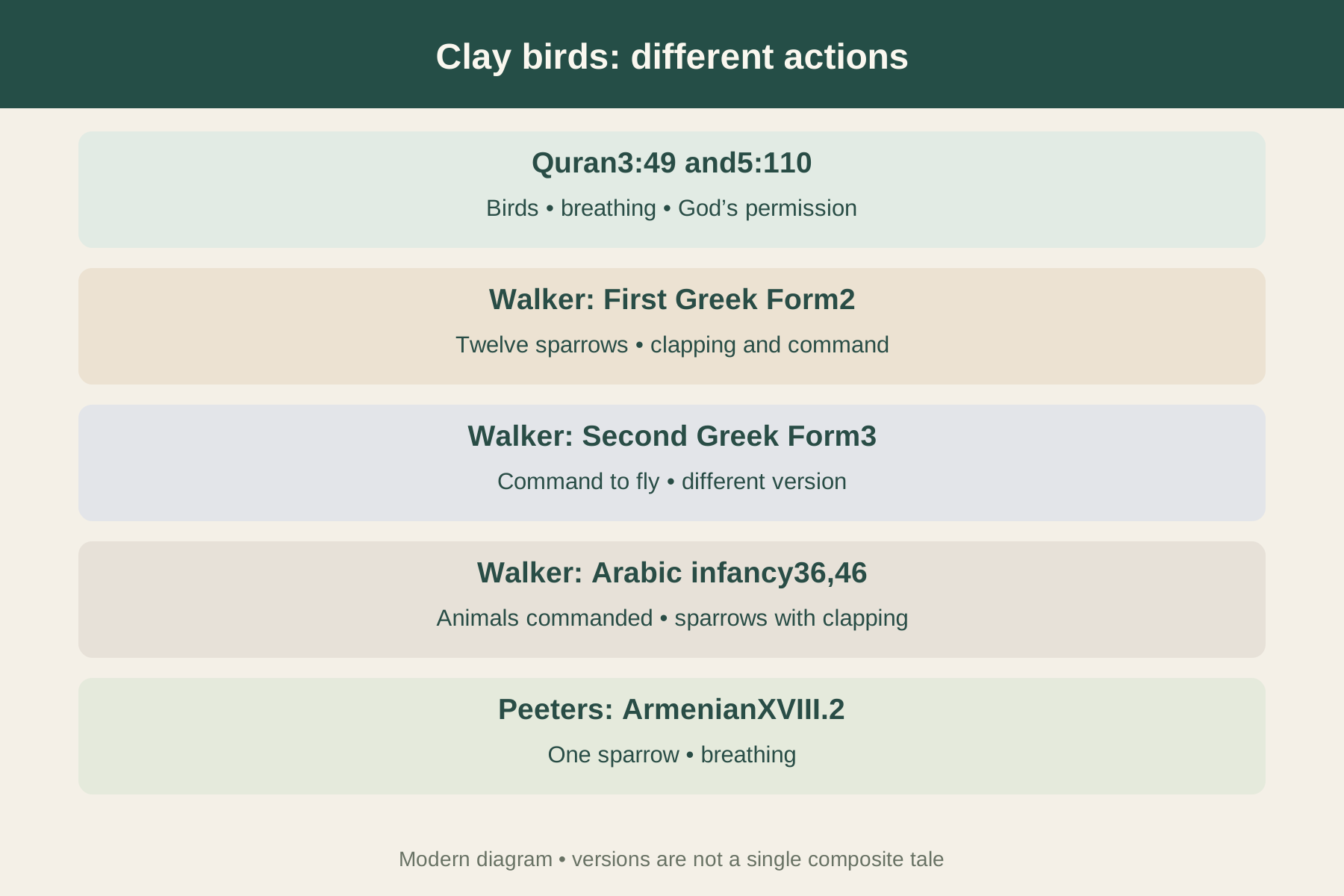
In Quran 3:45–51, the birds appear within the announcement of the Messiah and Jesus’ mission to the Children of Israel. Jesus says he makes the form of a bird from clay and breathes into it; it becomes a bird by God’s permission. Healing the congenitally blind and lepers, raising the deadResurrection of the deadThe dead returning to life, distinguished from soul immortality, with differing scope and form among texts.Glossary · Click to read the explanation, and knowing what people eat and store follow. [1]
These details have a context. The verse does not narrate a childhood day of play: it gives no age, twelve sparrows, Sabbath or Joseph. The passage then mentions confirmation of the TorahTorah / PentateuchGenesis, Exodus, Leviticus, Numbers and Deuteronomy: Mosaic corpus with a compositional history. Torah can also mean teaching or law beyond these five books.Glossary · Click to read the explanation and worship of God as Jesus’ LordRabbTitle of lordship, ownership or care by context; applied to God in Lord of worlds.Glossary · Click to read the explanation and his hearers’ Lord. The miracle therefore belongs to mission, sign and divine permission, without the dramatic details of some infancy accounts. [1]
In Al Maidah: permission repeated
In Quran 5:110, God’s address recalls favours to Jesus and his mother: support through the Holy Spirit, speech in the cradle and adulthood, teaching of the Book, wisdom, Torah and Gospel, then making birds and breathing into them, healing and bringing forth the dead. Permission recurs beside these actions. [2]
Mention of the cradle does not place everything in the list in infancy. The list brings together stages and actions without dating the bird miracle. At the passage’s conclusion, 5:116–117, Jesus affirms that he called people to worship God. This structure matters: the Quran locates power within the messenger’s dependence on God without reproducing the Sabbath dialogue or the sparrows’ number. [2]
Which gospel?
The Infancy Gospel of ThomasInfancy Gospel of ThomasAccounts of Jesus’ boyhood, distinct from the sayings Gospel of Thomas.Glossary · Click to read the explanation differs from the “Gospel of Thomas” containing sayings of Jesus. Its versions vary; some later forms attribute it to Thomas, but that attribution does not establish apostolic authorship. [8]
“Gospel” here describes a circulating literary title; it does not make the work one of the four canonical Gospels. The Infancy Gospel of Thomas concentrates on boyhood. One version concludes with twelve-year-old Jesus in the Temple, a scene familiar from Luke 2:41–52. That passage ends with the child’s conversation with his parents and return with them; it contains no bird miracle. [3][12]
Five years old, twelve sparrows
In WalkerAlexander WalkerNineteenth-century English translator of several apocryphal infancy narratives.Glossary · Click to read the explanation’s “First Greek Form,” chapter 2, five-year-old Jesus plays beside a stream, collects water in little pools and fashions twelve sparrows from soft clay. It is the Sabbath. A man sees him and reports to Joseph. Joseph asks about working on the Sabbath; Jesus claps and commands the sparrows to depart. They fly away crying. [3]
The action is clapping and command, without breathing into the sparrows. The scene contains more than the miracle: water, children, an observer, Joseph, an objection and a response enacted. These details give the narrative relationship with the Quranic image weight while preventing the two texts from being described as identical paragraphs.
Nor should the objecting man become a description of all Jews, or the dialogue a direct record of first-century legal practice. We are reading a literary portrayal with characters and purposes; the history of Sabbath law requires other sources.
Versions tell it differently
Walker’s Second Greek Form emphasizes the command to the sparrows without explicit clapping in that scene. Some episodes also occupy different places. We cannot reduce “the Christian text” to one sentence and measure the Quran against it. [3]
BurkeTony BurkeScholar of Christian apocrypha who edited Greek and Syriac infancy traditions.Glossary · Click to read the explanation’s critical Greek translation places the scene at its opening, 1.1–5, unlike Walker’s numbering. His SyriacSyriacA literary form of Aramaic, with an extensive Christian heritage and earlier non-Christian attestations.Glossary · Click to read the explanation translation combines multiple witnesses and preserves clapping; its introduction describes Syriac copies from the fifth/sixth and sixth centuries. It is not a translation of one manuscript alone. [4][5]
Numbering is itself part of the problem: “chapter two” needs a specified version. Breathing even occurs in some infancy accounts when James’ bite is healed; the verb’s occurrence somewhere in a work does not mean that every version uses it to animate sparrows. [3][9]
A work’s date and a witness’s date
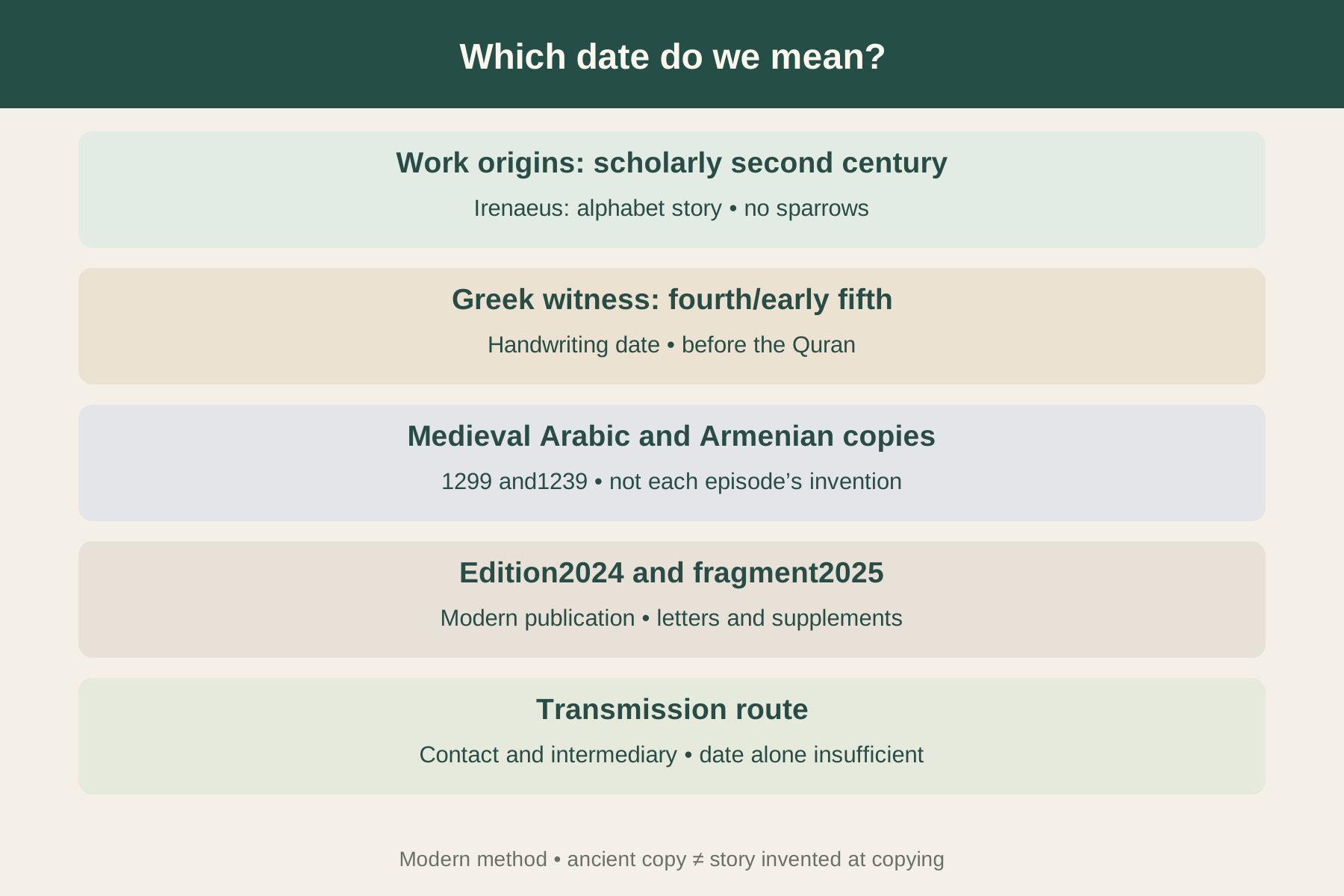
Scholars commonly place the Infancy Gospel’s origins in the second century. That differs from the date of its earliest surviving physical copy and of every individual episode. IrenaeusIrenaeus of LyonLate-second-century Christian writer who mentioned the child Jesus and a teacher.Glossary · Click to read the explanation, a Christian writer of the late second century CE, provides an important witness in Against Heresies 1.20.1: the child disputes alpha and beta with his teacher. [8][11]
This is early evidence for the alphabet story, not a reference to clay sparrows. Irenaeus also does not supply the title “Infancy Gospel of Thomas” here. His passage alone therefore cannot establish second-century attestation of the birds with all their later details. Similar episodes within a narrative collection do not automatically share a date.
An ancient papyrus, a modern publication
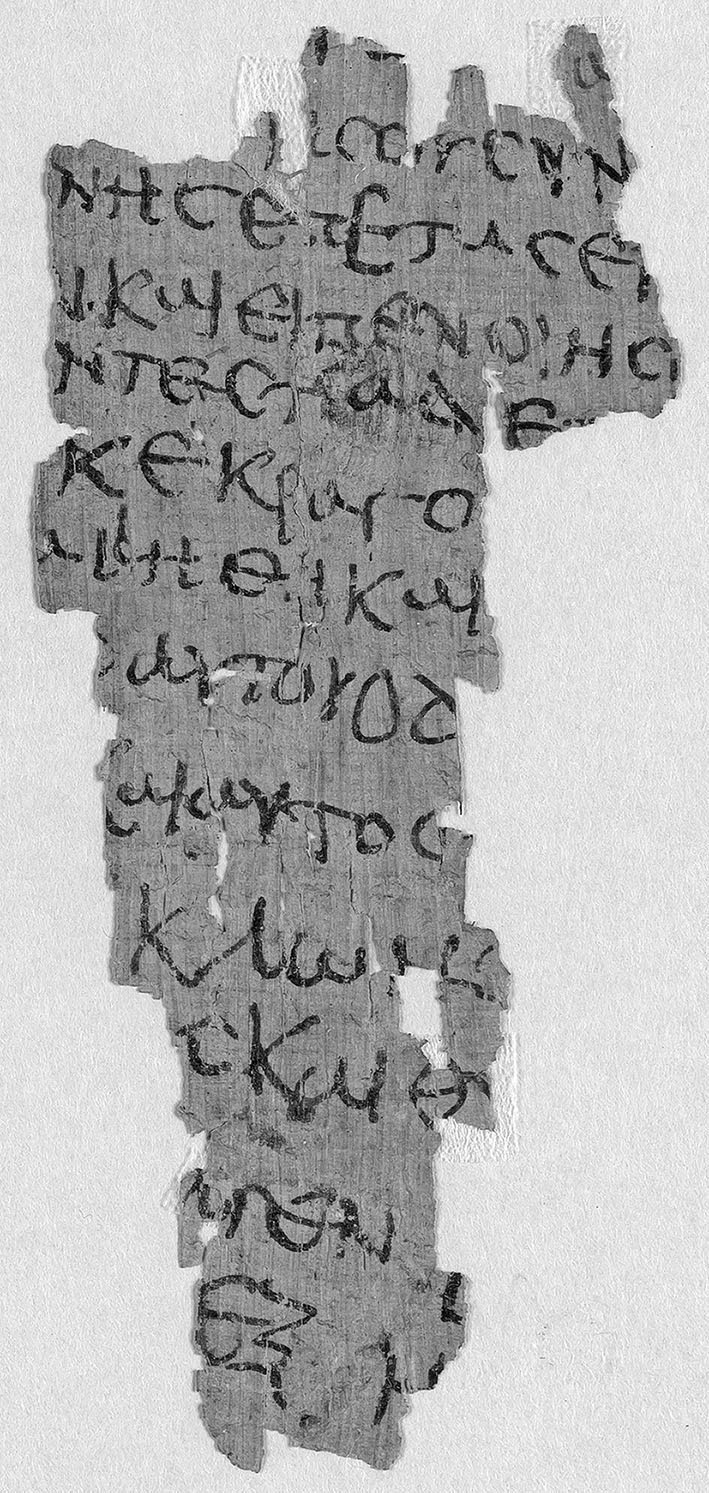
Lajos BerkesLajos BerkesPapyrologist who co-edited a papyrus with the clay-sparrow episode.Glossary · Click to read the explanation and Gabriel Nocchi MacedoGabriel Nocchi MacedoGreek and Latin papyrologist who co-edited the Hamburg fragment.Glossary · Click to read the explanation published P.Hamb.Graec.1011 in 2024: a sparrow witness dated by handwriting to the fourth or early fifth century, without radiocarbon datingRadiocarbon datingA probabilistic date range for organic material; for parchment it dates animal skin rather than ink directly.Glossary · Click to read the explanation or known discovery site. [6]
We thus have a physical witness preceding the Quran, without making 2024 the date of a new excavation at a known site. Preserved letters must also be distinguished from editors’ bracketed supplements. The copy documents pre-Islamic circulation, without proving the miracle’s occurrence in Jesus’ lifetime or its route to Arabia.
A joining fragment published in 2025
In 2025, the scholars published a joining fragment that extends the reading and clarifies the form of the clapping verb. Some text remains supplemented: the number twelve is not entirely preserved in letters readable on the two fragments. [7]
This study’s cover shows the original fragment published in 2024, before the addition. It is not presented as a photograph of the latest joined state. The distinction between image and edited text matters: a convincing supplement remains a supplement, and readers need to know that. [18]
An Arabic title does not date a text
The catalogue of the North American Society for the Study of Christian Apocryphal Literature (NASSCALNorth American Society for the Study of Christian Apocryphal LiteratureResearch society maintaining a guide to Christian apocryphal texts and witnesses.Glossary · Click to read the explanation) distinguishes a form published in 1697 from an undated witness and one with a 1299 manuscript. The Arabic Infancy GospelArabic Infancy GospelCollection about Jesus’ childhood overlapping other accounts without being the same work.Glossary · Click to read the explanation differs from the Infancy Gospel of Thomas; its Arabic name does not date its chapters before the Quran. [10]
In Walker’s translation, chapter 36, seven-year-old Jesus fashions clay animals and birds, then commands them to move, fly, eat and drink. Chapter 46 contains twelve sparrows beside pools on the Sabbath, clapping and an objection connected with the pools. These are two scenes: combining the first scene’s age with the second’s details creates an account neither tells in that form. [9]
The clay-bird story’s antiquity in Greek does not automatically date the entire Arabic compilation. Nor does proximity to the Quran’s language make a later Arabic version earlier.
Breathing also appears in an Armenian account
In Paul PeetersPaul PeetersScholar and translator who published Syriac, Arabic and Armenian infancy texts in 1914.Glossary · Click to read the explanation’ historical translation of the Armenian Infancy Gospel, chapter XVIII.1–3, Jesus is six and accompanied by other children. He fashions one clay sparrow, breathes into it, and it flies. The story then extends to other creatures. This explicitly parallels breathing: Christian versions do not all use clapping alone. [13]
This version’s dating requires care. NASSCAL documents differing Armenian forms and witnesses, including a complete copy dated 1239. Peeters’ 1914 translation alone does not establish the breathing episode in a pre-Quranic copy. [14]
An analogue does not settle direction; a late manuscript also does not prove invention at the time of copying. We need to date the version containing the relevant detail, rather than merely the collection’s name.
Clay and breath in a wider setting
Genesis 2:7 describes humanity formed from the ground’s dust and life breathed into the nostrils. Quran 32:7–9 mentions humanity’s initial creation from clay, its offspring, its fashioning and the breathing of spirit. These images help explain material, life and breath together; they do not recount Jesus animating a sparrow. [16][17]
Dust in the Genesis wording is not the same word as clay in the Quran. Precision precedes expansion of the pattern. Mesopotamian accounts of humanity made from earthly material also do not establish a chain ending with Jesus’ sparrows. The Archive examines that wider setting in “Clay, labor, and breath: ancient accounts of human creation,” whose subject differs from the bird miracle.
In the available extract of her study on Jesus and birds, Mary DzonMary DzonMedieval-literature scholar who studied Jesus and clay birds across traditions.Glossary · Click to read the explanation highlights variations and functions across medieval Abrahamic traditions. We use that specific extract without claiming to have read the whole article or investigated every Jewish account it discusses. [15]
What does comparison establish?
Jesus and clay sparrows are attested in Christian accounts, and a physical Greek witness precedes Islam. The Quran specifies clay birds, breathing and permission without the Sabbath scene, age or particular number. [1][2][3][6]
From analogue to transmission route
Transfer of a passage from a particular copy to the Quran remains unproven by the witnesses studied here. Oral circulation, translated versions, shared storytelling and lost intermediaries are historical possibilities requiring assessment of chronology, contact, details, structure, transmission route and alternatives. Specific resemblance strengthens the question without naming the storyteller or intervening book.
The clearest finding is that this story is not a static mould. It appears within a child’s play and a Sabbath objection, or among a messenger’s signs with repeated divine permission. Some forms have clapping, others command, and an Armenian account breathing. Following these differences reveals more history than either “unrelated” or “identical copy,” while keeping established findings distinct from what remains unproven.
References and notes
- Mission and signs. Quran3:45–51; Arabic primary text Return to the text ↑
- Favours and permission. Quran5:109–120; especially110,116–117 Return to the text ↑
- Walker’s Greek forms. Infancy Gospel of Thomas; Alexander Walker, First Greek Form1–19; Second Greek Form1–11 Return to the text ↑
- Opening1.1–5. Tony Burke, The Childhood of the Saviour: a new translation; opening1.1–5; ©2009 Return to the text ↑
- Eclectic translation and witnesses. Tony Burke, Syriac translation; introduction and chapters2–19; 2016 excerpt Return to the text ↑
- Papyrus and dating. Lajos Berkes and Gabriel Nocchi Macedo, The Earliest Manuscript of the So-called Infancy Gospel of Thomas: Editio princeps of P.Hamb.Graec.1011, ZPE229(2024),68–74 Return to the text ↑
- Joining fragment. Lajos Berkes and Gabriel Nocchi Macedo, A Bit More of Jesus’s Childhood: A New Fragment of the Infancy Gospel of Thomas Papyrus, ZPE236(2025),84–88 Return to the text ↑
- Identity and selected witnesses. Tony Burke, e-Clavis: Infancy Gospel of Thomas; summary and selected witness catalogue Return to the text ↑
- Two distinct scenes. Arabic Infancy Gospel; Walker historical translation, chapters28–55; especially36,43,46 Return to the text ↑
- Forms and manuscripts. e-Clavis: Arabic Infancy Gospel; complete197 displayed lines Return to the text ↑
- Alphabet, without sparrows. Irenaeus, Against Heresies1.20.1; historical primary translation Return to the text ↑
- Jesus in the Temple. Luke2:41–52; USCCB primary text Return to the text ↑
- Sparrow and breath. Paul Peeters, Évangiles apocryphesII(1914), Armenian Infancy GospelXVIII.1–3, pp.199–200 Return to the text ↑
- Forms and witnesses. Mari Mamyan, e-Clavis: Armenian Infancy Gospel; complete204 displayed lines Return to the text ↑
- Extract, not full article. Mary Dzon, Jesus and the Birds in Medieval Abrahamic Traditions, Traditio66(2011),189–230; available extract only Return to the text ↑
- Dust and life’s breath. Genesis2:7; public-domain KJV Return to the text ↑
- Human creation and breath. Quran32:7–9; Arabic primary text Return to the text ↑
- Original image and rights. P.Hamb.Graec.1011 image, p.72 notes31–32; Staats- und Universitätsbibliothek Hamburg; CC BY-SA4.0 Return to the text ↑
Research history
Substantive changes are retained here. Minor copy edits remain in the internal operational log.
-
Substantive record update
-
Substantive record update
Suggest a correction · Suggest a source for this record
Cite this record
IL Archive, «Birds from clay: Jesus, infancy accounts and the Quran», Edition 3, https://ilarchive.com/en/studies/jesus-clay-birds-and-infancy-texts
Continue reading