Ancient text
Gospel of Pseudo-Matthew
A text for line-by-line reading, with transliteration, translation, and resources.
A Latin collection about Mary and the child Jesus, its manuscript redactions and pseudonymous prefaces; the palm miracle on the road to Egypt compared with Surah Maryam without presuming direct borrowing.
Estimated reading time: 7 min Published Last reviewed:
Share article
Text
Introduction
The Gospel of Pseudo-Matthew is a pseudonymous Christian text in Latin concerning the origins of Mary, the mother of JesusMary, mother of JesusThe recipient of Gabriel’s announcement of Jesus’s birth in Luke 1.Glossary · Click to read the explanation, Jesus' birth and childhood. It is not the canonical Gospel of MatthewGospel of MatthewOne of the New Testament’s four Gospels, from the late first century CE, relating inherited law and Jesus’ sayings.Glossary · Click to read the explanation, and its title is no proof of apostolic authorship. The questions are how earlier narratives were assembled and reshaped, what the manuscripts actually attest, and how to read the palm-tree episode without confusing narrative with history. [1]
Comparison with the palm in Qur'anic Surah Maryam reveals both common motifs and important differences. Yet the proposed date of the Latin work and that of the Egypt-journey section are separate questions; resemblance alone establishes neither direct borrowing nor its direction. [2]
A contested attribution and several prefaces
Some forms open with letters purportedly exchanged by bishops Chromatius and Heliodorus and Jerome, the Latin Christian scholar of the fourth and fifth centuries. The letters claim that Jerome translated from HebrewHebrewA Northwest Semitic language of the Canaanite group, encompassing Iron Age epigraphy, Biblical, Rabbinic, medieval and Modern Hebrew; its scripts and pronunciations changed over time.Glossary · Click to read the explanation a book Matthew had written about Mary's birth and Jesus' infancy. This is an attribution intended to confer authority, not reliable evidence of an actual translation or a Hebrew original of the extant work. The epistolary prologue is not identical across manuscript families: other branches preserve a prologue related to the ending of the Protevangelium of James. [7]
The modern name “Pseudo-Matthew” usefully distinguishes this collection from the New Testament's Matthew, but it does not identify one uniform, identically chaptered text in every witness. Much of its central narrative concerns Mary before Jesus' childhood becomes the focus. [1]
Mary and Joseph: an older narrative reworked
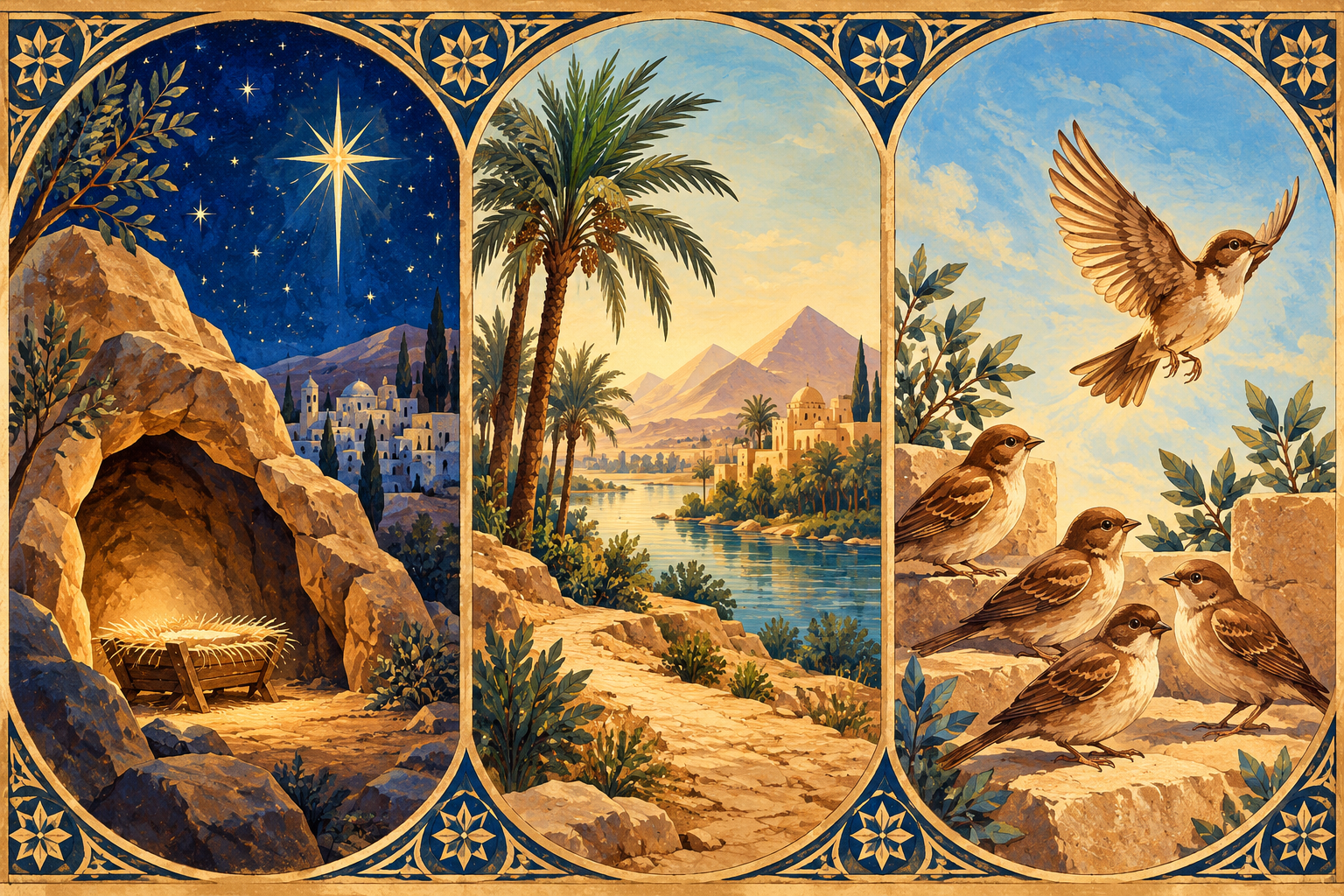
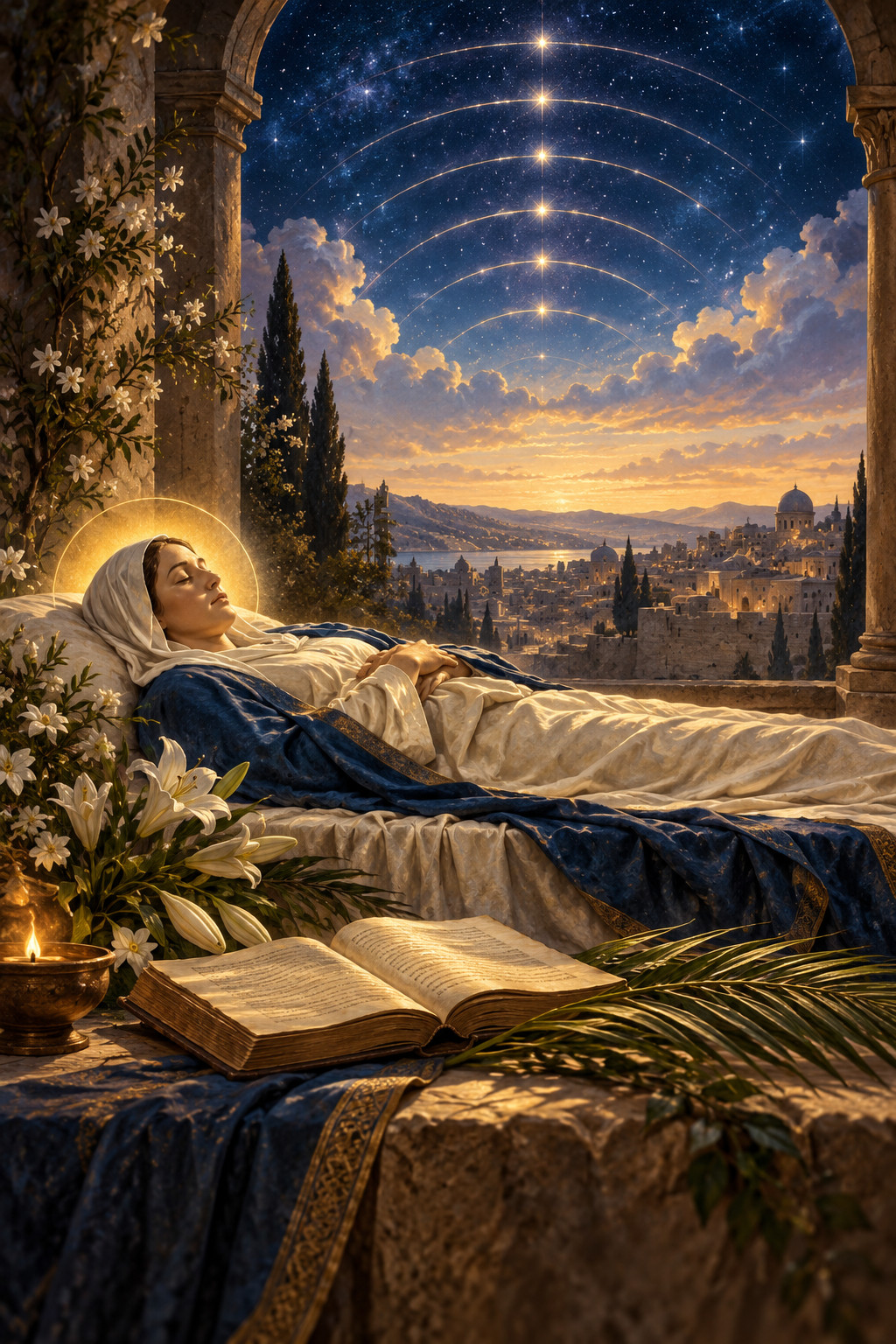
The story begins with the childless Joachim and Anna, presented as Mary's parents. After Joachim is turned away from the temple because the couple has no child, angelic announcements promise their daughter. Mary enters the temple at three; Joseph is later selected to care for her. The book recounts the annunciation, birth in a cave, the midwives' examination, and visits by shepherds and Magi. These are events within the narrative, not independent biographical records. [1] [3]
The Marian section rewrites the Protevangelium of James, a Greek account of Mary's origins and Jesus' birth usually dated in its beginnings to the later second century CE. It is no literal translation. Pseudo-Matthew gives Mary a deliberate vow of virginity, a daily pattern of prayer and work at the temple, and a company of virgins living with her in Joseph's house. Joachim's charity and Joseph's humility receive new emphasis. Mary Clayton understands these features in relation to ascetic and monastic ideals in the Latin environment that reshaped the story. [2]
The account also seeks to coordinate details with the Gospel of LukeGospel of LukeNew Testament gospel where Satan asks to test the disciples in 22:31–32.Glossary · Click to read the explanation and Matthew: the family moves from the birth cave to a stable, and the Magi arrive some two years later in Pseudo-Matthew's sequence. This is a literary harmonization of circulating Christian stories, not independent historical confirmation of their particulars. [2] [3]
The journey to Egypt and the palm tree
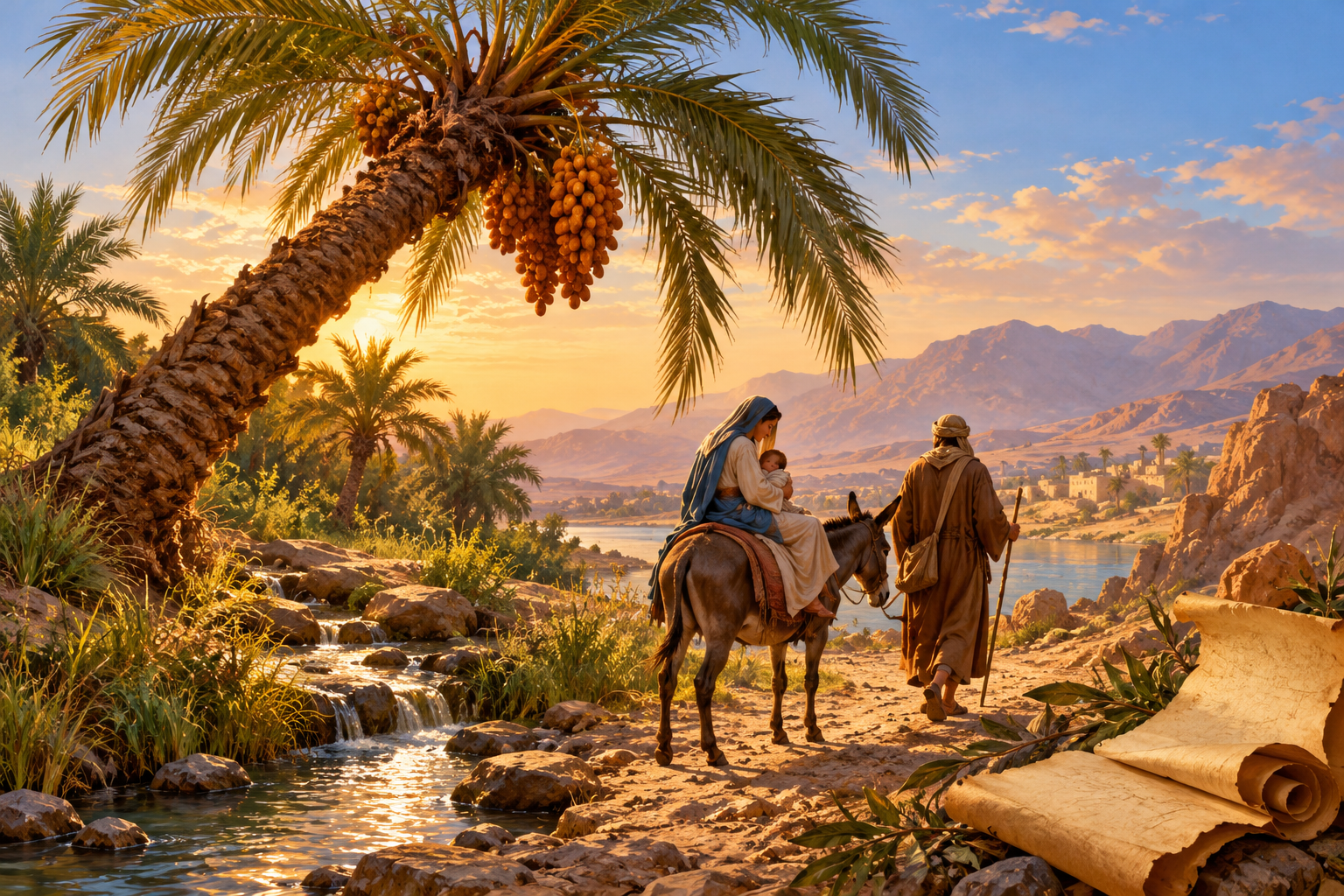
After Joseph is warned about Herod, the family travels to Egypt. Dragons and wild animals submit to the child along the road. The palm episode occurs on the third day of the journey in Alexander Walker's historical English translation. Mary longs for fruit high in the tree, while Joseph worries that their water is running out. The child commands the palm to lower its fruit, then orders a spring to rise from the roots. In the next chapter an angel carries a palm branch to paradise, making it a symbol of victory. [3]
The Latin excerpt for chapter 20:2 reproduced by the scholarly Corpus Coranicum project places these words in the child's mouth: [4]
That is, “Bend, tree, and nourish my mother with your fruit.” This is a published Latin excerpt in a research resource, not a diplomatic transcription I made from an identified manuscript and not a guarantee of identical wording in every witness. The child addresses the palm here, unlike the agency in the Qur'anic scene below. [4]
The journey continues with the shortening of a thirty-day route to a single day, followed by Egyptian temple idols falling when the child enters. Within the narrative these episodes display Jesus' authority over nature and pagan deities. They do not independently establish a historically identifiable itinerary. [3]
A text with layers and divergent witnesses
Textual scholarship distinguishes the Marian section, indebted to James, from the journey to Egypt. As Mary Clayton reports it, Jan Gijsel argued that the latter was joined to the collection at a later stage, citing its abrupt transition, contrasting style and interests, and a separate title in one witness. Since it nonetheless appears in all complete witnesses, these observations do not by themselves securely date its incorporation. [7]
The earlier textual families are conventionally called A and P. A later Q redaction probably added the pars altera (“second part”) around the eleventh century, importing episodes from the Infancy Gospel of ThomasInfancy Gospel of ThomasAccounts of Jesus’ boyhood, distinct from the sayings Gospel of Thomas.Glossary · Click to read the explanation, a distinct narrative about the boy Jesus' miracles. The still later R redaction differs as well. Chapters following the Egypt journey in Tischendorf's influential printing must therefore not be treated as an original, invariant part of every manuscript. [7] [6]
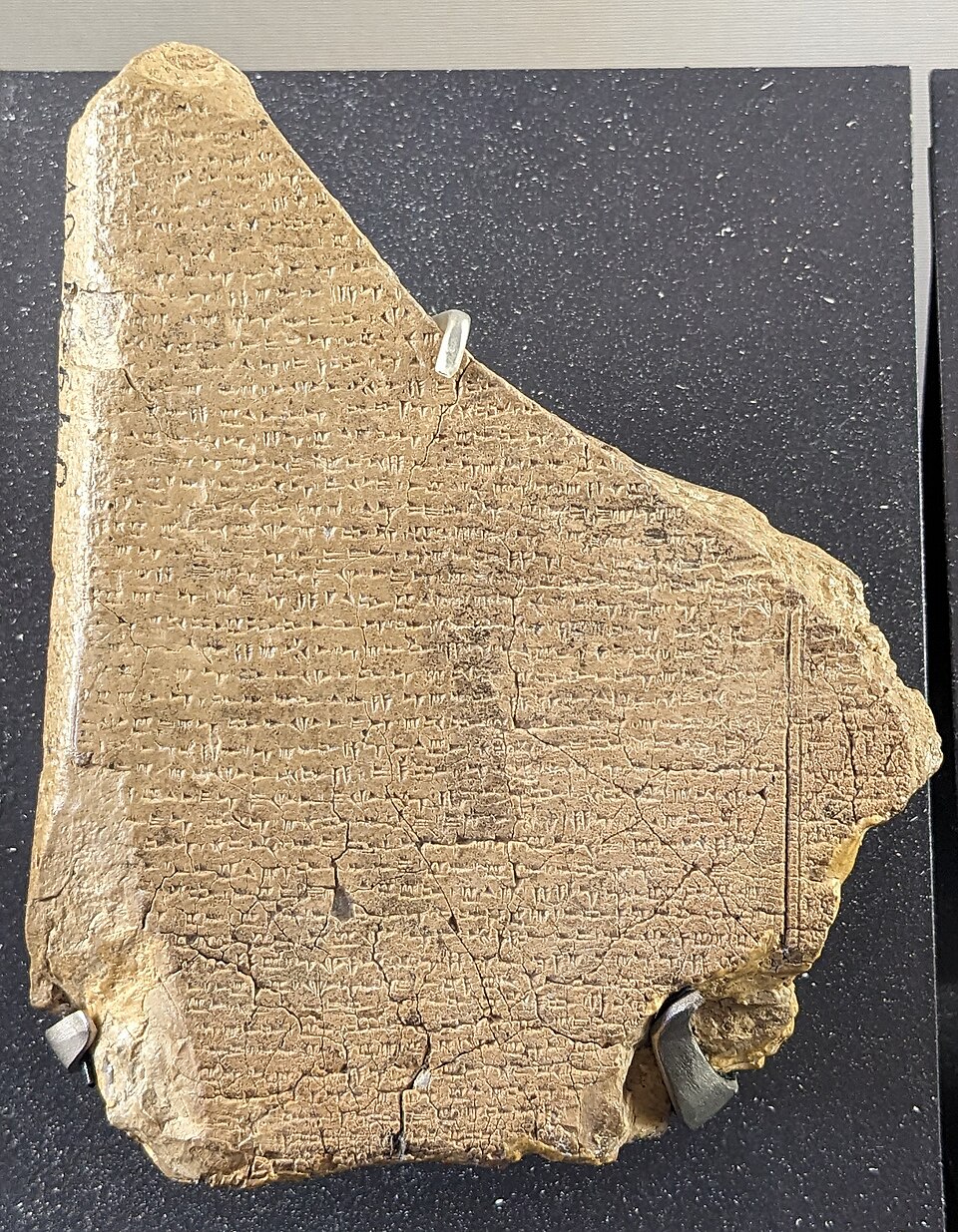
Scholars have proposed roughly 550–700 CE for the composition of the Latin core. Clayton reports Gijsel's preference for the early seventh century alongside his broader range. Surviving witnesses begin with composite excerpts around 800 CE (Montpellier, medical faculty library, MS 55), followed by Latin manuscripts from about 820, such as British Library Add. 11880. These are dates of copies or compilations, not dates when every component was written. The e-Clavis catalogue inventories hundreds of witnesses and their recensions rather than a single original manuscript. [6] [7]
The palm in Surah Maryam: related motifs, different scenes
In the Qur'anThe QuranThe central scripture of Islam, consisting of 114 Arabic surahs; its study distinguishes Quranic discourse from manuscript history, reading traditions, and historical inference.Glossary · Click to read the explanation, Surah Maryam 19:23–26 depicts Mary in labour beside a palm trunk, consolation through water, and this command to Mary: [5]
“Shake the palm trunk towards you”; fresh dates then fall. Here the setting is childbirth, and Mary is instructed to shake the trunk. In Pseudo-Matthew the setting is the flight to Egypt after the birth, and the child orders the tree to bend and then release water; the branch taken to paradise is an additional Latin narrative element. Palm, nourishment and water may belong to a wider world of stories about Mary and the child. But differences in setting and agency, together with the uncertain date of the assembled Egypt section, rule out treating similarity alone as a demonstrated transmission chain or identifying the surviving Latin form as the Qur'an's direct source. [3] [4] [5]
Corpus Coranicum also reports Suleiman Mourad’s hypothesis relating the remote background to ApolloApolloGod of music and prophecy in Greek traditions, also participating in the Iliad’s events.Glossary · Click to read the explanation’s birth by a palm. The underlying Greek lines have not been directly checked here; the suggestion is reported as scholarship, not treated as independent proof of a transmission route. [4]
A short chronology of the evidence
- Narrative time: Jesus' birth and childhood under Herod as narrated; this is not the date of the book's composition.
- Later second century CE, approximately: early Greek Protevangelium of James, whose Marian narrative was later reworked. [2]
- About 550–700 CE, with divergent estimates: proposed composition or revision of the Latin core, not a certain date for every Egypt episode. [7]
- About 800–850 CE: early surviving Latin witnesses; even the oldest is not an author's autograph. [6]
- Around the eleventh century and later: expansion in Q and further additions, translations and medieval collections. [6] [7]
Significance and limits
Pseudo-Matthew is valuable as evidence for the medieval Latin reception and reshaping of Christian stories. Mary's role grows, birth traditions are blended with ideals of monastic piety, and miracle narratives circulate in medieval literature and art. Its many manuscripts make the history of copying, selection and redaction researchable; they do not offer an independent first-century biography of Jesus or Mary. [1] [2] [6]
References and notes (7)
- Brandon W. Hawk, “Gospel of Pseudo-Matthew,” specialist e-Clavis entry: identity, structure and related texts; its manuscript inventory updates older counts. §1, summary and structure Return to the text ↑
- Mary Clayton, The Apocryphal Gospels of Mary in Anglo-Saxon England (1998): the reworking of James, Mary’s vow and monastic ideals, and harmonization with canonical accounts; relevant publisher-sample pages read, not the whole book. Printed pp. 9–11, 20–21; PDF pagination differs Return to the text ↑
- Gospel of Pseudo-Matthew in Alexander Walker’s historical English translation of Tischendorf’s text; used for the narrative sequence, not as a collation of individual Latin witnesses. Prefaces and chs. 1–6, 8–26; esp. 18–25 Return to the text ↑
- Nicolai Sinai with Veronika Roth, Corpus Coranicum (TUK 459): Latin palm-tree passage and German critical discussion. The resource identifies Tischendorf, Evangelia Apocrypha (1876), pp. 87–88; its displayed text was read, not a single manuscript or Gijsel’s apparatus. Ps.-Mt. 20:1–2; Tischendorf 1876, pp. 87–88 Return to the text ↑
- Qur’an, Surah Maryam: Arabic verses concerning labour, water and dates; the short quotation is translated anew here rather than reproduced from a long copyrighted modern translation. Surah Maryam 19:23–26 Return to the text ↑
- Brandon W. Hawk, e-Clavis, manuscripts and editions, including families A, P, Q and R; Montpellier MS 55 (c. 800) and London Add. 11880 (c. 820). §3.1.1, Latin witnesses Return to the text ↑
- Mary Clayton, The Apocryphal Gospels of Mary in Anglo-Saxon England (1998): analysis reporting Gijsel on dating, variant prefaces, the Egypt section and Q/R redactions. The printed pages cited were read; Gijsel’s complete critical edition was not. Printed pp. 18–19, 22–23 Return to the text ↑
Archive records may be reviewed and refined as better evidence or sources become available. Suggest a correction
Suggest a correction · Suggest a source for this record
Cite this record
IL Archive, «Gospel of Pseudo-Matthew», https://ilarchive.com/en/texts/gospel-of-pseudo-matthew
Continue reading