Entity · Concept
Biblical Jubilee
A reference page linking a name, group, or concept to the materials that discuss it.
- Names
- Jubilee year · שנת היובל
The fiftieth-year law of Leviticus 25: family land restoration, limited release from servitude, and debate over debt remission and Deuteronomy 15.
Estimated reading time: 8 min Published Last reviewed:
Share article
Text
Introduction
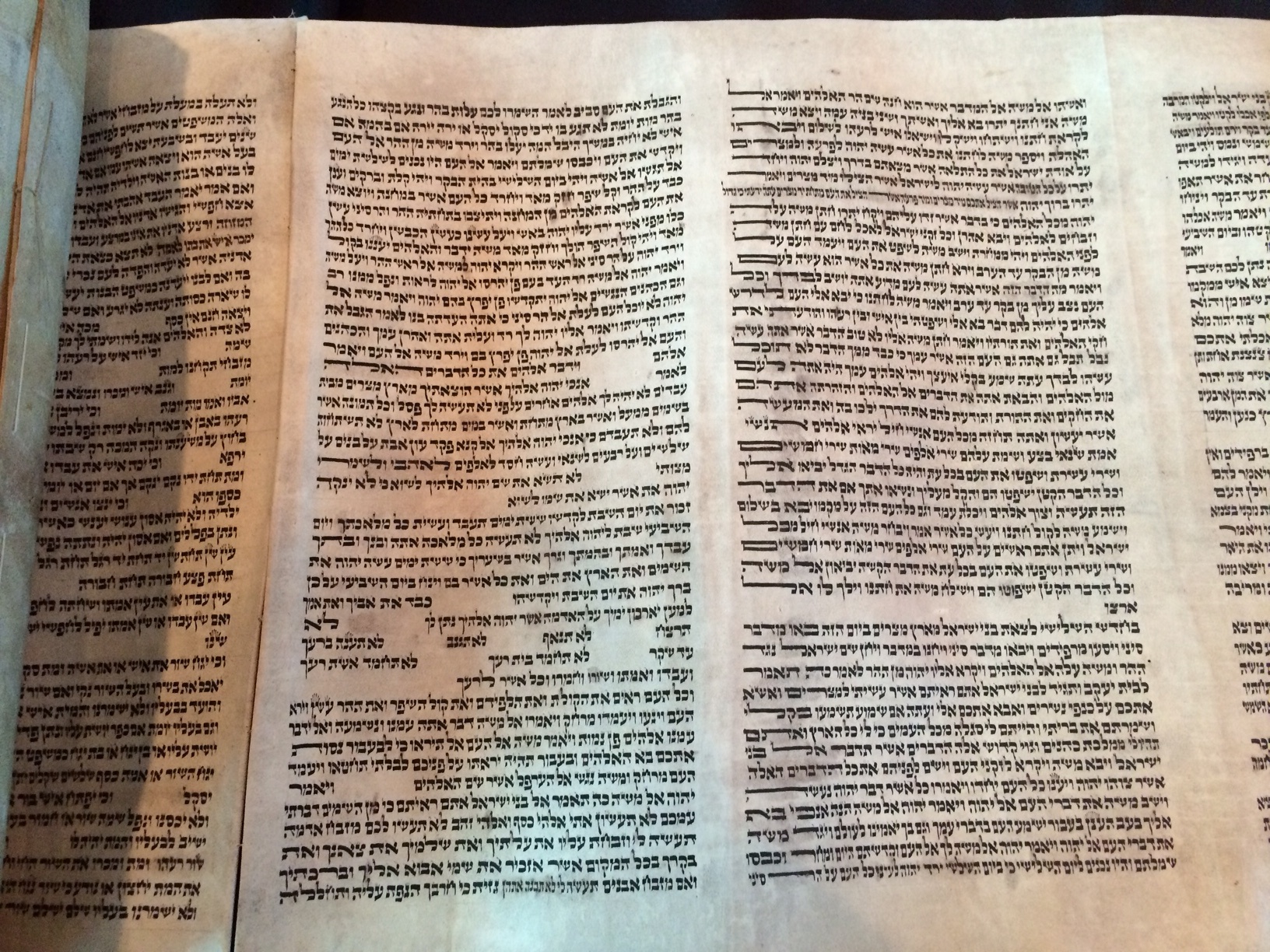
The biblical Jubilee is a law in the PentateuchTorah / PentateuchThe first five books of the Jewish and Christian Bible: Genesis, Exodus, Leviticus, Numbers and Deuteronomy. They combine narrative and law from creation to Moses’ death; in Jewish usage, “Torah” can also encompass a wider body of authoritative teaching.Glossary · Click to read the explanation that addresses loss of land and dependency through poverty while giving the passage of time a sacred significance. Leviticus 25 proclaims release and a return to family holdings in the fiftieth year, but its freedoms have defined boundaries: houses in walled towns, impoverished Israelites and enslaved outsiders are treated differently. DeuteronomyBook of DeuteronomyTorah book presenting commandments in Moses’ discourse and grounding Sabbath rest in slavery and liberation from Egypt.Glossary · Click to read the explanation 15 sets out another law, remission of loans in the seventh year. Whether the Jubilee also remits financial debt has remained a question of competing Jewish interpretations and modern scholarship. [4][5][8]
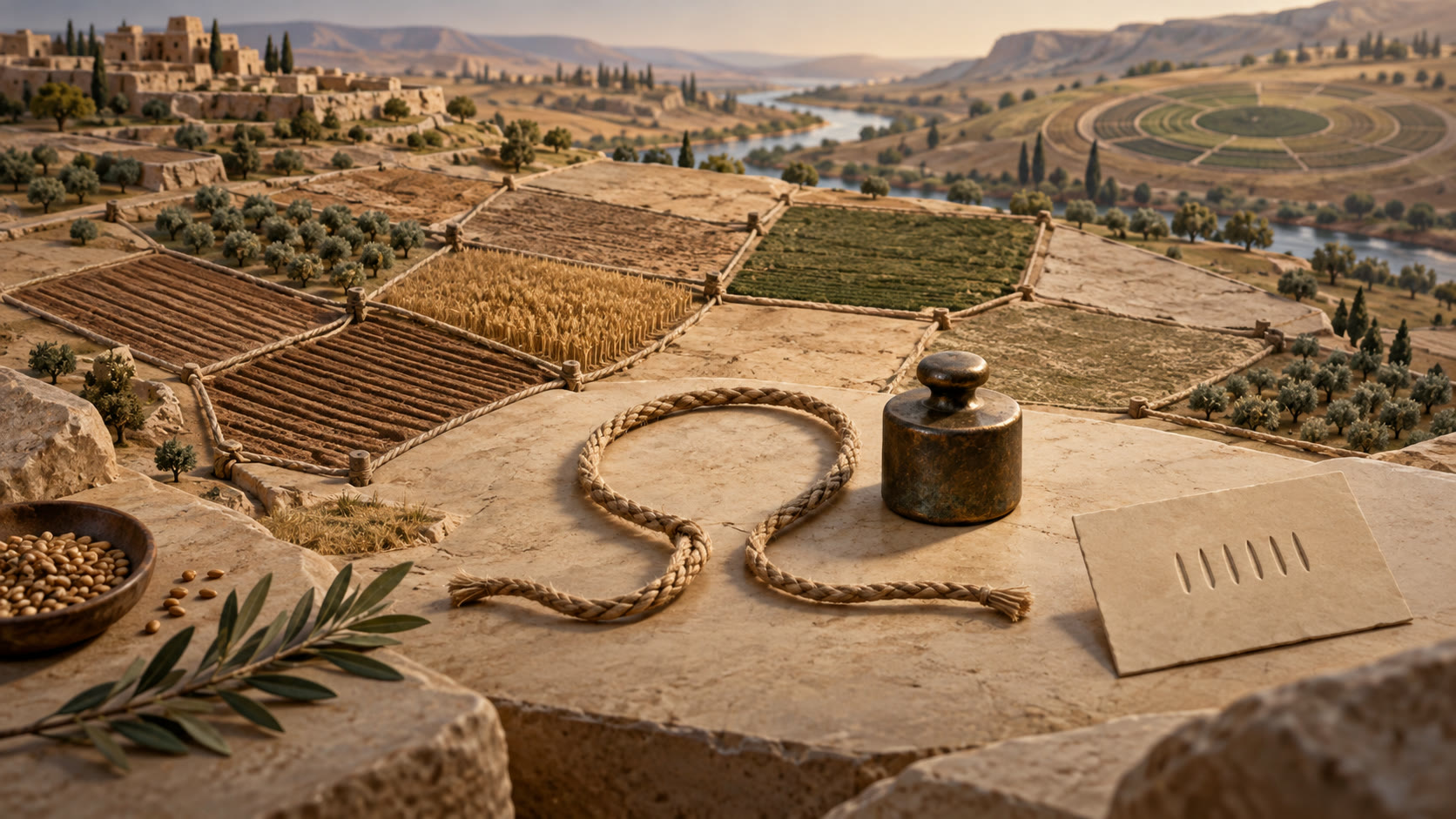
This article explains what the legislation actually says, compares its reception at Qumran and in rabbinic writing, and distinguishes its moral resonance from an unproven claim that a nationwide fifty-year cycle was regularly put into practice. Its modern cover is an illustration, not a surviving ancient witness.
Reading guide
- The word and the calendar.
- Family land, transfer and redemption.
- Debt service and the boundaries of release.
- The seventh year and monetary debt.
- Narratives of practice and their limits.
- Ancient Near Eastern debt-release edicts.
- The synthesis made at Qumran.
- Rabbinic and medieval Jewish interpretations.
- Freedom in prophetic and Christian reception.
- The Jubilee year versus the Book of JubileesBook of JubileesJewish retelling of Genesis and Exodus framed as angelic teaching to Moses, adding chronology, narratives and interpretation.Glossary · Click to read the explanation.
- Conclusions and levels of confidence.
The name, the count and the proclamation
The HebrewHebrewA Northwest Semitic language of the Canaanite group, encompassing Iron Age epigraphy, Biblical, Rabbinic, medieval and Modern Hebrew; its scripts and pronunciations changed over time.Glossary · Click to read the explanation word yovel (יוֹבֵל) is associated here with the sounding of a horn and the public proclamation. Leviticus 25:8–12 counts seven sabbaths of years, seven cycles of seven, before ordering the horn to sound on the Day of AtonementYom Kippur — Day of AtonementJewish observance on 10 Tishrei; Leviticus 16’s sanctuary purification and two-goat rite are distinct from later Mishnaic accounts and from fasting, prayer and repentance.Glossary · Click to read the explanation in the fiftieth year. The year is consecrated and release is proclaimed for the people covered by its provisions. Ordinary sowing and treating volunteer crops as a planned harvest are suspended. The Jubilee is therefore more than a detached festival; its calendar intersects with agriculture, possession and the social order.
Leviticus explicitly calls it the fiftieth year. How that year fits into the following cycles later generated a different mathematical discussion: is it counted separately, or as part of a new period? A discussion preserved in the Talmud at Arakhin 12b belongs to the reception of the law, not to the explicit wording of Leviticus itself. [9]
Land and the limits of a sale
Leviticus 25:23 grounds its land rules in a theological claim: the land belongs to God, while those holding it are resident dependants. A transfer should accordingly be valued by the harvest years remaining until the Jubilee; it is not simply an unconditional sale that permanently severs a household's claim. A relative can redeem the holding, and its former holder can redeem it when able. Otherwise the family receives it back at the Jubilee under the prescribed conditions.
It is misleading, however, to say that all property returns in the same fashion. Houses in walled towns have a limited redemption period; after its expiry, their status differs from that of houses in unwalled villages and agricultural land. Levite houses and their communal pasturelands are granted special protections. The legislation does not erase all property differences: it protects a particular structure of family holding and communal land. [5]
Dependants and the social limits of emancipation
Leviticus 25:35–43 commands support for a fellow Israelite made poor, without charging that person interest. Someone driven into service by poverty must not, in this text, be treated as a chattel slave, but as a hired worker or resident until the Jubilee, when that person and their children return to the family and holding. Related redemption rules apply where an Israelite has entered service to a resident alien or their household.
By contrast, Leviticus 25:44–46 permits the hereditary enslavement of people acquired from surrounding peoples. That is a real exception within the source, and prevents responsible readers from calling the law either the universal abolition of slavery or a proclamation of equal status for all inhabitants. Deuteronomy 15:12–18 separately requires the release of a Hebrew man or woman after six years' service, accompanied by provisions for starting again; this schedule should not be silently collapsed into the fiftieth-year rule. [5]
Does the Jubilee cancel financial debts?
Deuteronomy 15:1–3 expressly calls for creditors to remit a claim against a fellow member of the community at the seven-year release, distinguishing fellow Israelites from foreigners. Verses 7–11 even warn against withholding a loan because that year is drawing near. Leviticus 25 treats poverty, credit-related dependency, redemption and land tenure, but never expressly states that all monetary loans are cancelled in the fiftieth year. Silence alone, however, does not prove that remission was necessarily excluded.
Michael Bartos and Bernard M. LevinsonBernard M. LevinsonUniversity of Minnesota scholar of biblical law and interpretation, co-author of an analysis of 11QMelchizedek.Glossary · Click to read the explanation analyse two competing interpretations. On one view, restoring land and personal freedom makes little practical sense if debts remain untouched. On the other, the explicit remission provision belongs to the seventh year alone. Both positions interpret the relationship of passages in the TorahTorah / PentateuchThe first five books of the Jewish and Christian Bible: Genesis, Exodus, Leviticus, Numbers and Deuteronomy. They combine narrative and law from creation to Moses’ death; in Jewish usage, “Torah” can also encompass a wider body of authoritative teaching.Glossary · Click to read the explanation; neither should be presented as an additional verse that is plainly written in Leviticus. [4][8]
Is this a report of historical practice?
Leviticus is prescriptive legislation, not by itself an administrative record of a reform carried out every fifty years. JeremiahBook of JeremiahProphetic book addressing Judah and the Babylonian crisis; chapter 34 recounts liberation followed by renewed subjection.Glossary · Click to read the explanation 34 narrates an agreement under King Zedekiah to free people held in servitude, followed by their re-enslavement and prophetic condemnation. This episode bears on the force of release language and on conflict over dependants, but it never identifies the occurrence as the end of seven seven-year cycles. It is not a dated report proving the operation of the Jubilee cycle. [10]
Ezekiel 46:17 speaks of a 'year of liberty' when a princely grant to a servant reverts to the ruler's heirs. That language invites comparison with the Jubilee, but the passage does not spell out a fifty-year computation. A related expression does not demonstrate regular implementation. Moreover, the formation and redaction of Pentateuchal laws remain contested scholarly questions. The time in which a law is narrated as addressed to MosesMosesCentral figure in Exodus, Torah traditions and the Qur’an; childhood accounts differ in detail.Glossary · Click to read the explanation is not, without further evidence, the demonstrable date at which every provision acquired its written form. [11]
Comparisons with ancient Mesopotamian release edicts
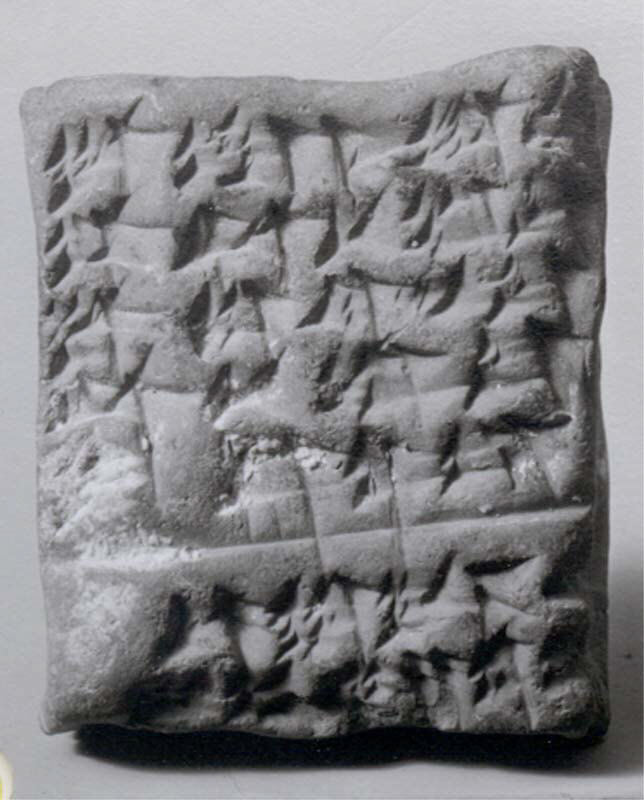
Royal edicts associated with rulers such as AmmisaduqaAmmisaduqaBabylonian king of the seventeenth century BCE in the Middle Chronology, whose edict provides selective debt and dependency relief.Glossary · Click to read the explanation in Babylonia relieved particular groups of debts and obligations under particular conditions. Such interventions provide an important comparison for the problems of indebtedness and dependency addressed in ancient Near Eastern societies. But an occasional royal decree is not the same institution as a recurring Jubilee attached to a sacred law code. Similar social aims or Semitic terminology cannot, by themselves, establish that the author of Leviticus copied any one Babylonian edict.
The institutional abstracts of two university theses comparing Jubilee, the seventh-year laws and Ammisaduqa's edict support treating this as a comparative question rather than a documented chain of direct borrowing. Only those abstracts, not the dissertations in their entirety, were consulted here, and no page-level findings from unseen chapters are attributed to them. [12][13]
Qumran brings two laws together
The 11QMelchizedek11QMelchizedek: Qumran interpretationCave Eleven Qumran text with a first-century BCE manuscript, combining jubilee and remission in an end-time interpretation.Glossary · Click to read the explanation text associated with the QumranQumranArchaeological site northwest of the Dead Sea near manuscript caves; its settlement and the groups who deposited the scrolls are studied together but not assumed identical. It is not synonymous with all Dead Sea Scrolls.Glossary · Click to read the explanation manuscript corpus draws on Leviticus 25:13 and Deuteronomy 15:2 in an eschatological account of release. Bartos and Levinson argue that this joining was a deliberate legal interpretation responding to the relation between the two laws once the books were read as a single Torah. The manuscript is fragmentary: readings supplied by modern editors are reconstructions and must not be confused with words all clearly visible on the surviving fragments.
This is evidence for the interpretation of Scripture in Second Temple JudaismSecond Temple JudaismDiverse Jewish traditions between the rebuilding of Jerusalem’s temple around 515 BCE and its destruction in 70 CE: institutions, diaspora, groups and texts, with distinctions between events, composition, manuscripts and the limits of evidence.Glossary · Click to read the explanation, not a cancelled-loan ledger from a particular Jubilee year. It also precedes the compiled rabbinic sources that handle the same verses differently. The disagreement should therefore not be imagined as a face-to-face debate between contemporaries. [8]
Rabbinic distinction and medieval Jewish law
Rabbinic commentaries such as Sifre on Deuteronomy and Sifra on Leviticus set out a functional distinction: the sabbatical seventh year deals with monetary claims, while the Jubilee concerns release from certain service and return of property. Bartos and Levinson understand this differentiation as another response to reading distinct legal passages within one canon. The later date of those works' redaction, however, should not be confused with the dates of every interpretation they preserve.
In the Mishneh Torah, MaimonidesMoses MaimonidesJewish jurist, philosopher, and physician (c. 1138–1204). Wrote the Commentary on the Mishnah and Guide in Judeo-Arabic, and the Mishneh Torah in Hebrew; practiced in Egypt.Glossary · Click to read the explanation treats financial remission within the laws of the sabbatical year and discusses counting the Jubilee and conditions for its operation separately. He also holds that debt remission under Torah law depends on the Jubilee being applicable, while rabbinic rules preserve remission when the Jubilee no longer applies. This is medieval normative interpretation, not independent Iron Age administrative evidence of where or how often the Jubilee was observed. [14][15]
Freedom in prophetic and Christian reception
Isaiah 61:1–2 announces good news to the afflicted, liberty to captives, and a year of divine favour. Later readers have associated that language with the freeing and return envisaged by the Jubilee, although this prophecy does not prescribe property redemption or walled-town transactions. Luke 4:16–21 narrates Jesus reading the Isaiah passage and applying its message to his ministry. Such reuse is literary and theological reception, not a direct record of widespread fiftieth-year debt cancellation in Roman Galilee. [16][17]
Likewise, modern invocations of 'jubilee' in religious or social criticism may legitimately draw inspiration from relief of dependency, but they should not obscure the unequal categories and exclusions present in Leviticus 25.
The Jubilee year is not the Book of Jubilees
The Jubilee legislation must be distinguished from the Book of JubileesBook of JubileesJewish retelling of Genesis and Exodus framed as angelic teaching to Moses, adding chronology, narratives and interpretation.Glossary · Click to read the explanation, an ancient Jewish retelling of Genesis and the opening chapters of Exodus organized around chronological units of forty-nine years. The names overlap but the genre and purpose are different: one is legislation about land, people and time; the other is narrative rewritten within a chronological framework. Recognizing this distinction is a description of textual forms, not a judgement on the book's religious status in different traditions. [18]
What is established, and what remains open
Textually clear: Leviticus 25 proclaims a fiftieth year, the return of particular holdings and the release of certain people with stated exclusions; Deuteronomy 15 expressly institutes seven-year debt remission. Historically clear for interpretation: a Qumran source brought those laws together, while rabbinic exegesis distinguished their functions. Debated: whether monetary debt release follows implicitly from the Jubilee rules. Not demonstrated by the materials examined here: continuous nationwide observance of a fifty-year Jubilee in ancient Israel or Judah. A legal prescription, a later reading and an account of practice are distinct classes of evidence, even when they shape a shared religious memory.
References and notes (13)
- Deuteronomy 15: the remission of debts and release of servants; Hebrew text with Jewish Publication Society (1917) translation. Deuteronomy 15:1–18, especially vv. 1–11 and 12–18. Return to the text ↑
- Leviticus 25: the laws of sabbatical years and the Jubilee; Hebrew text and Jewish Publication Society (1917) translation. Leviticus 25:1–55, especially vv. 8–17, 23–34 and 35–55. Return to the text ↑
- Michael Bartos and Bernard M. Levinson, “This Is the Manner of the Remission”: Implicit Legal Exegesis in 11QMelchizedek as a Response to the Formation of the Torah, Journal of Biblical Literature 132/2 (2013), pp. 351–371. Article on journal pp. 351–371, PDF file pp. 145–165 (1-based); relevant portions examined on print pp. 351–354, 357–358 and 360–371, with selected PDF-page screenshots. Return to the text ↑
- Babylonian Talmud, Arakhin 12b: discussion of Jubilee-year reckoning; published text and translation on Sefaria. Arakhin 12b, published excerpt concerning the Jubilee; not a complete reading of the tractate. Return to the text ↑
- Jeremiah 34: release and subsequent re-enslavement under Zedekiah; Hebrew and JPS (1917) text. Jeremiah 34:8–22, especially vv. 8–16. Return to the text ↑
- Ezekiel 46:17: the “year of liberty” and return of a princely gift, in a published Bible translation. Ezekiel 46:17 alone; no fifty-year count is supplied. Return to the text ↑
- Aaron Miner, Debt and its Solutions: A Comparative Study of the Biblical Jubilee Year and the Edict of Ammisaduqa, MA thesis, Stellenbosch University (2013); university repository abstract only. Official university repository abstract only; the dissertation body was not consulted. Return to the text ↑
- Sara Linda Huber, Verschuldung als gesellschaftliche und religiöse Herausforderung: ein Vergleich von Dtn 15,1–18, Lev 25 und altorientalischen Erlassedikten [Indebtedness as a Social and Religious Challenge], MA thesis, University of Vienna (2021); institutional abstract only. University catalogue abstract alone; internal chapters and detailed pages not read. Return to the text ↑
- Maimonides, Mishneh Torah, Laws of the Sabbatical Year and Jubilee, ch. 9: remission of loans; published English translation. Chapter 9, paragraphs 1–4 in the available translation. Return to the text ↑
- Maimonides, Mishneh Torah, Laws of the Sabbatical Year and Jubilee, ch. 10: counting and conditions of observance; published English translation. Chapter 10, paragraphs 1–8 in the available translation. Return to the text ↑
- Isaiah 61:1–2: liberation and the “year of the LORD’s favour”; Hebrew and JPS (1917) translation. Isaiah 61:1–2 only. Return to the text ↑
- Luke 4:16–21: Jesus’ reading and application of Isaiah, in a published English biblical translation. Luke 4:16–21 only; no independent examination of Greek manuscripts. Return to the text ↑
- James C. VanderKam, “The Book of Jubilees,” in Outside the Old Testament (Cambridge University Press, 1986); publisher’s description/preview only, not the full chapter. Publisher description and entry preview only, for the separate text and its 49-year periods. Return to the text ↑
Suggest a correction · Suggest a source for this record
Cite this record
IL Archive, «Biblical Jubilee», https://ilarchive.com/en/entities/biblical-jubilee
Continue reading