Entity · Concept
Yom Kippur — Day of Atonement
A reference page linking a name, group, or concept to the materials that discuss it.
- Names
- Day of Atonement · Yom ha-Kippurim
- Region
- Ancient Israel / Second Temple Judaism; subsequent Jewish communities
A Jewish observance on the tenth of Tishrei. The entry sets the sanctuary purification and two goats of Leviticus 16 beside the rites of fasting, repentance and prayer, noting scholarly debate over Azazel.
Estimated reading time: 9 min Published Last reviewed:
Share article
Text
Introduction
What did “the Day of Atonement” mean in its earliest surviving textual witness, and how did it become the Jewish day of fasting, prayer, and seeking forgiveness? The answer begins with a rite for cleansing the sanctuary and carrying sins away in Leviticus. It continues through the Mishnah’s account of Temple ceremonies and traditions of worship after the Temple’s destruction. This entry examines each witness in its own historical setting rather than presenting biblical prescriptions, later rabbinic accounts, and nineteenth-century art as evidence of equal kind or date.
A reading guide: four layers, not one narrative
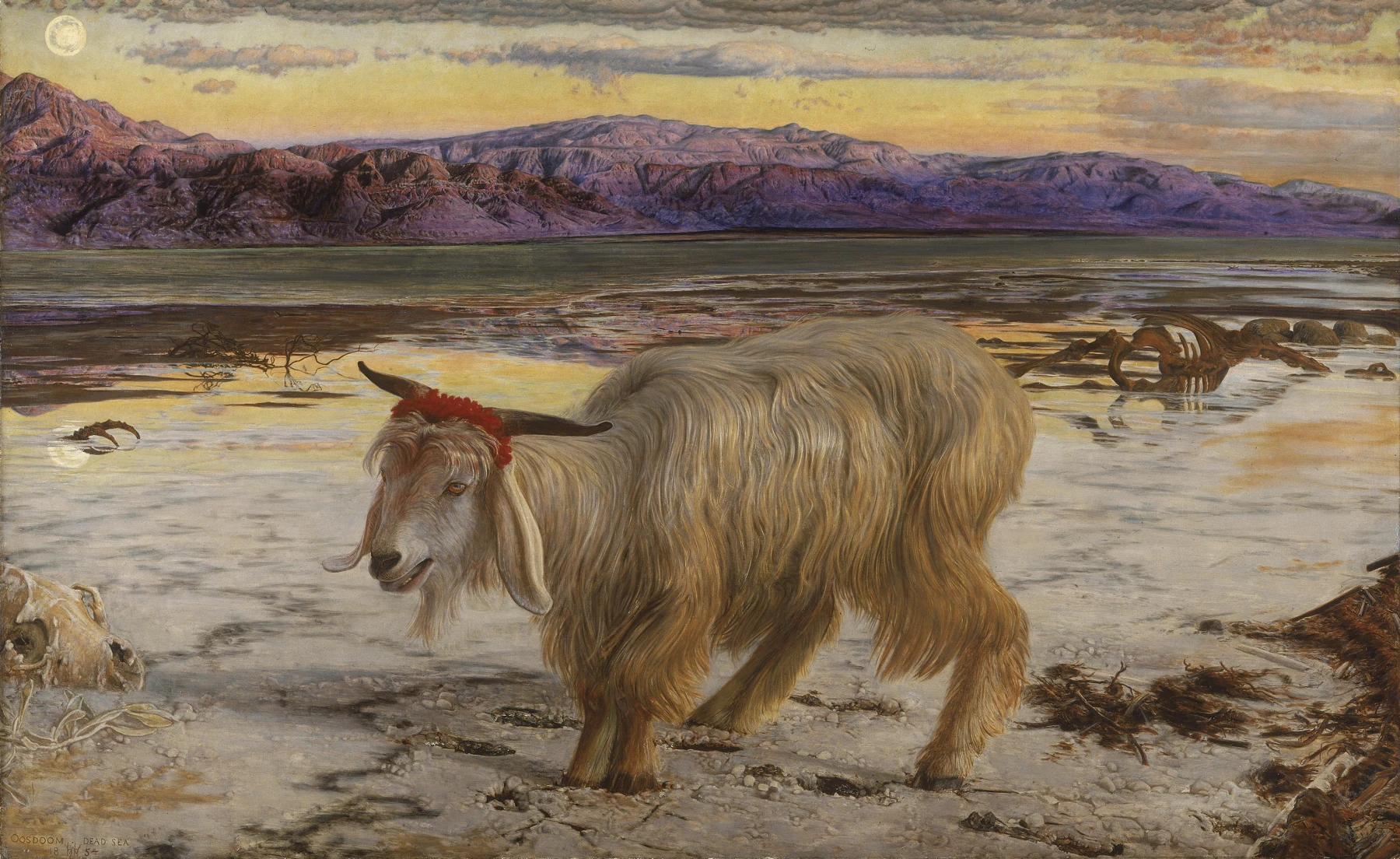
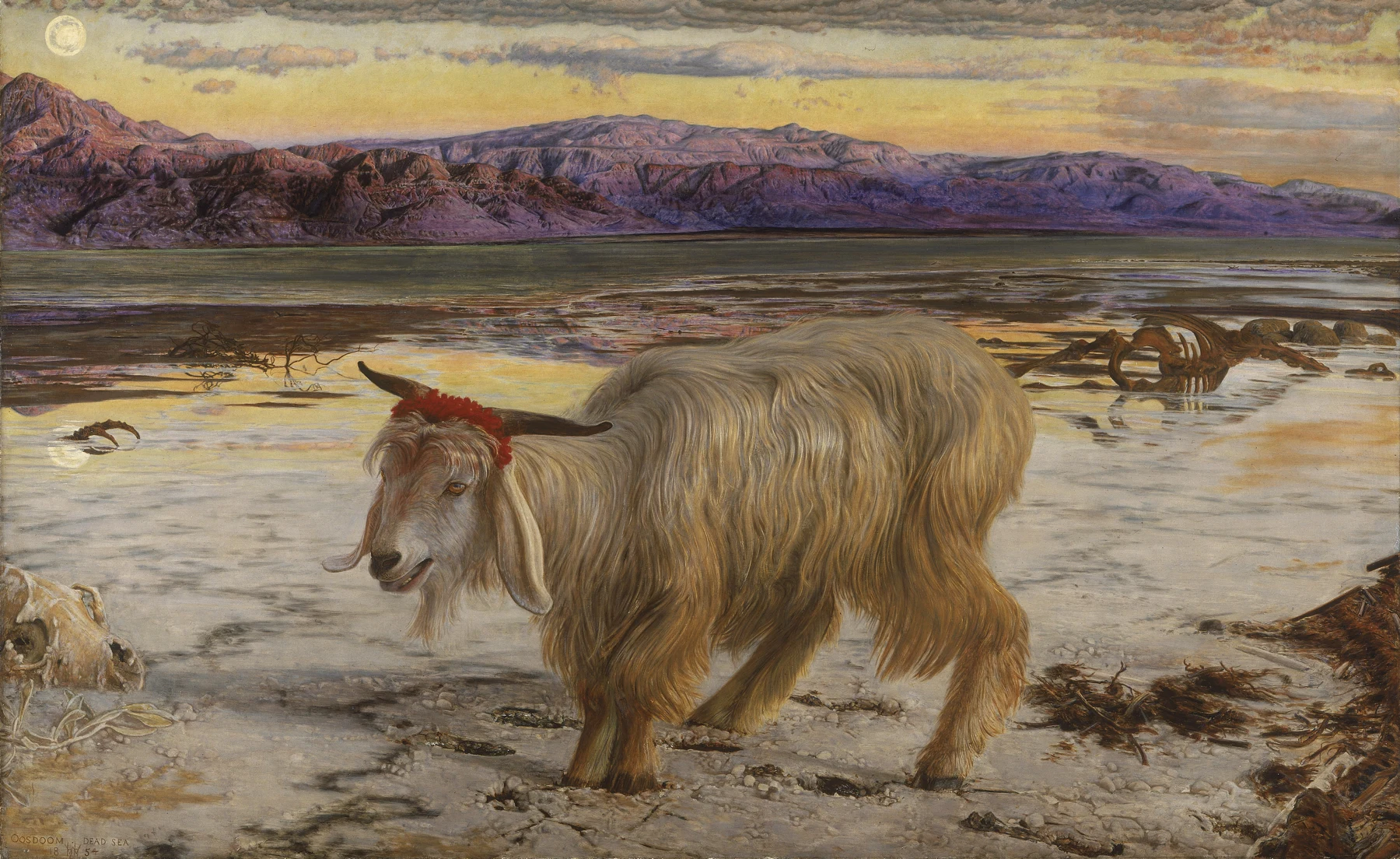
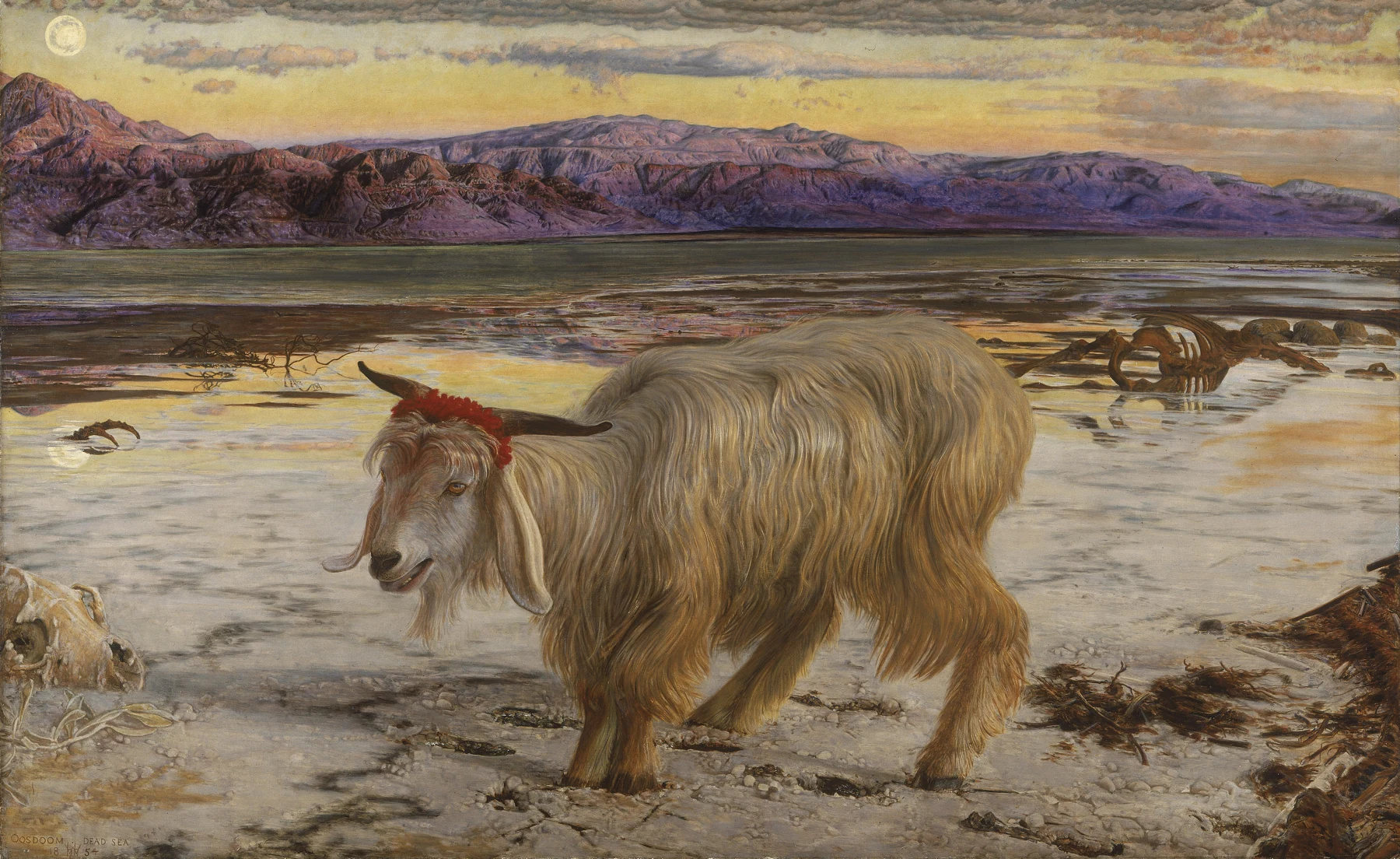
The Book of LeviticusLeviticusA Torah book concerning offerings, priesthood, and purity; chapter 16 describes sanctuary purification and a living goat carrying iniquities away.Glossary · Click to read the explanation sets out the rite as law; it is not a dated eyewitness report of any particular performance. The MishnahMishnahThe Mishnah is a rabbinic compilation assembled around 200 CE, organizing teachings and discussions by topic.Glossary · Click to read the explanation, a collection of rabbinic teachings redacted in its principal form around 200 CE, gives a more elaborate account linked to the remembered worship of the Temple. A third layer consists of Jewish liturgies that developed over centuries. William Holman Hunt's painting The Scapegoat represents a fourth: nineteenth-century artistic reception. These layers interact across the history of interpretation, but they are neither one document nor simultaneous testimony. [1][9][13]
The name and calendar date
In HebrewHebrewA Northwest Semitic language of the Canaanite group, encompassing Iron Age epigraphy, Biblical, Rabbinic, medieval and Modern Hebrew; its scripts and pronunciations changed over time.Glossary · Click to read the explanation the day is Yom ha-Kippurim, conventionally rendered “Day of Atonements” or “Day of Purifications,” and commonly shortened to Yom Kippur. Leviticus 16:29–34 assigns it to the tenth day of the seventh month, later known in Jewish calendrical usage as Tishrei. Leviticus 23:26–32 describes a sacred occasion marked by strict rest and “afflicting yourselves,” specifying the period from the evening of the ninth until the following evening. In Jewish observance it thus begins before sunset and ends after nightfall the next day; exact observance times vary by community and location. [1][2]
Three legal passages that must not be conflated
Leviticus 16 explains the priestly entry, purification of sacred space, and two-goat procedure. Leviticus 23 emphasizes the date, assembly, cessation of work, and self-denial. Numbers 29:7–11 prescribes further sacrifices on the tenth day, expressly distinguishing the additional purification offering from the dedicated atonement offering. Another calendrical connection occurs in Leviticus 25:8–10: the horn sounds on the Day of Atonement in a Jubilee year to proclaim release and restoration of holdings under that legislation. This does not mean that all Jubilee provisions were enacted on every annual Yom Kippur. [2][3][4]
The high priest and the danger of the holy place
In the legal scene, AaronAaron, priest in the biblical narrativeMoses’s brother and a priest in biblical narrative; Leviticus 16 assigns him sanctuary purification and confession over the living goat.Glossary · Click to read the explanation, the priest addressed in the narrative, may enter the inner space beyond the curtain only under prescribed conditions—not whenever he wishes. Washing and linen garments precede his approach; a bull is offered for himself and his household, and incense forms a cloud over the ark cover. Blood from the bull and then from the goat assigned to the LORD is used in acts of purification. Later the text prescribes the removal of garments, more washing, and the burning of sacrificial remains outside the camp. To reduce the occasion to the removal of a single goat is therefore to omit most of the ritualRitualAn organised or distinguished practice meaningful to a community; it may leave traces, but its form alone does not reveal an associated doctrine.Glossary · Click to read the explanation sequence. [1]
What exactly is purified?
Leviticus 16:16–19 names the inner sanctuaryHoly of HoliesMost sacred inner zone of the biblical sanctuary. Kings places the Ark beneath its cherubim; Leviticus regulates approach behind the curtain. Wilderness and Jerusalem temple traditions describe distinct settings.Glossary · Click to read the explanation, the tent of meeting, and the altar as recipients of atonement because of Israel's impurities and transgressions; verses 29–34 also speak of cleansing the people. Baruch Schwartz stresses that kippēr in this context principally concerns purging ritual contamination from the sacred precinct. Yitzhaq FederYitzhaq FederScholar of purity, expiation and ritual in the Hebrew Bible and its ancient setting, including Hittite comparisons.Glossary · Click to read the explanation considers the vocabulary of expiation and the use of blood in a broader textual setting without reducing the matter to a single proposed etymology. Purification of sacred space and forgiveness of persons are linked in the chapter, but they should not be treated as interchangeable in every verse. [1][5][7]
The lots and the two goats
Two goats are presented on behalf of the congregation, and lots designate one “for the LORD” and one “for Azazel.” The first is slaughtered as a purification offering for the people, and its blood participates in the rites of the sanctuary. The second remains alive while the priest lays both hands on its head, confesses the transgressions of Israel over it, and sends it with an appointed man to an isolated wilderness region. Leviticus 16:20–22 does not prescribe slaughtering this goat in the sanctuary; nor does its wording explicitly order that it be thrown off a cliff. [1]
Azazel: a disputed name and competing readings
The meaning of AzazelAsael / AzazelAsael is a punished angelic teacher in First Enoch; Azazel is a name whose referent in the wilderness rite of Leviticus 16 is disputed. Later traditions connect them, without establishing one unchanging identity across all witnesses.Glossary · Click to read the explanation in Leviticus remains contested. The term has been read as a wilderness-associated being, a rugged place, or a description of removal itself—the last approach contributing to versions such as “scapegoat” or “goat sent away.” Anna Angelini examines the opposition between “for Azazel” and “for the LORD,” the SeptuagintSeptuagintA name for the varied ancient Greek translations and writings associated with Jewish scripture; beginning with the Torah, the texts differ across books and manuscripts.Glossary · Click to read the explanation's treatment of the passage, and the name's subsequent religious development, while tracing changes in etymologies and portrayals. Leviticus itself offers no physical description of Azazel. Nor is it methodologically sound to identify every similarly named figure in Enochic literature directly with the character or term as used here. [8]
From wilderness to precipice: a change in the evidence
Leviticus commands that the goat be led into an isolated land, bearing the people's offenses away. Mishnah Yoma 6:6, by contrast, describes its escort dividing a crimson strip, attaching one half to a rock and the other between the animal's horns, and pushing the goat off a precipice to its death. This is a difference between textual witnesses. The precipice episode can be studied as a rabbinic account of Temple procedure, not inserted into Leviticus as though the biblical verses commanded it. Nor does a Mishnaic narrative by itself constitute an independent annual record of everything that happened in the Temple. [1][10]
Why the crimson strip?
Mishnah Yoma 4:2 mentions tying a crimson-wool strip to the scapegoat and marking the animal designated for slaughter differently. In 6:6 the strip is divided at the precipice. Section 6:8 transmits traditions concerning signals sent back to the Temple and a strip changing to white, associated with Isaiah 1:18. The appearance of these details in a later rabbinic text does not itself show that Leviticus included them or that they happened literally on every occasion. The reported color change is a traditional narrative, not a surviving photographic or archaeological observation. [9][10][11]
Rabbinic testimony and the limits of historical reconstruction
Tractate Yoma brings together preparations for the priest, the lots, access to the most sacred chamber, the sending of the goat, and eventually fasting and repentance. It is an essential witness to the sages' organization of ritual memory and law, but it was redacted after the destruction of the Second Temple in 70 CE. We must distinguish the Temple period it describes, the date of the Mishnah's own composition, and the earlier witness of Leviticus. Individual passages may preserve older practices, yet establishing the age of any detail requires evidence beyond an assumption that the entire Mishnah reports events firsthand. [9][10][11]
Yom Kippur after the end of the Temple rites
After the Temple's destruction, sacrifice and entry into the innermost sanctuary could no longer be performed as Leviticus describes. The day nevertheless endured in Jewish religious practice, with prayer, fasting, confession, and moral self-examination coming to the fore. The Avodah passage in some Yom Kippur services recounts the high priest's ritual without literally offering a bull and two goats. This is neither a total rupture nor an instantaneous substitution: traditions of prayer and repentance are older, and particular liturgical forms developed in different communal settings over time. [16][18]
Self-denial: from “affliction” to detailed prohibitions
The Torah commands self-affliction and rest, without listing in Leviticus 16 every restriction subsequently familiar in Jewish practice. Mishnah Yoma 8:1 specifies abstention from food and drink, washing, anointing, wearing shoes, and marital relations. Food and drink are normally grouped as one category in the traditional count of five afflictions. Religious law also recognizes health-related qualifications and exceptions. Contemporary Jewish observance should not be described as the verbatim continuation of every feature of an ancient priestly procedure. [2][12]
Repentance and repairing harm to others
Mishnah Yoma 8:9 links the day's atonement to personal moral responsibility. Relying on the day as a license to repeat wrongdoing does not secure atonement; an offense against another person requires an effort to appease that person. This rabbinic formulation brings a social dimension to purification and rejects the idea that observance automatically overrides a victim's rights. Its exact wording should not be retrojected wholesale into Leviticus, even though the Mishnah interprets biblical language, including Leviticus 16:30. [15]
Prayers and communal memory
In widely observed forms of the service, Kol Nidrei opens the evening, Vidui gives voice to communal confession, Avodah recalls the Temple service, and the final Ne'ilah service concludes the day, often followed by the sound of the shofar. Precise ordering, melodies, and readings differ among Jewish rites and communities. These prayers have distinct, layered histories. It would be mistaken to attribute all of them to the text of Leviticus or to treat the words of Kol Nidrei as an original element of the two-goat ritual. [16]
How did Leviticus 16 take shape?
In a source-critical study, David Frankel argues that verses 29–34, which fix the calendar observance and address the community, expanded an earlier priestly purification rite. Differences in addressees and the placement of the date help motivate his reconstruction. Baruch Schwartz, on the other hand, explains the received chapter as an integrated arrangement of sanctuary cleansing, removal of transgressions, and purification of the people; his reading does not require acceptance of Frankel's proposed stages. Both are scholarly interpretations of literary formation rather than archaeologically dated witnesses to a specific moment of composition. [5][6]
A distinct Christian reception
Hebrews 9–10 reinterprets high-priestly, curtain, and blood imagery to explain Christ's role, juxtaposing annual entry into sacred space with an entry presented as taking place “once for all.” It is early Christian reception of atonement imagery, not a neutral account of all Jewish practice. Daniel Stökl Ben Ezra studies the effects of Yom Kippur themes on early Christianity across a variety of sources. For this review, only the publisher's description and table of contents of his book were consulted, not its full chapters. [17][18]
The cover image: Hunt, not the ancient Temple
William Holman HuntWilliam Holman HuntWilliam Holman Hunt (1827–1910) was a British artist and co-founder of the Pre-Raphaelite Brotherhood.Glossary · Click to read the explanation's The Scapegoat depicts an isolated goat in a desert landscape by the Dead SeaDead SeaThe Dead Sea is a salt lake in the Jordan Rift Valley, near sites where ancient manuscripts were foundGlossary · Click to read the explanation, filtered through the painter's nineteenth-century artistic and religious concerns. The work shown here is the Lady Lever Art Gallery painting, accession LL 3623, not the different Manchester painting bearing the same title. Its red band is a modern pictorial choice that resonates with later rabbinic traditions; the painting cannot be used as a visual record of an ancient ceremony or a portrait of Azazel. The file is a public-domain reproduction of an old artwork, with specific source attribution. [13][14]
Conclusion: what is established, and what remains open?
Leviticus 16 undeniably describes cleansing sacred space and a congregation, with a goat dispatched alive to the wilderness. The Mishnah supplies later testimony about a crimson strip and a cliff; subsequent Yom Kippur liturgies reinterpret the Temple rite through repentance and prayer. What remains disputed includes the meaning of “Azazel,” the literary layers of Leviticus 16, and how literally every rabbinic description reflects actual Temple practice. Scripture, Mishnah, and Hunt's painting must not be treated as equally direct records of the same occurrence. [1][5][8]
References and notes (18)
- Leviticus 16:1–34, published Hebrew text and facing English translation: priestly entry, lots, two goats, cleansing and date checked; no independent collation of Hebrew manuscripts. Leviticus 16:1–34, full chapter (published Hebrew and English) Return to the text ↑
- Leviticus 23:26–32: date, cessation of work, self-affliction and evening-to-evening period examined in a published translation alongside the text. Leviticus 23:26–32 Return to the text ↑
- Numbers 29:7–11: additional offerings and their distinction from the atonement offering examined. Numbers 29:7–11 Return to the text ↑
- Leviticus 25:8–10: Jubilee horn and proclamation of release checked; not the entire Jubilee legislation. Leviticus 25:8–10 Return to the text ↑
- Baruch J. Schwartz, “Yom Ha-kippurim: The Biblical Significance” (2015), TheTorah.com; read the sections on kippēr, sanctuary cleansing and communal participation. Schwartz (2015), sections “What Contaminants Are Being Purged?” and annual kippurim Return to the text ↑
- David Frankel, “Recasting the Temple Purification Ritual as the Yom Kippur Service: Leviticus 16” (2014), TheTorah.com; examined the argument about chapter structure and vv. 29–34, a source-critical reconstruction. Frankel (2014), Leviticus 16 composition and vv. 29–34 Return to the text ↑
- Yitzhaq Feder, “Expiating with Blood” (2015), TheTorah.com; examined published discussion of kippēr and blood, not a complete separate monograph. Feder (2015), article sections on kippēr and blood Return to the text ↑
- Anna Angelini, “Is Azazel a Goat, Place, Demon, or Deity?” (2021), TheTorah.com; examined sections on Leviticus, translation and later reception. The name’s meaning remains disputed. Angelini (2021), “Azazel in Leviticus” and reception sections Return to the text ↑
- Mishnah Yoma 4:2: passage checked through the published Sefaria record and indexed text excerpts on lots and crimson wool; not the whole Mishnah or an independently executed API extraction. Mishnah Yoma 4:2; published paragraph and indexed excerpts Return to the text ↑
- Mishnah Yoma 6:6: the split strip, rock, precipice and goat’s death checked in published text and accessible excerpts; not prescribed by Leviticus. Mishnah Yoma 6:6, relevant paragraph Return to the text ↑
- Mishnah Yoma 6:8: indexed/public excerpts about signaling, the whitening crimson strip and Isaiah 1:18 checked as rabbinic tradition. Mishnah Yoma 6:8, indexed excerpts Return to the text ↑
- Mishnah Yoma 8:1: the five categories of abstention checked in published excerpts; health rulings and modern practices are not inferred directly from this paragraph. Mishnah Yoma 8:1, indexed paragraph Return to the text ↑
- National Museums Liverpool, museum shop listing for Hunt’s The Scapegoat; listing and pre-existing source link checked; full internal museum catalogue not examined, identity cross-checked with Commons. National Museums Liverpool, Lady Lever / The Scapegoat shop listing Return to the text ↑
- Wikimedia Commons file record “William Holman Hunt - The Scapegoat.jpg”: Lady Lever attribution (LL 3623), public-domain status, 3716×2280 source and the actual bundled WebP checked visually. Wikimedia Commons source file, licensing and attribution Return to the text ↑
- Mishnah Yoma 8:9: Sefaria’s publicly indexed translated paragraph on repentance and appeasing persons wronged was read; not the complete Mishnah. Mishnah Yoma 8:9, paragraph (indexed English translation) Return to the text ↑
- Daniel Kohn, “A Guide to Yom Kippur Prayers,” My Jewish Learning; sections naming Kol Nidrei, confession, Avodah and Ne’ilah reviewed. Educational overview, not direct proof of ancient origins. Daniel Kohn, “A Guide to Yom Kippur Prayers”, named services Return to the text ↑
- Hebrews 9:7–14, 24–28 and 10:1–18; consulted the published NRSVUE translation at Bible Gateway and chapter-10 extracts; no collation of Greek manuscripts. Hebrews 9:7–14, 24–28; 10:1–18 (NRSVUE translation and excerpts) Return to the text ↑
- Daniel Stökl Ben Ezra, The Impact of Yom Kippur on Early Christianity (Mohr Siebeck, 2003): publisher description and table of contents only, not the book’s scholarly chapters. Publisher metadata, description and contents only; 465-page book not read Return to the text ↑
Suggest a correction · Suggest a source for this record
Cite this record
IL Archive, «Yom Kippur — Day of Atonement», https://ilarchive.com/en/entities/yom-kippur
Continue reading