Entity · Concept
Ritual Atonement: The Verb Kipper in Leviticus
A reference page linking a name, group, or concept to the materials that discuss it.
- Names
- kippēr (כִּפֶּר)
- Region
- Ancient Israel and the southern Levant (biblical textual context)
The Hebrew kippēr in Leviticus can refer to action on behalf of people or directed at sacred spaces. Blood, flour, forgiveness, impurity, and competing scholarly accounts clarify its shifting ritual force.
Estimated reading time: 8 min Published Last reviewed:
Share article
Text
Introduction
The HebrewHebrewA Northwest Semitic language of the Canaanite group, encompassing Iron Age epigraphy, Biblical, Rabbinic, medieval and Modern Hebrew; its scripts and pronunciations changed over time.Glossary · Click to read the explanation verb kippēr (כִּפֶּר, from the root k-p-r) occurs repeatedly in the ritualRitualAn organised or distinguished practice meaningful to a community; it may leave traces, but its form alone does not reveal an associated doctrine.Glossary · Click to read the explanation instructions of LeviticusLeviticusA Torah book concerning offerings, priesthood, and purity; chapter 16 describes sanctuary purification and a living goat carrying iniquities away.Glossary · Click to read the explanation. But what does its action address: a person's wrongdoing, pollution affecting sacred space, or the relationship between a community and its God? This entry examines the action, its object or beneficiary, and its stated results rather than treating “atonement” as a single, self-explanatory English equivalent.
These priestly prescriptions are evidence for the language and logic of a body of biblical law, not by themselves archaeological proof that each procedure was enacted exactly as written. The Hebrew term must also be distinguished from the modern Arabic use of takfīr for declaring somebody outside a religion.
Guide to the entry
- The verb, the offering's name, and their different linguistic roots.
- Who receives atonement, what is purified, and where blood is applied.
- Economic alternatives, impurity, and the Day of AtonementYom Kippur — Day of AtonementJewish observance on 10 Tishrei; Leviticus 16’s sanctuary purification and two-goat rite are distinct from later Mishnaic accounts and from fasting, prayer and repentance.Glossary · Click to read the explanation.
- Competing interpretations and the limits of Hittite comparison.
A verb is not the name of an offering
כִּפֶּר (kippēr) is a Hebrew verbal form of the root k-p-r. Depending on its setting, “perform atonement” or “remove a ritual impediment” may communicate the effect. The adjacent noun חַטָּאת (ḥaṭṭāʾt) can name a sin and a particular offering, traditionally rendered “sin offering” and often rendered “purification offering.” These terms have different roots; one is not a direct morphological definition of the other. James W. Watts emphasizes the rhetorical play between wrongdoing and the offering associated with it. Joseph Lam has challenged a particular etymological argument used to settle the offering's designation. Lam's argument was examined here from the published abstract only, not the full article. [16][19]
Comparisons with other Semitic roots cannot determine the force of every sentence. Arabic kaffāra, denoting an expiatory act or compensation in particular contexts, and takfīr, denoting the attribution of unbelief to another person, are distinct usages. Neither makes the Hebrew kippēr an accusation against someone's faith.
Who performs it, and what follows?
The offering regulations repeatedly say that the priest performs the action on behalf of a person or group, after which they are forgiven. At Leviticus 4:20 atonement is made for the congregation and followed by a passive formula of forgiveness; comparable formulas occur in verses 26, 31, and 35. The priest does not appear as an independent dispenser of forgiveness. Rather, priestly mediation and the stated outcome of forgiveness are differentiated in the narrative. The chapter primarily treats inadvertent offences, with cases involving an anointed priest, the community, a leader, and an individual. [2]
For the community, the priest carries the bull's blood into the Tent of Meeting, sprinkles it before the veil, and applies it to the incense altar's horns. For an individual, blood is placed on the horns of the altar of burnt offering. The destination of the blood varies with the case, while these instructions do not tell the person presenting the offering to wash in the victim's blood. Hand-laying, slaughter, and the burning of designated portions form part of the prescribed sequence; blood handling is not the only action described. [2]
Fine flour: an indispensable exception
Leviticus 5:7–13 sets out graded provisions according to means. Someone unable to afford a sheep may bring two birds; someone who cannot afford even the birds may present a tenth of an ephah of fine flour. Oil and frankincense are excluded from this particular offering. The priest burns a handful on the altar, and verse 13 expressly states atonement and forgiveness, although no animal is killed in this specified substitute. It is therefore inaccurate to claim that every instance of ritual atonement in this chapter requires blood, even though blood is central to numerous other rites. [8]
This allowance is not a general permission to replace every animal sacrifice with flour. It applies to the cases covered by the passage and illustrates the importance of distinguishing ritual material from the outcome the text attributes to the action.
Guilt, restitution, and repair
Leviticus 4–5 does not simply equate the ḥaṭṭāʾt offering with the ʾāšām, often termed a “guilt” or “reparation” offering, although both are associated with atoning formulas. Wrongfully using sacred property entails restitution plus an additional fifth in 5:15–16. At the end of the unit, the person who has cheated another or sworn falsely must return the property. The response thus includes practical repair, not merely a ceremony. Watts observes how the literary language repeatedly joins offence and offering while still distinguishing types of wrongdoing and the obligations they incur. The end of Hebrew Leviticus 5 is usually numbered Leviticus 6:1–7 in English Bibles. [8][16]
Ritual impurity is not necessarily moral fault
Leviticus 12 prescribes rites following childbirth: after the stipulated interval the mother brings offerings, the priest makes kippēr on her behalf, and she is clean. Childbirth is not thereby defined as moral wrongdoing. The text concerns movement between states of ritual impurityRitual impurityA religious status regulating contact with the sacred, especially in Leviticus and Numbers. Causes, duration, and remedies vary by context; it does not necessarily imply sin, disease, or diminished dignity.Glossary · Click to read the explanation and purity. [12]
In Leviticus 14, after a person affected by a described skin condition has recovered, the priest applies blood from the reparation offering and then oil to the right ear, thumb, and big toe. The language of kippēr also occurs during this restoration to purity. This is a case where blood touches a person, but it is not the procedure in Leviticus 4. The ancient skin condition should not be automatically identified with the medical category of modern leprosy. [13]
When the altar itself is addressed
Exodus 29:36 uses atonement language with the altar as the object during its consecration, alongside its purification and anointing. The object of the verb is therefore not always an offender. Within this ritual system, even a sacred installation may require treatment or preparation. Hebrew constructions matter: to make atonement on behalf of somebody is not grammatically the same as to perform the action on a sanctuary or altar. [14]
The Day of Atonement: cleansing and removal
In Yom KippurYom Kippur — Day of AtonementJewish observance on 10 Tishrei; Leviticus 16’s sanctuary purification and two-goat rite are distinct from later Mishnaic accounts and from fasting, prayer and repentance.Glossary · Click to read the explanation, Leviticus 16 brings together distinct actions. AaronAaron, priest in the biblical narrativeMoses’s brother and a priest in biblical narrative; Leviticus 16 assigns him sanctuary purification and confession over the living goat.Glossary · Click to read the explanation brings the bull's blood and that of the slaughtered goat into the sanctuary, applying blood at and before the ark cover. The chapter describes making atonement for the inner shrine, Tent of Meeting, and altar in response to Israel's impurities and transgressions. When this has been completed, Aaron lays his hands on the living goat, acknowledges the community's wrongs over it, and sends it into the wilderness. The goat sent away is not slaughtered in this stage; it does not perform the identical textual role of the other goat's blood. [3]
Leviticus 16:30 also announces the people's cleansing from their sins. The chapter should thus be reduced neither to physical cleaning of a room nor to individual pardon alone. Baruch J. Schwartz relates sanctuary purification, acknowledgement of wrongdoing, fasting, and cessation from labour in his reading of the biblical day. This explains the literary-ritual construction; it is not a description of every later Jewish observance. [17]
Blood as life: the text's own explanation
Leviticus 17:11 supplies a fundamental internal rationale: the life of flesh is associated with blood, and blood assigned to the altar serves an atoning function. Treating blood as part of a ritual process does not imply that the biblical authors imagined it merely as ordinary cleaning liquid. Equally, a ritual interpretation cannot be converted into a claim about a physical mechanism. Scholars' metaphor of blood as a “ritual detergent” concerns its function in particular sacred-space procedures; it is not an instruction to wash every worshipper with it. [11]
What scholars actually dispute
Jacob MilgromJacob MilgromJewish biblical scholar (1923–2010), noted for studies of Leviticus, priestly traditions, purity and offerings.Glossary · Click to read the explanation influentially interpreted certain applications of blood as purging ritual pollution generated by impurity and wrongdoing from sacred installations. Yitzhaq FederYitzhaq FederScholar of purity, expiation and ritual in the Hebrew Bible and its ancient setting, including Hittite comparisons.Glossary · Click to read the explanation explores bodily experience, metaphor, and ancient comparisons as ways of understanding the symbolism of blood. Watts stresses the rhetoric culminating in forgiveness and the role of priestly mediation. A published review, rather than direct examination of James A. Greenberg's 2019 book, records Greenberg's objections to restricting kippēr to purgation of sacred sites and his proposal that ritual maintains a balanced relationship between deity and community. [15][21]
These interpretations need not erase the textual differences: being “forgiven” in Leviticus 4, cleansing the sanctuary in Leviticus 16, and recovery of purity in Leviticus 14 represent distinct expressions of the desired outcome within an interconnected ritual vocabulary.
Hittite comparison and the photographed object
Feder's 2011 monograph, Blood Expiation in Hittite and Biblical Ritual, compares practices involving blood in HittiteHittitesAncient people and kingdom of Anatolia, dominating much of Anatolia and northern Syria around 1650–1200 BCE.Glossary · Click to read the explanation and biblical sources and argues for a historically relevant tradition shared between them. Only the publisher's description of the monograph, not its complete chapters, was consulted for that claim. Accordingly, the shared-tradition model is attributed to Feder, not presented as a demonstrated route of direct borrowing or as a statement about every Hittite ritual. [20]
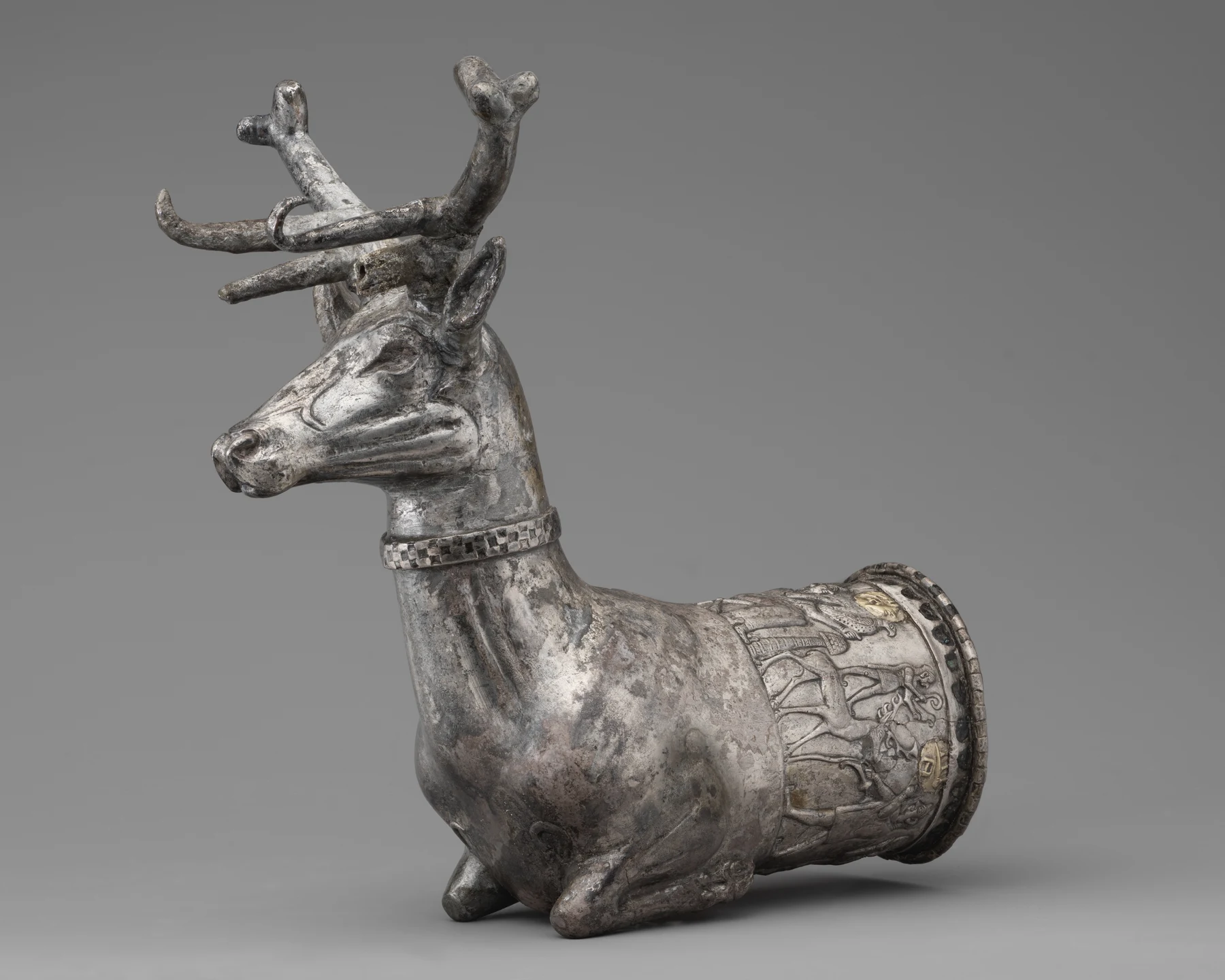
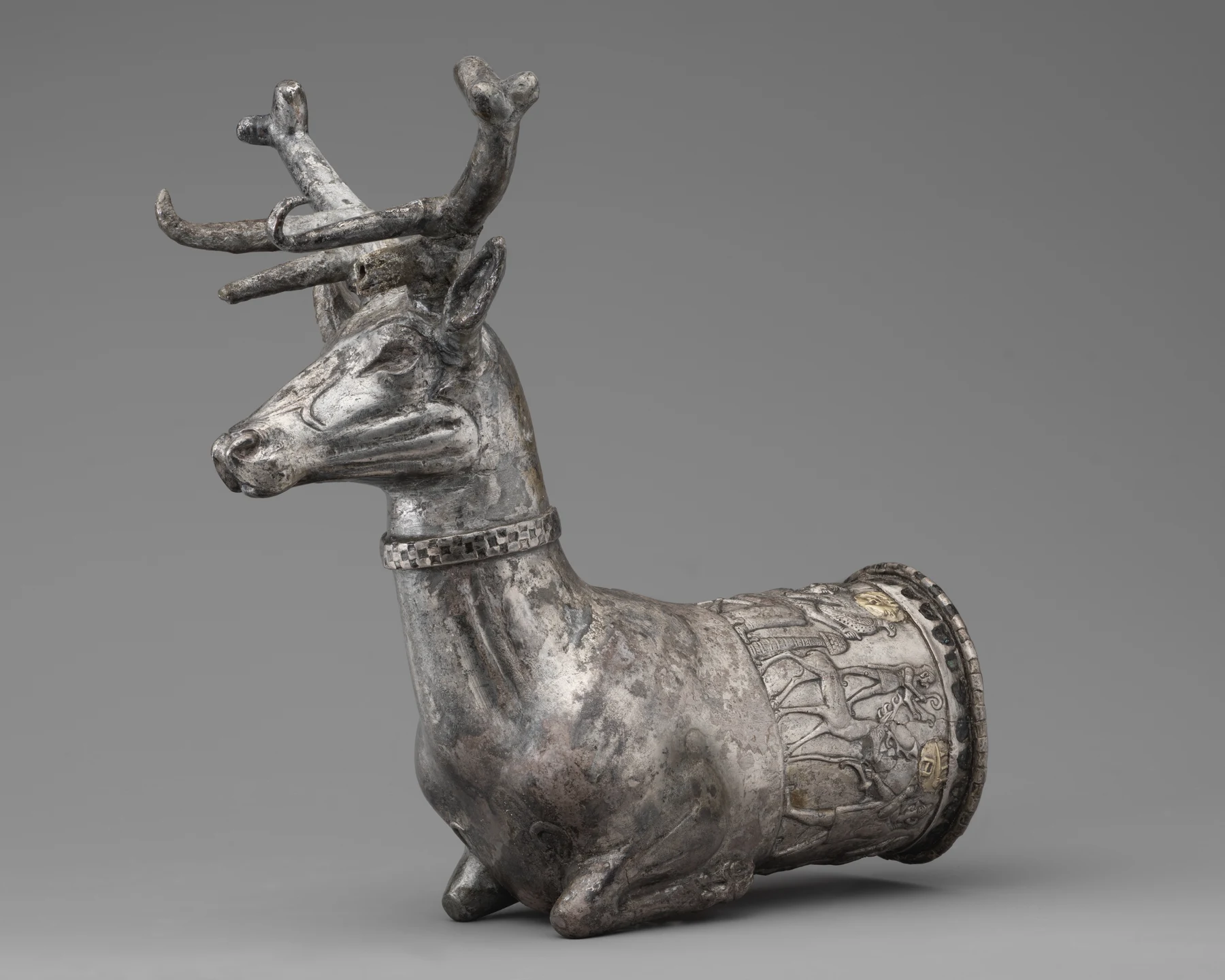
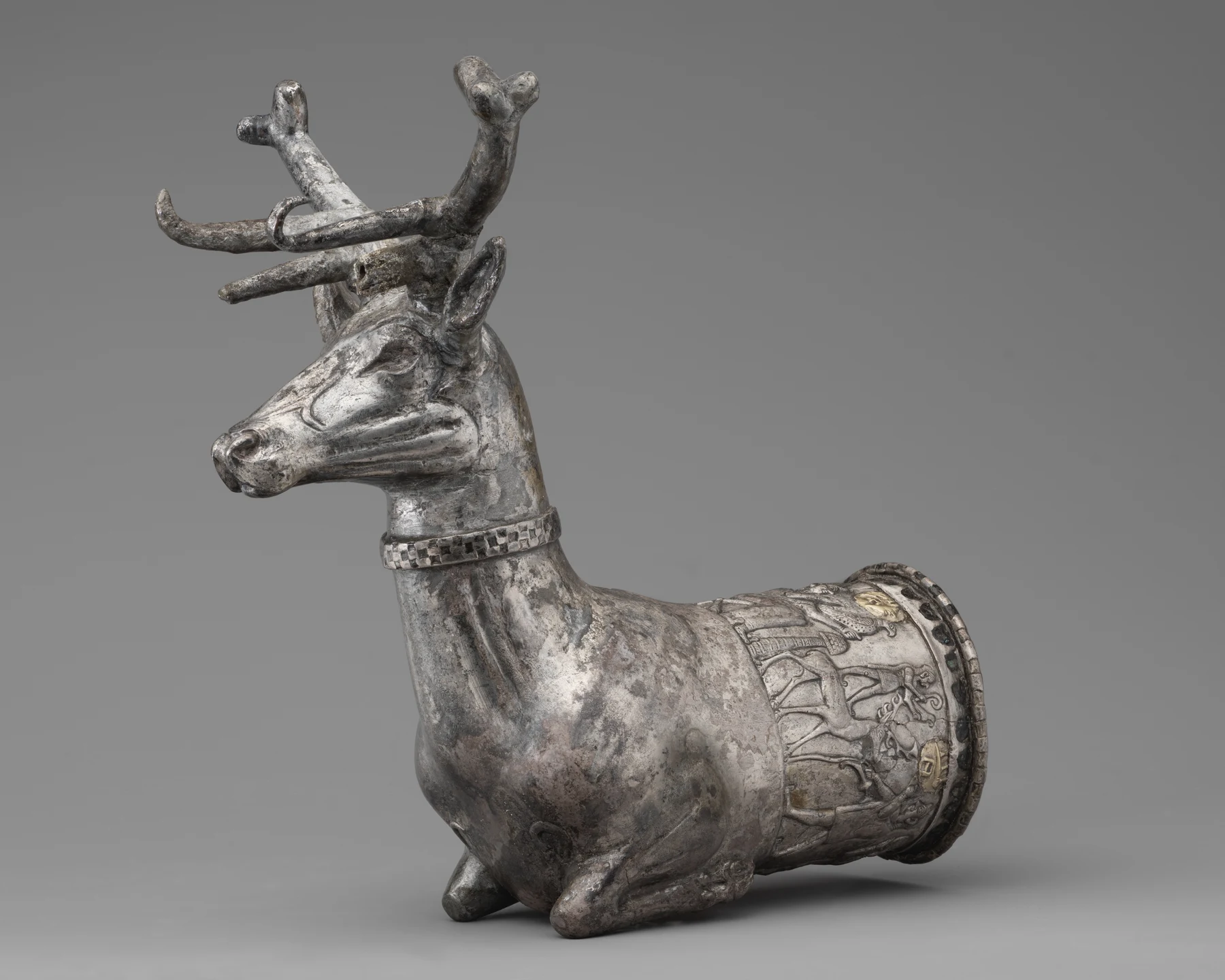
The photograph depicts a Hittite silver drinking vessel ending in a stag's forepart, made in central AnatoliaAnatoliaAnatolia is the region occupying the Asian part of present-day TurkeyGlossary · Click to read the explanation around the fourteenth to thirteenth centuries BCE. A narrow frieze shows a religious scene, some of whose interpretation the museum itself leaves open. The Metropolitan Museum of Art catalogues it as accession 1989.281.10. This is useful comparative ritual material culture, not evidence that the vessel contained blood, was employed in a Hebrew kippēr rite, or was excavated at an Israelite site. It contextualizes a neighbouring world rather than picturing the Hebrew verb. [10]
Translation and later reception
Conventional equivalents such as “atonement,” “expiation,” and their counterparts in other languages stress reconciliation or the removal of a fault, but they do not always preserve the difference between treatment of sacred space and action on a person's behalf. Later Jewish and Christian responses to the disappearance of Temple sacrifices also developed different accounts of forgiveness. Marc Zvi BrettlerMarc Zvi BrettlerHebrew Bible scholar and professor emeritus at Duke, studying biblical texts historically and literarily.Glossary · Click to read the explanation and Amy-Jill LevineAmy-Jill LevineNew Testament and Jewish studies scholar at Hartford International University, studying Jewish contexts of early Christianity.Glossary · Click to read the explanation discuss several of these developments in a joint essay: the later history must not be read back into the exact wording of Leviticus. [18]
Conclusion
When reading kippēr, ask who performs the act, for whom or upon what, with which ritual elements, and with what result as specified in the passage. Sanctuary cleansing, forgiveness for an individual, purification following bodily states, and the means-tested flour substitute then become intelligible as related yet non-identical functions. None of them amounts to declaring a person an unbeliever. [2][3][8]
References and notes (15)
- Leviticus, ch. 4, Hebrew text with facing English translation, Mechon-Mamre; classes of offerers, blood placement, and forgiveness formulas. Lev 4:2–7, 13–20, 22–35 Return to the text ↑
- Leviticus, ch. 16, Hebrew text and facing English translation, Mechon-Mamre; distinction between blood rites and the living goat. Lev 16:2, 6–22, 29–34 Return to the text ↑
- Leviticus, ch. 5 in Hebrew numbering, Mechon-Mamre; flour substitute, reparation, additional fifth, and chapter divisions. Lev 5:1–13, 15–26 (Hebrew); Heb 5:20–26 = Eng 6:1–7 Return to the text ↑
- The Metropolitan Museum of Art, “Vessel terminating in the forepart of a stag,” Hittite, accession 1989.281.10; object description, image, and Public Domain status. Collection no. 327399; ca. 14th–13th centuries BCE, central Anatolia Return to the text ↑
- Leviticus 17, Hebrew and facing English, Mechon-Mamre; the blood–life rationale. Lev 17:10–14, especially 17:11 Return to the text ↑
- Leviticus 12, Hebrew text and facing English, Mechon-Mamre; purity after childbirth. Lev 12:2–8, especially 12:6–8 Return to the text ↑
- Leviticus 14, Hebrew text and facing English, Mechon-Mamre; blood, oil, and restoration to ritual purity. Lev 14:10–20, 21–32 Return to the text ↑
- Exodus 29, Hebrew text and facing English, Mechon-Mamre; atonement for the altar during its consecration. Exod 29:35–37; context 29:10–14 Return to the text ↑
- Yitzhaq Feder, “Expiating with Blood,” TheTorah.com (2015; updated 2026), scholarly essay on blood and metaphor. Consulted article sections on ritual action, kipper, and comparative reasoning; not Feder’s complete monograph Return to the text ↑
- James W. Watts, “Leviticus’ Rhetorical Presentation of the Sin and Guilt Offerings,” TheTorah.com (2019; updated 2026). Sections on structure, ritual language, forgiveness formulas, and pertinent endnotes Return to the text ↑
- Baruch J. Schwartz, “Yom Ha-kippurim: The Biblical Significance,” TheTorah.com (2015). Sections on sanctuary decontamination, confession, fasting, and cessation of labour Return to the text ↑
- Marc Zvi Brettler and Amy-Jill Levine, “Is Atonement Possible Without Blood? A Jewish-Christian Divide,” TheTorah.com (2021; updated 2026). Sections on blood in the Hebrew Bible and later Jewish and Christian responses Return to the text ↑
- Joseph Lam, “On the Etymology of Biblical Hebrew ḥaṭṭāʾt: A Contribution to the ‘Sin Offering’ vs. ‘Purification Offering’ Debate,” Journal of Semitic Studies 65/2 (2020), 325–346; publisher abstract only. Abstract only; full pages 325–346 not accessed Return to the text ↑
- Yitzhaq Feder, Blood Expiation in Hittite and Biblical Ritual: Origins, Context, and Meaning, SBL Press (2011); publisher synopsis only. Publisher catalogue description; no book chapters accessed Return to the text ↑
- Published review of James A. Greenberg, A New Look at Atonement in Leviticus: The Meaning and Purpose of Kipper Revisited (Eisenbrauns, 2019), Denver Journal (2023); review only. Reviewer’s discussion of the balance model and objections to purgation; no direct reading of the book Return to the text ↑
Suggest a correction · Suggest a source for this record
Cite this record
IL Archive, «Ritual Atonement: The Verb Kipper in Leviticus», https://ilarchive.com/en/entities/ritual-atonement-kipper
Continue reading