Ancient text
Leviticus
A text for line-by-line reading, with transliteration, translation, and resources.
Leviticus brings together offerings, priestly duties, purity and obligations to others. It describes two distinct roles for the goats on the Day of Atonement, and Hebrew scrolls preserve different parts of the book.
Estimated reading time: 3 min Published Last reviewed:
Share article
Text
Introduction
Leviticus is the third book of the Torah. Its HebrewHebrewA Northwest Semitic language of the Canaanite group, encompassing Iron Age epigraphy, Biblical, Rabbinic, medieval and Modern Hebrew; its scripts and pronunciations changed over time.Glossary · Click to read the explanation name, Vayikra, comes from the opening verb, meaning “and he called.” In the book’s account, God calls to MosesMosesCentral figure in Exodus, Torah traditions and the Qur’an; childhood accounts differ in detail.Glossary · Click to read the explanation from the Tent of Meeting. It sets out the offerings and duties of the priests, distinguishes ritualRitualAn organised or distinguished practice meaningful to a community; it may leave traces, but its form alone does not reveal an associated doctrine.Glossary · Click to read the explanation states, and gives instructions for the Day of AtonementYom Kippur — Day of AtonementJewish observance on 10 Tishrei; Leviticus 16’s sanctuary purification and two-goat rite are distinct from later Mishnaic accounts and from fasting, prayer and repentance.Glossary · Click to read the explanation. Later chapters connect holiness to worship, harvest, judgment and the treatment of other people. [1][2][5]
Offerings, priests and ritual purity
Chapters 1–7 describe different offerings, including burnt offerings and grain offerings. They set out what the worshipper brings and what the priest does with it. Chapters 8–10 recount the installation of Aaron and his sons and the beginning of their service. Leviticus 10:10–11 gives the priests the task of distinguishing the holy from the common and the ritually clean from the unclean, and of teaching the laws to Israel. [1][2]
Chapters 11–15 explain which animals may be eaten and how particular circumstances affect ritual purity. In Leviticus 11:24–25, touching the carcass of certain animals makes a person ritually unclean until evening. The person who carries it also washes their clothes. In the priestly system, impurity can be a temporary ritual condition that arises through ordinary physical contact. [1][2]
The two goats on the Day of Atonement
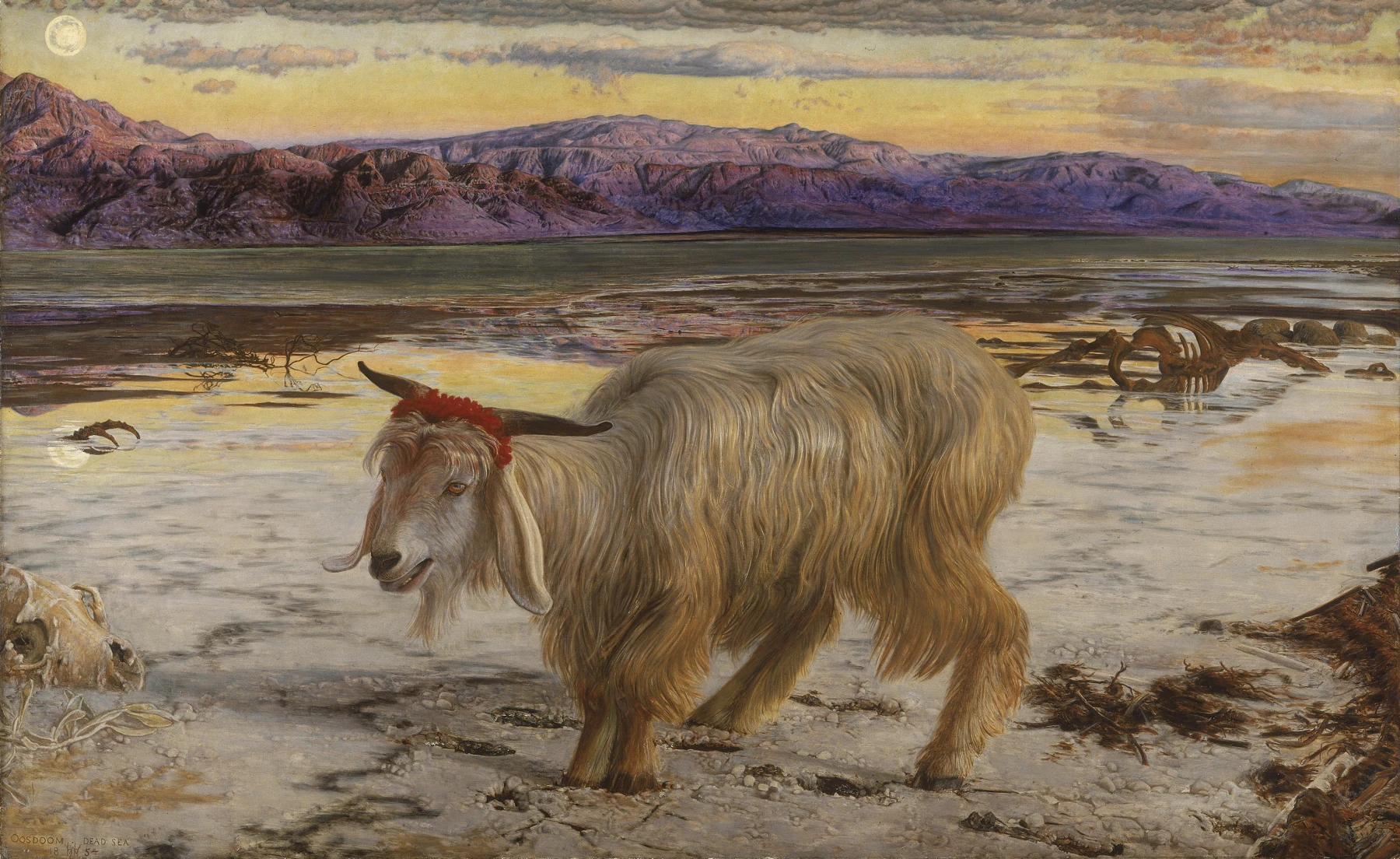
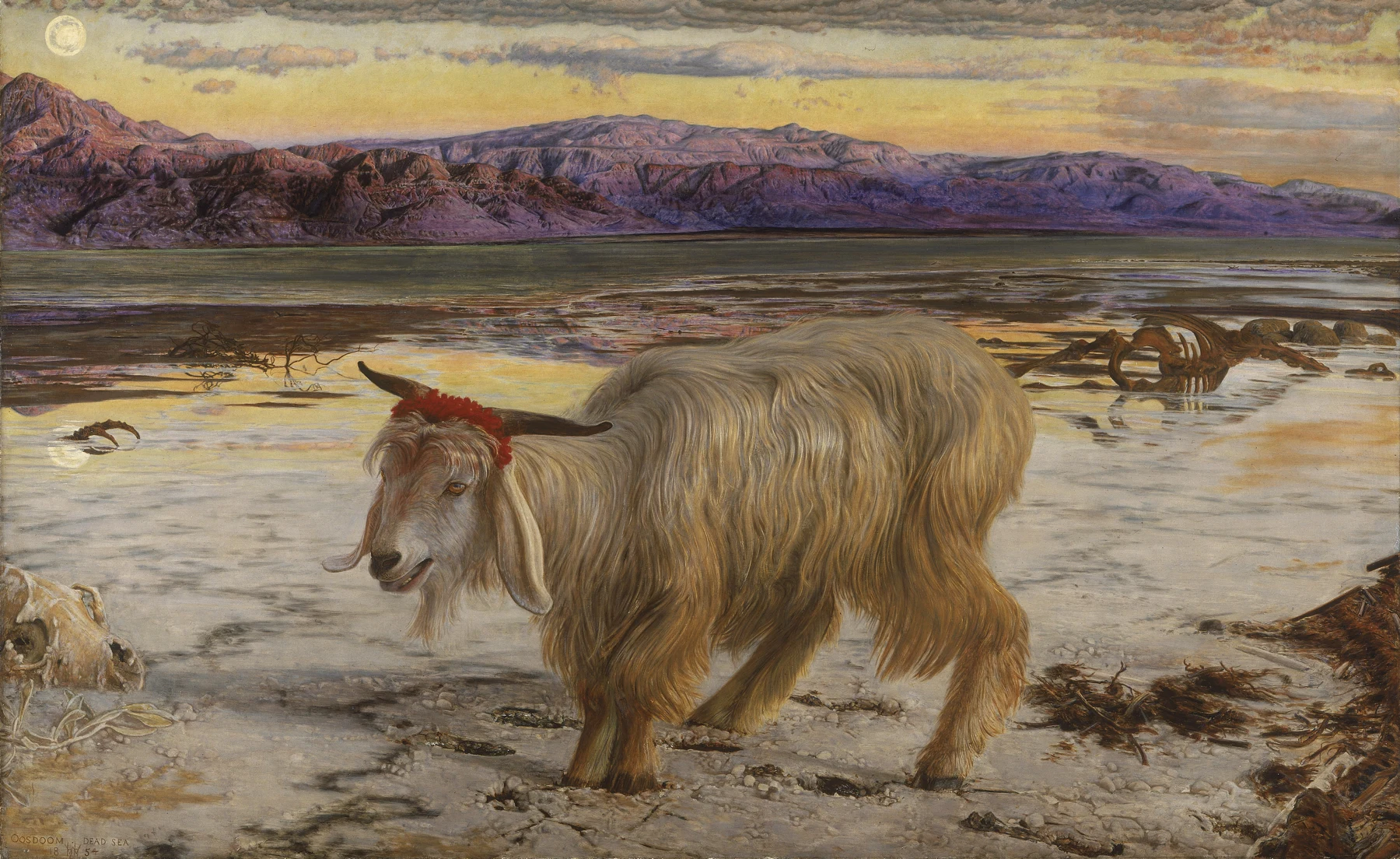
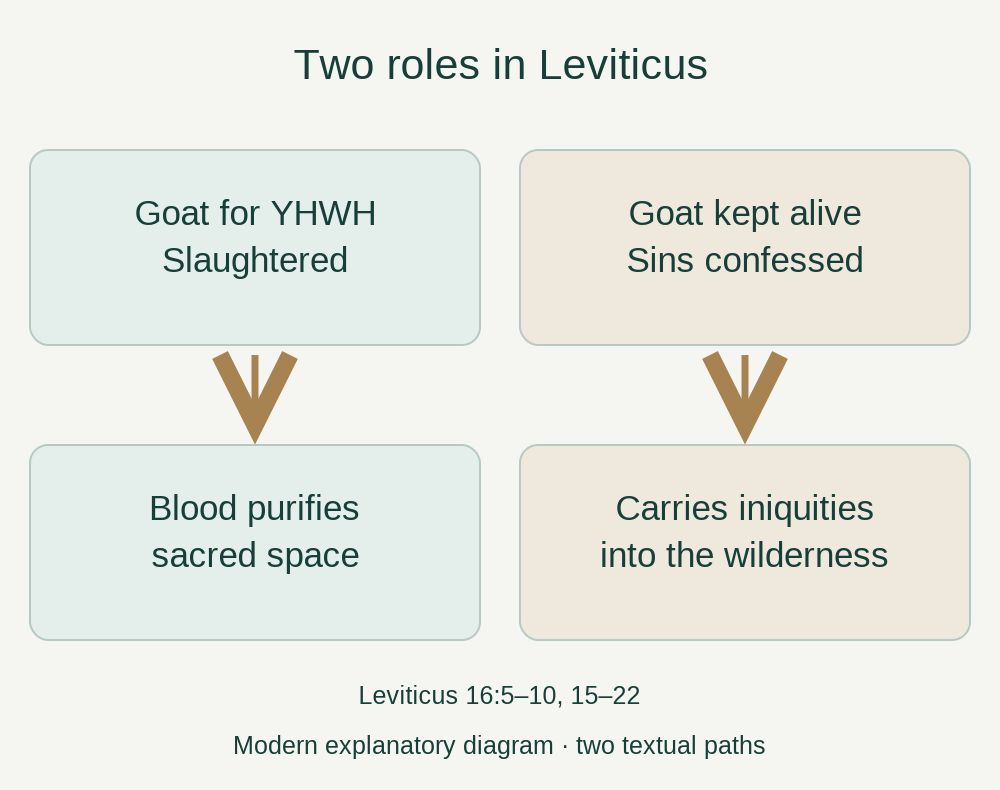
Leviticus 16 describes rites for the sanctuary, the priests and the community. According to the text, lots are cast so that one goat is assigned to the LORD and the other to Azazel. Blood from the first goat is used in the purification of the sanctuary. In the account, Aaron confesses the people’s wrongs over the living goat. It is then sent into the wilderness, where the text describes it as carrying those wrongs away. [2][3]
The same chapter sets the observance on the tenth day of the seventh month, calls for rest from work and describes atonement as an annual observance (Leviticus 16:29–34). The date returns in the calendar of appointed occasions in Leviticus 23:26–32. In the cycle of public Torah readings listed by Mechon-Mamre, Leviticus 16 is the morning Torah reading on Yom KippurYom Kippur — Day of AtonementJewish observance on 10 Tishrei; Leviticus 16’s sanctuary purification and two-goat rite are distinct from later Mishnaic accounts and from fasting, prayer and repentance.Glossary · Click to read the explanation. [1][3][4]
Holiness in the fields and the community
Chapters 17–26 are commonly called the Holiness Code. Chapter 19 addresses the whole community. Leviticus 19:9–10 directs farmers to leave the edges of fields and fallen fruit for poor people and resident foreigners. The same chapter requires impartial judgment and links care for foreign residents to the memory of being foreigners in Egypt (19:15 and 33–34). [1][2][5]
Two surviving Hebrew witnesses
The Leviticus scroll 11Q1 from QumranQumranArchaeological site northwest of the Dead Sea near manuscript caves; its settlement and the groups who deposited the scrolls are studied together but not assumed identical. It is not synonymous with all Dead Sea Scrolls.Glossary · Click to read the explanation is written in paleo-Hebrew script; the Library of Congress dates the copy to the late second or early first century BCE. The long fragment described by the Library of Congress preserves parts of the final six chapters, including verses on the Day of Atonement in chapter 23. At En-Gedi, excavators found charred manuscripts in a synagogue in 1970. Researchers reconstructed text from one roll using three-dimensional X-ray scans without unrolling it physically. The readable sections preserve Leviticus 1:1–9 and 2:1–11. Michael Segal and his colleagues report that the preserved consonants agree with the corresponding passages of the medieval Leningrad manuscript. [6][7][8][9]
Quick answers
What does Leviticus cover? It describes offerings, priestly duties, ritual purity and laws for worship and community life. [1][2]
Where are the two goats described? Leviticus 16:7–22 gives them different roles. One serves in the purification of the sanctuary, and the living goat carries the people’s wrongs into the wilderness. [3]
What did researchers read on the En-Gedi scroll? They recovered readable portions of Leviticus 1:1–9 and 2:1–11 from a charred manuscript. [8][9]
References and notes
- Mechon-Mamre, “Leviticus,” Hebrew–English Bible Opening verse and Leviticus 1–2, 8–10, 10:10–11, 11:24–25, 19:1–2, 9–10, 15 and 33–34, and 23:26–32. Hebrew text and English translation. Return to the text ↑
- Christine Hayes, “The Priestly Legacy: Cult and Sacrifice, Purity and Holiness in Leviticus and Numbers,” Open Yale Courses, RLST 145, lecture 9 Transcript, chapters 1, 3, 5 and 6. Structure, priestly service, ritual impurity and atonement, and the Holiness Code. Return to the text ↑
- Mechon-Mamre, “Leviticus Chapter 16,” Hebrew Bible in English Leviticus 16:5–22 and 29–34. The lots, the purification of sacred space, the confession over the living goat, and the date and annual observance. Return to the text ↑
- Mechon-Mamre, “Regular Public Torah Readings” Table of Special Parashiyot, “Yom Kippur, Morning.” The Torah reading is Leviticus 16:1–34. Return to the text ↑
- Mechon-Mamre, “Leviticus Chapter 19,” Hebrew Bible in English Leviticus 19:1–2, 9–10, 15 and 33–34. Address to the community, harvest provisions, judging impartially and treatment of resident foreigners. Return to the text ↑
- Library of Congress, Scrolls from the Dead Sea, “The Leviticus Scroll” Exhibition object 11Q1 (PaleoLev). Cave 11, paleo-Hebrew script and parts of chapters 22–27 in the long fragment. Return to the text ↑
- Library of Congress, Scrolls from the Dead Sea, “Translation of The Leviticus Scroll” Leviticus 23:22–29, lines 1–9 with restorations marked. Rest and the Day of Atonement in the annual calendar. Return to the text ↑
- W. Brent Seales, Clifford Seth Parker, Michael Segal, Emanuel Tov, Pnina Shor and Yosef Porath, “From damage to discovery via virtual unwrapping: Reading the scroll from En-Gedi,” Science Advances 2, no. 9 (2016), e1601247 Introduction and sections on virtual unwrapping. Excavation of the synagogue in 1970, carbonized parchment and reconstruction from micro-CT scans; the verse numbers come from note 9. Return to the text ↑
- Michael Segal, Emanuel Tov, William Brent Seales, Clifford Seth Parker, Pnina Shor and Yosef Porath, “An Early Leviticus Scroll from En-Gedi: Preliminary Publication,” Textus 26 (2016), 29–58 Transcription of columns I and II, Leviticus 1:1–9 and 2:1–11. Comparative discussion of the preserved consonants and the Leningrad manuscript B 19A. Return to the text ↑
Archive records may be reviewed and refined as better evidence or sources become available. Suggest a correction
Suggest a correction · Suggest a source for this record
Cite this record
IL Archive, «Leviticus», https://ilarchive.com/en/texts/leviticus-biblical-book
Continue reading