Site
Byblos / Jbeil
Byblos, today’s Jbeil, grew on the Lebanese coast north of Beirut. Bronze Age tombs reveal ties to Egypt, while royal Phoenician inscriptions and a Roman-period account of Adonis preserve different chapters of the port city’s history.
Estimated reading time: 3 min Published Last reviewed:
Share article
Text
Introduction
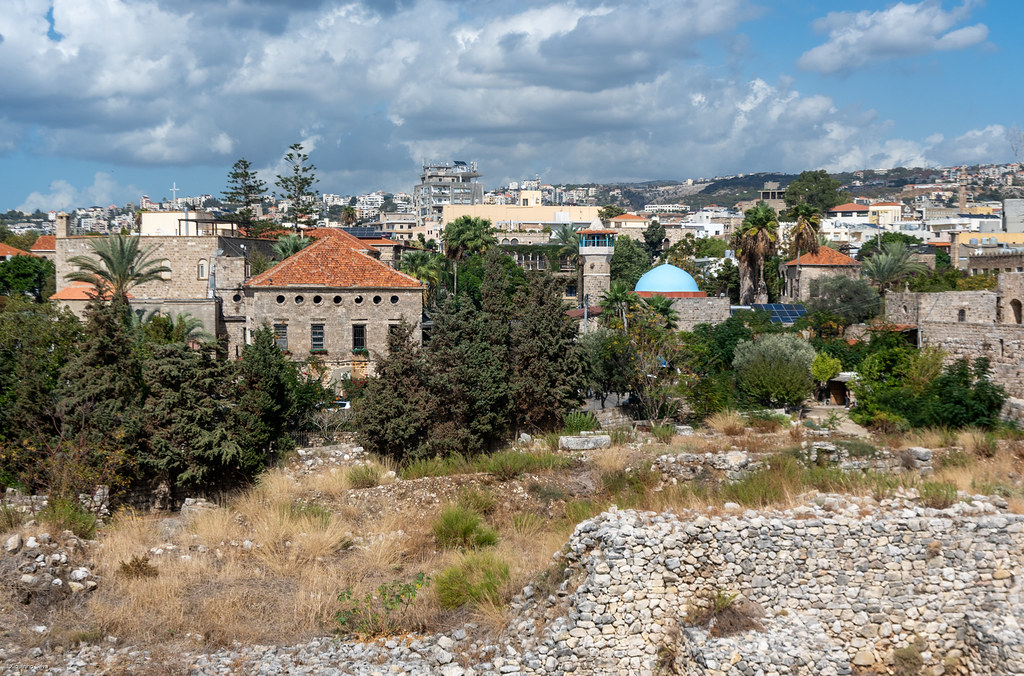
Byblos stands on the Lebanese coast, about 40 kilometres north of Beirut. Today the city is known as Jbeil. Its archaeological site preserves remains from Neolithic settlement through Bronze Age temples, Roman streets and medieval fortifications. Royal inscriptions and a later account of the rites of AdonisAdonis: death and return in differing narrativesA Greek mythic figure associated with Aphrodite, lament, and the Adonia; ancient sources diverge on his birth, death, divided residence, and ritual return.Glossary · Click to read the explanation give written evidence from different periods of the city’s history. [1][4][5]
Cedar and the tombs at the gate
Byblos traded cedar with Egypt. Tania Zaven, director of the archaeological site, explains that cedar timber was used in Egypt for vessels, roofs, furniture and coffins. The excavation near the fortified gate on the acropolis adds a physical detail to that connection. In Hypogeum V the archaeologists found a glazed steatite scarab bearing the throne name of Amenemhat III in a cartouche. The excavators date the material from the tombs to about 2000–1750 BCE, the early part of the Middle Bronze Age. [2]
The entrance to the cemetery lay in the open area leading to the gate, where shafts had been cut down into the rock. Several underground tombs have more than one chamber. The Louvre’s interview with the excavators describes burials of men, women and children and the remains of meals and food offerings. In some tombs the bones were later gathered into cedar chests. The scarab, the vessels and the chests give evidence of trade and of how the dead were buried and commemorated. [2]
Royal inscriptions in Phoenician
The sarcophagus of Ahiram was discovered in 1923 and is kept at the National Museum of Beirut. The Phoenician text, KAI 1, begins on the upper edge of a short side and continues on the edge of the lid. The Ohio State University corpus places the inscription in the early tenth century BCE on the evidence of its letter forms. Its entry also discusses a proposed earlier date for the stone coffin itself. The carved letters and the object that carries them can have different dates. [3]
The limestone stele of Yehawmilk, Louvre AO 22368, comes from a later period. The Louvre dates it to about 450 BCE. The relief shows the king in Persian dress making an offering to the seated Lady of Byblos, who wears an Egyptian-style headdress. The Phoenician inscription is a royal dedication. Together the carving and the text show how a ruler of Achaemenid-period Byblos presented his relationship with the city’s goddess. [4]
Adonis in a Roman-period account
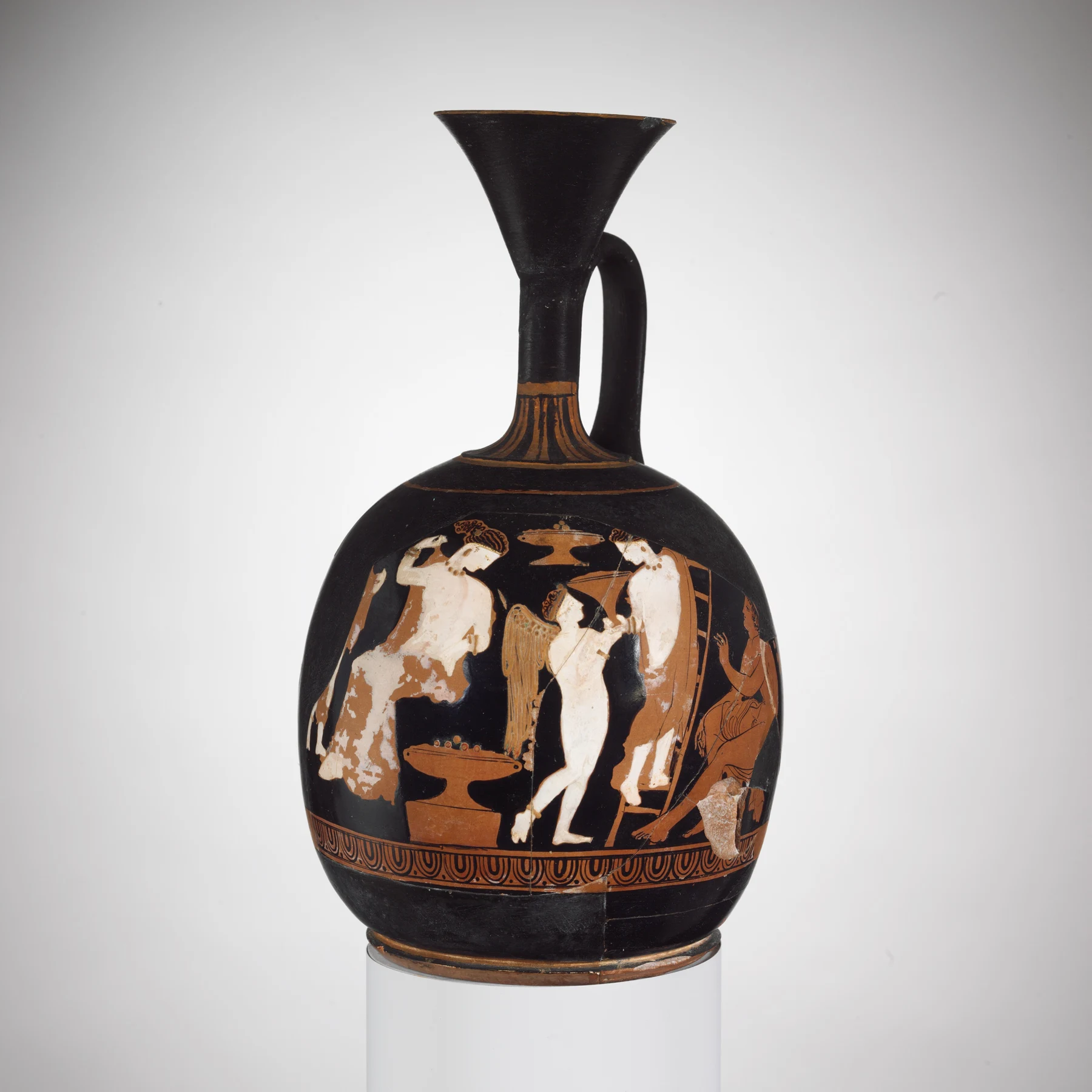
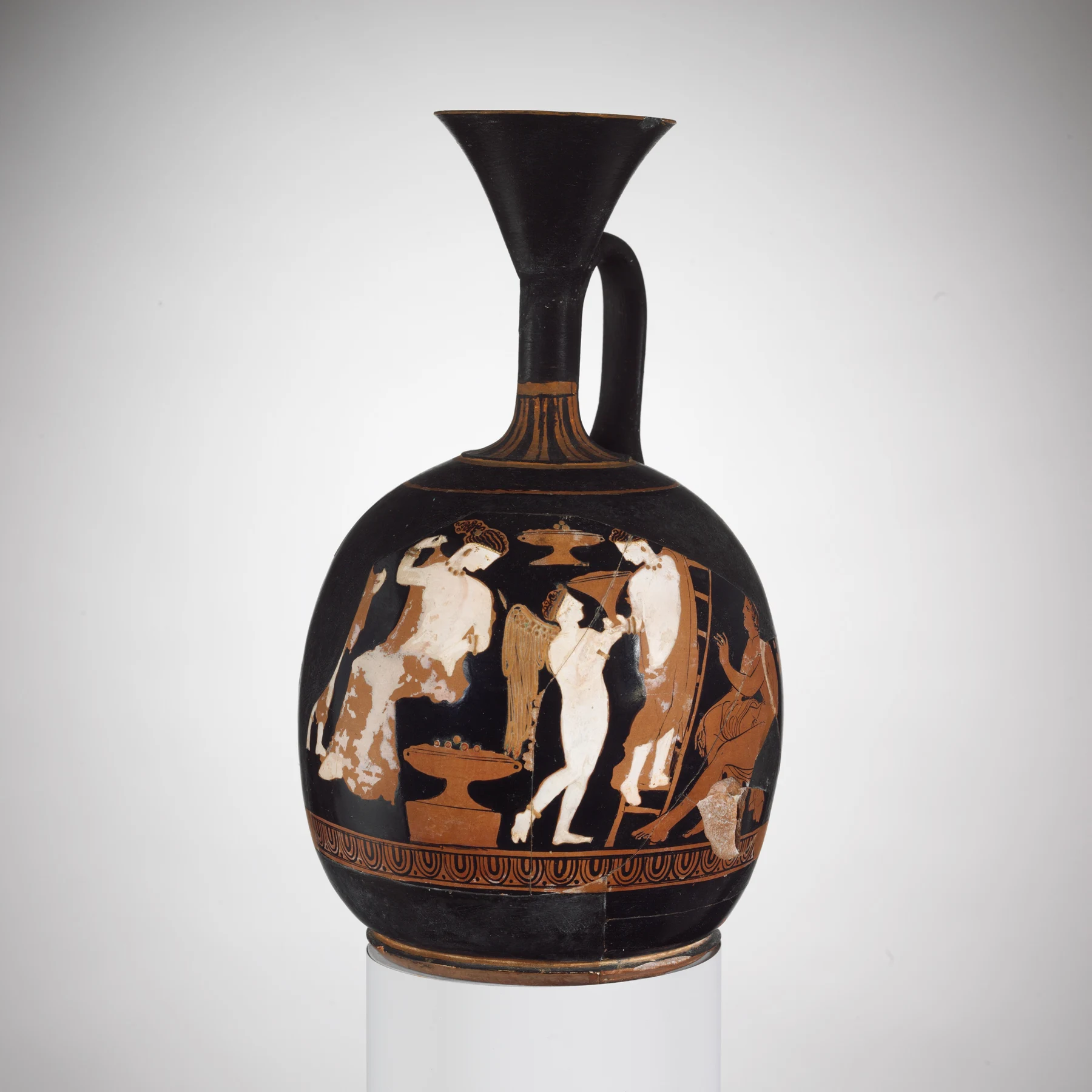
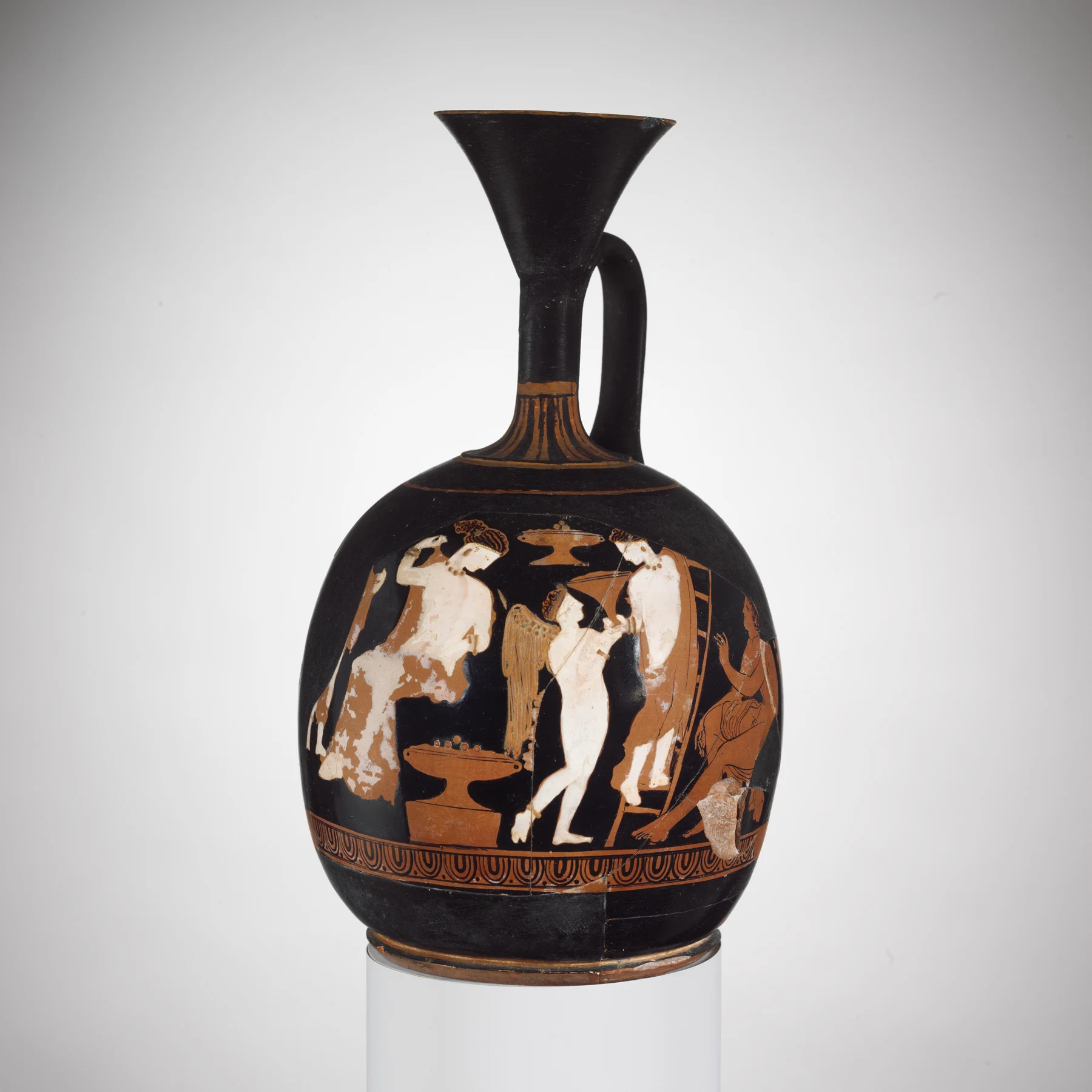
On the Syrian Goddess, attributed to Lucian, describes annual mourning for AdonisAdonis: death and return in differing narrativesA Greek mythic figure associated with Aphrodite, lament, and the Adonia; ancient sources diverge on his birth, death, divided residence, and ritual return.Glossary · Click to read the explanation at Byblos and a rite that proclaimed him alive again. In the same account, some inhabitants connect the rites with OsirisOsirisOsiris was an ancient Egyptian deity associated with the dead, life after death, renewal, and kingship. His roles appear in changing funerary texts, rituals, and judgment scenes, notably the weighing of the heart.Glossary · Click to read the explanation. The narrator also gives two explanations for the colour of a nearby river, one from the story of the wounded Adonis and one that attributes the red colour to soil washed into the water. The account preserves different explanations heard in Roman times. The Bronze Age burials and Phoenician dedications document earlier settings. [5][2][3][4]
Quick answers
Where is Byblos? Byblos, now called Jbeil, lies about 40 kilometres north of Beirut on the Mediterranean coast. [1]
Why is the sarcophagus of Ahiram important? It carries an early royal inscription in the Phoenician alphabet. The letter forms and the stone coffin provide different kinds of dating evidence. [3]
Which ancient text describes the festival of Adonis at Byblos? On the Syrian Goddess, attributed to Lucian, describes mourning for Adonis and the proclamation that he was alive again. [5]
References and notes
- UNESCO World Heritage Centre, “Byblos,” World Heritage List 295 Brief synthesis and integrity. Sandstone promontory, location north of Beirut, Neolithic occupation, ancient buildings and the medieval town. Return to the text ↑
- Musée du Louvre, “Fouilles d’une nécropole de l’âge du bronze à Byblos,” interview with Tania Zaven and Julien Chanteau Passages on the gate and cemetery, Hypogeum V and the scarab of Amenemhat III, Middle Bronze I dating, cedar trade and burial practices. Return to the text ↑
- Digital Epigraphy and Archaeology Project for the Ancient Semitic World, Ohio State University, “KAI 001” Paleographic date and General Notes. Discovery in 1923, placement of the text, dating of the inscription and coffin, and present location. Return to the text ↑
- Musée du Louvre, “Stèle de Yehawmilk,” AO 22368, KAI 10 Description and Places and dates. Limestone stele, royal Phoenician dedication, offering to the Lady of Byblos and date around 450 BCE. Return to the text ↑
- On the Syrian Goddess, attributed to Lucian, translated by Herbert A. Strong, edited by John Garstang (1913) Sections 6–8, pp. 45–48. Mourning for Adonis, proclamation and image, report about Osiris, and two explanations of the river’s colour. Return to the text ↑
Suggest a correction · Suggest a source for this record
Cite this record
IL Archive, «Byblos / Jbeil», https://ilarchive.com/en/sites/byblos-jbeil
Continue reading
Related readings