Study
Dumuzi and Adonis: Death, Return, and the Limits of the Resurrection Model
An extended study of a topic, with evidence and references.
From Dumuzi’s dream and half-year settlement to Adonia at Athens, Alexandria and Byblos: distinguishing lamentation, alternation and return, with resurrection comparisons and Islamic-period continuity.
Share article
Text
Why does the “dying and rising god” need scrutiny?
A young god dies, women mourn him, plants wither, and a date returns each year. These elements can appear to form one story that traveled from Sumer to the LevantThe LevantThe Levant is a regional name for lands along the eastern MediterraneanGlossary · Click to read the explanation and later religions. Arranging them in a modern sentence does not establish that every ancient source combined them in that order.
James Frazer proposed a broad model bringing different gods into the death and renewal of vegetation. This was a scholar’s comparative construction, not a doctrine preserved in one text among all the peoples compared. The historical excerpt illustrates his model; it does not authorize treating every detail as the conclusion of current research. [4]
Jonathan Z. Smith challenged the combination of death, disappearance, and alternation in one category. Tryggve Mettinger, by contrast, defended the category in particular cases and considered AdonisAdonis: death and return in differing narrativesFigure associated with Aphrodite, mourning and celebration; divided residence, death and return differ between sources.Glossary · Click to read the explanation’s return probable. [5][6]
We cannot settle the dispute by defining every return as resurrectionResurrection of the deadThe dead returning to life, distinguished from soul immortality, with differing scope and form among texts.Glossary · Click to read the explanation or excluding it beforehand. The practical questions are who died, what returned, which text says so, and when and where.
Dumuzi: a dream ending in loss
In Dumuzid’s Dream, the dream precedes pursuit. His sister warns him and tries to protect him; betrayal of his hiding place leads to capture. Utu enables temporary escapes, but the ending describes his death and the destruction of the sheepfold, without subsequently narrating his resurrection. [1]
These details connect Dumuzi with herding, kinship, and the fear of loss. Describing him as a vegetation god who dies every winter and rises every spring adds a calendar and interpretation that this narrative alone does not supply.
Escape from pursuers must also be distinguished from return after death. Someone who escapes an opponent before being killed has not thereby risen from the dead. Combining this text’s ending with another composition’s conclusion must be identified as comparative work, not the ending of a single manuscript.
The translation used is a composite text displaying gaps and alternative readings. It is not a continuous record of everything said about Dumuzi in every period.
Half a year: return requiring a replacement
The ending of InannaInanna / IshtarProminent Mesopotamian goddess with a major centre at Uruk, whose parentage and cult traditions vary rather than forming one fixed genealogy.Glossary · Click to read the explanation’s Descent to the Netherworld divides residence between Dumuzi and his sister: half a year for each. The settlement belongs to a world that does not permit return without a substitute. [2]
This is a significant return and should not be concealed because it fails to fit an interpretation. Its structure, however, involves alternation and replacement rather than abolishing death’s power over everyone.
A researcher can ask whether the settlement concerns renewed life, ritualRitualAn organised or distinguished practice meaningful to a community; it may leave traces, but its form alone does not reveal an associated doctrine.Glossary · Click to read the explanation time, or a balance between underworld figures. Claiming that it alone establishes a doctrine of general human resurrection requires further evidence.
The half-year arrangement does not concern Inanna herself. Nor does this passage say that she originally descended to rescue a lover who had died before her. Reversing the sequence turns a story of substitution into a different rescue story.
Tammuz in Ezekiel and in interpretation of Assyrian ritual
Ezekiel sees women weeping for Tammuz at the northern entrance to YHWHYahwehThe divine proper name written YHWH in the Hebrew Bible.Glossary · Click to read the explanation’s house, within a critical vision of worship he rejects. Verses 8:14–15 do not describe a resurrection celebration, specify a forty-day fast, or survey every Israelite’s beliefs. [3]
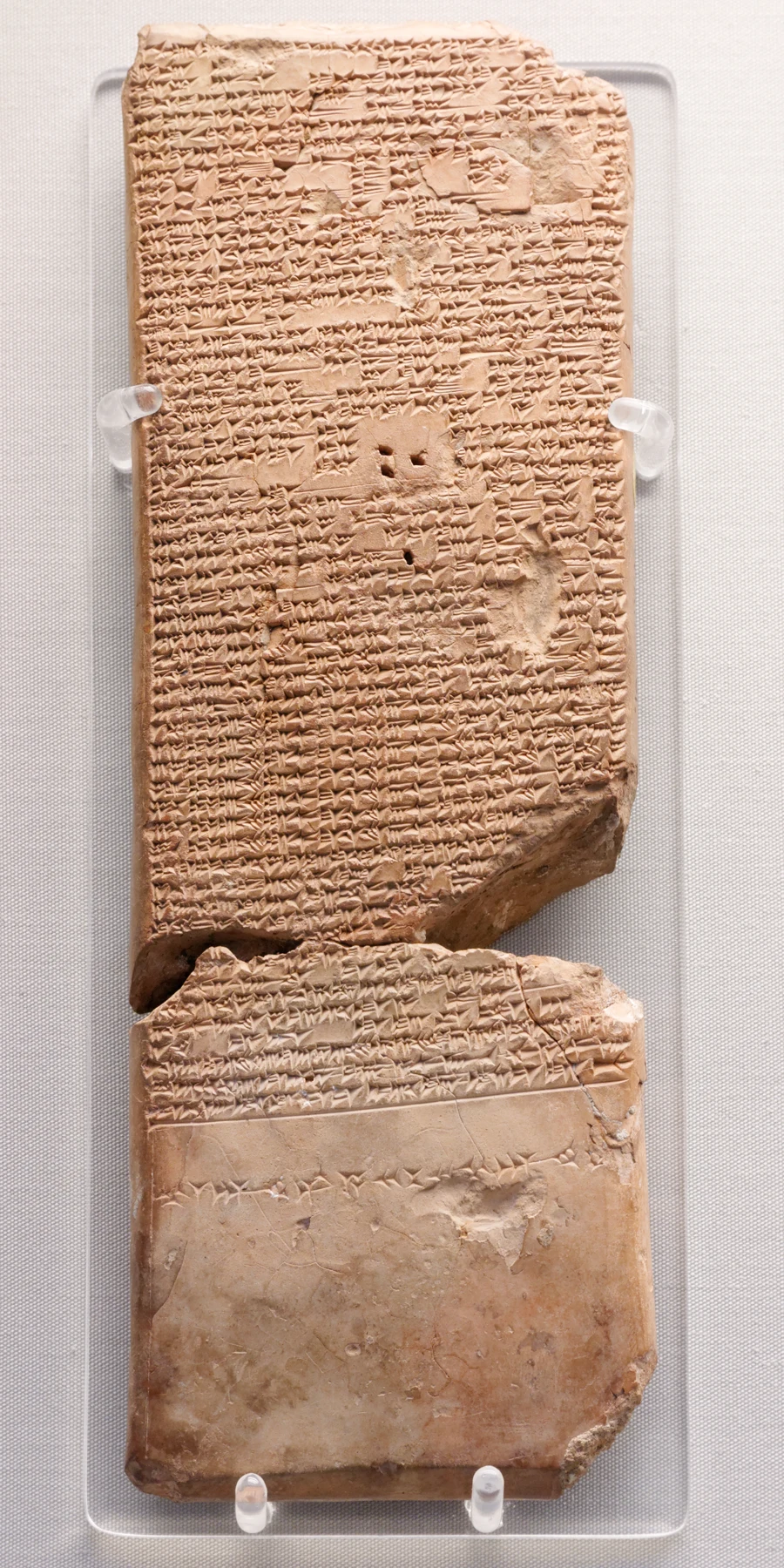
Satoko Ehara reproduces Tammuz’s ascent in SAA 3, no. 38, amid broken lines and ritual representation of his body. We have not independently examined the tablet. [11]
We therefore distinguish lamentation explicitly mentioned in a text, ritual interpretation of an ascent, and the historical reconstruction connecting them. Not every lamentation narrative establishes resurrection; a disputed reading is not a reason to delete it.
Nor should every occurrence of “Tammuz” automatically be turned into a divine person. The month name and its calendrical context also require attention.
Adonis: divided residence is not always the ending of a death story
The Library attributed to Apollodorus supplies several genealogies for Adonis. In one narrative, AphroditeAphroditeGreek goddess whose origin Hesiod relates to foam after the assault on Ouranos.Glossary · Click to read the explanation and Persephone dispute possession of the child. ZeusZeusZeus is the sky god and leading deity in many Greek traditions. In the Iliad he presides over divine gatherings while others can still speak and object.Glossary · Click to read the explanation divides the year into three portions; Adonis gives his own portion to Aphrodite, and a boar subsequently kills him while hunting. [7]
Notice the order: divided residence precedes the account of his killing, rather than explicitly resolving his death at the end of this passage. Retelling it as “he died, the goddesses divided him, and he therefore rose every year” rearranges the source.
Three portions also differ from the two halves in Dumuzi’s settlement. Residence in two worlds can be compared, but the calculation, characters, and cause do not become identical merely because an underworld goddess is present.
Similarly, a young lover and a powerful goddess do not establish that Adonis was Dumuzi in every setting. Historical connections and later identifications may exist, but their routes require more than similarity of roles.
Ovid: the flower preserves remembrance
At the end of Adonis’s narrative in Metamorphoses 10, the boar kills the young man. Venus promises annual remembrance of her grief, and an anemone grows from his blood. This ending does not narrate Adonis’s restoration to human life after death. [8]
The distinction concerns the survival of memory, transformation of matter, and return of the person. A flower can mark loss without being a body restored to its former life.
This does not establish that every form of Adonis worship lacked a notion of return. It specifies what this ending narrates. Other sources offer different language; we should neither replace it with Ovid nor import it into his text without explanation.
Variation between narratives is itself evidence. One figure can be understood differently in literature, ritual practice, and the discourse of an author describing them.
Gardens of Adonis: rapid growth needing context
In Phaedrus, PlatoPlatoGreek philosopher; the Timaeus’s maker differs from later religious conceptions of God.Glossary · Click to read the explanation compares the rapid eight-day growth of gardens of Adonis, planted for amusement, with eight months’ cultivation for a serious crop. This is an analogy in a discussion of teaching and writing, not a comprehensive ritual manual. [13]
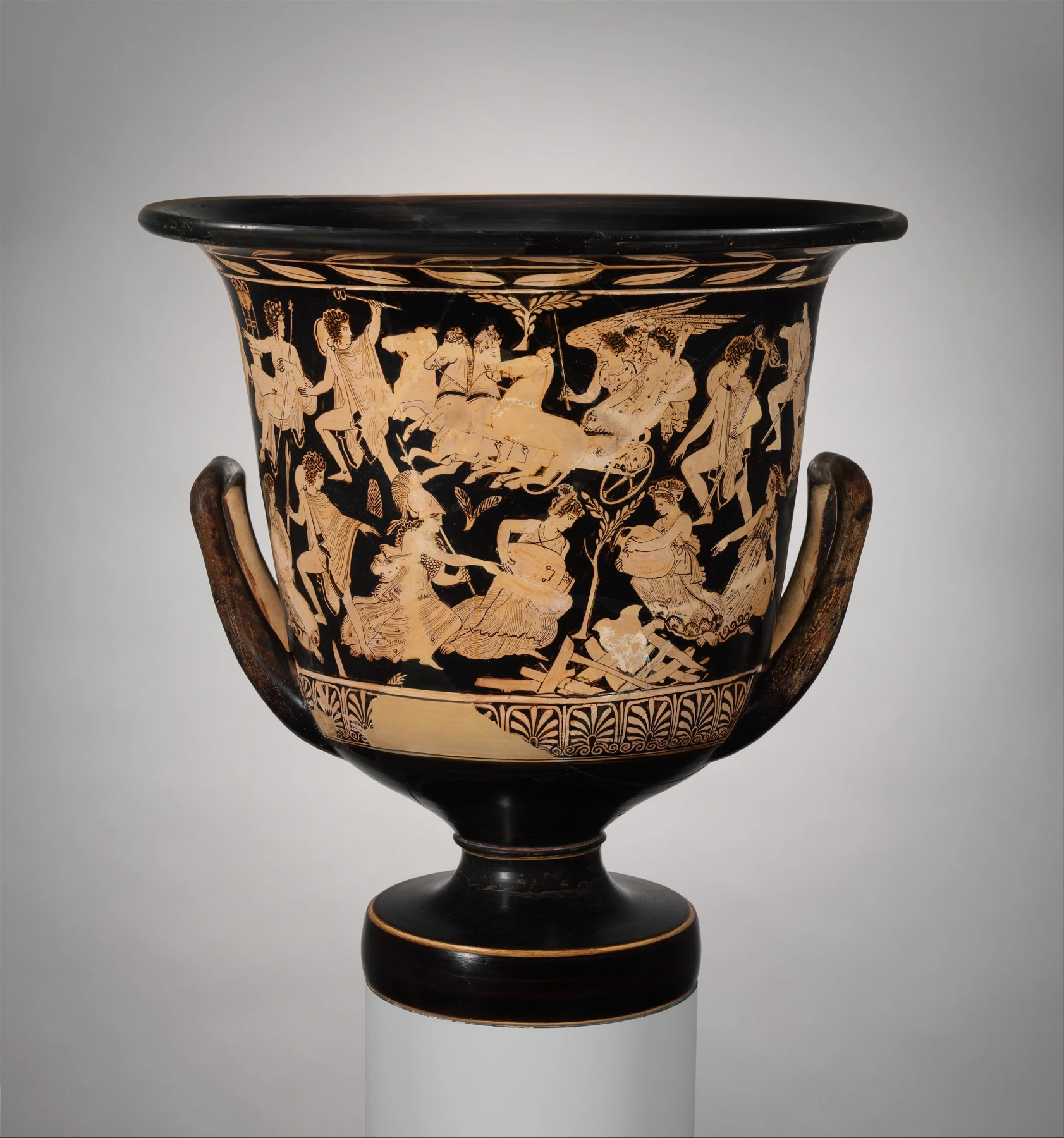
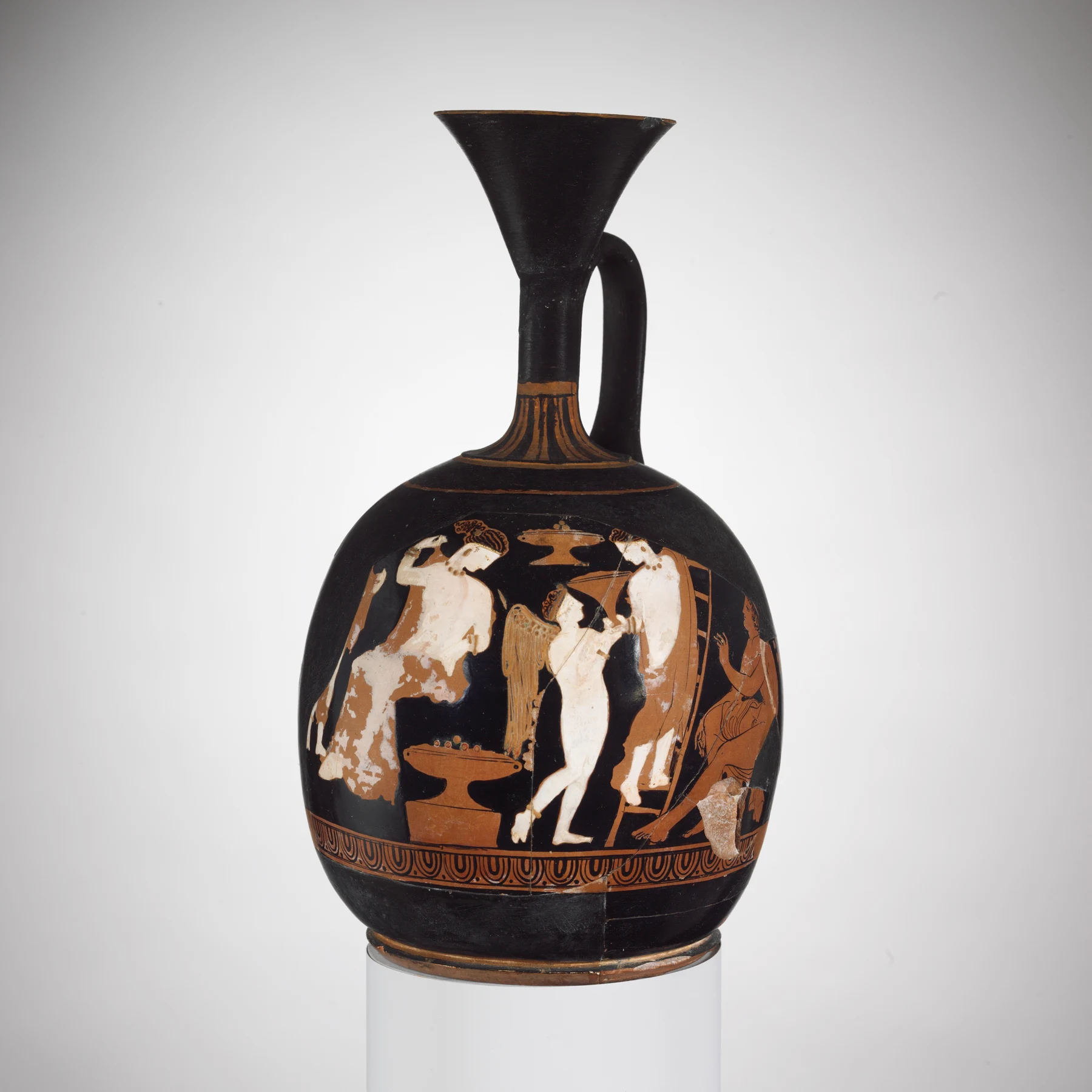
The cover shows an Attic vessel from the mid-fourth century BCE, associated by the Metropolitan Museum’s catalogue with the AdoniaAdonia: the celebration of AdonisCelebration associated with Adonis; texts and images attest practices varying by place and time, including planters, mourning and farewell.Glossary · Click to read the explanation: a woman on a ladder receives a planter from Eros. Identification of two other figures as Adonis and Aphrodite is tentative in the museum’s account. [12]
The planters and ladder provide a practice and image for investigation, but do not depict a body leaving a grave. The scene is Athenian; it is not a direct image of Sumerian Dumuzi or evidence of details of Byblian ritual centuries later.
Short life, fragility, or lost beauty are possible interpretations. They require testing within their contexts. Plants alone do not specify every rite’s meaning or every participant’s doctrine.
Alexandria: annual return before Christianity
In Theocritus’s fifteenth idyll, from the third century BCE, two women enter an Adonis celebration in Alexandria. The singer welcomes his return from Acheron in the twelfth month, mentions carrying him to the sea in the morning, and wishes for his coming the following year. [9]
This is an important early witness. All language of Adonis’s return cannot be dismissed as an invention after Christianity. Yet the scene is a poem representing a celebration, not an explanation of how every death and return narrative fits together.
The text presents recurring return and a presence welcomed and then dismissed. That structure can be compared with ritual seasons. How represented presence related to divine life in participants’ understanding requires assessment of texts and material evidence, rather than extracting a complete doctrine from one word.
The Alexandrian setting is specific. Its sequence does not automatically provide a uniform festival calendar for Athens, Byblos, and MesopotamiaMesopotamiaA historical region associated with the Tigris and Euphrates, home to many societies and civilisations.Glossary · Click to read the explanation.
Byblos: what does the next-day account say?
On the Syrian Goddess, attributed to Lucian in the second century CE, describes annual mourning for Adonis at Byblos, offerings to him as dead, followed on the next day by saying that he lives and presenting him toward the sky. The next section attributes the rite to OsirisOsirisEgyptian deity associated with the dead and continued life, presiding over judgment in funerary papyri such as 66.99.142.Glossary · Click to read the explanation according to some Byblians. [10]
The Greek phrase in section six specifies the next day; it does not here supply a “rose on the third day” formula. The historical English translation interprets the presentation as involving his effigy. Defining the procedure requires reading the text and its notes rather than inventing a detailed rite.
This is more explicit than mere lamentation and belongs in the comparison. It is nevertheless a Roman-period description: the date of the text does not establish when every procedure mentioned began.
The alternative explanation involving Osiris also reveals interpretive variation within one place. Attribute the claim to those reporting it, rather than making all these gods one person throughout their histories.
Where do scholars disagree?
The disagreement concerns more than whether a sentence mentions return. It includes the meaning of “resurrection,” the distinction between narrative and ritual, the date of testimony, and the possibility of combining distant witnesses in one model.
Smith stresses the difference between alternation and victory over death. Mettinger considers Adonis’s return probable without making every figure a single replica. These are scholarly judgments, not substitutes for the sources examined above. [5][6]
A useful question specifies its scope: the Sumerian passage, Athens, the Alexandrian poem, or the Roman account of Byblos? A description can fit one case and fail to fit another.
“Scholarship has proved that the gods rise” is therefore insufficient, as is “antiquity had no conception of return.” Both erase distinctions that the texts can reveal.
Tammuz in Islamic-period sources: continuity with reinterpretation
Ehara compares mourning for Tammuz in sources including al-Fihrist and Nabatean Agriculture, discussing continuity of the rite with a new interpretation connected to planetary worship. These sources describe communities in the Islamic period, not an Islamic rite. [11]
This is useful because continuity need not preserve an unchanged meaning. A name, date, and lament can remain while the story explaining why people weep changes.
We should not reverse the direction of reading and project a medieval interpretation onto Sumer. Nor does an author’s identification of a community as “Sabians” necessarily equate it with every Qur’anic or historical use of that name.
The material cited from these two books has been consulted through Ehara’s study and translated passages, without claiming examination of every manuscript of either book. This defines the comparison’s strength and limitations.
Do these witnesses establish the origin of Christian resurrection?
Paul describes Christ as firstfruits, the resurrection of his followers at his coming, and death as the last enemy to be abolished. This is an eschatological structure in 1 Corinthians 15:20–26, rather than a lover alternating between goddesses for half a year or an annual farewell celebration. [14]
Different structures do not prohibit comparison. Lamentation, return, presentation, and celebration can be examined by identifying similarities and differences and investigating contact, intermediaries, and an appropriate chronology.
The witnesses reviewed here supply no documented chain establishing that Paul took this structure from Dumuzi or Adonis. A pre-Christian poem establishes the antiquity of its wording, not automatically its status as Paul’s source. An annual Christian celebration also does not make the event commemorated a historical event repeated each year.
The diversity of death, return, and lamentation is established. Continuity and reinterpretation are probable in some cases. Deriving a particular religious resurrection from a particular god requires a separate transmission dossier. This distinction preserves resemblance and the specificity of traditions without attacking a belief or turning historical research into its defense.
Continue reading: Returning from the Underworld and Resurrection; Inanna’s and Ishtar’s Descent; The Search for Immortality; Similarity Does Not Establish Borrowing.
References and notes
- Composite translation read in full with gaps; not every tablet or Sumerian transliteration. Oxford ETCSL 1.4.3, Dumuzid’s Dream; composite lines 1–261 Return to the text ↑
- Substitution and half-year ending checked; complete composite previously read, not every cuneiform witness. Oxford ETCSL 1.4.1, Inanna’s Descent; especially 282–294 and 404–410 Return to the text ↑
- Both verses read; critical prophetic depiction, not census or resurrection description. Ezekiel 8:14–15; public-domain KJV Return to the text ↑
- Indexed p. 6 excerpt read; direct PDF unavailable. Historical model, not whole-book reading. J. G. Frazer, The Golden Bough, 3rd edition, vol. 5, Adonis Attis Osiris I, excerpt p. 6 Return to the text ↑
- Specified sections of the 1987 entry read; not presented as scholarly consensus. Jonathan Z. Smith (1987), Dying and Rising Gods, Encyclopedia of Religion; introduction, Adonis, Dumuzi Return to the text ↑
- Lecture section pp. 8–10 read; English version 2011. The 2001 book was not read in full. Tryggve N. D. Mettinger, Report from a Scholar’s Life, English version 2011; The Dying God, pp. 8–10 Return to the text ↑
- Both passages read; divided year precedes the killing, not its explicit resolution here. Apollodorus, Library 3.14.3–4; J. G. Frazer historical translation Return to the text ↑
- Specified passages only; flower and remembrance separated from restoration of the person. Ovid, Metamorphoses 10.519–559 and 705–739; Brookes More historical translation Return to the text ↑
- Displayed song and context read; pre-Christian annual return, not precise dating of every action. Theocritus, Idyll 15; Adonis song; historical excerpt from Mitchell Carroll, Greek Women (1908), pp. 369–375 Return to the text ↑
- Selected passages read; Greek specifies next day, “effigy” is Strong’s interpretation. Not the whole work. On the Syrian Goddess §§6–9; Greek A. M. Harmon (1921), English H. A. Strong (1913), dual edition Hayes/Nimis (2013), printed pp. 38–43 Return to the text ↑
- Full article read; its ancient sources were not all examined independently. Satoko Ehara, Continuity and Transformation of the Weeping Ritual: Focusing on the Tammūz Ritual during the Islamic Period, Orient 59 (2024), pp. 91–106; DOI 10.5356/orient.59.91 Return to the text ↑
- Catalogue, original and rights checked; Adonis/Aphrodite tentative, scene not Dumuzi. Metropolitan Museum, 22.139.26; Attic red-figure squat lekythos, mid-4th century BCE; Adonia Return to the text ↑
- Gardens passage and context read; philosophical analogy, not complete ritual description. Plato, Phaedrus 276b; Benjamin Jowett translation; gardens of Adonis comparison Return to the text ↑
- Seven verses read; chapter previously read in full. Text’s argument, not a verdict on the miracle. 1 Corinthians 15:20–26; public-domain KJV Return to the text ↑
Suggest a correction · Suggest a source for this record
Cite this record
IL Archive, «Dumuzi and Adonis: Death, Return, and the Limits of the Resurrection Model», Edition 1, https://ilarchive.com/en/studies/dumuzi-adonis-and-dying-gods
Continue reading