Entity
Aphrodite
A reference page linking a name, group, or concept to the materials that discuss it.
Greek goddess whose origin Hesiod relates to foam after the assault on Ouranos.
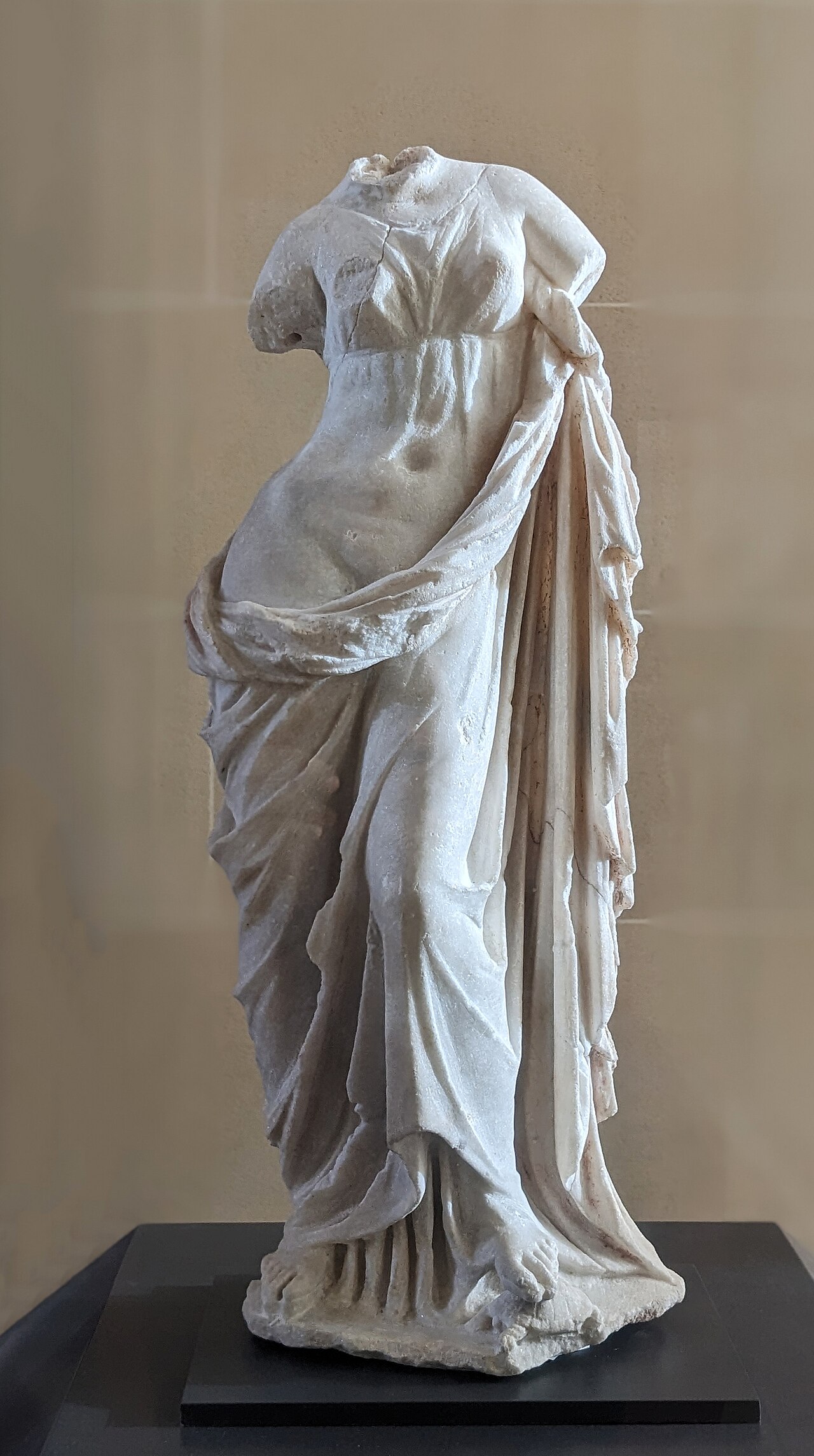
Text
Aphrodite is a Greek goddess. In the Greek poet HesiodHesiodGreek poet whose major work is generally dated to the late eighth or early seventh century BCE, including the Theogony.Glossary · Click to read the explanation’s TheogonyHesiod’s TheogonyGreek poem on divine generations and Zeus’s kingship; its surviving form does not identify all of Hesiod’s sources.Glossary · Click to read the explanation she arises from foam around Ouranos’s severed organ, cast into the sea by KronosKronosGreek divine figure and Zeus’s father; Hesiod connects his reign with struggles between divine generations.Glossary · Click to read the explanation. This is Hesiod’s account rather than every Greek genealogy. [1]
This birth gives the assault on Ouranos a consequence different from KumarbiKumarbiHurrian divine figure in Hittite CTH 344; challenges Anu and carries the storm god after swallowing his seed.Glossary · Click to read the explanation’s pregnancy. The image here shows a Roman-period object from Dura-Europos, much later than the poem. [1][2]
References and notes
- Hesiod, Theogony Lines188–209: foam and Aphrodite. Return to the text ↑
- Musée du Louvre — AO20126 Statue identity and findspot; second–third centuries CE. Return to the text ↑
Research history
Substantive changes are retained here. Minor copy edits remain in the internal operational log.
-
Substantive record update
Suggest a correction · Suggest a source for this record
Cite this record
IL Archive, «Aphrodite», Edition 2, https://ilarchive.com/en/entities/aphrodite-greek-goddess