Study
Resurrection in Daniel: The Jewish Text and Its Ancient Context
An extended study of a topic, with evidence and references.
- Timeline
- From 400 BCE to 900 CE
- Region
- Judaism in the Hellenistic period; Iranian traditions
The dead awakening in Daniel, restoration in Jewish texts and world renewal in Iranian traditions: witnesses, chronology and evidence of contact, with the 2025 manuscript-dating results explained.
Share article
Text
Introduction
How did the promise of the dead awakening appear in Daniel, and how does it relate to restoration in Jewish texts and resurrectionResurrection of the deadThe dead returning to life, distinguished from soul immortality, with differing scope and form among texts.Glossary · Click to read the explanation and world renewal in Iranian traditions? This study reads Daniel 12 against persecution and justice, then compares witnesses and dates to identify what supports historical contact and what remains debated.
The narrative is set under Babylonian and Persian kings, while an influential critical approach dates the final visions to the crisis under Antiochus IVAntiochus IV EpiphanesAntiochus IV Epiphanes was a Seleucid king who ruled from175 to164 BCE.Glossary · Click to read the explanation, around 167–164 BCE. Composition differs from the date of a surviving manuscript. We therefore also examine the dating of a Daniel manuscript published in 2025 and its contribution to the history of the book’s circulation. [3][15][16]
The sleepers in the dust
In Daniel 12, MichaelMichael / MīkālTheophoric name asking who is like God; borne by humans and a heavenly figure in Daniel. It establishes no former Canaanite deity.Glossary · Click to read the explanation appears as a protector in a time of distress, then many sleepers in the earth’s dust awaken. Their outcomes differ: lasting life on one side, lasting shame and contempt on the other. The wise and those who lead others toward righteousness shine like stars. The scene joins the restoration of the dead with deliverance and judgment. [1]
The wording is brief: it names “many” sleepers, describes their destinies and radiance, and leaves the details of renewed bodies for later elaboration. At the chapter’s end, DanielDaniel in the biblical bookDaniel is the Jewish sage and visionary in the biblical book bearing his name.Glossary · Click to read the explanation himself is promised rest and a place in his allotted portion at the end of the days. The individual remains visible within this collective hope of resurrectionResurrection of the deadThe dead returning to life, distinguished from soul immortality, with differing scope and form among texts.Glossary · Click to read the explanation. [1]
Narrative time and the book’s formation
Daniel’s stories inhabit the world of Babylonian and Persian kings. In her critical Yale account, Christine HayesChristine HayesChristine Hayes studies Jewish history, rabbinic literature and interpretation of the Hebrew Bible.Glossary · Click to read the explanation tentatively dates the first six chapters’ stories to the late third century BCE and the visions in chapters 7–12 to the crisis under Antiochus IV, around 167–164 BCE. This scholarly dating rests on contextual interpretation and differs from the story’s narrated setting. [3]
The book combines court talesCourt TaleA scholarly label for stories of a sage or outsider tested or endangered by a ruler; the label alone does not prove textual borrowing.Glossary · Click to read the explanation and visions. In the tales Daniel is a Jewish sage living in exile and serving foreign kings; in the visions he receives scenes of crisis and deliverance. Each section’s date and function must be examined while distinguishing composition, redaction and narrative setting. [3]
When rescue is insufficient for justice
Daniel 11 describes the sanctuary’s desecration, removal of the offering and wise teachers falling through sword, fire and captivity. This raises a question of justice: what becomes of those who died faithful to the covenant while others survived? The promise of awakening in chapter 12 follows that crisis and extends hope beyond the rescue of the living. [2][1]
Second Maccabees 7 gives the argument a more explicit bodily form. Brothers refuse to violate their ancestral law and hope that God will restore their lives and the limbs their tormentors removed. Their mother links that hope to the world’s Creator, who can bestow life again. The story joins fidelity, creation and restored life, contrasting them with the persecutor’s denied resurrection “to life”; that phrase specifies the fate denied without detailing every other possible outcome. [18]
Ezekiel’s bones and the text’s own explanation
In Ezekiel 37, dry bones move together, acquire flesh and skin, then receive breath. Verse 11 explains them as the house of Israel, which says its hope is lost. Opening the graves is linked to bringing the people back to their land: restoring the dead portrays the community’s restoration. [4]
This language also gives readers resources for imagining individuals restored. It is useful to distinguish the vision’s role in Ezekiel from later uses of its imagery. Investigating a connection with Daniel follows those uses alongside each text’s setting. [4]
Isaiah: revivification imagery and its dating
Isaiah 26:19 pictures the dead living and dwellers in dust awakening. Nearby are dead rulers who do not rise, an enlarged nation and pains like childbirth. This setting places the language of awakening alongside the community’s destiny and restoration. [5]
Scholars differ over the date of this layer of Isaiah. Christopher B. HaysChristopher B. HaysChristopher B. Hays studies the Hebrew Bible, Semitic languages and the ancient Near East.Glossary · Click to read the explanation cautions against treating revivification imagery itself as proof of a late date: such language already expressed political and national deliverance in the ancient Near EastAncient Near EastA historical and geographical term covering Mesopotamia, the Levant and neighbouring ancient societies.Glossary · Click to read the explanation. He considers Isaiah’s images less developed than Ezekiel’s and Daniel’s and proposes an earlier date. This presents his position as stated in the published chapter summary. [6]
Life, death and dust form a shared vocabulary in these texts. Arranging them into dated stages of a single conception requires arguments about each passage’s date, meaning and relationship to the others.
An Iranian text promises a deathless world
Yašt 19:89–96 in the AvestaAvestaAvestan-language religious corpus with layers and oral transmission, not a book composed in one year.Glossary · Click to read the explanation places the benefactor SaoshyantSaoshyantSaoshyant is an Avestan term for a benefactor, with an eschatological savior sense in Zoroastrian texts.Glossary · Click to read the explanation and his helpers within the world’s renewal. The dead rise, life and immortality arrive, creation becomes free from decay, and evil powers lose their dominion. The parallel with hope beyond death is substantive, rather than a shared generic word such as life: dead people rise and the world’s condition changes. [7]
The connection merits comparison because it joins the dead rising with comprehensive change in the world. It differs from Daniel in names, actors, the victory’s structure and renewal’s scope. Understanding a historical relationship requires examining the dates of these elements and settings that allowed their transmission and reshaping. [7][9]
Three times within the Iranian evidence
Three times need separation: a tradition’s oral composition, a collection’s writing or editing, and the surviving physical copy. Almut HintzeAlmut HintzeAlmut Hintze studies ancient Iranian languages, the Avesta and Zoroastrian traditions.Glossary · Click to read the explanation explains that the Yašts belong to an oral compositional culture, whereas their surviving manuscripts are late. A late copy neither dates its contents’ invention nor automatically gives every line an early date. [10]
Shaul ShakedShaul ShakedShaul Shaked was a scholar of Iranian languages, Zoroastrianism and its contacts with Jewish traditions.Glossary · Click to read the explanation distinguishes disputed resurrection readings in the Gathas, statements in the Younger Avesta and fuller Pahlavi accounts. He argues for strong Iranian influence on Jewish eschatological developments, drawing on clustered parallels and long contact under Persian rule and in the diaspora. He also acknowledges the difficulty that the complete Iranian system survives in later sources. [9]
The BundahišnBundahishnThe Bundahishn is a Middle Persian Zoroastrian work on creation, the world and its final renovation.Glossary · Click to read the explanation has two recognized recensions and a layered editorial history. MacKenzieDavid Neil MacKenzieDavid Neil MacKenzie (1926–2001) was a British scholar of Middle and modern Iranian languages.Glossary · Click to read the explanation connects an important final redaction with ninth-century CE priestly circles, alongside older material and an unknown first compilation. We therefore identify recension and chapter, distinguishing a tradition’s proposed antiquity from the formulation actually read. [12]
A Greek report about Magian teachings
Greek literature adds evidence with its own chronology and transmission. In his prologue §9, Diogenes LaertiusDiogenes LaertiusDiogenes Laertius was a Greek author usually dated to the early third century CE.Glossary · Click to read the explanation reports that TheopompusTheopompus of ChiosTheopompus of Chios was a fourth-century BCE Greek historian.Glossary · Click to read the explanation attributed to the Magi the teaching that humans would live again and become immortal. Theopompus was a fourth-century BCE historian; Diogenes’s surviving report was written centuries later, around the third century CE. [8][19][20]
The testimony has two chronological levels: a fourth-century BCE source to whom the statement is attributed and a writer preserving it centuries later. It is significant evidence when investigating Iranian hopes of renewed life, while Theopompus’s original text is not what survives here. [8]
The paragraph directly preserves a report about Magian teachings. Its relevance to Daniel’s formation must be considered with other evidence of contact and dating, since it names neither the book’s author nor a particular Jewish transmitter. [8]
The Bundahišn: restored bodies and a purified world
Chapter 30 of the Indian Bundahišn gives a fuller account. The Creator is asked how a body dispersed by water and wind can be restored. The reply invokes creation itself: the maker of the world can remake what existed. Humanity rises; people recognize relatives; deeds become visible in the judgment assembly. Everyone passes through molten metal, experienced differently by righteous and wicked, before the world is renewed and lasting immortality bestowed. [11]
This is an explicit example of frashokeretiFrashokereti: final renovationCreation’s completion or renovation in Iranian tradition, linked to incorruptible life and evil’s retreat.Glossary · Click to read the explanation, final renovation, in this Iranian formulation. It does not duplicate Daniel’s ending: Daniel juxtaposes two lasting destinies, whereas this chapter moves toward purification, world renewal and immortality. Comparison does not require every Zoroastrian source to share these details or define exceptions identically.
The creation argument in this chapter connects with that of the brothers’ mother in Second Maccabees: the power that gave life can restore it. This specific parallel merits examination alongside the formulations’ dates and evidence of contact between their settings. [11][18]
What would demonstrate influence?
Comparing Daniel with Iranian traditions is stronger than matching a word or picture. Further tests nevertheless remain. Does the proposed source predate the receiving text in the relevant form? Can communities and settings of contact be identified? Does a distinctive sequence recur, beyond the shared human problem of death? Are there traces of a linguistic, textual or ritualRitualAn organised or distinguished practice meaningful to a community; it may leave traces, but its form alone does not reveal an associated doctrine.Glossary · Click to read the explanation intermediary?
Persian rule and diaspora life provide historical settings for investigating contact between communities. Reinterpretation within Jewish tradition can work alongside selective reception of Iranian ideas. Each explanation is assessed through the textual details and sequences it explains and the additional assumptions it requires.
Different scholarly explanations of the connections
Jon D. LevensonJon D. LevensonJon D. Levenson studies the Hebrew Bible, its interpretation and Jewish traditions.Glossary · Click to read the explanation emphasizes resurrection hope’s continuity with earlier Israelite resources, as well as points of change. He challenges an explanation confined to foreign import. This is the book’s thesis as presented by its publisher, placing continuity in biblical imagery at the centre of explanation. [13]
Vicente DobrorukaVicente DobrorukaVicente Dobroruka researches Iranian and Jewish traditions and ancient apocalyptic literature.Glossary · Click to read the explanation, who studies Iranian and Jewish parallels, explains in his introduction that apparently obvious influence became questions requiring investigation. Much of his work therefore speaks of parallels. These positions represent different ways of assessing evidence, rather than disagreement about whether comparison is possible. [14]
What do Qumran and the 2025 results add?
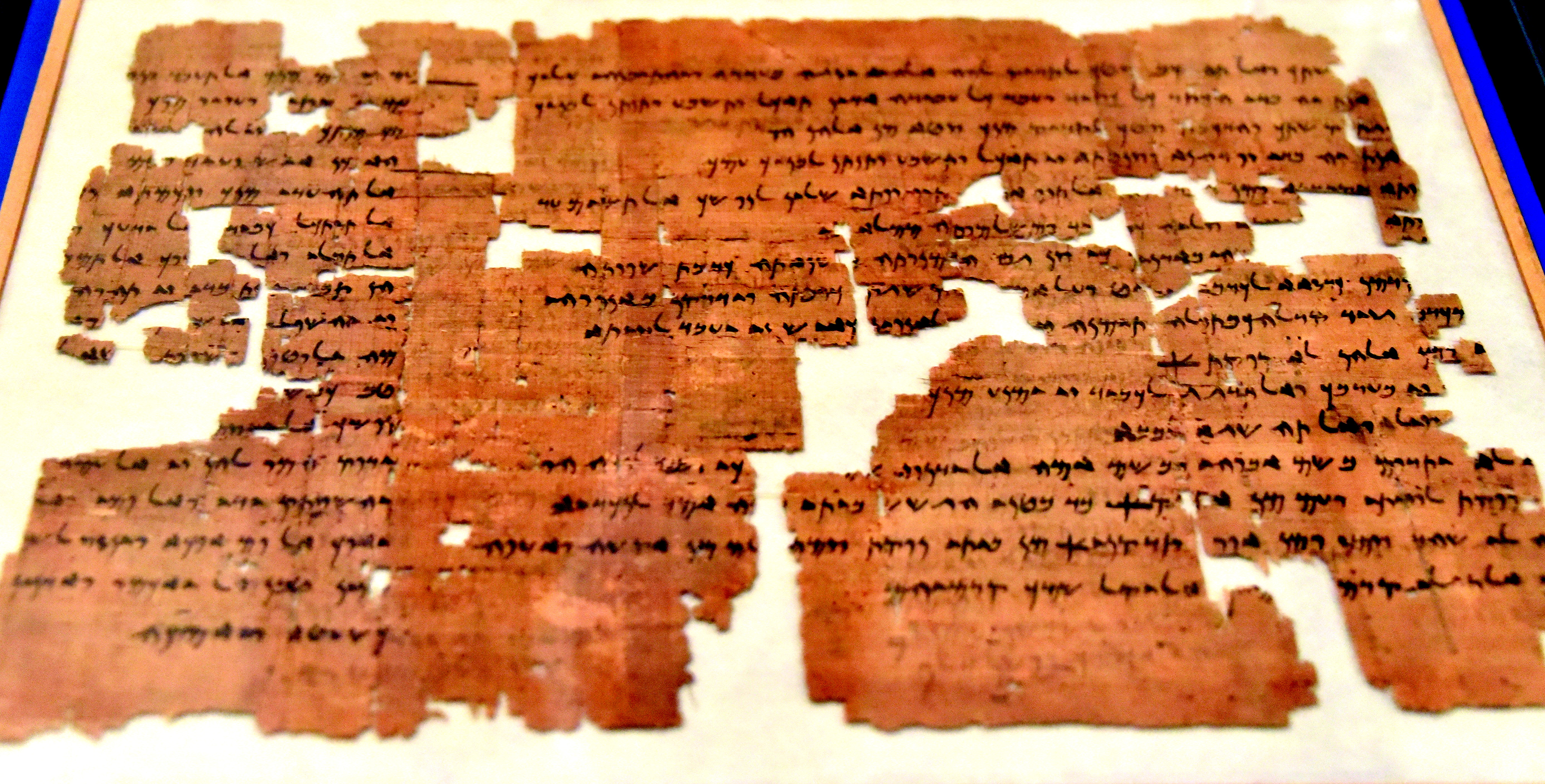
On 4 June 2025, Mladen PopovićMladen PopovićMladen Popović studies the Hebrew Bible, ancient Judaism and the Dead Sea Scrolls.Glossary · Click to read the explanation and colleagues published a study combining radiocarbon datingRadiocarbon datingA probabilistic date range for organic material; for parchment it dates animal skin rather than ink directly.Glossary · Click to read the explanation with analysis of writing shapes. One witness from QumranQumranSite near the northwestern Dead Sea; neighboring caves preserve ancient Jewish textual finds, not one complete Bible.Glossary · Click to read the explanation, manuscript 4Q114, preserves parts of Daniel 8–11. The researchers favoured a calibrated range of about 230–160 BCE, earlier than some previous handwriting estimates and overlapping the literary dating of the visions to the 160s BCE. [15]
Appendix S4 supplies an important detail: the calibrated probability distribution also has an older range, around 355–285 BCE. The researchers reject it by comparison with writing in dated AramaicAramaicA group of Northwest Semitic language varieties with a long history across the Near East.Glossary · Click to read the explanation documents. The favoured interval thus combines measurement with a palaeographic judgment; it is neither a precise composition year nor the entire calibrated distribution. [16]
Radiocarbon dates the manuscript’s organic material; the writing date and the age of ideas require additional evidence. 4Q114 does not preserve Daniel 12’s resurrection verses. The researchers regard its date as making it a witness from the book’s presumed time of authorship. This inference combines physical dating and literary chronology without identifying the scribe or a personal connection to the author. It matters for the history of the book’s copying and circulation. [15][16]
A hope with a history, conclusions with limits
We can establish that Daniel 12 depicts dead people awakening to destinies beyond present life, and that other Jewish texts use restoration imagery or connect creation with renewed life. Iranian tradition also preserves resurrection and final renovation, with differences between its textual layers. A single demonstrated route from one particular source to one particular author remains unproven here.
The comparison shows how the dead awakening could answer the fate of people denied justice in life. Connections between biblical tradition and the Iranian world remain a field for assessing different arguments alongside the dates of texts and manuscripts and settings of contact.
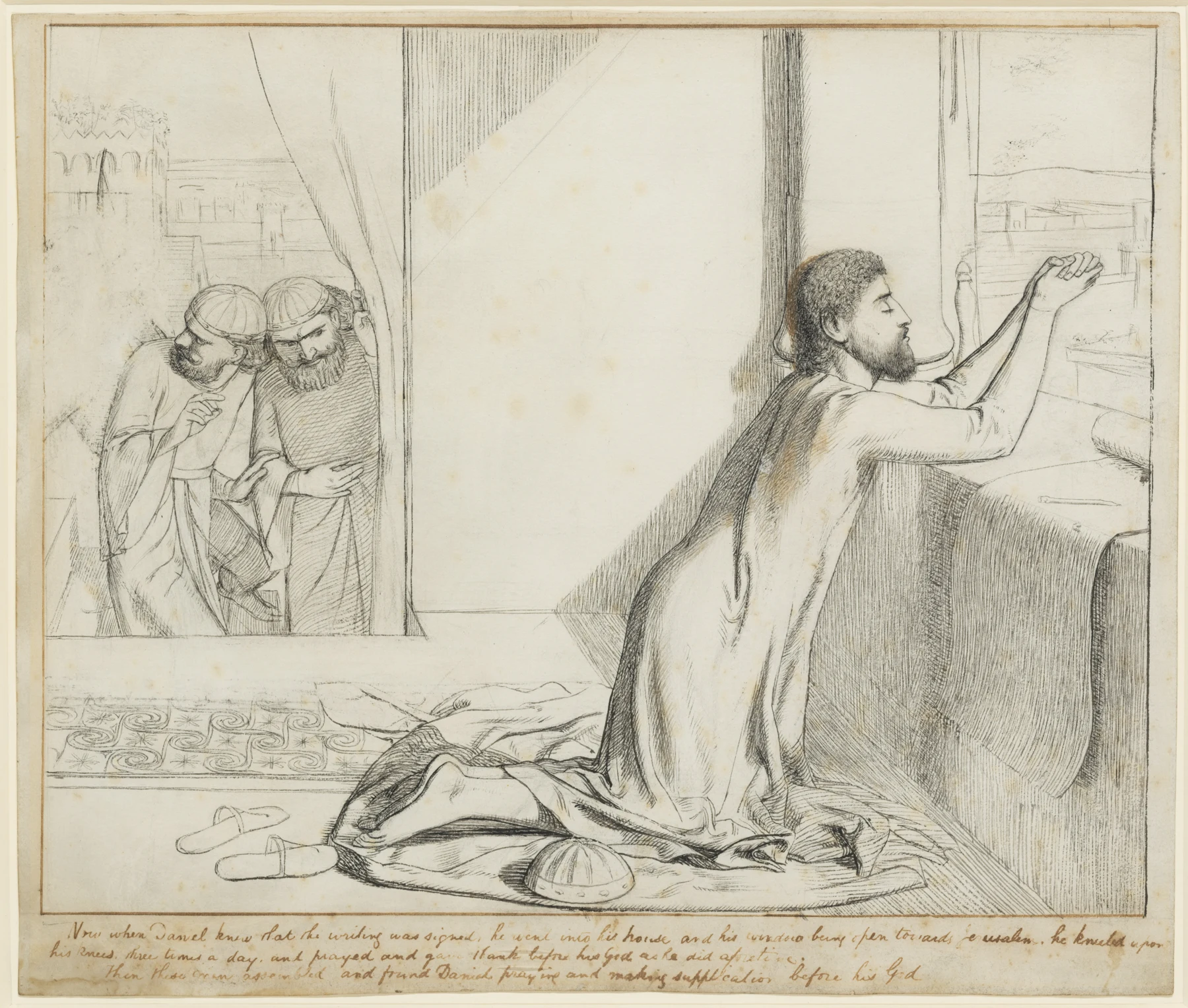
The cover is William Holman HuntWilliam Holman HuntWilliam Holman Hunt (1827–1910) was a British artist and co-founder of the Pre-Raphaelite Brotherhood.Glossary · Click to read the explanation’s 1849 drawing inspired by Daniel’s prayer in chapter 6. Its caption identifies it as later artistic reception, rather than an ancient portrait or the awakening scene of chapter 12. [17]
Continue with Daniel’s tales and court wisdom, Zoroastrianism and Judaism, underworld returns and resurrection, and similarity and the transmission of ideas.
References and notes
- The text and passage specified in the reference. Daniel 12:1–13; historical KJV translation. Return to the text ↑
- The text and passage specified in the reference. Daniel 11:29–45; historical KJV translation. Return to the text ↑
- The text and passage specified in the reference. Christine Hayes, Open Yale Courses RLST 145, lecture 23; Daniel 1–6 and 7–12, their dating and setting. Return to the text ↑
- The text and passage specified in the reference. Ezekiel 37:1–14; historical KJV translation. Return to the text ↑
- The text and passage specified in the reference. Isaiah 26:14–19; historical KJV translation. Return to the text ↑
- Author’s position as presented in the publisher’s chapter summary; not the complete chapter. Christopher B.Hays, The Origins of Isaiah 24–27 (2019), chapter 3, pp.68–94; DOI:10.1017/9781108582360.004. Return to the text ↑
- The text and passage specified in the reference. Yasht 19:89–96; James Darmesteter, The Zend-Avesta II, SBE 23, pp.306–308; historical translation. Return to the text ↑
- The text and passage specified in the reference. Diogenes Laertius, Lives I, Prologue 6–9; R.D.Hicks,1925. Return to the text ↑
- The text and passage specified in the reference. Shaul Shaked, Eschatology I, Encyclopaedia Iranica; Gathas, Younger Avesta, selected Pahlavi and influence paragraphs. Return to the text ↑
- The text and passage specified in the reference. Almut Hintze, Yashts, Encyclopaedia Iranica; Transmission and Origins of the Yashts. Return to the text ↑
- The text and passage specified in the reference. Indian Bundahishn 30:1–33; E.W.West,1880, SBE 5, pp.120–130. Return to the text ↑
- The text and passage specified in the reference. D.N.MacKenzie, Bundahishn, Encyclopaedia Iranica; selected manuscript, authorship and compilation paragraphs. Return to the text ↑
- The book’s announced thesis in the publisher’s description; not a reading of the whole book. Jon D.Levenson, Resurrection and the Restoration of Israel (2006; paperback 2008), Yale publisher description. Return to the text ↑
- Specified introductory passages, not all chapters. Vicente Dobroruka, Persian Influence on Daniel and Jewish Apocalyptic Literature,2022, edition 2023; publisher preview, introduction pp.1–2,4. Return to the text ↑
- The text and passage specified in the reference. Mladen Popović et al., “Dating ancient manuscripts using radiocarbon and AI-based writing style analysis”, PLOS ONE 20(6),e0323185,4 June 2025; abstract,2.1–2.2, opening 2.2.1 and section 6. Return to the text ↑
- The calibrated distribution has two ranges; the preferred interval includes palaeographic judgment and is not the raw measurement. Popović et al.,2025, S4 Appendix; PDFpp.1–4,7, especially 4Q114 in 4.1.2. Return to the text ↑
- Later drawing of Daniel6; identity and rights from the official catalogue. Metropolitan Museum, William Holman Hunt, Daniel Praying,1849;2023.675. Return to the text ↑
- The text and passage specified in the reference. 2 Maccabees 7:1–14,20–29; Greek text displayed at New Advent. Return to the text ↑
- R.D.Hicks, Loeb1925 introduction, author and dating section, pp.ix–xii. Return to the text ↑
- Michael Flower, Theopompus of Chios (1994), publisher abstract on the fourth-century BCE historian and fragments; not the whole book. Return to the text ↑
Research history
Substantive changes are retained here. Minor copy edits remain in the internal operational log.
-
Substantive record update
Suggest a correction · Suggest a source for this record
Cite this record
IL Archive, «Resurrection in Daniel: The Jewish Text and Its Ancient Context», Edition 2, https://ilarchive.com/en/studies/daniel-resurrection-historical-context
Continue reading