Study
Gehenna and Ancient Underworlds: A Place-Name with Changing Meanings
An extended study of a topic, with evidence and references.
- Timeline
- From 2000 BCE to 900 CE
From Hinnom and Sheol to Enoch, Mark and the Quran: distinguishing the dead’s abode, punishment, waiting and renovation while testing linguistic kinship and transmission.
Share article
Text
A place on earth, names for the afterlife
Standing in the valley of Hinnom near JerusalemJerusalemJerusalem is a city of religious importance in Judaism, Christianity and IslamGlossary · Click to read the explanation, we would not see a map of the afterlife. We would see an earthly place whose name acquired a long textual history. That distinction introduces our investigation of GehennaGehenna: a place-name and language of punishmentTerm related to the valley of Hinnom; usage changes across Jewish, Christian and Islamic texts and does not equate every afterlife term.Glossary · Click to read the explanation: a place-name and its uses can be traced, but every reference to death, fire or descent cannot be converted into the same picture familiar to a later reader.
This study compares selected HebrewHebrewA Northwest Semitic language in the Canaanite group, with ancient and modern forms.Glossary · Click to read the explanation, Sumerian, Greek, Enochic, Christian, Iranian and Quranic passages. It does not ask which religion “copied” all the others or whether belief in punishment is true. It asks how geography became associated with judgment, how the dead’s abode differed from waiting for or undergoing judgment, and what evidence permits when proposing transmission.
Before comparison: keep the names distinct
GehennaGehenna: a place-name and language of punishmentTerm related to the valley of Hinnom; usage changes across Jewish, Christian and Islamic texts and does not equate every afterlife term.Glossary · Click to read the explanation is historically related to Hinnom’s name. Mahmoud Omidsalar traces Jahannam’s ultimate etymology to Hebrew; Chaim Milikowsky notes an AramaicAramaicA group of Northwest Semitic language varieties with a long history across the Near East.Glossary · Click to read the explanation form retained in rabbinic usage. These observations do not settle every linguistic intermediary through which the name reached Arabic. [20][25]
SheolSheol: a Hebrew term for the realm of the deadHebrew textual term involving death, descent and lost return; it does not automatically mean later punitive Gehenna.Glossary · Click to read the explanation occurs in Hebrew texts about death and descent. Hades is a Greek term whose function needs contextual reading. Revelation also mentions a “lake of fire,” which it does not treat as identical to Hades. [5][6][16]
We therefore separate four questions: where are the dead, do they await judgment, why do their destinies differ, and is punishment permanent or a stage that ends? Texts may answer differently even when a later translator employs one term, such as “hell,” for several original words.
Hinnom and Tophet: what the passages actually say
Jeremiah 7:30–34 associates the valley with Tophet and burning sons and daughters. Its warning then turns the place into a site of slaughter, burial and corpses without anyone to drive away birds and animals. It does not explain the destiny of souls separated from bodies: its immediate subject is the community’s offense and the fate of place and city. [1]
Jeremiah 19:1–13 adds a performed warning: an earthenware jar is broken before elders. The text recalls innocent blood and burning children, then depicts siege and the city’s collapse. The broken vessel makes destruction tangible; it is not a physical model of an underground hell. [2]
In 2 Kings 23:10 Josiah defiles Tophet to prevent people passing children through fire to Molech. This is an important textual witness connecting the place with a practice condemned by the narrator. It does not replace archaeology or independently resolve debates over Molech’s identity, the terminology and the rite. Those questions cannot be merged into one certainty. [3]
Fire and corpses: imagery available for reuse
Isaiah 66:22–24 places worship within an horizon of new heavens and earth, then describes people looking at rebels’ corpses, with worms that do not die and fire that is not quenched. Hinnom is not named in these verses. The reference to corpses matters: the passage is not a detailed account of immortal souls’ consciousness within a prison. [4]
This language lends itself to reinterpretation: fire, worms, a spectacle witnessed by survivors. When later writing uses the same imagery, literary connections can be investigated more precisely than the mere presence of fire in two cultures. Reuse does not establish an unchanged meaning or show that the first scene already contained every later interpretation.
That also calls for care with the story of a “perpetually burning rubbish dump,” sometimes offered as a ready explanation of hell’s origin. The selected Jeremiah and Kings passages do not describe such a dump. Its absence here cannot prove that no dump existed in any period; it does prevent presenting the story as an explicit fact in these witnesses. [1][2][3]
Sheol: death and lost return
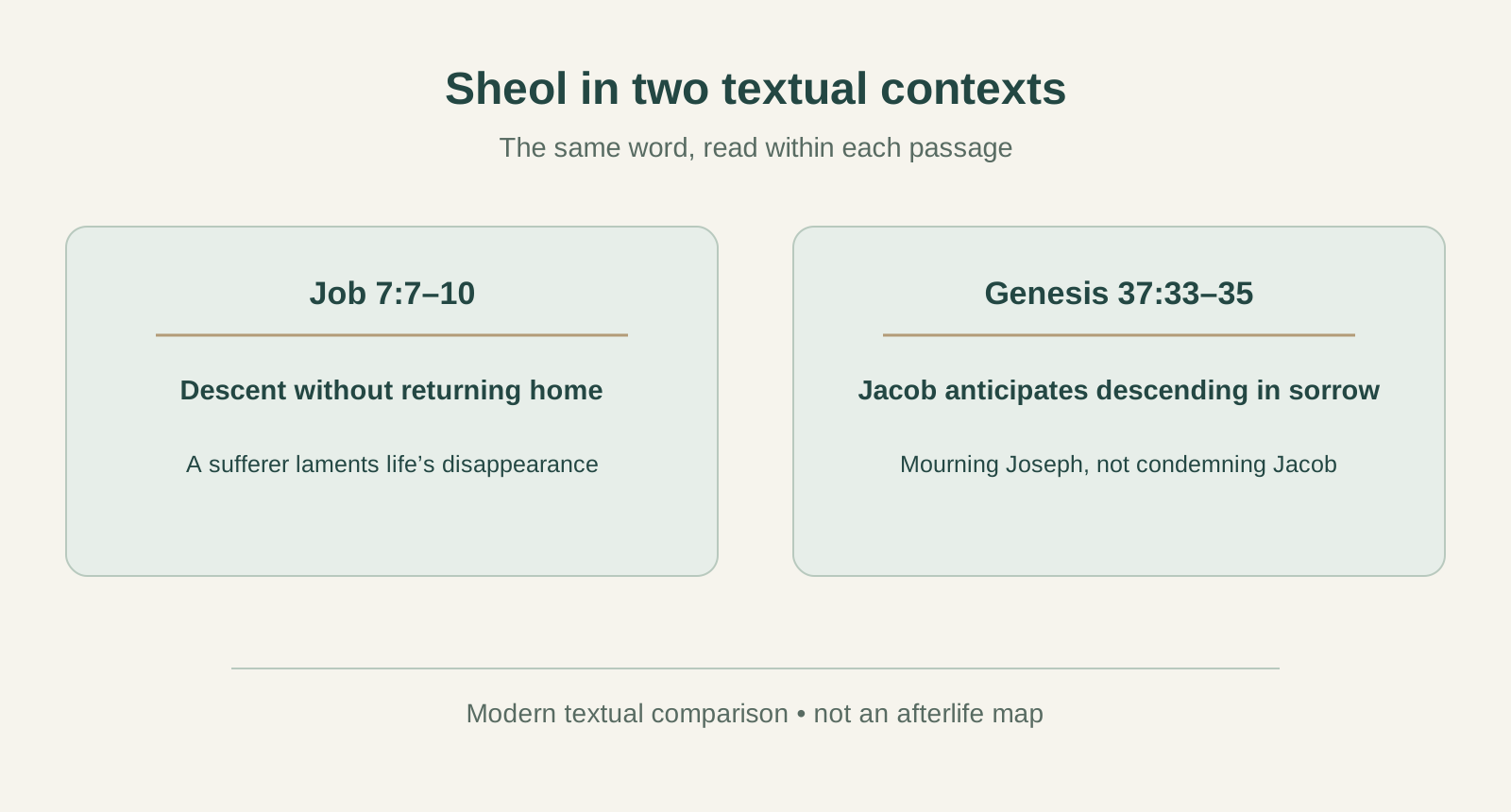
Job 7:7–10 portrays life as vanishing breath. Someone descending to Sheol does not return home, and their place no longer recognizes them. This is a sufferer’s lament, not a table classifying the wicked by crimes or degrees of torture. A poetic voice cannot be made a binding definition of everything Job or a later tradition says about death. [5]
In Genesis 37:33–35 Jacob mourns Joseph and anticipates descending to Sheol in sorrow. The scene neither condemns Jacob nor says that wickedness sends him to punishment. An automatic replacement of “Sheol” with “punitive Gehenna” would therefore misread this context. [6]
The following diagram compares this word’s function in these two passages alone. It is a modern textual illustration, not an ancient artifact or a map of the afterlife.
Mesopotamia: offerings, family and behavior
In Gilgamesh, Enkidu and the Netherworld, conditions differ with family and funerary offerings. An Ur version also describes suffering for disobeying parents. This is neither simply a fiery punishment for sinners nor evidence that conduct never matters in Mesopotamian texts. [7]
This is a specific comparison, not a comprehensive definition of Sumerian religion. Differences in suffering’s causes are evidence: one text may concern continuing family connections, missing offerings or violated obligations, while another concerns humanity’s final judgment. An afterlife in both does not establish identical structures.
Plato: judgment that rank cannot shield
Gorgias’s final myth, 523–527, presents defective human judgment: wealth, appearance and witnesses deceive judges. PlatoPlatoGreek philosopher; the Timaeus’s maker differs from later religious conceptions of God.Glossary · Click to read the explanation’s literary remedy judges souls after death, stripped of rank’s outward trappings, before judges who perceive their condition. The righteous reach the Islands of the Blessed; condemned souls go to TartarusTartarusDeep abyss in Greek poetic imagination, named by Zeus as a place of punishment in the Iliad.Glossary · Click to read the explanation. [8]
The passage distinguishes punishment that improves those capable of improvement from punishment making incurable offenders examples that warn others. Saying “the Greeks had hell” cannot impose one doctrine on all Greek texts and practices. This is a philosophical story arguing about justice, power and the soul.
The comparison shows that ethically differentiated destinies occur in more than one tradition. A Jewish or Christian writer’s direct adoption of Gorgias’s scheme would be a further claim, requiring evidence of knowledge and use of that text rather than judges and punishment appearing on both sides.
Enoch 22: waiting is not final judgment itself
Annette Yoshiko Reed places the Book of the WatchersBook of the WatchersOpening section of1 Enoch, 1–36; includes the Watchers’ descent and transgression and Enoch’s journey.Glossary · Click to read the explanation, 1 EnochFirst EnochLayered collection of Jewish writings about heaven, evil and judgment.Glossary · Click to read the explanation 1–36, around the third century BCE. Selected introductory pages were read here, not her whole book; this dating does not necessarily apply to every component of the Enoch collection. [9]
In Enoch 22 RaphaelRaphael / RephaelTheophoric name from healing and El; human Rephael in Chronicles and angel Raphael in Tobit. Distinct from Israfil, whose etymology is a separate question.Glossary · Click to read the explanation guides the visionary to hollows holding dead spirits until the great day of judgment. Abel’s spirit calls for justice; the righteous have a bright place with water, and different conditions appear for those who did not receive recompense during life. This is neither one undifferentiated grave nor a story whose temporal endpoint is death itself. [10]
The surviving text nevertheless resists a seamless plan. The historical translation displays a difference between four hollows and three, and a fixed allocation of every category is difficult. We preserve that variation instead of drawing four precise rooms as though every ancient reading supported them. The firmer distinction is between waiting places and destinies associated with future judgment.
Enoch 26–27: the accursed valley
Another image follows. Chapter 26 describes blessed land, mountains, watercourses and deep narrow ravines. In chapter 27 Enoch asks about an accursed valley within blessed land. UrielUrielName joining El to an element interpreted as light or fire; human in Chronicles, heavenly figure in Enoch. No Ugaritic divine origin established.Glossary · Click to read the explanation explains this scene; Raphael was the guide in chapter 22. [11][12]
Here the valley is assigned to those speaking against God and becomes a place of judgment witnessed by the righteous within an eschatological horizon. Chapter 27 does not explicitly name Hinnom or independently describe every fire image a reader might collect elsewhere. Locating its valley on Jerusalem’s map requires geographical argument, rather than simply reading a name written in these verses.
The important distinction is that chapter 22’s hollows and chapter 27’s valley do not just perform one function. Combining them into a completed Gehenna obscures differences in timing, purpose and description that require historical explanation.
Gehenna in Mark: warning and Isaiah’s imagery
Mark 9:42–50 uses Gehenna in an emphatic warning about stumbling and harmful conduct. It contrasts it with entering life or God’s kingdom and returns to imagery of worms and unquenchable fire. Comparing it with Isaiah 66 is more specific than comparing isolated words for fire: two distinctive images accompany a discourse on destiny. [13][4]
Connection does not erase difference. In Isaiah spectators look at corpses; in Mark the imagery directs conduct and warns of punishment. We follow what the passage does with inherited imagery rather than assuming that it repeats a complete system preserved from the beginning.
Readings and verse numbering also differ between witnesses and translations. Some repeated verses do not appear in the Greek display consulted. A historical conclusion cannot rest on counting repetitions in one translation, but on verifiable imagery, vocabulary and context.
Hades in Luke, the lake of fire in Revelation
Luke 16:19–31 describes the rich man and Lazarus dying, then places the rich man in painful Hades while Lazarus is near Abraham. A barrier prevents passage; the rich man asks that his brothers be warned. The dialogue concludes with MosesMosesCentral figure in Exodus, Torah traditions and the Qur’an; childhood accounts differ in detail.Glossary · Click to read the explanation, the prophets and responding to them. Hades is not painless and neutral in this passage; the parable concerns listening and destiny, rather than mapping every dead person’s condition. [14]
Revelation 20:10–15 distinguishes stages and images. The sea, death and Hades surrender the dead for judgment according to deeds. Death and Hades are then thrown into the lake of fire. The Greek of 20:13–14 retains Hades as a name distinct from the lake; collapsing both into one word obscures the scene’s movement. [15][16]
The devil too is thrown into punishment in 20:10. This passage does not portray him as an independent king administering hell beyond divine sovereignty. A picture of “Satan’s kingdom of fire” cannot automatically replace what this text actually says.
Within Jewish tradition: duration has multiple answers
Mishnah Eduyot 2:10 includes the wicked’s judgment in Gehinnom among examples lasting twelve months. Rabbi Yohanan ben Nuri adds another opinion: the period from Passover to Shavuot. The discussion appeals to Isaiah 66, returning to earlier textual material through a new argument about duration. [17]
This witnesses variation within one tradition. It does not establish that every rabbinic text releases every person after twelve months, or supply a rule transferable to Enoch or the Gospels. Categories, exceptions and each statement’s function need examination before reconstructing a comprehensive doctrine.
Iranian tradition: punishment and final renovation
Philippe Gignoux distinguishes Gathic, Avestan and Pahlavi layers; a late Iranian account cannot date every detail to an earlier era. [18]
Chapter 30 of the Indian Bundahišn separates righteous and wicked destinies and subjects the wicked to punishment. Humans subsequently pass through molten metal as a means of purification. At the end hell’s pollution disappears and its territory is restored to enlarge the renovated world. That ending does not automatically match an unchanged, enduring prison of suffering. [19]
This chapter witnesses a system combining judgment, purification and renovation. It has a transmission and redaction history; it cannot alone establish that Achaemenid communities held its complete surviving scheme or transmitted it wholesale to Jews. Difference in the ending may be crucial: similar fire does not erase differences in what fire accomplishes.
Jahannam in the Quran: text and later detail
QuranQuranCentral text of Islam, used here as evidence of its religious discourse.Glossary · Click to read the explanation 15:43–44 designates Jahannam as a destination and explicitly gives it seven gates, each assigned a portion. “Gates” matters: these verses alone do not enumerate seven ordered layers with specified names. Quran 4:56 describes fire and replacement skins so that punishment continues to be felt, presenting clearly bodily imagery within retribution. [21][22]
Quran 11:106–108 contrasts fire and the garden and speaks of remaining, with a qualification concerning God’s will. This invites interpretation; the verses alone do not settle every later debate over duration, intercessionIntercessionMediation subject in the cited Quranic texts to permission and approval, not divine independence.Glossary · Click to read the explanation or punishment’s end. One isolated expression cannot establish one doctrine for all Muslims. [23]
Kinship between Jahannam and Hinnom supports studying a word’s history in new traditions. It does not make Quranic fire a description of the earthly valley or demonstrate that every detail came from one Hebrew text. A word’s history and the history of images, judgments and functions require different investigations.
Later elaboration and the evidence needed for transmission
Christian Lange shows that later Islamic literature expanded hell’s descriptions and that equating gates with seven layers belongs to interpretation. Selected chapter pages were read, not his whole book. [24]
Milikowsky cautions against harmonizing different Gospel schemes. We report a point in the available extract and notes, rather than an unread complete article’s argument. [25]
Here we test proposed transmission with practical questions. Does the earlier image genuinely precede its comparator? Is contact or a text’s circulation known? Is similarity precise in function and structure, or merely death, fire and a judge? Can an intermediary or quotation be traced? What changes does the receiving context introduce?
Internal Jewish resources do not preclude interaction with Greek or Iranian worlds. Interaction does not prove borrowing every idea. Where a link is missing, hypotheses retain their evidentiary level; linguistic usage, textual borrowing, reinterpretation and direct transfer must be distinguished.
What can be established, and what remains open?
The examined passages associate Hinnom with Tophet and warning; Sheol in Job and Genesis does not automatically function as eschatological punishment’s name. Enoch offers differing descriptions of waiting and judgment; Mark employs imagery resembling Isaiah, while Revelation distinguishes Hades and the lake of fire. Iranian and Quranic passages differ in punishment’s function and ending, and in how much they explicitly describe.
A single demonstrated line from a Sumerian hell to every religion is not established by this evidence. Similarity cannot replace a missing route, nor need it be dismissed because the route remains unresolved. Useful comparison preserves both promising evidence and limits on certainty.
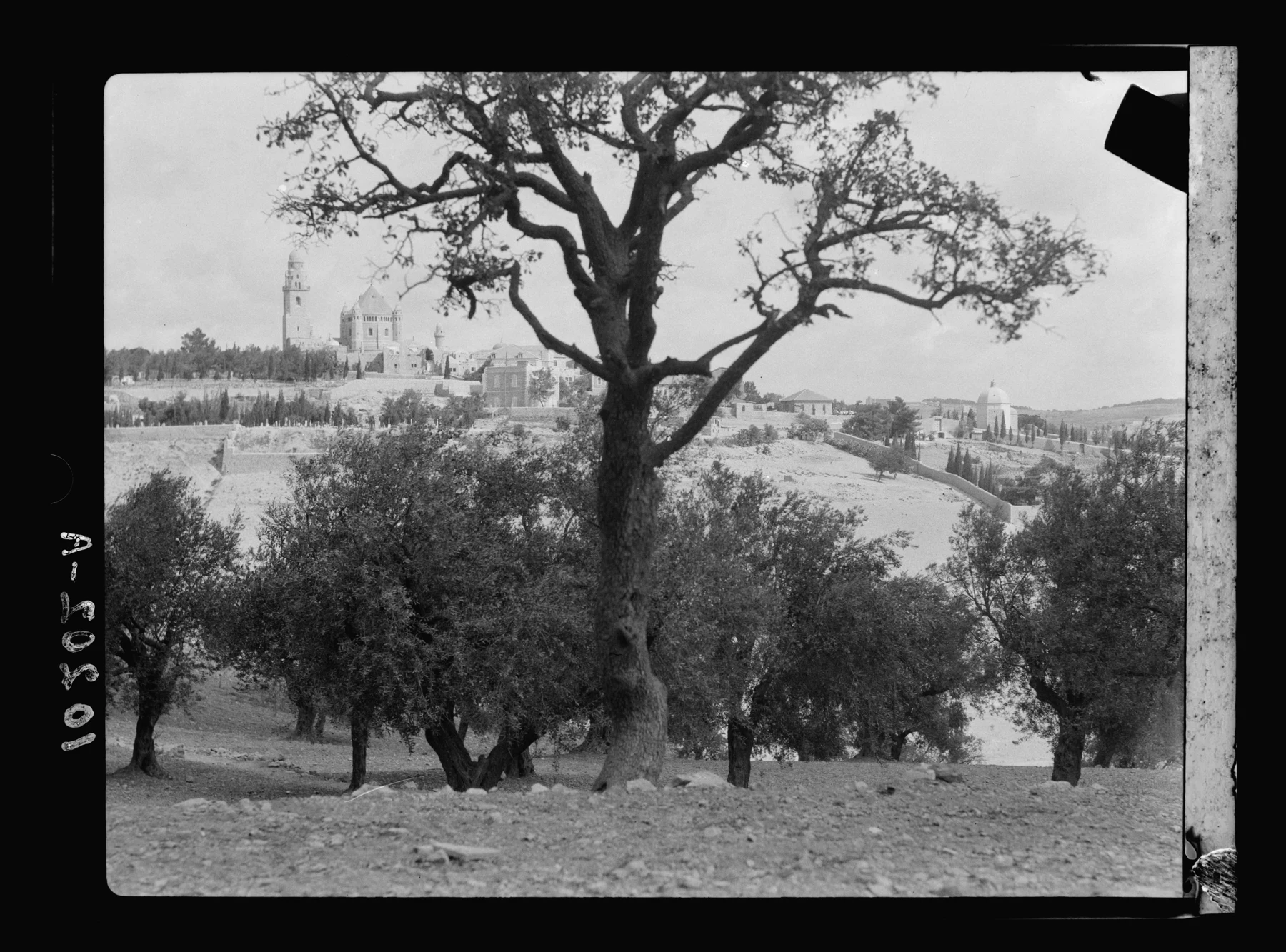
The cover documents Mount Zion from Hinnom in 1934–1939, according to the Library of Congress catalogue. It is a modern record of the place, not an ancient rite or the afterlife. Matson collection rights were dedicated to the public; the library reports no known publication restrictions. The original is a nitrate negative, rather than a lantern slide covered by the rights statement’s exception. [26][27]
Continue with underworld returns and resurrection, resurrection in Daniel, Second Temple Judaism, and similarity and the transmission of ideas.
References and notes
- All five verses. Jeremiah 7:30–34; KJV (public domain) Return to the text ↑
- Verses 1–13 in full. Jeremiah 19:1–13; KJV (public domain) Return to the text ↑
- Full verse; it does not resolve the Molech debate. 2 Kings 23:10; KJV (public domain) Return to the text ↑
- All three verses; the text describes corpses. Isaiah 66:22–24; KJV (public domain) Return to the text ↑
- Hebrew verses 7–10 read. Job 7:7–10; displayed Hebrew primary text Return to the text ↑
- Hebrew verses 33–35 read. Genesis 37:33–35; displayed Hebrew primary text Return to the text ↑
- Selected passages and the Ur version. ETCSL 1.8.1.4; composite 176–303; Urim UET 6, 58, 1–28 Return to the text ↑
- Final myth read, not the whole dialogue. Plato, Gorgias 523a–527a; Benjamin Jowett historical translation Return to the text ↑
- Selected introductory pages, not the whole book. Annette Yoshiko Reed, Fallen Angels (2005), publisher excerpt; introductory pp. 1, 3–6 and opening of p. 7 Return to the text ↑
- Full chapter; hollow-count variants retained. 1 Enoch 22:1–14; R. H. Charles, historical translation (1917) Return to the text ↑
- Chapter 26 in full. 1 Enoch 26:1–6; R. H. Charles, historical translation (1917) Return to the text ↑
- Full chapter 27; Hinnom is not named. 1 Enoch 27:1–5; R. H. Charles, historical translation (1917) Return to the text ↑
- Greek and Latin passage; numbering varies. Mark 9:42–50; displayed Greek and Latin; numbering variants Return to the text ↑
- Greek verses 19–31 in full. Luke 16:19–31; displayed Greek primary text Return to the text ↑
- All six verses. Revelation 20:10–15; KJV (public domain) Return to the text ↑
- Both Greek verses; Hades differs from the lake. Revelation 20:13–14; SBL Greek New Testament (2010) Return to the text ↑
- Complete Mishnah unit in Hebrew. Mishnah Eduyot 2:10; Hebrew unvocalized and vocalized primary text Return to the text ↑
- Text-history passages, not every cited work. Philippe Gignoux, Hell i (2003; updated 2013), selected historical sections Return to the text ↑
- Previously complete; sections 12–32 reread. Indian Bundahišn 30, especially 12–32; E. W. West (1880), SBE 5 Return to the text ↑
- Etymology and selected sections. Mahmoud Omidsalar, Hell ii (2000; updated 2013), etymology and selected sections Return to the text ↑
- Both Arabic verses. Quran 15:43–44; Arabic primary text Return to the text ↑
- Full Arabic verse. Quran 4:56; Arabic primary text Return to the text ↑
- All three Arabic verses. Quran 11:106–108; Arabic primary text Return to the text ↑
- Selected pages, not the entire chapter or book. Christian Lange, Introducing Hell in Islamic Studies (2016), printed pp. 3–7, 12–13, 19–20; DOI 10.1163/9789004301368_002 Return to the text ↑
- Publisher extract and notes 1–13; not full article. Chaim Milikowsky, Which Gehenna?, NTS 34(2), 1988, pp. 238–249; publisher extract and notes 1–13 Return to the text ↑
- Catalogue and original image; modern site photograph. Library of Congress, Mt. Zion from valley of Hinnom, 1934–1939; LC-DIG-matpc-19029 Return to the text ↑
- Full rights statement; image is not a lantern slide. Library of Congress, Matson collection rights statement; revised 2003/2019 Return to the text ↑
Suggest a correction · Suggest a source for this record
Cite this record
IL Archive, «Gehenna and Ancient Underworlds: A Place-Name with Changing Meanings», Edition 1, https://ilarchive.com/en/studies/hell-gehenna-and-ancient-underworlds
Continue reading