Entity
Sheol: a Hebrew term for the realm of the dead
A reference page linking a name, group, or concept to the materials that discuss it.
Sheol is a Hebrew term used in grave imagery, at the boundary of death, and in poetic depictions of the dead. Genesis, Job, Psalms and Isaiah reveal contextual differences, including the limits of later Greek and punitive readings.
Estimated reading time: 8 min Published Last reviewed:
Share article

Text
Introduction
Sheol (HebrewHebrewA Northwest Semitic language of the Canaanite group, encompassing Iron Age epigraphy, Biblical, Rabbinic, medieval and Modern Hebrew; its scripts and pronunciations changed over time.Glossary · Click to read the explanation שְׁאוֹל, šəʾōl) is a word in the Hebrew Bible associated with death and descent to the fate of the dead. Yet its meaning cannot be recovered from a single translated equivalent. It appears in mourning for a lost relative, in language evocative of the grave, and in poetry imagining a world below. This entry reads particular passages to distinguish what the word does—and does not—tell us about death, human destiny, and hope.
We compare Jacob’s words when he believes Joseph dead with Job’s lament over life cut short. We then examine Psalms, Isaiah, and wisdom literature before tracing the word’s Greek rendering and its reception. The aim is to understand a varied textual history, not to draw one fixed map of the afterlife.[7]
The word and its translation
The Hebrew spelling is שְׁאוֹל, conventionally transliterated šəʾōl or Sheol. Transliteration should not be confused with definition: depending on the passage, the noun may evoke an imagined abode of the dead, the grave or domain of death in a lament, or a depth that living people cannot reach. It need not mean a particular physical burial plot, and it cannot everywhere be equated with a hell in which the wicked undergo punishment. Matthew Suriano’s research highlights the overlapping images of burial and the boundary separating the living from the dead rather than treating them as mutually exclusive alternatives.[8]
The name’s etymology is unresolved. Scholars have connected it tentatively with the Hebrew root שׁאל, “to ask” or “inquire,” whether in the image of death demanding more victims or in the consultation of the dead. Another suggestion connects the name to desolation or emptiness. These are proposals, not an established derivation; a word’s attested use carries more weight than a hypothetical root.[7]
Jacob and Job: one word, two functions
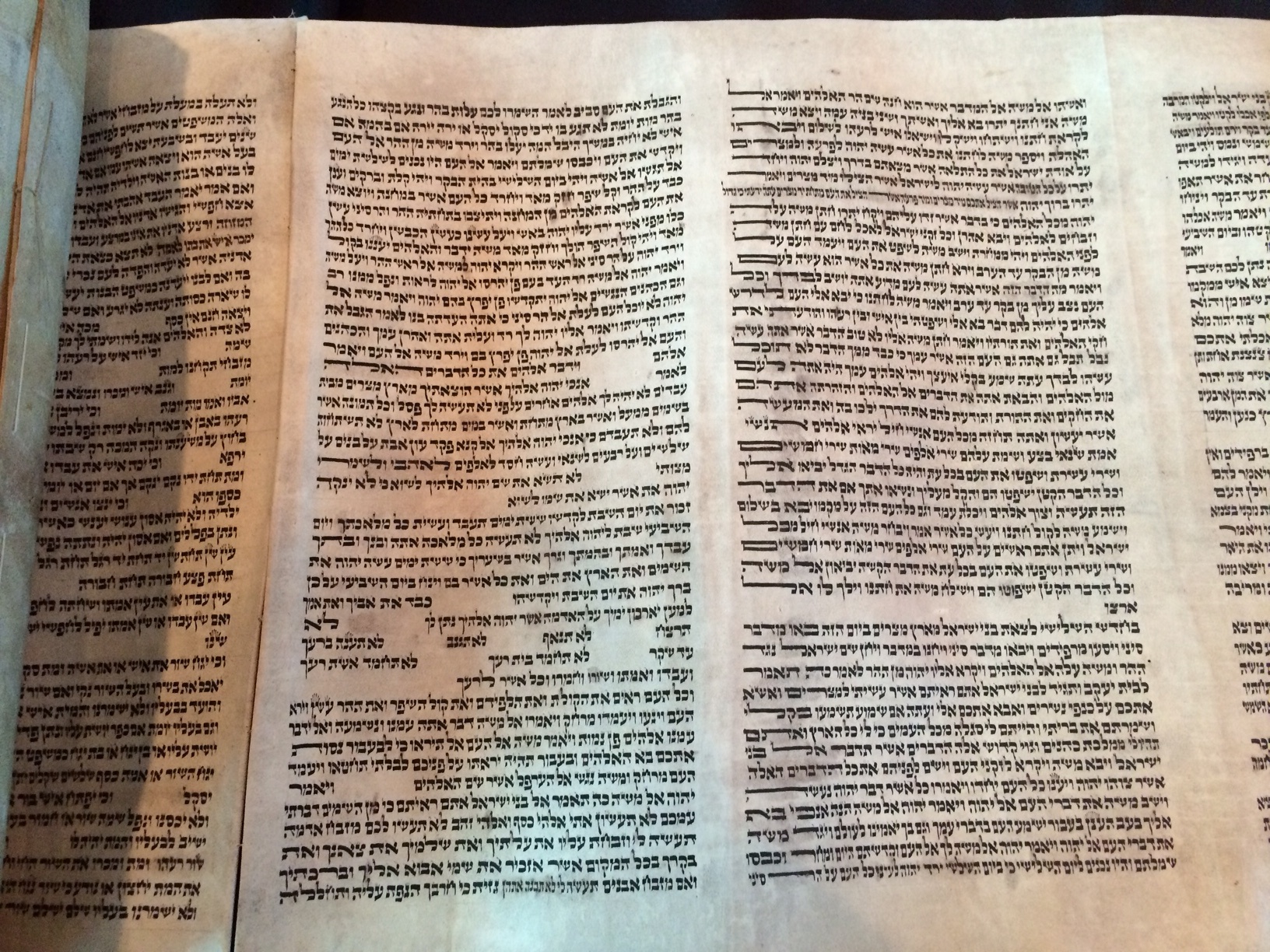
In the Book of GenesisBook of GenesisHebrew book of the Torah containing Noah’s flood, survival offering and covenant with living creatures.Glossary · Click to read the explanation, JacobJacob in GenesisGenesis figure, son of Isaac and brother of Esau; he encounters heavenly messengers and sends human envoys.Glossary · Click to read the explanation receives the bloodstained coat of his son JosephJoseph in Genesis and the Qur’anFigure whose story in Genesis and Sūrat Yūsuf combines enslavement, accusation, prison and advancement in Egypt.Glossary · Click to read the explanation, believes an animal has devoured him, and refuses to be comforted. In Genesis 37:35, the Hebrew Masoretic textMasoretic TextThe Hebrew Bible’s transmission tradition combining its consonantal text, transmitted vocalization and accentuation, and Masorah notes. The consonantal text has ancient roots; surviving codices that bring these layers together in their Masoretic form are medieval.Glossary · Click to read the explanation, as displayed in the consulted parallel edition, reads:[5]
In context: “I will go down to Sheol, mourning my son.” A bereaved father anticipates his own death and joining the son he assumes is dead; the passage does not condemn Jacob to punishment after death. Moreover, Joseph remains alive within the story, so his father’s grief cannot establish the geography or inhabitants of an afterlife. The story is set in the ancestral past; the dates at which Genesis took literary shape and was written belong to a separate historical question.[19]
The Book of JobBook of JobHebrew wisdom text exploring suffering, justice and the limits of human knowledge through dialogue and poetry.Glossary · Click to read the explanation, a Hebrew wisdom work of poetic exchanges between a suffering man, his companions, and God, uses the same noun differently. Job speaks in 7:9–10 while lamenting how quickly his days disappear:[6]
That is, “So one who goes down to Sheol does not come up; he will not return to his home.” The following assertion that his place will know him no more makes the rupture with his former life central to the image. It is not a full scheme of afterlife judgment: this is the anguished voice of a speaker in a dramatic poem, not necessarily the position of every biblical writer. In Job 14:13, the same speaker hypothetically wishes God would hide him in Sheol until divine anger passed and then remember him. These images test the possibilities of hope within the dialogue rather than yielding one settled doctrine of an “impossible return.”[14]
A poetic underworld among kings and psalmists
In the Book of IsaiahBook of IsaiahProphetic collection in the Hebrew Bible; its first chapter addresses justice and the cases of the fatherless and widow.Glossary · Click to read the explanation 14:4–20, a taunt against the oppressive king of BabylonBabylonBabylon is an ancient city in central present-day Iraq, south of BaghdadGlossary · Click to read the explanation makes the trees celebrate his downfall and portrays Sheol below as stirred by his arrival. Isaiah 14:9 opens the scene:[9]
“Sheol below is astir to meet you.” The rephaʾim, depicted here as the shades of dead rulers and notables, rise to mock the fallen king. This is the most elaborate picture of a quasi-community of the dead among our selected passages, but it is also political satire in poetic form. The same passage contrasts the burial given to other kings with the dishonor suffered by this ruler (Isaiah 14:18–20). Its whole scenario cannot simply be transferred to Jacob or Job.
A different contrast appears in PsalmsBook of PsalmsCollection of ancient Hebrew poems and prayers; Leviathan has different roles in Psalms 74 and 104.Glossary · Click to read the explanation 139:8. The speaker sets heaven and Sheol at opposite extremes to express the reach of divine presence:[10]
“If I ascend to heaven, you are there; if I make my bed in Sheol, you are there.” The depth of death, in this poem, lies no farther than God’s reach. The verse is an extreme poetic comparison about presence, not the report of a journey undertaken by the psalmist underground.
Silence, remembrance, and deliverance
Psalm 6:6 in Hebrew numbering (6:5 in many English editions) asks: “In death there is no remembrance of you; in Sheol who will praise you?” In a song attributed in Isaiah to King Hezekiah, Isaiah 38:18 likewise says that “Sheol does not praise you,” contrasting it in the next verse with the living who give thanks. Both are spoken from the standpoint of someone wishing to remain among the living and praise God in the community. Neither must be treated as an exhaustive philosophical theory of every possible state of postmortem awareness.[23][11]
Ecclesiastes 9:10, a wisdom saying that urges people to do what they can while alive, declares that in Sheol there is no “work or planning or knowledge or wisdom.” This depicts death as a limit on purposeful human action. It should not simply be fused with Isaiah’s talking dead kings.[12] The distinctions matter: pleas for deliverance, advice to use one’s lifetime, and poetic personification are different kinds of speech.
The imagery does not end with finality, however. “The LORD kills and gives life; he brings down to Sheol and brings up,” says Hannah’s song in 1 Samuel 2:6, amid reversals of poor and rich, weak and powerful. These paired verbs assert divine power without by themselves specifying the mechanism or timing of every dead person’s return.[13] In Psalm 49:16 according to Hebrew numbering (49:15 in a common alternative), the speaker trusts that God will redeem his life “from the hand of Sheol” and take him. The line can invite readings of rescue from death or of hope beyond death, but does not unambiguously lay out a theory of universal resurrection.[15]
Manuscripts and the Greek “Hades”
The ancient Jewish Greek translations collectively called the SeptuagintSeptuagintA name for the varied ancient Greek translations and writings associated with Jewish scripture; beginning with the Torah, the texts differ across books and manuscripts.Glossary · Click to read the explanation often rendered Sheol as Hades, a Greek word that could mean the abode of the deadHades, abode of the deadHades is a Greek name for the abode of the dead, whose function varies with the text.Glossary · Click to read the explanation, distinct in use from the Greek god who bore the same name. In the Greek form of Genesis 37:35 printed in the Rahlfs edition, the Hebrew descent to Sheol is represented by words including “εἰς ᾅδου” (“to Hades”).[17] An intelligible choice of Greek vocabulary does not import the whole of Greek mythology into Genesis, any more than Sheol automatically denotes GehennaGehenna and Jahannam: from the Hinnom Valley to the language of punishmentA name linked to Jerusalem’s Valley of Hinnom. Gehenna acquired meanings of judgment in Jewish and Christian texts and is linguistically related to Quranic Jahannam; the depictions are not identical.Glossary · Click to read the explanation, whose punitive associations grew in later traditions.
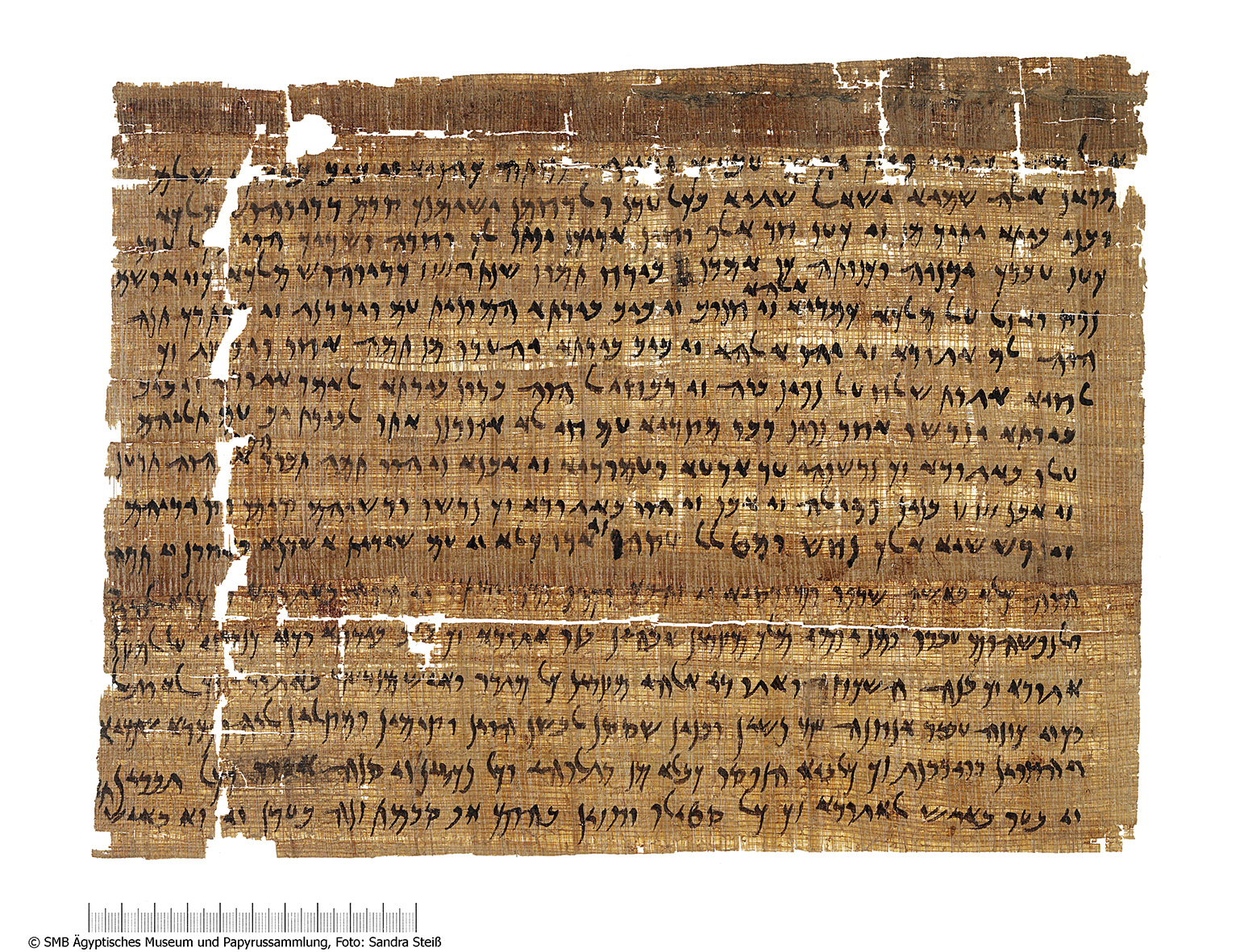
We must distinguish Hebrew compositions edited and transmitted over different periods from the dates of our surviving physical witnesses. The Greek Pentateuch was probably translated in Ptolemaic Egypt in the third century BCE, with other books translated across later centuries. It is evidence for translation and reception, not a document from Jacob’s lifetime.[18] The Great Isaiah Scroll from QumranQumranArchaeological site northwest of the Dead Sea near manuscript caves; its settlement and the groups who deposited the scrolls are studied together but not assumed identical. It is not synonymous with all Dead Sea Scrolls.Glossary · Click to read the explanation, designated 1QIsaᵃ and dated approximately 125 BCE, preserves the Book of Isaiah. Its copying date is not the date of the first composition of chapter 14’s poem; this review has not checked that scroll’s variant readings letter by letter.[22]
Neighboring dates, not one proven evolution
- Approximately the second millennium BCE: Sumerian writings about descent to the netherworld survive in a literary tradition reconstructed in modern scholarship from tablets and fragments. The composite work is not itself a date for every individual tablet.[16]
- The first millennium BCE: Genesis, Isaiah, and Psalms took shape along different editorial and transmission histories. A figure’s place within a narrative cannot date every sentence spoken about that figure.[19]
- Probably the fifth to fourth centuries BCE: a range often proposed for the literary composition of Job, possibly drawing on an older tale as its narrative frame.[20]
- The third century BCE: Greek translation of the Pentateuch, including the Greek Genesis in which we encountered “Hades.”[18]
- Around 165 BCE: composition of the later visions in the Book of DanielBook of DanielA book combining court tales of wisdom and deliverance with visions of kingdoms and the future, formed in stages.Glossary · Click to read the explanation. Daniel 12:2 says that some sleeping in the dust awaken to life or shame. This articulates resurrectionResurrection of the deadResurrection: the hope of the dead returning to life through divine action. Ancient traditions differ on who rises, what embodiment means, and how this relates to judgment or cosmic renewal.Glossary · Click to read the explanation more explicitly than Job 7’s image of descent, although the term “Sheol” is absent from Daniel 12:2 itself.[21]
- Around 125 BCE: copying of the surviving Great Isaiah Scroll, a witness to the transmission of Isaiah rather than to the original date of every part of the book.[22]
Comparison and conclusion
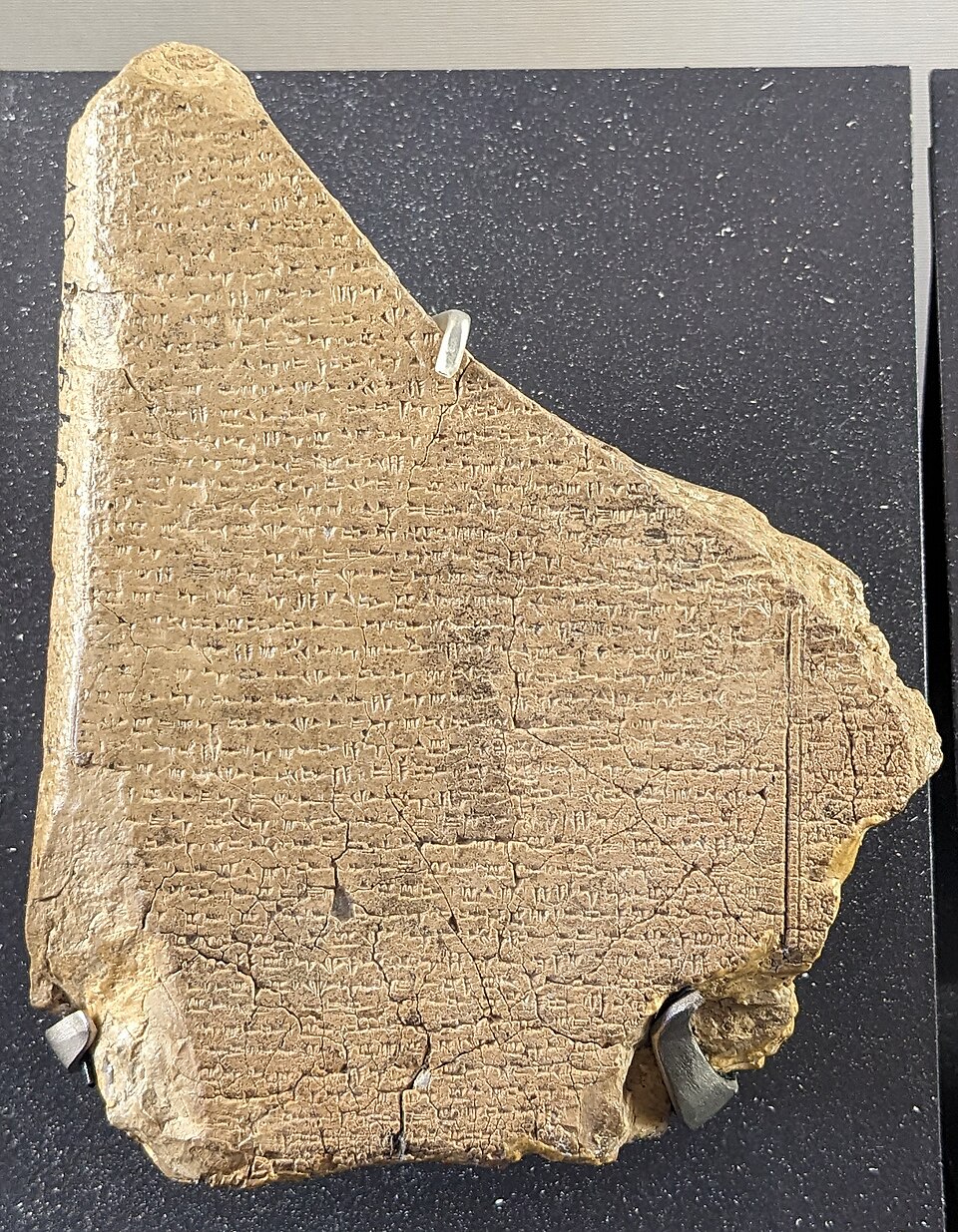
In Mesopotamian literature, the Sumerian poem “InanaInanna / IshtarA prominent Mesopotamian goddess whose Sumerian name Inanna became associated with Akkadian Ishtar across diverse traditions. She was associated with desire, war, royal authority and Venus, while local forms and genealogies varied among texts.Glossary · Click to read the explanation’s Descent to the Netherworld” tells how InannaInanna / IshtarA prominent Mesopotamian goddess whose Sumerian name Inanna became associated with Akkadian Ishtar across diverse traditions. She was associated with desire, war, royal authority and Venus, while local forms and genealogies varied among texts.Glossary · Click to read the explanation enters a realm with gates, powers, and a ruler. We consulted the Oxford project’s English translation of a composite Sumerian text, not individual cuneiformCuneiformWriting with wedge-shaped signs, developed from Mesopotamian recording traditions and used for several languages from the third millennium BCE.Glossary · Click to read the explanation tablets in their original language.[16] The image of descending away from the living is comparable with some Hebrew usages. But the gates and ruling figures of Inanna’s story are not thereby established for every biblical passage, nor does the resemblance prove direct borrowing. Likewise, the Greek word “Hades” is important for translation history, not a warrant for constructing one uniform Israelite doctrine.
The evidence supports a bounded conclusion: Sheol is a word and a set of images for death, and its function shifts with genre and speaker. Jacob grieves; Job protests; Isaiah’s poet mocks a king; the psalmist pleads for life or affirms divine presence; the sage reflects on life’s limits. Calling all these uses “hell” or “nothing but the grave” effaces differences present in the texts themselves. Describing a systematic afterlife or historical connections between traditions requires independent evidence for each additional claim.[8]
References and notes (19)
- Mechon-Mamre’s displayed Masoretic Hebrew with its JPS English parallel; the passage read covers Jacob’s recognition of the coat and refusal of comfort, rather than treating a modern English rendering as the Hebrew original. Genesis 37:33–35, verses 33–35 on the chapter 37 page Return to the text ↑
- Masoretic Hebrew and JPS parallel at Mechon-Mamre. Read Job 7:7–10, where the vanishing cloud and nonreturn to one’s home form a single lament. Job 7:7–10, particularly 7:9–10 Return to the text ↑
- The Lexham Bible Dictionary, accessible “Etymology” section of its Sheol entry, noting uncertainty and the שׁאל / שׁאה proposals, and rejecting an exclusively grave-only definition. Only that visible section was used. Sheol entry, “Etymology” section available on the page Return to the text ↑
- Matthew Suriano, A History of Death in the Hebrew Bible (Oxford, 2018), ch. 7, “Death, Dying, and the Liminality of Sheol,” pp. 217–248. Publisher abstract only; it distinguishes a mythic realm, tomb imagery, and a liminal boundary. Full chapter not accessed. Chapter 7, pp. 217–248; publisher abstract only Return to the text ↑
- Read Isaiah 14:4–20 in Hebrew with JPS parallel. The scene is a taunt against Babylon’s king, portraying the rephaʾim as royal shades and contrasting the ruler’s disgrace with honorable burial. Isaiah 14:4–20, especially vv. 9–11 and 18–20 Return to the text ↑
- Psalm 139:7–12 in Hebrew and JPS parallel; heaven and Sheol mark poetic extremes for the reach of divine presence. Psalm 139:7–12, particularly v. 8 Return to the text ↑
- Isaiah 38:17–19 in Hebrew with JPS parallel. The statement that Sheol cannot praise belongs to Hezekiah’s song and is contrasted with the living giving thanks. Isaiah 38:17–19, particularly vv. 18–19 Return to the text ↑
- Ecclesiastes 9:2–10 in Hebrew with JPS parallel; the wisdom exhortation to act now frames the absence of activity and knowledge in Sheol. Ecclesiastes 9:2–10, particularly v. 10 Return to the text ↑
- 1 Samuel 2:5–8, Hebrew and JPS parallel; poetic reversals of fortune frame the claim that God brings down to Sheol and raises up. 1 Samuel 2:5–8, especially v. 6 Return to the text ↑
- Job 14:10–15, Hebrew and JPS parallel. The wish to be hidden in Sheol until anger passes is hypothetical, not an account of a journey that happened. Job 14:10–15, especially vv. 12–14 Return to the text ↑
- Psalm 49:15–20, Hebrew and JPS parallel. Hebrew v. 16 (v. 15 in another numbering) speaks of God redeeming the speaker from Sheol without explaining a mechanism of resurrection. Psalm 49:15–20, especially Hebrew v. 16 Return to the text ↑
- Oxford ETCSL, “Inana’s descent to the nether world,” English translation of a composite Sumerian literary text; read the opening descent and the sections on gates and the underworld. This was not a direct reading of an individual cuneiform tablet. Corpus dating comes from the project’s About page. ETCSL c.1.4.1, composite translation, lines 1–47 and gate scenes; https://etcsl.orinst.ox.ac.uk/about.htm Return to the text ↑
- Greek Septuagint text of Genesis 37:33–35 identified by the digital publisher as based on Alfred Rahlfs’ 1935 edition; “εἰς ᾅδου” was checked at v. 35. This is a printed composite edition, not a reading attributed to a particular Greek manuscript. LXX Genesis 37:33–35, digital Rahlfs 1935 edition, v. 35 Return to the text ↑
- Leonard J. Greenspoon, revised by William A. Ross (2024), “Septuagint,” Oxford Bibliographies. Read the accessible Introduction, dating the Greek Pentateuch to the mid/late third century BCE and distinguishing the longer production of the whole Greek corpus. Oxford Bibliographies, “Septuagint,” accessible Introduction, revised 24 October 2024 Return to the text ↑
- Victor H. Matthews, “Book of Genesis,” Oxford Bibliographies (updated 2023; reviewed 2026). Accessible publisher Introduction only; it describes the long formation of Genesis from varied traditions and editors, without dating Genesis 37 precisely. Oxford Bibliographies, “Book of Genesis,” Introduction only, updated 24 April 2023 Return to the text ↑
- Posen Library, “What Is the Book of Job?” Read institutional guide dating its literary composition generally to the Persian period, probably the fifth to fourth centuries BCE, and distinguishing narrative frame and dialogues. “What Is the Book of Job?” sections on composition and dating Return to the text ↑
- Anathea E. Portier-Young, “Book of Daniel,” Oxford Classical Dictionary (2022), publisher abstract only, dating the work around 165 BCE. Daniel 12:2 was also checked against Mechon-Mamre’s Hebrew; full article not accessed. Publisher abstract; Daniel 12:2 at https://mechon-mamre.org/p/pt/pt3412.htm Return to the text ↑
- Israel Museum, Jerusalem, “A Voice from the Desert,” exhibition description of the Great Isaiah Scroll. The ca. 125 BCE dating also appears in an indexed excerpt from its exhibition briefing; the briefing PDF itself was not inspected. The Isaiah 14 wording in 1QIsaᵃ was not collated letter by letter. Museum exhibition entry; indexed excerpt of https://www.imj.org.il/sites/default/files/IMJ%20Great%20Isaiah%20Scroll%20Exhibition.pdf Return to the text ↑
- Psalm 6, Hebrew with JPS parallel; the question “in Sheol who will thank you?” is Hebrew v. 6 (which counts the superscription), but v. 5 in many other editions. Psalm 6:5–7 (Hebrew), especially 6:6; often English 6:5 Return to the text ↑
Suggest a correction · Suggest a source for this record
Cite this record
IL Archive, «Sheol: a Hebrew term for the realm of the dead», https://ilarchive.com/en/entities/sheol
Continue reading