Study
Daniel and Ahiqar: Wisdom and Danger at the Royal Court
An extended study of a topic, with evidence and references.
- Region
- Assyria, Babylonia and Elephantine
Daniel and Ahiqar in the world of court tales: Aramaic witnesses, danger and deliverance, with narrative dates distinguished from copies and Ahiqar’s explicit reception in Tobit.
Estimated reading time: 8 min Published Last reviewed:
Share article
Text
Introduction
A sage approaches the king, then faces danger from accusations or orders issued by that same court: this pattern connects Daniel’sDaniel in the biblical bookDaniel is the Jewish sage and visionary in the biblical book bearing his name.Glossary · Click to read the explanation tales with Ahiqar’sAhiqar the wise figureAhiqar is a wise figure in ancient Aramaic traditions.Glossary · Click to read the explanation traditions. Did Daniel’s stories draw on Ahiqar, or did they share a wider narrative world? This study compares the sequence of danger and rescue and asks what changes when a story attributes wisdom and deliverance to its protagonist’s God.
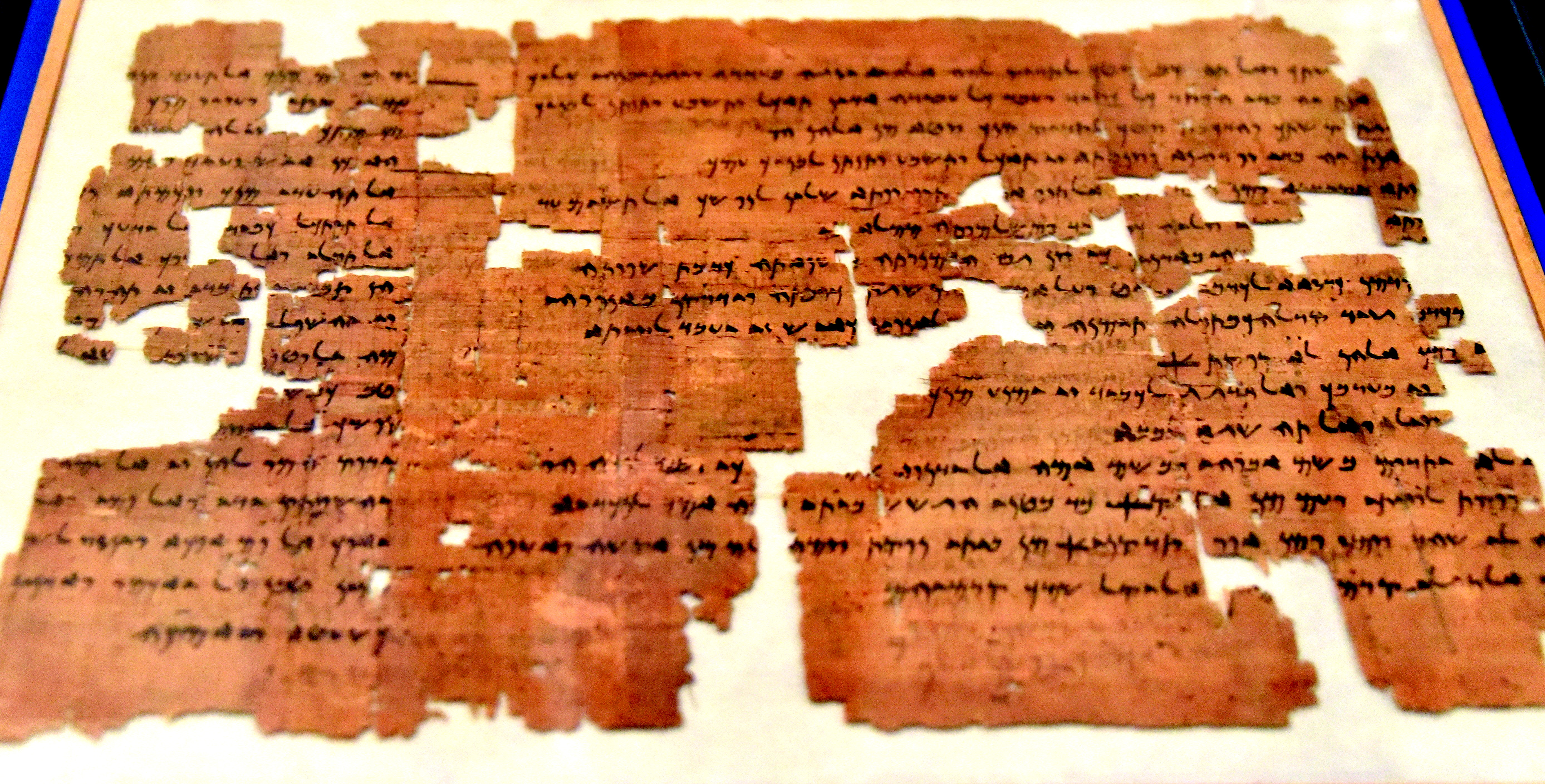
We begin with the Aramaic Ahiqar papyrusElephantine Ahiqar PapyrusA fragmentary Aramaic witness, probably from the later fifth century BCE, preserving Ahiqar’s tale and sayings with gaps and editorial restorations.Glossary · Click to read the explanation from ElephantineElephantine / YebElephantine / Yeb, near Aswan at the Nile’s First Cataract, preserves a long-lived Egyptian town, temples of Khnum and Satet, and Persian-period garrisons. Aramaic papyri document several communities, including Judeans and Yaho’s temple, whose rebuilding was sought in 407 BCE; claims and archaeological interpretations must be distinguished.Glossary · Click to read the explanation, a witness older than Daniel’s final form, distinguishing narrative settings from writing and copying dates. We then examine Tobit’s explicit mention of Ahiqar: a concrete example of the figure entering Jewish literature, helping distinguish documented reception from possible influence.
A sage close to power and danger
Daniel, a young exile from Judah, learns the court’s language, interprets what its sages cannot, and encounters hostility from officials. In Ahiqar’s story, a wise scribe serves Assyrian kings before the young man he raised turns against him. Both place knowledge close to power that may reward or kill its possessor, but they construct rescue differently. [1][2][6]
When are the events set, and when were the texts written?
Ahiqar’s tale is set under SennacheribSennacherib, king of AssyriaAssyrian king, 704–681 BCE; part of Ahiqar’s story is set at his court.Glossary · Click to read the explanation, king of Assyria from 704 to 681 BCE, and his son EsarhaddonEsarhaddon, king of AssyriaSennacherib’s son and successor, Assyrian king in 680–669 BCE, named in Ahiqar and Tobit.Glossary · Click to read the explanation, who ruled from 680 to 669 BCE. Assyria was a major power centered in northern MesopotamiaMesopotamiaHistorical region associated with the Tigris and Euphrates: Uruk, Ur, Eridu, cuneiform, Sumer, Akkad, Babylon and Assyria, their languages and cults, and the limits of archaeological evidence.Glossary · Click to read the explanation. The surviving papyrus, however, comes from Elephantine, the island opposite Aswan in southern EgyptEgyptEgypt lies mainly in northeastern Africa and includes the Sinai Peninsula in AsiaGlossary · Click to read the explanation, and probably dates to the second half of the fifth century BCE. [1][2][14]
The Ahiqar text was written on sheets reused after an older customs account had been erased. That account helps date this copy; the first composition is less precisely known. The papyrus is incomplete, some fragment arrangements are disputed, and brackets in translation indicate editorial restorations. We distinguish what this witness preserves from developments in later SyriacSyriacAn Aramaic literary language rooted in Edessa, first attested in non-Christian inscriptions and later prominent in Christian writing, scholarship, translation and liturgy.Glossary · Click to read the explanation and Arabic retellings. [1][2][4]
The Book of DanielBook of DanielA book combining court tales of wisdom and deliverance with visions of kingdoms and the future, formed in stages.Glossary · Click to read the explanation sets its tales under Babylonian and then Median and Persian rulers. One prominent king is Nebuchadnezzar IINebuchadnezzar IIBabylonian king, 605–562 BCE, appearing in Daniel and independently attested in inscriptions and building remains.Glossary · Click to read the explanation, who ruled BabylonBabylonBabylon is an ancient city in central present-day Iraq, south of BaghdadGlossary · Click to read the explanation from 605 to 562 BCE. This is the story’s setting; the book’s formation is another question. Carol A. NewsomCarol A. NewsomHebrew Bible scholar and professor emerita at Emory’s Candler School, working on Daniel, apocalyptic and wisdom literature.Glossary · Click to read the explanation, a scholar of the HebrewHebrewA Northwest Semitic language of the Canaanite group, encompassing Iron Age epigraphy, Biblical, Rabbinic, medieval and Modern Hebrew; its scripts and pronunciations changed over time.Glossary · Click to read the explanation Bible and apocalyptic literatureApocalyptic literatureLiterary works narrating the disclosure of transcendent knowledge about heaven, history and destiny to a human seer, often by an angel; not every end-time belief or catastrophe prophecy is an apocalypse.Glossary · Click to read the explanation, describes a tale collection developing in the Persian and early Hellenistic periods, possibly drawing on older traditions, followed by visions associated with the second-century BCE crisis under Antiochus IVAntiochus IV EpiphanesAntiochus IV Epiphanes was a Seleucid king who ruled from175 to164 BCE.Glossary · Click to read the explanation. This is a scholarly synthesis of the book’s stages, not an exact composition year for each tale. [3][5][14]
What does the Ahiqar papyrus preserve?
Ahiqar presents himself as a wise scribe serving Sennacherib and Esarhaddon. Childless, he raises his nephew NadinNadin in AhiqarThe young man Ahiqar raises and prepares as successor, then portrayed as betraying the sage.Glossary · Click to read the explanation as a son and prepares him to succeed him in royal service. The relationship then turns into betrayal. The accusation lines are badly damaged: the translation restores a letter and an accusation, while the mechanism remains less clear than in later versions. [1][2]
The king orders Ahiqar killed, but the official assigned to execute him remembers an earlier kindness: the sage had hidden him when a similar order threatened his life. Ahiqar asks repayment, and the man agrees to save him. A plan appears to kill a servant and substitute his corpse, though parts of the scene are missing. Long sayings about wisdom, discretion, and conduct follow the surviving narrative. Rescue depends on an earlier human relationship and also involves a proposed substitute victim. [1]
Seth A. BledsoeSeth A. BledsoeScholar of ancient Judaism, wisdom and narrative; assistant professor at Radboud University, with research on Ahiqar.Glossary · Click to read the explanation, a scholar of wisdom literature and ancient Judaism, reads this combination of fidelity and fear in Persian-ruled Elephantine. The text encourages loyalty and obedience while revealing the vulnerability of someone whose fate depends on royal decisions. This reading explains how a tale set in an Assyrian past could matter to Egyptian readers centuries later. [2]
Divine names and religious expressions occur in Ahiqar’s sayings, so the whole work is not described as devoid of religion. The relevant contrast is narrower: the surviving rescue scene depends on an official repaying a kindness, whereas Daniel will attribute revelation and deliverance to his God. Ahiqar’s challenges and riddles involving Egypt, developed in later versions, belong to another stage of the work’s history and cannot automatically fill the older papyrus’s gaps. [1][2][4]
Daniel: knowledge and religious loyalty
In Daniel 1, Daniel and three young men from JudahKingdom of JudahJudah was an ancient southern Levantine kingdom centered on Jerusalem in the Iron AgeGlossary · Click to read the explanation study the Chaldeans’ language and literature for royal service. They receive new names and assigned food, but Daniel seeks to avoid defilement from the king’s food as the story presents it, requesting a trial of another diet. They pass, and the king finds them outstanding in wisdom. The opening joins the ability to work at court with a religious commitment. [6]
In chapter 2, Nebuchadnezzar requires the sages to tell him both his dream and its interpretation, threatening them when they fail. Daniel and his companions seek their God’s mercy; the text says the secret is revealed in a night vision. Daniel gains honor and promotion but attributes his knowledge to divine revelation rather than personal superiority. The successful sage’s solution to a royal puzzle acquires an explicit religious meaning. [7]
In chapter 3, the king erects a golden image and orders people to bow to it; the text does not identify it as a likeness of the king himself. Daniel’s three companions refuse, maintaining their position even if their God does not save them from the fire. The narrative then tells of their rescue and the king’s acknowledgment of their God’s power. [8]
Loyalty is tested again in chapter 6. Daniel’s opponents find no fault in his administration and persuade the king to prohibit petitions to any god or person except himself for a specified period. Daniel continues praying, is thrown to the lions, and attributes his survival to an angel sent by his God. Competing officials bring the charge, and divine intervention supplies the narrative’s rescue; both differ from the relative’s betrayal and repaid kindness in Ahiqar. [9]
Chapters 4 and 5 return to the interpreting sage: a tree in one king’s dream and writing on the wall at another king’s feast. Interpretation confronts the first ruler’s pride and announces the end of the second’s reign. Naama GolanNaama Golan, biblical scholarHebrew Bible scholar who examined the structure and meaning of Daniel 1–6 in a 2019 study.Glossary · Click to read the explanation, a Hebrew Bible scholar, reads chapters 1–6 through the tension between human kingship and divine sovereignty, and the limits of both ruler and sage. Her interpretation illuminates the collection alongside readings emphasizing exiles’ integration or criticism of power. [5][10][11]
A genuine relationship within the world of court tales
The stories share a connected set of features: a sage close to the king, success provoking hostility, accusations turning power against him, mortal danger, and rescue. This explains their study alongside Joseph and EstherEsther, the biblical queenThe Jewish heroine of Esther, portrayed as becoming queen and intervening to save her community at the Persian court.Glossary · Click to read the explanation as court talesCourt TaleAn analytical category for stories in which a sage or outsider faces tests of skill, loyalty, or survival at a royal court, through contest, accusation, or reversal; it does not establish one textual origin.Glossary · Click to read the explanation, a literary category recurring around wisdom, power, and vulnerable people’s fortunes. [1][2][11]
Differences give each narrative its direction. Ahiqar’s betrayal begins in his household; a past favor protects him from the king’s order. Daniel highlights the court sages’ inability in order to foreground divine revelation, or an imposed religious act turns loyalty to God into the central crisis. An adopted relative and an official indebted for an old kindness do not drive the lions’ den story. [1][7][8][9]
The Ahiqar papyrus’s priority and Aramaic’s place in the ancient Near EastAncient Near EastModern scholarly label for ancient societies of Mesopotamia, the Levant, Anatolia and Iran, sometimes extending to Egypt and other neighbours depending on the study; not one civilization or religion.Glossary · Click to read the explanation make transmission and reshaping of traditions legitimate questions. Distinctive details, sequence, and wording, together with chronology and contact, can strengthen an influence argument; a named intermediary or a manuscript for every stage is not always required. The witnesses examined here, however, do not identify a particular Daniel tale as dependent on the Elephantine papyrus itself. Two possibilities remain open: a shared Aramaic narrative world and some Daniel stories drawing on circulating Ahiqar traditions. [1][2][3][11]
Tobit: when Ahiqar is named
The Book of TobitBook of TobitJewish story of a family in Assyria, combining adversity, prayer, journey and almsgiving, and naming Ahiqar.Glossary · Click to read the explanation, a Jewish story about a family living in Assyria, offers clearer evidence of Ahiqar’s reception. In Tobit 1:21–22 he is named as Tobit’s relative and a senior official under Esarhaddon who intercedes for him. Name and role occur in the text itself, rather than being inferred solely from a similar scene. [12]
In 14:10, Nadab’s betrayal of Ahiqar, who raised him, and the sage’s escape serve an exhortation about almsgiving and the outcome of injustice. The translation checked calls the betrayer Nadab, whereas the Ahiqar papyrus translation used here has Nadin; we preserve the distinction between witnesses. Tobit shows Ahiqar’s story entering Jewish literature and receiving a particular moral emphasis. Daniel’s relationship to it remains a separate question. [13]
What does this comparison add?
We have an early Aramaic witness, Daniel’s tales of wisdom and deliverance, and Ahiqar’s explicit appearance in Tobit. These let us trace wise-courtier traditions across settings while distinguishing a copy’s date from the story’s proposed origins. Whether and how Daniel’s storytellers used these traditions remain less precise than the evidence that Ahiqar circulated.
The comparison reveals more than a single source attribution. Both works place the sage near power that can kill him. Ahiqar makes knowledge and human loyalty means of survival at court; Daniel’s tales allow royal service until it conflicts with fidelity to God. The narrative form persists while the center of wisdom and deliverance changes. [1][2][6][9][11]
Further reading: Esther and court tales, Joseph and Two Brothers, Resurrection in Daniel, and Similarity and borrowing.
References and notes (14)
- Berlin, Ahiqar P.13446 A–H and K–L: object data and English narrative A i 01–D ii 15; brackets mark restorations and some fragment ordering is disputed. Berlin, Ahiqar P.13446 A–H and K–L: object data and English narrative A i 01–D ii 15; brackets mark restorations and some fragment ordering is disputed. Return to the text ↑
- Seth A. Bledsoe, Ahiqar study in Political Memory in and after the Persian Empire, 2015, pp. 239–243, 253–255 and 263–265 reread; pp. 245–246 checked in the earlier reading. These selections are not a reading of the whole volume. Seth A. Bledsoe, Ahiqar study in Political Memory in and after the Persian Empire, 2015, pp. 239–243, 253–255 and 263–265 reread; pp. 245–246 checked in the earlier reading. These selections are not a reading of the whole volume. Return to the text ↑
- Carol A. Newsom, Daniel, Oxford Bibliographies, 13 September 2010: accessible introduction on tales, visions and formation, not the full restricted bibliography. Carol A. Newsom, Daniel, Oxford Bibliographies, 13 September 2010: accessible introduction on tales, visions and formation, not the full restricted bibliography. Return to the text ↑
- Göttingen Ahiqar project: public project overview read on 12 October 2026 on witnesses and transmission. Fresh retrieval was unavailable in this review; full editions were not read. Göttingen Ahiqar project: public project overview read on 12 October 2026 on witnesses and transmission. Fresh retrieval was unavailable in this review; full editions were not read. Return to the text ↑
- Naama Golan, The Daniel Narratives (Dan 1–6): Structure and Meaning, JHS 19, article 3, 2019: pp. 1–5 and 23–24 reread, not the whole article. Naama Golan, The Daniel Narratives (Dan 1–6): Structure and Meaning, JHS 19, article 3, 2019: pp. 1–5 and 23–24 reread, not the whole article. Return to the text ↑
- Daniel 1, Hebrew and facing English: education, names and food, within the earlier complete reading of Daniel 1–6. Daniel 1, Hebrew and facing English: education, names and food, within the earlier complete reading of Daniel 1–6. Return to the text ↑
- Daniel 2: dream, interpretation, revelation and promotion, in the previous primary-text reading. Daniel 2: dream, interpretation, revelation and promotion, in the previous primary-text reading. Return to the text ↑
- Daniel 3:1–33 in the displayed Masoretic numbering: golden image, refusal and deliverance. The text does not call it the king’s portrait. Daniel 3:1–33 in the displayed Masoretic numbering: golden image, refusal and deliverance. The text does not call it the king’s portrait. Return to the text ↑
- Daniel 6:1–29 in the displayed Masoretic numbering: decree, prayer, lions and deliverance. Daniel 6:1–29 in the displayed Masoretic numbering: decree, prayer, lions and deliverance. Return to the text ↑
- Daniel 4:1–34 and 5:1–30: tree dream and wall writing, in the previous primary-text reading. Daniel 4:1–34 and 5:1–30: tree dream and wall writing, in the previous primary-text reading. Return to the text ↑
- Editorial comparison of primary texts, Bledsoe and Golan: court-tale relationships and altered deliverance, with direct influence kept as a research possibility. Editorial comparison of primary texts, Bledsoe and Golan: court-tale relationships and altered deliverance, with direct influence kept as a research possibility. Return to the text ↑
- Tobit 1:21–22 in Oxford University Church’s chapters 1–2 file: passage and page-two context read, not the whole book; translation edition not identified in the file. Tobit 1:21–22 in Oxford University Church’s chapters 1–2 file: passage and page-two context read, not the whole book; translation edition not identified in the file. Return to the text ↑
- Tobit 14, whole chapter checked, especially 14:10: Nadab, Ahiqar’s betrayal and almsgiving. Tobit 14, whole chapter checked, especially 14:10: Nadab, Ahiqar’s betrayal and almsgiving. Return to the text ↑
- British Museum, Babylon resource and Sennacherib/Esarhaddon records: Nebuchadnezzar 605–562 BCE, Sennacherib 704–681, Esarhaddon 680–669. Narrative settings are distinguished from composition. British Museum, Babylon resource and Sennacherib/Esarhaddon records: Nebuchadnezzar 605–562 BCE, Sennacherib 704–681, Esarhaddon 680–669. Narrative settings are distinguished from composition. Return to the text ↑
Suggest a correction · Suggest a source for this record
Cite this record
IL Archive, «Daniel and Ahiqar: Wisdom and Danger at the Royal Court», https://ilarchive.com/en/studies/daniel-tales-and-court-wisdom
Continue reading
Related readings