Person · Figure
Nanni of Ur, a voice in the copper trade
- Names
- Nanni
- Timeline
- 1750 BCE
- Region
- Mesopotamia
Nanni sent an Akkadian letter to Ea-nāṣir over poor copper, a withheld purse and the treatment of his messengers. His complaint records how one trader sought redress in the Old Babylonian trade with Dilmun.
Estimated reading time: 5 min Published Last reviewed:
Share article
Text
Introduction
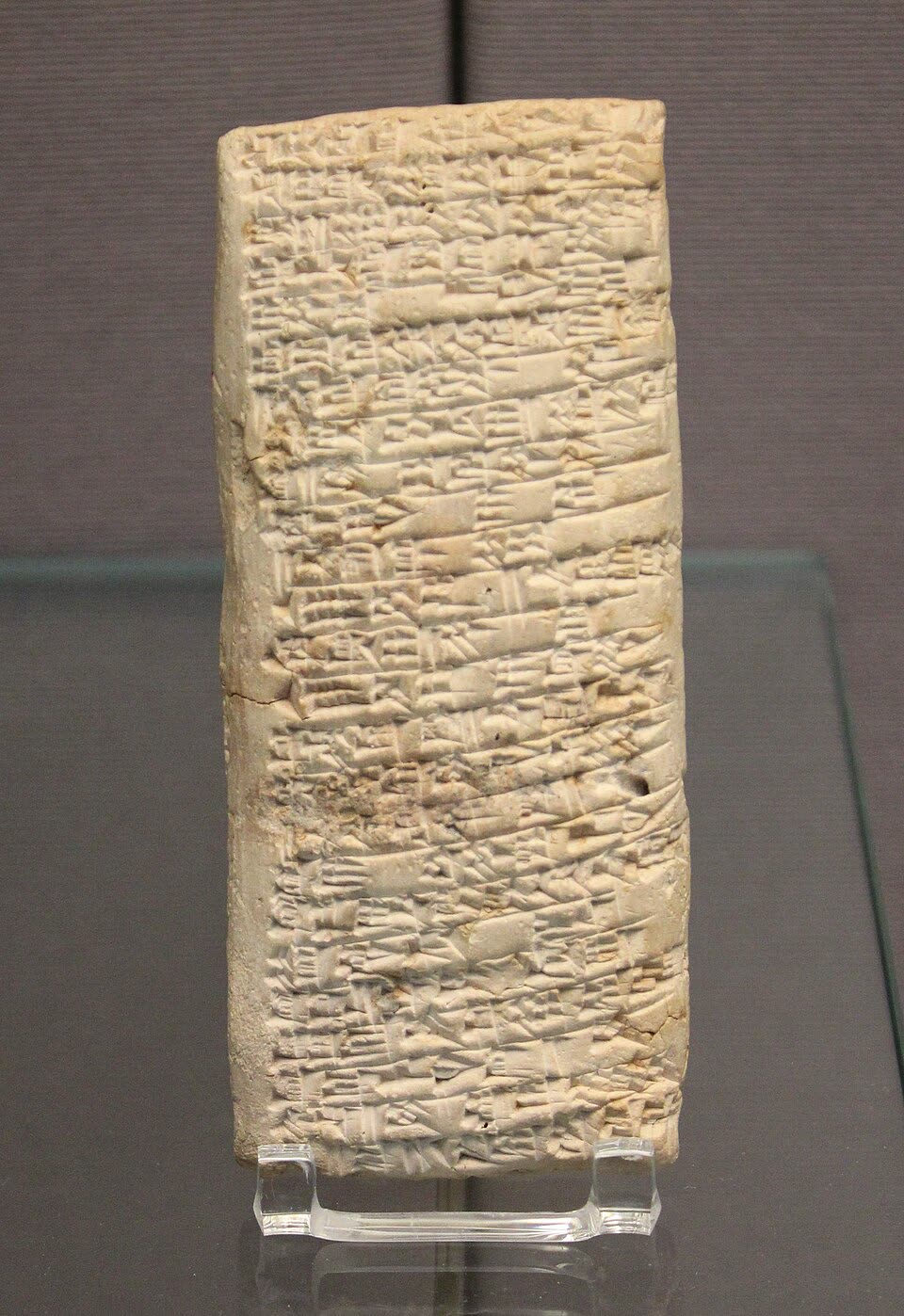
Nanni is the named sender of an Old Babylonian letter to the copper trader Ea-nāṣir. The clay tablet found at Ur preserves his account of an unkept promise about the quality of copper ingots, the treatment of his messengers and money he wanted returned. The British Museum dates the object to about 1750 BCE. Read as a business letter, it shows how a participant in the copper trade called on past obligations and set terms for future dealings. [1] [2] [3]
A promise about copper
The letter opens by identifying Ea-nāṣir as its recipient and Nanni as its sender. Nanni recalls a promise made in person that good copper ingots would be given to Gimil-Sin. In his account, Ea-nāṣir presented the messenger with poor ingots and told him he could take them or leave. The complaint measures the offer against a prior commitment and draws attention to the manner in which the messenger was received. Nanni repeatedly takes the treatment of the man who came for the metal as a slight to himself. [1] [3]
Nanni also refers to men sent to recover his purse or capital. He asserts that they came back empty-handed more than once from territory he describes as hostile. He stresses their standing as men comparable to himself and Ea-nāṣir, and asks which other trader to DilmunDilmun: Ancient Gulf Land and Literary SettingDilmun was an ancient Gulf trading land with a major archaeological centre in Bahrain and connections to eastern Arabia and Failaka. This entry separates boats, burials and kings from the literary purity and fresh water of Enki and Ninhursaga, and tests the limits of comparison with Eden.Glossary · Click to read the explanation has behaved this way toward him. These passages set out a problem that extends beyond the batch of ingots. Sending people to collect property involved repeated journeys, and Nanni expected the receiving party to honour the standing of the people he entrusted to act for him. [1] [3]
A purse, the palace and a second tablet
Nanni brings up silver that had passed out of his hands and demands his purse back in full. He also says that he and Šumi-abum each delivered a substantial quantity of copper to the palace on Ea-nāṣir's behalf. Steven Garfinkle and Seth Richardson translate the quantity as about 540 kilograms for each man. The letter then invokes a sealed tablet they had left in the temple of ŠamašShamashMesopotamian god of the sun and justice, shown before Hammurabi on an eighteenth-century BCE stele preserved in the Louvre.Glossary · Click to read the explanation. The appeal turns on what Nanni says he and his associate had already done, and on a written record outside the complaint itself. [1] [3]
At the close, Nanni declares that he will receive only good copper and will choose the ingots himself in his own courtyard. The detail about the courtyard makes the proposed change concrete. The sender means to move the decision about acceptable metal into a place under his control and to exercise it in person. Translators differ over a term at the end. Garfinkle and Richardson read a threat to cause Ea-nāṣir grief, and discuss a reading adopted by W. F. Leemans that concerns having first choice. The preceding lines make Nanni's intention to inspect and select the ingots clear. [3] [4]
Recovering the business setting
The tablet is registered as British Museum 131236 and published as Ur Excavations Texts 5, no. 81. The CuneiformCuneiformWriting with wedge-shaped signs, developed from Mesopotamian recording traditions and used for several languages from the third millennium BCE.Glossary · Click to read the explanation Digital Library Initiative gives the excavation number U.16814a. The final report on Ur places the U.16814 group among tablets probably associated with the house the excavators called No. 1 Old Street. The field catalogue assigns the group to AH House IV, and an editorial note explains why the equation with the modern street label is probable. That evidence links Nanni's message with a group of texts concerning Ea-nāṣir while leaving the precise location where the tablet lay within the house unresolved. [1] [4] [5]
The wider correspondence supplies a second view of Nanni. The same collection records complaints from men who awaited copper or expected interest on what they had already paid. Garfinkle and Richardson identify him as a senior merchant of Larsa and attribute another letter to him, UET 5, no. 66. In that document he calls on Ea-nāṣir and a second man whose name is damaged to behave properly if they are his sons. The researchers read similar language across the correspondence as appeals to familiar relationships and to the business consequences of a damaged reputation. Contemporary complaints by other correspondents about late delivery or the grade of copper give context to Nanni's expectation that a commercial partner should keep his word. [3]
Ea-nāṣir is documented among merchants who travelled to Dilmun, in the Gulf, and whose business involved moving copper ingots. The letters studied by Garfinkle and Richardson concern sizeable quantities of metal owed to associates in Ur and Larsa. The labour of carrying the copper, sending messengers and securing repayment surfaces in the correspondence when a transaction goes wrong. Nanni's own grievance brings together the purchase, the handling of his funds, the palace deliveries and the written record he asks Ea-nāṣir to remember. [3] [4]
The sender in the surviving record
GabrielGabriel / JibrīlA Semitic theophoric name for an interpreter of visions in Daniel and a messenger in Luke; named Jibrīl in the Qurʾan. His functions depend on each textual context.Glossary · Click to read the explanation Moshenska's study of the complaint's modern reception traces how photographs of the tablet and retellings of the transaction spread online from 2015. He observes that much of this reception humanises the recipient Ea-nāṣir and casts him as the central character. Nanni's letter gives a different vantage point. The sender names what he expected, details the costs of failed collection, and tells his partner how he proposes to receive copper in future. The document preserves those demands in Nanni's voice. The outcome of the dispute and much of his life remain unknown. [1] [3] [4]
References and notes (5)
- Cuneiform Digital Library Initiative, UET 5 81 (P414985) Object catalogue, excavation number, reference to the first publication and Akkadian transliteration across both faces. Return to the text ↑
- British Museum, Clay tablet (131236), catalogue description hosted on Zenodo Museum object identification, production date and description of the two copper delivery issues. Return to the text ↑
- Steven J. Garfinkle and Seth Richardson, Community and State Violence in Middle Bronze Age Mesopotamia Journal of the Economic and Social History of the Orient 68 (2025), pp. 174–177. Read the translation of Nanni's letter, comparison with UET 5 66, and discussion of the final line. Return to the text ↑
- Gabriel Moshenska, The Legend of Ea-Naṣir Accepted manuscript in the UCL repository. Read the archaeological setting, quoted Oppenheim translation and study of the complaint's modern reception. Return to the text ↑
- C. Leonard Woolley and M. E. L. Mallowan, Ur Excavations VII: The Old Babylonian Period Final excavation report, p. 125 and note 5 on No. 1 Old Street, house IV and the U.16814 group. Return to the text ↑
Suggest a correction · Suggest a source for this record
Cite this record
IL Archive, «Nanni of Ur, a voice in the copper trade», https://ilarchive.com/en/people/nanni-of-ur