Period
The Neo-Assyrian empire (c. 911–609 BCE)
- Timeline
- From 911 BCE to 609 BCE
- Region
- Mesopotamia
Assyrian kings ruled from the Tigris to the Mediterranean and campaigned in Egypt. Their inscriptions describe conquest, tribute and resettlement. Babylonian chronicles and other accounts offer a different view of the empire and its fall.
Estimated reading time: 6 min Published Last reviewed:
Share article
Text
Introduction
From their heartland in what is now northern IraqIraqIraq is a modern country encompassing much of ancient MesopotamiaGlossary · Click to read the explanation, the Neo-Assyrian kings extended their rule west to the Mediterranean and south into Babylonia. They also campaigned in Egypt. Assyrian royal inscriptions, administrative records and the accounts of neighbouring kingdoms document the empire from different perspectives. [10][13][17][24]
Dates and kings
The accession of Adad-nirari II in 911 BCE is a conventional starting point. The Babylonian Chronicle records that Ashur-uballit II and his Egyptian allies tried unsuccessfully to retake Harran in 609 BCE, a conventional endpoint. The dates below follow the regnal chronologies used in the cited editions. [9][41]
- Ashurnasirpal II (883–859 BCE) reached the Mediterranean and made NimrudNimrud: ancient KalhuNimrud is the site of the Assyrian city Kalhu in present-day northern Iraq, near Mosul.Glossary · Click to read the explanation (Kalhu) his royal capital. [8][10][38]
- Shalmaneser III (858–824 BCE) fought a western coalition at Qarqar in 853 BCE. One of his later monuments is the Black Obelisk (record 1200 on this site). [8][11][12]
- Tiglath-Pileser III (745–727 BCE, counting his accession year) extended direct Assyrian rule over parts of Syria and the southern LevantThe LevantThe Levant is a regional name for lands along the eastern MediterraneanGlossary · Click to read the explanation. [8][13]
- Sargon IISargon IISargon II was an Assyrian king of the late eighth century BCE; ORACC dates his reign about 721–705 BCEGlossary · Click to read the explanation (722–705 BCE, counting his accession year) built a royal capital at Dur-Sharrukin and died on campaign in AnatoliaAnatoliaAnatolia is the region occupying the Asian part of present-day TurkeyGlossary · Click to read the explanation. [14]
- SennacheribSennacherib, king of AssyriaAssyrian king, 704–681 BCE; part of Ahiqar’s story is set at his court.Glossary · Click to read the explanation (705–681 BCE, counting his accession year) made NinevehNineveh and KuyunjikNineveh is an ancient Assyrian city near Mosul in northern Iraq; Kuyunjik is one of its archaeological moundsGlossary · Click to read the explanation his principal royal residence. His inscriptions describe the campaign in Judah in 701 BCE. [10][15]
- EsarhaddonEsarhaddon, king of AssyriaSennacherib’s son and successor, Assyrian king in 680–669 BCE, named in Ahiqar and Tobit.Glossary · Click to read the explanation (680–669 BCE by regnal years) captured Memphis in 671 BCE. The victory stele from Sam’al commemorates his Egyptian campaign. [16][39][43]
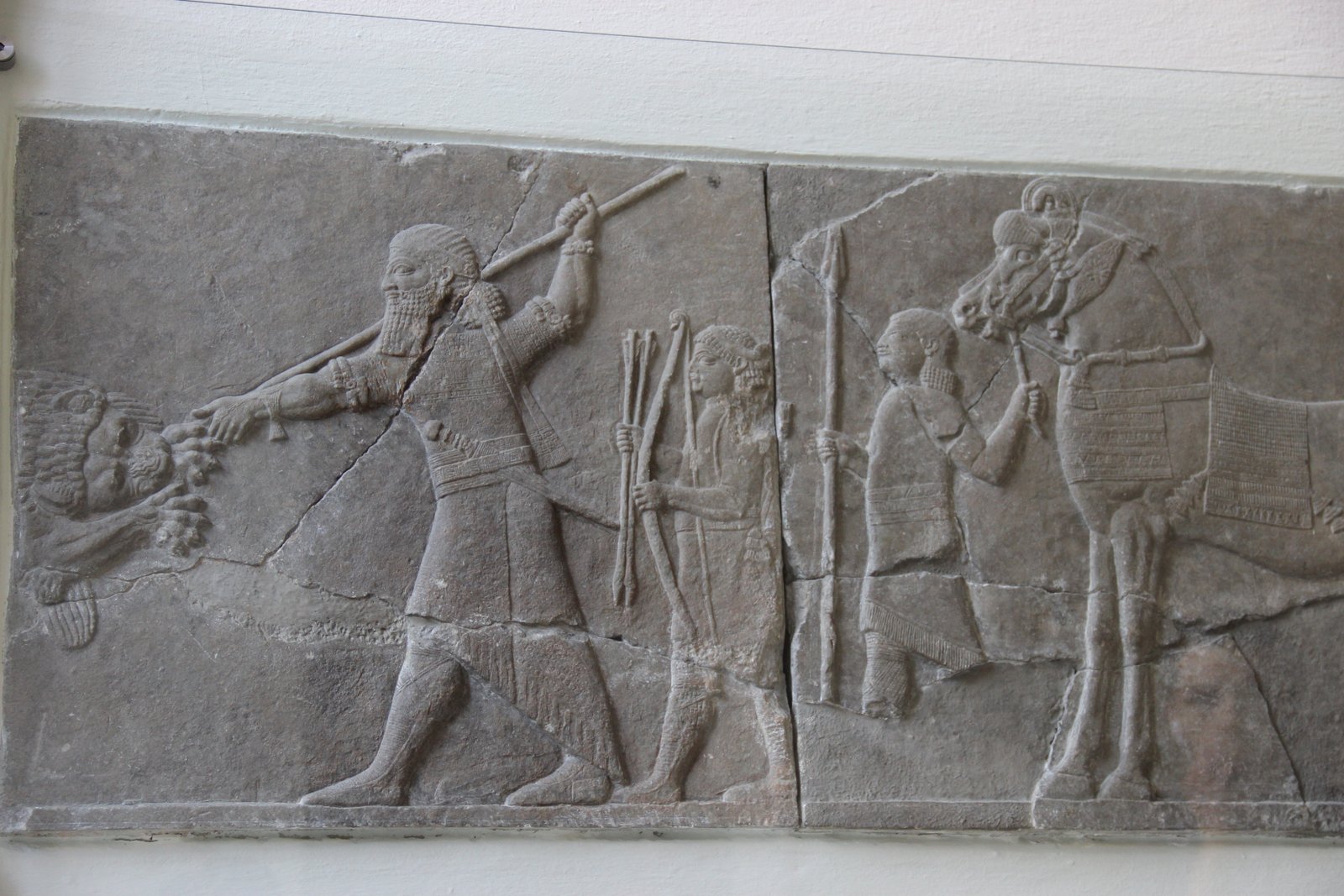
- AshurbanipalAshurbanipalAshurbanipal was an Assyrian king of the seventh century BCE, reigning about 668–631 BCEGlossary · Click to read the explanation (668–631 BCE in the chronology used here) assembled collections of scholarly tablets at Nineveh. [17][27]
The city of AshurAshur, Qal’at SherqatAncient Tigris city in Iraq, an Assyrian political and religious centre.Glossary · Click to read the explanation remained an important religious centre. It shared its name with the god Ashur, whose temple stood in the city, and with Assyria itself. [36]
The change under Tiglath-Pileser III
The Assyrian Eponym Chronicle records a revolt at Kalhu before Tiglath-Pileser III took the throne in 745 BCE. A Babylonian king list calls him Pulu, and 2 Kings 15:19 calls him Pul. [13][40][45]
Tiglath-Pileser III’s inscriptions record the appointment of governors in annexed territories. They distinguish areas brought under direct administration from rulers who remained in place and owed tribute. They also describe the incorporation of men and contingents from conquered lands into Assyrian forces. [13][35]
Arpad fell in 740 BCE after a campaign that lasted several years. Tiglath-Pileser III’s forces took Gaza in 734 BCE. His inscriptions list tribute from rulers of Judah, Edom, Moab and Ammon. They report the annexation of Damascus and parts of Israel during the campaigns of 733–732 BCE. A Babylonian chronicle names him as king of BabylonBabylonBabylon is an ancient city in central present-day Iraq, south of BaghdadGlossary · Click to read the explanation from 729 BCE. [13][18][35]
Israel and Judah
The Babylonian Chronicle credits Shalmaneser V with ravaging SamariaSamaria: city and regionAncient city and administrative region; the city’s site is at Sebastia, northwest of Nablus in the West Bank.Glossary · Click to read the explanation, the capital of Israel. His successor Sargon II claims its conquest in his own inscriptions and records the installation of an Assyrian governor. The sources place these events around the change of reign and Sargon’s early campaigns. [14][18]
In 701 BCE Sennacherib campaigned in Judah. His account says that HezekiahHezekiah, king of JudahKing of Judah in the late eighth century BCE, named in Sennacherib’s Assyrian accounts of the 701 BCE campaign.Glossary · Click to read the explanation had refused submission. Inscribed prisms record the king’s claims to have taken 46 fortified towns, removed 200,150 people and confined Hezekiah in JerusalemJerusalemJerusalem is a city of religious importance in Judaism, Christianity and IslamGlossary · Click to read the explanation, likening him to a bird in a cage. They give the tribute as 30 talents of gold and 800 of silver, along with other goods. The account in 2 Kings 18:14–16 gives the same amount of gold and 300 talents of silver. The conquest of Lachish appears in palace reliefs from Nineveh (see the Lachish letters, record 1204). [15][19][21][22][23]
Sennacherib’s account describes Hezekiah confined in Jerusalem and claims no capture of the city. In 2 Kings 19:35–36, the death of 185,000 Assyrians is attributed to an angel, and Sennacherib returns to Nineveh. Herodotus later tells a different story about mice in an Assyrian camp near Pelusium in Egypt. These accounts preserve different explanations and settings. [15][20][22][33]
How the empire ruled
Royal correspondence travelled by roads linking provincial centres, with relay stations where fresh mounts were available. Provincial governors reported to the court and helped maintain the network. Royal inscriptions attribute military success to the support of the god Ashur and present campaigns from the king’s perspective. [13][15][24]
Forced resettlement was one means of imperial rule. Sargon II’s inscriptions record the removal of inhabitants from Samaria and the resettlement of people from other lands there. Modern studies distinguish these royal claims from what letters and administrative records reveal about particular relocations. The AramaicAramaicNorthwest Semitic language varieties documented since the early first millennium BCE, including Old and Imperial Aramaic, Syriac, Jewish dialects, and living Neo-Aramaic forms.Glossary · Click to read the explanation alphabetic script was used alongside AkkadianAkkadianAn ancient East Semitic language written in cuneiform from the third millennium BCE; its varieties include Babylonian and Assyrian, and it served in international diplomacy.Glossary · Click to read the explanation cuneiformCuneiformWriting with wedge-shaped signs, developed from Mesopotamian recording traditions and used for several languages from the third millennium BCE.Glossary · Click to read the explanation, as the Aramaic annotations on some clay tablets show. [14][25][26]
Knowledge and records
Austen Henry Layard and Hormuzd Rassam recovered tablets from royal buildings at Nineveh. The Yale Cuneiform Commentaries Project counts about 31,000 tablets and fragments from the mound of Kuyunjik, including material from two rooms in Sennacherib’s Southwest Palace. The total covers finds from more than one collection. Surviving tablets include literary works, scholarly texts and administrative records. Colophons and letters document the copying and acquisition of texts for the royal collections. [10][27][28]
Ashurbanipal, civil war and collapse
Ashurbanipal’s inscriptions recount campaigns against Taharqa and Tantamani and the sack of Thebes. Assyrian power in Egypt receded as Psamtik I consolidated his rule. Ashurbanipal’s brother Shamash-shum-ukin rebelled in 652 BCE. The siege of BabylonBabylonBabylon is an ancient city in central present-day Iraq, south of BaghdadGlossary · Click to read the explanation ended in 648 BCE. Ashurbanipal also records campaigns against Elam, including the sack of Susa. [17][29][37][42][43][44]
NabopolassarNabopolassarNabopolassar was a late-seventh-century BCE Babylonian king who claimed to rebuild Etemenanki.Glossary · Click to read the explanation took the throne of Babylon in 626 BCE and campaigned in Assyrian territory in 616 BCE. The Babylonian Fall of Nineveh Chronicle records that the Medes captured Ashur in 614 BCE. The Medes and Babylonians then took Nineveh in 612 BCE after a three-month siege. The chronicle reports the death of Sin-shar-ishkun at that time. It records the capture of Harran in 610 BCE and a failed attempt by Ashur-uballit II and his Egyptian allies to regain it in 609 BCE. A separate chronicle describes the defeat of the Egyptian army at Carchemish in 605 BCE. [9][31][32][46]
The Median–Babylonian alliance is documented in the chronicle, which records their joint siege of Nineveh. A 2019 study of mineral deposits in Kuna Ba cave in northern Iraq found evidence of prolonged aridity late in the imperial period. Its authors propose that drought added pressure to Assyria’s agricultural base. The climate evidence and the written record document different aspects of the collapse. [9][30]
Reading the evidence with care
Royal inscriptions present the king’s version of events. Figures for conquered towns, deportees and tribute belong to that account and need independent corroboration when it exists. A comparison with the Babylonian chronicles and the biblical accounts can establish points of agreement and show where the sources describe different details. [9][15][18][19][20]
Why it matters
The Neo-Assyrian period set the world in which Israel and Judah, the PhoenicianPhoeniciansCommunities of Levantine coastal cities known for Mediterranean contact during the first millennium BCE.Glossary · Click to read the explanation cities, Egypt and Babylon met. Its roads, its deportations and its use of Aramaic changed the region long after its capitals were burned. Reading its inscriptions beside the HebrewHebrewA Northwest Semitic language of the Canaanite group, encompassing Iron Age epigraphy, Biblical, Rabbinic, medieval and Modern Hebrew; its scripts and pronunciations changed over time.Glossary · Click to read the explanation Bible and the Babylonian chronicles, and seeing where they differ, is a good way to learn how to read any ancient source.
References and notes
- Wikipedia, 'Neo-Assyrian Empire' (secondary summary) First 200,000 of 286,163 characters: dates, kings, capitals, provinces, army, deportations, Ashurbanipal, collapse 626-609 BCE, languages, sources; the last part was not read Return to the text ↑
- Wikipedia, 'Tiglath-Pileser III' (secondary summary) First 100,000 of 152,005 characters: reforms, standing army, Levant campaigns 743-732 BCE, Babylon 729 BCE, the name Pul; the last part was not read Return to the text ↑
- Wikipedia, 'Sennacherib's Annals' (secondary summary) Whole article: Taylor, Chicago and Jerusalem prisms, the 701 BCE campaign, 46 cities, 200,150 deportees, Hezekiah 'caged bird', tribute Return to the text ↑
- Wikipedia, 'Assyrian siege of Jerusalem' (secondary summary) Whole article as returned: biblical and Assyrian accounts, tribute, Herodotus, one-campaign versus two-campaign theories Return to the text ↑
- Wikipedia, 'Library of Ashurbanipal' (secondary summary) Whole article as returned: Layard 1849, Rassam, more than 30,000 tablets, contents, collection methods, British Museum catalogue Return to the text ↑
- Wikipedia, 'Fall of Nineveh' (secondary summary) Whole article as returned: siege of 612 BCE, Nabopolassar and the Medes, Sin-shar-ishkun, Ashur-uballit II, Fall of Nineveh Chronicle, causes Return to the text ↑
- Wikimedia Commons file page, 'Alabaster Bas-relief of Lion hunt; Ashurbanipal thrusts spear into a leaping lion...' (Gary Todd, CC0) File page read: description, author, date 1 Aug 2016, licence CC0 1.0, original 5184 x 3456; museum given as Pergamon Museum, Berlin (category Vorderasiatisches Museum) Return to the text ↑
- Metropolitan Museum of Art, “List of Rulers of Mesopotamia,” Heilbrunn Timeline of Art History. Assyrian chronology, including Ashurnasirpal II, Shalmaneser III and Tiglath-Pileser III. Return to the text ↑
- Babylonian Chronicle 3, “Fall of Nineveh Chronicle,” BM 21901, translation adapted from A. K. Grayson by Jona Lendering. Regnal years 10, 12, 14, 16 and 17 of Nabopolassar, the campaigns in Assyria, Nineveh’s siege and the two events at Harran. Return to the text ↑
- Department of Ancient Near Eastern Art, Metropolitan Museum of Art, “Early Excavations in Assyria,” Heilbrunn Timeline of Art History. The nineteenth-century excavations at Nimrud and Nineveh, Assyrian palaces and the finds of Layard and Rassam. Return to the text ↑
- Center for Online Judaic Studies, “Kurkh Stele, 853 BCE.” Excerpts from the inscription of Shalmaneser III and description of the coalition at Qarqar. Return to the text ↑
- British Museum, “The Black Obelisk of Shalmaneser III,” hosted on Google Arts & Culture. The monument and inscriptions assigned to Shalmaneser III. Return to the text ↑
- Hayim Tadmor and Shigeo Yamada, The Royal Inscriptions of Tiglath-pileser III (744–727 BC) and Shalmaneser V (726–722 BC), Kings of Assyria, Royal Inscriptions of the Neo-Assyrian Period 1 (Eisenbrauns, 2011). Introduction and chronographic sources for accession and Babylonia. Texts 27 and 42 attest tribute and annexation. The summary inscriptions also record tribute from Judah and other Levantine rulers. Return to the text ↑
- Grant Frame, The Royal Inscriptions of Sargon II, King of Assyria (721–705 BC), Royal Inscriptions of the Neo-Assyrian Period 2 (Eisenbrauns, 2021). Introduction on the accession and the end of the reign. Inscriptions 1, lines 12b–17a, and 7, lines 23b–25a, on Samaria and its administration. Return to the text ↑
- A. Kirk Grayson and Jamie Novotny, The Royal Inscriptions of Sennacherib, King of Assyria (704–681 BC), Part 1, Royal Inscriptions of the Neo-Assyrian Period 3/1 (Eisenbrauns, 2012). Introduction and inscription 22 (the prism group), col. iii, lines 18–49, third campaign, the claim about fortified towns and captives, confinement in Jerusalem and tribute. Return to the text ↑
- Erle Leichty, The Royal Inscriptions of Esarhaddon, King of Assyria (680–669 BC), Royal Inscriptions of the Neo-Assyrian Period 4 (Eisenbrauns, 2011). Regnal chronology and the campaign against Egypt, including the capture of Memphis. Return to the text ↑
- Jamie Novotny and Joshua Jeffers, The Royal Inscriptions of Ashurbanipal (668–631 BC), Aššur-etel-ilāni (630–627 BC) and Sîn-šarra-iškun (626–612 BC), Kings of Assyria, Part 1, Royal Inscriptions of the Neo-Assyrian Period 5/1 (Eisenbrauns, 2018). Regnal chronology and corpus of inscriptions, including the prism accounts and commentary on Ashurbanipal’s reign and campaigns. Return to the text ↑
- Babylonian Chronicle 1, “From Nabû-Nasir to Šamaš-šuma-ukin,” translation adapted from A. K. Grayson by Jona Lendering. Column i, lines 19–24 on Tiglath-Pileser III’s accession at Babylon and lines 27–30 on Shalmaneser V and Samaria. Return to the text ↑
- 2 Kings 18:14–16, New American Bible, Revised Edition, published by the U.S. Conference of Catholic Bishops. Hezekiah’s tribute and the specified amounts of gold and silver. Return to the text ↑
- 2 Kings 19:35–36, New American Bible, Revised Edition, published by the U.S. Conference of Catholic Bishops. The biblical account of the death of 185,000 and Sennacherib’s departure for Nineveh. Return to the text ↑
- Daniel David Luckenbill, The Annals of Sennacherib, Oriental Institute Publications 2 (Chicago, 1924). Translation of the Chicago Prism, col. iii, lines 18–49, royal figures, confinement of Hezekiah and gold, silver and other tribute. Return to the text ↑
- The Israel Museum, Jerusalem, “Special Display: The Assyrian Campaign in Judah as told in the Sennacherib Prism.” Exhibition record, 701 BCE campaign and the distinction between Hezekiah’s confinement and an explicit description of a siege. Return to the text ↑
- British Museum, “Lachish relief: Stone panel from the South-West Palace of Sennacherib (Room 36, no. 10),” hosted on Google Arts & Culture. Museum object description and relief of captives leaving Lachish. Return to the text ↑
- Karen Radner, “An Imperial Communication Network: The State Correspondence of the Neo-Assyrian Empire,” in State Correspondence in the Ancient World: From New Kingdom Egypt to the Roman Empire (Oxford University Press, 2014), 64–93. University publication record, Assyria’s relay post and provincial correspondence. Return to the text ↑
- Karen Radner, “The ‘Lost Tribes of Israel’ in the Context of the Resettlement Programme of the Assyrian Empire,” in The Last Days of the Kingdom of Israel (De Gruyter, 2018), 101–123. Opening discussion on the evidence for deportation and resettlement, from royal inscriptions to administrative records. Return to the text ↑
- A. R. Millard, “Assyrians and Arameans,” Iraq 45, no. 1 (1983), 101–108. Publisher extract, Aramaic annotations on cuneiform tablets. Return to the text ↑
- Cuneiform Commentaries Project, Yale University, “Cities and Libraries.” “Nineveh,” excavation contexts at Kuyunjik, the approximately 31,000 tablets and fragments, their genres and the evidence for copying and collection. Return to the text ↑
- Eleanor Robson, “Do Not Disperse the Collection! Motivations and Strategies for Protecting Cuneiform Scholarship in the First Millennium BCE,” in Sharing and Hiding Religious Knowledge in Early Judaism, Christianity, and Islam (De Gruyter, 2018), 8–45. The Nineveh collections, archaeological and textual evidence, and royal circulation and protection of scholarship. Return to the text ↑
- Metropolitan Museum of Art, “Egypt in the Late Period (ca. 664–332 B.C.),” Heilbrunn Timeline of Art History. Opening paragraphs, Assyrian intervention and Psamtik I’s consolidation of Saite rule. Return to the text ↑
- Ashish Sinha et al., “Role of Climate in the Rise and Fall of the Neo-Assyrian Empire,” Science Advances 5, no. 11 (2019), eaax6656. Abstract, results and fig. 3, Kuna Ba cave record and the proposed relation between drought and agricultural vulnerability. Return to the text ↑
- Cuneiform Digital Library Initiative, “Wiseman, Chronicles BM 021901,” P555783. Catalogue record and primary edition of the tablet known as the Fall of Nineveh Chronicle. Return to the text ↑
- Babylonian Chronicle 5, “Jerusalem Chronicle,” BM 21946, translation adapted from A. K. Grayson by Jona Lendering. Obverse, lines 1–8, Nebuchadnezzar’s victory over the Egyptian army at Carchemish in Nabopolassar’s twenty-first year. Return to the text ↑
- Herodotus, Histories 2.141, trans. A. D. Godley, Perseus text. Sethos, the Assyrian force at Pelusium and the account of the mice. Return to the text ↑
- Staatliche Museen zu Berlin, Vorderasiatisches Museum, “Löwenjagd (rechte Szene): Diener mit Pferd und König mit Gefolge.” Museum description and photograph of VA 960 and VA 963, matched to the cover by the figures and joints of the slabs. The record attributes the scene to Ashurbanipal’s reign. Return to the text ↑
- Peter Dubovský, “Tiglath-Pileser III’s Campaigns in 734–732 B.C.: Historical Background of Isa 7; 2 Kgs 15–16 and 2 Chr 27–28,” Biblica 87 (2006), 153–170. Discussion of the earlier Arpad campaign and the reconstruction of the campaigns in the southern Levant. Return to the text ↑
- UNESCO World Heritage Centre, “Ashur (Qal’at Sherqat).” Description and criteria, the ancient city and its religious importance. Return to the text ↑
- Joshua Jeffers and Jamie Novotny, The Royal Inscriptions of Ashurbanipal (668–631 BC), Aššur-etel-ilāni (630–627 BC) and Sîn-šarra-iškun (626–612 BC), Kings of Assyria, Part 2, Royal Inscriptions of the Neo-Assyrian Period 5/2 (Eisenbrauns, 2023). Corpus of inscriptions, including records of the Babylonian war and campaigns against Elam. Return to the text ↑
- “Aššurnasirpal II’s Expedition to the Lebanon,” Livius, translation adapted from Ancient Near Eastern Texts Relating to the Old Testament. Annals from the temple of Ninurta at Nimrud, expedition passage, first two paragraphs, the king’s reported arrival at the Mediterranean. Return to the text ↑
- Staatliche Museen zu Berlin, Vorderasiatisches Museum, “Siegesstele des Königs Asarhaddon von Assyrien über Ägypten.” Object record for the victory stele from Zincirli, ancient Sam’al. Return to the text ↑
- 2 Kings 15:19, New American Bible, Revised Edition, published by the U.S. Conference of Catholic Bishops. The verse names Pul, and the editorial note identifies the name with Tiglath-Pileser III. Return to the text ↑
- Alexander Johannes Edmonds, “A New Reconstruction of the Reigns of Adad-nārārī II and Tukultī-Ninurta II in Light of Five Unattributed Royal Inscriptions,” Journal of Ancient Near Eastern History 10, no. 2 (2023), 239–292. Abstract and discussion of Adad-nārārī II’s early campaigns and chronology, including the events of 911 BCE. Return to the text ↑
- Ministère de la Culture, France, “Shamash-shum-ukin (Šamaš-šum-ukin),” Archéologie. Biographical entry, Babylonian revolt in 652 BCE and the fall of Babylon in 648 BCE. Return to the text ↑
- Marian H. Feldman, “Nineveh to Thebes and Back: Art and Politics between Assyria and Egypt in the Seventh Century BCE,” Iraq 66 (2004), 141–150. Publisher extract on the 671 BCE sack of Memphis and Ashurbanipal’s later campaign against Thebes. Return to the text ↑
- François Vallat, “Susa ii. History during the Elamite Period,” Encyclopaedia Iranica. Assyrian inscriptions, the relief from Nineveh and the evidence for Ashurbanipal’s sack of Susa. Return to the text ↑
- H. M. Vlaardingerbroek, “Kings and Queens,” in Mesopotamia in Greek and Biblical Perceptions: Idiosyncrasies and Distortions (PhD dissertation, Vrije Universiteit Amsterdam, 2014). Discussion of Tiglath-Pileser III, biblical Pul and the form Pūlu in the Babylonian king list. Return to the text ↑
- Babylonian Chronicle 2, “Early Years of Nabopolassar,” BM 25127, translation adapted from A. K. Grayson by Jona Lendering. Lines 14–15, Nabopolassar’s accession on the twenty-sixth day of Arahsamna in 626 BCE. Return to the text ↑
Suggest a correction · Suggest a source for this record
Cite this record
IL Archive, «The Neo-Assyrian empire (c. 911–609 BCE)», https://ilarchive.com/en/periods/neo-assyrian-empire