Person · Contextual definition
Sargon II
Sargon II ruled Assyria around 721–705 BCE and founded a new capital at Khorsabad. Palace reliefs, royal inscriptions and governors’ letters document his reign.
Estimated reading time: 3 min Published Last reviewed:
Share article
Text
Introduction
Sargon II ruled Assyria around 721–705 BCE. He founded Dur-Sharrukin, now Khorsabad in northern IraqIraqIraq is a modern country encompassing much of ancient MesopotamiaGlossary · Click to read the explanation, and inaugurated it as his capital a year before his death. The palace reliefs show how he presented his kingship, while the letters of provincial governors record the work of building the new city. His reign can also be traced through inscriptions about Samaria and a royal monument discovered on Cyprus. [1][2][4][5][6]
The new capital at Khorsabad
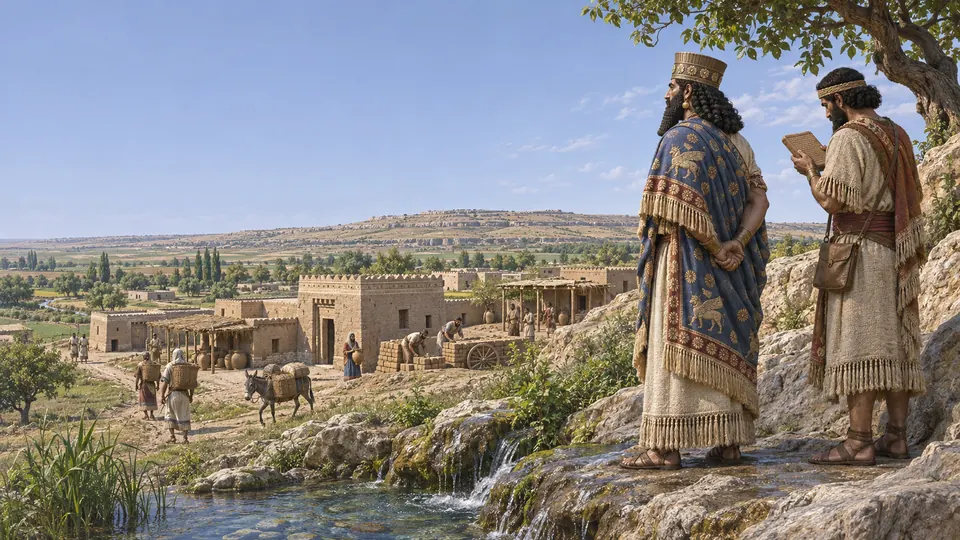
Dur-Sharrukin had a walled lower town and a fortified citadel, described as a terrace. The citadel held the royal palace, which contained about two hundred rooms and courtyards in all. Temples and the residences of high officials also stood in the citadel. The city was officially inaugurated in 706 BCE, with work still unfinished. After Sargon’s death in 705 BCE, his son Sennacherib transferred the capital to NinevehNineveh and KuyunjikNineveh is an ancient Assyrian city near Mosul in northern Iraq; Kuyunjik is one of its archaeological moundsGlossary · Click to read the explanation. Khorsabad remained occupied, and a governor of the city is attested after the transfer. [1]
The construction records put the governors at the centre of the project. Each sector had a governor who could write to the king whenever a problem arose, and officials often complained of shortages of skilled workers. Timber came from the upper Tigris and the Amanus mountains. The records show logs floated to Nineveh or Ashur. At Ashur, wood could be stored before the onward journey. The construction also relied on compulsory labour, including people from kingdoms subject to Assyria. [2][3]
Royal claims and their sources
Sargon’s own inscriptions claim victory at Samaria and report deportations and resettlement. The Nimrud Prism, a royal inscription on clay, describes the placement of newcomers under Assyrian administration. Sargon’s inscriptions present the reorganisation of Samaria in his own name. How the accounts of the city’s capture fit together remains debated. [5]
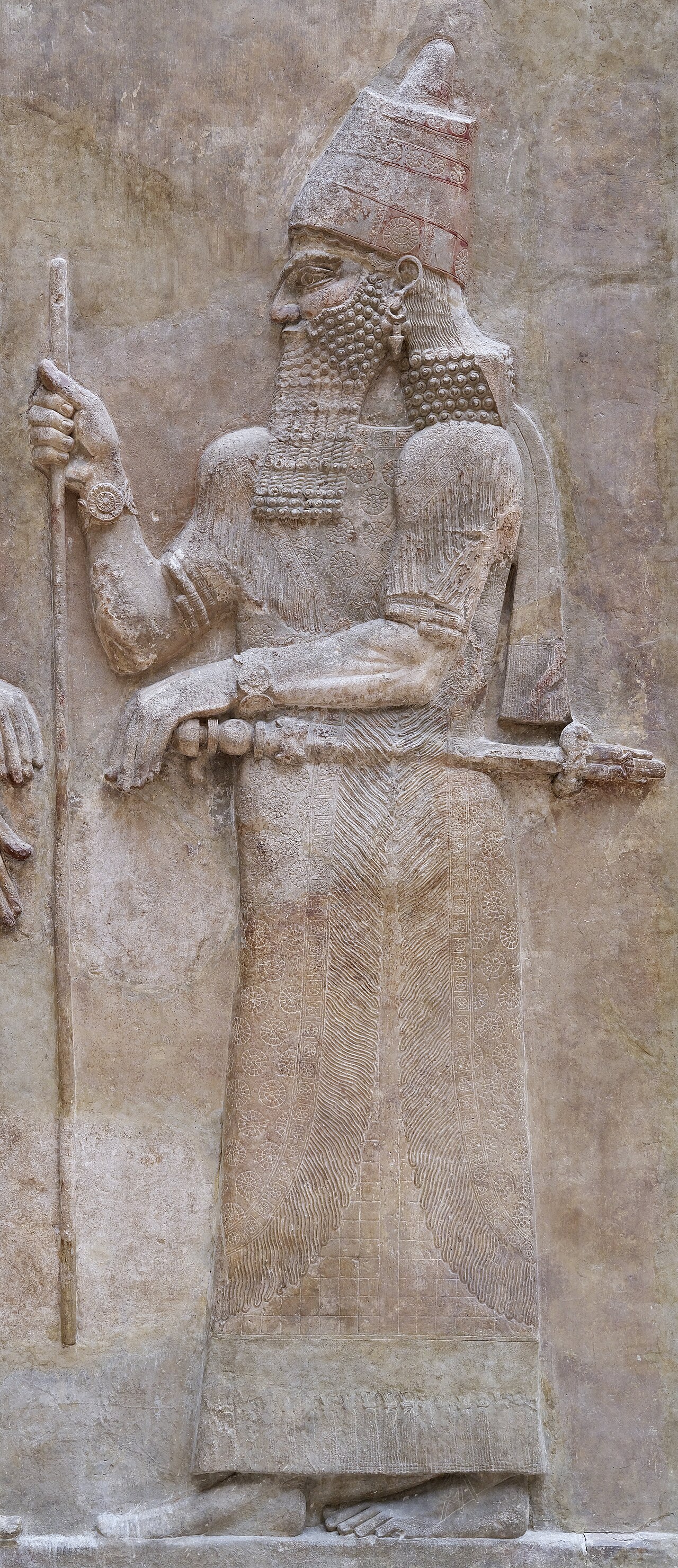
The Louvre’s relief of Sargon and a dignitary came from his palace at Khorsabad. The king wears the Assyrian royal headdress and holds a sceptre. A cuneiformCuneiformWriting with wedge-shaped signs, developed from Mesopotamian recording traditions and used for several languages from the third millennium BCE.Glossary · Click to read the explanation inscription is carved on the back of the relief. On the basalt stele found at Kition, near modern Larnaca, the king raises his right hand before symbols of Assyrian deities. The stele’s inscription lists embassies from distant lands. Its findspot places an example of Sargon’s royal imagery and writing in the eastern Mediterranean. [4][6]
Sargon of Akkad and the birth legend
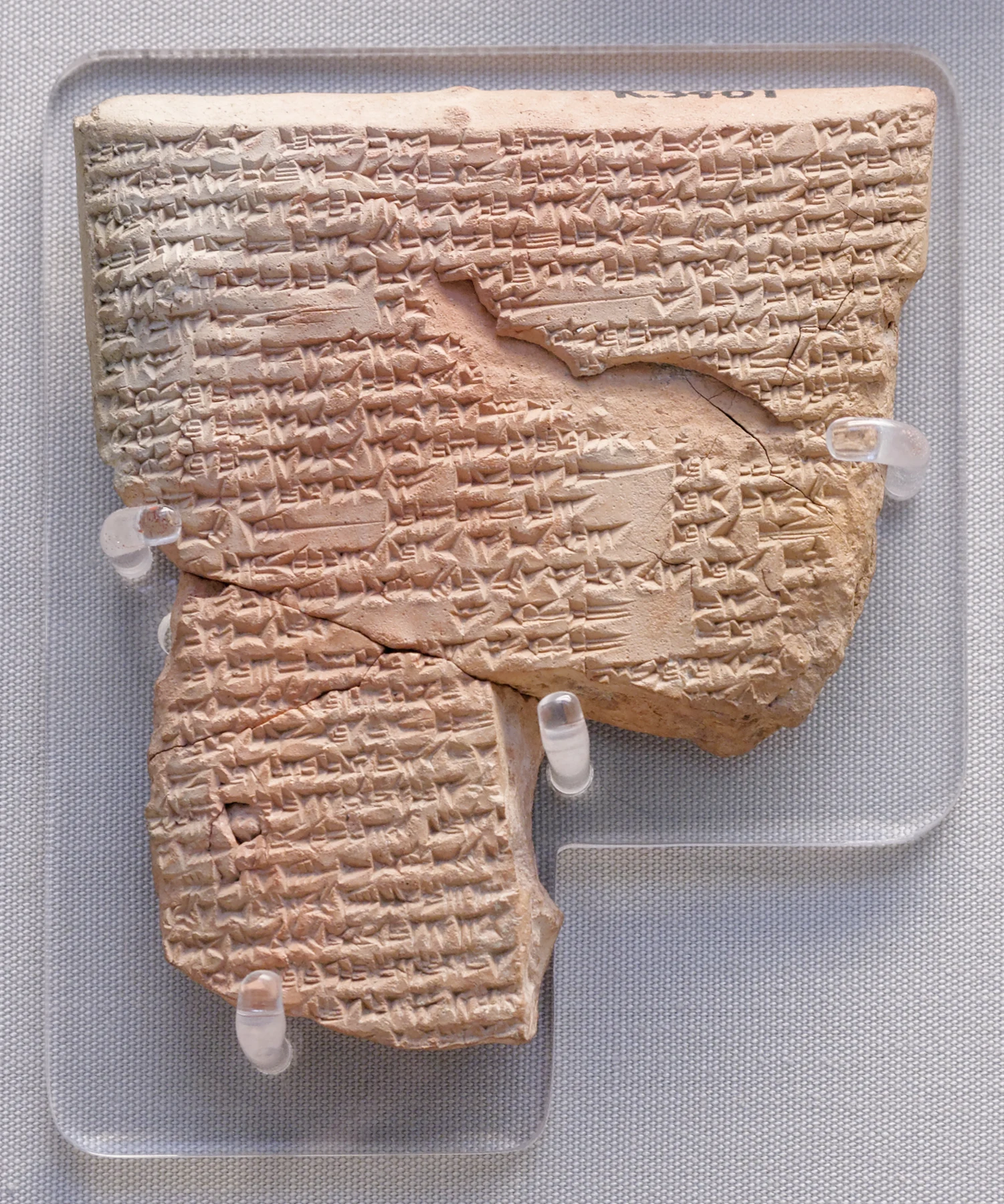
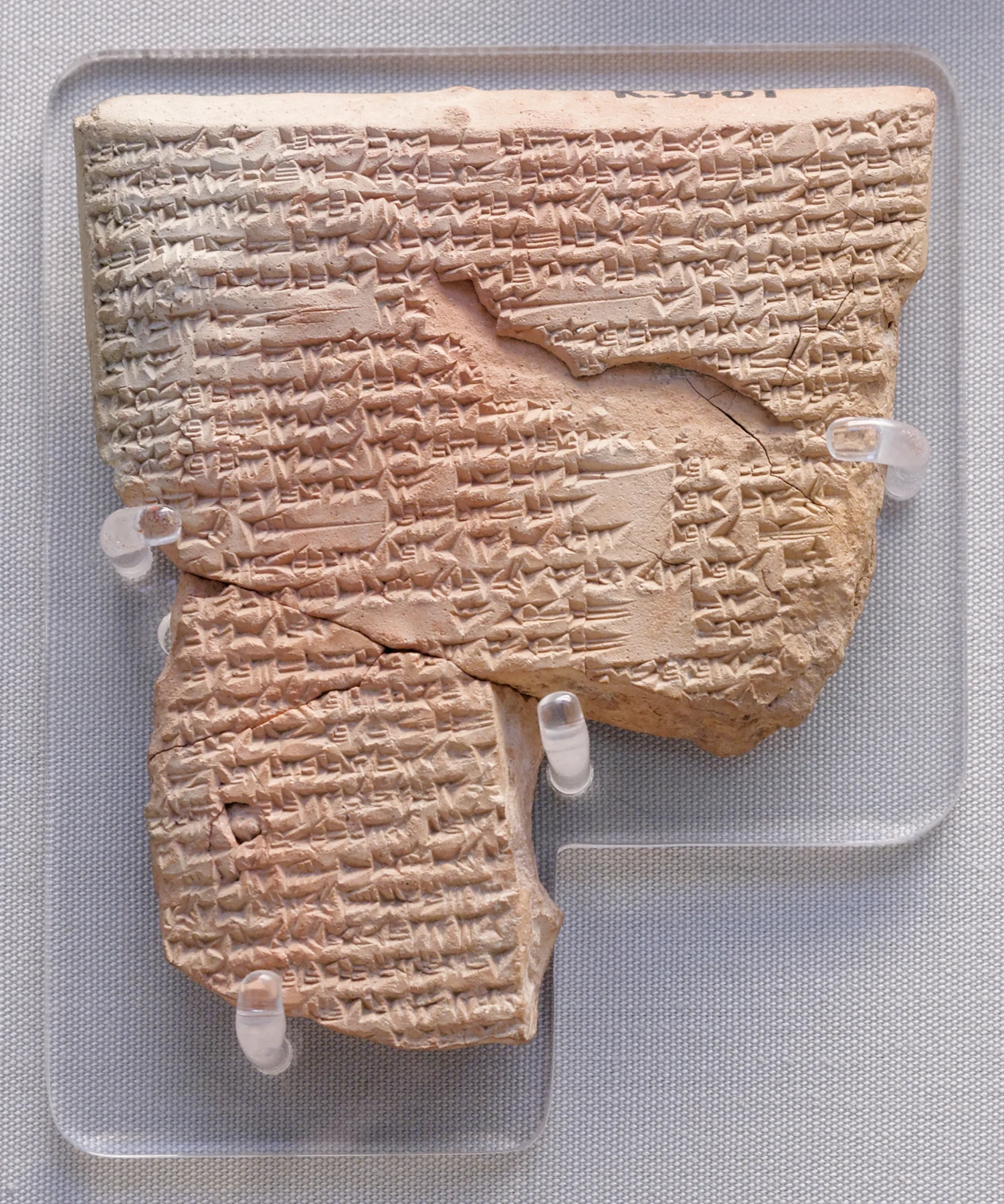
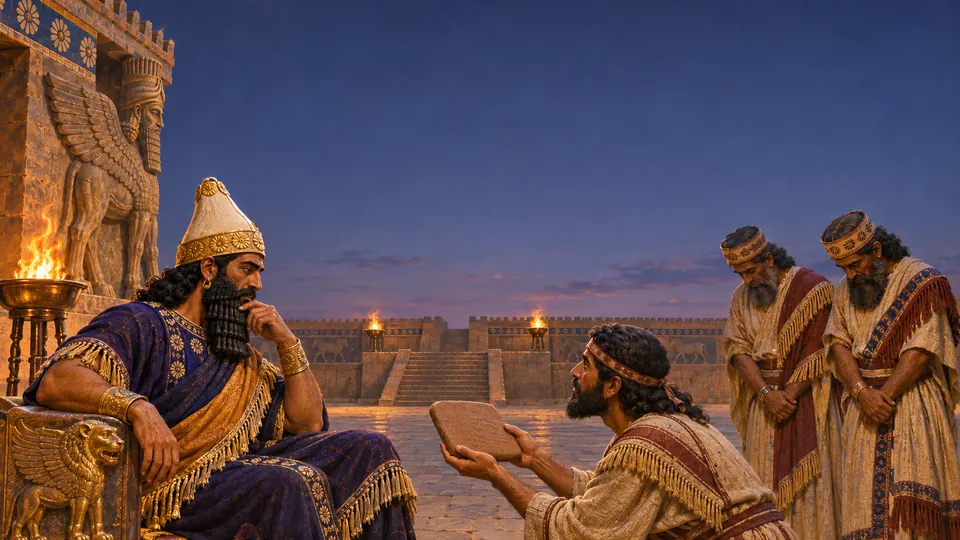
Sargon of Akkad, who gives his name to the birth legend, lived in the third millennium BCE. Two copies of the legend written in Neo-Assyrian script come from AshurbanipalAshurbanipalAshurbanipal was an Assyrian king of the seventh century BCE, reigning about 668–631 BCEGlossary · Click to read the explanation’s library. Some scholars have proposed that the legend was composed in Sargon II’s reign. Its date of composition remains uncertain. [7]
Quick answers
When did Sargon II rule Assyria?
His reign is generally dated to about 721–705 BCE. [4][6]
Where was his capital?
Sargon inaugurated Dur-Sharrukin, now Khorsabad in northern Iraq, in 706 BCE. Sennacherib moved the seat of government to Nineveh after his father’s death. [1]
Which Sargon appears in the birth legend?
The narrator is Sargon of Akkad, a ruler of the third millennium BCE. Among the surviving copies are tablets written in Neo-Assyrian script from the library of Ashurbanipal. [7]
References and notes (7)
- Mosul Cultural Museum and the French Ministry of Culture, “Khorsabad” Opening history and site description. The capital’s inauguration in 706 BCE, the move to Nineveh and the layout of the citadel. Return to the text ↑
- French Ministry of Culture, “Organising the construction works” Sections on construction records and management. Sector assignments and letters from governors. Return to the text ↑
- French Ministry of Culture, “Raw materials and manpower” Timber supplies and transport, storage at Ashur and compulsory labour. Return to the text ↑
- Musée du Louvre, “Orthostate”, AO 19873 and AO 19874 Object entry. Findspot, regnal dating, figures and inscription on the reverse. Return to the text ↑
- Shawn Zelig Aster, “Sargon in Samaria—Unusual Formulations in the Royal Inscriptions and Their Value for Historical Reconstruction” Pp. 591–595, especially the Nimrud Prism, lines 27–41. Deportations, resettlement and the appointment of a governor. Return to the text ↑
- Anja Fügert, Vorderasiatisches Museum, “Stele Sargons II. aus Larnaka (Kition), Zypern”, VA 00968 Catalogue and commentary. Findspot, basalt, attributes of the figure, divine symbols and inscription. Return to the text ↑
- Isaac Kalimi, “Love of God and Apologia for a King: Solomon as the Lord’s Beloved King in Biblical and Ancient Near Eastern Contexts” Sections 4.2.1.1–4.2.1.2, pp. 45–49. Sargon of Akkad, surviving witnesses and the proposed Neo-Assyrian setting of the legend. Return to the text ↑
Suggest a correction · Suggest a source for this record
Cite this record
IL Archive, «Sargon II», https://ilarchive.com/en/people/sargon-ii
Continue reading
Related readings