Artifact
The Charter of Šitti-Marduk (British Museum 90858)
An object record bringing together its image, metadata, rights, and context.
- Timeline
- From 1125 BCE to 1104 BCE
- Region
- Mesopotamia
After a campaign in Elam, Nebuchadnezzar I restored the privileges of the towns of Bīt-Karziabku. The limestone stele names the officials who witnessed the decision and spells out what tax collectors and soldiers could do.
Estimated reading time: 4 min Published Last reviewed:
Share article
Photograph
Gary Todd / Wikimedia Commons, CC0 1.0. Resized.
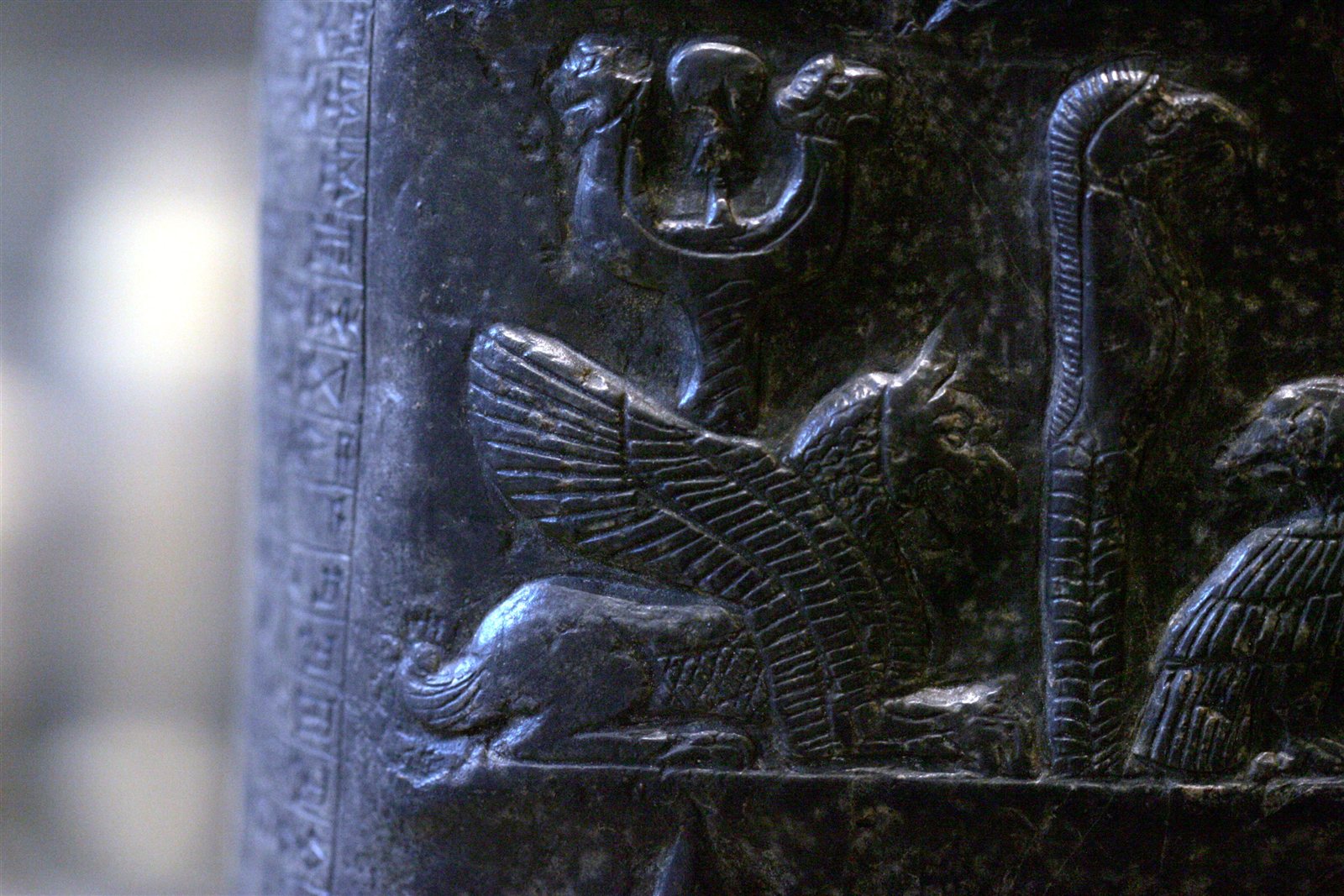
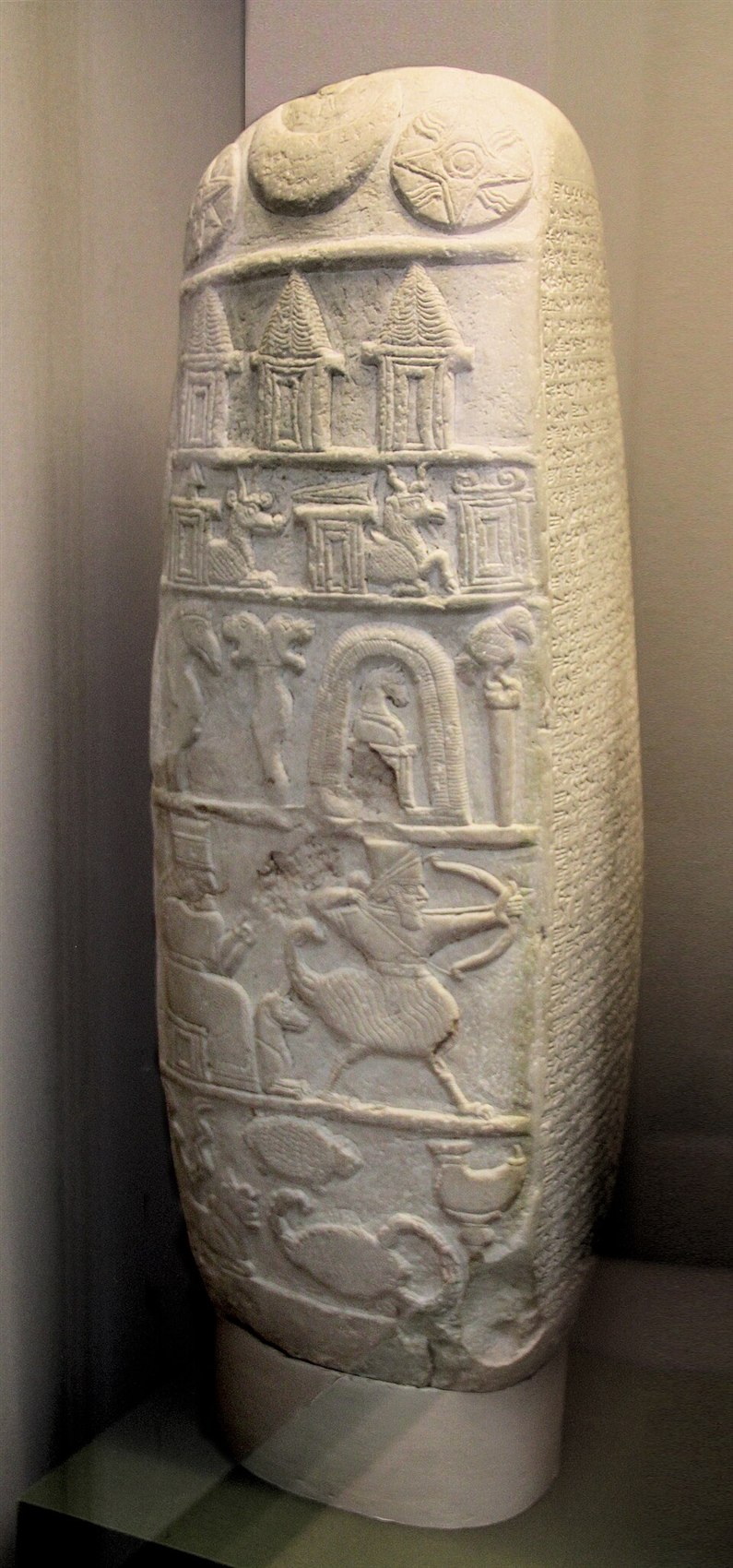
The relief face and adjacent column of writing on the charter stele of Šitti-Marduk, British Museum 90858
License · Image sourceObject details
- Title
- The Charter of Šitti-Marduk (British Museum 90858)
- Timeline
- From 1125 BCE to 1104 BCE
- Region
- Mesopotamia
- Rights
- CC0
Text
Introduction
When Nebuchadnezzar I returned from Elam, the head of Bīt-Karziabku asked the king to recognise privileges that his towns had held under an earlier ruler. The response was engraved in AkkadianAkkadianAn ancient East Semitic language written in cuneiform from the third millennium BCE; its varieties include Babylonian and Assyrian, and it served in international diplomacy.Glossary · Click to read the explanation on a limestone stele that now bears the British Museum number 90858. The name in the modern edition is Šitti-Marduk. Leonard William King read it as Ritti-Marduk in 1912, the form still used in the museum’s inscription notes. The monument dates to Nebuchadnezzar I’s reign, conventionally placed around 1125–1104 BCE. [1][2][3]
The march and the petition
The opening column presents the war as an answer to an offence against Akkad and says that MardukMardukBabylon’s leading god, worshipped at Esagil and elevated in the Akkadian Enūma eliš. His symbols include a spade and mušḫuššu dragon. His earliest origins remain obscure; Nibiru is no evidence of a planetary homeland.Glossary · Click to read the explanation commissioned the king. The army sets out from Dēr in the month of Duʾūzu. The account evokes the heat and lack of drinking water, followed by dust so thick at the Ulāya River that one warrior cannot see the other man in his chariot. The Royal Inscriptions of Babylonia edition reads the name of Elam’s ruler in line i 41 as Ḫulteludiš, where King’s rendering refers to the king of Elam by title alone. [2][3]
The text describes Šitti-Marduk twice as the head of the house of Bīt-Karziabku. In both passages his chariot is on the king’s right. The repetition brings him back into the story at the moment of battle, before the text turns to his petition. Kathryn SlanskiKathryn SlanskiYale scholar of Mesopotamia, studying texts, images, inscribed monuments, law and authority.Glossary · Click to read the explanation reads the account of his service as the part of the charter that explains why the beneficiary received his privileges. A separate monument from the same reign, published as BBSt 24, records the return of Marduk’s cult statue. The opening of BM 90858 recounts the campaign and Šitti-Marduk’s part in it. [2][3][5][6]
What the charter restored
In King’s translation of lines i 44–51, Šitti-Marduk reports that the towns in the district of Namar had been exempt under a previous king but had fallen under Namar’s jurisdiction. Nebuchadnezzar consults the judges and restores the towns’ old privileges. The text then restricts visits by royal and district officials and forbids taking cattle or sheep for the king or Namar’s governor. It also limits demands for horses and prohibits cutting what King tentatively translates as the fences of plantations and date-palm groves. [1][2]
The second column names two towns, Bīt-Šamaš and Šanbaša, that were exempted from fortification work. In the next line the charter also forbids bridge and road works. King reads these clauses as protection against compulsory labour. Soldiers stationed in the towns could not order arrests in town or countryside. In King’s preferred rendering of lines ii 9–10, the governor and the commandant of Namar were to maintain the stationed soldiers. The troops could still be billeted in the towns under these terms. [1][2]
Witnesses and divine emblems
Thirteen officials appear in the list of those present when the privileges were declared. They include the governors of Isin, BabylonBabylonBabylon is an ancient city in central present-day Iraq, south of BaghdadGlossary · Click to read the explanation and Namar. The next line names the scribe Enlil-tabni-bulliṭ and calls the object a narû, a stone monument. The final clauses invoke divine penalties against anyone who restores Namar’s authority over the towns or alters or destroys the monument. King’s edition distinguishes the word narû used for this stele from kudurru, used later in a curse against an offender’s own boundary stone. [2][5]
Two adjacent faces each carry one column of writing. On a third face, six tiers of relief begin with an eight-pointed star, a crescent and a sun disk. Three horned headdresses stand in the tier below. Farther down, King identifies the seated goddess with a dog as Gula. A serpent begins near the top and runs along the left side of the emblems. The British Museum measures the stone at 64 cm high, 21 cm long and 18 cm wide. [1][2]
The find at Sippar
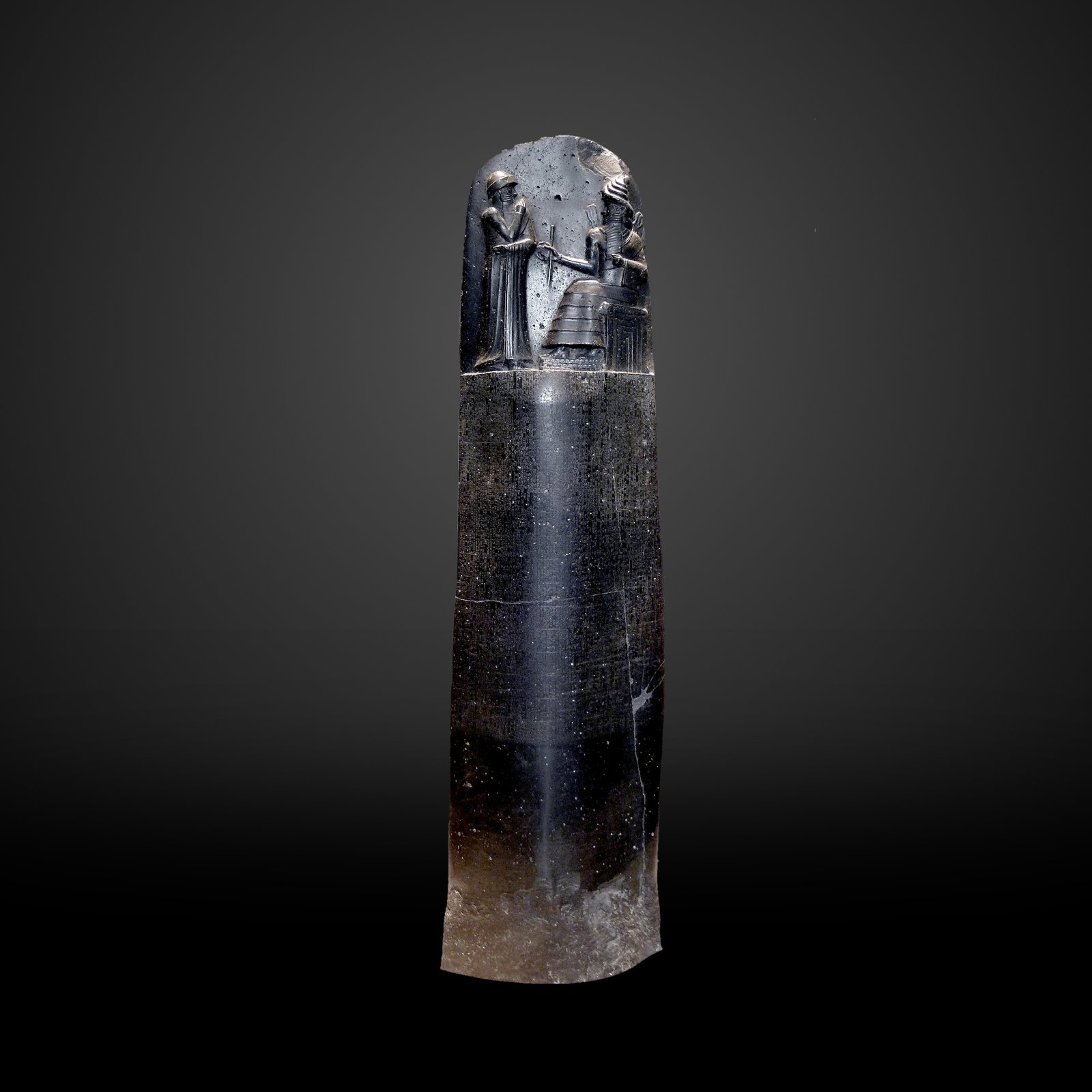
The British Museum gives Abu Habba, ancient Sippar, as the findspot and records Hormuzd Rassam as excavator. Julian Reade identifies Abd-al-Ahad Thoma as the excavator in 1882 and places the find with BM 90829 and BM 90835 in Room 50 of the ShamashShamashMesopotamian god of the sun and justice, shown before Hammurabi on an eighteenth-century BCE stele preserved in the Louvre.Glossary · Click to read the explanation temple. The three records show the range of transactions preserved on stones found together. Reade classifies BM 90829 as an official land grant, BM 90835 as a land transaction and BM 90858 as an official grant of privileges. [1][4]
References and notes
- British Museum, “Boundary-stone; kudurru,” museum no. 90858, reg. 1882,0522.1800 Object description, dimensions, authority, excavation credit, findspot and inscription notes Return to the text ↑
- Leonard William King, Babylonian Boundary-Stones and Memorial-Tablets in the British Museum (Trustees of the British Museum, 1912), no. VI Pp. 29–36, cols. i–ii, nn. on ii 1–2 and ii 9–10, and relief descriptions on pp. 30–31 Return to the text ↑
- Grant Frame, “Nebuchadnezzar I 11,” Royal Inscriptions of Babylonia online, Q006251, updated by Alexa Bartelmus from RIMB 2 (1995), B.2.4.11 Catalogue metadata and col. i 1–43, especially i 14–21, 25–29, 35–43. The edition stops before the terms of the grant Return to the text ↑
- Julian E. Reade, “Babylonian Boundary-Stones and Comparable Monuments in the British Museum,” Annual Review of the Royal Inscriptions of Mesopotamia Project 5 (1987), pp. 47–51 P. 48, entries for 90829, 90835 and 90858, with the excavation credit and shared Room 50 findspot Return to the text ↑
- Kathryn E. Slanski, “Classification, Historiography and Monumental Authority: The Babylonian Entitlement narûs (kudurrus),” Journal of Cuneiform Studies 52 (2000), pp. 95–114 Pp. 95–97 on the terminology and pp. 99–101 on BBSt 6 and 24 and the function of their opening narratives Return to the text ↑
- John P. Nielsen, “‘I Overwhelmed the King of Elam’: Remembering Nebuchadnezzar I in Persian Babylonia,” in Jason M. Silverman and Caroline Waerzeggers, eds., Political Memory in and after the Persian Empire (SBL Press, 2015) Pp. 58–59 and nn. 20–25, comparing the contemporary inscriptions BBSt 6 and 24 and their accounts of the campaign Return to the text ↑
Archive records may be reviewed and refined as better evidence or sources become available. Suggest a correction
Suggest a correction · Suggest a source for this record
Cite this record
IL Archive, «The Charter of Šitti-Marduk (British Museum 90858)», https://ilarchive.com/en/artifacts/ritti-marduk-charter-bm90858
Continue reading