Study
The Tower of Babel: the city, the tower, and the languages
An extended study of a topic, with evidence and references.
- Timeline
- From 2000 BCE to 650 CE
- Region
- Mesopotamia / Babylon
Babel, Etemenanki and Enmerkar’s incantation compared through archaeology, architecture, language, dated witnesses and differing strengths of connection.
Estimated reading time: 8 min Published Last reviewed:
Share article
Text
Introduction
Why does the city and tower of BabelBabylonBabylon is an ancient city in central present-day Iraq, south of BaghdadGlossary · Click to read the explanation in GenesisBook of GenesisHebrew book of the Torah containing Noah’s flood, survival offering and covenant with living creatures.Glossary · Click to read the explanation resemble the world of Babylonian zigguratsZigguratZiggurat: a monumental stepped or terraced cult structure of ancient Mesopotamia. Not every raised temple platform was a ziggurat, and the form and specific use of lost upper stages often remain uncertain.Glossary · Click to read the explanation? How does its account of different languages relate to a Sumerian poem about EnmerkarEnmerkarEnmerkar is a ruler of Uruk in Sumerian literature and the protagonist of a poem about rivalry with Aratta’s lord.Glossary · Click to read the explanation? This study compares the HebrewHebrewA Northwest Semitic language of the Canaanite group, encompassing Iron Age epigraphy, Biblical, Rabbinic, medieval and Modern Hebrew; its scripts and pronunciations changed over time.Glossary · Click to read the explanation narrative with Mesopotamian architecture and inscriptions, then considers the high building in the QuranThe QuranThe central scripture of Islam, consisting of 114 Arabic surahs; its study distinguishes Quranic discourse from manuscript history, reading traditions, and historical inference.Glossary · Click to read the explanation. It asks what this shared cultural world illuminates and where a claim of specific literary transmission begins.
We distinguish a building's history from the dates of a text and its surviving copy. The geographical and architectural evidence gives the Babylonian connection real weight. Comparison with the Sumerian poem also requires attention to a disputed translation of the passage itself.
A city determined to remain together
Builders gather on a plain in ShinarShinarShinar is a region named in Genesis with Babylon, Uruk and Akkad, and the plain where the city and tower are built.Glossary · Click to read the explanation and prepare fired bricks and bitumen. They want a city, a tall tower and a name that will hold them together. The story ends with what they hoped to avoid: failed communication, dispersal and the abandonment of the city building. This movement from gathering to scattering structures Genesis 11:1–9. [1]
The city and tower in Genesis
Genesis is the first book of the Torah. Shinar, associated in the book with Babylon, UrukUrukAncient city at Warka in southern Iraq, a major urban centre around 3200 BCE that preserved early writing and accounting tablets.Glossary · Click to read the explanation and Akkad, forms this story's geographical setting. The builders use fired brick and bitumen instead of stone and mortar. The tower's top is described as being in heaven: an expression of height rather than a measurable engineering specification. [1][2]
The narrative connects the wish to make a name and avoid dispersal with God's descent to inspect the city and tower and confuse speech. That descent creates a literary irony: what seems enormous to its builders remains small in the story's divine perspective. This interpretation concerns the narrative's structure; architectural history requires material evidence. [1]
Distinguishing the account from its later extensions clarifies familiar details. Genesis 11 ends with the abandonment of building the city; it does not describe the tower collapsing. NimrodNimrodFigure associated with hunting and kingship in Genesis, appearing in Genesis Rabbah as a ruler who opposes Abraham and casts him into fire.Glossary · Click to read the explanation appears in the preceding chapter, with a kingdom including Babylon, Uruk and Akkad, but is not named as the builders' leader in these nine verses. Connecting him with the tower belongs to the history of bringing these references together and interpreting them. [1][2]
How do chapters ten and eleven fit together?
Genesis 10 describes peoples by their lands, families and languages before chapter 11 opens with one language. Chapter 10 can be read as a map of the nations' dispersal, followed by a story explaining one aspect of that dispersal. The focus on a city gathering everyone also permits reflection on power and centralization. These are possibilities for interpreting the text's arrangement; a building's remains cannot decide between them. [1][2]
We therefore assign no precise date for the emergence of human languages to this account. Dating the layers and editing of Genesis is also a larger question than identifying a possible building in its story. A 2022 article reports a scholarly trend dating Genesis’s final form after the Babylonian exileBabylonian exileJudean deportations to Babylonia and the kingdom’s collapse in the early sixth century BCE; several phases, not everyone removed or returned at once.Glossary · Click to read the explanation experienced by JudahKingdom of JudahJudah was an ancient southern Levantine kingdom centered on Jerusalem in the Iron AgeGlossary · Click to read the explanation in the sixth century BCE. This concerns the book’s editing; the age of its earlier traditions remains debated. We therefore compare dated witnesses without automatically making a building’s date the narrative’s composition date. [15]
Etemenanki: a historical ziggurat in Babylon
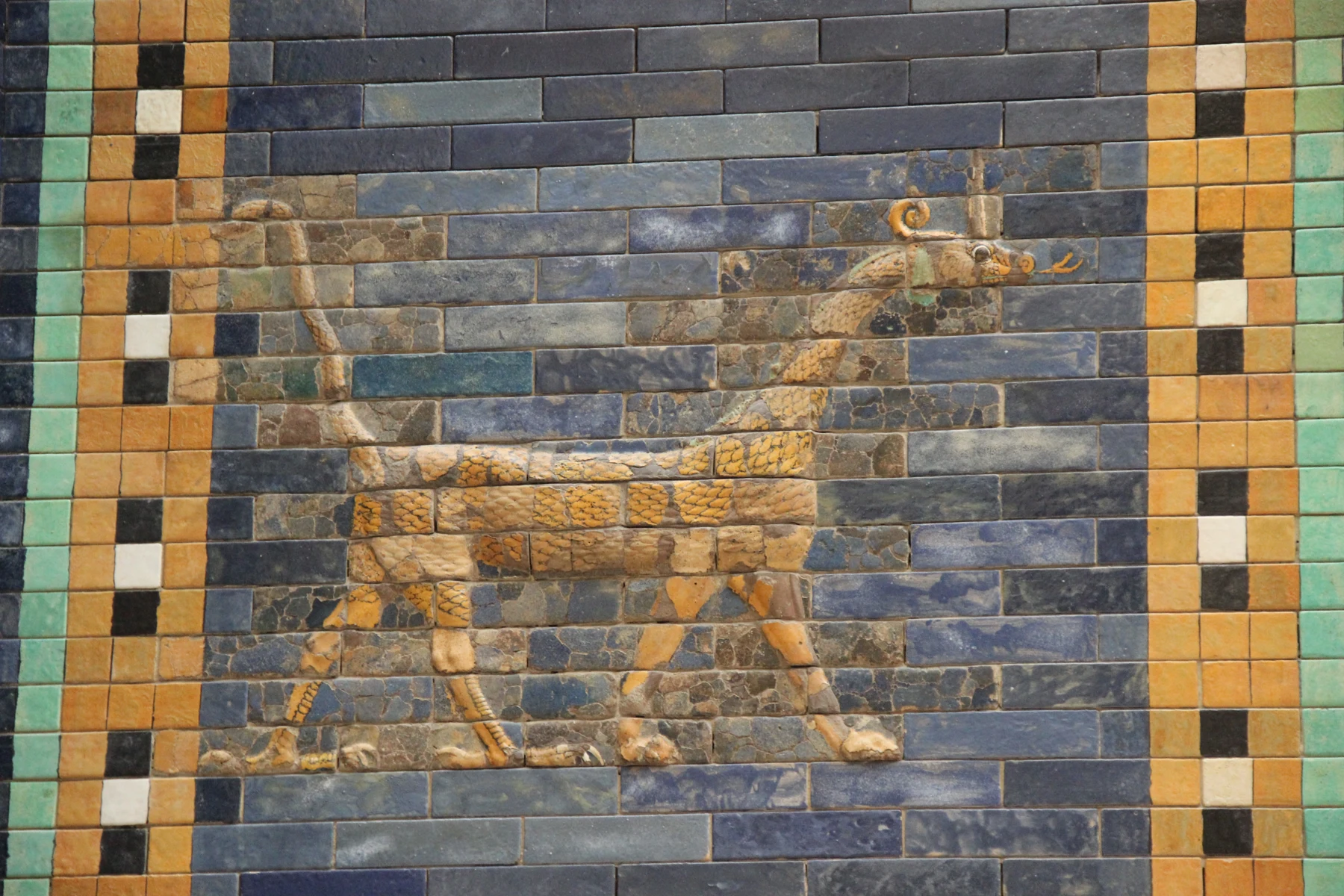
A ziggurat is a stepped building associated with a Mesopotamian temple complex. In Babylon, EtemenankiEtemenankiStepped ziggurat in Babylon’s Esagil sacred precinct, associated with Marduk. Excavations establish its base, royal texts attest rebuilding, and a later Esagil Tablet supplies idealized dimensions.Glossary · Click to read the explanation belonged to the setting of EsagilEsagil, Marduk’s templeEsagil, also written Esagila, is Marduk’s temple in ancient Babylon, in present-day Iraq, and a central sanctuary of the city’s god.Glossary · Click to read the explanation and the worship of MardukMardukBabylon’s leading god, worshipped at Esagil and elevated in the Akkadian Enūma eliš. His symbols include a spade and mušḫuššu dragon. His earliest origins remain obscure; Nibiru is no evidence of a planetary homeland.Glossary · Click to read the explanation. Its Sumerian name is understood approximately as the foundation platform of heaven and earth. Height here forms part of sacred architecture, rather than simply a physical attempt to reach the sky. [5][6][7]
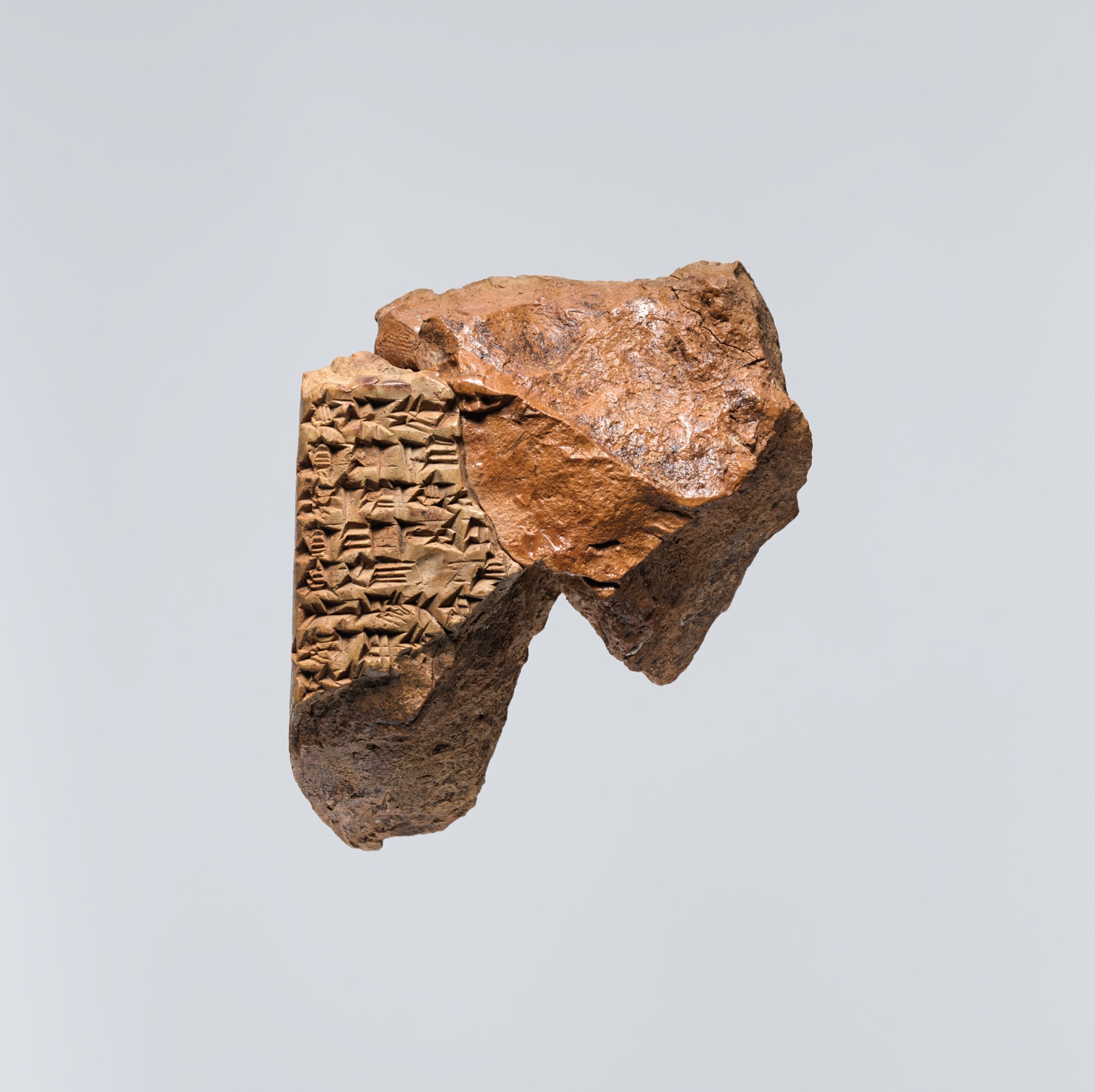
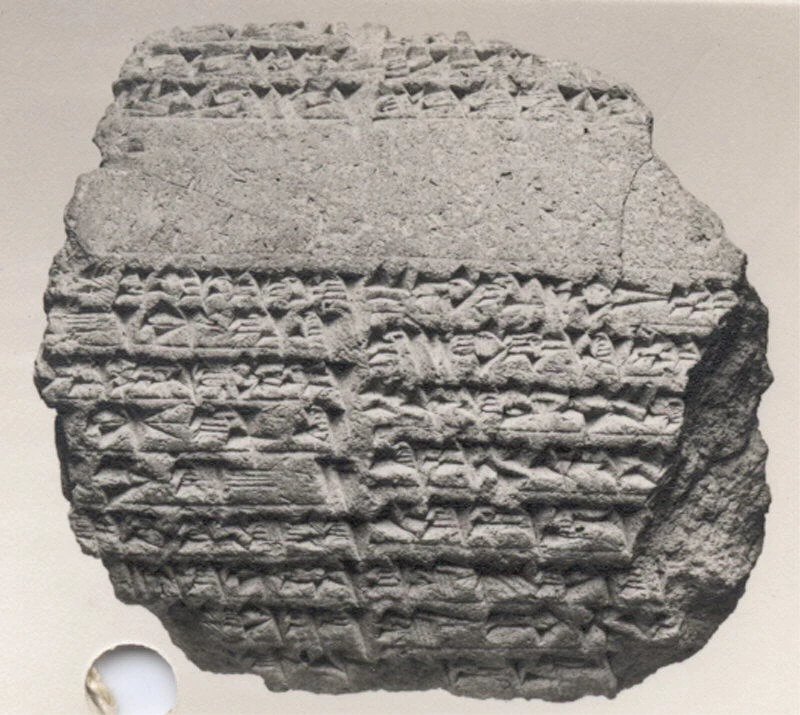
The building underwent successive stages and restorations. Sources record rebuilding under EsarhaddonEsarhaddon, king of AssyriaSennacherib’s son and successor, Assyrian king in 680–669 BCE, named in Ahiqar and Tobit.Glossary · Click to read the explanation, king of Assyria in 680–669 BCE, and work under NabopolassarNabopolassarNabopolassar was a late-seventh-century BCE Babylonian king who claimed to rebuild Etemenanki.Glossary · Click to read the explanation and Nebuchadnezzar IINebuchadnezzar IIBabylonian king, 605–562 BCE, appearing in Daniel and independently attested in inscriptions and building remains.Glossary · Click to read the explanation in the late seventh and first half of the sixth centuries BCE. The cylinder of Nebuchadnezzar II pictured here preserves a text about its restoration. It is a written witness, rather than a picture of the tower's appearance. [7][8][9][14]
The named city of Babylon, tall building, fired brick and bitumen together make the world of ziggurats a strong background for Genesis. Etemenanki is the leading candidate for understanding that Babylonian image. Identifying it remains a historical proposal: the story does not name the ziggurat, Marduk or the building's number of levels. A strong general connection does not make every narrated event identifiable in excavation. [1][5][6][9]
What does the Esagil Tablet measure?
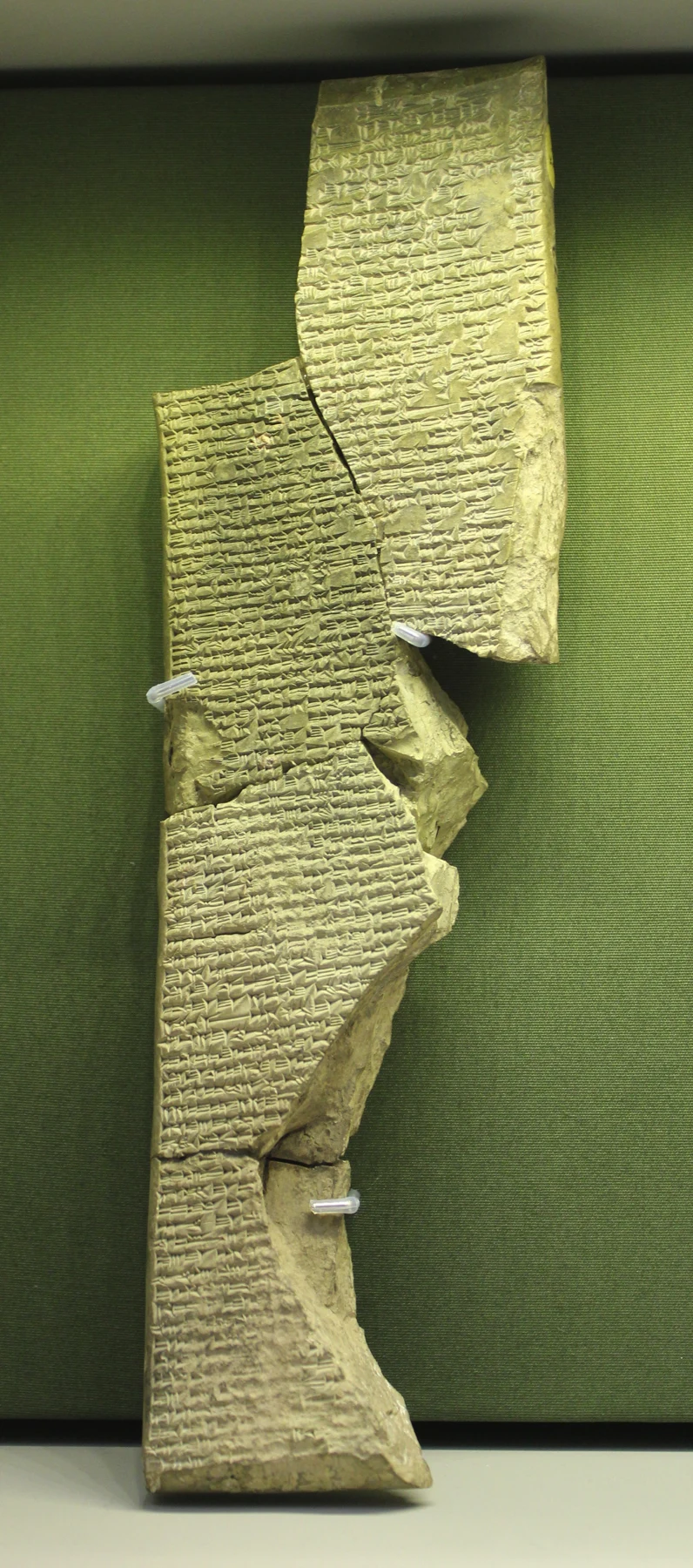
AO 6555 in the Louvre is a copy from Uruk dated about 229 BCE, transmitting an older text associated with BorsippaBorsippaBorsippa is an ancient city in Iraq with the Ezida temple and a ziggurat, distinct from neighboring Babylon.Glossary · Click to read the explanation, another Babylonian city. It treats Esagil's areas and Etemenanki's dimensions in a mathematical and scribal setting. The copy's date concerns the surviving tablet, not the beginning of the ziggurat's construction. [5][6]
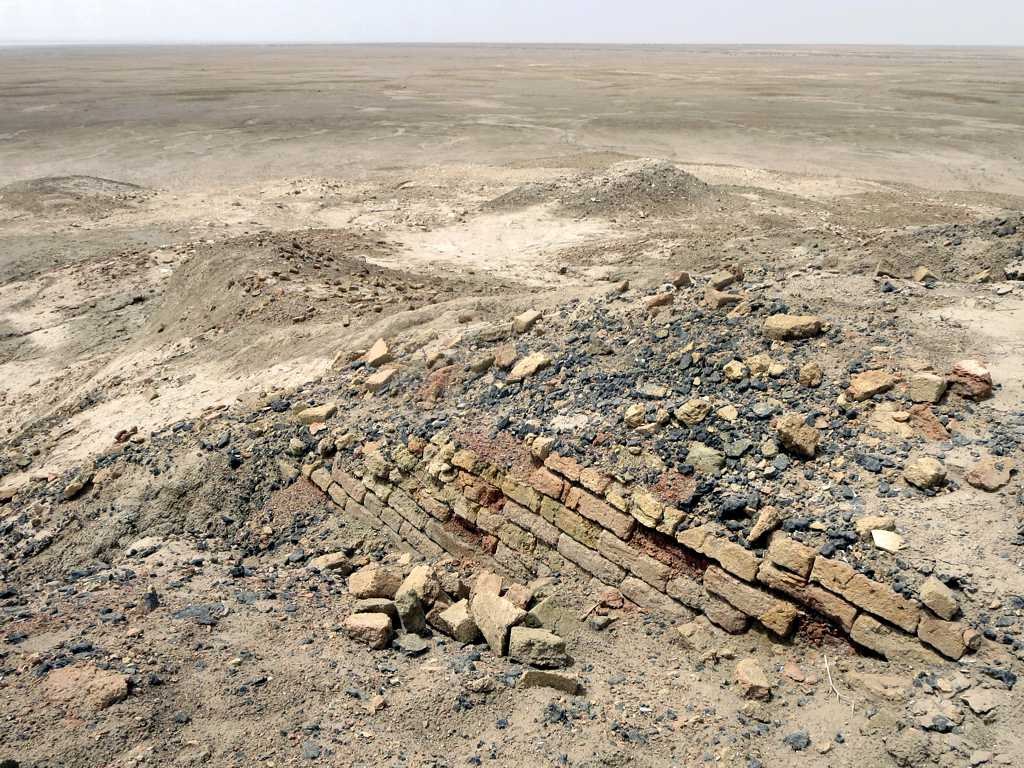
The tablet yields a model with a base and height of about ninety meters and seven levels, with dimensions missing for one level that researchers reconstruct mathematically. The excavated base measures about 91.5 meters on each side. Reconstructed height is less direct evidence than the base measurement: texts and ancient images allow different models, and some figures may be educational or idealized. [6][7][9]
Assyriologist Olof PedersénOlof PedersénOlof Pedersén is an Uppsala Assyriologist combining cuneiform texts and archaeology in research on Babylon.Glossary · Click to read the explanation adds an important witness: a stele showing the king and ziggurat and naming Etemenanki. His 2024 study compares the drawing's proportions with the excavated base and proposes a model roughly as high as it is wide. This supports the possibility of a very tall building, while its reconstructed upper stages remain estimates. [9]
The stele was known as MS 2063 in a private collection. Pedersén presents an account of its discovery near Esagil in the early 1990s, reported by fishermen, which he finds plausible but unsupported by corroborating documentation. He records its transfer to IraqIraqIraq is a modern country encompassing much of ancient MesopotamiaGlossary · Click to read the explanation in December 2023. We can use its inscription and image while distinguishing study of the object from documentation of its findspot in a controlled excavation. [9]
Babylon: the city's name and the story's meaning
Babylon's name was understood in AkkadianAkkadianAn ancient East Semitic language written in cuneiform from the third millennium BCE; its varieties include Babylonian and Assyrian, and it served in international diplomacy.Glossary · Click to read the explanation tradition approximately as gate of the god or gods. That interpretation may itself reinterpret an earlier name. Genesis instead connects Babel with Hebrew balal, to mix or confuse. The sound association works within the story; it does not make the Akkadian name historically derived from the Hebrew verb. [1][10]
The city's name thus becomes part of the argument: a place intended to hold its people together becomes a name associated with dispersal and failed communication. Linguistic comparison shows how a familiar name is put to a new use, alongside the architectural comparison above. [1][10]
Enmerkar and the Lord of Aratta: one speech or many?
Enmerkar and the Lord of ArattaEnmerkar and the Lord of ArattaA Sumerian poem of rivalry, messages and temples, containing an incantation about the speech of different peoples.Glossary · Click to read the explanation is a Sumerian poem about rivalry between Enmerkar, a literary ruler of Uruk, and the lord of distant ArattaArattaAratta is a place in Sumerian literature visited by Uruk’s messenger in Enmerkar’s story; its historical location is unsettled.Glossary · Click to read the explanation. One surviving witness is a tablet from NippurNippur / NuffarAncient Nippur (modern Nuffar, Iraq), major cult centre of Enlil and Ekur; excavations revealed sanctuaries, houses and thousands of cuneiform tablets across many periods.Glossary · Click to read the explanation catalogued as Old Babylonian, about 1900–1600 BCE. That dates a preserved witness, not the ruler's life or the poem's first composition. [3][13]
In the context considered here, Enmerkar demands metals, stones and labor for temples and sends a messenger to Aratta. He orders the recitation of the incantation of NudimmudEnkiMesopotamian deity also known as Ea, linked with Eridu and the Abzu (deep fresh waters), wisdom, incantations, and narratives of creation and cosmic order. Later written attestations do not identify the deity of Eridu’s earliest layers.Glossary · Click to read the explanation, a name of EnkiEnkiMesopotamian deity also known as Ea, linked with Eridu and the Abzu (deep fresh waters), wisdom, incantations, and narratives of creation and cosmic order. Later written attestations do not identify the deity of Eridu’s earliest layers.Glossary · Click to read the explanation. Lines 134–155 concern different peoples, their speech and addressing EnlilEnlilEnlil/Ellil: a major Mesopotamian god associated with destinies, kingship, and Ekur at Nippur, already prominent in third-millennium god lists. His name’s origin and cult beginnings remain debated.Glossary · Click to read the explanation in one language. Aratta's historical location remains uncertain; here it is a place within the poem. [3]
The difficult point is the direction of change. Oxford's translation reads the verb within a hope for future unification of speech. Wilfred G. LambertWilfred G. LambertAssyriologist and cuneiform scholar associated with Birmingham who translated Enūma Eliš.Glossary · Click to read the explanation explains that the wording also permits a past transformation of one language into many, and that the incantation's function within the story remains obscure. He points to conflicting translations, rather than a Sumerian text unanimously understood as recounting Babel's confusion. [3][4]
The poem therefore offers an important ancient comparison for the question of language and human unity. Its plot concerns rivalry, a message and temples, rather than a city building a tower to avoid dispersal. Those differences specify the kind of comparison available without erasing the shared question's significance. [1][3][4]
What makes transmission plausible?
We weigh several clues together: the witness's priority, the image's specificity, the sequence of events and contacts between the communities circulating texts. For architecture, Babylon's name combines with building materials and the tower as converging evidence. For Enmerkar, the comparison remains broader, and the disputed translation affects its assessment. The absence of a surviving intermediary increases uncertainty; it does not make a preserved intermediary an absolute prerequisite for investigating transmission. [1][3][4][5][9]
Jewish contact with Babylon was possible in several periods; the Babylonian exile in the sixth century BCE provides a familiar setting. This is a general route of contact, rather than proof that a particular copy of Enmerkar reached Genesis's author. The Babylonian environment's influence can be judged more strongly than direct borrowing from that poem.
The high building in the Quran
In the Quran, a seventh-century CE text, Pharaoh orders HamanHaman in the QuranHaman is addressed by Pharaoh in the Quran to build a high structure in Moses’s story; this entry identifies that narrative context.Glossary · Click to read the explanation to fire clay and build a high structure so that he may look toward MosesMosesCentral figure in Exodus, Torah traditions and the Qur’an; childhood accounts differ in detail.Glossary · Click to read the explanation's god. The structure and the ways to heaven recur in 40:36–37. Pharaoh is the ruler's title in the story set in EgyptEgyptEgypt lies mainly in northeastern Africa and includes the Sinai Peninsula in AsiaGlossary · Click to read the explanation; Haman here is associated with him. The name has another narrative setting in Haman of the Book of EstherHaman in EstherThe powerful court official opposing Esther and Mordecai, whose scheme to kill the Jews turns against him.Glossary · Click to read the explanation. [11][12]
Height and fired clay make comparison with Babel's imagery useful. The narrative function differs: in Genesis, a project of gathering encounters confused speech and dispersal; in the Quran, the building concerns Pharaoh's claim about Moses's god. The verses do not describe changing languages. Investigating transmission of the image also requires tracing reception narratives and intermediaries in late antiquity. [1][11][12]
What follows from the witnesses?
The links have different strengths depending on the question. Etemenanki's existence and restoration history are established by inscriptions and archaeology; its connection with Babel's narrative background is supported by converging clues. Enmerkar attests ancient reflection on one speech and many, but the direction of change is disputed in translation, and direct borrowing into Genesis remains unproven.
Comparison shows how city, tower and language serve different purposes: organizing Babylon's religious and architectural world, narrating gathering and dispersal in Genesis, and framing Pharaoh's claim in the Quran. Studying those connections is valuable while keeping each witness's date and character clear.
Further reading: Genesis and Enuma Elish, Marduk and Babylon, How do we distinguish similarity from borrowing?.
References and notes (15)
- Genesis 11, Hebrew and JPS 1917 English. Whole chapter read, especially verses 1–9 on city, tower, speech and dispersal. Genesis 11; Hebrew and JPS 1917 Return to the text ↑
- Genesis 10, Hebrew and JPS 1917. Whole chapter read; verses 5,20,31–32 for languages and 8–10 for Nimrod and Shinar’s cities. Genesis 10; Hebrew and JPS 1917 Return to the text ↑
- Oxford, Enmerkar and the Lord of Aratta, Electronic Text Corpus of Sumerian Literature translation. Lines 1–207 read, including the incantation at 134–155. Neither individual cuneiform witnesses nor the entire poem collated. ETCSL 1.8.2.3, translation, lines 1–207, particularly 134–155 Return to the text ↑
- Wilfred G. Lambert, The Classification of Incantations, in SAOC 62, 2008. Printed pages 94–95, corresponding to PDF pages 106–107, and page 95’s notes, especially 17, read. Neither the whole volume nor the cited book translations was read. Wilfred G. Lambert, The Classification of Incantations, SAOC 62 (2008), printed pp.94–95 = PDF pp.106–107; note17 Return to the text ↑
- Louvre AO 6555. Catalogue description, provenance and date fields read. The detailed field gives about 229 BCE alongside an inconsistent period heading; the Ministry’s explanation supports the 229 copy date. Listed works were not thereby read. Louvre AO 6555, catalogue description/provenance/date fields Return to the text ↑
- French Ministry of Culture, Arabic explanation of the Esagil Tablet. Whole page read: Uruk copy of 229 BCE, older Borsippa source, mathematical exercises and potentially idealized dimensions. French Ministry of Culture, Arabic explanation of Esagil Tablet Return to the text ↑
- French Ministry of Culture, Architecture of the Ziggurat. Whole page read on restorations, ninety-meter model and dimensions mathematically supplied for the missing level. French Ministry of Culture, Architecture of the Ziggurat Return to the text ↑
- Metropolitan Museum of Art, cylinder 86.11.284, about 604–562 BCE. Catalogue and public-domain statement read; Babylon provenance is qualified by a question mark. Viewing the photograph is not an independent cuneiform reading. Met 86.11.284, catalogue and object API Return to the text ↑
- Olof Pedersén, The Tower of Babylon Stele Found in Babylon, Iraq, 2024. Main text on pages 1–12 and figure captions read; page 13’s bibliography not counted as read. The reported discovery lacks independent corroborating documentation; the study records return to Iraq in December 2023. Olof Pedersén, The Tower of Babylon Stele Found in Babylon, Iraq (2024), main text pp.1–12, DOI10.1017/irq.2024.4 Return to the text ↑
- UNESCO Babylon nomination: name paragraph on printed page 61 and early context on 62, corresponding to PDF pages 64–65. This scope only, not the whole dossier. A pre-Akkadian origin is a proposal, not a settled derivation. UNESCO Babylon nomination, printed pp.61–62 = PDF pp.64–65, city name and early history Return to the text ↑
- Quran 28:38, whole Arabic verse and displayed English translation read: clay, high building and Haman in Pharaoh’s speech about Moses’s god. Quran 28:38 Return to the text ↑
- Quran 40:36–37, both whole Arabic verses and displayed English read, on the building and ways to heaven. Quran 40:36–37 Return to the text ↑
- Cuneiform Digital Library Initiative, P277891, Nippur tablet N2822. Identity/date fields read: witness to Enmerkar, Old Babylonian, about 1900–1600 BCE. Listed studies not read. CDLI P277891, Penn Museum N2822, catalogue identity/date fields Return to the text ↑
- Actual cylinder 86.11.284 image visually examined against identity and public-domain metadata. A written restoration witness, not an image showing the ziggurat’s height. Met 86.11.284, actual image and public-domain metadata Return to the text ↑
- Bobby Kurnia Putrawan, Ludwig Beethoven J. Noya and Alisaid Prawiro Negoro, Centripetal-centrifugal Forces in the Tower of Babel Narrative, Old Testament Essays35/2,2022. Sections B1,E,F read on structure, Genesis context and epilogue. The article reports post-exilic dating of Genesis’s final form; cited books not thereby read. Sections B1,E,F, DOI10.17159/2312-3621/2022/v35n2a5 Return to the text ↑
Suggest a correction · Suggest a source for this record
Cite this record
IL Archive, «The Tower of Babel: the city, the tower, and the languages», https://ilarchive.com/en/studies/babel-and-ancient-ziggurats
Continue reading