Entity
Etemenanki
A reference page linking a name, group, or concept to the materials that discuss it.
- Names
- E-temen-an-ki · Etemenanki
- Region
- Babylon, Mesopotamia (present-day Iraq)
Etemenanki, Marduk’s great ziggurat at Babylon: excavated foundations, royal rebuilding texts, the Esagil Tablet copied in 229 BCE, and its debated link to Babel.
Estimated reading time: 8 min Published Last reviewed:
Share article
Text
Introduction
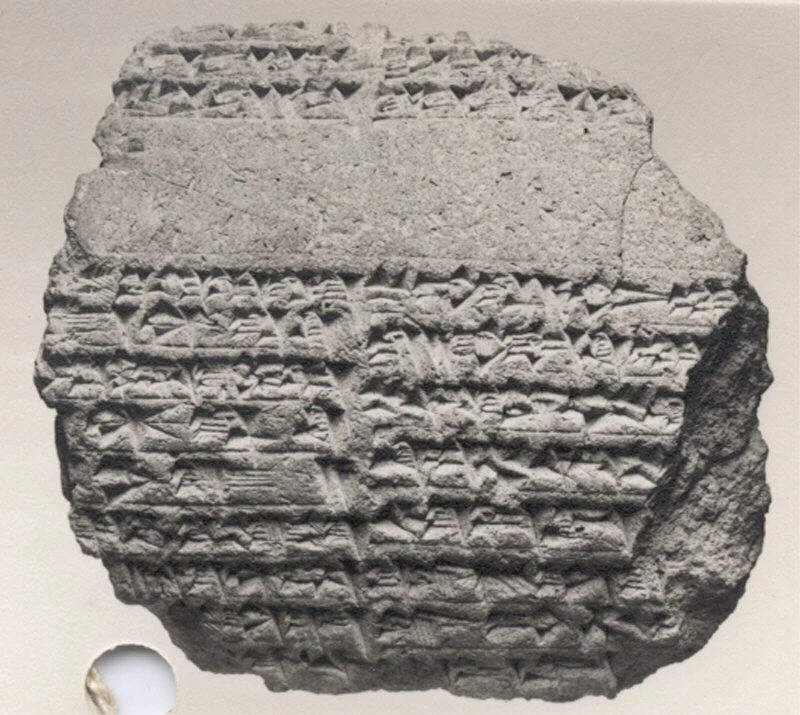
Etemenanki was the great zigguratZigguratZiggurat: a monumental stepped or terraced cult structure of ancient Mesopotamia. Not every raised temple platform was a ziggurat, and the form and specific use of lost upper stages often remain uncertain.Glossary · Click to read the explanation of BabylonBabylonBabylon is an ancient city in central present-day Iraq, south of BaghdadGlossary · Click to read the explanation, a stepped temple tower associated with the EsagilEsagil, Marduk’s templeEsagil, also written Esagila, is Marduk’s temple in ancient Babylon, in present-day Iraq, and a central sanctuary of the city’s god.Glossary · Click to read the explanation sanctuary and worship of MardukMardukBabylon’s leading god, worshipped at Esagil and elevated in the Akkadian Enūma eliš. His symbols include a spade and mušḫuššu dragon. His earliest origins remain obscure; Nibiru is no evidence of a planetary homeland.Glossary · Click to read the explanation. How can we describe a building of which only the lower remains survive? This entry brings together a royal cylinder in the Metropolitan Museum, building inscriptions, an excavated foundation, and a measurement tablet copied centuries later. It distinguishes evidence for an actual monument from later imaginings of the “Tower of Babel.” [1][8]
Contents
- Name and location
- Why the ziggurat mattered
- Construction across successive reigns
- Nabopolassar’s own account
- Nebuchadnezzar II and his inscribed objects
- What excavations actually found
- The Esagil Tablet: a late scholarly copy
- Ninety metres: calculation or accomplished structure?
- The pictured stele and its uncertain history
- Other witnesses and the building’s later history
- Is it the Tower of Babel in Genesis?
- Degrees of confidence
- The site today and what the evidence permits
Name and location
The name is conventionally transliterated E-temen-an-ki and explained approximately as “house/platform of the foundation of heaven and earth.” It designates a particular religious monument, not every ziggurat. A ziggurat is an elevated structure of terraces crowned by a sanctuary, rather than simply a watchtower. The site stands in ancient Babylon, in present-day IraqIraqIraq is a modern country encompassing much of ancient MesopotamiaGlossary · Click to read the explanation, north of Marduk’s principal temple, in the sacred zone associated with Esagil. The tower and the adjacent temple were distinct buildings, although connected by cultic activity and terminology. [1][2]
Why the ziggurat mattered
Its name joins heaven and earth, while royal inscriptions present the height of the monument as service to Marduk and a measure of Babylonian kingship. Esagil was the principal temple linked with the deity; Etemenanki was a towering landmark of its sacred surroundings. The familiar expression that its summit should rival heaven is therefore not automatically a measurement or a literal description of communication between worlds. Religious symbolism, royal self-presentation and a practical building project coexist in the evidence. [1][3]
Construction across successive reigns
The date of the first tower on this spot cannot be fixed securely; suggestions about its earlier beginnings have varying evidential support. Babylon suffered extensive destruction at the hands of the Assyrian king Sennacherib in 689 BCE, followed by restoration under Esarhaddon. Late in the seventh century BCE NabopolassarNabopolassarNabopolassar was a late-seventh-century BCE Babylonian king who claimed to rebuild Etemenanki.Glossary · Click to read the explanation, founder of the Neo-Babylonian dynasty, proclaimed work on Etemenanki. His inscriptions are not identical: a long account dwells on the foundations, while a shorter witness says that he rebuilt the ziggurat. A king’s assertion that he “built” it documents his project and claims, not the creation of a previously nonexistent site. [4][3]
Nabopolassar’s own account
A cuneiformCuneiformWriting with wedge-shaped signs, developed from Mesopotamian recording traditions and used for several languages from the third millennium BCE.Glossary · Click to read the explanation building text catalogued in the Babylonian royal inscriptions project as Nabopolassar 06 has the king say that Marduk ordered him to secure the foundations of Etemenanki, then weakened, and to raise its summit towards heaven. He describes making mudbricks and fired bricks, transporting bitumen, commissioning surveys, and consulting ritualRitualAn organised or distinguished practice meaningful to a community; it may leave traces, but its form alone does not reveal an associated doctrine.Glossary · Click to read the explanation specialists and the gods at the foundation ceremony. The text illuminates how the court presented the enterprise and records identifiable building materials and procedures. It cannot tell us precisely how tall the finished structure became. This account follows a published editorial translation, not an independent decipherment of the AkkadianAkkadianAn ancient East Semitic language written in cuneiform from the third millennium BCE; its varieties include Babylonian and Assyrian, and it served in international diplomacy.Glossary · Click to read the explanation signs. [3]
Nebuchadnezzar II and his inscribed objects
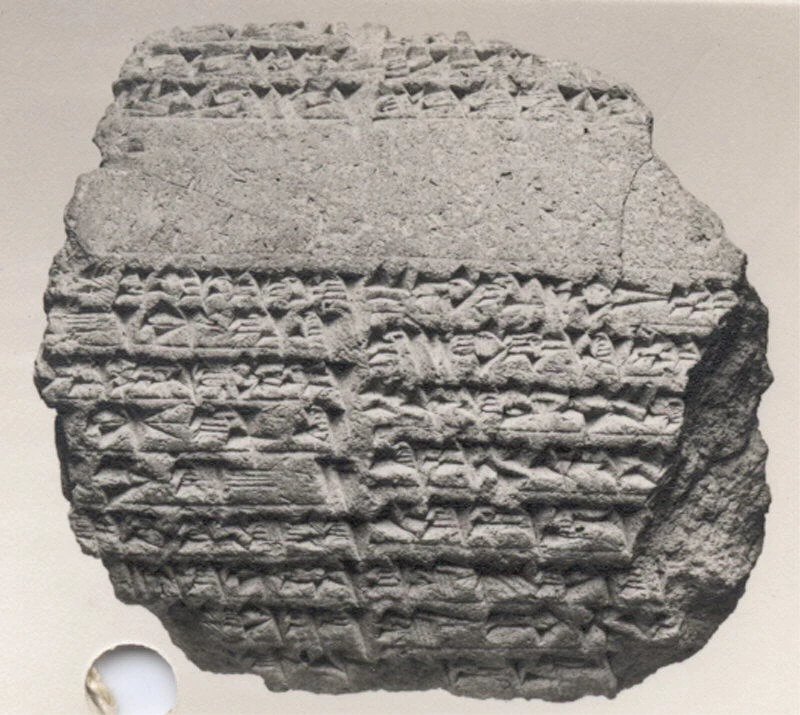
Nebuchadnezzar IINebuchadnezzar IIBabylonian king, 605–562 BCE, appearing in Daniel and independently attested in inscriptions and building remains.Glossary · Click to read the explanation, Nabopolassar’s son and king of Babylon around 604–562 BCE, continued the building programme. The Metropolitan Museum of Art holds a clay cylinder, 86.11.284, dated to his reign; its catalogue identifies the inscription as commemorating the reconstruction of Etemenanki. Its geographic attribution to Babylon carries a question mark, so it should not be described as an excavated foundation deposit of secure provenance. Separate inscribed bricks from Nebuchadnezzar refer to bitumen, fired bricks and brilliant blue glaze. These are distinct objects: the wording of a particular brick should not be attributed to the pictured cylinder without collating their texts. [8][7]
What excavations actually found
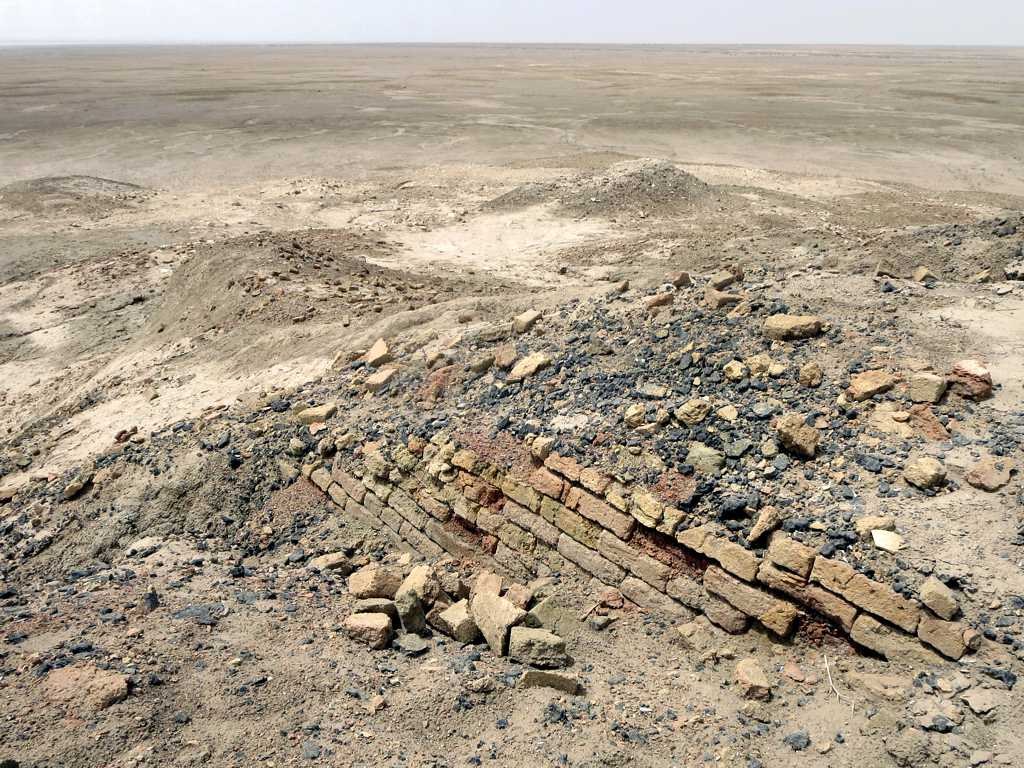
German excavations, followed by later investigations, documented a large foundation. Its side measured approximately 90 m, or about 91.5 m in some excavation measurements. The surviving structure has been described as an approximately 60 × 60 m mudbrick core, surrounded on each side by a mantle of baked brick about 15 m thick. This evidence establishes the ground plan, not the building’s completed height. Most of the rising mass was removed in subsequent periods, and some of its bricks were reused. What remains is a low core and the trace of its stripped mantle. Modern images of a soaring, complete ziggurat are reconstructions, not photographs of a standing building. [9][11]
The Esagil Tablet: a late scholarly copy
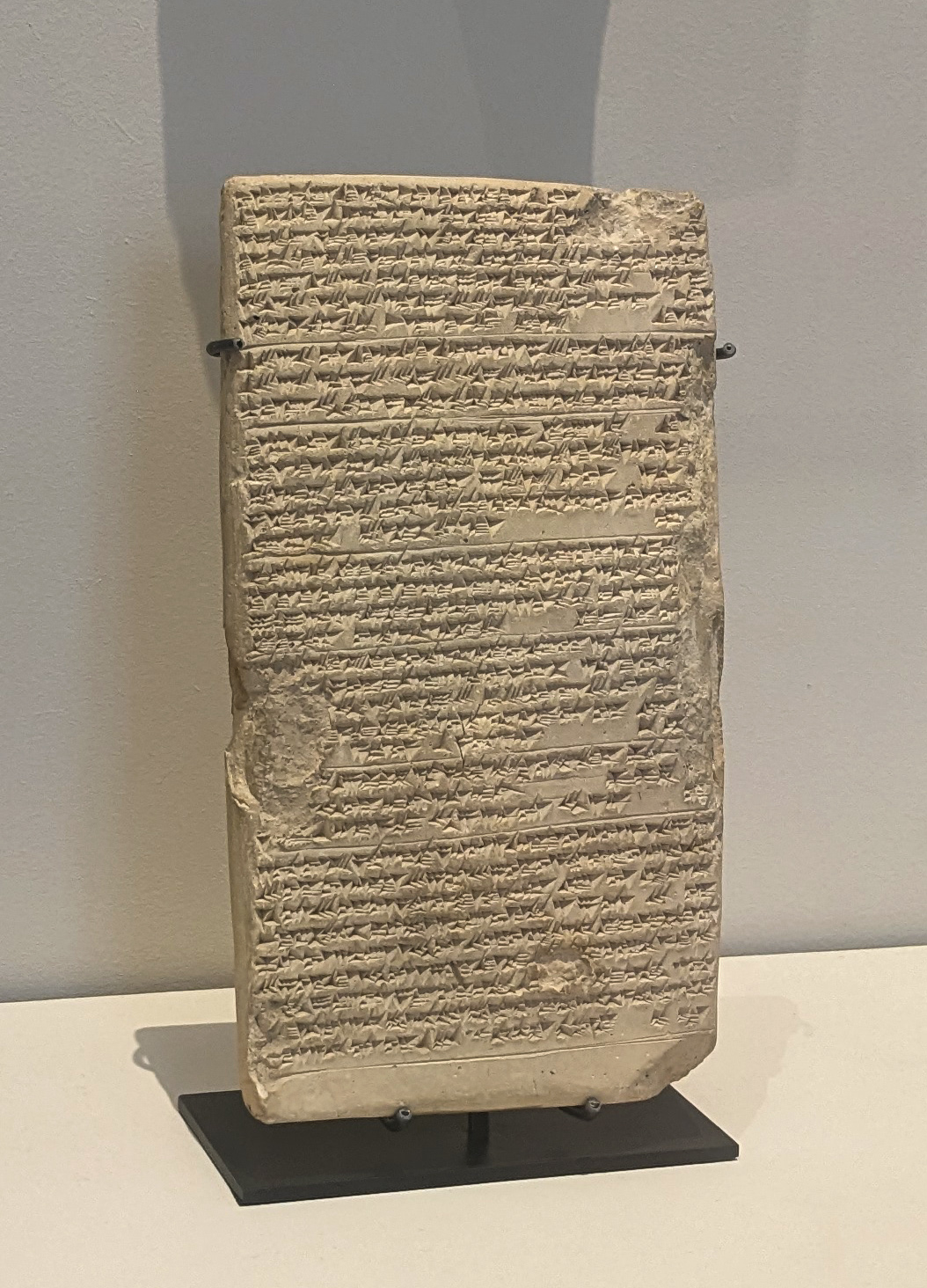
The so-called Esagil Tablet, now in the Louvre as AO 6555, is not the royal cylinder discussed above. It is an Akkadian copy written at UrukUrukAncient city at Warka in southern Iraq, a major urban centre around 3200 BCE that preserved early writing and accounting tablets.Glossary · Click to read the explanation in 229 BCE by the scribe Anu-bēlšunu, according to the French Ministry of Culture, drawing upon an older textual tradition associated with BorsippaBorsippaBorsippa is an ancient city in Iraq with the Ezida temple and a ziggurat, distinct from neighboring Babylon.Glossary · Click to read the explanation. It lists measurements concerning Esagil and Etemenanki, yet it is also a learned scribal exercise in calculating areas and converting units in the Mesopotamian sexagesimal system. The Louvre record has an internally inconsistent dynastic heading; its detailed dating field gives “circa 229 BCE,” matching the museum interpretation. The clearly stated copy date therefore carries more weight than the heading alone. [5][6][13]
Ninety metres: calculation or accomplished structure?
The tablet supplies a square base of approximately 90 m per side and a total calculated height of roughly 90 m: on paper, the ziggurat fits into a near-perfect cube. The French Ministry of Culture describes the terraces and an upper shrine with chambers for several deities. But a stage is omitted from the calculations, and mathematically harmonious dimensions need not reproduce a completed historical building. Pedersén also questions reliance on all the tablet’s stage heights when compared with the carved stele, and suggests alternatives requiring further tests. The width of the excavated base is more securely known than the exact height or appearance of the summit. [12][9]
The pictured stele and its uncertain history
A fragmentary black stone stele carries an inscription naming Nebuchadnezzar and images of the side of a ziggurat and a plan of its summit sanctuary. Formerly MS 2063 in the Schøyen Collection, it is now in the Iraq Museum, Baghdad. Olof PedersénOlof PedersénOlof Pedersén is an Uppsala Assyriologist combining cuneiform texts and archaeology in research on Babylon.Glossary · Click to read the explanation reports local testimony that the two pieces were found near Esagil in the 1990s, but explicitly notes the absence of a controlled excavation record or photographs of their discovery and the likelihood of a depositional level later than Nebuchadnezzar. Areas of the surface are badly worn or missing. The relief is therefore important evidence for an ancient representation of the tower, while the history of deposition and some details of interpretation remain debated. [10][14][9]
Other witnesses and the building’s later history
In Histories 1.181 HerodotusHerodotusFifth-century BCE Greek historian whose account of the Persian Wars includes reports on peoples, court and empire.Glossary · Click to read the explanation, writing in the fifth century BCE, describes a precinct of Bel at Babylon, successive towers, an ascent, and an upper chamber. This is a Greek literary witness, filtered through the author and his informants; his count of eight towers cannot simply be equated with the later tablet’s scheme or with the stele’s relief. Archaeological and written studies trace repair and debris removal into the Hellenistic era, even as most of the standing monument disappeared. Herodotus helps document the monument’s reputation and representation, but is not an excavation survey. [15][9]
Is it the Tower of Babel in Genesis?
GenesisBook of GenesisHebrew book of the Torah containing Noah’s flood, survival offering and covenant with living creatures.Glossary · Click to read the explanation 11:1–9 tells of a community using baked bricks and bitumen to build a city and tower with its summit in heaven, followed by the confusion of speech and the scattering of people. Babylon, brick technology and the image of vertical ambition make Etemenanki a plausible architectural background and powerful point of later reception; heritage institutions explicitly recognize this relationship. Genesis, however, never names Etemenanki or Nebuchadnezzar, and archaeology provides no evidence for a historical episode in which languages were miraculously confused there. The HebrewHebrewA Northwest Semitic language of the Canaanite group, encompassing Iron Age epigraphy, Biblical, Rabbinic, medieval and Modern Hebrew; its scripts and pronunciations changed over time.Glossary · Click to read the explanation wordplay linking Babel with balal (“confuse”) serves the narrative; it is not an etymological analysis of Babylon’s Akkadian name. [16][18]
Degrees of confidence
Three conclusions should be kept apart. Firmly evidenced: a great ziggurat at Babylon, with a large excavated foundation and royal texts naming Etemenanki. Reconstructed: its complete height, number and proportions of terraces, and the form of the upper sanctuary at a given date, because the witnesses differ. Interpretive: the degree to which this monument shaped the composition or later understanding of Genesis; this is a persuasive historical proposal, not an explicit identity stated by the biblical text. Written traditions from different periods cannot be collapsed into the surviving monument, and later artworks are not archaeological documentation of a narrated event. [11][16][18]
The site today and what the evidence permits
Babylon was inscribed on the UNESCO World Heritage List in 2019. UNESCO describes the ziggurat among the city’s remains associated with the Tower of Babel tradition, while warning that modern reconstructions complicate the authenticity of some above-ground views. Historical inquiry therefore begins not with the most dramatic picture, but with a timeline placing the cylinder, excavated base, Esagil Tablet, carved stele and biblical story alongside one another without merging them. Etemenanki emerges as a real cultic monument with a long material history; its literary afterlife calls for a separate comparative reading. [17][9]
References and notes (18)
- French Ministry of Culture, “Architecture of the ziggurat.” The entire short explanation was read for the name, monument, position, and rebuilding phases; this is curatorial synthesis, not a primary building record. French Ministry of Culture, "Architecture of the ziggurat", sections "Plan" and "Construction" (entire short page) Return to the text ↑
- French Ministry of Culture, Arabic “Esagil Tablet” explanatory notice, full short page, especially the name Etemenanki and the copy written at Uruk in 229 BCE. Read in Arabic, not retranslated from cuneiform. French Ministry of Culture, Arabic Esagil Tablet notice, “History” and “Unique document” (entire short page) Return to the text ↑
- RIBo, Nabopolassar 06, Q005365: col. i 28–42 and ii 1–36, in the project’s indexed translation and the displayed English translation on Linear History. The Akkadian signs were not independently deciphered. Royal Inscriptions of Babylonia Online (RIBo), Nabopolassar 06, col. i 28–42, col. ii 1–36 and published English translation Return to the text ↑
- RIBo, Nabopolassar 13, Q005372, obverse 13–18: short published excerpt declaring reconstruction of Etemenanki. Only the indexed passage was read; a direct page fetch failed. RIBo, Nabopolassar 13 (Q005372), obverse lines 13–18, search-indexed bilingual text excerpt Return to the text ↑
- Louvre collections, Esagil Tablet AO 6555 / TCL 6,32: entire accessible object-catalogue fields read, including the discrepant dynastic header and explicit “circa 229 BCE” manufacture date. No cuneiform collation was performed. Musée du Louvre, AO 6555 / TCL 6,32, entire displayed short object record: description, dimensions, date, provenance Return to the text ↑
- French Ministry of Culture, Arabic explanatory page about AO 6555, read in full: 229 BCE Uruk copy, Borsippa exemplar and scribal computations. This is a copy date, not a construction date. French Ministry of Culture, Arabic “Explanation” of Esagil Tablet AO 6555: complete short page Return to the text ↑
- RIBo, Nebuchadnezzar II 068, Q005539, brick inscription, lines 11–23, indexed English passage on bitumen, fired brick and blue glaze. This is not the Metropolitan cylinder 86.11.284; no independent sign reading. RIBo, Nebuchadnezzar II 068 (Q005539), brick inscription, obverse lines 11–23, indexed English translation excerpt Return to the text ↑
- The Metropolitan Museum of Art, cylinder 86.11.284: entire short catalogue and public-domain statement read. Babylon is marked as an uncertain geographic attribution; the cuneiform was not transcribed or newly translated. Metropolitan Museum of Art, 86.11.284 / object 321908, entire object catalogue (title, period, geography, size, rights) Return to the text ↑
- Olof Pedersén, “The Tower of Babylon Stele Found in Babylon,” Iraq 85 (2023), 179–191 (online 2024). Selected passages from sections 1–3 and 5–7 plus figure captions were read in the open Cambridge HTML version; the entire linked PDF was not read. Olof Pedersén, “The Tower of Babylon Stele Found in Babylon,” Iraq 85 (2023), 179–191, Cambridge open-access HTML: selected passages of sections 1–3, 5–7 and their figure captions, not every page of the PDF Return to the text ↑
- RIBo, Nebuchadnezzar II 001, Q005472, the stele formerly MS 2063: only the index excerpt, epigraph lines 1–3 and catalogue identification were consulted, not the entire damaged inscription. RIBo, Nebuchadnezzar II 001 (Q005472), Schøyen MS 2063, epigraph lines 1–3 and indexed catalogue introduction Return to the text ↑
- Pedersén, same article, section 3 on foundations (90–91.5 m base, 60 m core, 15 m mantle, loss and reuse) and selected section 6 paragraphs. Specific HTML passages were inspected; calculated dimensions remain the author’s analysis. Pedersén, Iraq 85 (2023), section 3 “Etemenanki – the Ziggurat”, excavation and core measurements, plus section 6 discussion Return to the text ↑
- French Ministry of Culture, “Architecture of the ziggurat,” entire brief page: 90 × 90 m square, calculated 90 m height and an omitted level. This is a scholarly reconstruction from a tablet, not measured surviving height. French Ministry of Culture, “Architecture of the ziggurat,” full short page, 90 x 90 m dimensions, levels and idealized height Return to the text ↑
- French Ministry of Culture, “Mesopotamian mathematics,” entire short page read on the sexagesimal system and numeral notation; not a full translation of the Esagil Tablet. French Ministry of Culture, “Mesopotamian mathematics,” complete short explanatory page on sexagesimal calculation Return to the text ↑
- Pedersén, sections 1 and 5 plus selected section 6: the disputed acquisition history, villagers’ account, absence of contemporary photographs and condition of the stele were read in HTML, not taken as a secure excavation log. Pedersén, Iraq 85, sections 1 and 5, provenance narrative and acquisition; selected section 6 on conservation and uncertainty Return to the text ↑
- Herodotus, Histories 1.181 in G. C. Macaulay’s English translation, full short chapter as displayed on Lexundria. Greek original not collated; no inference depends on reading 1.182–183. Herodotus, Histories 1.181, English translation by G. C. Macaulay, full chapter 1.181 as displayed, not the Greek original Return to the text ↑
- Genesis 11:1–9, the whole short passage viewed through Sefaria’s Hebrew/English display; the published translation was used, with no independent textual or philological study of Hebrew manuscripts. Genesis 11:1–9, entire biblical passage in Sefaria English rendering with displayed Hebrew; no independent Hebrew philology Return to the text ↑
- UNESCO World Heritage Centre, Babylon listing 278: brief synthesis, integrity and authenticity passages read. UNESCO’s distinctions between ancient remains and extensive modern reconstructions were checked; no full site-management dossier was read. UNESCO World Heritage Centre, Babylon property no. 278, “Brief synthesis,” “Authenticity” and “Integrity” sections Return to the text ↑
- French Ministry of Culture, Arabic “Tower of Babel legend,” the entire short essay read. Its connection between Genesis and Babylon is reported as a heritage interpretation, not evidence of an actual language-confusion event. French Ministry of Culture, Arabic “Tower of Babel legend”, whole short explanatory page, biblical parallels as an interpretation Return to the text ↑
Suggest a correction · Suggest a source for this record
Cite this record
IL Archive, «Etemenanki», https://ilarchive.com/en/entities/etemenanki
Continue reading