Entity
Etemenanki
A reference page linking a name, group, or concept to the materials that discuss it.
Babylon’s ziggurat in the Esagil complex, associated with Marduk and attested in royal inscriptions and a later measurement tablet.
Text
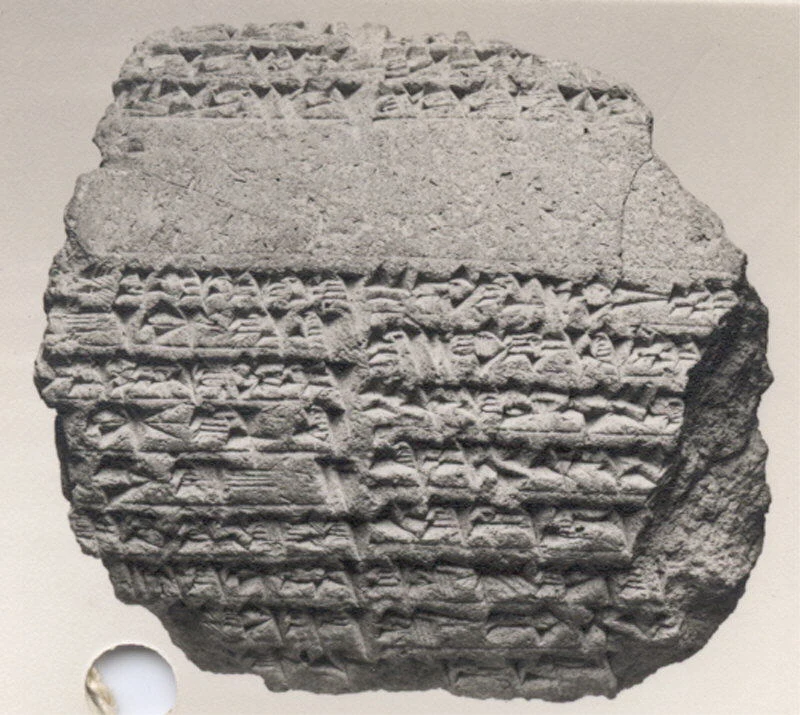
Etemenanki was a historical zigguratZigguratElevated temple tower of terraces in historical Mesopotamian architecture. Not every temple platform is a ziggurat; similar elevation does not establish one developmental route for all early structures.Glossary · Click to read the explanation associated with MardukMardukBabylon’s god, elevated with the city’s history. Enuma Elish celebrates his rise and cosmic ordering; sources associate him with Nibiru and Jupiter. Earliest origins and functions remain uncertain.Glossary · Click to read the explanation’s Babylonian temple. A cylinder of Nebuchadnezzar II records its restoration; the UrukUrukAncient city at Warka in southern Iraq, a major urban centre around 3200 BCE that preserved early writing and accounting tablets.Glossary · Click to read the explanation copy of the Esagil Tablet (229 BCE) supplies some idealised dimensions. Excavations attest a large foundation. These witnesses make the monument a possible background for Genesis 11 without proving an event of linguistic confusion there. [5][6][8][9]
References and notes
- Full object catalogue fields through provenance/dating and relevant bibliography inspected. No claim to read every cuneiform sign or all bibliographic items. The catalogue header's dynastic range conflicts with its explicit circa-229 BCE year; use the latter with the ministry's independent entry. Louvre AO 6555, Esagil Tablet catalogue, description, provenance and dating Return to the text ↑
- Full short explanatory page read, especially copy date, Uruk/Borsippa relationship, genre, and idealised height warning. French Ministry of Culture, Arabic explanation of AO 6555 Return to the text ↑
- Full short catalogue metadata and the museum's public-domain statement read; the Akkadian inscription itself was not translated from signs. Metropolitan Museum of Art 86.11.284, Nebuchadnezzar II cylinder catalogue Return to the text ↑
- Selected pages and footnotes read, not the full 13-page article. The provenance narrative, excavation base, inscriptions and numerical reconstruction were checked; no reliance on an uncorroborated find story as a secure excavated context. Olof Pedersén, 'The Tower of Babylon Stele Found in Babylon,' Iraq (2024), selected pp. 1, 3–7 and 9–10 Return to the text ↑
Research history
Substantive changes are retained here. Minor copy edits remain in the internal operational log.
-
Substantive record update
Suggest a correction · Suggest a source for this record
Cite this record
IL Archive, «Etemenanki», Edition 2, https://ilarchive.com/en/entities/etemenanki