Artifact
The Nineveh Planisphere (British Museum K.8538)
An object record bringing together its image, metadata, rights, and context.
- Timeline
- From 911 BCE to 612 BCE
- Region
- Mesopotamia
A clay disk from Nineveh sets constellations and cuneiform labels in eight sectors. Its surviving marks show how an Assyrian scribe drew the sky, while some of the writing still resists interpretation.
Estimated reading time: 4 min Published Last reviewed:
Share article
Photograph
BabelStone / Wikimedia Commons, CC0 1.0.
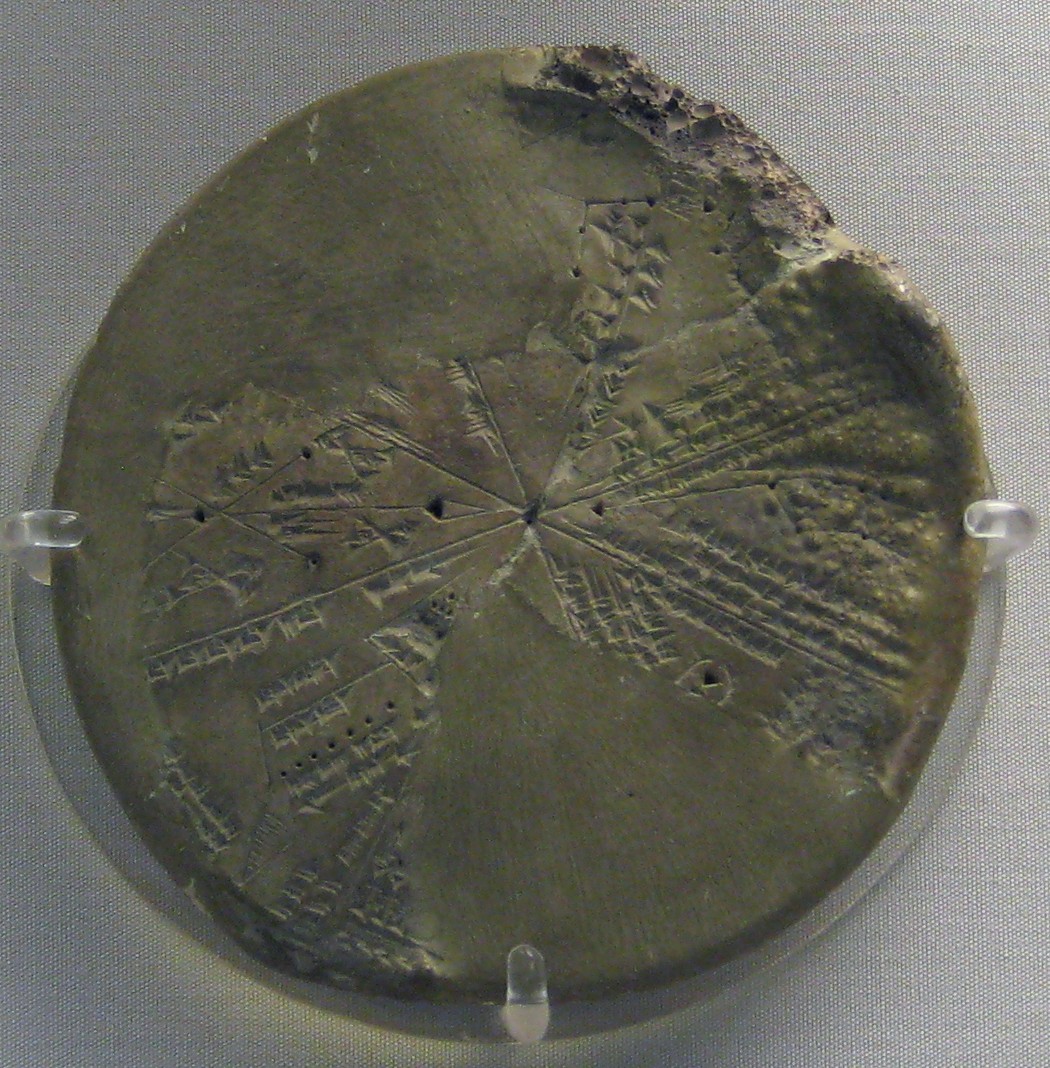
The inscribed face of the Nineveh planisphere, British Museum K.8538
License · Image sourceObject details
- Title
- The Nineveh Planisphere (British Museum K.8538)
- Timeline
- From 911 BCE to 612 BCE
- Region
- Mesopotamia
- Rights
- CC0
Text
Introduction
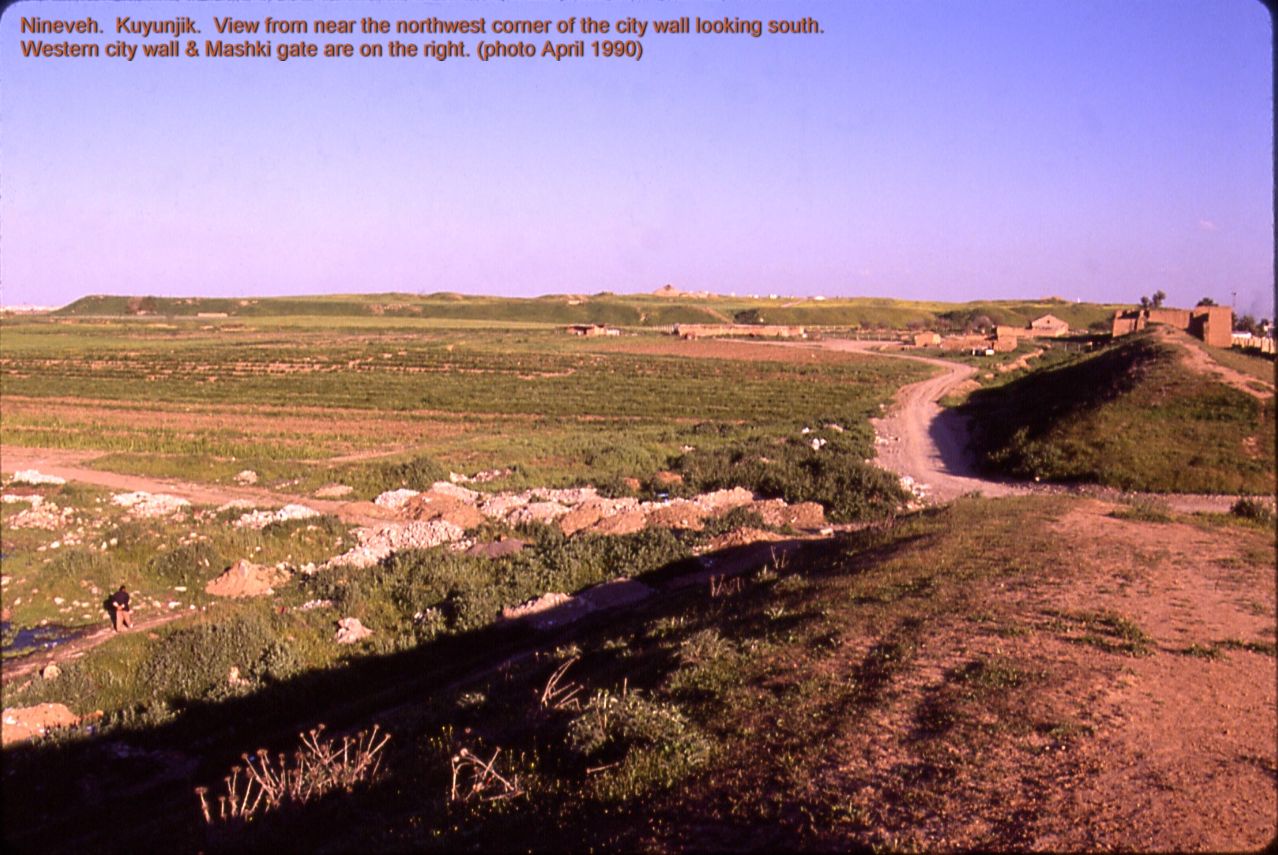
Lines radiate from the centre of this clay disk, crossing a face marked with dots, figures and cuneiformCuneiformWriting with wedge-shaped signs, developed from Mesopotamian recording traditions and used for several languages from the third millennium BCE.Glossary · Click to read the explanation signs. The British Museum keeps it as K.8538 and traces it to KouyunjikNineveh and KuyunjikNineveh is an ancient Assyrian city near Mosul in northern Iraq; Kuyunjik is one of its archaeological moundsGlossary · Click to read the explanation, the mound of ancient Nineveh. The museum attributes the excavation to Austen Henry Layard and others. The disk measures up to 14.1 cm in diameter and is 3.2 cm thick. The Cuneiform Digital Library Initiative lists it as an AkkadianAkkadianAn ancient East Semitic language written in cuneiform from the third millennium BCE; its varieties include Babylonian and Assyrian, and it served in international diplomacy.Glossary · Click to read the explanation tablet of the Neo-Assyrian period under the identifier P397674. [1][2][3][4]
A diagram cut into clay
The inscribed face is flat and has a raised rim. The reverse is slightly rounded and bears no inscription. In his 1912 publication, Leonard William King described partial vitrification, a glassy change in the clay, and noted that some of the disk was missing. His edition placed the tablet among the planispheres from AshurbanipalAshurbanipalAshurbanipal was an Assyrian king of the seventh century BCE, reigning about 668–631 BCEGlossary · Click to read the explanation’s library. It supplied a facsimile in plate 10 and acknowledged the earlier transcription and discussion by Archibald Henry Sayce and Robert Holford Macdowall Bosanquet. [1][3]
King described the face as divided into eight equal sectors. Within them he saw geometric figures in which lines join or surround small impressions. He took these impressions to mark stars and suggested that the triangular impressions could indicate brighter ones. Some of the writing gives the names of stars or constellations, and King noted a numerical measurement in one place. He tentatively identified one fragmentary outline as a bird. [3]
Reading the sectors
M. Willis Monroe counts traces of drawings in six of the eight sectors and writing in all eight. The signs face different ways on the clay. Monroe reads the diagram as progressing counterclockwise, while the orientation of individual passages varies. In his survey this feature makes K.8538 a possible exception to the usual practice of reading the text of the circular diagrams from the outside inward. A photograph shows where the incised lines converge and how closely the labels and other marks share the same space. [3][4]
Monroe discusses Johannes Koch’s identifications of the constellations, based in part on parallels in the astronomical compendium MUL.APIN. The museum’s curator notes identify the outline at the top with the constellation now called Gemini. Monroe also draws attention to sequences of repeated syllables and phrases among the inscriptions. Some resemble writing found in magical contexts. How these passages fit with the star names and with other astronomical or astrological texts remains open. The suggestion about their character concerns the form of the writing, while the proposed constellation identifications rest on comparisons with other texts. [1][4]
The date proposed for the sky
The British Museum’s curator notes interpret the diagram as showing the sky over Nineveh on the night of 3–4 January 650 BCE. The catalogue classifies the clay object as Neo-Assyrian, and the Cuneiform Digital Library Initiative supplies the broader range of about 911–612 BCE for that period. [1][2]
Two ways to arrange the stars
The round tablet known as the Sippar Planisphere gives a second example of how Mesopotamian scribes arranged constellations in clay. It belongs to the Neo-Babylonian period and uses twelve sectors of roughly thirty degrees. Wayne Horowitz and Farouk Al-Rawi identify its subject as the ziqpu stars, which reached their highest points near the middle of the sky as seen from Assyria or Babylonia. Its reverse lists these stars and gives the intervals between their culminations. On its face, short descriptions and groups of impressed dots show the arrangements of stars in the surviving sectors. [4][5]
King published K.8538 alongside other circular fragments from Nineveh, including Sm. 162 and K.14943+. Monroe reads these two as diagrams of monthly star lists. Their reconstructed layouts use twelve divisions and three concentric rings for the sky paths associated with EaEnkiMesopotamian deity also known as Ea, linked with Eridu and the Abzu (deep fresh waters), wisdom, incantations, and narratives of creation and cosmic order. Later written attestations do not identify the deity of Eridu’s earliest layers.Glossary · Click to read the explanation, Anu and EnlilEnlilEnlil/Ellil: a major Mesopotamian god associated with destinies, kingship, and Ekur at Nippur, already prominent in third-millennium god lists. His name’s origin and cult beginnings remain debated.Glossary · Click to read the explanation. In Monroe’s classification, the disks from Nineveh and Sippar form a separate group of circular star catalogues because of the ways their diagrams depict stars or constellations. [3][4]
References and notes
- British Museum, “Tablet,” collection record K.8538 Description, excavation and findspot, period, dimensions and curator’s comments on the proposed date and the outline identified with Gemini Return to the text ↑
- Cuneiform Digital Library Initiative, “CT 33, pl. 10, K 08538 (P397674)” Record, physical information, chronology, provenience and genre fields Return to the text ↑
- Leonard William King, Cuneiform Texts from Babylonian Tablets in the British Museum, Part XXXIII (Trustees of the British Museum, 1912) ‘Description of Plates’, § III, p. 6, and pls. 10–12. Form, impressions, earlier transcription, facsimile and related circular tablets Return to the text ↑
- M. Willis Monroe, “Astronomical and astrological diagrams from cuneiform sources,” Journal for the History of Astronomy 53, no. 3 (2022) § 4.1, especially ‘Astrolabe texts’, ‘Circular star catalogs’ and the sections on the Sippar Planisphere and K.8538, fig. 3 and nn. 27–28 Return to the text ↑
- Wayne Horowitz and Farouk N. H. Al-Rawi, “Tablets from the Sippar library IX. A ziqpu-star planisphere,” Iraq 63 (2001), pp. 171–181 Open extract on the Sippar tablet’s obverse diagram and reverse list, and the meaning of ziqpu stars Return to the text ↑
Archive records may be reviewed and refined as better evidence or sources become available. Suggest a correction
Suggest a correction · Suggest a source for this record
Cite this record
IL Archive, «The Nineveh Planisphere (British Museum K.8538)», https://ilarchive.com/en/artifacts/nineveh-planisphere-k8538
Continue reading