Artifact · Tablet
The Flood Tablet (Gilgamesh Tablet XI, British Museum K.3375)
An object record bringing together its image, metadata, rights, and context.
- Timeline
- From 699 BCE to 600 BCE
- Region
- Mesopotamia
A clay tablet from Ashurbanipal's library at Nineveh with the flood story of Gilgamesh Tablet XI, recognised in 1872 by George Smith: what it is, what it says and what it does not prove.
Estimated reading time: 5 min Published Last reviewed:
Share article
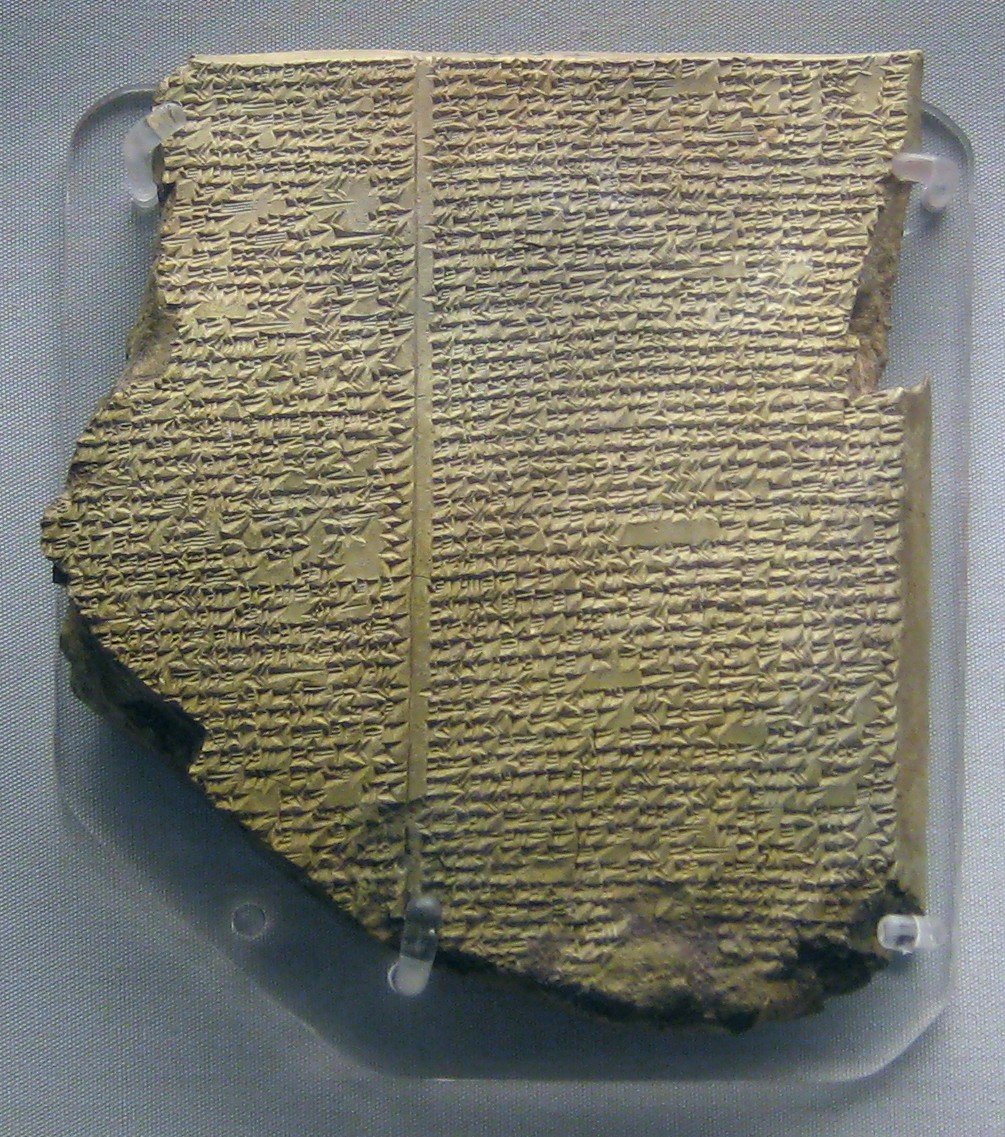
Photograph
Photo: BabelStone, CC0, via Wikimedia Commons
The Flood Tablet (British Museum K.3375), a fragment of Tablet XI of the Epic of Gilgamesh: Neo-Assyrian clay tablet from the library of Ashurbanipal, Nineveh, 7th century BCE, shown in a museum mount
License · Image sourceVideo
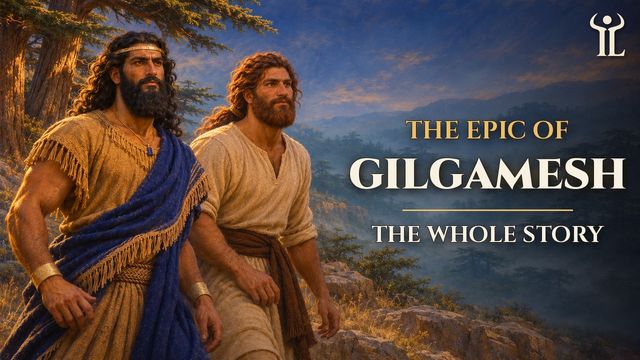
The Epic of Gilgamesh: The Complete Story from the Ancient Tablets
A king no one could stop, a wild man made to match him, and a friendship that changes both. The whole Epic of Gilgamesh in eight illustrated chapters, told from the clay tablets of ancient Iraq; where the tablets are broken, the narration says so. Illustrations, narration voice and visual effects were created with AI tools by IL Archive; the text is a faithful retelling based on the ancient tablets.
The YouTube player loads only when you press play. Watch on YouTube
Object details
- Title
- The Flood Tablet (Gilgamesh Tablet XI, British Museum K.3375)
- Timeline
- From 699 BCE to 600 BCE
- Region
- Mesopotamia
- Rights
- CC0
Text
Introduction
Few single objects have changed how the ancient Near EastAncient Near EastModern scholarly label for ancient societies of Mesopotamia, the Levant, Anatolia and Iran, sometimes extending to Egypt and other neighbours depending on the study; not one civilization or religion.Glossary · Click to read the explanation is read as much as one broken clay tablet in the British Museum, registered as K.3375 and known as the Flood Tablet. In 1872 a museum assistant recognised on it an ancient Mesopotamian account of a great flood, and the discovery made newspaper headlines in London.
This entry describes the object itself: where it was found, what is written on it, how it was recognised, and what scholars debate about it. It keeps three things apart that are easy to blur: the tablet (a copy made in the 7th century BCE), the story it tells, and the much older traditions behind that story.
The object
K.3375 is a baked clay tablet inscribed in AkkadianAkkadianAn ancient East Semitic language written in cuneiform from the third millennium BCE; its varieties include Babylonian and Assyrian, and it served in international diplomacy.Glossary · Click to read the explanation cuneiformCuneiformWriting with wedge-shaped signs, developed from Mesopotamian recording traditions and used for several languages from the third millennium BCE.Glossary · Click to read the explanation, the script of the Mesopotamian scribes. The British Museum dates it to the 7th century BCE, the Neo-Assyrian period, and records its findspot as KouyunjikNineveh and KuyunjikNineveh is an ancient Assyrian city near Mosul in northern Iraq; Kuyunjik is one of its archaeological moundsGlossary · Click to read the explanation, the mound of NinevehNineveh and KuyunjikNineveh is an ancient Assyrian city near Mosul in northern Iraq; Kuyunjik is one of its archaeological moundsGlossary · Click to read the explanation, where the royal library of AshurbanipalAshurbanipalAshurbanipal was an Assyrian king of the seventh century BCE, reigning about 668–631 BCEGlossary · Click to read the explanation (who ruled 668–626 BCE) was found. [1]
The surviving piece is a broken fragment about 15.2 cm long, 13.3 cm wide and 3.2 cm thick. [2] The photograph shows one face with two columns of closely written lines, divided by a ruled line, and a ragged broken edge on the left. A description of the discovery says the fragment is half of a tablet that originally held six columns. [3] The tablet is not a record of an event. It is a scribal copy of a literary work, made some centuries after the traditions it preserves took shape.
What is written on it
The text is part of Tablet XI of the Epic of Gilgamesh in its standard Babylonian form, an epic of twelve tablets whose ancient title is taken from its opening words, "He who saw everything". [4] Tablet XI is the point where GilgameshGilgameshA king of Uruk in Mesopotamian tradition and the hero of Sumerian poems and a multi-tablet Akkadian epic, with his companion Enkidu, the loss of a friend and the search for life. In standard Tablet XI, Utnapishtim tells him of the flood.Glossary · Click to read the explanation reaches UtnapishtimUtnapishtimThe flood hero of Standard Babylonian Gilgamesh, granted exceptional life with his wife by the gods. He tells Gilgamesh how he survived; his name overlaps with Atrahasis and Ziusudra traditions without making their narratives identical.Glossary · Click to read the explanation, the survivor of the flood, and asks how he gained life without end.
Utnapishtim answers with the story of the flood. In summary, the god EaEnkiMesopotamian deity also known as Ea, linked with Eridu and the Abzu (deep fresh waters), wisdom, incantations, and narratives of creation and cosmic order. Later written attestations do not identify the deity of Eridu’s earliest layers.Glossary · Click to read the explanation (the Akkadian name of EnkiEnkiMesopotamian deity also known as Ea, linked with Eridu and the Abzu (deep fresh waters), wisdom, incantations, and narratives of creation and cosmic order. Later written attestations do not identify the deity of Eridu’s earliest layers.Glossary · Click to read the explanation) warns him through the wall of a reed hut. He builds a boat, takes his family, craftsmen and animals aboard, and survives a storm. When the water falls the boat rests on Mount Nimush, also written Nisir. He sends out a dove, a swallow and a raven, and then offers a sacrifice. The god EnlilEnlilEnlil/Ellil: a major Mesopotamian god associated with destinies, kingship, and Ekur at Nippur, already prominent in third-millennium god lists. His name’s origin and cult beginnings remain debated.Glossary · Click to read the explanation, who had sent the flood, is rebuked by Ea; Utnapishtim and his wife are then given a life like that of the gods, far away at the mouth of the rivers. [4][5] A summary of one standard line count puts the flood story at roughly the first two hundred lines of the tablet. [5]
Tablet XI continues after the flood with Gilgamesh failing a test of staying awake and losing a plant of renewed youth to a serpent. The plant has its own entry on this site: Gilgamesh's Rejuvenating PlantGilgamesh’s Rejuvenating PlantA thorny plant that Gilgamesh retrieves in Tablet XI and plans to test for rejuvenation, before a snake carries it away and sheds its skin. The account separates the narrative from interpretations of eating and immortality and cautiously compares the trees of Eden.Glossary · Click to read the explanation. The flood section is only part of Tablet XI.
How it was recognised
George Smith worked at the British Museum on the huge collection of broken tablets from Nineveh. About 25,000 fragments came from the excavations at Kouyunjik in 1848–1854, most of them from Ashurbanipal's library. [4] Smith was preparing a volume of cuneiform texts and searching the mythological tablets when, in his own words, "on looking down the third column" his eye caught the statement that the ship rested on the mountains of Nizir. He wrote that he saw at once that he had found part of the Chaldean account of the Deluge. [6]
On 3 December 1872 he presented the find to the Society of Biblical Archaeology in London. [4] The public interest was large enough that the newspaper The Daily Telegraph offered to fund new excavations at Nineveh, with Smith in charge. [3] Smith wrote that soon after he began digging at Kouyunjik he found a fragment of the same account, belonging to the first column of the tablet. [6] Later authors disagree about the year of that dig and about exactly which fragment he found there, so this entry does not give them. [4][5]
Why it matters, and what it does not show
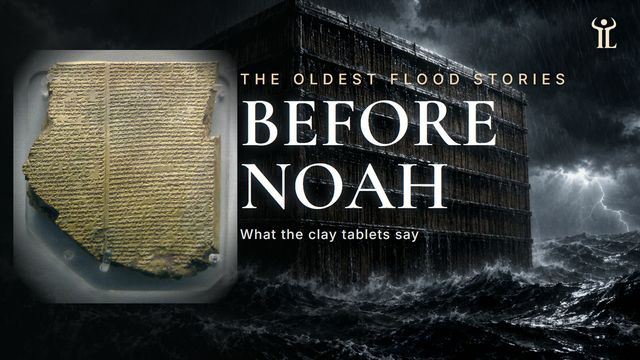
The flood in Tablet XI is not the oldest flood story in MesopotamiaMesopotamiaHistorical region associated with the Tigris and Euphrates: Uruk, Ur, Eridu, cuneiform, Sumer, Akkad, Babylon and Assyria, their languages and cults, and the limits of archaeological evidence.Glossary · Click to read the explanation. Earlier written traditions tell of ZiusudraZiusudraA literary king-priest in the fragmentary Sumerian Flood Story (ETCSL 1.7.4). He survives by boat, sacrifices, and receives divine life from An and Enlil in Dilmun. The surviving copy is Old Babylonian; his historicity is unproven.Glossary · Click to read the explanation and of AtrahasisAtrahasis: Epic and HeroAkkadian narrative on human creation, relations with the gods and the flood, named for its survivor warned by Enki. Its surviving manuscripts differ in date and preservation; its hero must not be equated uncritically with every Utnapishtim version.Glossary · Click to read the explanation. Many scholars think the flood section was brought into the standard epic from the Atrahasis tradition by an editor, though the details of who did this and when are debated. [5] The comparison with the biblical flood in Genesis is treated at length in our study The Flood Before NoahNoahNoah is the flood-story figure in Genesis and a prophet in the Qur’anGlossary · Click to read the explanation. What the tablet establishes is a documented Mesopotamian narrative with its own characters and gods. It does not by itself say how one tradition relates to another, and a similar plot is not proof of a direct link.
Several details of translation are uncertain: the length measured in the boat's description, the exact reading of the mountain's name, and the identification of one divine figure in the text as Enlil are all choices made by translators. [5]
Reading the object today
The tablet is a fragment seen in a museum display, not a complete book. Its value lies in showing actual scribal work: the neat lines and the ruled column divider. Photographs, including the one used here, make the writing visible, but reading it requires the editions by specialists such as Andrew George, which put the text of many manuscripts together. [1][5]
References and notes
- British Museum registration K.3375, 'The Flood Tablet' (Library of Ashurbanipal, Kouyunjik), as given in the museum record reproduced on Google Arts & Culture and in the Omnika catalogue entry Catalogue description: Neo-Assyrian, 7th century BCE, findspot Kouyunjik, library of Ashurbanipal; Omnika entry for the bibliography (Budge 1920; George 2000; Dalley 1989) Return to the text ↑
- Wikimedia Commons, file 'British Museum Flood Tablet.jpg' (BabelStone, 2010, CC0) File page: description, K.3375, dimensions 15.24 x 13.33 x 3.17 cm, licence Return to the text ↑
- Biblical Archaeology Society, sidebar 'George Smith's Other Find: The Babylonian Flood Tablet' (signed M.D.M.), to 'The Genesis of Genesis' Whole sidebar: half of a six-column tablet; the lecture of 3 December 1872; the Daily Telegraph proposal Return to the text ↑
- Daniel Hammerly-Dupuy, 'Some Observations on the Assyro-Babylonian and Sumerian Flood Stories', Andrews University Seminary Studies 6 (1968) Section 1 (first Assyrian tradition of the Flood) and section 2 (second tradition), read from a text extraction of the PDF Return to the text ↑
- Wikipedia, 'Gilgamesh flood myth' (secondary summary of Kovacs, Tigay, George and others) Physical description, line-number outline of Tablet XI, scholarly points (editorial insertion, translation uncertainties); used as a pointer to the scholarship, not as a primary source Return to the text ↑
- George Smith, The Chaldean Account of Genesis (1876), chapter on the discovery, as reproduced at sacred-texts.com mirror Smith's own account of recognising the Deluge text in the third column and of the later Kouyunjik fragment Return to the text ↑
Archive records may be reviewed and refined as better evidence or sources become available. Suggest a correction
Suggest a correction · Suggest a source for this record
Cite this record
IL Archive, «The Flood Tablet (Gilgamesh Tablet XI, British Museum K.3375)», https://ilarchive.com/en/artifacts/flood-tablet-gilgamesh-xi
Continue reading