Entity
The Seven Hathors and Other Sevens in Ancient Egypt
A reference page linking a name, group, or concept to the materials that discuss it.
- Names
- Seven Hathors
- Timeline
- From 1300 BCE to 1200 BCE
- Region
- Egypt
The Seven Hathors who announce a person's fate, and the seven cows and a bull of Book of the Dead spell 148: what the papyri and Nefertari's tomb actually say about seven in Egypt.
Estimated reading time: 5 min Published Last reviewed:
Share article
Video
Why Is Seven Sacred? What the Clay Tablets of Ancient Iraq Reveal
Our fourth documentary follows the number seven through the clay tablets of ancient Iraq and its neighbours, then reads the scriptures in their own words and with respect. Some scenes are AI-generated illustrations.
The YouTube player loads only when you press play. Watch on YouTube
Text
Introduction
Seven appears again and again in the texts of MesopotamiaMesopotamiaHistorical region associated with the Tigris and Euphrates: Uruk, Ur, Eridu, cuneiform, Sumer, Akkad, Babylon and Assyria, their languages and cults, and the limits of archaeological evidence.Glossary · Click to read the explanation, UgaritUgaritAncient city and kingdom at Ras Shamra on the Syrian coast, flourishing between the fourteenth and early twelfth centuries BCE and preserving multilingual archives.Glossary · Click to read the explanation and the Bible. Did ancient Egypt share this pattern? This entry gathers the clearest Egyptian cases: the Seven Hathors, who pronounce a fate, and the seven cows and the bull of Book of the Dead spell 148, painted in the tomb of Queen Nefertari.
Each case is read in its own source, noting where a modern translation adds or interprets, and then set beside the numbers Egypt used for its groups of gods. The result is a useful test: seven mattered in Egypt, but it was not the number that organised the divine world there.
The Seven Hathors in the Tale of the Two Brothers
Hathor was an Egyptian goddess of many roles, often shown with a cow's head or as a woman with cow's ears and horns. [1] In New Kingdom stories she also appears in the plural. Edward F. Wente notes that, according to popular religious belief of the period, there were seven such Hathor goddesses who determined the fate of a child at birth. [2]
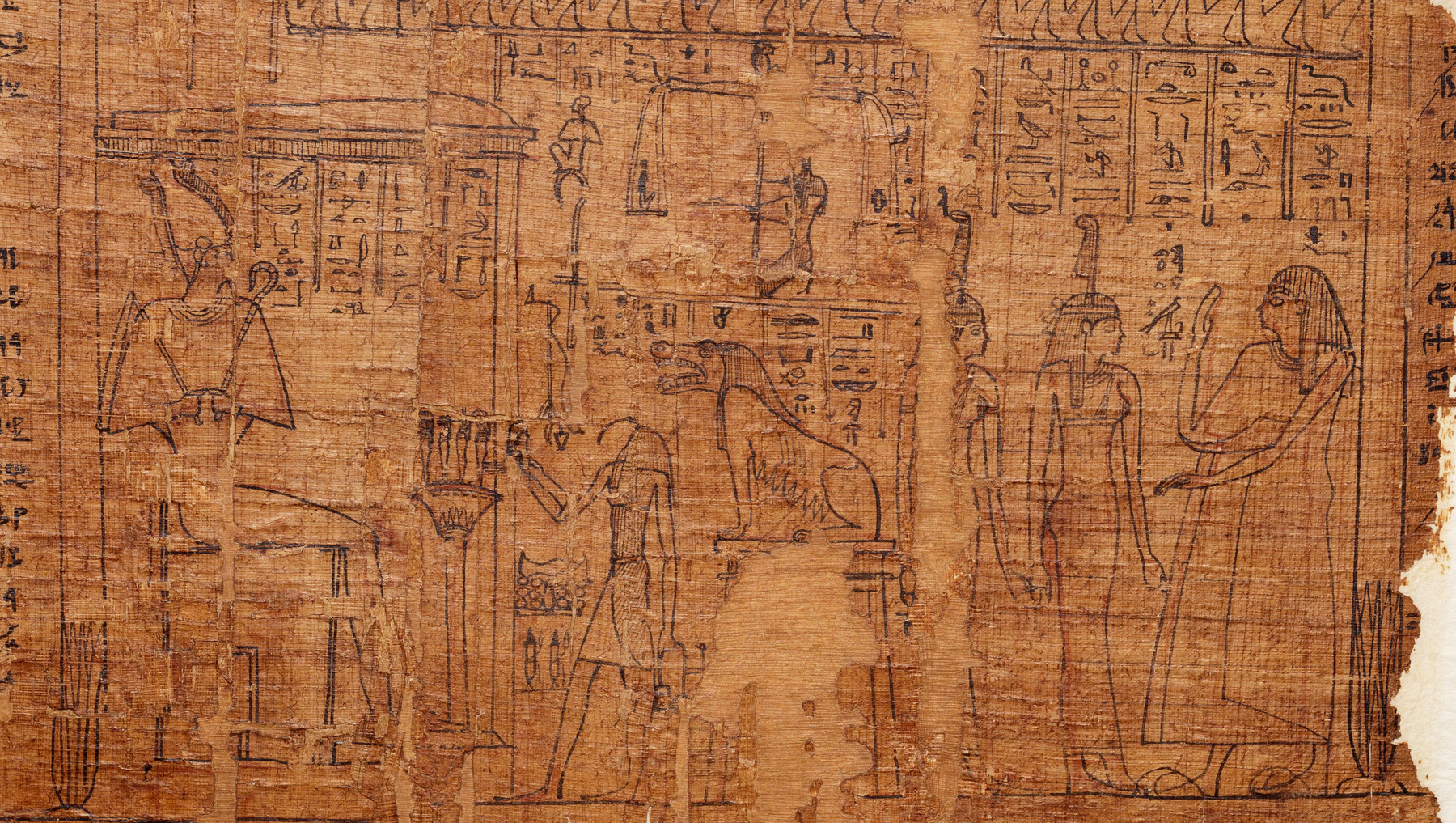
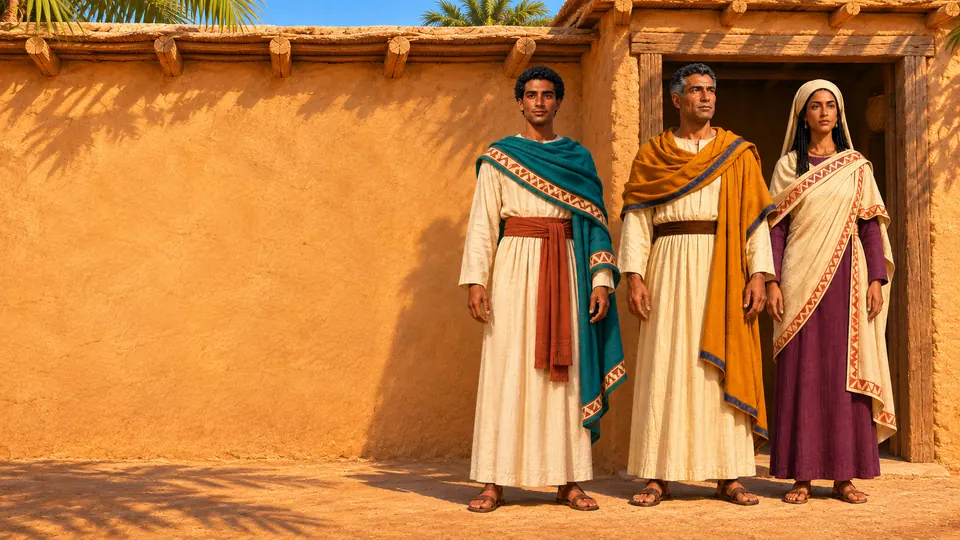
The clearest witness is the Tale of the Two BrothersPapyrus D’Orbiney: Tale of the Two BrothersNineteenth-Dynasty hieratic papyrus (c. 1215 BCE), British Museum EA10183; the sole known manuscript of the Tale of the Two Brothers, copied by Inena.Glossary · Click to read the explanation, preserved on Papyrus D'OrbineyPapyrus D’Orbiney: Tale of the Two BrothersNineteenth-Dynasty hieratic papyrus (c. 1215 BCE), British Museum EA10183; the sole known manuscript of the Tale of the Two Brothers, copied by Inena.Glossary · Click to read the explanation, a manuscript of about 1215 BCE. BataBata in the Tale of the Two BrothersYounger brother in the Egyptian tale preserved by D’Orbiney, accused and later transformed before attaining kingship.Glossary · Click to read the explanation has withdrawn alone to the Valley of the Pine. The sun god ReRe, Egyptian sun godRe is the Egyptian sun god, associated with creation, life and renewal of cosmic orderGlossary · Click to read the explanation-Harakhty asks KhnumKhnumEgyptian god represented with a ram’s head; his priests appear in the Elephantine petition’s account of the 410 BCE destruction.Glossary · Click to read the explanation, the potter god, to make him a wife so that he will not live alone, and Khnum makes a woman more beautiful than any in the land. Then the Seven Hathors come to see her and speak as one. Susan Tower Hollis translates their words (papyrus page 9, lines 8–9): [3]
Miriam Lichtheim renders the line "She will die by the knife", and Wente "It is [by] an (executioner's) blade that she shall die". [4][2] The woman later betrays Bata at the king's court. At the end Bata, now king, has her brought before his officials and contends with her in their presence. The papyrus does not describe her death; Wente takes the passage to imply her condemnation, in line with the fate the Hathors announced. [2]
The Hathors and the Doomed Prince
A second tale, known as the Doomed Prince, survives on the back (verso) of Papyrus Harris 500. [4] Wente notes that the manuscript dates from the early Nineteenth Dynasty, while the story itself was probably composed late in the Eighteenth, following Wolfgang Helck. A king long without a son finally has one, and the Hathors come to determine his fate. Wente translates: [2]
Here the number seven is not written in the translations consulted: both Lichtheim and Wente have simply "the Hathors". Wente's note connects them with the seven of the Two Brothers, so calling them the Seven Hathors is a reasonable reading, but it remains an inference. The end of the tale is lost. Both translators stress that the Egyptian idea of fate was flexible rather than rigidly fixed; the story turns on whether, and how, the prince escapes what was announced. [2][4]
Seven cows and a bull: Book of the Dead spell 148
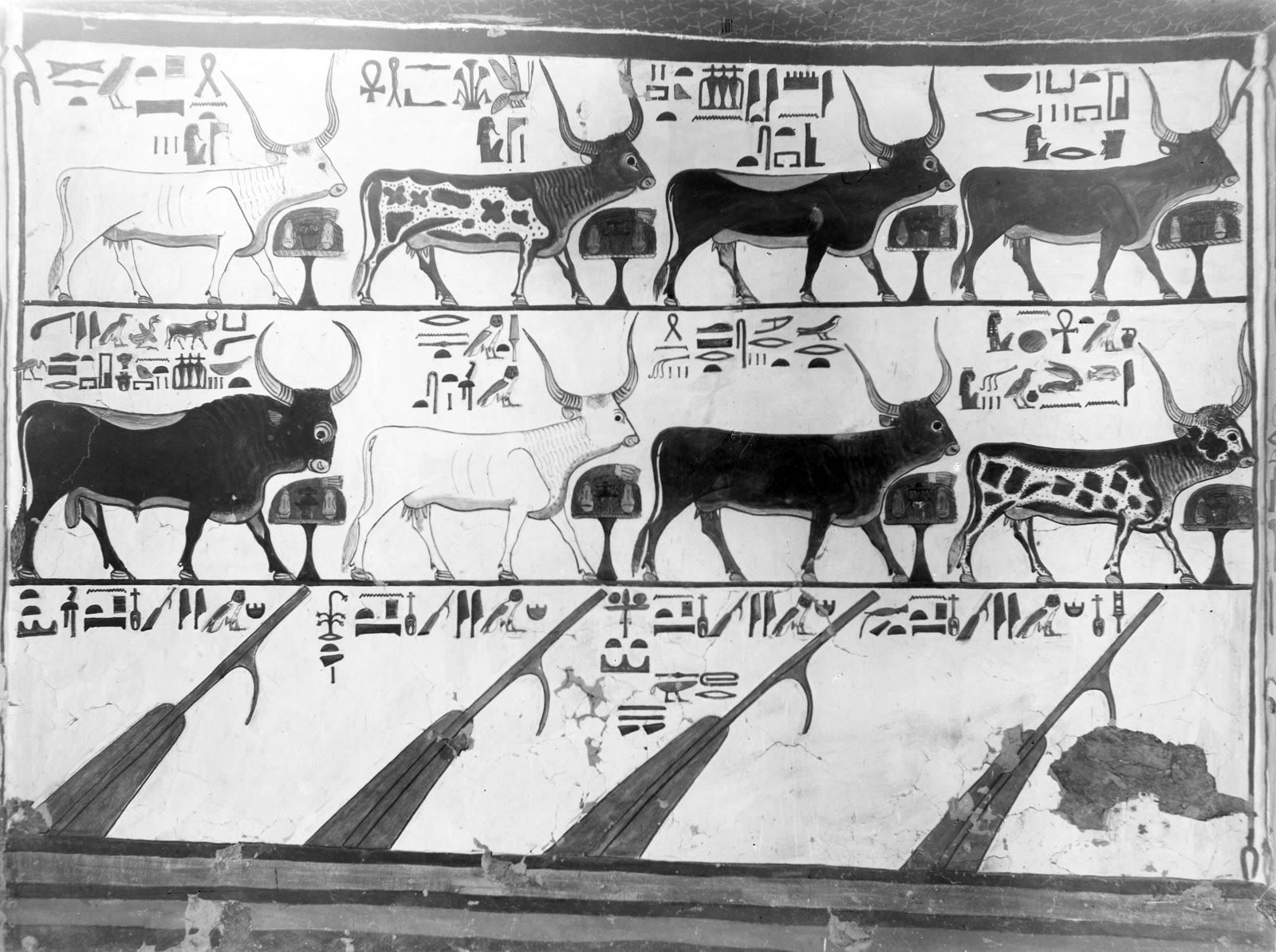
The Book of the DeadEgyptian Book of the DeadA modern name for a variable collection of Egyptian funerary spells and images intended for the afterlife, not a single book with a fixed sequence.Glossary · Click to read the explanation is the modern name for a varied corpus of Egyptian funerary spells. Spell (chapter) 148 brings together seven cows and their bull. A celebrated painted version is in tomb QV 66 in the Valley of the Queens at ThebesThebes, EgyptThebes, Egyptian Waset, was an ancient Egyptian city in the area of modern Luxor, with monuments on both banks of the Nile.Glossary · Click to read the explanation, made for Nefertari, the wife of Ramesses II, and found by Ernesto Schiaparelli's expedition in 1904. [1]
In a side chamber the scene fills the south wall and runs onto the west wall. There are four cows in the upper register and three cows and the bull in the middle one. Each animal has its own hide pattern, a caption above it and a small altar of vegetables, milk and bread before it. John K. McDonald explains that the text of the spell gives these cows the power to supply the dead queen with such food. The same spell names four steering oars, each linked with a direction, that help the dead steer among the stars; they fill the lowest register. [1][5]
Nefertari stands on the adjoining wall with raised arms. No words are written for her, but McDonald suggests that she is understood to recite the spell's request to the cows. [1] The number here is part of the scene's structure: the painting gives each animal its own caption and its own altar. The sources read for this entry do not explain why the number seven was chosen.
A seven among nines and eights
The same papyrus that names the Seven Hathors also names a larger group of gods. When Bata meets the gods going out to govern the land, they are the Ennead, and they greet him as "Bull of the Ennead". [3][2]
An ennead is a group of nine gods. The best known, the Great Ennead of HeliopolisHeliopolis, ancient IunuHeliopolis is the Greek name of Egyptian Iunu, at Matariya in northern present-day CairoGlossary · Click to read the explanation, was headed by the creator AtumAtumAtum is an Egyptian creator god associated with HeliopolisGlossary · Click to read the explanation and continued through Shu and Tefnut and Geb and Nut to OsirisOsirisOsiris was an ancient Egyptian deity associated with the dead, life after death, renewal, and kingship. His roles appear in changing funerary texts, rituals, and judgment scenes, notably the weighing of the heart.Glossary · Click to read the explanation, Isis, Nephthys and Seth. According to the Global Egyptian Museum, nine could stand for "all" the gods, because the Egyptians expressed plurality with three, and nine is three times three. The count was therefore not always literal: the ennead of Thebes had fifteen gods. [6] Egyptian creation traditions also speak of the EightThe Eight in Egyptian creation traditionsThe Eight are four divine pairs describing conditions before the ordered world in Egyptian traditionsGlossary · Click to read the explanation, four divine pairs who describe the conditions before the ordered world.
Egypt thus offers a useful counterweight. Seven is present there: seven goddesses who announce a fate, seven cows who feed the dead. Yet the numbered groups that order the gods in Egyptian creation traditions are a Nine and an Eight. Seven was prominent across much of the ancient Near EastAncient Near EastModern scholarly label for ancient societies of Mesopotamia, the Levant, Anatolia and Iran, sometimes extending to Egypt and other neighbours depending on the study; not one civilization or religion.Glossary · Click to read the explanation, but it was not a universal sacred number. Egypt's own counts deserve to be read on their own terms.
References and notes
- John K. McDonald, House of Eternity: The Tomb of Nefertari, Los Angeles: The Getty Conservation Institute and the J. Paul Getty Museum, 1996 pp. 80-81 (PDF pp. 86-87) on the Chapter 148 scene in Chamber G; caption on PDF p. 62 (Schiaparelli, 1904); glossary entry 'Hathor'; title page and copyright page Return to the text ↑
- Edward F. Wente, translations of 'The Tale of the Doomed Prince' and 'The Tale of the Two Brothers', in William Kelly Simpson (ed.), The Literature of Ancient Egypt, 3rd ed., New Haven and London: Yale University Press, 2003 Doomed Prince: introduction p. 75, 4,1-4,5 and note 1 p. 76; Two Brothers: 9,2-9,7 and notes 8-9 p. 85, 9,8-9,9 p. 86, ending 19,6-19,9 and notes 18-19 p. 90 Return to the text ↑
- Susan Tower Hollis, The Ancient Egyptian "Tale of Two Brothers", Norman: University of Oklahoma Press, 1990, translation pp. 5-15, as reproduced in an OLLI George Mason University course handout Papyrus D'Orbiney 9,1-9,9 (the Ennead; Khnum makes the wife; the Seven Hathors). Curly-brace glosses in the handout are the compiler's, not the translator's Return to the text ↑
- Miriam Lichtheim, Ancient Egyptian Literature, vol. II: The New Kingdom, Berkeley: University of California Press, 1976 p. 200 (introduction to 'The Doomed Prince': Papyrus Harris 500 verso, the Egyptian idea of fate; text 4,1-4,4); p. 207 ('The Two Brothers' 9,6-9,9); read in OCR text of a PDF copy, damaged lines checked in a second raw extraction Return to the text ↑
- Archivio fotografico Museo Egizio, Turin, photograph E00613: Valley of the Queens, QV 66, Tomb of Nefertari, 1904-1935, with the museum's description Catalogue description of the photograph (first eastern annexe, south wall, scene 17: seven cows, a bull and four steering oars of Spell 148), as published on the Wikimedia Commons file page Return to the text ↑
- Global Egyptian Museum, glossary entry 'Ennead' Whole entry (short glossary text) Return to the text ↑
Suggest a correction · Suggest a source for this record
Cite this record
IL Archive, «The Seven Hathors and Other Sevens in Ancient Egypt», https://ilarchive.com/en/entities/seven-hathors-and-egyptian-sevens
Continue reading
Related readings