Artifact
Tablet VI of Enuma Elish from Kish (Ashmolean AN 1926.373)
An object record bringing together its image, metadata, rights, and context.
- Timeline
- From 911 BCE to 612 BCE
- Region
- Mesopotamia
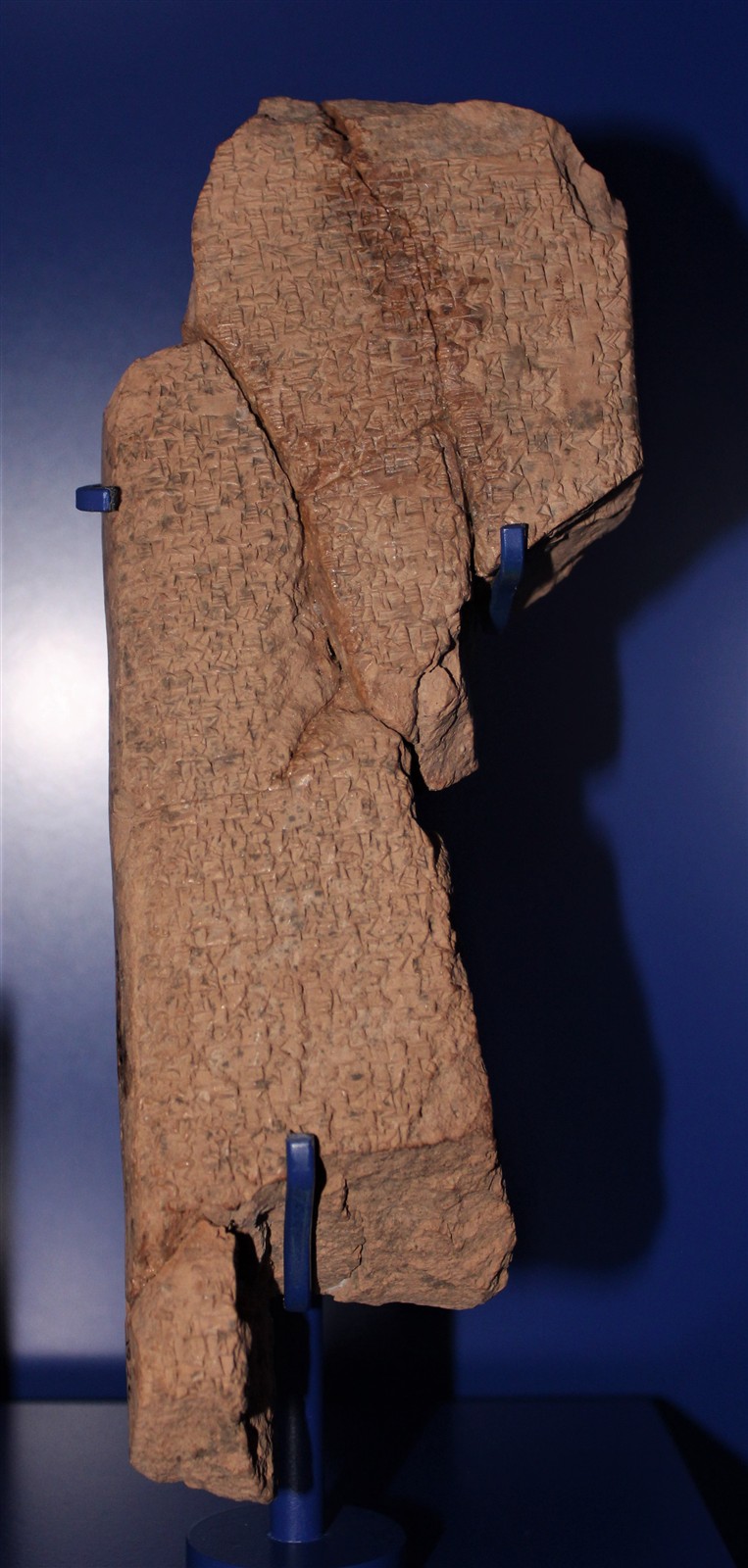
A broken tablet from Kish preserves part of the Babylonian creation poem. Read together, three pieces in Oxford record the Anunnaki of heaven and the netherworld and preserve signs from the passage on the building of Esagila.
Estimated reading time: 4 min Published Last reviewed:
Share article
Photograph
Photograph by Zunkir, via Wikimedia Commons · CC BY-SA 4.0
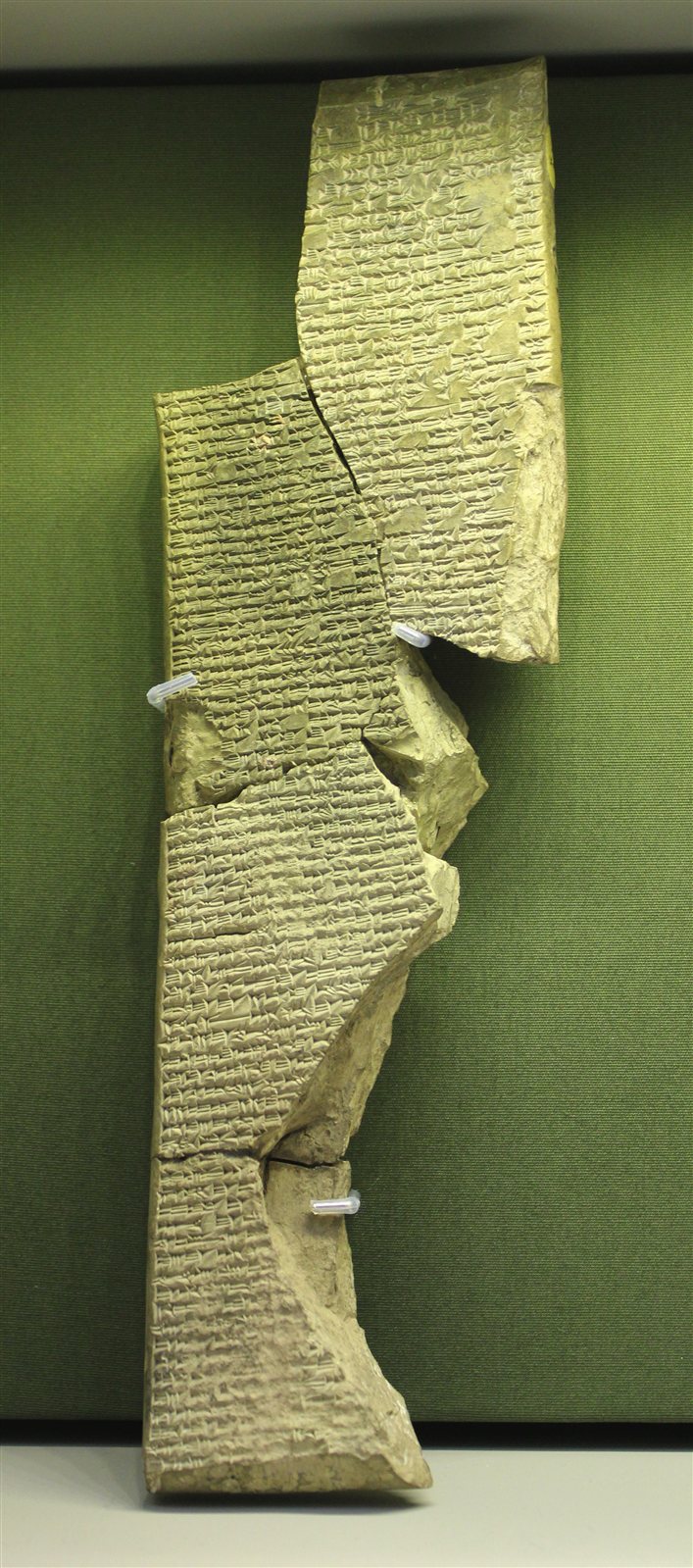
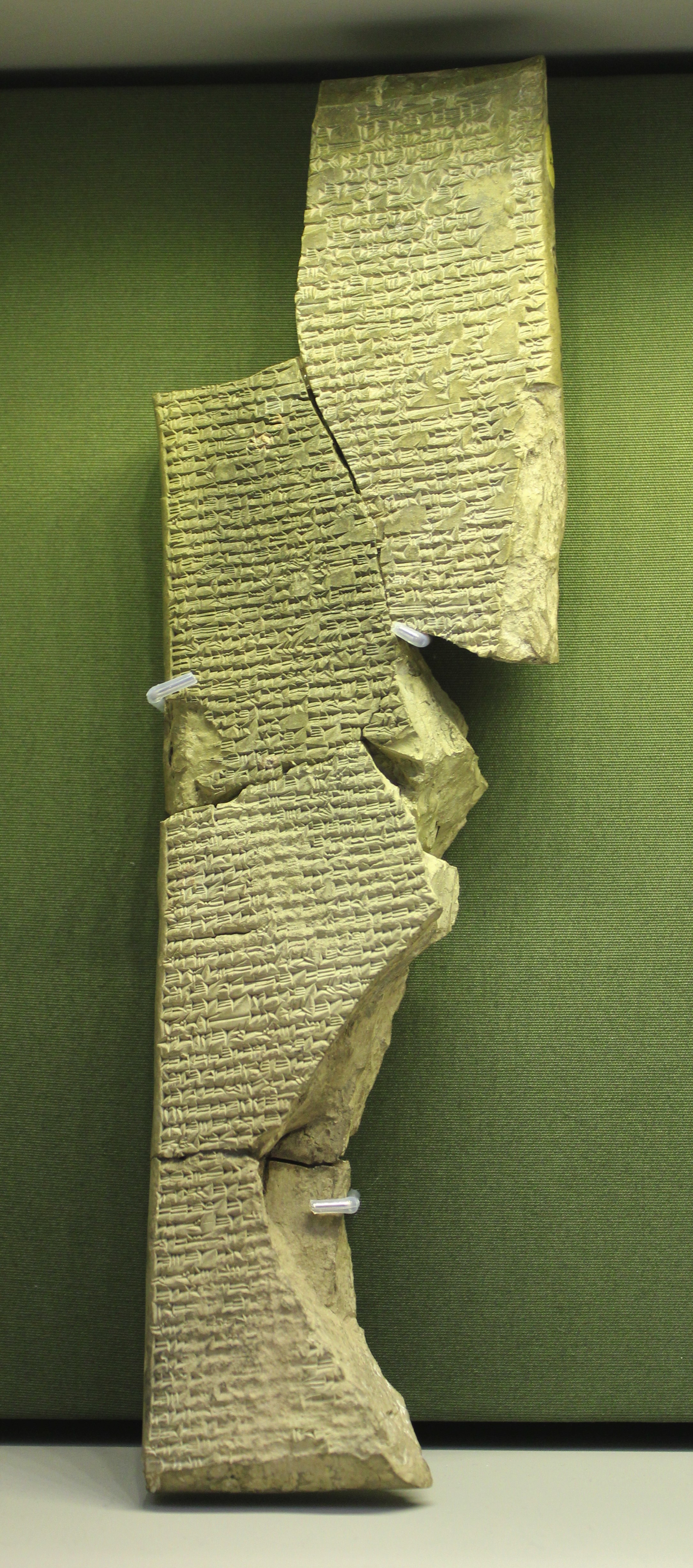
Clay fragment AN 1926.373 on its display mount in the Ashmolean Museum. Fine lines of cuneiform reach the broken edges
License · Image sourceVideo
Enuma Elish: The first waters, the storm and the fifty names
The first waters, the storm and the fifty names. The whole story in four illustrated chapters, told from the ancient clay tablets; where the tablets are broken, the narration says so. Illustrations, narration voice and visual effects were created with AI tools by IL Archive; the text is a faithful retelling based on the ancient tablets.
The YouTube player loads only when you press play. Watch on YouTube
Object details
- Title
- Tablet VI of Enuma Elish from Kish (Ashmolean AN 1926.373)
- Timeline
- From 911 BCE to 612 BCE
- Region
- Mesopotamia
- Rights
- CC BY-SA
Text
Introduction
On a narrow piece of inscribed clay from Kish, lines of cuneiformCuneiformWriting with wedge-shaped signs, developed from Mesopotamian recording traditions and used for several languages from the third millennium BCE.Glossary · Click to read the explanation end at jagged breaks. The Ashmolean Museum in Oxford holds it as AN 1926.373. It belongs to a manuscript of Tablet VI of Enuma ElishEnuma ElishA seven-tablet Babylonian creation poem in Akkadian, recounting Marduk’s rise, victory over Tiamat, cosmic ordering and human creation, and culminating in praise through fifty names. Its composition date is debated; later manuscripts and recitation traditions preserve it.Glossary · Click to read the explanation, the Babylonian creation poem in AkkadianAkkadianAn ancient East Semitic language written in cuneiform from the third millennium BCE; its varieties include Babylonian and Assyrian, and it served in international diplomacy.Glossary · Click to read the explanation. The surviving text can be read across three joined pieces. On their front, the scribe wrote of the AnunnakiAnunna / AnunnakiAnunna/Anunnaki is a collective designation for Mesopotamian gods whose scope varies by text and period; it is not a group with one fixed membership or number.Glossary · Click to read the explanation in heaven and the netherworld and of the shrine they offer to build for MardukMardukBabylon’s leading god, worshipped at Esagil and elevated in the Akkadian Enūma eliš. His symbols include a spade and mušḫuššu dragon. His earliest origins remain obscure; Nibiru is no evidence of a planetary homeland.Glossary · Click to read the explanation. The broken edges sometimes leave only the first words of a line, so parallel copies supply much of what can be read in translation. [1][2][3][4]
Three pieces of a tablet from Kish
The Ashmolean’s gallery list records AN 1926.373 as a clay tablet with cuneiform from the Epic of Creation. Its listed dimensions are 14.0 cm long, 5.6 cm wide and 4.6 cm high. The list dates the piece approximately 911–612 BCE, the same range the Cuneiform Digital Library Initiative assigns to the joined tablet under its Neo-Assyrian period heading. The electronic Babylonian Library describes the script as Neo-Assyrian. These classifications apply to the surviving copy from Kish. [1][2][3]
The Ashmolean specifies that AN 1926.373 was allocated to it by the Oxford–Field Museum expedition to Kish in 1926. That joint project excavated at the site from 1923 to 1933. The electronic Babylonian Library lists two joins for the fragment, AN 1924.1828 and AN 1926.374. Its manuscript list brings all three together under KišNB1 in Tablet VI, and the Cuneiform Digital Library Initiative groups them under P368432. The Oxford accession numbers identify the individual pieces, and KišNB1 and P368432 each identify the joined manuscript in a different catalogue. [1][2][3][5][7]
Eleanor Robson includes the three inventory numbers in her reconstruction of the core of a scholarly collection from Mound W at Kish. That group contained literary, lexical, divinatory and mathematical texts. The excavators left little detail about the deposit, so Robson uses the museum records and the relationships among tablets to reconstruct the group. Her table lists these three numbers under Tablet IV of the poem. The electronic edition places them in Tablet VI, where the surviving words can be checked against the other manuscripts line by line. [2][4][5][6]
The assembly and the apportionment of the gods
Tablet VI begins with Marduk proposing to create human beings to take over the gods’ work. EaEnkiMesopotamian deity also known as Ea, linked with Eridu and the Abzu (deep fresh waters), wisdom, incantations, and narratives of creation and cosmic order. Later written attestations do not identify the deity of Eridu’s earliest layers.Glossary · Click to read the explanation advises that the gods hand over the one guilty of starting the war. In the assembled text, the IgigiIgigiCollective of deities called Igigi or Igigū in Akkadian sources from the Old Babylonian period onward. They labour and rebel in Atrahasis; their numbers and relation to the Anunnaki vary by text.Glossary · Click to read the explanation name QinguQinguQingu (Kingu): a god whom Tiamat appoints commander and gives the Tablet of Destinies; captured after Marduk’s victory, his blood is used to make humans in Tablet VI.Glossary · Click to read the explanation and he is brought before Ea. The narrative then links the creation of humanity to Qingu’s blood. Parts of this sequence survive in the joined Kish manuscript. It preserves Qingu’s name at line 29, the opening phrase about his blood at line 33, and the word for humanity at line 35. The surviving copy has lost the ends of several of these lines. [4]
After this episode, Marduk distributes the gods between heaven and the netherworld. The edition reads three hundred posted in heaven and a corresponding number assigned to the netherworld, for a total of six hundred. The Kish manuscript preserves the number for three hundred in line 42 and part of the wording about six hundred in line 44. At line 46 the signs for the Anunnaki and the two realms are still discernible in the edition’s reading of this witness. The passage presents the Anunnaki as a group divided between the two realms in this episode. [4]
The shrine for Marduk
In the next exchange, the Anunnaki ask how they can repay Marduk for freeing them from toil. They offer to build a shrine. The opening of that offer survives in the Kish copy at line 51. Marduk calls for the building of BabylonBabylonBabylon is an ancient city in central present-day Iraq, south of BaghdadGlossary · Click to read the explanation, and the text describes the making of bricks in one year and construction in the next. The joined clay preserves signs at the opening of the lines about the first and second years and traces of the name Esagila in line 62. The edition places the building episode between the division of duties among the gods and the later naming of Marduk. [4]
The score for line 46 gives two positions for the passage. It is line 46 of Tablet VI in the continuous edition, and line 44′ on the obverse of KišNB1. The prime mark shows that the line count on that face starts after a break. Following both numbers lets readers move from the reconstructed passage to the surviving signs on the joined pieces. [2][4][5]
References and notes
- Ashmolean Museum, “Assyrian & Persian Empires,” gallery case list Entry AN1926.373, material, dimensions, date range, and 1926 allocation by the Oxford–Field Museum expedition. Return to the text ↑
- electronic Babylonian Library, “Ashm-1926.373” Provenance, script, inventory of the three pieces and Edited in Corpus section leading to KišNB1 in Tablet VI. Return to the text ↑
- Cuneiform Digital Library Initiative, “CDLI Literary 002718.06, ex. 005 (P368432)” Object record and text identification, Akkadian, clay, Kish, Neo-Assyrian period, and the three accession numbers. Return to the text ↑
- A. C. Heinrich, “Poem of Creation (Enūma eliš) Chapter VI,” electronic Babylonian Library, 2021, translated by Benjamin R. Foster Continuous edition and KišNB1 scores at lines 29, 33, 35, 42, 44, 46, 51 and 60–62. Return to the text ↑
- A. C. Heinrich, “Poem of Creation (Enūma eliš),” electronic Babylonian Library Tablet VI, List of Manuscripts, Kiš entry KišNB1, joined accession numbers and references to the handcopies. Return to the text ↑
- Eleanor Robson, “Mathematical Cuneiform Tablets in the Ashmolean Museum, Oxford,” SCIAMVS 5 (2004), 3–65 Pp. 47–48, figure 2 and table 8, the scholarly collection from Mound W and its listing of these joins under Tablet IV. Return to the text ↑
- The Field Museum, “The Kish Collection” Expedition history, 1923–1933 dates and institutional partners. Return to the text ↑
Archive records may be reviewed and refined as better evidence or sources become available. Suggest a correction
Suggest a correction · Suggest a source for this record
Cite this record
IL Archive, «Tablet VI of Enuma Elish from Kish (Ashmolean AN 1926.373)», https://ilarchive.com/en/artifacts/enuma-elish-tablet-six-kish
Continue reading