Person · Figure
Elissa (Dido)
- Names
- Deido · Dido · Dido of Carthage · Elisa · Elissa
- Timeline
- From 825 BCE to 814 BCE
- Region
- The Near East and the Mediterranean
The princess of Tyre who, in ancient tradition, fled her brother and founded Carthage. Greek and Roman writers tell her story in different ways, and whether she really lived is still debated.
Estimated reading time: 6 min Published Last reviewed:
Share article
Text
Introduction
Elissa is the woman whom ancient tradition names as the founder of Carthage, the great Phoenician city on the coast of what is now Tunisia. She came, the story says, from TyreTyreTyre is a city on the coast of present-day southern Lebanon and an important ancient Phoenician centerGlossary · Click to read the explanation, the leading city of the PhoeniciansPhoeniciansCommunities of Levantine coastal cities known for Mediterranean contact during the first millennium BCE.Glossary · Click to read the explanation on the coast of today's Lebanon. Roman writers usually call her Dido, and under that name she became the tragic queen of Virgil's Aeneid. [1][2]
Every account of her was written centuries after the date it gives for her. No inscription from her own time names her. This entry sets out what each ancient witness says, how the versions differ, and why scholars still disagree about whether a real woman stands behind the legend. [3][4][5]
The story in Justin
The fullest version survives in Justin, a Roman writer who summarised the lost history of Pompeius Trogus (first century BCE). [1][4]
A king of Tyre died and left his throne to his son Pygmalion and his daughter Elissa. The people gave it to Pygmalion alone, although he was still a boy. Elissa married her uncle Acerbas, priest of Hercules, the Roman name for Tyre's chief god Melqart, an office "next to that of the king". Acerbas had hidden great riches in the ground. Pygmalion, wanting the gold, had him killed. [1]
Elissa hid her grief and planned her escape with leading citizens. At Cyprus a priest joined her with his family, and the travellers took about eighty young women to be wives for the new city. In a bay of Africa she bought "as much as could be covered" by an ox's hide, then had the hide cut into thin strips and enclosed a far larger piece of land. The place was called Byrsa, the Greek word for "hide", and the story explains the name of Carthage's citadel. Envoys from nearby Utica, an older Tyrian settlement, urged the newcomers to stay, and the new city paid a yearly rent for its ground. [1]
Later a local king, Hiarbas, demanded Elissa as his wife and threatened war. She asked for three months, built a great pyre at the edge of the city as if for a sacrifice, climbed it, and killed herself with a sword, saying she would go to her husband. "As long as Carthage remained unconquered, she was worshipped as a goddess." Justin dates the founding seventy-two years before Rome, about 825 BCE by the usual Roman date for Rome. [1][5]
The oldest witnesses
The earliest known writer on Elissa is the Greek historian Timaeus, active around 300 BCE, about five centuries after her supposed time. His work is lost; a short summary survives in a later anonymous book on famous women. In it Elissa, sister of Pygmalion, flees after her husband's murder, founds Carthage, and throws herself into a fire rather than marry a Libyan king. Timaeus adds that the Libyans called her Deido because of her long wanderings. [4]
Timaeus also gave a date: according to Dionysius of Halicarnassus, he placed the founding of Carthage, and of Rome, in the thirty-eighth year before the first Olympic Games, which works out to 814 or 813 BCE. [5][6]
A second line of evidence comes from Tyre itself. The Jewish historian Flavius JosephusFlavius JosephusFirst-century Jewish historian who retold older narratives, including Abraham’s test, in Jewish Antiquities.Glossary · Click to read the explanation (first century CE) quotes Menander of Ephesus, who said he had learned Tyre's history "out of their own records". Menander's list of kings ends with Pygmalion, who reigned 47 years: "in the seventh year of his reign, his sister fled away from him, and built the city Carthage in Libya." Menander does not give her name. Josephus counts 143 years and 8 months from the building of the temple in JerusalemJerusalemJerusalem is a city of religious importance in Judaism, Christianity and IslamGlossary · Click to read the explanation under SolomonSolomonSolomon is the biblical king, David’s son, associated in Kings with Jerusalem and building the templeGlossary · Click to read the explanation to the founding of Carthage. [3]
Dido and Aeneas
Roman poets joined her story to Rome's own founding legend. The epic poet Naevius, who wrote about the First Punic War in the late third century BCE, already named Dido and her sister Anna, according to the ancient commentator Servius. [7]
Virgil, writing between about 29 and 19 BCE, made the meeting central. In book 1 of the Aeneid, the goddess Venus tells the hero Aeneas the queen's story: her husband (here called Sychaeus) murdered by Pygmalion at an altar, the flight with the hidden treasure, and the land bought with a bull's hide. In book 4 Dido falls in love with Aeneas; when he leaves for Italy at the gods' command, she curses his descendants, calls for an "unknown Avenger" to rise from her ashes, and dies on a pyre by his sword, "a gift not asked" for such a use. The curse turns a love story into an explanation of the long hatred between Carthage and Rome. [2][8]
The meeting cannot be history even inside ancient chronology: by the reckoning of the Greek scholar Eratosthenes, Troy fell in 1183 BCE, more than three centuries before Timaeus's date for Carthage. Other Roman versions differed too. The scholar Varro said it was Anna, not Dido, who died on the pyre for love of Aeneas. [6][7]
Servius also offers a second explanation of her names: she was first called Elissa, and only after her death did the Carthaginians call her Dido, which he says meant "heroic woman" in their language. [7]
Was she a real person?
Scholars give different answers, and the evidence allows no final one.
- For a real core: Menander claims to rely on Tyrian records, and his list places the flight in a precise year of a named king. The historian Jona Lendering argues that the legend "may contain some reliable information", since a woman founder seems too unusual to be pure invention. [3][5]
- Against reading it as history: all the sources are late, they disagree on dates, names and the manner of her death, and the oxhide trick is typical of stories told to explain a place name. [1][4][7]
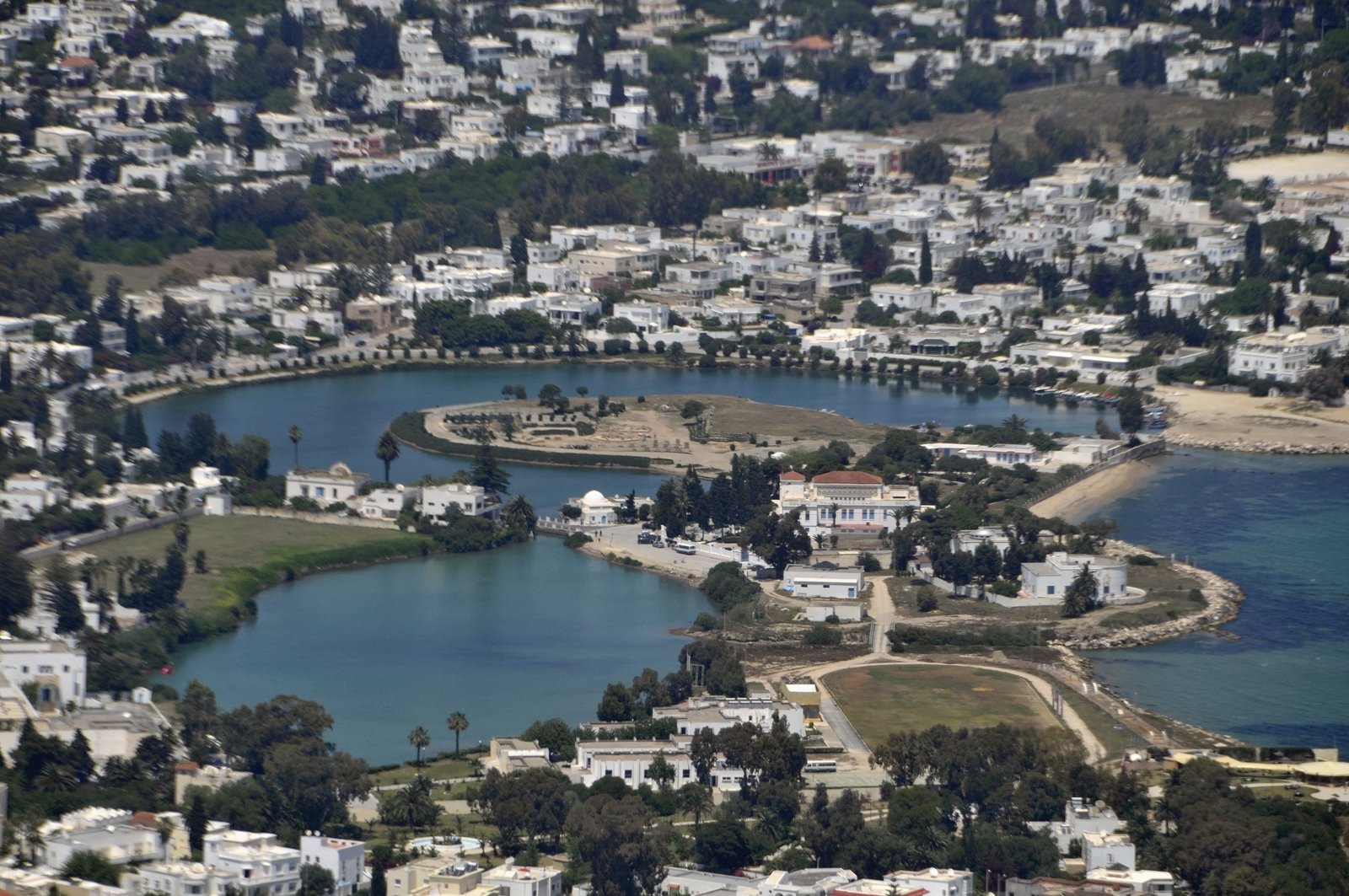
- Archaeology: the oldest layers excavated on the Byrsa hill date to the first half of the eighth century BCE, and perhaps to the end of the ninth. This is close to the traditional dates, but excavation can show when people settled, not who led them. [9]
The Carthage page on this site describes the city and its excavations in detail.
Her later fame
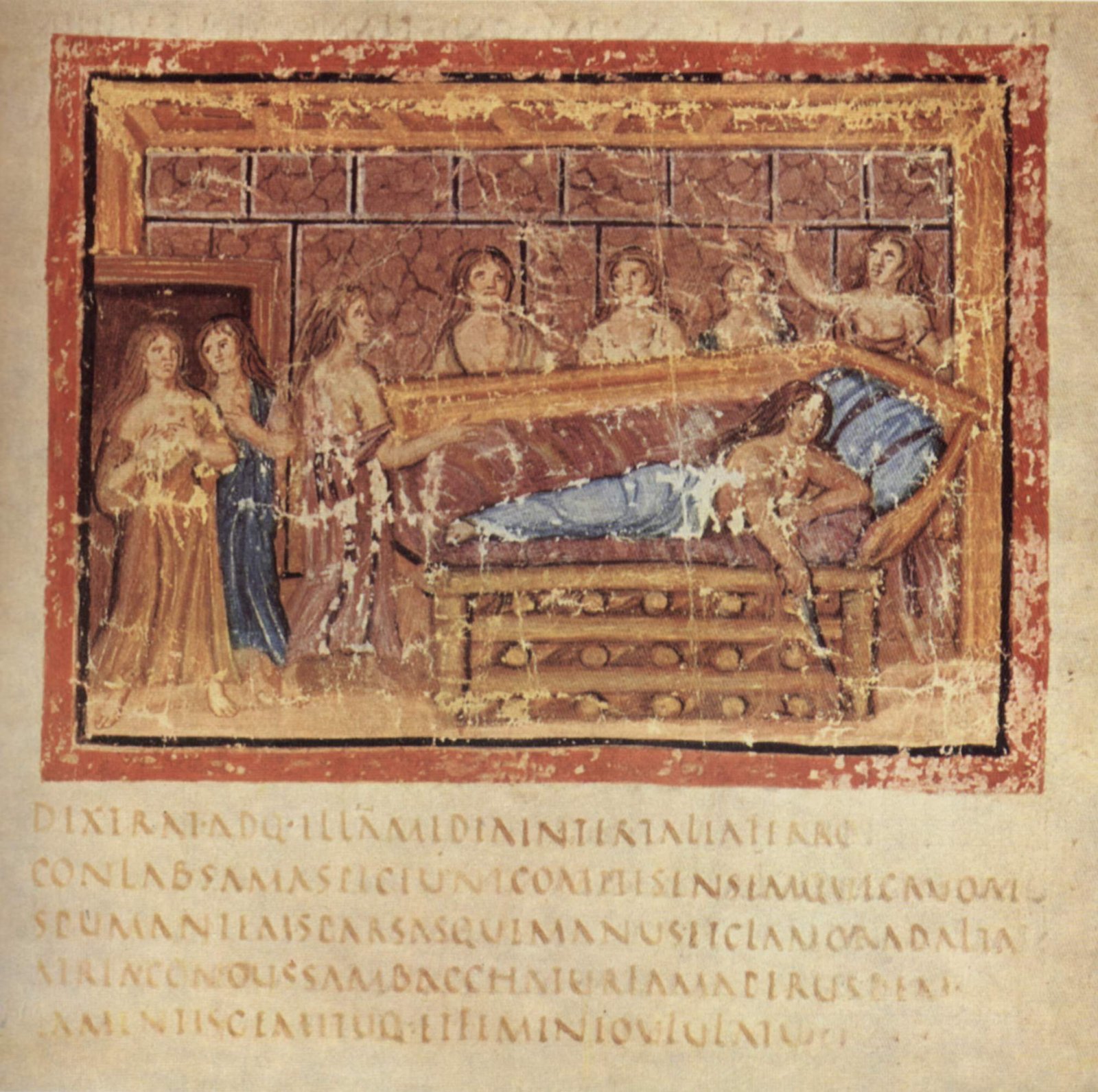
Dido's story kept growing after Virgil. OvidOvidOvid was a Roman poet writing in Latin, who lived from 43 BCE to about 17 CE. His best-known works include the Metamorphoses.Glossary · Click to read the explanation wrote a verse letter in her voice to Aeneas, Heroides 7, which ends with the words for her tomb. [10] TertullianTertullianLatin Christian writer in Carthage around 200 CE. His writings span apology, doctrinal controversy, and religious practice. This entry examines his language of soul, Christ’s flesh, Word, and spirit alongside the limits of biography, textual chronology, and disputed affiliations.Glossary · Click to read the explanation, a Christian writer of Carthage, praised her for choosing death rather than a second marriage. [11] AugustineAugustineFourth- and fifth-century Christian author describing his changing grasp of nonspatial divine presence.Glossary · Click to read the explanation, who grew up in Roman Africa, remembered weeping as a schoolboy for Dido "who sought death at the sword's point". [12] A fifth-century illustrated manuscript of Virgil in the Vatican shows her death scene.
References and notes (12)
- Justin, Epitome of the Philippic History of Pompeius Trogus, translated by John Selby Watson (London, 1853), transcribed by Roger Pearse on tertullian.org Book 18, chapters 4–6: Pygmalion and Elissa as heirs, Acerbas priest of Hercules, the murder, the flight, Cyprus and the eighty young women, the oxhide and Byrsa, Utica and the yearly rent, Hiarbas, the pyre and her death, her worship “as long as Carthage remained unconquered”, the date “seventy-two years before Rome” and the translator's note 102 on the differing dates. Return to the text ↑
- Virgil, Aeneid, book 1, translated by John Dryden, Perseus Digital Library Book 1, lines 335–371: Venus tells Aeneas the story of Dido, Pygmalion and Sychaeus, the ghost and the hidden treasure, the flight from Tyre and the ground bought with a bull's hide (Byrsa). Return to the text ↑
- Flavius Josephus, Against Apion, book 1, translated by William Whiston (1737), online edition on penelope.uchicago.edu Book 1, sections 17–18: Menander of Ephesus and the Tyrian records, the kings from Hiram to Pygmalion (Ithobalus, Badezorus, Matgenus), Pygmalion's reign of 47 years, the flight of his unnamed sister in his seventh year and the founding of Carthage, and Josephus's count of 143 years and 8 months from the temple in Jerusalem. Return to the text ↑
- Philip A. Harland (translated in consultation with Joaquim Pinheiro), “Phoenician diasporas: Timaios of Tauromenion, Trogus and Appian on the founding of Carthage and on child sacrifice”, Ethnic Relations and Migration in the Ancient World (2024) Timaios of Tauromenion, FGrHist 566 F82 (preserved in the anonymous treatise On Women), with the introduction; Appian, Libyan Book 1 (Zoros and Karchedon, the oxhide and Byrsa). Return to the text ↑
- Jona Lendering, “Punic Carthage”, Livius.org (created 2004, last modified 2020) Sections on the name Kart hadašt, the Elissa legend and its value as evidence, the dates of Timaeus (814/813 BCE) and Justin (825 BCE), and the pottery and radiocarbon dating of the oldest finds. Return to the text ↑
- Dionysius of Halicarnassus, Roman Antiquities, book 1, translated by Earnest Cary (Loeb Classical Library, 1937), LacusCurtius edition Book 1, chapters 74.1–74.2 with the editor's notes: Timaeus places the founding of Rome at the same time as Carthage, in the thirty-eighth year before the first Olympiad; Cato and Eratosthenes' reckoning (Troy taken in 1183 BCE). Return to the text ↑
- Servius, Commentary on Virgil's Aeneid, edited by Georg Thilo (Leipzig, 1881), Perseus Digital Library Notes on Aeneid 1.340 (Elissa called Dido after her death, “virago” in Punic) and 1.343 (Sychaeus, also called Sicharbas); notes on Aeneid 4.9 (Naevius on Anna and Dido) and 4.682 (Varro: Anna, not Dido, died on the pyre). Return to the text ↑
- Virgil, Aeneid, book 4, translated by Theodore C. Williams (Boston, 1910), Perseus Digital Library Book 4, lines 584–658: Dido sees the fleet leave, her curse and the call for an avenger, and her last speech on the pyre with Aeneas's sword. Return to the text ↑
- Boutheina Maraoui Telmini, Frerich Schön, Britt M. Starkovich and Shyama Vermeersch, “New Pottery Contexts and Radiocarbon Data from Early Layers on the Byrsa Hill (Carthage): the ‘Astarté 2’-Sequence”, Rivista di Studi Fenici 48 (2020) Abstract and article page: the undisturbed Early Punic sequence on virgin soil at Rue Astarté, dated by pottery and radiocarbon to the first half of the eighth century BCE, the lowest layer possibly reaching the end of the ninth century. Return to the text ↑
- Ovid, Heroides 7, “Dido to Aeneas”, English prose translation (London: J. Nunn, 1813), Perseus Digital Library The whole letter, including the closing epitaph. Return to the text ↑
- Tertullian, To the Martyrs, translated by S. Thelwall, Ante-Nicene Fathers vol. 3, New Advent Chapter 4: Dido's death “lest … she should be compelled to marry again”, and the wife of Hasdrubal in 146 BCE. Return to the text ↑
- Augustine, Confessions, book 1, translated by J. G. Pilkington, Nicene and Post-Nicene Fathers, first series, vol. 1, New Advent Book 1, chapter 13 (sections 20–22): the schoolboy reading of the wanderings of Aeneas and weeping for Dido. Return to the text ↑
Suggest a correction · Suggest a source for this record
Cite this record
IL Archive, «Elissa (Dido)», https://ilarchive.com/en/people/elissa-dido
Continue reading