Site · City
Carthage (Qart-hadasht)
- Names
- Carthage · Carthago · Karthago · Qart-hadasht · Qart-ḥadašt
- Timeline
- From 814 BCE to 146 BCE
- Region
- The Near East and the Mediterranean
A Phoenician city on the Gulf of Tunis that became the great power of the western Mediterranean until Rome destroyed it in 146 BCE. Its founding story is legend; its earliest layers are a matter for excavation.
Estimated reading time: 6 min Published Last reviewed:
Share article
Text
Introduction
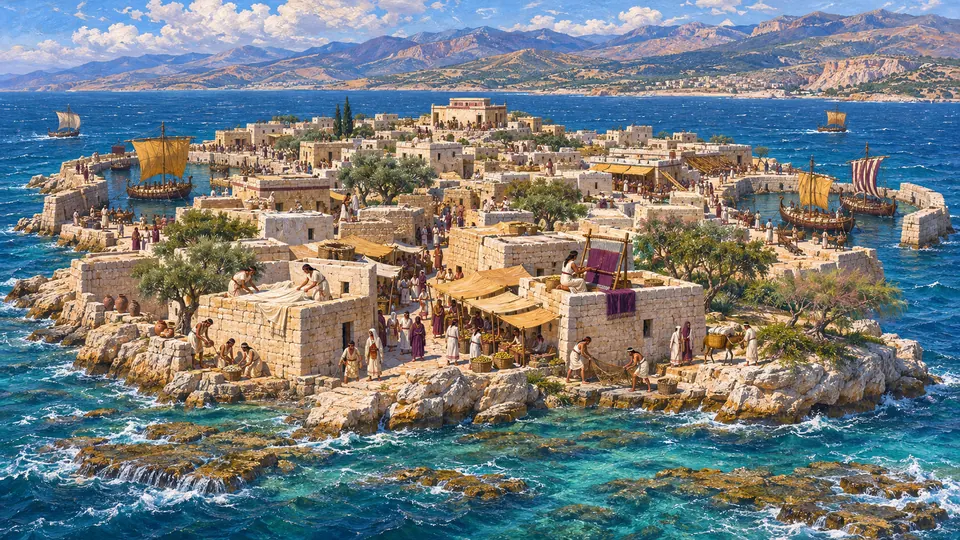
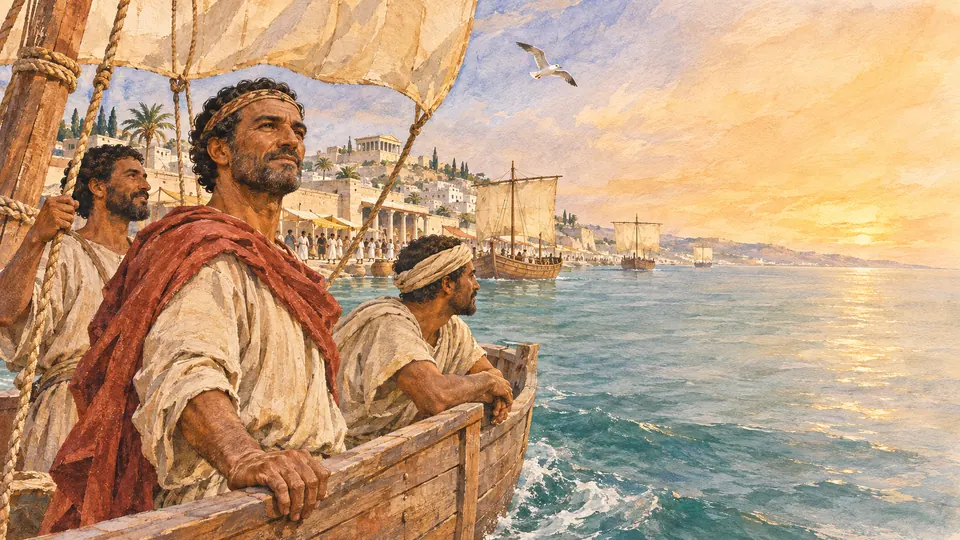
Carthage stood on a hill above the Gulf of Tunis, in what are now the northern suburbs of Tunis. Its own people called it Qart-hadasht, "the New City". Phoenician settlers, linked by ancient tradition to TyreTyreTyre is a city on the coast of present-day southern Lebanon and an important ancient Phoenician centerGlossary · Click to read the explanation on the Lebanese coast, founded it, and it grew into the leading city of the PhoeniciansPhoeniciansCommunities of Levantine coastal cities known for Mediterranean contact during the first millennium BCE.Glossary · Click to read the explanation in the West, with a navy, a trading network and long wars against the Greeks of Sicily and against Rome. Rome destroyed it in 146 BCE and later built a Roman Carthage on the same ground. [1][2]
Two very different kinds of evidence speak about its beginnings. Greek and Latin writers tell the story of a princess of Tyre, Elissa, whom the Romans also called Dido. Archaeologists dig the oldest layers of the city and date them. This entry keeps the two apart: first the legend and who tells it, then what the ground has shown and where the questions are still open. [1][2]
The founding legend: Elissa leaves Tyre
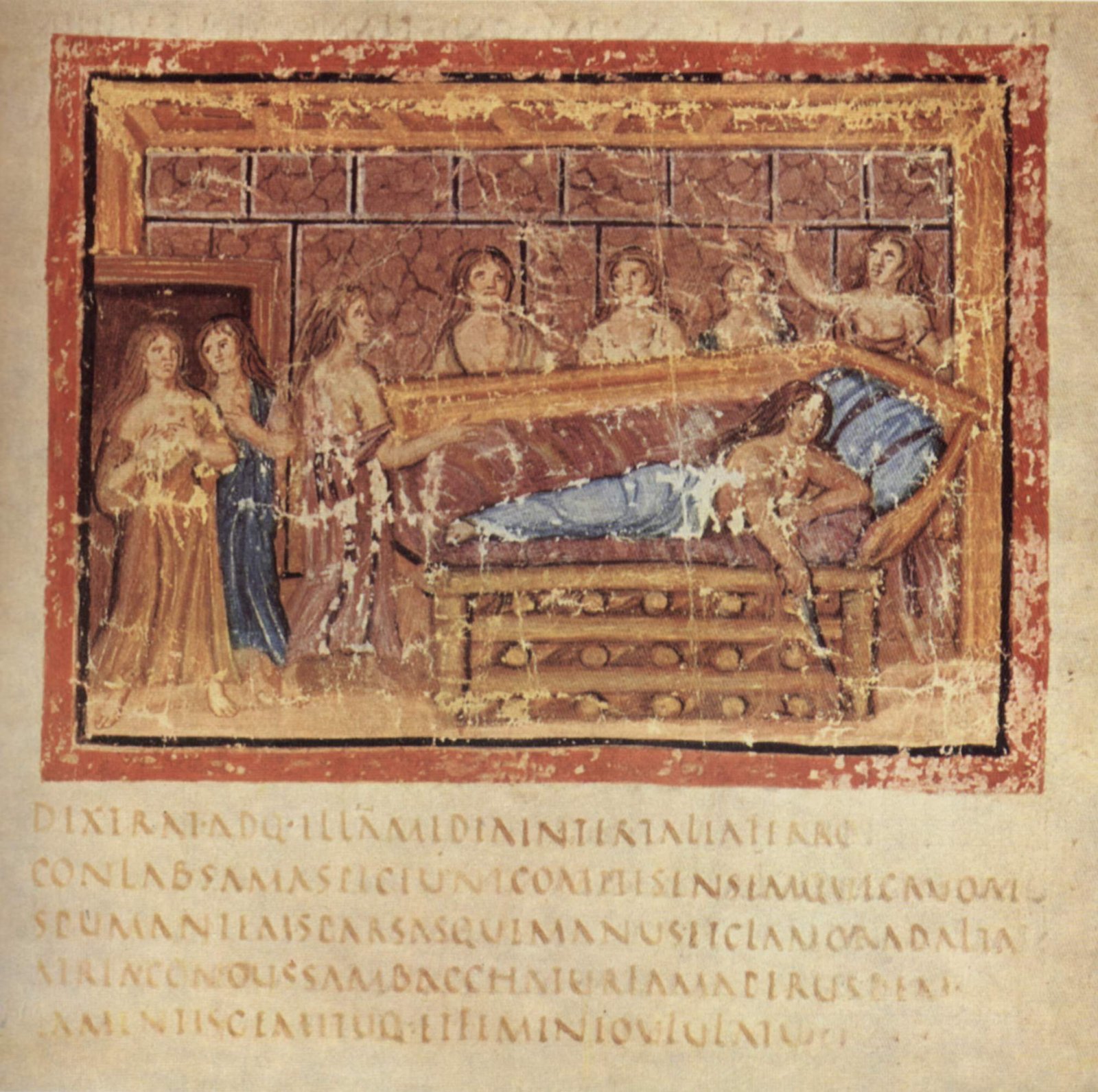
The fullest version comes from Justin, a Roman writer who summarised the lost world history of Pompeius Trogus. A king of Tyre leaves two heirs, the boy Pygmalion and his sister Elissa, and the people give the throne to Pygmalion. Elissa marries her uncle Acerbas, priest of the god the Romans called Hercules. Pygmalion, greedy for Acerbas's hidden gold, murders him. [3]
Elissa sails away by night with nobles who also hate the king. On the African coast she asks the local people for as much ground as an oxhide can cover, then cuts the hide into thin strips and encloses a whole hill. The story explains the name of the citadel, Byrsa, the Greek word for "hide". Envoys from Utica, an older Phoenician town nearby, greet the newcomers as kinsmen, and the city is founded on land for which a yearly rent is paid to the Africans. Later a local king, Hiarbas, demands Elissa in marriage and threatens war; she climbs a pyre and kills herself with a sword. Justin adds that she was worshipped as a goddess as long as Carthage stood. [3]
The Roman poet Virgil tells the same outline in the Aeneid: Dido flees her brother after he kills her husband Sychaeus, and buys as much ground as a bull's hide could enclose. Virgil then makes her the queen whom the Trojan hero Aeneas meets and leaves, a love story that UNESCO's own description calls mythical. [4][1]
Dates in the ancient writers
Flavius JosephusFlavius JosephusFirst-century Jewish historian who retold older narratives, including Abraham’s test, in Jewish Antiquities.Glossary · Click to read the explanation, writing in the first century CE, quotes Menander of Ephesus, who used Tyrian records: in the seventh year of Pygmalion's reign "his sister fled away from him, and built the city Carthage in Libya". The Greek historian Timaeus placed the founding in 814 or 813 BCE, while Justin's "seventy-two years before Rome" points to about 825 BCE. These figures come from king lists and calculations made centuries later. They show that ancient writers agreed on the late ninth century BCE, not that they had a founding document. [5][2][3]
What the ground shows
For a long time excavations seemed to disagree with the tradition: the oldest pottery found in houses, especially Greek cups that can be dated by their style, pointed to about 760 BCE at the earliest, two generations after the traditional date. [6]
Radiocarbon dating, which measures the slow decay of carbon in once-living things, changed the picture, but not simply. Animal bones from the lowest layers at Bir Massouda, in the Rue Ibn Chabaat and on the slope of the Byrsa hill gave dates in the ninth or early eighth century BCE. In a small, undisturbed sequence on Byrsa, a fox bone with knife cuts from the lowest layer dates to about 900–840 BCE. [6]
Yet the excavators date the same layers by their pottery to the first half of the eighth century BCE, perhaps starting in the last years of the ninth; radiocarbon dates at Carthage and other early Iron Age sites often come out some 70 years older than pottery dates. Some researchers read the radiocarbon results as confirming a city of the late ninth century; others give more weight to the pottery. The question is still open. [6][2]
What is not in doubt is the character of the early town. Its lowest layers hold pottery made on the wheel by settled Phoenicians, handmade pots of local Libyan type, and imports from Sardinia, Cyprus, Spain, Greece and the LevantThe LevantThe Levant is a regional name for lands along the eastern MediterraneanGlossary · Click to read the explanation. At Bir Massouda a stretch of the first town wall, a double wall tied by cross walls, stood near cremation burials of the eighth century BCE that lay outside the early city. [6][7]
The tophet: a debated sanctuary
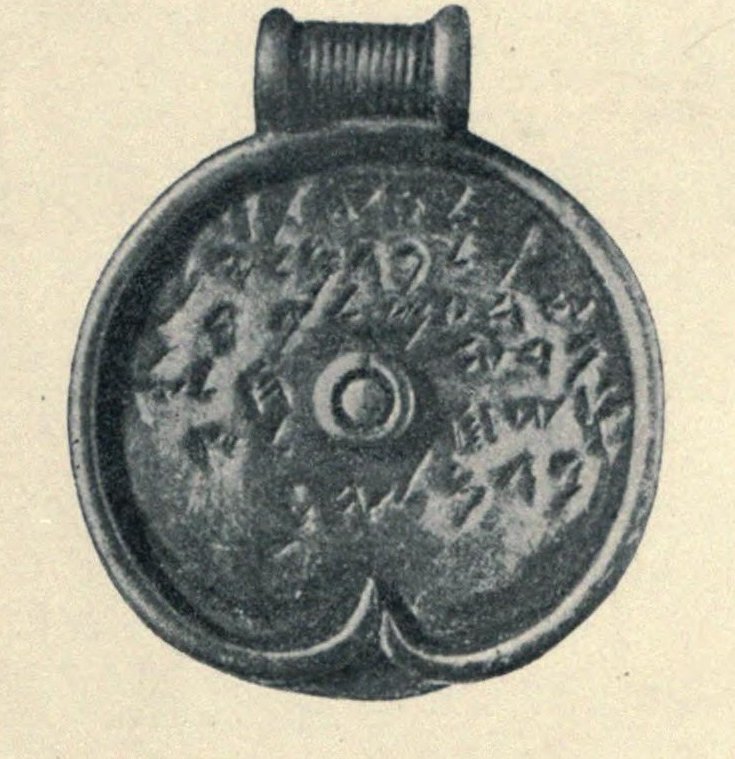
At the edge of the city, at Salammbô, lies the place modern scholars call the tophet, a word borrowed from the Bible. It held many small urns with the burned bones of very young children and of young animals, under stone markers. More than a thousand inscriptions address Baal Hammon and, from about the fifth century BCE, also the goddess Tanit; most say that someone gave what they had vowed. Similar sites exist in Sicily and Sardinia. [1][8]
Greek and Latin writers, Justin among them, accused Carthage of sacrificing children. Whether the tophet proves this is much debated. A team led by Jeffrey H. Schwartz studied 540 individuals from 348 urns and found that most died before birth or within the first months of life, as in a cemetery for babies who died naturally; they did not exclude occasional sacrifice. Other scholars, among them a team led by Patricia Smith and a group led by Paolo Xella with Josephine Quinn, argue that the ages, the inscriptions and the written sources together point to sacrifice. Nathan Pilkington notes that the ancient writers describe older children, not newborns. The evidence is real; its meaning is still argued. [3][9][8]
A sea power and its fall
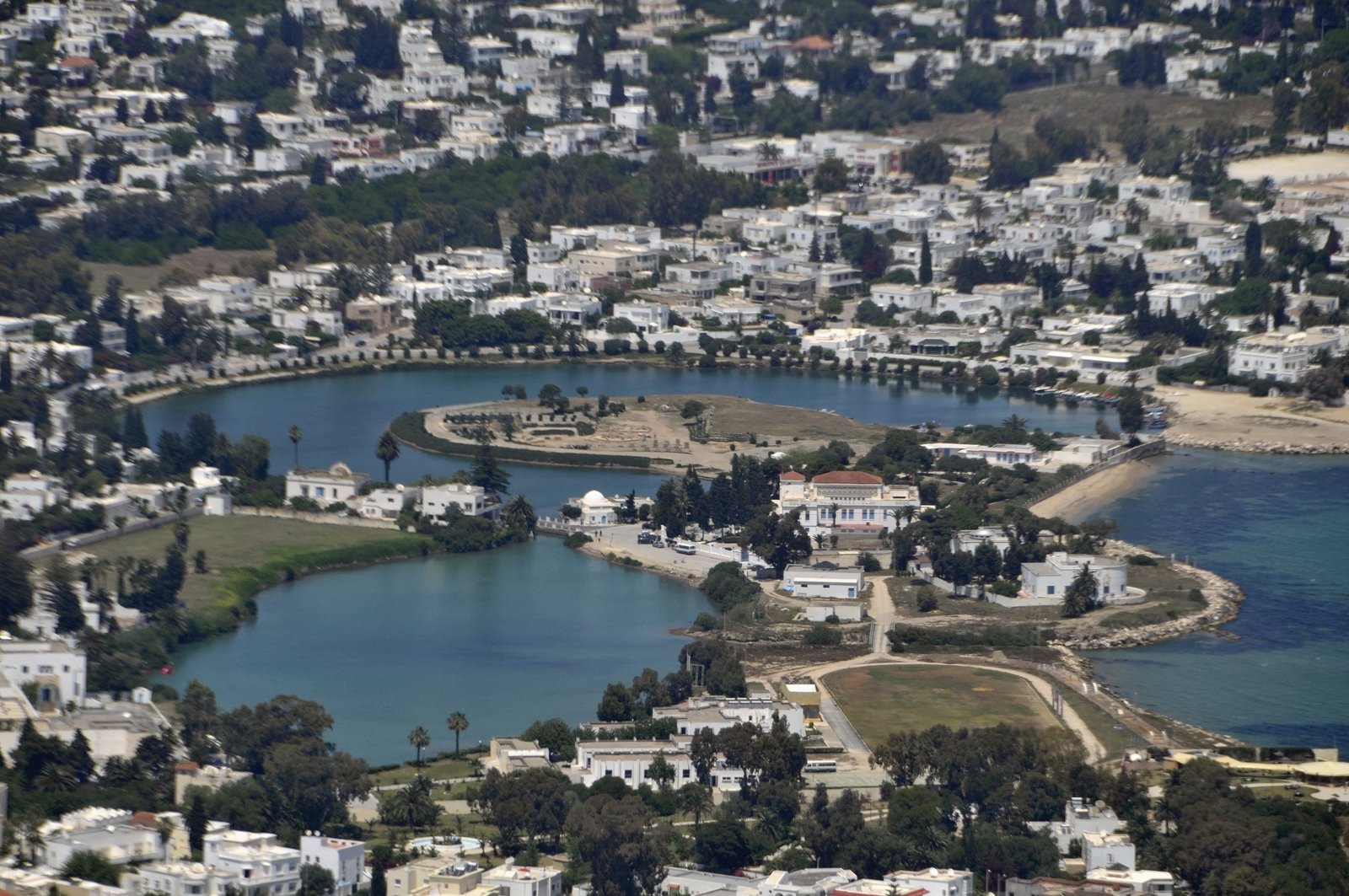
Appian, a Greek historian of the second century CE, describes two connected harbours: an outer one for merchant ships and an inner one with an island, ship sheds for 220 vessels and the admiral's house. Two lagoons at Salammbô still keep their outline. [10][1]
After Tyre fell to the Babylonian king Nebuchadnezzar IINebuchadnezzar IIBabylonian king, 605–562 BCE, appearing in Daniel and independently attested in inscriptions and building remains.Glossary · Click to read the explanation in the early sixth century BCE, Carthage led the Phoenician cities of the West. It fought the Greeks of Sicily and then Rome in three Punic Wars: it lost Sicily in the first (264–241 BCE), was defeated in the second, the war of Hannibal, and was besieged in the third (149–146 BCE). [2]
In 146 BCE Roman troops under Scipio fought for six days and nights through the streets toward Byrsa. On the seventh day, Appian says, 50,000 men and women surrendered; the city burned, and the Roman Senate ordered that it be razed and that no one should live there again. [10]
The Roman city and after
A Roman colony planned in 122 BCE largely failed. Julius Caesar ordered a new colony in 44 BCE, carried out after his death, and Roman Carthage became the capital of the province of Africa and one of the great cities of the empire. TertullianTertullianLatin Christian writer in Carthage around 200 CE. His writings span apology, doctrinal controversy, and religious practice. This entry examines his language of soul, Christ’s flesh, Word, and spirit alongside the limits of biography, textual chronology, and disputed affiliations.Glossary · Click to read the explanation and Cyprian lived there, and AugustineAugustineFourth- and fifth-century Christian author describing his changing grasp of nonspatial divine presence.Glossary · Click to read the explanation taught there. The Vandals took it in 439 CE, the Byzantine Empire in 534. UNESCO listed the site as World Heritage in 1979, with the Byrsa hill, the Punic harbours, the tophet, cemeteries, a theatre and the Antonine Baths. [11][10][1]
Quick answers
Did Elissa really found Carthage?
Her story is a founding legend told by later Greek and Latin writers. Archaeology shows Phoenician settlers there by the eighth century BCE, but it cannot confirm the person. [3][6]
References and notes (11)
- UNESCO World Heritage Centre, “Archaeological Site of Carthage” (World Heritage List no. 37), property page Short description; brief synthesis; criteria (ii), (iii) and (vi); integrity, authenticity and protection statements (2009); date of inscription 1979. Return to the text ↑
- Jona Lendering, “Punic Carthage”, Livius.org (created 2004, last modified 2020) Whole page: the name Kart hadašt, the Elissa legend, the dates of Timaeus (814/813 BCE) and Justin (825 BCE), the pottery chronology and the radiocarbon dates, Carthage after the fall of Tyre (c. 585 BCE), the wars with the Sicilian Greeks and the three Punic Wars, 146 BCE. Return to the text ↑
- Justin, Epitome of the Philippic History of Pompeius Trogus, translated by John Selby Watson (London, 1853; 1886 printing), transcribed by Roger Pearse on tertullian.org Book 18, chapters 4–6: Pygmalion and Elissa, Acerbas, the flight, Cyprus, the oxhide and Byrsa, Utica, the yearly rent, the ox and horse heads, Hiarbas, Elissa's death, the date “seventy-two years before Rome”, and the charge of human sacrifice. Return to the text ↑
- Virgil, Aeneid, book 1, translated by John Dryden, Perseus Digital Library Book 1, lines 335–371: Venus tells Aeneas the story of Dido, Pygmalion and Sychaeus, the flight from Tyre and the land bought with a bull's hide (Byrsa). Return to the text ↑
- Flavius Josephus, Against Apion, book 1, translated by William Whiston (1737), online edition on penelope.uchicago.edu Book 1, section 18 (§§116–126): Menander of Ephesus on the kings of Tyre from Hiram to Pygmalion, the flight of Pygmalion's sister in his seventh year and the founding of Carthage, and Josephus's count of 143 years and 8 months from the temple in Jerusalem. Return to the text ↑
- Boutheina Maraoui Telmini and Frerich Schön (with Britt M. Starkovich and Shyama Vermeersch), “New Pottery Contexts and Radiocarbon Data from Early Layers on the Byrsa Hill (Carthage): the ‘Astarté 2’-Sequence”, Rivista di Studi Fenici 48 (2020), pp. 65–106 Abstract; section 1 (introduction: the traditional date, the c. 760 BCE pottery horizon, Bir Massouda trench 4); section 4 (radiocarbon results, the Bir Massouda and Rue Ibn Chabaat series, the gap of about 70 years between radiocarbon and pottery dates); section 5 (concluding readings). Return to the text ↑
- Boutheina Maraoui Telmini, Fethi Chelbi and Roald Docter, “Les fouilles tuniso-belges du terrain Bir Massouda (2002–2005)”, in VI Congresso Internacional de Estudos Fenício Púnicos, Lisbon 2014, pp. 338–348 Publisher's abstract only (the full text is restricted): the cremation burials of the eighth century BCE outside the early city, the later metal workshops, and a stretch of the archaic casemate city wall. Return to the text ↑
- Nathan L. Pilkington, “Forbidden to Sacrifice Humans or Eat Dogs: Revisiting the Tophet Debate through a Demographic Lens”, Cartagine. Studi e Ricerche 8 (2023) Introduction and sections 1–2 (the history of the debate, the MLK term, the bone studies of Schwartz et al. and Smith et al., Xella et al. 2013, the age words in Diodorus, Justin and Plutarch, the formula of the later inscriptions) and section 4 (conclusion). Return to the text ↑
- Jeffrey H. Schwartz, Frank Houghton, Roberto Macchiarelli and Luca Bondioli, “Skeletal Remains from Punic Carthage Do Not Support Systematic Sacrifice of Infants”, PLoS ONE 5(2): e9177 (2010) Whole article: abstract, introduction, methods, results (urn contents, sex, age from teeth and bones, neonatal line) and discussion. Return to the text ↑
- Appian, The Punic Wars, translated by Horace White (1912), text on perseids.org Sections 95–96 (the two harbours and the triple wall) and 127–136 (the final assault, the surrender, the Senate's decree, Gracchus's colony, Caesar and Augustus). Return to the text ↑
- Jona Lendering, “Roman Carthage”, Livius.org (created 2019, last modified 2020) Whole page: the colony of 122 BCE, Caesar's colony (44 BCE), the provincial capital, Tertullian, Cyprian and Augustine, the Vandal conquest of 439 and the Byzantine reconquest of 534. Return to the text ↑
Suggest a correction · Suggest a source for this record
Cite this record
IL Archive, «Carthage (Qart-hadasht)», https://ilarchive.com/en/sites/carthage
Continue reading
Related readings