The Voyage of Hanno Chapter 1
Beyond the Pillars
The names come in the order the sailors remember them. Settlements and rivers mark the early passages. Kerne becomes a place to return to. Beyond it are a lake full of islands, a coast of night fires and a last encounter whose name tells us little about those who lived there.
SourcesTurn the pages with the arrows, the arrow keys or a swipe.
THE VOYAGE OF HANNO
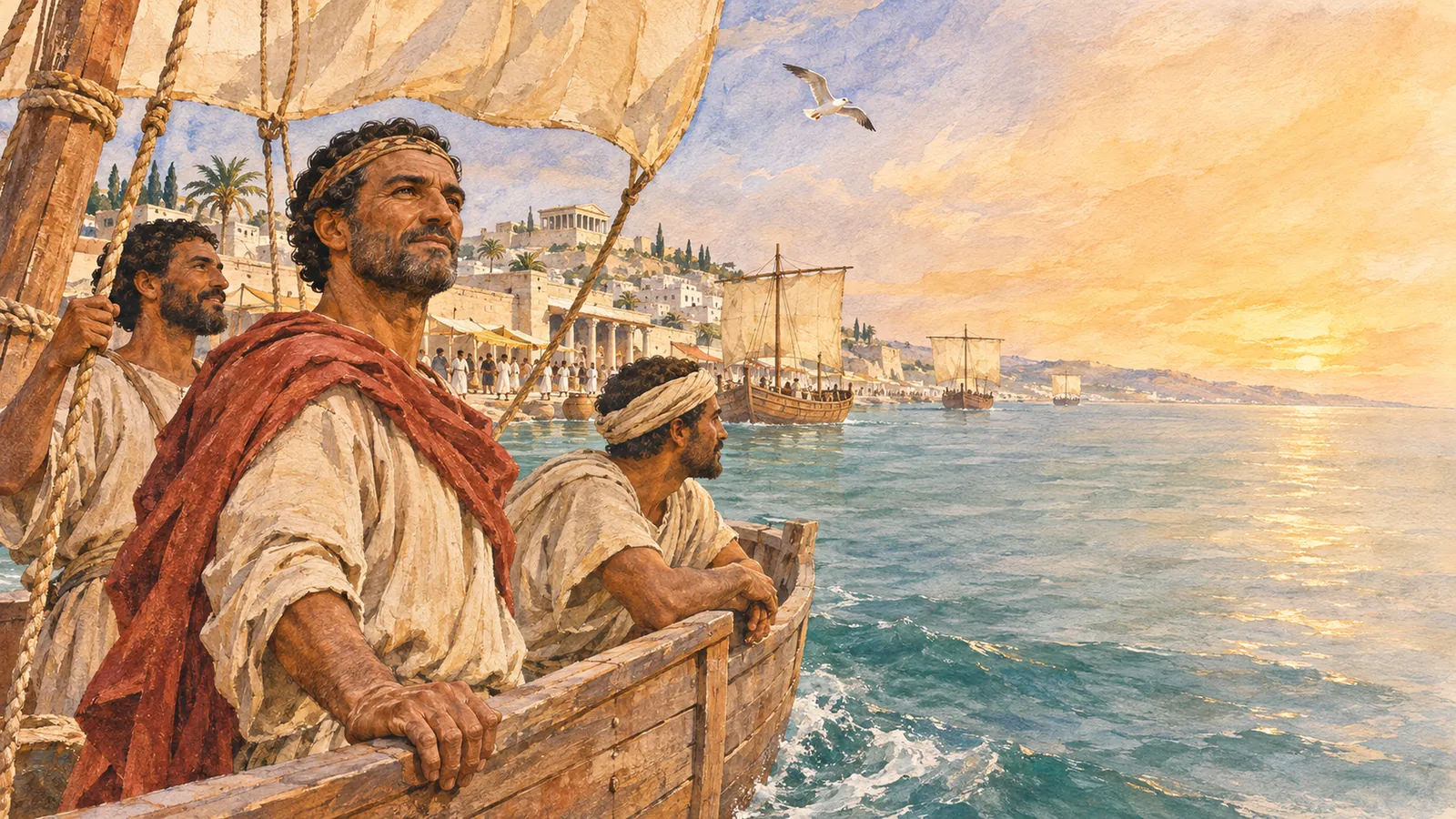
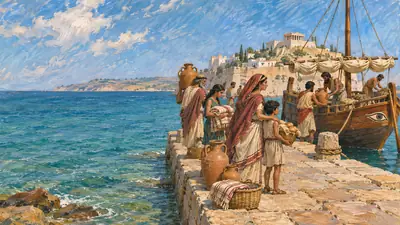
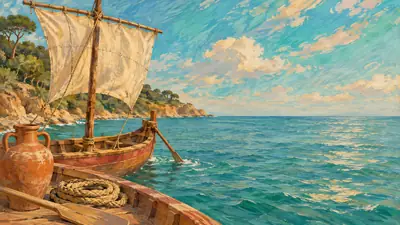
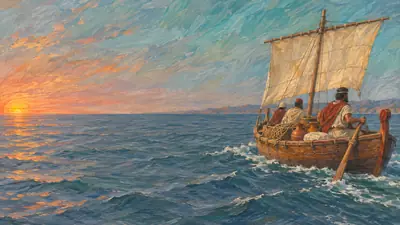
The ships draw away from Carthage. All that survives of their route is a short Greek account. It begins with a name, Hanno, and follows fragments of an Atlantic coast.
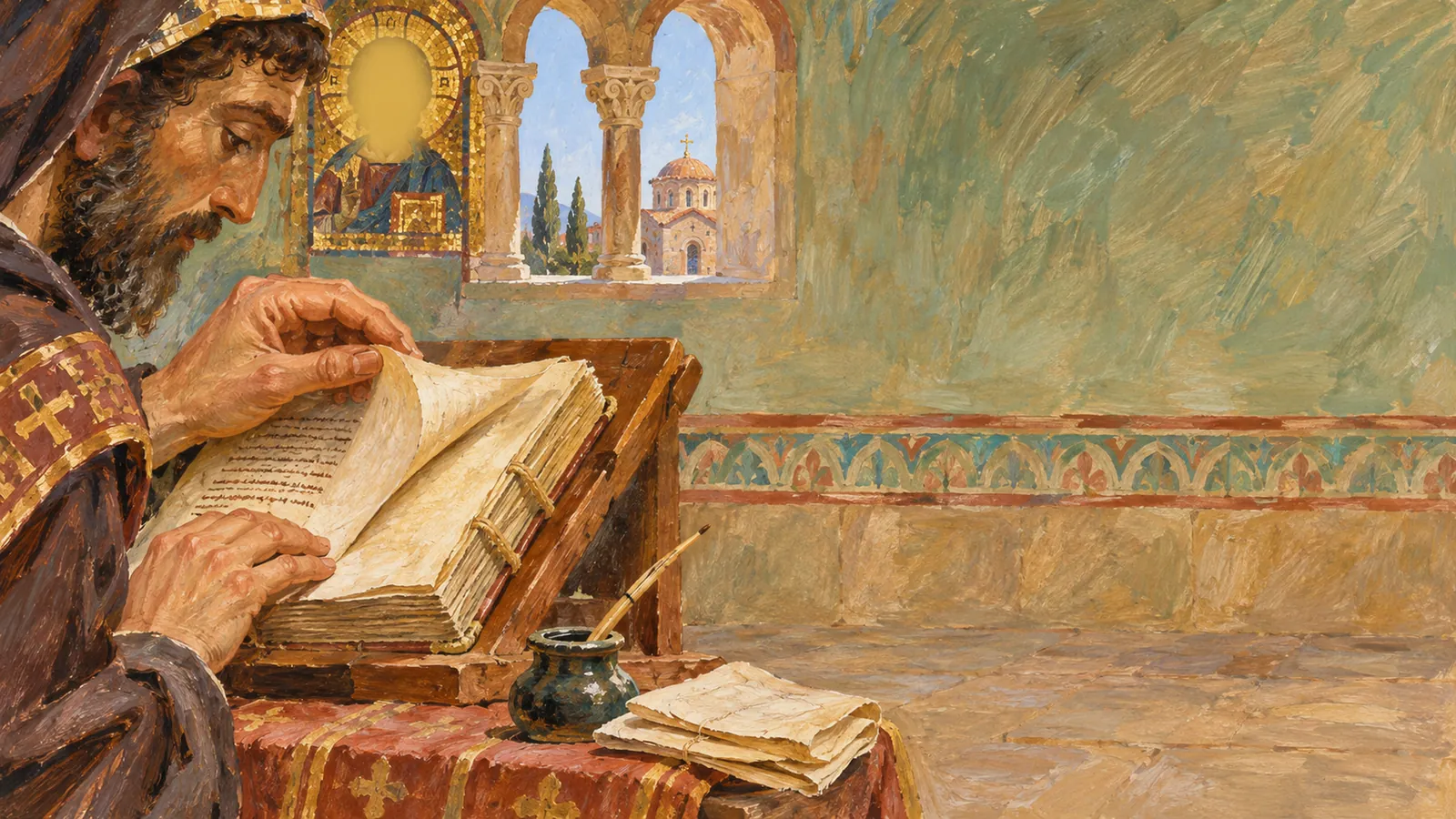
The Greek text survives on three pages of a medieval manuscript. Its heading calls Hanno king of the Carthaginians and says he dedicated the account in a sanctuary of Kronos.
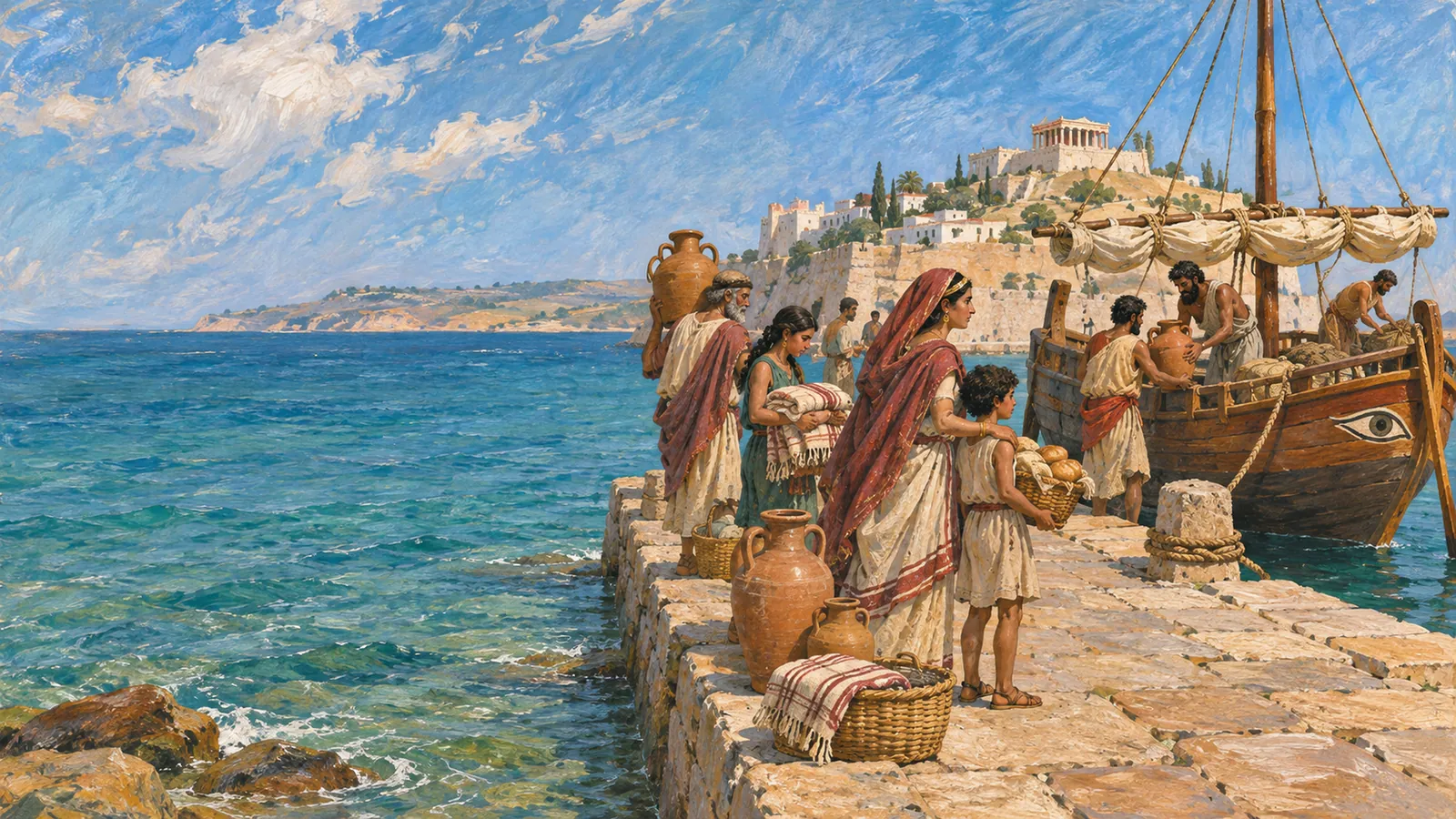
Carthage sends Hanno to establish new towns overseas. The account gives him sixty fifty-oared ships and thirty thousand people. Those are the narrator’s figures, and their scale is hard to check.
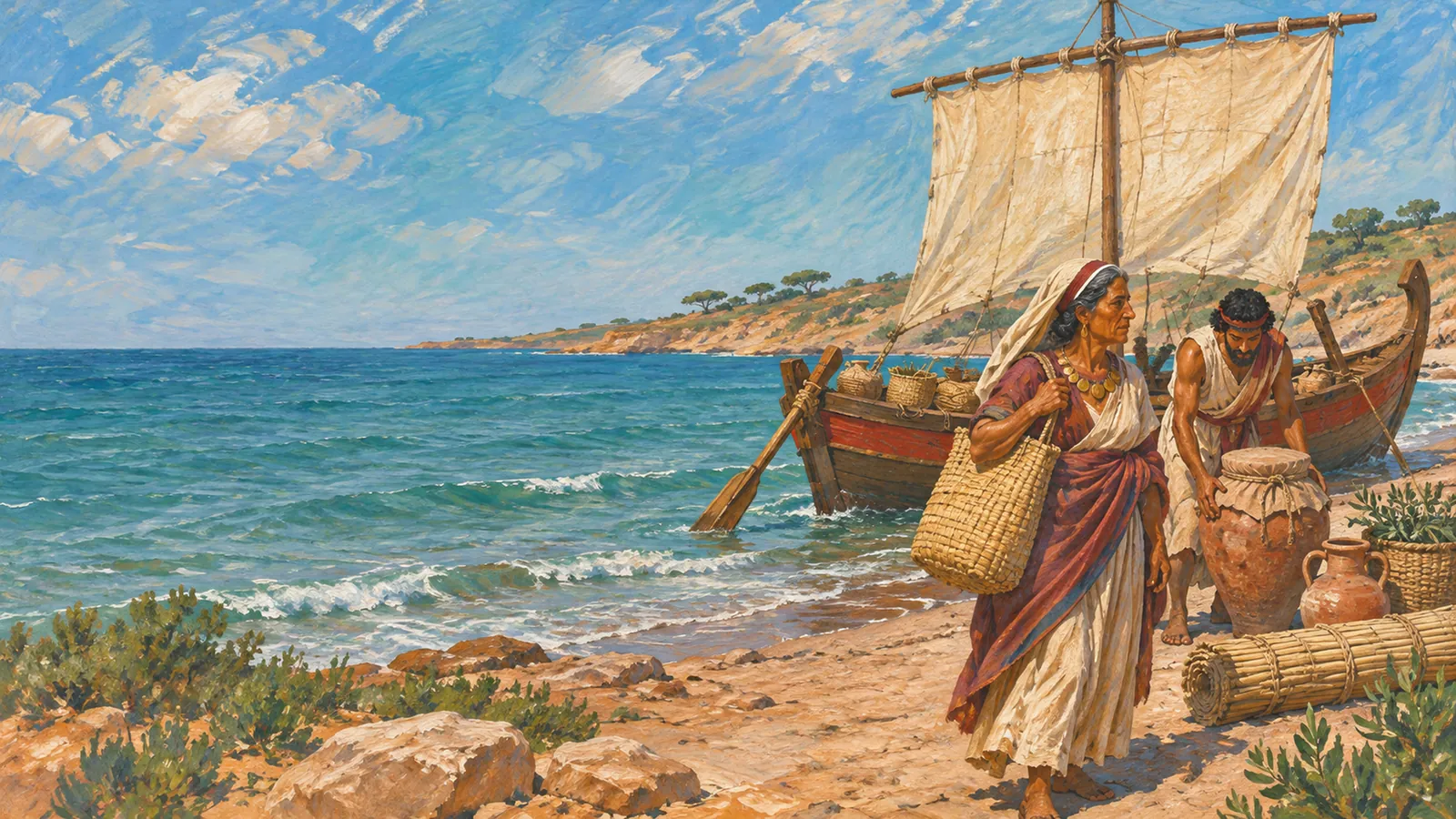
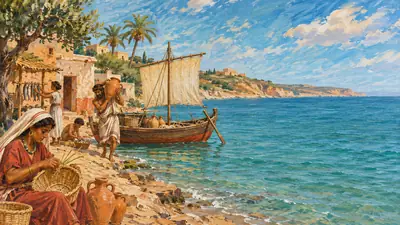
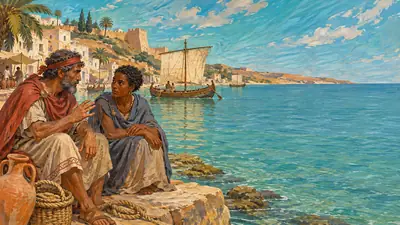
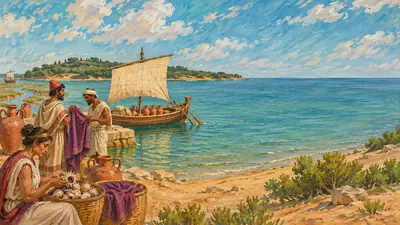
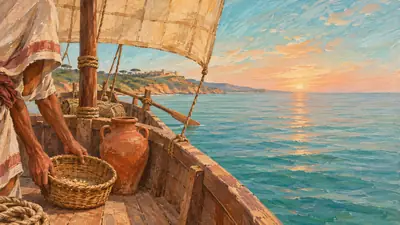
Men and women set out together. The text calls the intended settlers Libyphoenicians and says they carry food and equipment. Here the supplies wait on the quay with the people.
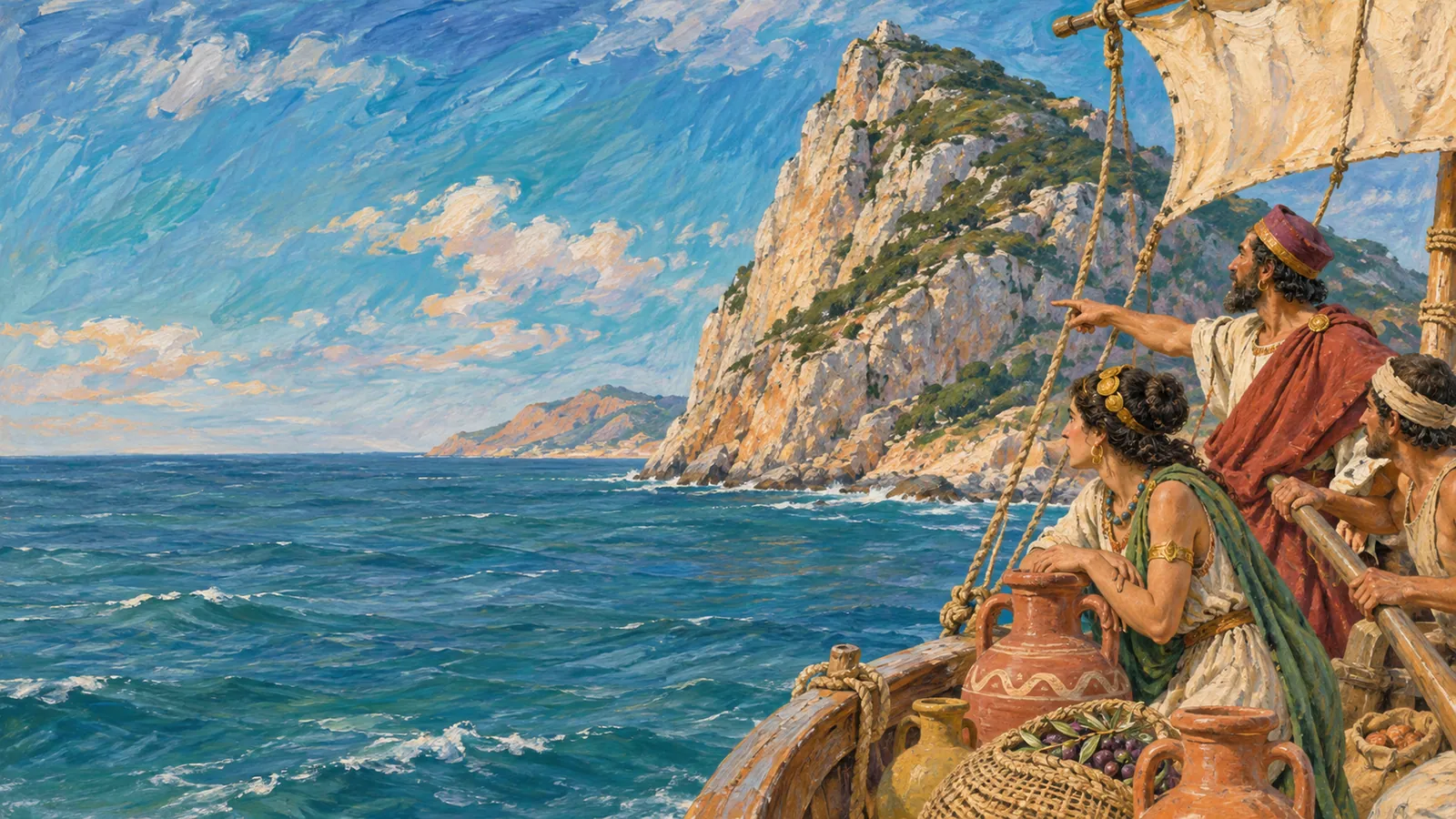
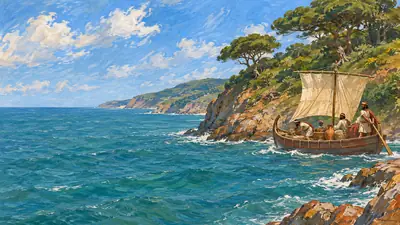
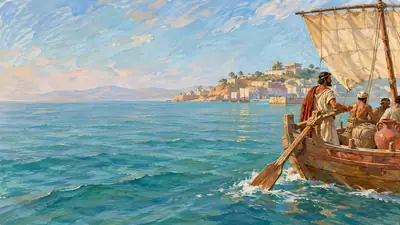
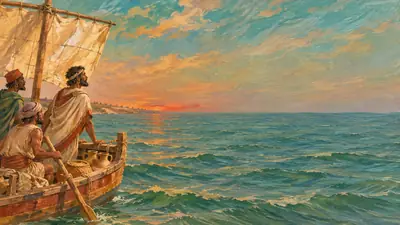
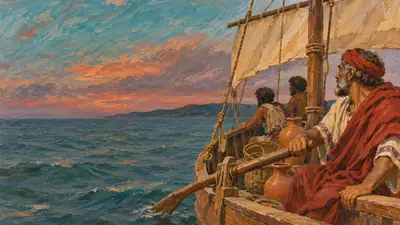
The fleet passes the Pillars of Heracles at the Strait of Gibraltar. A headland stands on each side of the channel. Beyond is the open Atlantic.
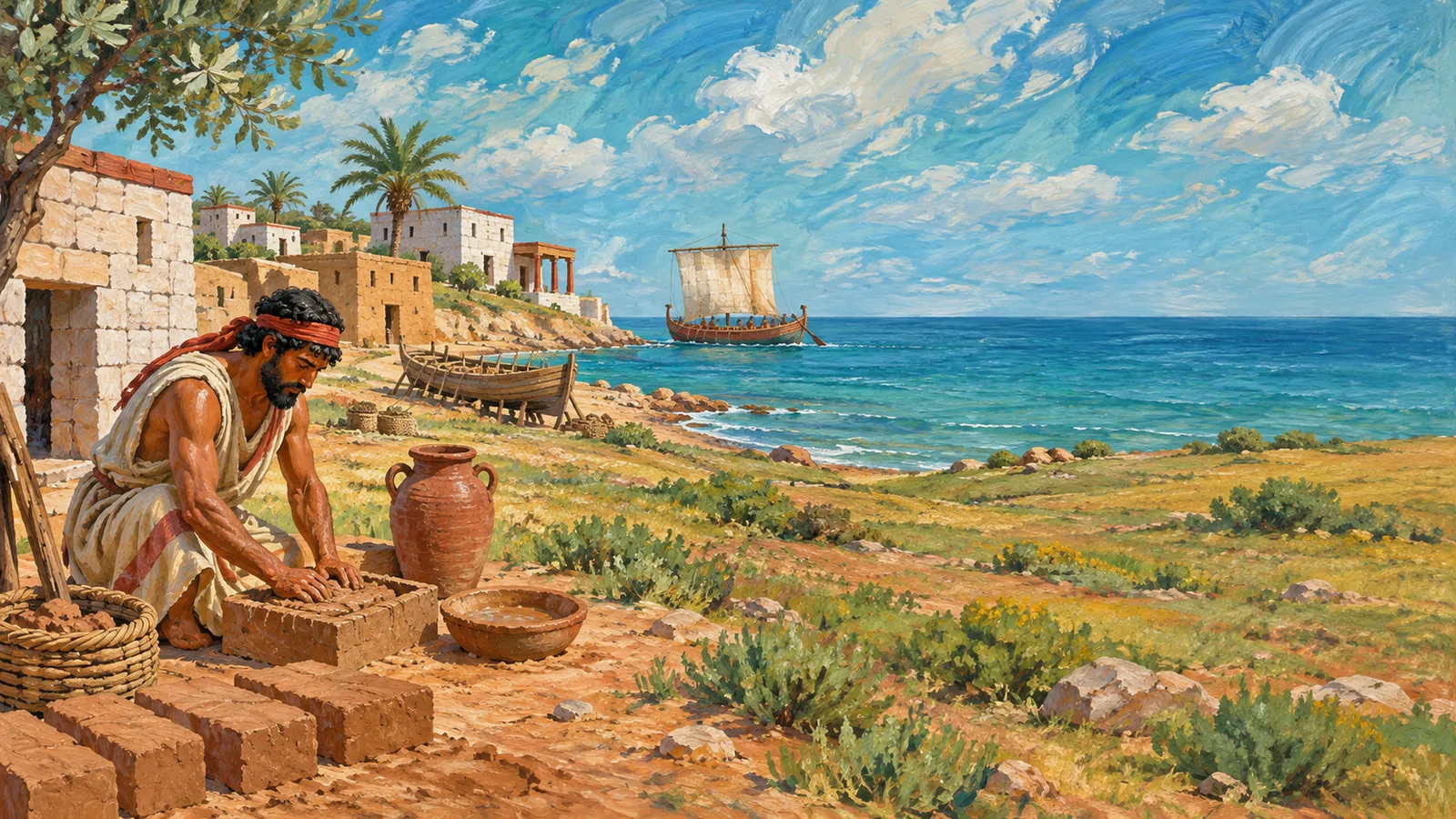
Two days beyond the Pillars, the sailors say, they establish their first town. They name it Thymiaterion. The account remembers one feature of the land, a broad plain below the settlement.
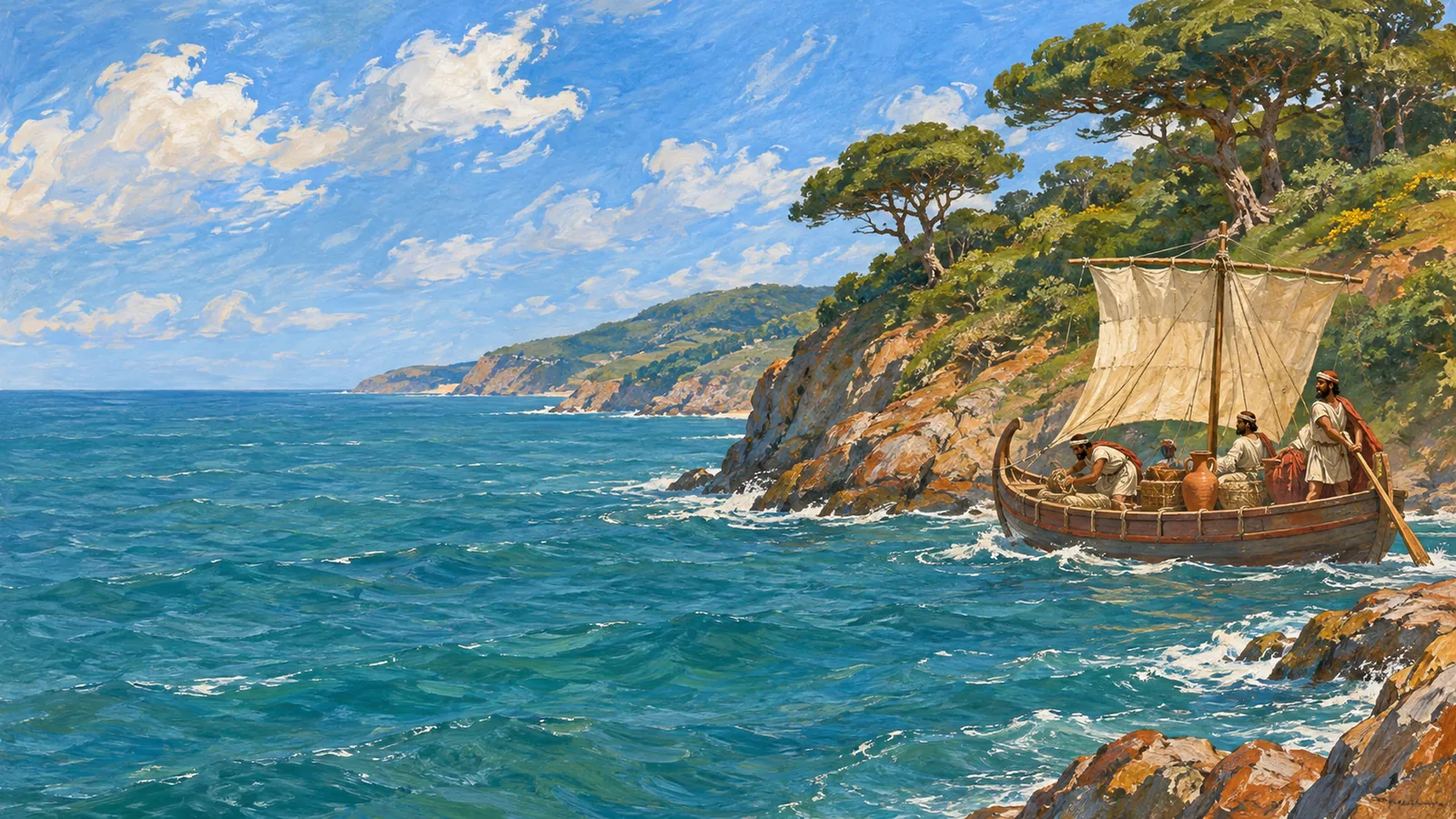
The ships sail west and gather at Soloeis. Trees cover the cape the sailors remember. We have the direction and the look of the coast, and its exact position remains open.
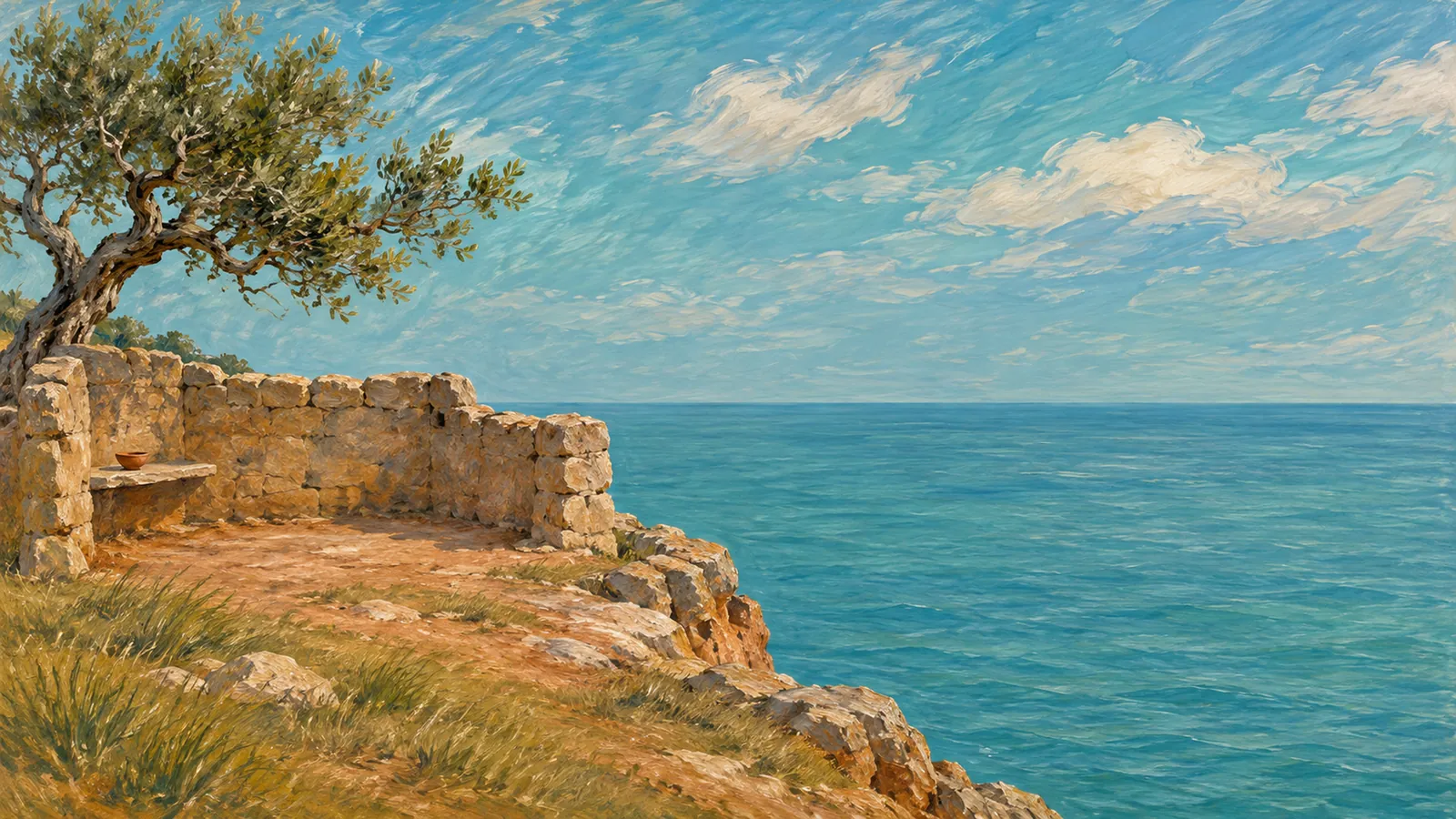
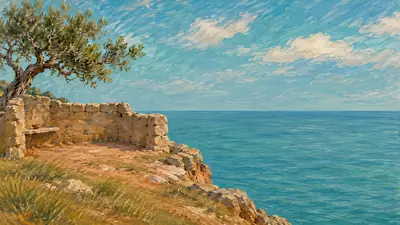
On the cape the voyagers establish a sanctuary for the god the Greek text calls Poseidon. They leave the shrine on land and turn their ships toward sunrise.
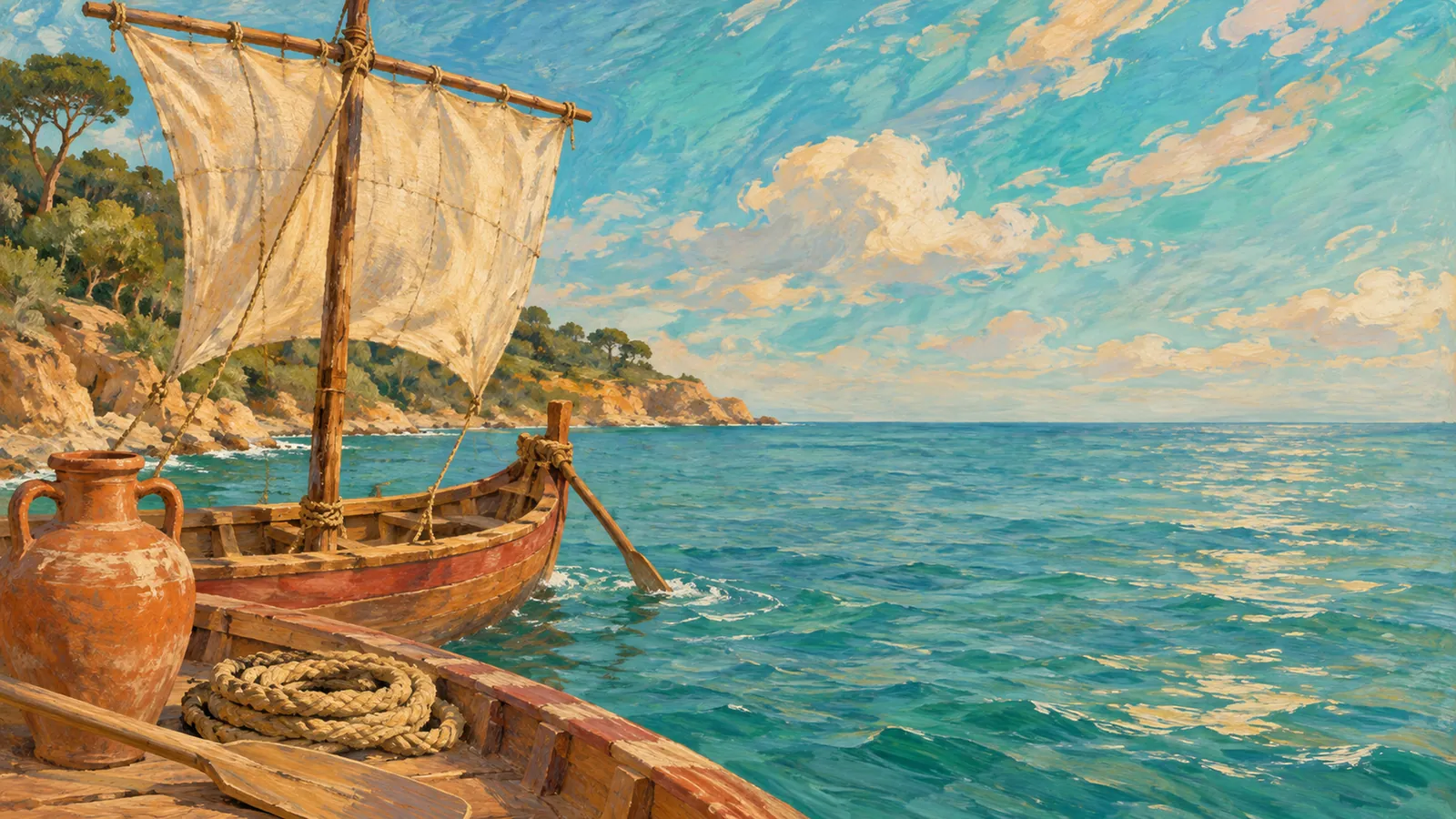
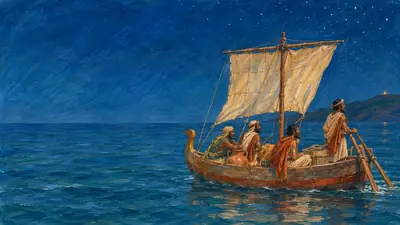
They sail east for half a day. The account takes its bearings from sunrise and gives the distance in sailing time. At the other end lies water close to the sea.
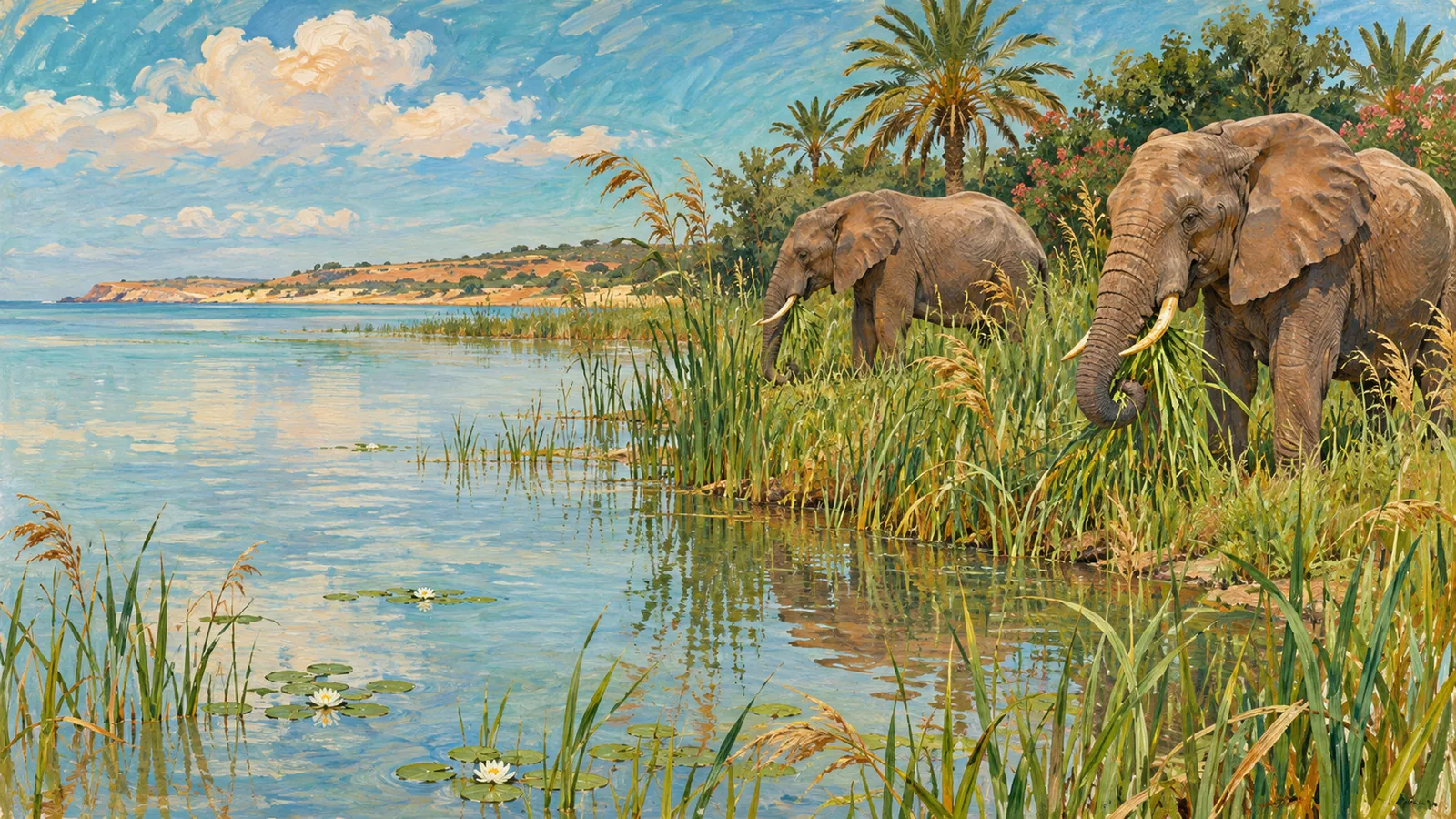
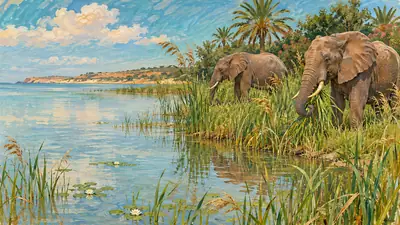
Tall reeds fill the lake. The crew describes elephants grazing there with other animals. For a moment the Greek account pauses with them and watches the shore.
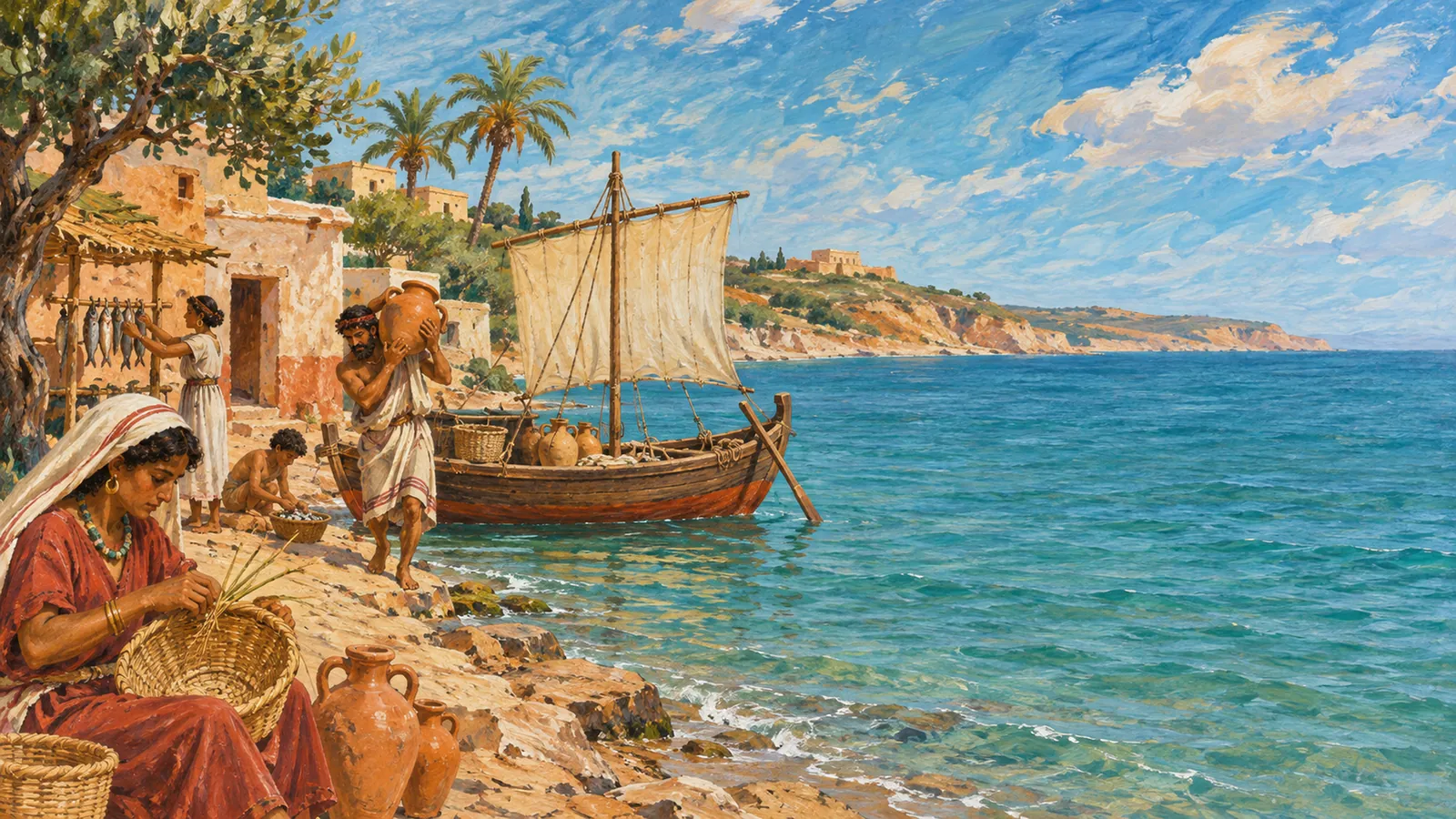
A day beyond the lake they name five settlements along the sea, Karikon Teichos, Gytte, Akra, Melitta and Arambys. These names have outlasted our knowledge of where the towns stood.
THE RIVER LIXOS
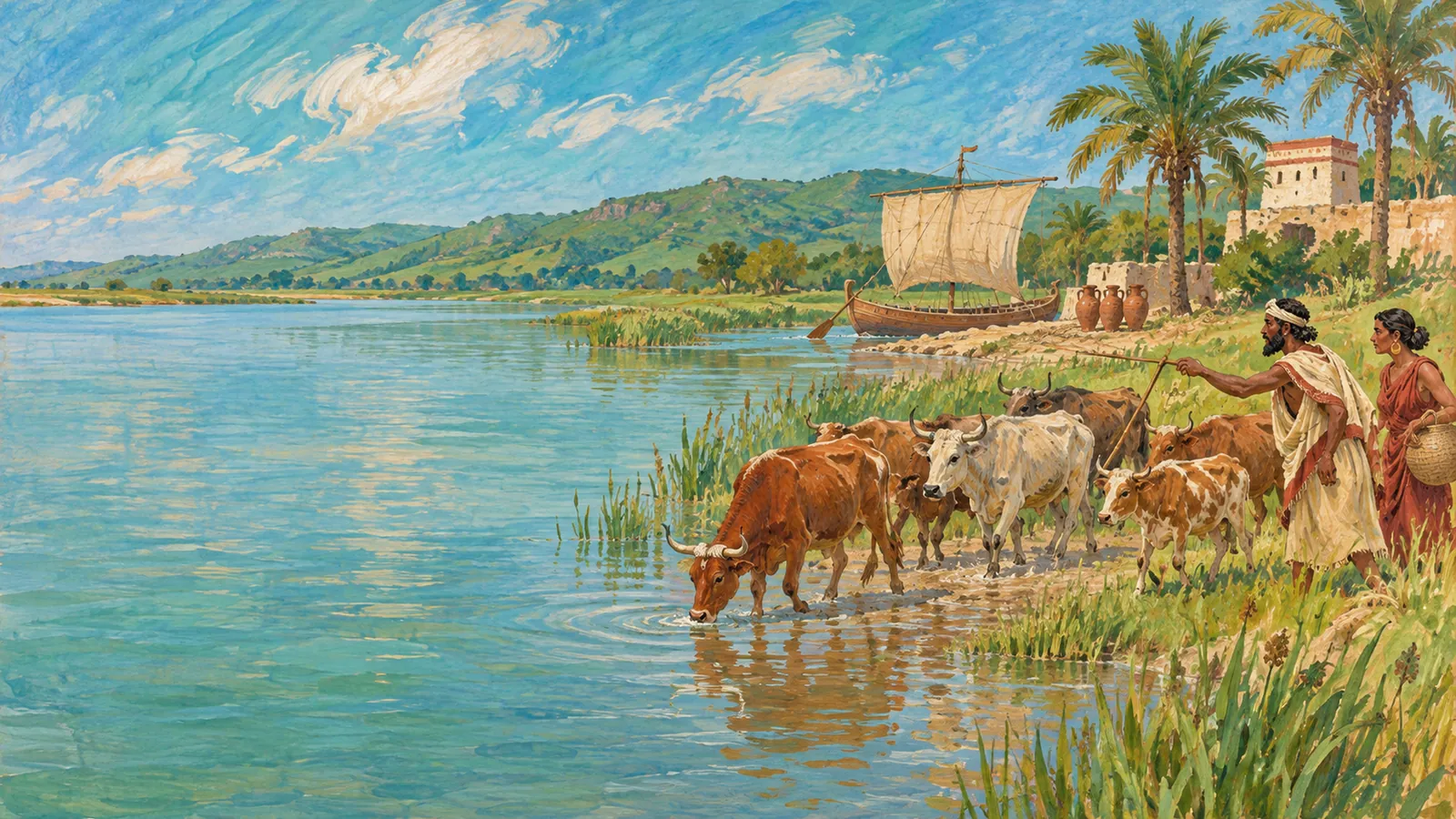
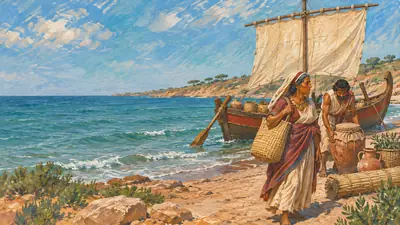
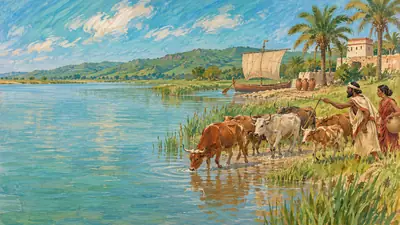
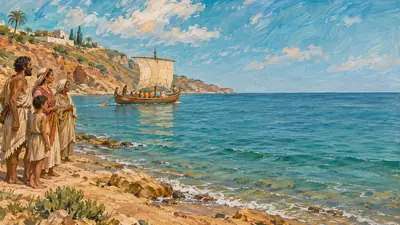
Next the ships come to a large river called the Lixos. Along its banks a pastoral people whom the Greek text calls the Lixitai are grazing their cattle.
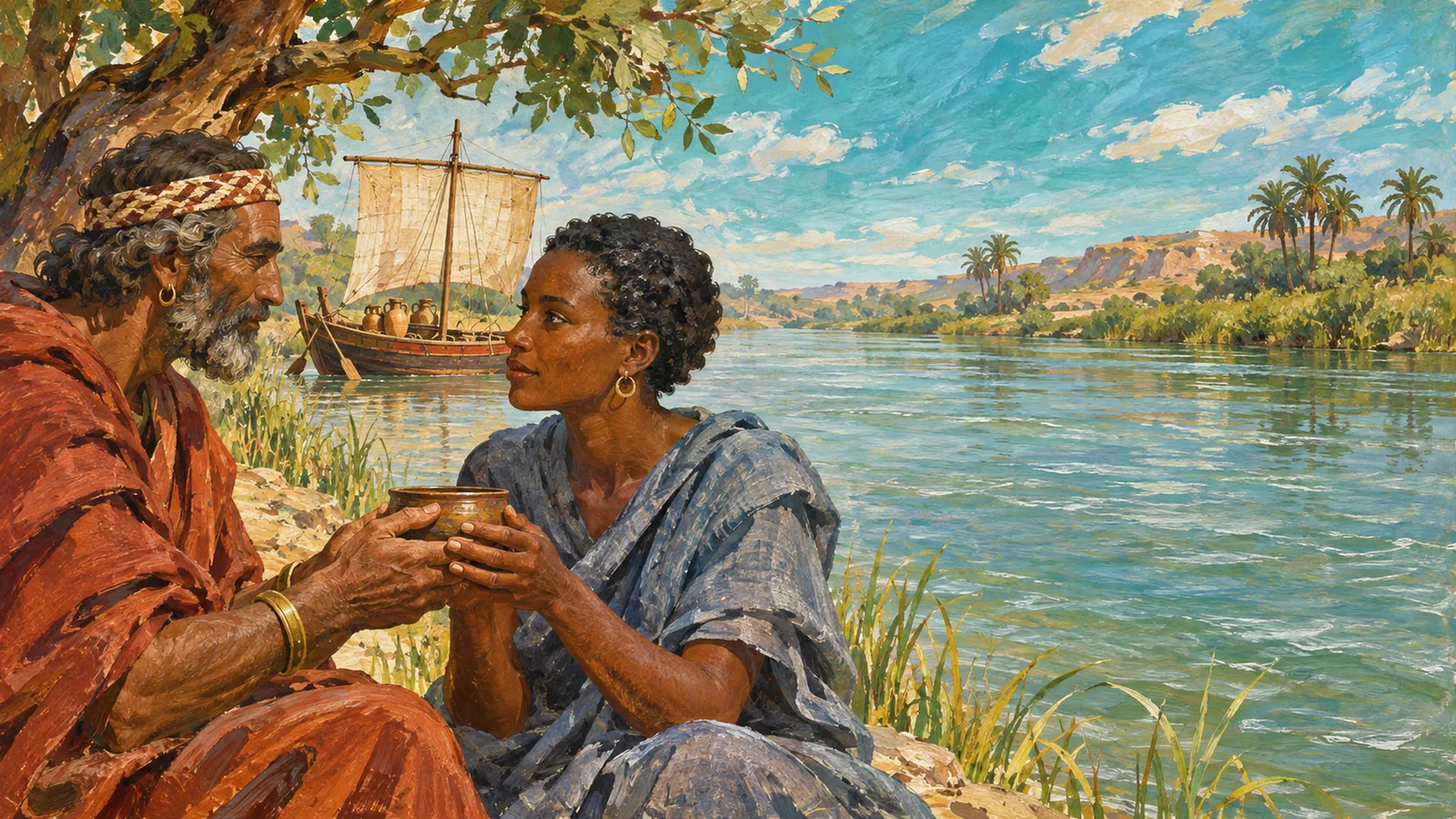
Hanno’s party stays for a time and says in the account that they become friends. The text tells us little about the visit, but it changes who takes part in the voyage.
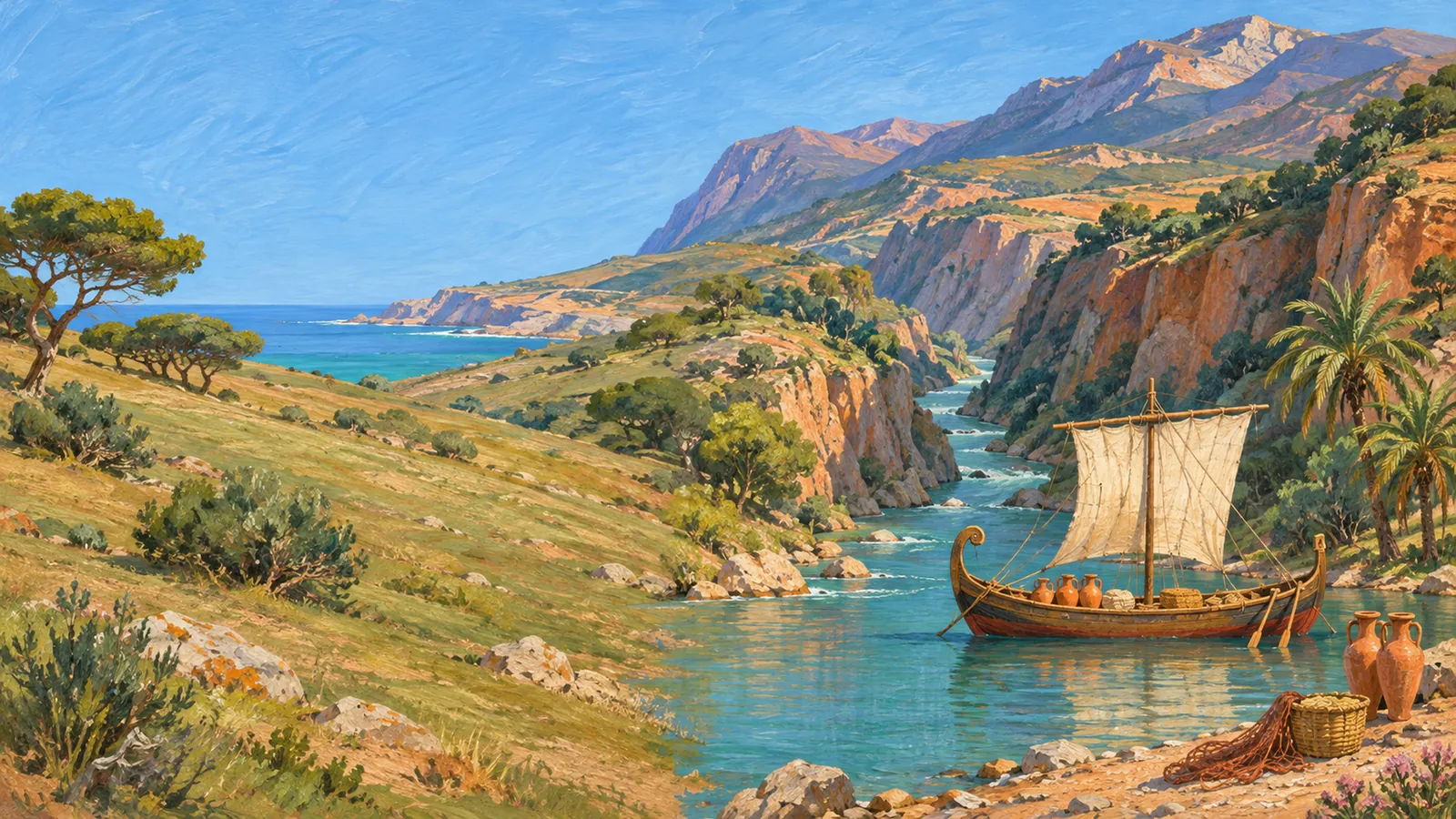
The voyagers hear that the river comes from great mountains. The Lixitai tell them of people who can outrun horses. Here the voyagers pass on stories they were told.
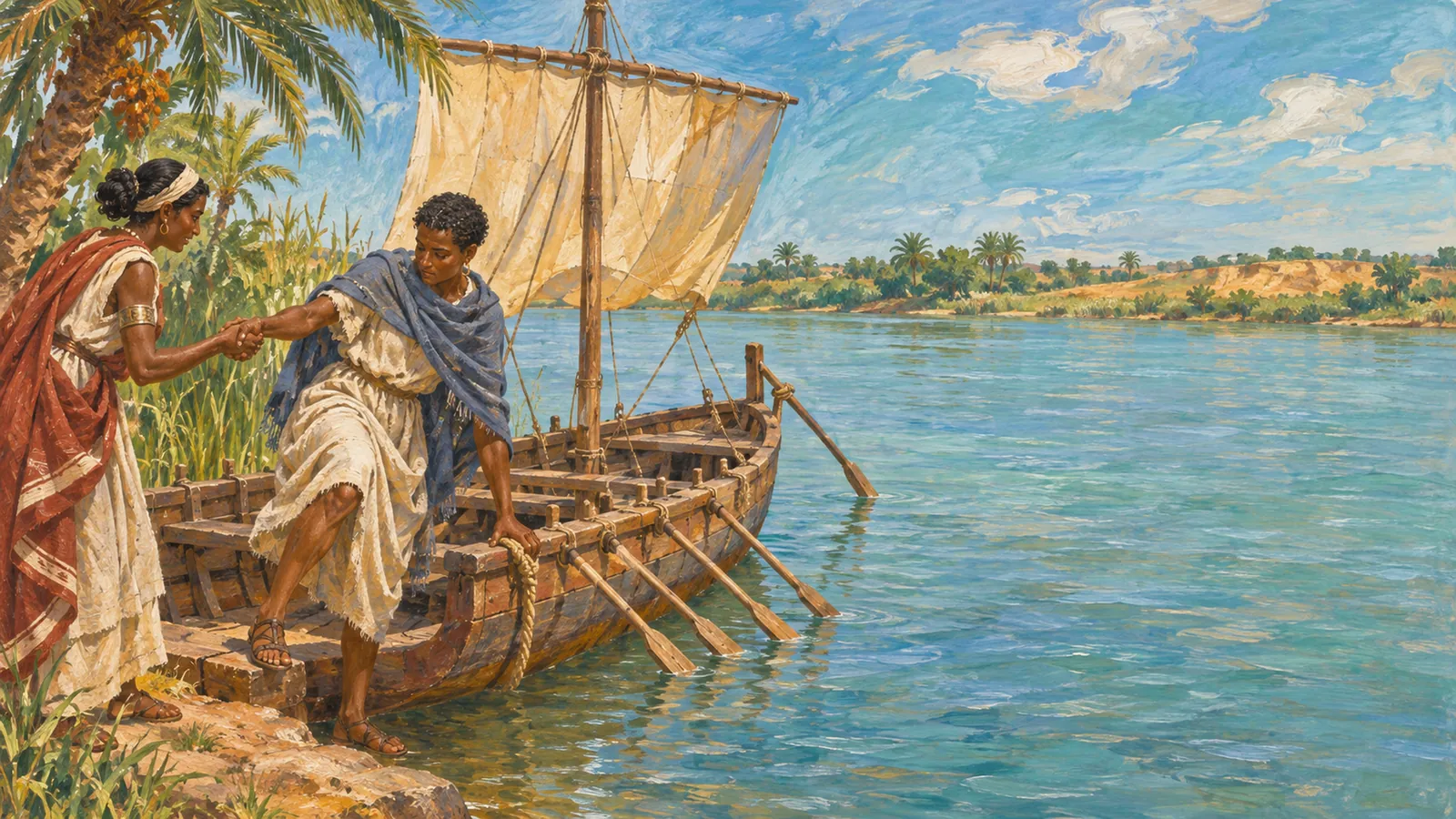
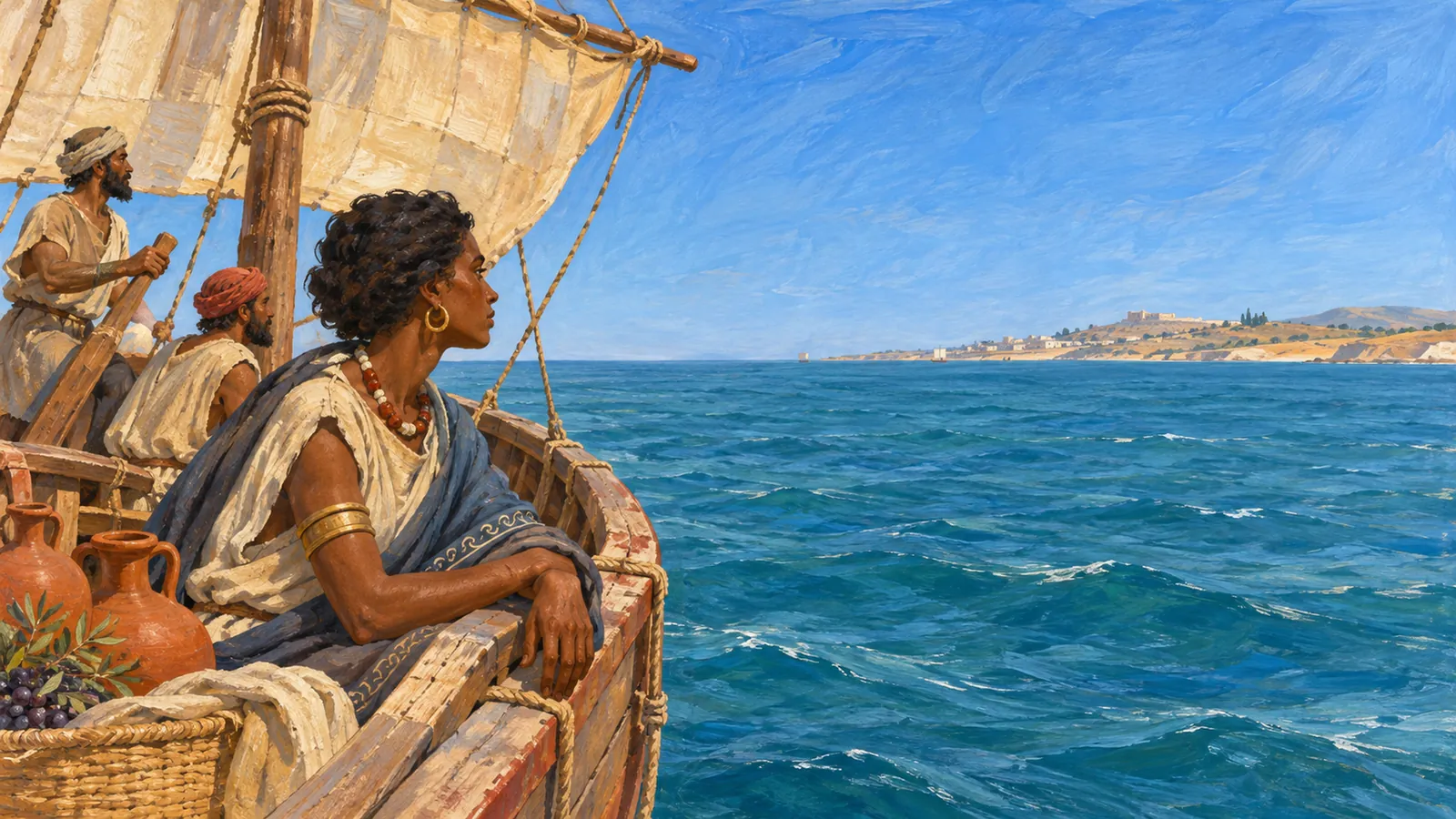
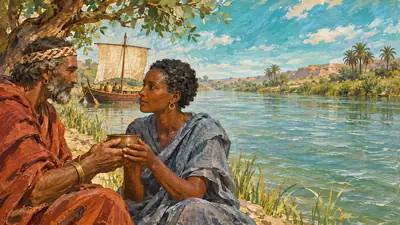
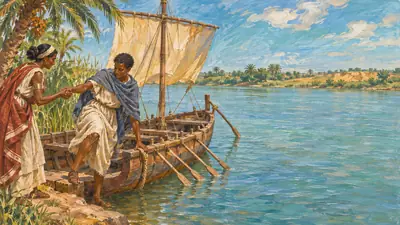
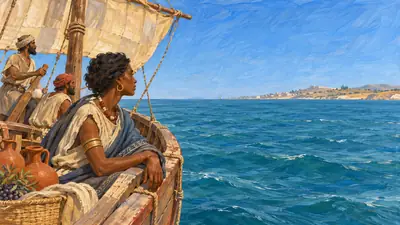
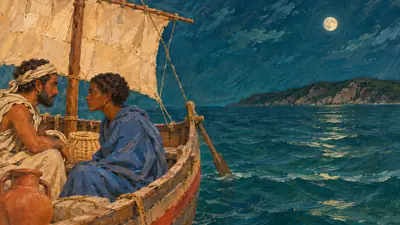
Several interpreters from the Lixos join the sailors. Their names are lost. The woman in blue represents their part in the voyage.
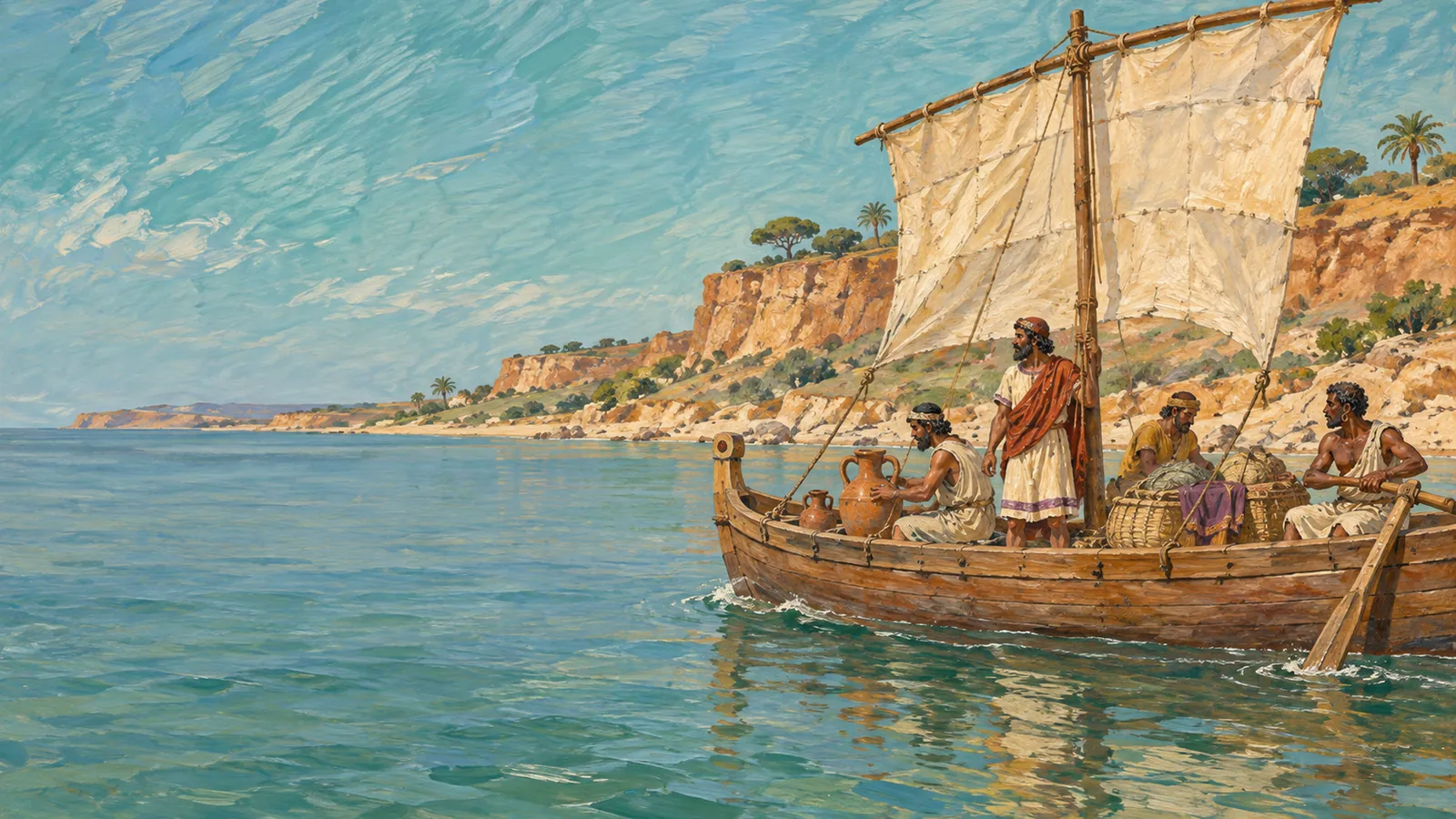
The fleet goes south for two days past a barren shore, then turns east for a day. This shorter reckoning follows the Greek text and the translation by Blomqvist.
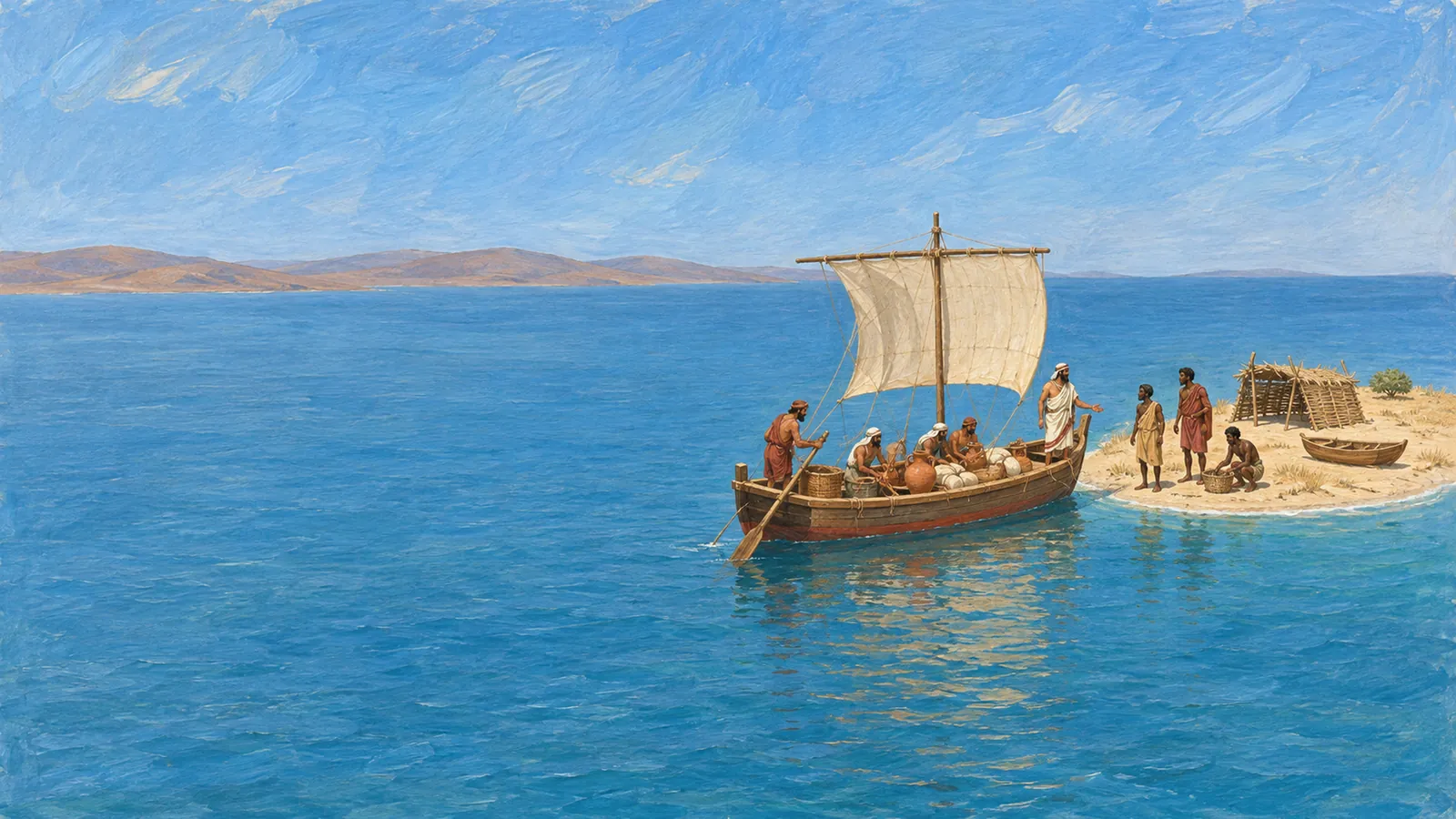
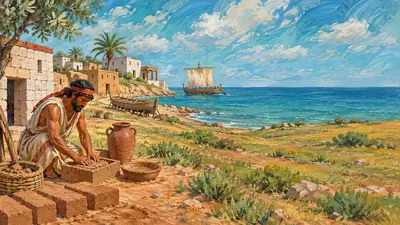
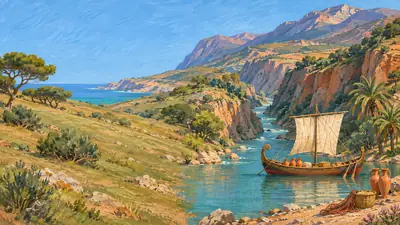
Deep inside a bay lies an island the report measures at five stadia around. The expedition settles it and names it Kerne. It will become a place to return to.
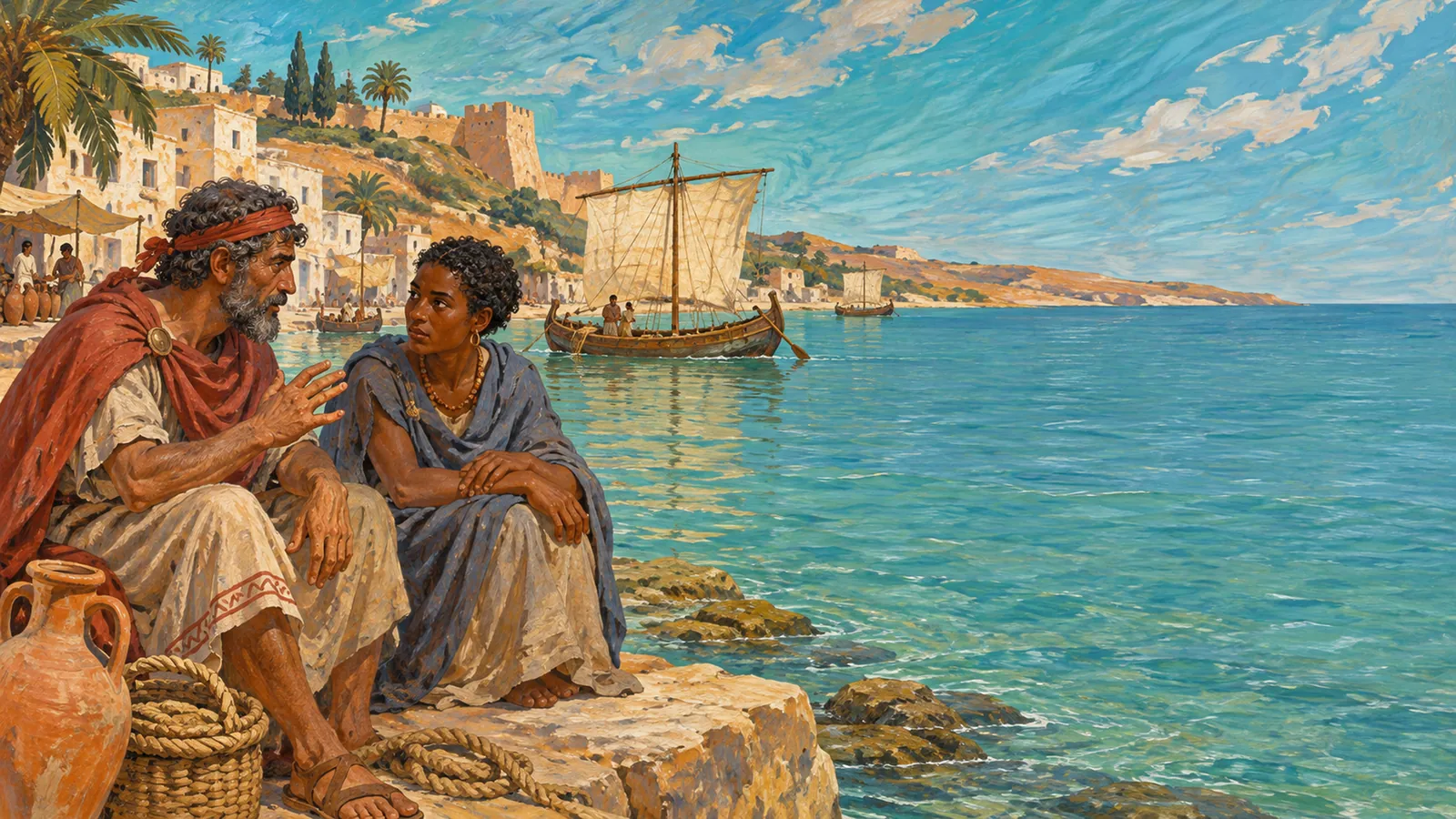
The voyagers compare their passage to the Pillars with their passage from the Pillars to Kerne. The journeys seem about equal, so they judge Kerne to lie opposite Carthage.
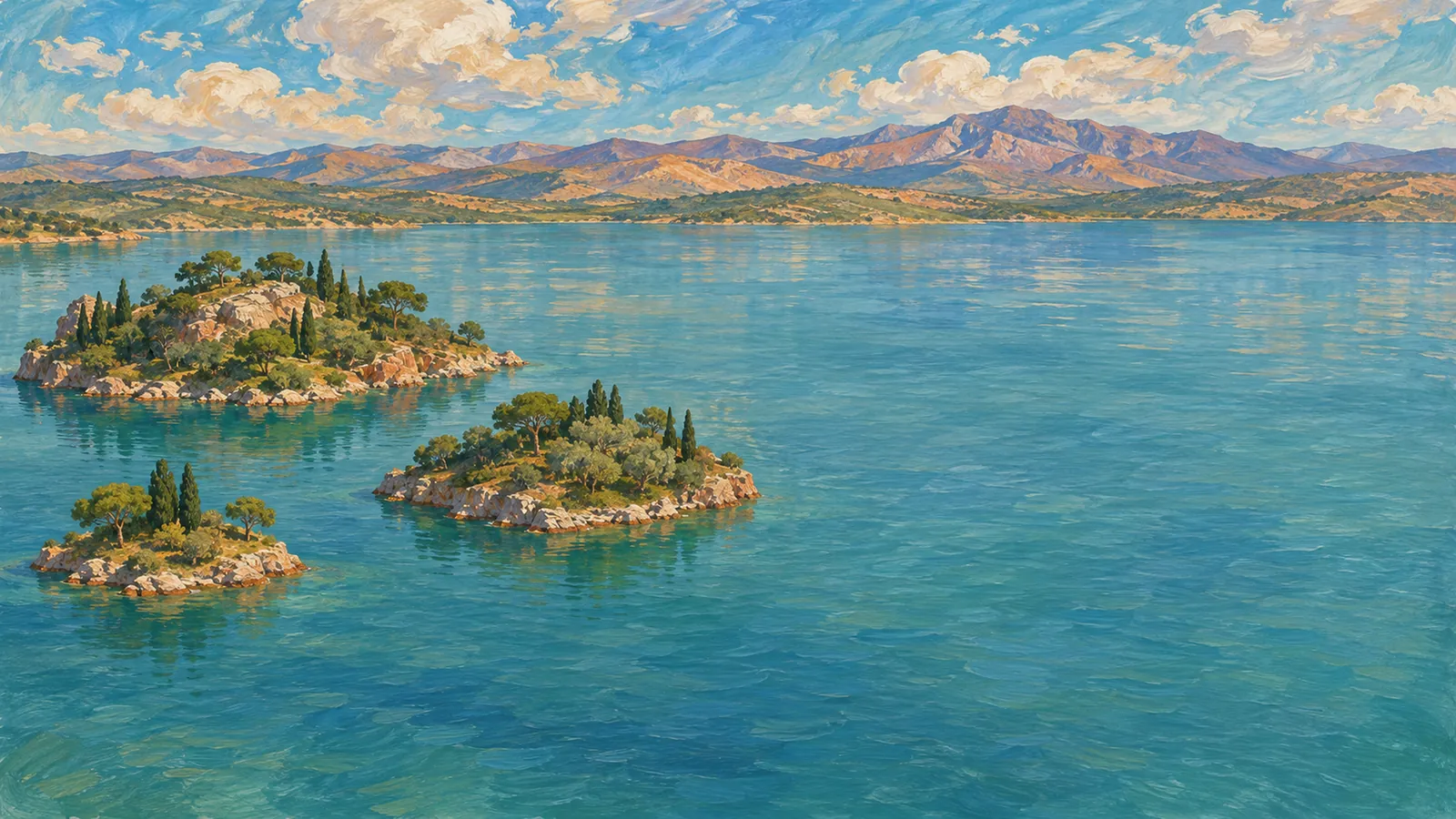
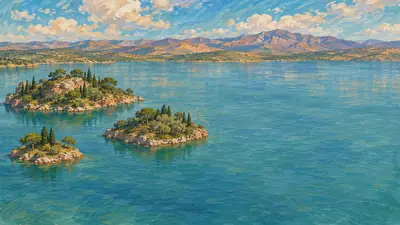
A large river leads to a lake with three islands larger than Kerne. Its name is often printed as Chretes. The Greek wording at that point is uncertain.
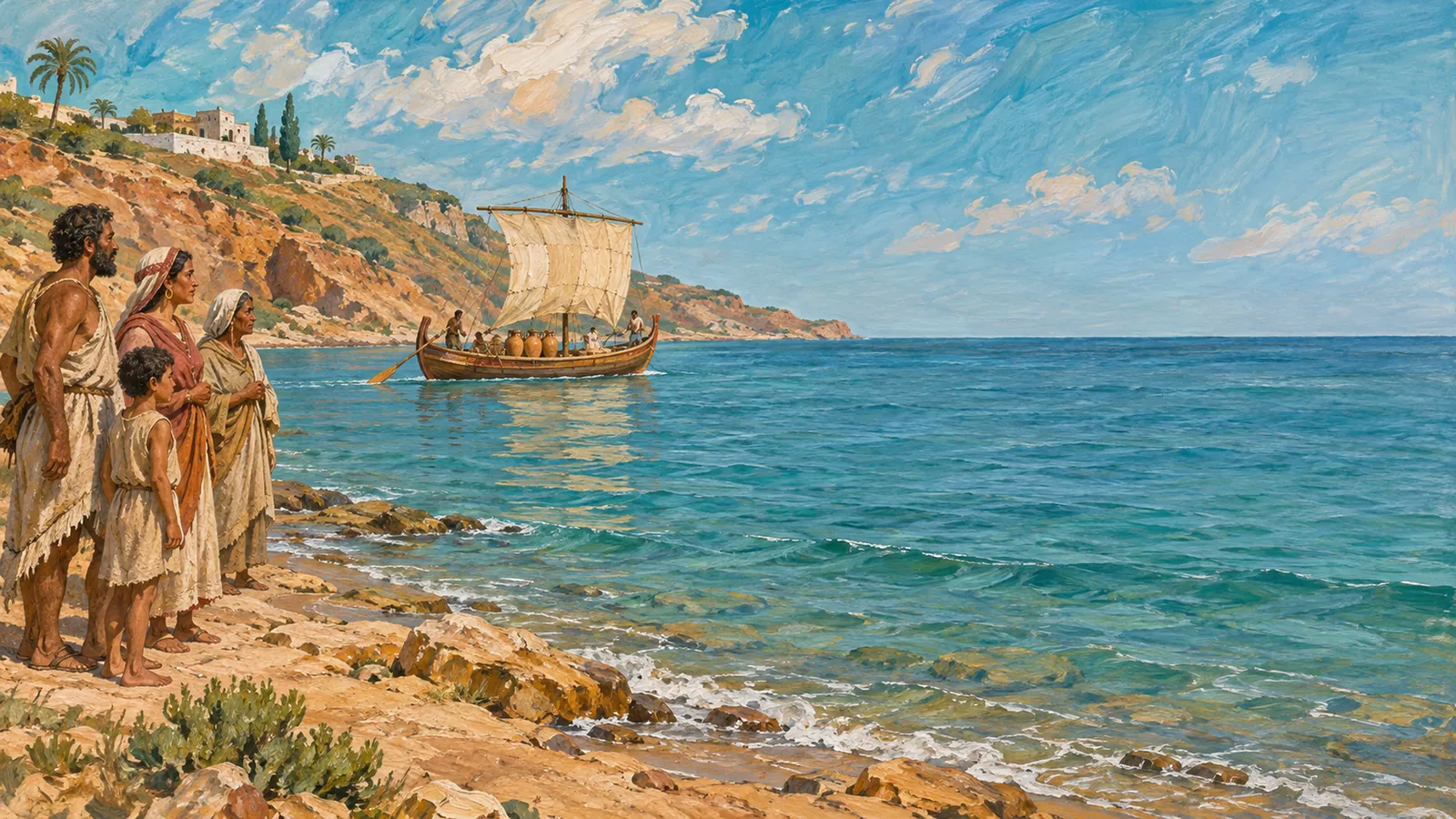
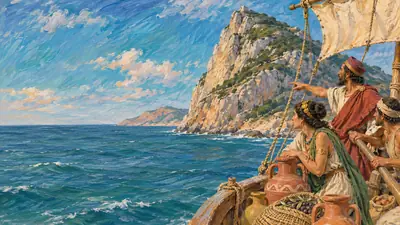
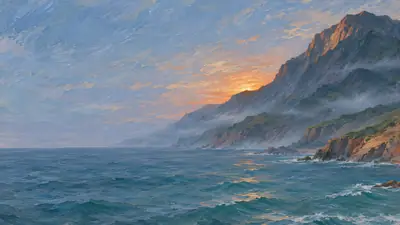
A day beyond the islands, high mountains loom over the shore. The voyagers say they were driven away and could not land. The local people’s account has not reached us.
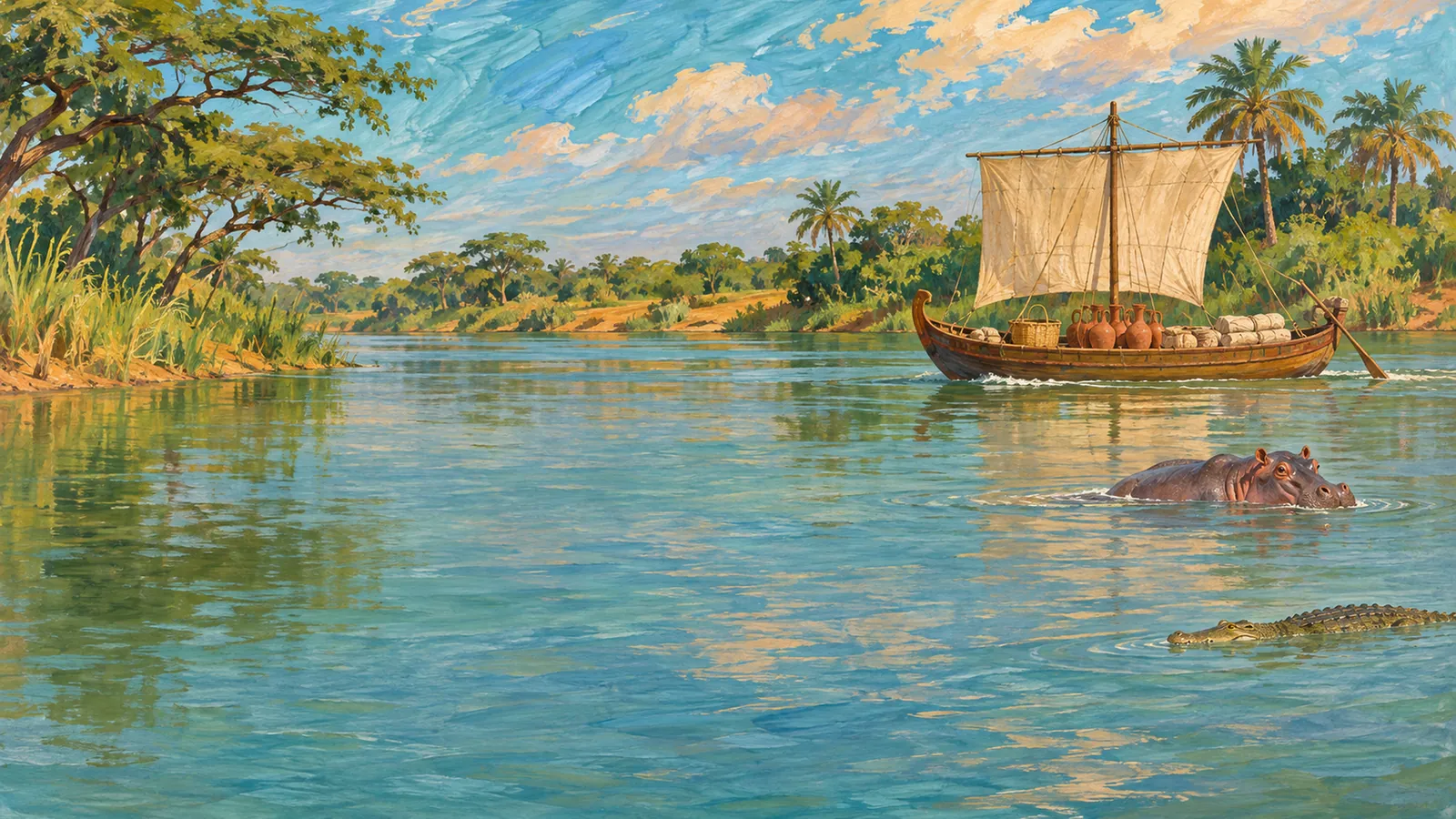
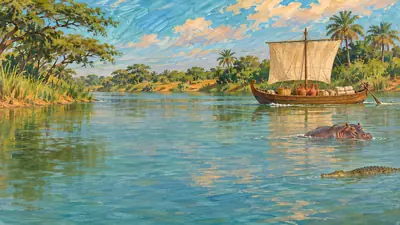
Farther on they reach another broad river. They remember crocodiles and hippopotamuses in its waters. The account gives us the animals and the river, and no name for this place.
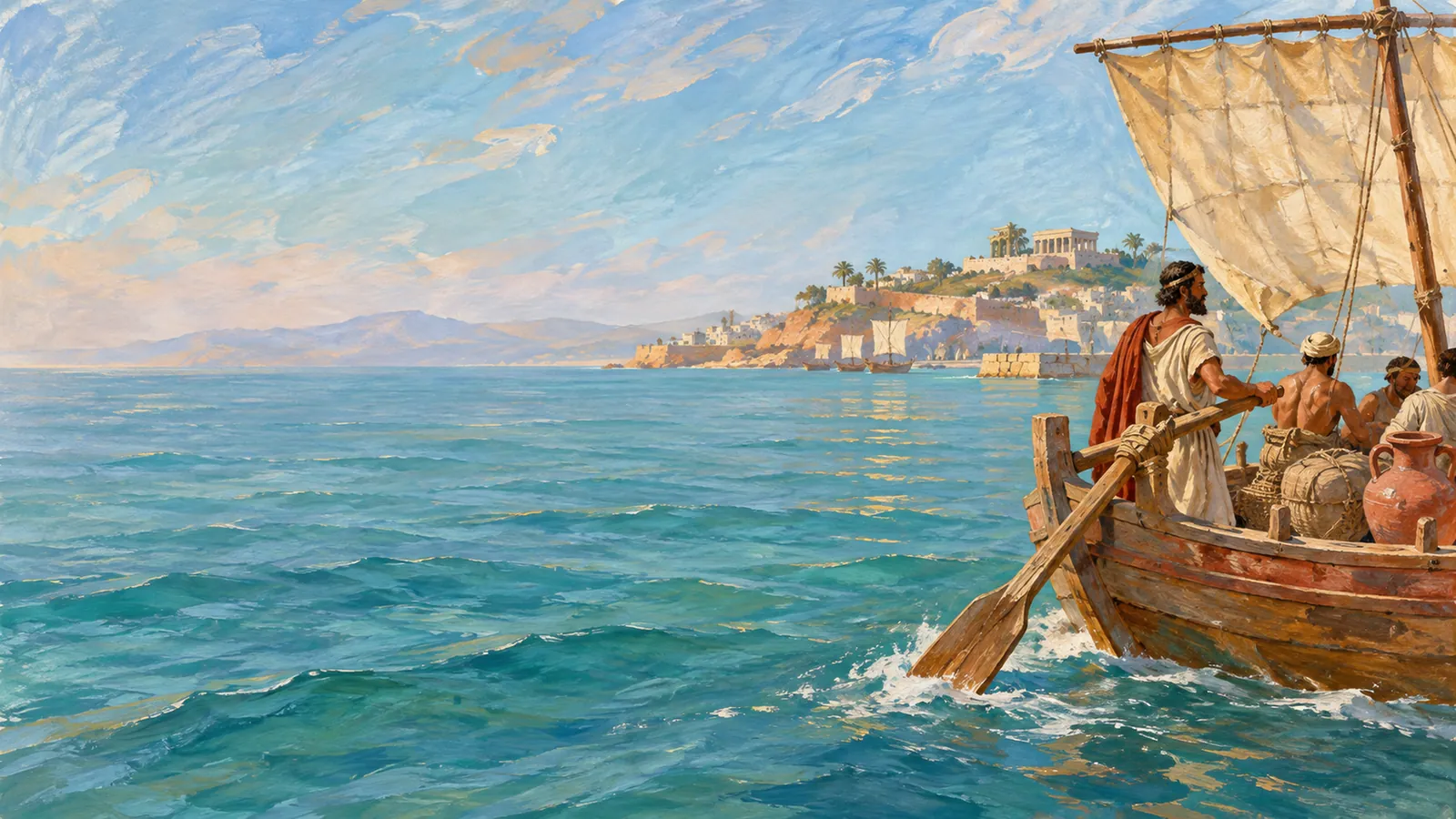
They turn their ships around and return to Kerne. The text moves quickly through this voyage back. It begins the next southern journey from the island they already know.
SOUTH FROM KERNE
They sail along an inhabited coast for twelve days. The sailors call the people by a broad Greek name, and even their Lixos interpreters cannot understand the speech they hear.
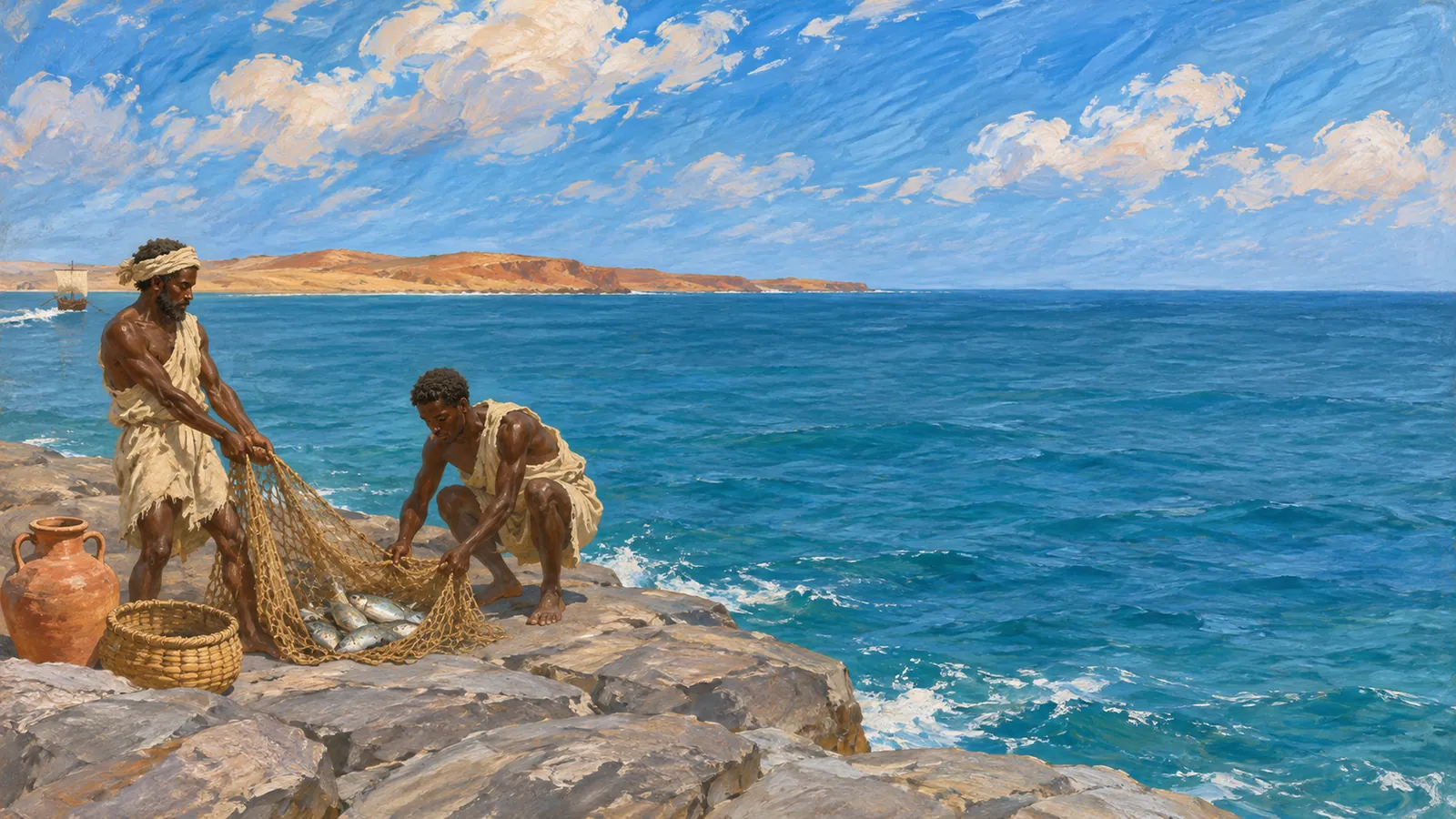
The account says the people on shore move away as the ships draw near. We can follow the crew’s movements in the story. The people on shore leave no words of their own.
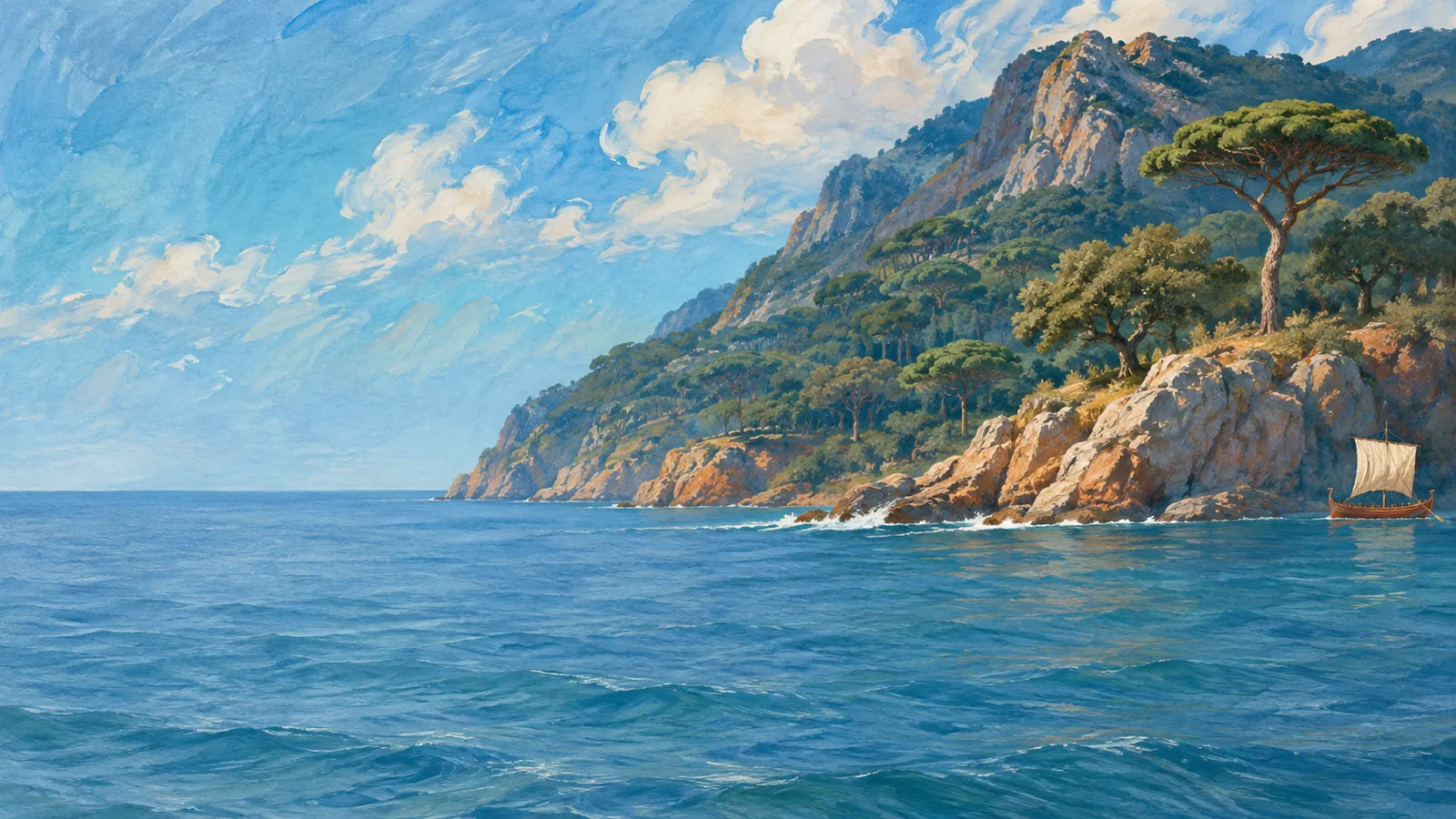
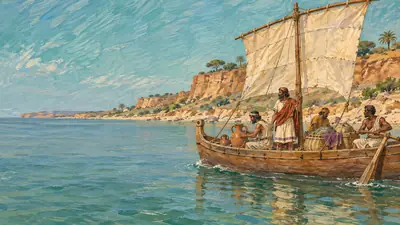
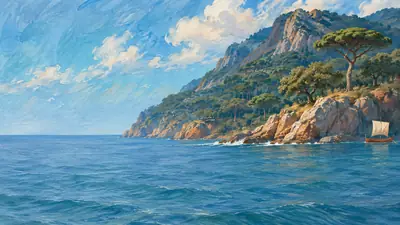
On the last day, the ships anchor beneath wooded mountains. The Greek report notices the scent and colours of the wood. At this point the coast reaches us through the senses.
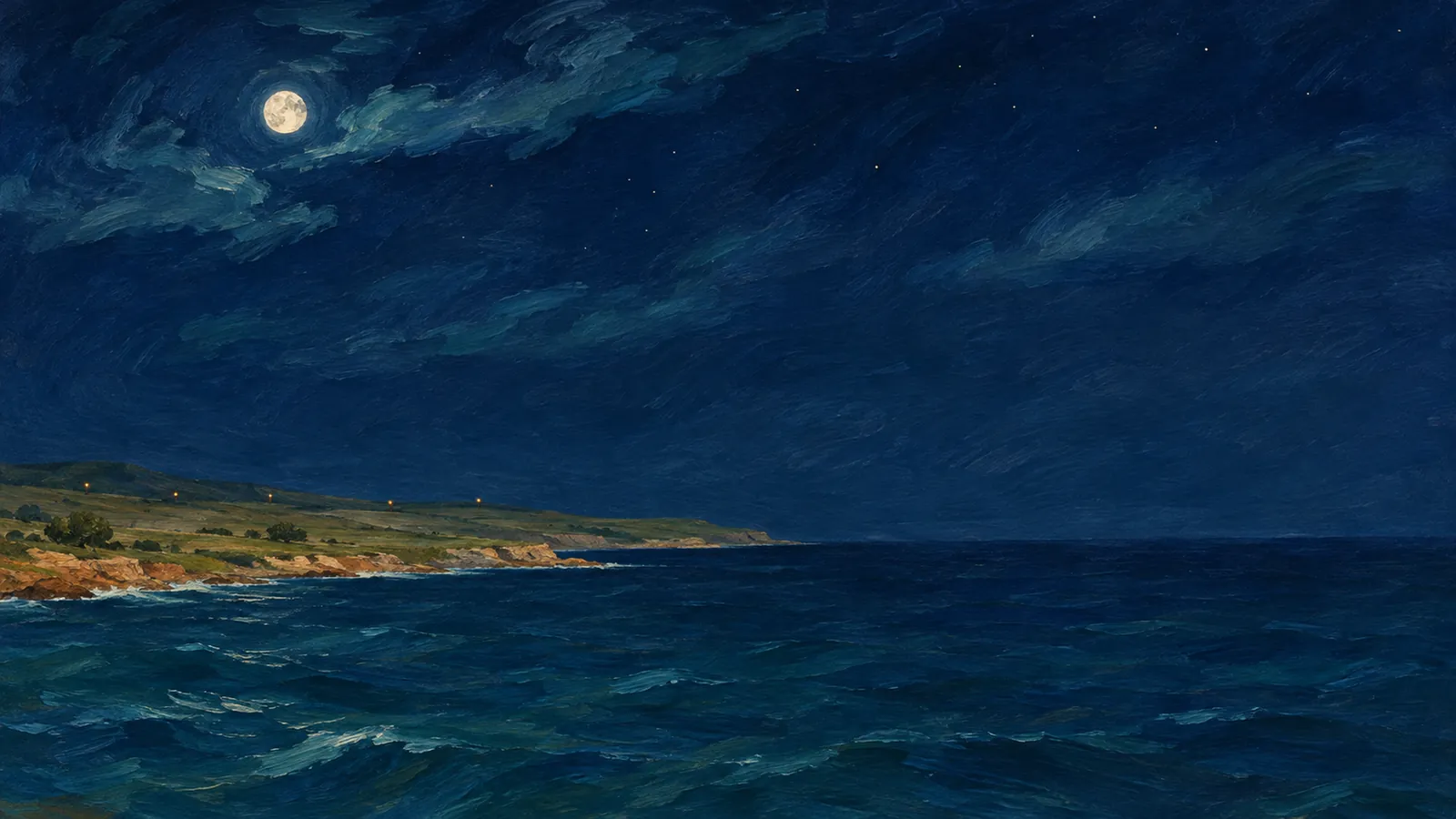
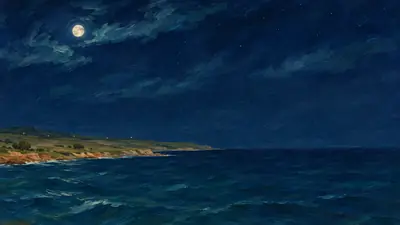
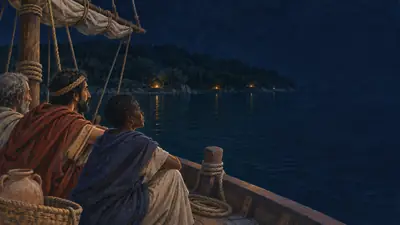
Two days rounding the mountains bring them to a wide expanse of sea. Beyond it lies a plain where scattered fires rise in the night, at intervals and in varying numbers.
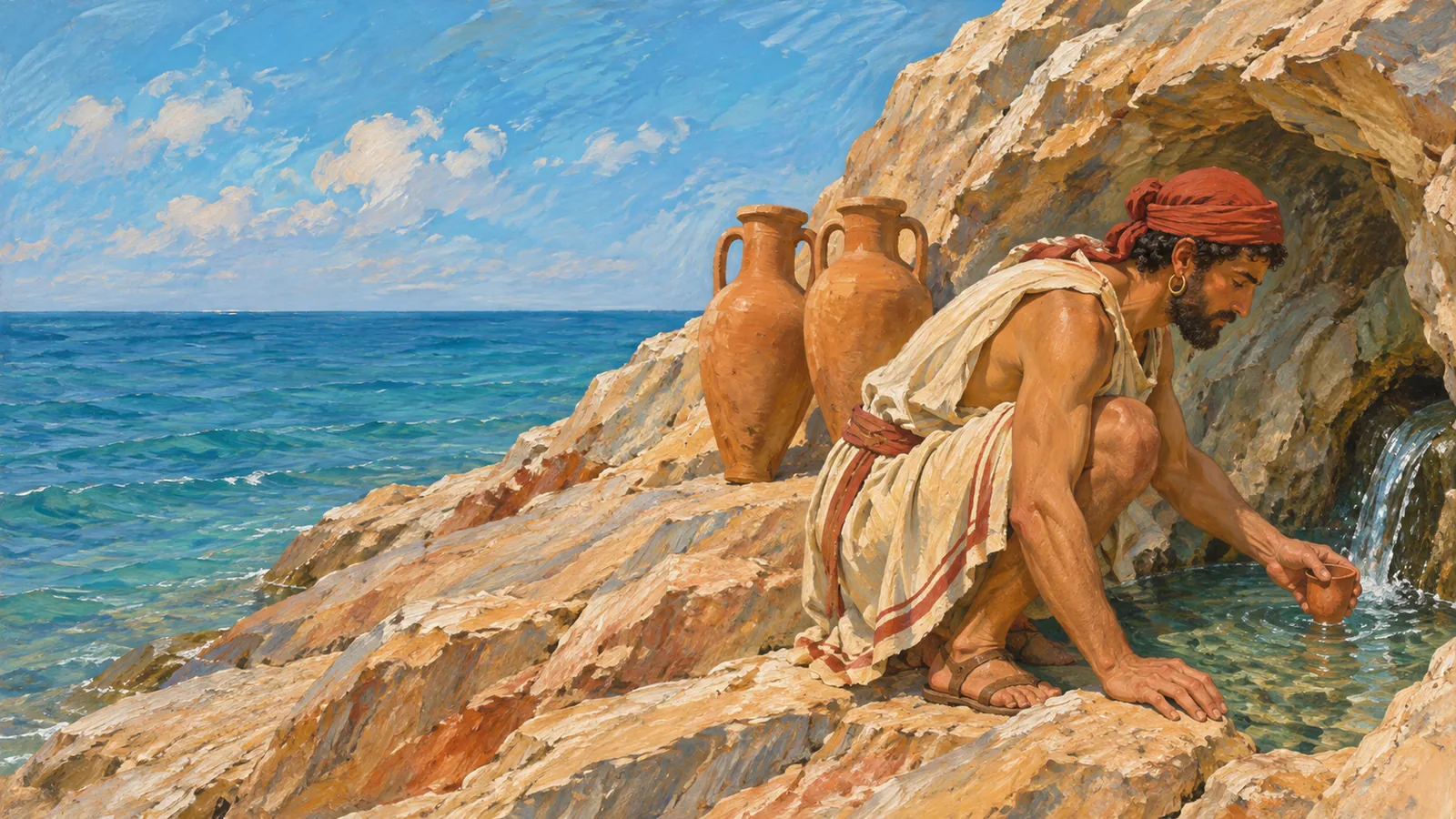
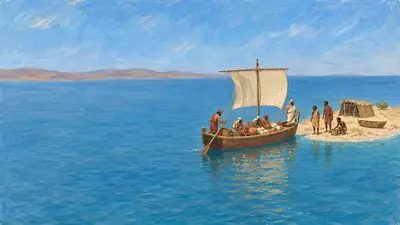
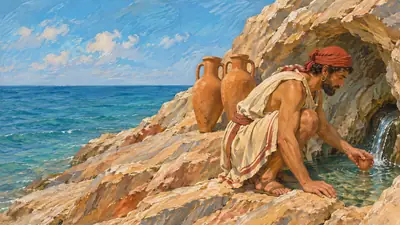
The sailors refill their water. The brief remark is enough to show the voyage’s needs. A further five days beside the coast bring them to a great bay.
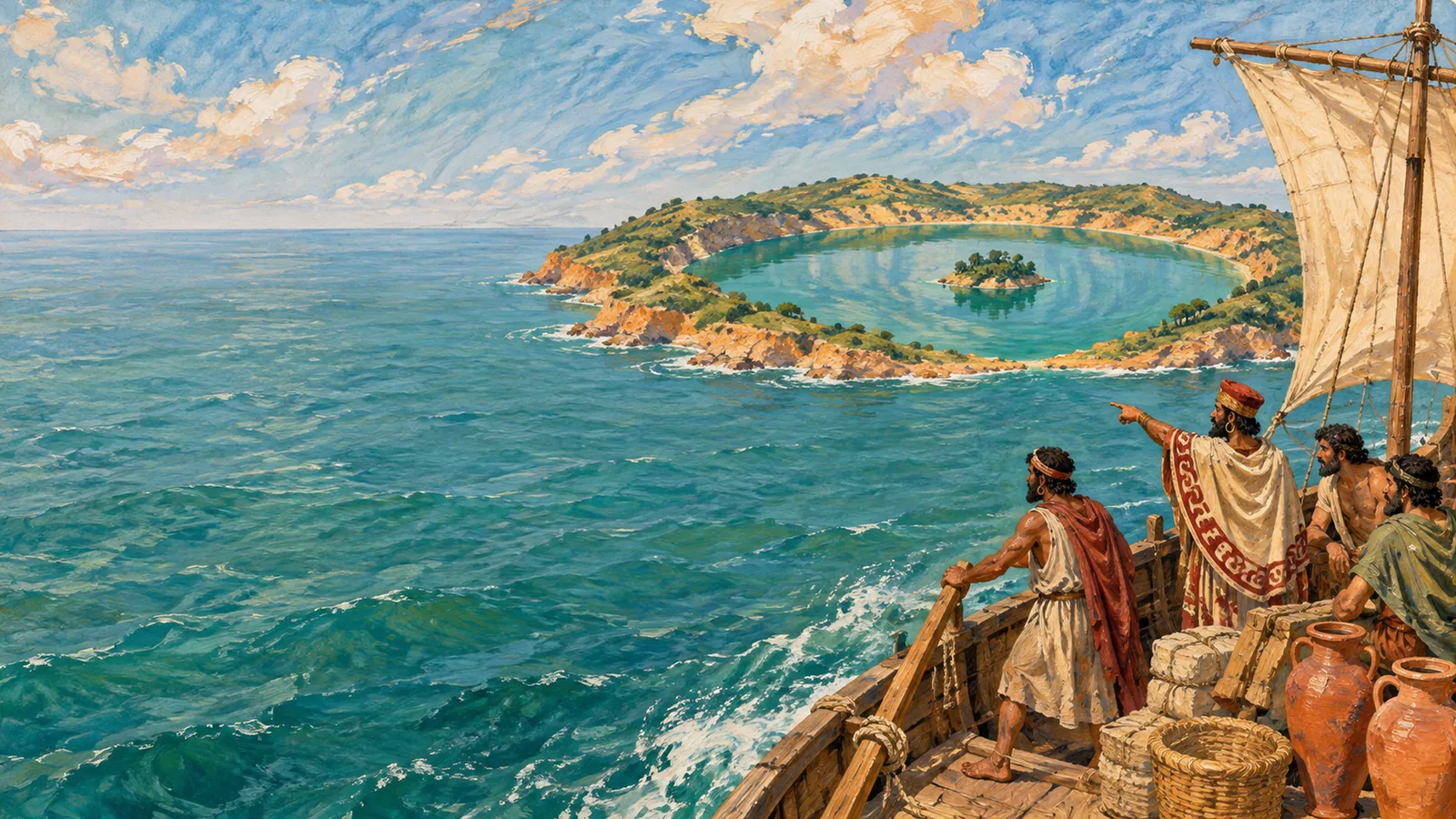
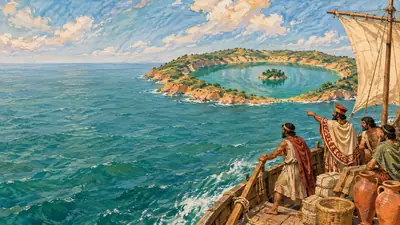
The interpreters name the bay Horn of the West. A large island encloses a lake. The lake holds another island.
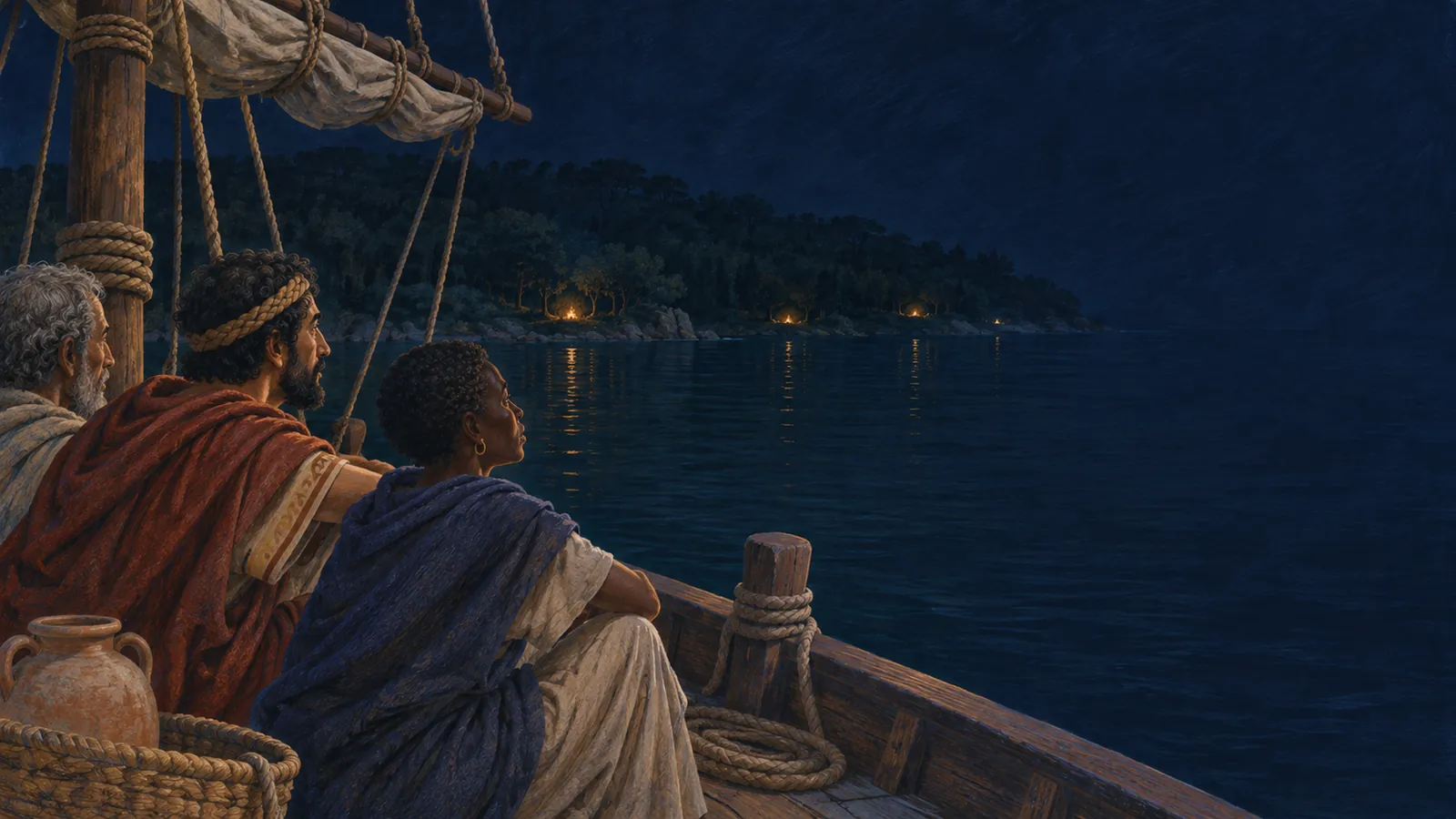
On the island they see woods by day. At night they report fires, pipes, cymbals, drums and shouts. Fear spreads.
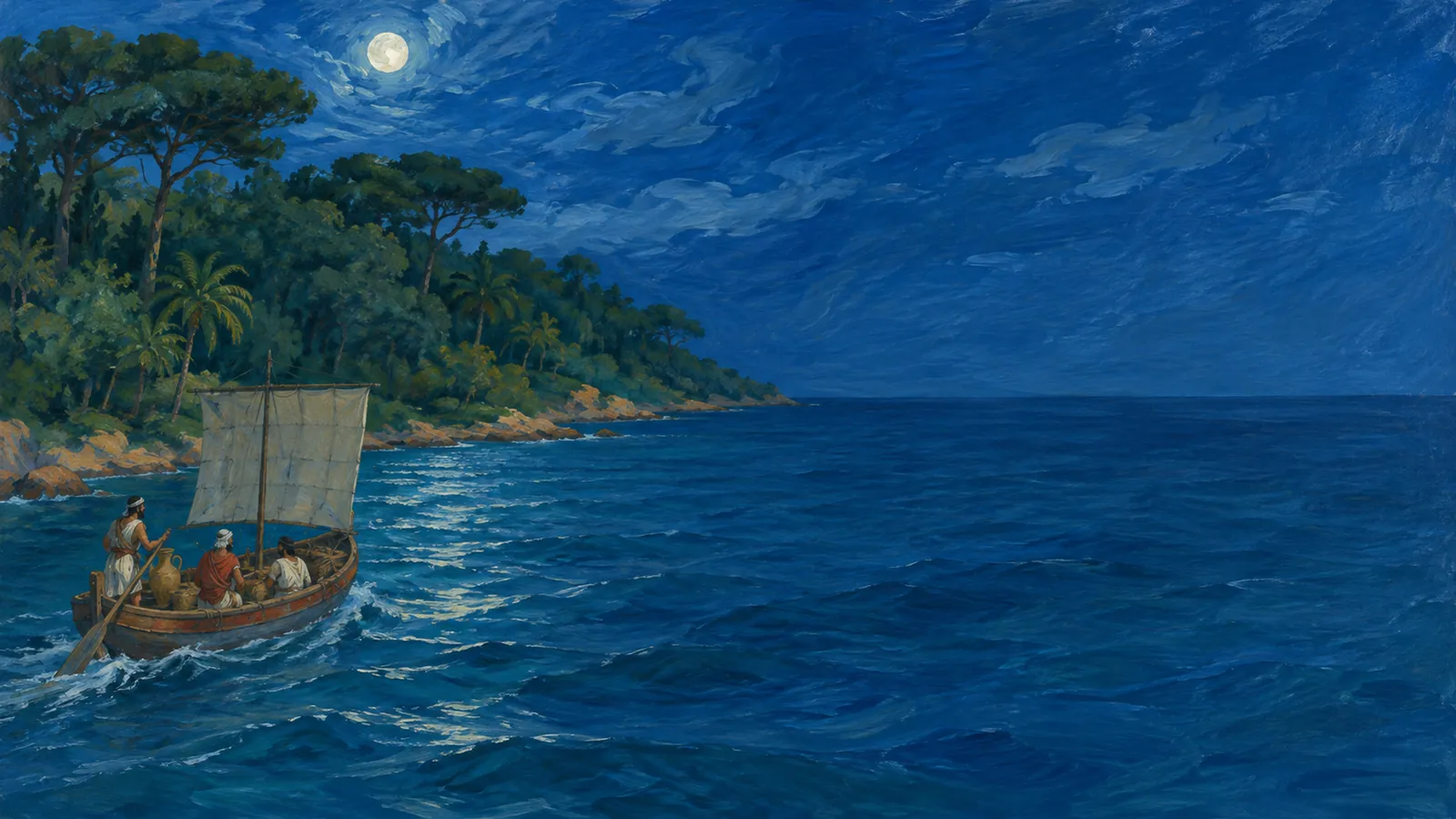
The crew’s diviners urge them to leave, and the ships hurry out. The words tell us how the voyagers reacted. We are still outside the lives of anyone they might have heard.
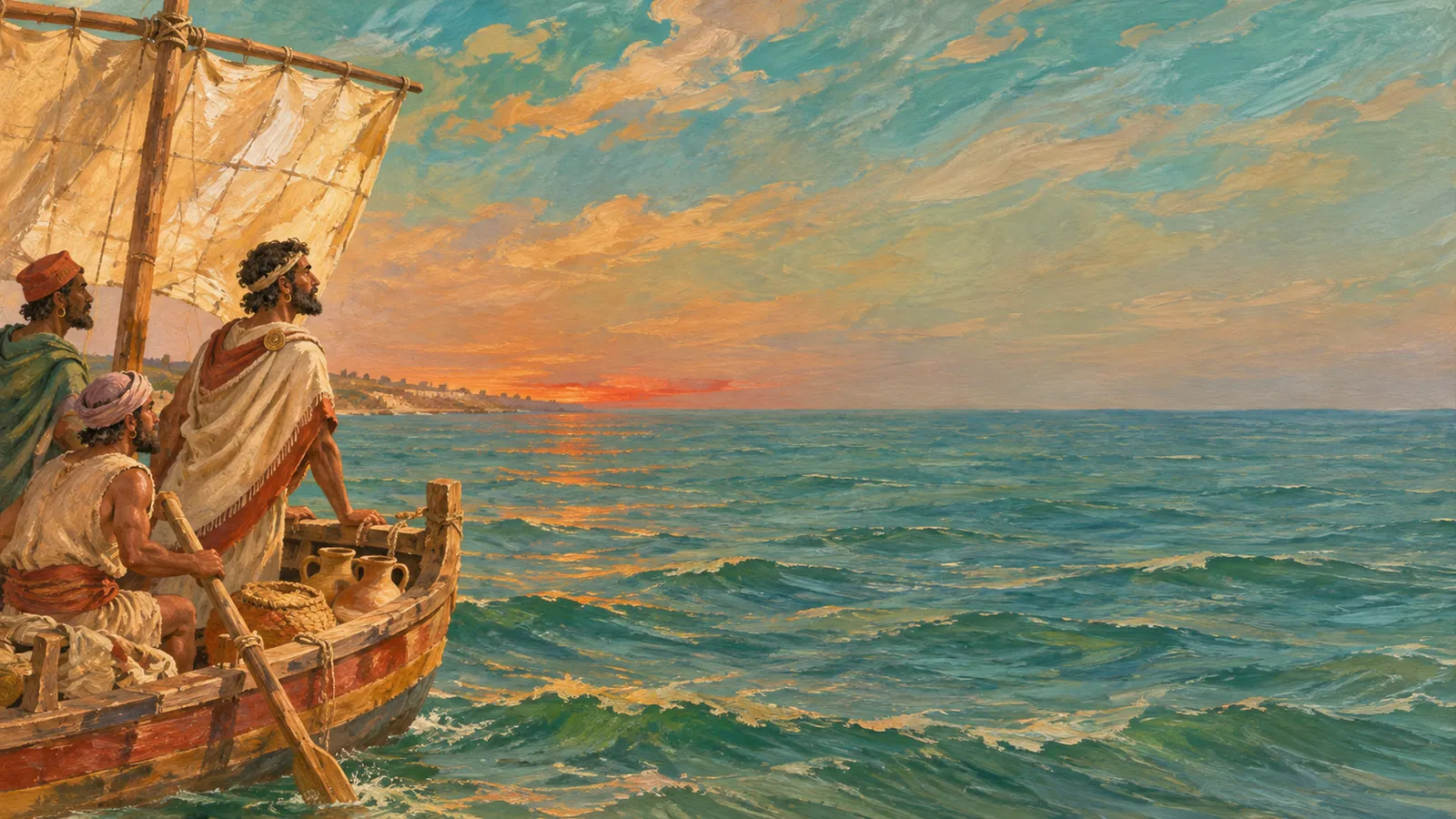
They tell of heat, a strong scent and what looked like streams of fire reaching the sea. The heat keeps them from landing. The account leaves the cause of the lights open.
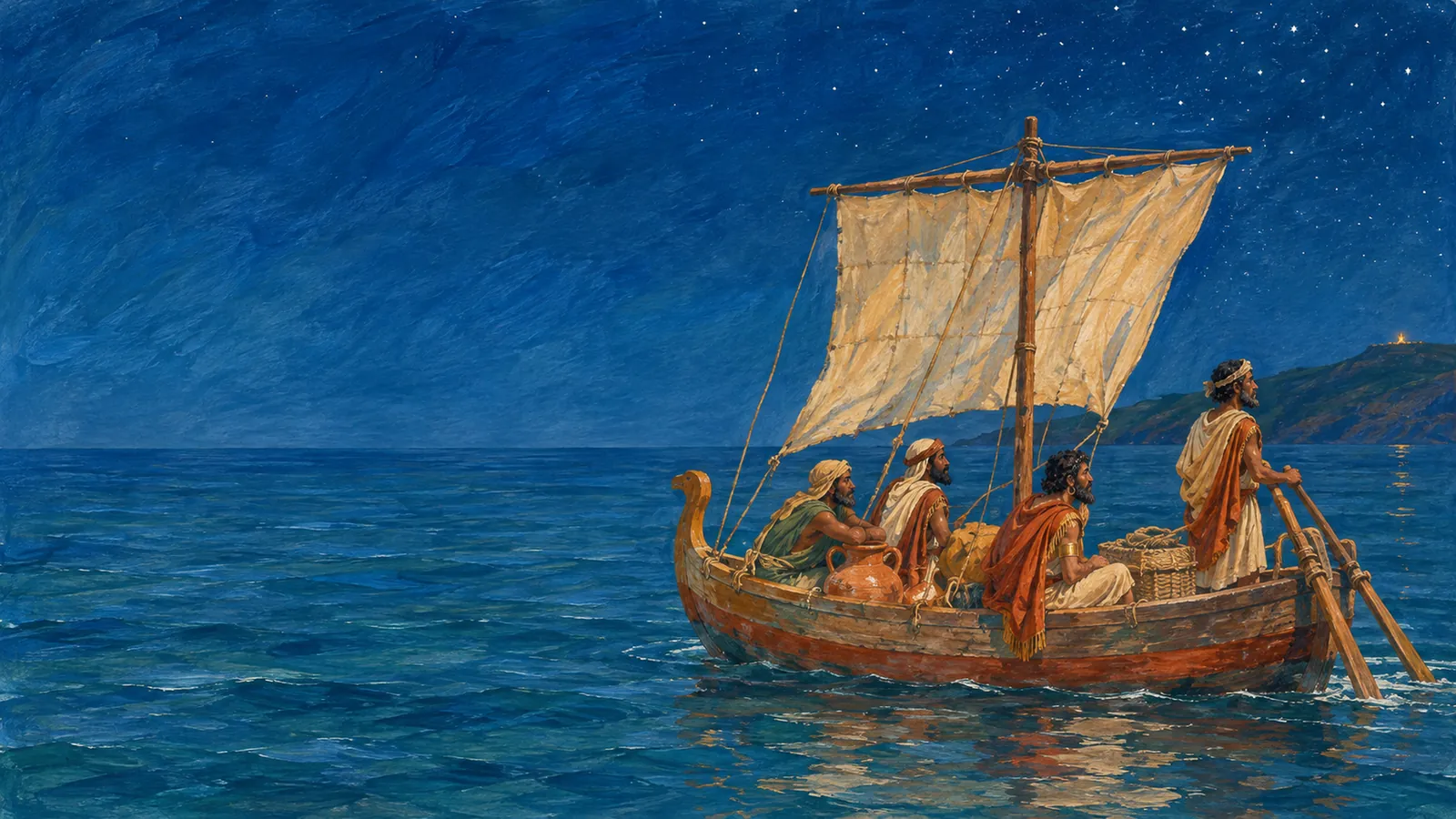
For four days the sailors follow a coast lit at night. They see a fire higher than the others, one that seems to touch the stars from far out at sea.
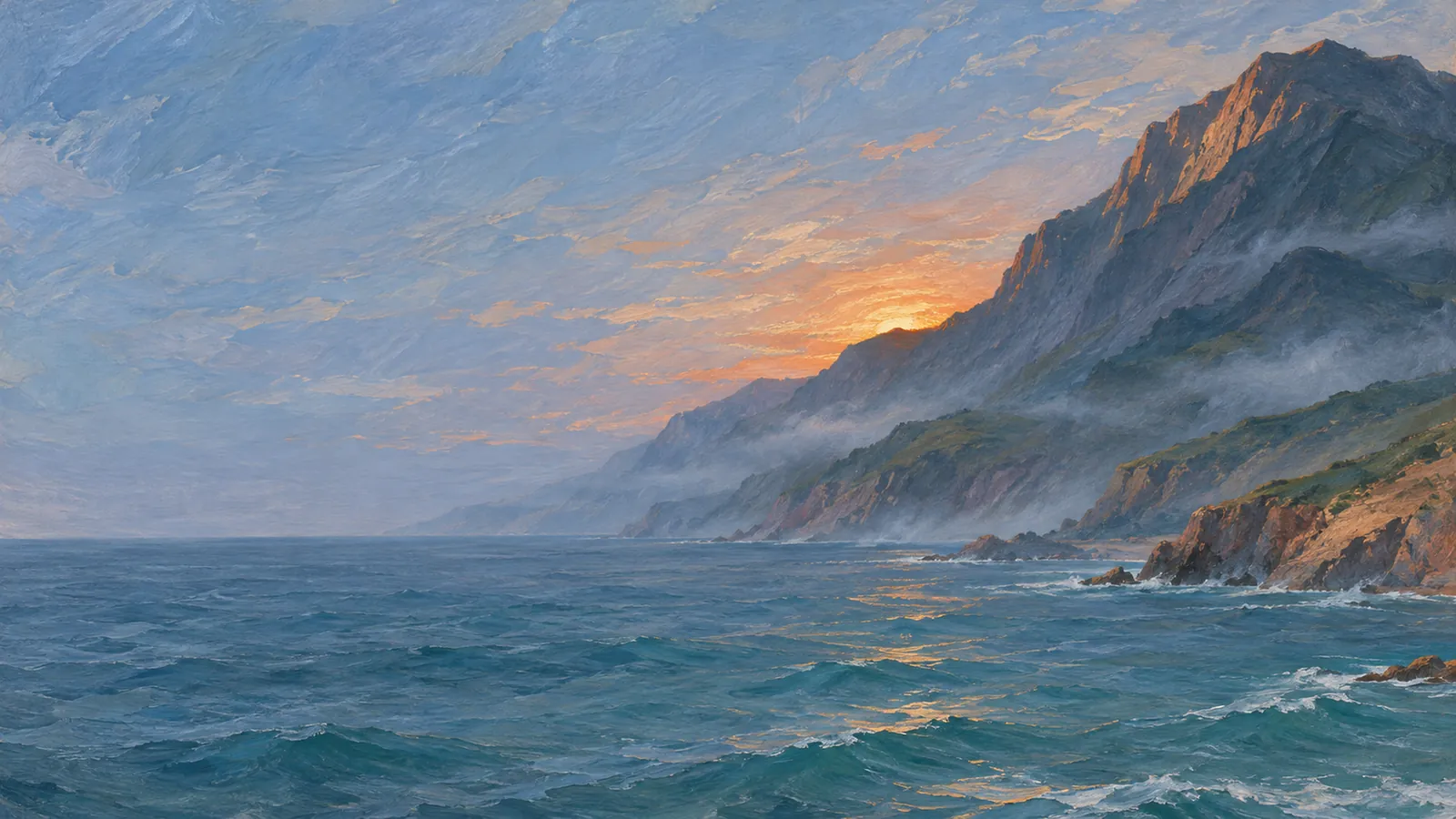
In daylight the high shape is a mountain. The account calls it the Chariot of the Gods. Its name and the sighting survive, while the mountain’s modern identity is debated.
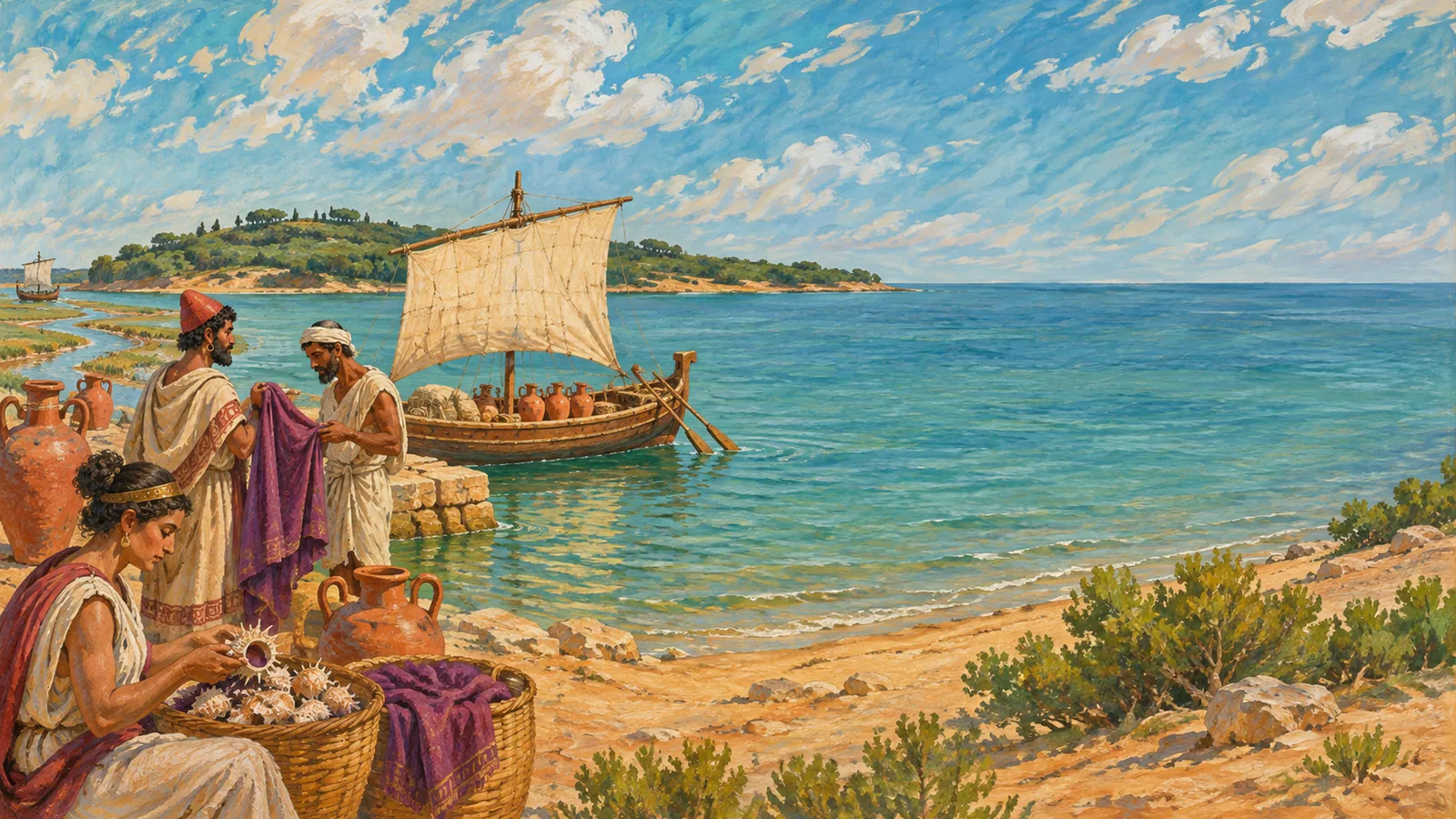
HORN OF THE SOUTH
On the third day from there they reach the Horn of the South. The story describes another island within a lake on a larger island. This is the last landfall it tells.
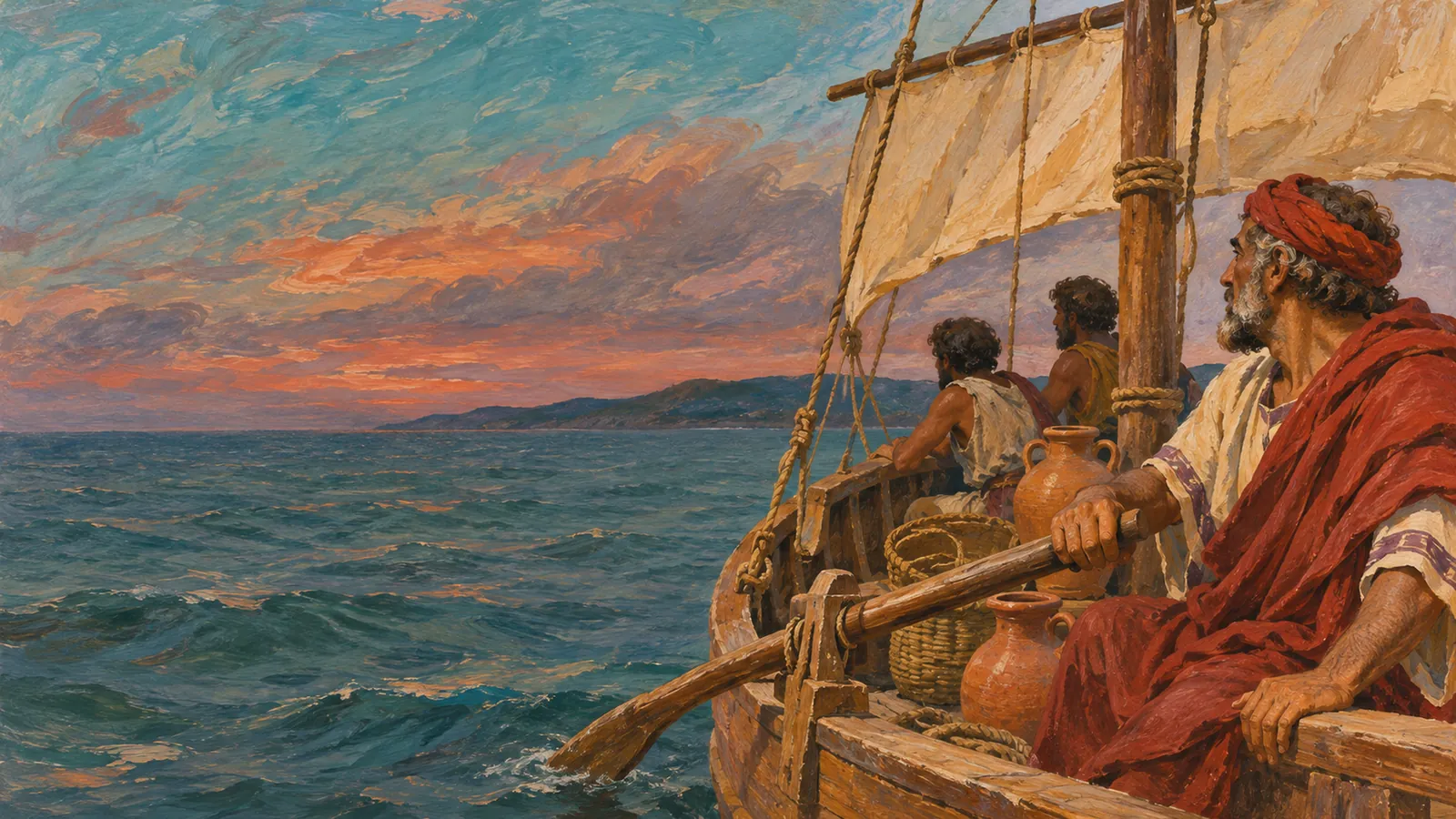
The voyagers say they pursued figures on the island and killed three whom they describe as women. The pictures stay with the ship and the shore they leave behind.
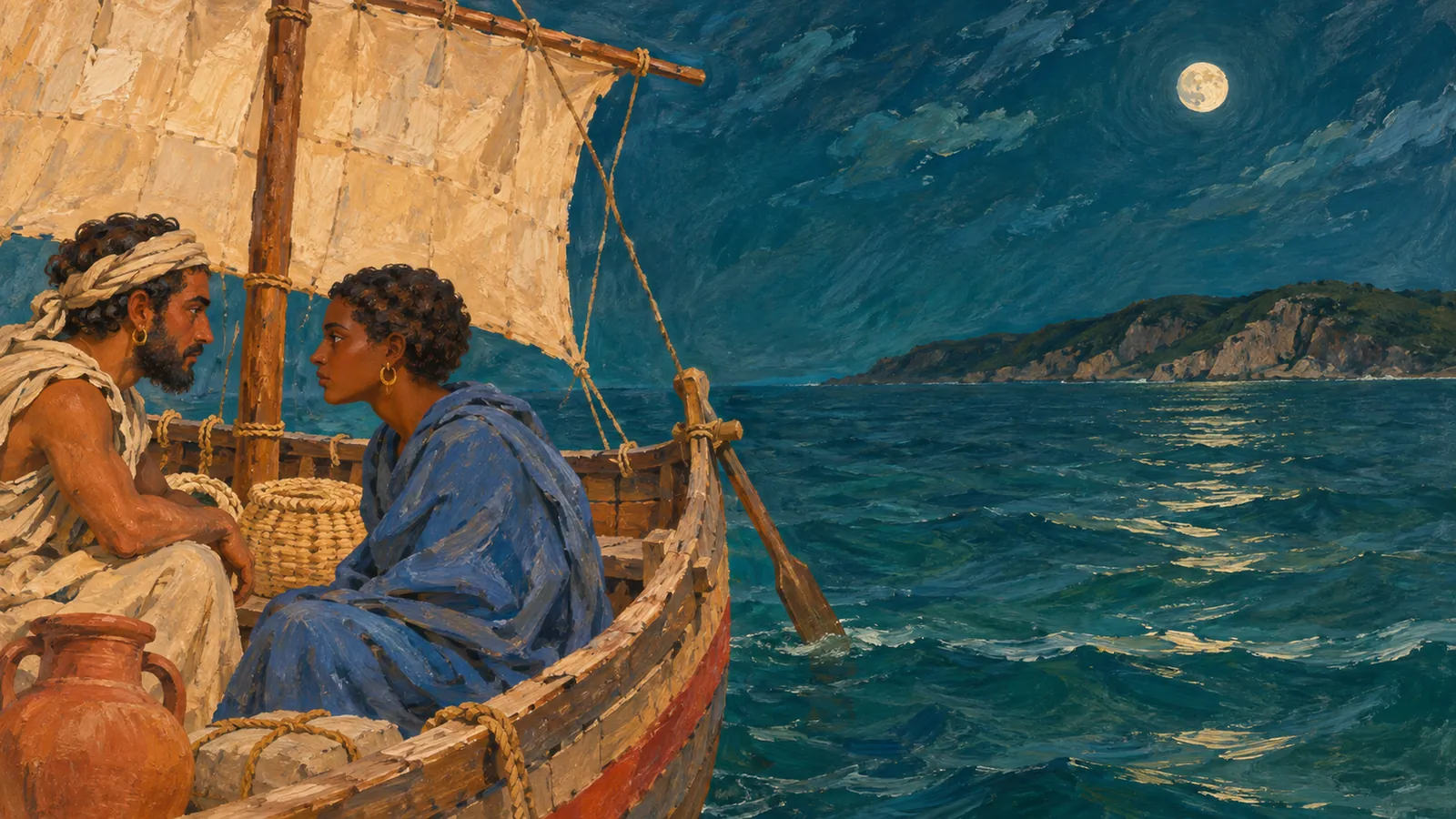
The interpreters’ name for those encountered reaches us in Greek as Gorillai. Its meaning in the encounter is uncertain. No account from the island survives to help us identify them.
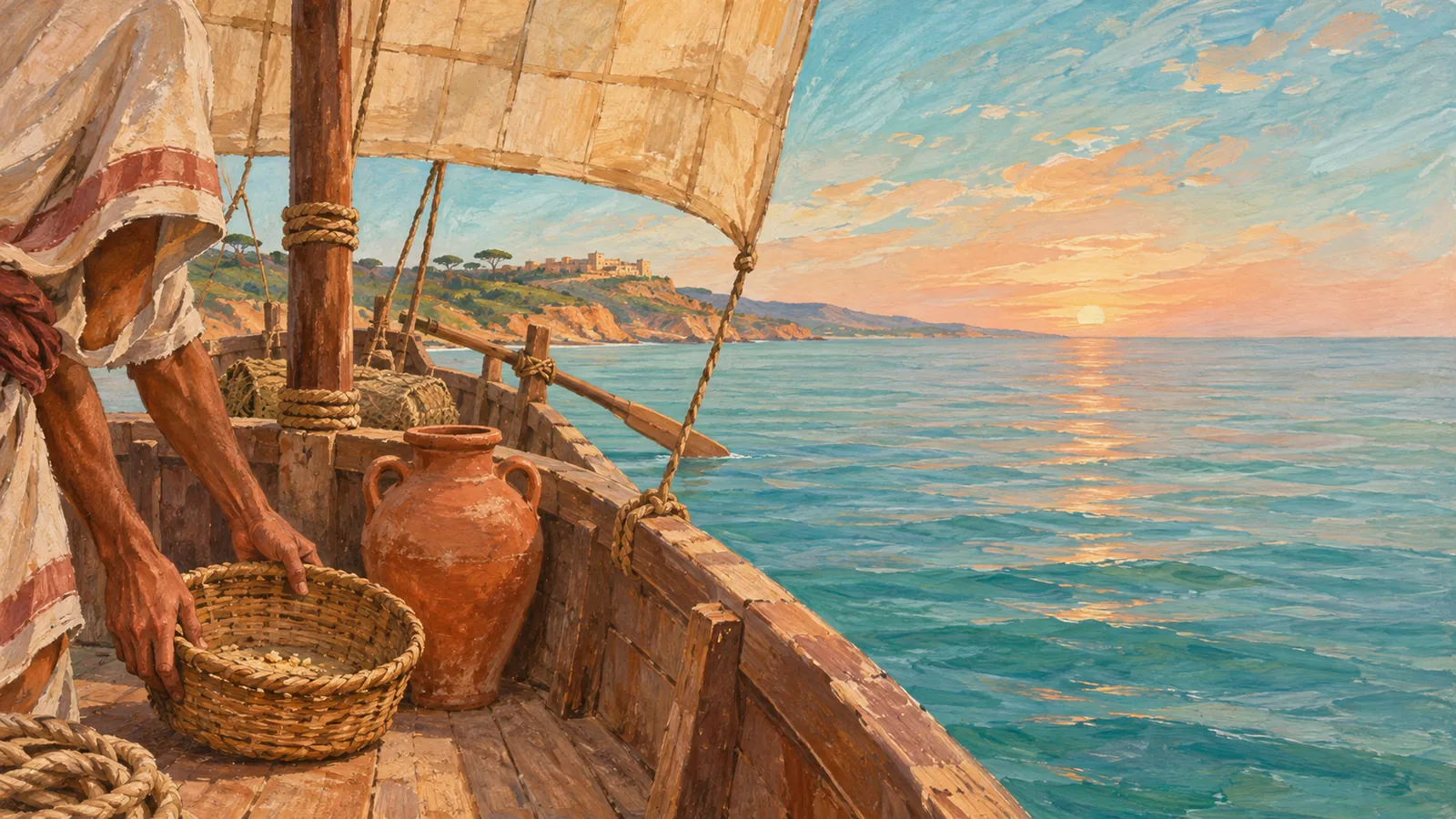
The last reason the crew gives for turning back is that their food is running short. The text began by listing food among their supplies. Now the line of places ends.
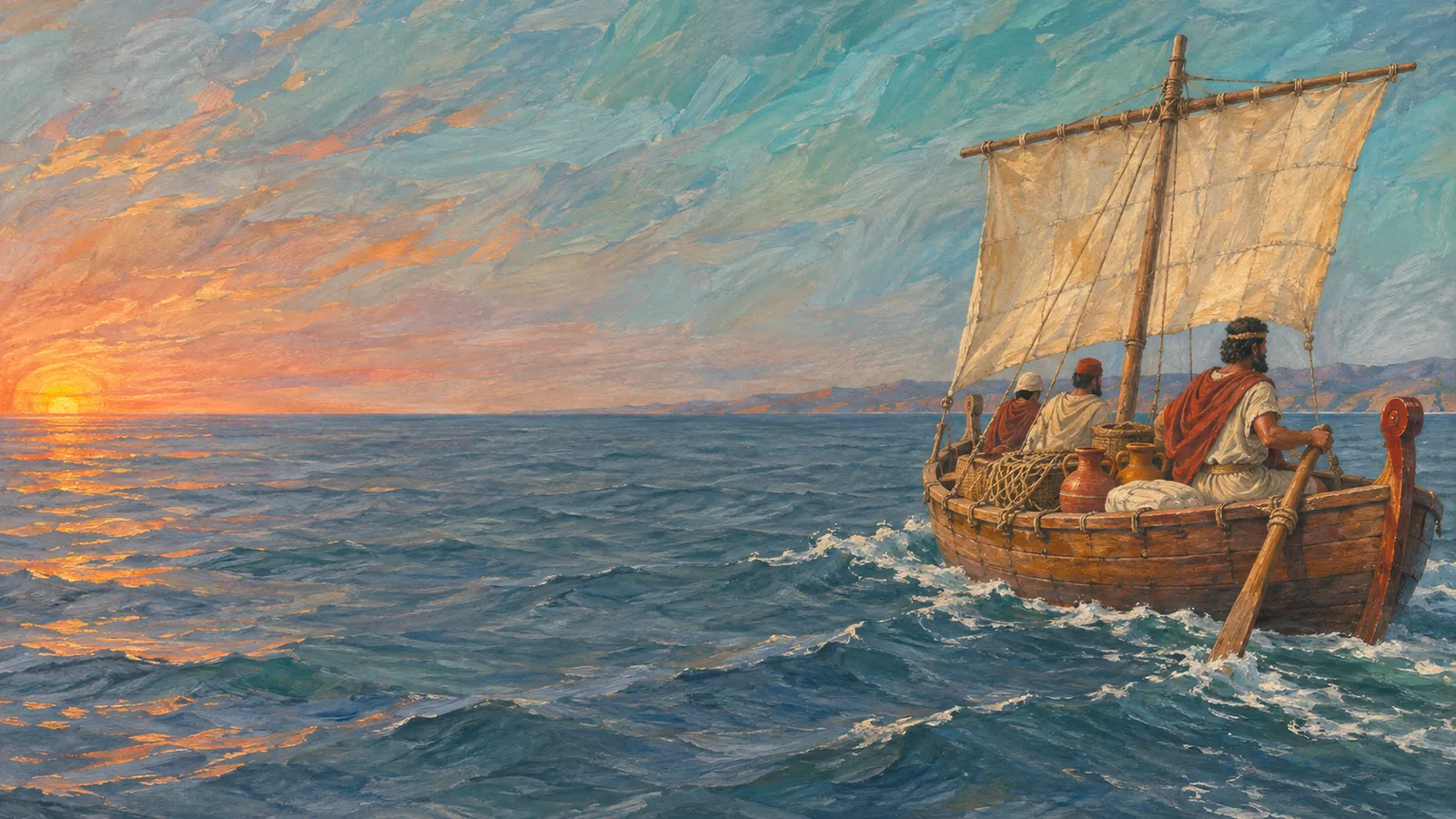
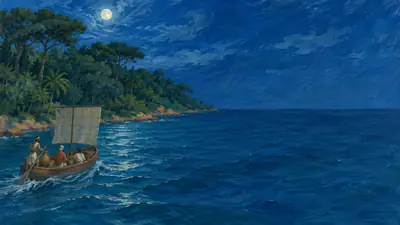
They say they sail back to Carthage. The return has no further scene in the Greek text. Behind the ship lie the named rivers and bays we can follow only in outline.
End of chapter 1
All pages
Sources
Editions consulted
- Heidelberg University Library, Cod. Pal. graec. 398, fols. 55r–56r, catalogue and manuscript
- Karl Müller, Greek edition of the Periplus of Hanno
- Greek Periplus, continuous reading of §§1–18
- Jerker Blomqvist, translation of the primary text, reproduced in the appendix
- Wilfred H. Schoff, comparison translation
- Biblissima, Heidelberg manuscript’s date and foliation
Ancient lines behind each page
- Page 1: Greek Periplus, heading
See source notes for which details are attested. - Page 2: Greek Periplus, heading
See source notes for which details are attested. - Page 3: Greek Periplus, §1
See source notes for which details are attested. - Page 4: Greek Periplus, §1
See source notes for which details are attested. - Page 5: Greek Periplus, §1–2
See source notes for which details are attested. - Page 6: Greek Periplus, §2
See source notes for which details are attested. - Page 7: Greek Periplus, §3
See source notes for which details are attested. - Page 8: Greek Periplus, §4
See source notes for which details are attested. - Page 9: Greek Periplus, §4
See source notes for which details are attested. - Page 10: Greek Periplus, §4
See source notes for which details are attested. - Page 11: Greek Periplus, §5
See source notes for which details are attested. - Page 12: Greek Periplus, §6
See source notes for which details are attested. - Page 13: Greek Periplus, §6
See source notes for which details are attested. - Page 14: Greek Periplus, §7
See source notes for which details are attested. - Page 15: Greek Periplus, §8
See source notes for which details are attested. - Page 16: Greek Periplus, §8
See source notes for which details are attested. - Page 17: Greek Periplus, §8
See source notes for which details are attested. - Page 18: Greek Periplus, §8
See source notes for which details are attested. - Page 19: Greek Periplus, §9
See source notes for which details are attested. - Page 20: Greek Periplus, §9
See source notes for which details are attested. - Page 21: Greek Periplus, §10
See source notes for which details are attested. - Page 22: Greek Periplus, §10
See source notes for which details are attested. - Page 23: Greek Periplus, §11
See source notes for which details are attested. - Page 24: Greek Periplus, §11
See source notes for which details are attested. - Page 25: Greek Periplus, §12
See source notes for which details are attested. - Page 26: Greek Periplus, §13
See source notes for which details are attested. - Page 27: Greek Periplus, §14
See source notes for which details are attested. - Page 28: Greek Periplus, §14
See source notes for which details are attested. - Page 29: Greek Periplus, §14
See source notes for which details are attested. - Page 30: Greek Periplus, §14–15
See source notes for which details are attested. - Page 31: Greek Periplus, §15
See source notes for which details are attested. - Page 32: Greek Periplus, §16
See source notes for which details are attested. - Page 33: Greek Periplus, §16
See source notes for which details are attested. - Page 34: Greek Periplus, §17–18
See source notes for which details are attested. - Page 35: Greek Periplus, §18
See source notes for which details are attested. - Page 36: Greek Periplus, §18
See source notes for which details are attested. - Page 37: Greek Periplus, §18
See source notes for which details are attested. - Page 38: Greek Periplus, §18
See source notes for which details are attested.
Illustrations made with AI tools by IL Archive; the text is based on the ancient sources (see the sources at the end of each chapter).