Artifact · Inscription
The Cyrus Cylinder: Royal Inscription and the Limits of Inference
An object record bringing together its image, metadata, rights, and context.
- Names
- BM 90920 · Cyrus Cylinder
- Timeline
- From 539 BCE to 538 BCE
- Region
- Babylon, Mesopotamia (modern Iraq)
A critical reading of Babylonian object BM 90920: its damaged royal text, Marduk’s choice of Cyrus, returned divine images and people, and the limits of its modern human-rights label.
Estimated reading time: 5 min Published Last reviewed:
Share article
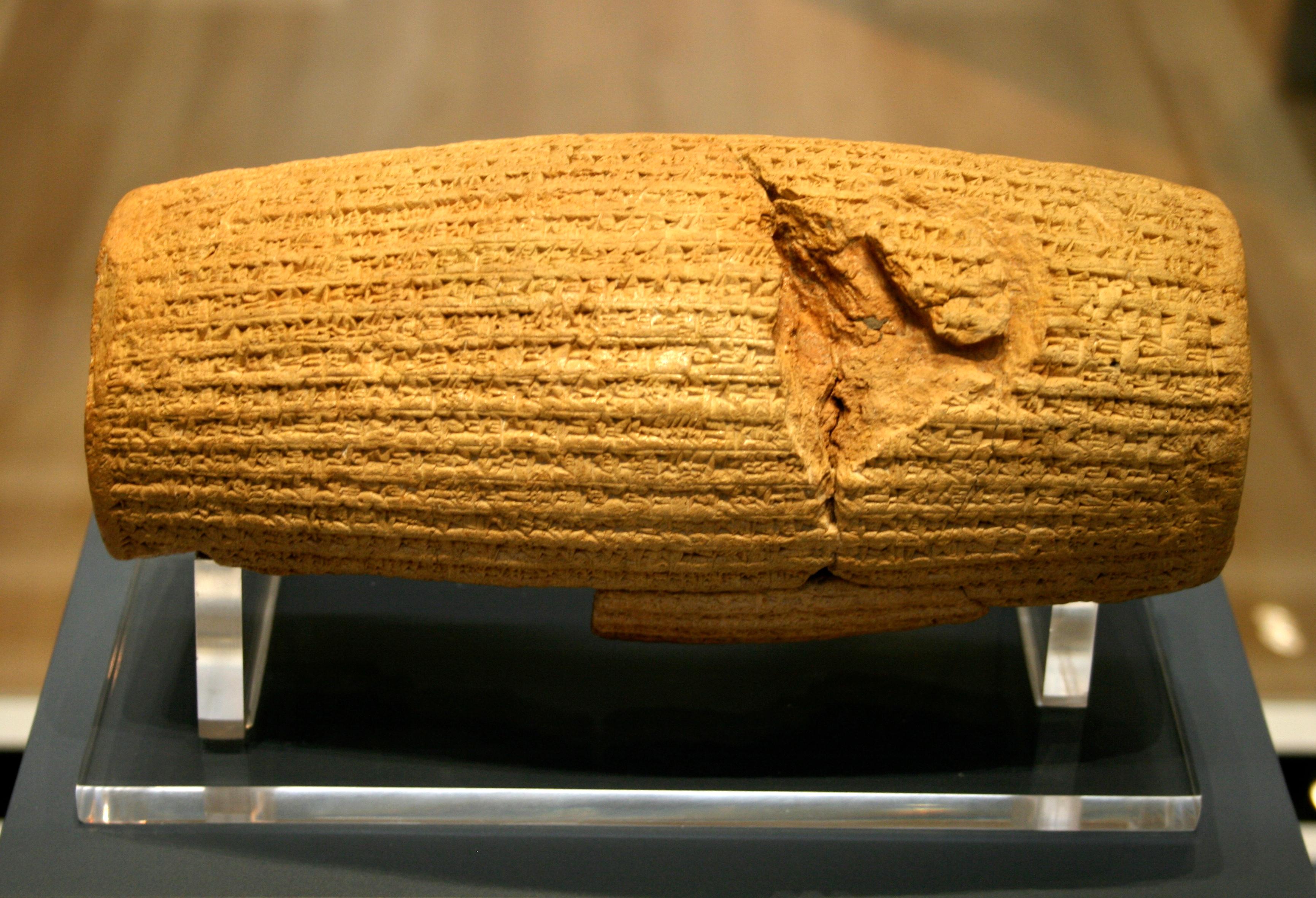
Photograph
Photograph by Mike Peel (www.mikepeel.net). Modifications by مانفی. Wikimedia Commons, CC BY-SA 4.0.
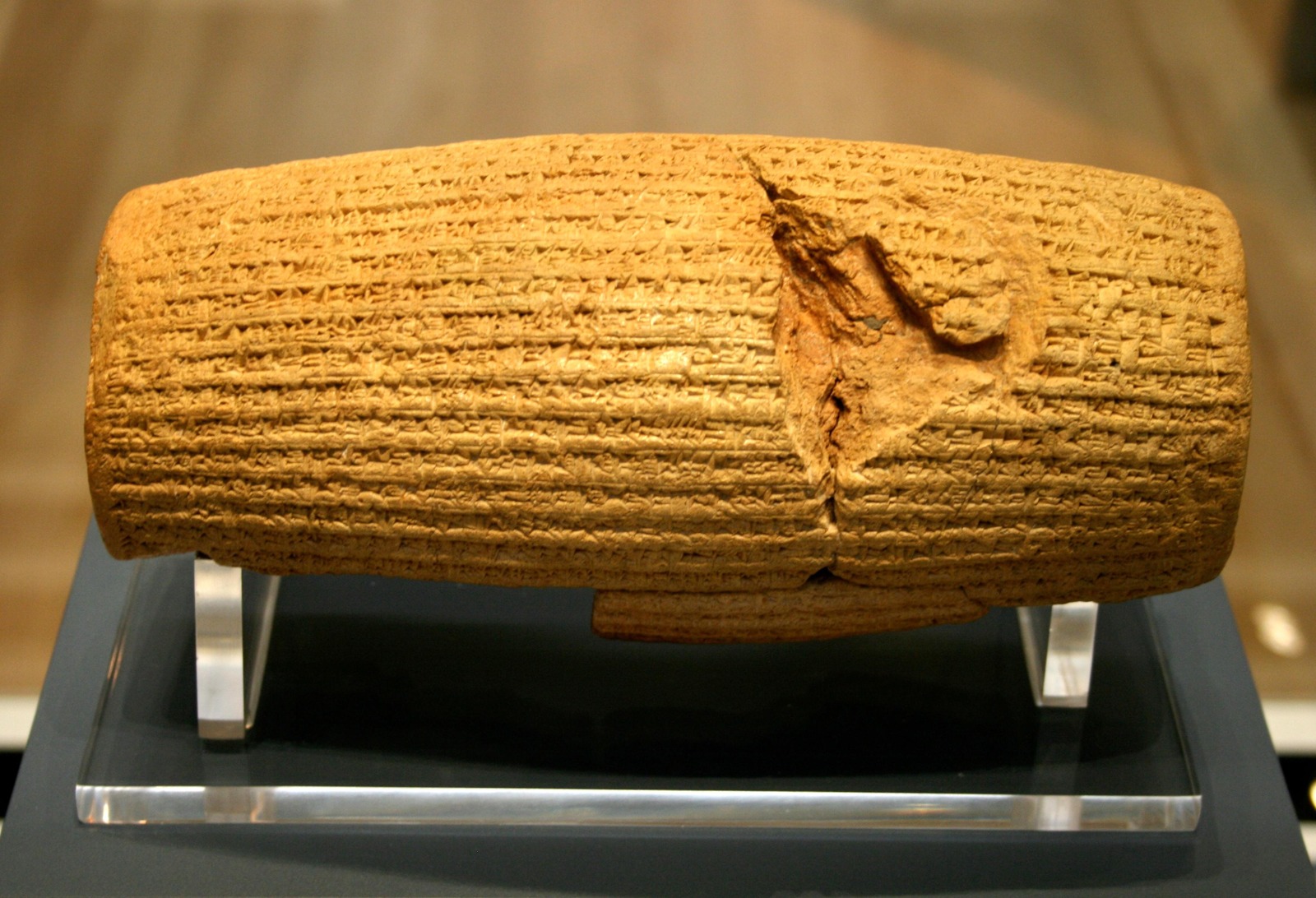
The Cyrus Cylinder, BM 90920, on display at the British Museum. Its cuneiform lines and damaged clay surface are visible
License · Image sourceObject details
- Title
- The Cyrus Cylinder: Royal Inscription and the Limits of Inference
- Timeline
- From 539 BCE to 538 BCE
- Region
- Babylon, Mesopotamia (modern Iraq)
- Rights
- CC BY-SA
Text
Introduction
This entry concerns the clay object itself, not a general biography of Cyrus IICyrus IIFounder of the Achaemenid Empire; conquered Babylon in 539 BCE and died in 530 BCE.Glossary · Click to read the explanation. What did a Babylonian writer, speaking for the conqueror of BabylonBabylonBabylon is an ancient city in central present-day Iraq, south of BaghdadGlossary · Click to read the explanation in 539 BCE, claim about the city, MardukMardukBabylon’s leading god, worshipped at Esagil and elevated in the Akkadian Enūma eliš. His symbols include a spade and mušḫuššu dragon. His earliest origins remain obscure; Nibiru is no evidence of a planetary homeland.Glossary · Click to read the explanation, returning gods and inhabitants? We distinguish surviving signs from restorations, royal claims from historical deductions, and the ancient inscription from its modern celebration as a declaration of rights.
The object, its numbers and discovery
The Cyrus Cylinder is a barrel-shaped baked-clay object inscribed in Babylonian AkkadianAkkadianAn ancient East Semitic language written in cuneiform from the third millennium BCE; its varieties include Babylonian and Assyrian, and it served in international diplomacy.Glossary · Click to read the explanation cuneiformCuneiformWriting with wedge-shaped signs, developed from Mesopotamian recording traditions and used for several languages from the third millennium BCE.Glossary · Click to read the explanation. Its principal museum identity is British Museum BM 90920; the acquisition reference is 1880,0617.1941. CDLI indexes it as BM090920, P386349. This is an incomplete material witness with fractures and lacunae. Its lines run around the curved surface: the missing signs cannot simply be read as if the clay were intact.[1][2]
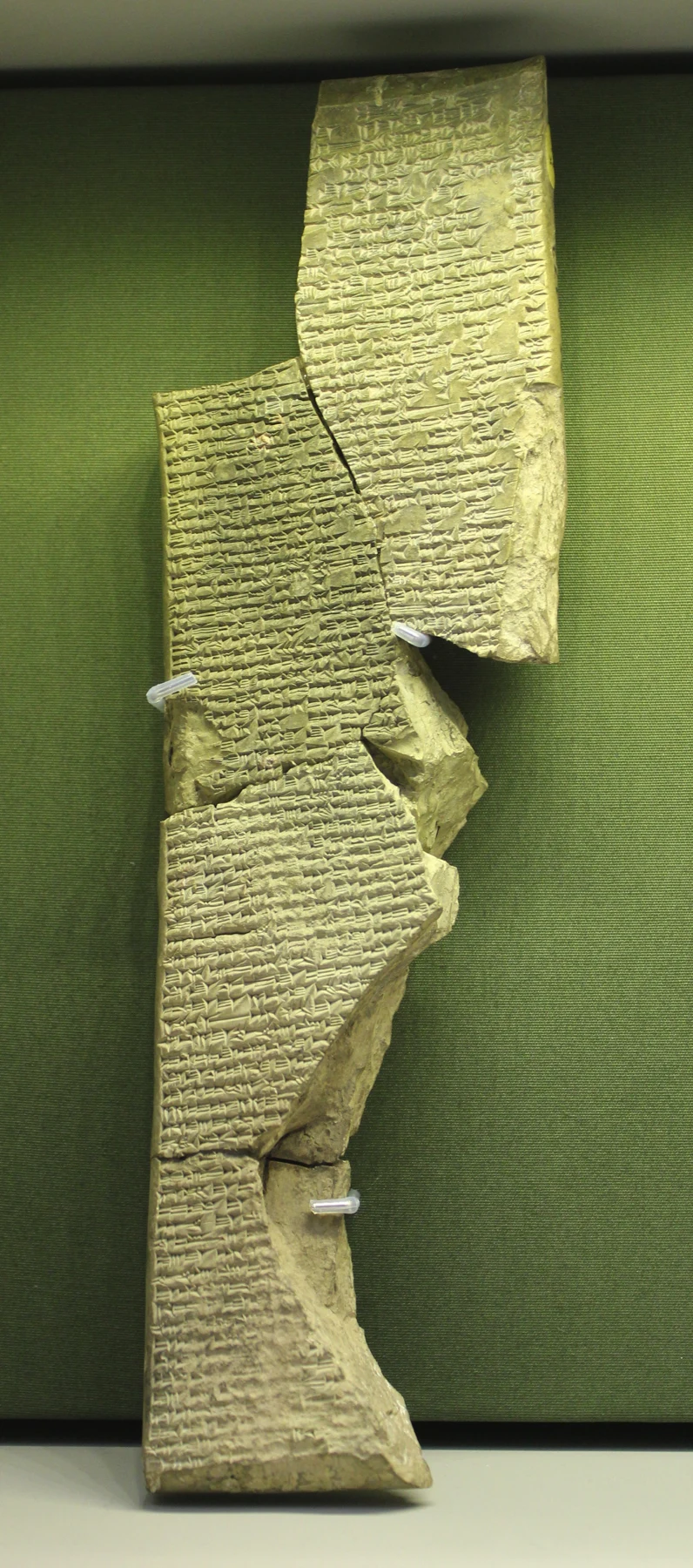
Hormuzd Rassam excavated it at Babylon in 1879, in the city's temple precinct, conventionally associated with EsagilaEsagil, Marduk’s templeEsagil, also written Esagila, is Marduk’s temple in ancient Babylon, in present-day Iraq, and a central sanctuary of the city’s god.Glossary · Click to read the explanation, the temple of Marduk. This archaeological context does not prove its exact original placement or audience. A separate fragment in the Yale Babylonian Collection, NBC 2504, was identified as belonging to the Cylinder's text in 1972 and increased the readable text. In 2010 two British Museum tablet fragments were identified as witnesses to another copy of portions of the same inscription; they were not new pieces physically joined to BM 90920.[2][3]
The inscription was composed after Cyrus's capture of Babylon in 539 BCE, commonly dated around 539–538 BCE, rather than on a securely known day. The narrated conquest, manufacture of the object, its excavation in 1879, and modern discoveries of parallel witnesses are different dates. Its genre is a Babylonian royal or foundation inscription, intended to legitimate the new regime, not an impartial report or a codified law.[1][3]
Text, damage and layers of interpretation
The surviving beginning denounces Nabonidus, Babylon's last independent king, for offending cultic order and burdening the population. The narrative portrays Marduk seeking and choosing a just ruler. Later, Cyrus speaks in the royal first person, gives his titles and ancestry, and recounts beneficial measures. The change of grammatical voice belongs to the inscription's literary construction; it is not an independently recorded popular testimony.[1][4]
Five layers must be kept separate: legible Akkadian signs; scholarly restorations at breaks; decisions made by modern translators; what the ruler's text asserts; and conclusions a historian may defend through comparison. Square brackets in editions may indicate reconstructed rather than preserved writing. This discussion reads published transcriptions and translations; it does not claim a new direct collation of Akkadian signs.[1][4]
Cyrus, Marduk and the peaceful-entry claim
Marduk, Babylon's chief civic god, is said to select Cyrus, take his hand symbolically and lead him into the city. The account presents the entry as peaceful, the inhabitants as pleased, and Cyrus as relieving burdens and restoring temples. Such claims make political sense: they make the conquest acceptable within Babylonian norms while contrasting the new king's divine favour with Nabonidus's supposed failures. The Nabonidus Chronicle supplies partial independent context, including fighting at Opis before Babylon's fall. Thus the Cylinder's language about an unopposed entry into Babylon should not be expanded into a claim that the entire 539 BCE campaign involved no fighting.[1][5]
The inscription uses local Babylonian theology and established royal idiom. Marduk's centrality does not show that Cyrus personally converted to Babylonian religion, nor that all subjects experienced his policy alike. Cyrus asks Marduk for favourable intercession on behalf of himself and Cambyses; piety and restoration supply the inscription's vocabulary of legitimacy.[1][4]
Returned gods, cities and inhabitants
Later lines claim that Cyrus restored statues of gods to their sanctuaries after they had been assembled in Babylon, and resettled or returned inhabitants in connection with these homes and shrines. The geographical sequence names places such as Ashur, Susa, Akkad, Eshnunna, Zamban, Me-Turnu and Der, with settlements beyond the Tigris. Some details depend on fragmentary writing and editorial decisions. Restoring divine images is not, by itself, a universal guarantee of freedom of belief.[1][4][6]
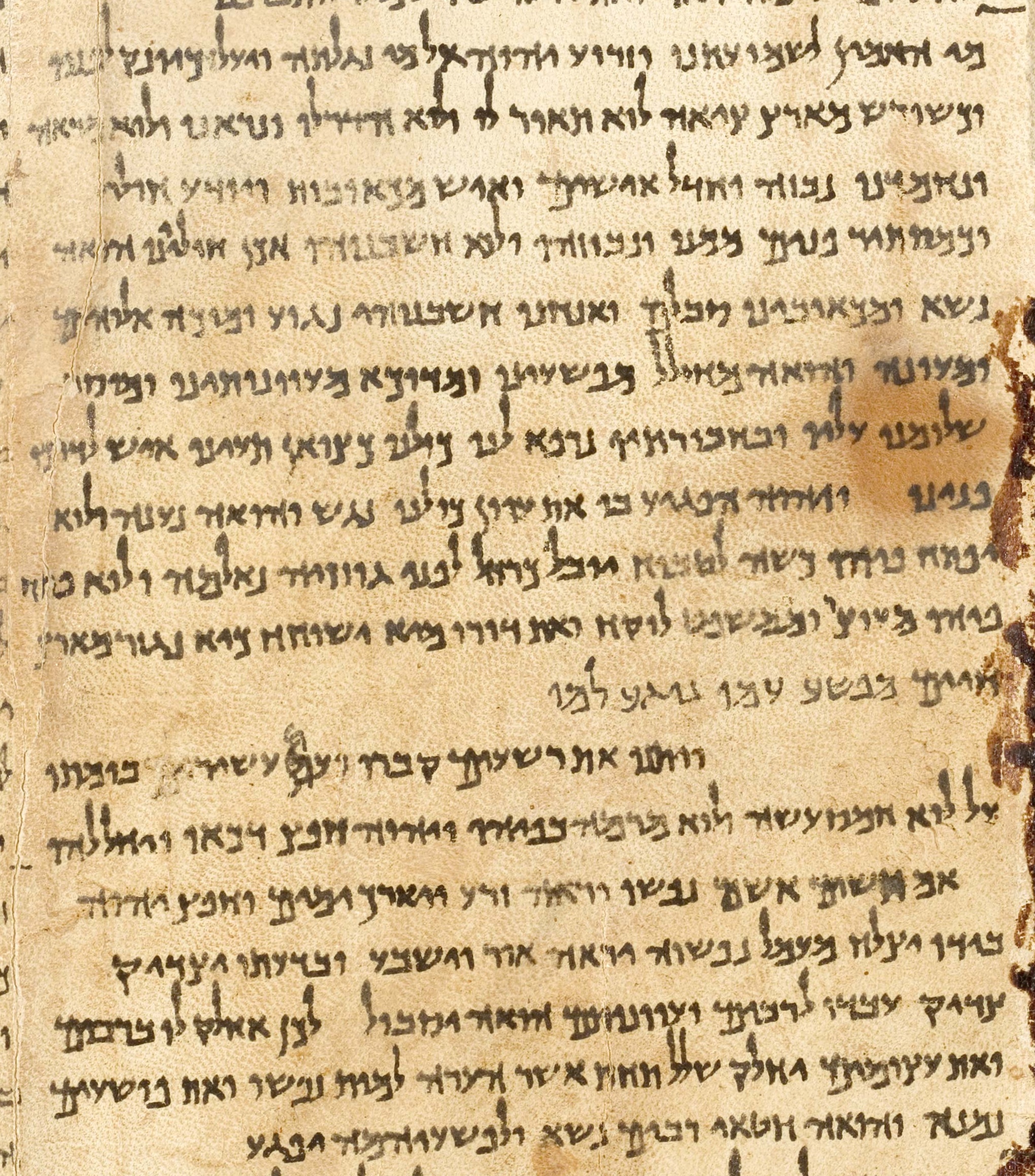
The population passage is embedded in a description of divine and cultic restoration. Van der Spek investigates its relevance to deportees and foreign cults, while cautioning against assuming one empire-wide release of every displaced people. Neither Jews nor JerusalemJerusalemJerusalem is a city of religious importance in Judaism, Christianity and IslamGlossary · Click to read the explanation is explicitly named in the preserved Cylinder. The Babylonian exileBabylonian exileJudean deportations to Babylonia and the kingdom’s collapse in the early sixth century BCE; several phases, not everyone removed or returned at once.Glossary · Click to read the explanation and Second IsaiahSecond IsaiahScholarly label for Isaiah 40–55, associated substantially with exile and Cyrus; neither an identified biography nor proof of a single author or date.Glossary · Click to read the explanation are relevant external comparisons, not permission to insert absent biblical names into the Akkadian inscription.[4][6]
What historians may infer
The strongest direct evidence here is what the new regime wanted to say in Babylon: Marduk favoured Cyrus, Nabonidus had failed, and the conqueror repaired civic and cultic order. Historians can examine whether particular restorations and returns took place, but the text by itself does not measure their complete extent or confirm the feelings of all residents. The Nabonidus Chronicle is also incomplete; its different emphases are useful precisely because it is not the same royal speech.[4][5]
The modern “first charter of human rights”
In the twentieth century, particularly through imperial Iranian state commemoration under Mohammad Reza Pahlavi and subsequent international presentations of replicas, the Cylinder became celebrated as a “first charter of human rights.” That phrase describes a modern reception and political use, not the inscription's sixth-century-BCE literary genre. No surviving passage establishes equal individual rights in a universal legal framework or promulgates modern freedoms of expression and equality.[3][6][7]
This distinction does not deny that concrete restoration policies could benefit specific shrines and communities. It allows the historical inscription and its later symbolic influence to be studied without mistaking one for the other. For broader context on the Babylonian deity, see Marduk's Rise, a modern study link rather than a term-definition link.
An evidence-based conclusion
BM 90920 is a real, damaged Babylonian royal inscription from the aftermath of the conquest. It says that Marduk chose Cyrus and that divine images and populations were restored to their places. It does not explicitly name Jerusalem or Jews. The implementation and extent of the measures, as well as the later vocabulary of human rights, require evidence beyond the Cylinder itself.[1][4][6]
References and notes
- CDLI, Cyrus Cylinder, P386349 / BM090920, catalogue and published text. CDLI P386349/BM090920 object metadata and published line sequence, lines 1–45 where extant; not an independent Akkadian collation Return to the text ↑
- R. J. van der Spek, “Cyrus the Great, Exiles, and Foreign Gods” (2014), appendix: BM accession, Yale fragment and 2010 duplicate tablet witnesses; the British Museum catalogue itself was not read. printed p. 261, appendix A1/A2 and B1/B2, inspected in the institutional PDF Return to the text ↑
- M. A. Dandamayev, “CYRUS iv. The Cyrus cylinder,” Encyclopaedia Iranica VI/5 (1993), 521–522, updated online in 2013; artifact and provenance, Yale fragment, inscription genre. read online object/history/genre paragraphs; Berger’s original 1975 study not read Return to the text ↑
- R. J. van der Spek, “Cyrus the Great, Exiles, and Foreign Gods: A Comparison of Assyrian and Persian Policies on Subject Nations,” SAOC 68 (2014), 233–264. selected text at printed pp. 233, 253–254, 256–258, 260–261 and appendix 261–263; not a complete chapter reading Return to the text ↑
- Nabonidus Chronicle (ABC 7), English translation after A. K. Grayson with revisions, Livius. column iii, lines 12–18, Opis and Babylon sequence; not independent tablet collation Return to the text ↑
- Van der Spek, “Cyrus the Great, Exiles, and Foreign Gods,” 2014, discussion of divine images, settlement returns and their limitations. printed pp. 254, 257–258, 260–261 and appendix 262–263 (especially lines 17–34); partial reading Return to the text ↑
- UN Dag Hammarskjöld Library, FAQ on the Cyrus Cylinder/Edict of Cyrus (updated 21 October 2024); modern reception and presentation of a replica in 1971, not a critical edition of the inscription. FAQ answer, replica and “human rights” language; scanned archival press files not read Return to the text ↑
Archive records may be reviewed and refined as better evidence or sources become available. Suggest a correction
Suggest a correction · Suggest a source for this record
Cite this record
IL Archive, «The Cyrus Cylinder: Royal Inscription and the Limits of Inference», https://ilarchive.com/en/artifacts/cyrus-cylinder-bm90920
Continue reading