Artifact
The Venus Tablet of Ammisaduqa (British Museum K.160): Watching a Planet for Omens
An object record bringing together its image, metadata, rights, and context.
- Timeline
- From 700 BCE to 600 BCE
- Region
- Mesopotamia
A clay tablet from Nineveh lists when Venus vanished and reappeared over 21 years, with an omen for each event. Its dates once seemed to fix Babylonian chronology, but the text is damaged and scholars still disagree.
Estimated reading time: 7 min Published Last reviewed:
Share article
Photograph
Photo: Fæ, CC BY-SA 3.0, via Wikimedia Commons; object: British Museum
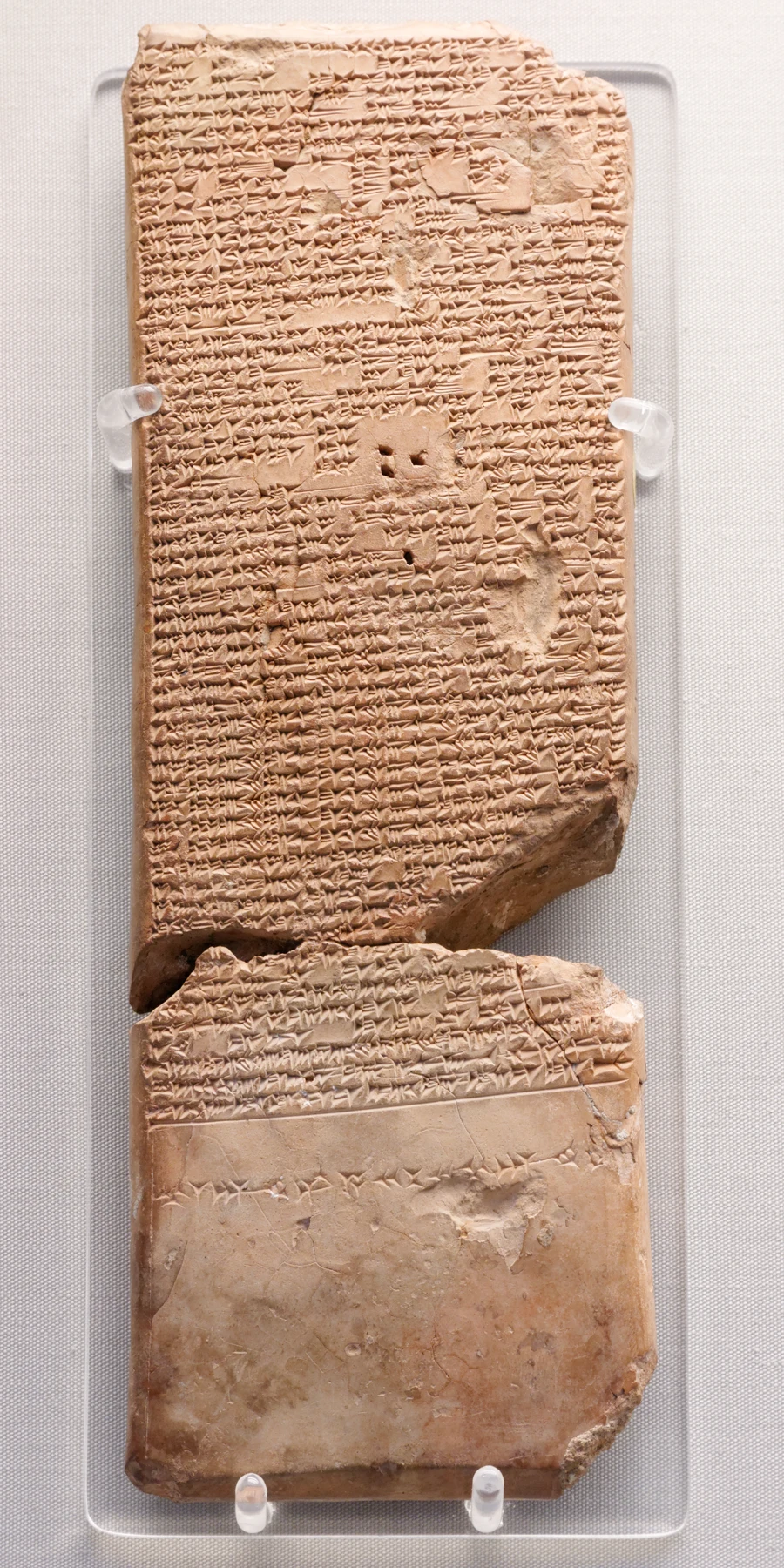
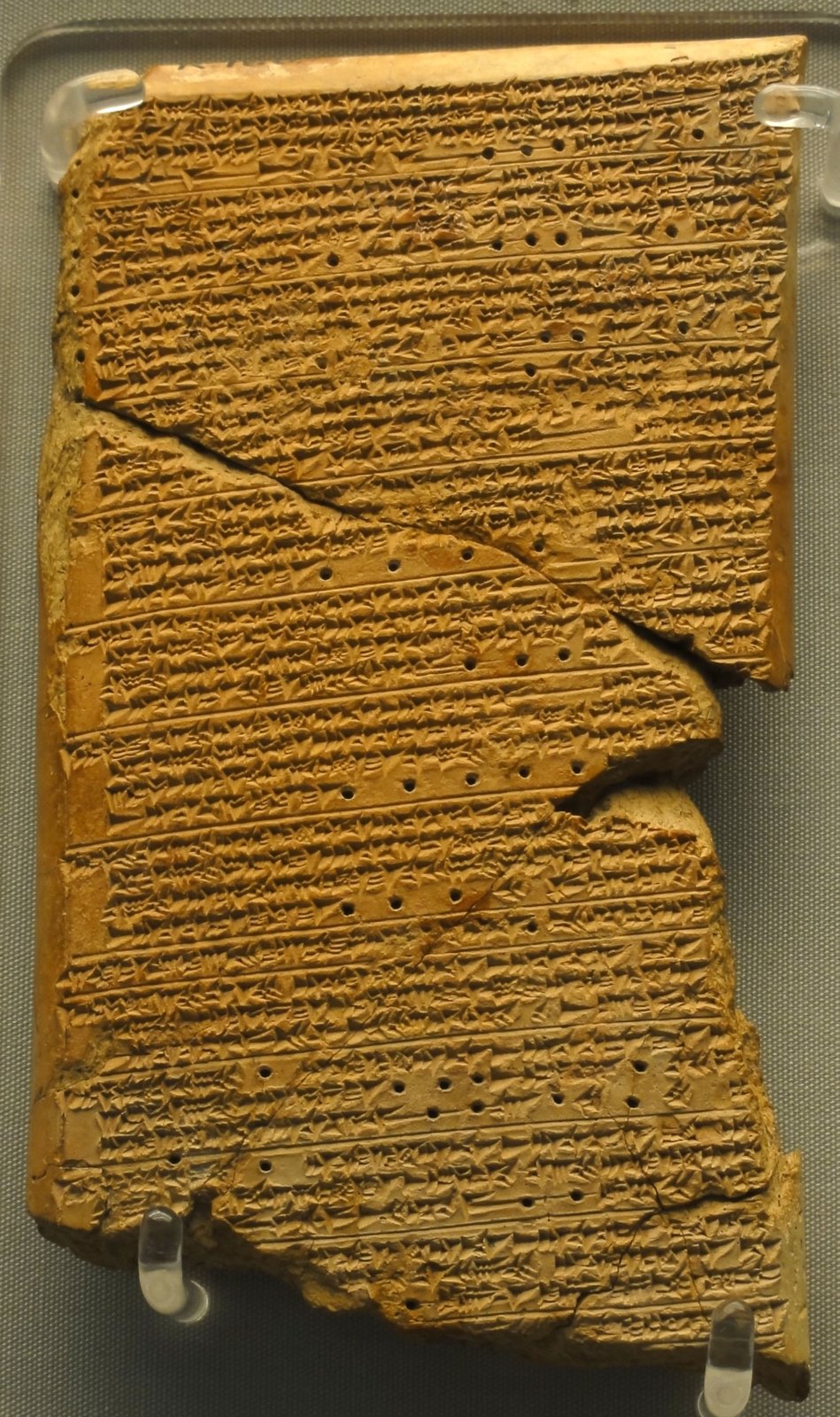
The Venus Tablet of Ammisaduqa (Enuma Anu Enlil, Tablet 63; British Museum K.160): a broken clay tablet from Nineveh, a seventh-century BCE copy, covered with lines of cuneiform that record dated risings and settings of Venus and an omen for each
License · Image sourceObject details
- Title
- The Venus Tablet of Ammisaduqa (British Museum K.160): Watching a Planet for Omens
- Timeline
- From 700 BCE to 600 BCE
- Region
- Mesopotamia
- Rights
- CC BY-SA
Text
Introduction
Venus is the brightest "star" in the sky, and from time to time it disappears completely for days or weeks. The Babylonians noted when this happened and what they thought it foretold. One clay tablet in the British Museum, catalogued as K.160, preserves a long list of such notes, and tradition ties it to the reign of King AmmisaduqaAmmisaduqaBabylonian king of the seventeenth century BCE in the Middle Chronology, whose edict provides selective debt and dependency relief.Glossary · Click to read the explanation of BabylonBabylonBabylon is an ancient city in central present-day Iraq, south of BaghdadGlossary · Click to read the explanation. Because it seemed to hold real observation dates, historians hoped it would fix the dates of the whole Old Babylonian age. That hope has been only partly met, and the reason is instructive. [1][2]
The object
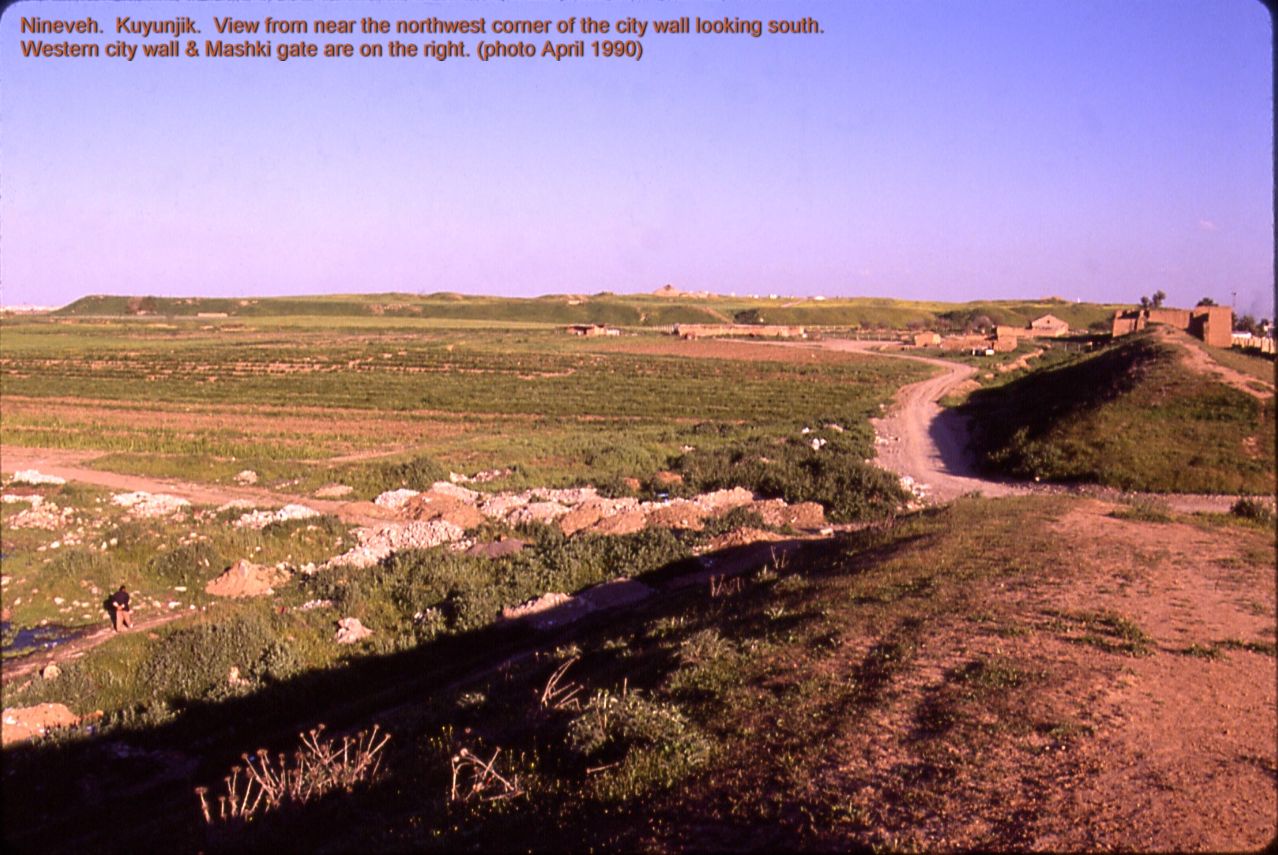
K.160 is a fragmentary clay tablet written in cuneiformCuneiformWriting with wedge-shaped signs, developed from Mesopotamian recording traditions and used for several languages from the third millennium BCE.Glossary · Click to read the explanation, a copy made in the first millennium BCE. Its "K" number means it belongs to the KuyunjikNineveh and KuyunjikNineveh is an ancient Assyrian city near Mosul in northern Iraq; Kuyunjik is one of its archaeological moundsGlossary · Click to read the explanation collection, the tablets dug up at NinevehNineveh and KuyunjikNineveh is an ancient Assyrian city near Mosul in northern Iraq; Kuyunjik is one of its archaeological moundsGlossary · Click to read the explanation that came from the library of the Assyrian king AshurbanipalAshurbanipalAshurbanipal was an Assyrian king of the seventh century BCE, reigning about 668–631 BCEGlossary · Click to read the explanation in the seventh century BCE. It is about 17 cm high. [1][2] It was published in hand copy by Henry Rawlinson and George Smith in 1870, and it remains the best-known of the surviving copies. [2]
It is not a unique document. In 1975 Erica Reiner, with David Pingree, edited twenty fragments of the text, nearly all from British Museum collections and one from Berlin. They reckoned that these come from about fifteen original tablets. One of them was found at Kish in 1924, and its closing note says that it was copied from a text at Babylon in the reign of the Assyrian king Sargon IISargon IISargon II was an Assyrian king of the late eighth century BCE; ORACC dates his reign about 721–705 BCEGlossary · Click to read the explanation (720–704 BCE). [1][2] So the text we read is a late copy of a much older record, handed down by scribes for something like a thousand years.
Part of a series of omens
The text is Tablet 63 of Enūma Anu EnlilEnlilEnlil/Ellil: a major Mesopotamian god associated with destinies, kingship, and Ekur at Nippur, already prominent in third-millennium god lists. His name’s origin and cult beginnings remain debated.Glossary · Click to read the explanation, "When Anu and Enlil", the great Babylonian collection of omens drawn from the sky. The series ran to about 70 tablets and held several thousand omens: the first tablets deal with the Moon, then come the Sun and the weather, and the last twenty or so deal with stars and planets. Scholars sent the Assyrian kings reports based on these omens. [1][3] The idea behind them is simple. The gods were thought to write messages in the heavens, and an unusual sign could be read as a warning or a promise about the land. This was divination, not astronomy as we use the word. But it needed careful watching and record-keeping, and that is why the tablet matters to historians of science.
What the tablet says
The tablet holds 59 numbered omens in four sections. [1] Most follow one fixed pattern. Reiner and Pingree's translation of the first reads roughly:
The source is Reiner and Pingree 1975, Tablet 63, omen 1. [1] The first part is a dated observation: the day Venus was last seen, the number of days it was invisible, and the day it came back. The second part, after the colon, is the prediction. It is not a law of nature derived from the observation. It is what the scribes' collection said about such an event, and some omens give results that seem to clash.
Venus is called by a divine name, Ninsianna, written with the sign for a god, so the planet is treated as a divine being. Scholars connect it with Inanna / IshtarInanna / IshtarA prominent Mesopotamian goddess whose Sumerian name Inanna became associated with Akkadian Ishtar across diverse traditions. She was associated with desire, war, royal authority and Venus, while local forms and genealogies varied among texts.Glossary · Click to read the explanation, the goddess who stood behind the planet in Mesopotamian tradition. One manuscript, perhaps from Assur, uses a different name for the planet. [1]
The four sections are arranged like this. [1]
- Omens 1–21 (section I) record pairs of events: when Venus was last seen and when it was first seen again, in the east or in the west.
- Omens 22–33 (section II) are different. They begin with a first appearance and give two predictions each. This section also turns up in another omen series, Iqqur īpuš, a month-by-month guide to the year.
- Omens 34–37 (section III) add four more pairs of events.
- Omens 38–59 (section IV) repeat most of the earlier events, rearranged in the order of the months, so that a reader can look up the month.
Why Venus disappears
A modern comparison helps. Venus travels inside the Earth's orbit, so it always stays near the Sun in our sky. It appears low after sunset as an "evening star", then moves toward the Sun and vanishes in its glare, and later returns before sunrise as a "morning star". Each full round takes about 584 days. The invisible period is very short, as little as a few days, when Venus passes between us and the Sun, and much longer, about two months, when it passes behind the Sun. Five such rounds fit almost exactly into eight years. [1] That "eight-year cycle" is the pattern that the tablet's first ten omens seem to follow, and the later omens appear to give a second cycle of the same kind, perhaps followed by the start of a third. [1]
The Year of the Golden Throne
The link to Ammisaduqa rests on a single detail. After the first ten omens, the tablet gives a year name, "the year of the Golden Throne", which the year-name lists place as the eighth year of King Ammisaduqa. The tenth omen is odd: it says only that Venus disappeared in the east on the 25th of month XII, with no invisibility period and no prediction. Reiner and Pingree thought it was not a shortened omen but a dated report of an observation, like the dated reports that priests wrote for this king. [1] In 1912 Franz Xaver Kugler tied the Venus cycles to Ammisaduqa's reign, and from then on the tablet was used to date the end of the First Dynasty of Babylon. [2][4]
Why it did not settle the dates
If the observations are real and reliable, the position of Venus on certain days should say which years they belong to. Scholars have used this to propose four different starting years for Ammisaduqa's reign, usually called the "high" chronology (about 1702 BCE), the "middle" (1646), the "low" (1638) and the "ultra-low" (1582). [2] Two things make the tablet less decisive than it looks.
- The text was damaged in copying. Pingree pointed out that many entries in the later part, omens 11–21, are astronomically impossible, and that different manuscripts give different day numbers for the same event. B. L. van der Waerden rejected or altered more than half of the entries in that part to make them fit an eight-year pattern. Some of the faults were already present in the source that all the copies come from. [1][2]
- It is unclear how much is pure observation. Some scholars have questioned whether the record can be trusted to date a reign, since its figures do not fully match the real orbit of Venus. [5] The first ten omens, the part Pingree thought the most coherent, can rule out many candidate years but cannot pick the right one. [1]
Today the tablet is usually described as an important and carefully studied source whose use for absolute dating is disputed. Many historians use the "middle" chronology as a convention, without claiming that this tablet proves it. [2][4][5]
Why it matters
The tablet shows that Babylonian scribes tracked the sky with great regularity and treated the heavens as a text to be read. It also shows how a precious source can be worn down by centuries of copying. It lets us follow two histories at once: how people looked at Venus, and how modern scholars try to give dates to the past.
Photograph
The photograph shows the tablet in a display case in the British Museum. It was taken by the Wikimedia user Fæ and shared under the Creative Commons CC BY-SA 3.0 licence. [6]
References and notes
- Erica Reiner (with David Pingree), Babylonian Planetary Omens, Part One: Enuma Anu Enlil, Tablet 63: The Venus Tablet of Ammisaduqa (Bibliotheca Mesopotamica 2/1), Undena Publications, Malibu 1975 Foreword, Philological Introduction (sources, sections, subscripts, omen 10), Pingree's chapter on the astronomical and textual problems, Introductory Note and first two omens of the text, colophons; text layer of the publisher's PDF Return to the text ↑
- Wikipedia, 'Venus tablet of Ammisaduqa' (secondary summary of Kugler 1912, Reiner and Pingree 1975, Weir, Walker, Gurzadyan, Hobson) Whole article: object data, copies, Kugler's link, chronology options, known problems Return to the text ↑
- Wikipedia, 'Enuma Anu Enlil' (secondary summary citing Reiner, Hunger, Parpola) Whole article: size of the series, subject groups, use in reports to Assyrian kings Return to the text ↑
- Wikipedia, 'Ammisaduqa' (secondary summary of Old Babylonian sources) Whole article: reign length, dynasty, year names Return to the text ↑
- Chronology of the Ancient Near East (CAENO), 'Astronomy shards', section on the Ammizaduga Venus observations Short page: reliability of the observations and the history of the debate Return to the text ↑
- Wikimedia Commons, file 'Venus Tablet of Ammisaduqa.jpg' (Fae, CC BY-SA 3.0) File metadata via the Commons API: author, licence, description, 1627 x 2743 px Return to the text ↑
Archive records may be reviewed and refined as better evidence or sources become available. Suggest a correction
Suggest a correction · Suggest a source for this record
Cite this record
IL Archive, «The Venus Tablet of Ammisaduqa (British Museum K.160): Watching a Planet for Omens», https://ilarchive.com/en/artifacts/venus-tablet-of-ammisaduqa
Continue reading