Site · City
Nerik, the Hittite city of the Storm God
- Names
- Nerik · Oymaağaç Höyük
- Timeline
- From 1700 BCE to 1180 BCE
- Region
- Hittite Anatolia (present-day Türkiye)
Cuneiform tablets and a monumental temple support the identification of Nerik with Oymaağaç Höyük in northern Türkiye. The cult city appears in Hittite festival texts, including the opening of the Illuyanka story.
Estimated reading time: 4 min Published Last reviewed:
Share article
Text
Introduction
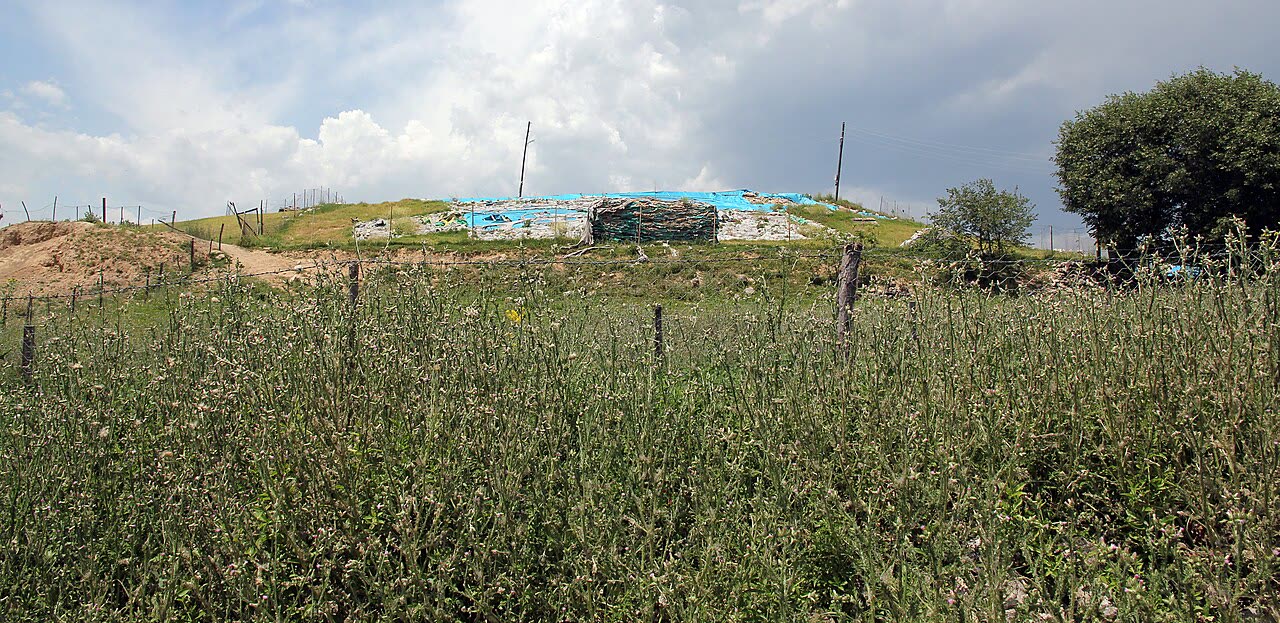
Nerik was a Hittite cult city associated with a local Storm God. Excavations at Oymaağaç Höyük near Vezirköprü in northern TürkiyeTurkeyTurkey is a modern country including Anatolia and territory in southeastern EuropeGlossary · Click to read the explanation have yielded cuneiformCuneiformWriting with wedge-shaped signs, developed from Mesopotamian recording traditions and used for several languages from the third millennium BCE.Glossary · Click to read the explanation fragments, a monumental temple complex and an underground spring chamber. Together with descriptions of Nerik in Hittite texts, those finds anchor the city's location and help explain its place in the state cult. One literary witness introduces the serpent combat of IlluyankaIlluyankaIlluyanka, Hittite for “serpent,” opposes the Storm-god in two CTH 321 accounts. In one, Inara and Hupasiya help trap it; in the other, the god’s son retrieves his stolen heart and eyes.Glossary · Click to read the explanation through the words of a priest of the Storm God of Nerik. [1] [2] [3]
Finding the city
Nerik was known from Hittite records before the excavation project began at Oymaağaç. The Freie Universität Berlin team explains that older sources locate it near the Kızılırmak and associate it with the mountains of Haharwa. The mound near Vezirköprü offered several converging lines of evidence. Early survey finds included Hittite cuneiform fragments and clay sealings with hieroglyphic Luwian inscriptions. One text refers to an offering to the Storm God of Nerik and another refers to the Haharwa region. The finds came from the surroundings of a substantial building detected in a geomagnetic survey. [1]
Excavation confirmed the plan of that building on the summit. Pavol Hnila used its architectural parallels with Hittite temples, the religious content of some fragments and pieces of clay bull figures to support identification as a temple. The report distinguishes successive phases of construction and damage. It also notes that an earlier structure shared much the same orientation with the later temple and yielded fragments of terracotta bulls. The pattern of rebuilding is consistent with the history of destruction and restoration that the excavators derive from the written sources, though the traces of fire alone do not assign a cause for each episode. [2]
Jörg Klinger discusses a fragment from the site that names both Nerik's Storm God and Zaḫpuna, who are also paired in a regulation for their monthly festival attributed to Tudḫaliya IV. Another excavated fragment uses the term dahanga, known from texts concerning worship at Nerik. Scholars differ on whether the term refers to an inner sanctuaryHoly of HoliesMost sacred inner zone of the biblical sanctuary. Kings places the Ark beneath its cherubim; Leviticus regulates approach behind the curtain. Wilderness and Jerusalem temple traditions describe distinct settings.Glossary · Click to read the explanation or a separate cult building. Its local presence links the finds to written descriptions of the cult, even where the names and functions of individual rooms are still debated. [2]
A priest introduces the serpent story
The opening of the Illuyanka composition, catalogued as CTH 321, attributes the text of a purulli festival to Killa, a priest of the Storm God of Nerik. A formula wishes for the land to thrive and remain protected. The story then places an encounter between the Storm God and a serpent at Kiškilušša. The serpent wins the first encounter. The goddess InaraInaraGoddess in Hittite traditions who plans the feast enabling the serpent’s defeat in the first Illuyanka account.Glossary · Click to read the explanation stages a feast, and a mortal named Ḫupašiya helps her by binding the serpent after it and its offspring have drunk. The Storm God then kills it. The priest belongs to Nerik, while the narrative itself gives the combat another place. [3]
The tablet tradition also preserves a second account of the defeat. The serpent takes the god's heart and eyes. The god's son marries a daughter of the serpent and retrieves them from her family. Restored, the Storm God returns to fight. His son is with the serpent and asks to share its fate, and the god kills them both. Elsewhere in the text, rain at Nerik and offerings connected with Mount Zaliyanu appear in fragmentary passages. Such details bring different places and kinds of ritualRitualAn organised or distinguished practice meaningful to a community; it may leave traces, but its form alone does not reveal an associated doctrine.Glossary · Click to read the explanation speech into the same textual tradition. [3]
The spring under the mound
An underground staircase, approximately 29 metres long, led from the hilltop through a natural cavity to a stone basin around nine metres below today's ground level. The excavators describe corbelled vaulting above both the descent and the basin. Michael Robert Breuer and his co-authors explain that the exposed remains were once suspected to be a passage through the site's defences. Excavation showed that the descent ended at a spring chamber. The team documented successive stages with photographs combined into measured three-dimensional models, including the waterlogged timber found inside the chamber. [4] [5]
Yasemin Özarslan and her colleagues examined a structure of massive wooden blocks built around a perforated trunk. They interpret it as a means of controlling the outlet from the basin. The wood was identified as Turkish pine, and radiocarbon measurements matched against the sequence of tree rings placed construction of the installation between 1525 and 1426 BCE. That date concerns the wooden fitting. The researchers assign a longer history to the spring chamber itself, including use after the collapse of the Hittite state. [5]
A settlement with a cult centre
Plant remains give an account of what people at the mound grew and used. Corinna Rössner and her colleagues identify barley, free-threshing wheat and emmer among the main annual crops, alongside pulses and a range of nuts and fruits. They compare the results with other Bronze Age settlements and find a pattern close to that at other Hittite sites despite differences in local rainfall and vegetation. The remains belong to occupation at the mound, on which the monumental temple and unusual spring installation stood. Nerik can be studied through those parts of the settlement as well as through the festival text introduced by its priest. [2] [3] [4] [6]
References and notes (6)
- Freie Universität Berlin, Excavations at Oymaagac-Nerik Project summary of textual geography, early survey finds, geomagnetic work and the first excavations. Return to the text ↑
- Rainer Maria Czichon and colleagues, Archäologische Forschungen am Oymaağaç Höyük/Nerik 2011–2015 MDOG 148 (2016), Hnila's sections on succession and the monumental temple and Klinger's report on cuneiform Textfunde, pp. 53–59. Return to the text ↑
- Anna Bauer and colleagues, CTH 321, Corpus of Hittite Mythological Texts TITUS edition, German translation of the festival opening, both Illuyanka episodes and the rain and offering passages. Return to the text ↑
- Michael Robert Breuer and colleagues, Photogrammetric Documentation of the Hittite Spring of Nerik Heritage 8 (2025), introduction and sections 2.1 and 3.1 on the spring staircase, wood and survey methods. Return to the text ↑
- Yasemin Özarslan and colleagues, Tree-ring analysis and absolute dating of a wooden water-drain installation Journal of Archaeological Science: Reports 62 (2025). Read the abstract and archaeological setting for the spring and dating of the pine installation. Return to the text ↑
- Corinna Rössner and colleagues, Plant subsistence and environment in the Late Bronze Age of the Central Black Sea Region Archaeological and Anthropological Sciences 17 (2025), settlement discussion, analyses of crops and comparison with other Late Bronze Age sites. Return to the text ↑
Suggest a correction · Suggest a source for this record
Cite this record
IL Archive, «Nerik, the Hittite city of the Storm God», https://ilarchive.com/en/sites/nerik