Entity · Figure
Illuyanka
A reference page linking a name, group, or concept to the materials that discuss it.
- Region
- Hittite Anatolia (present-day Türkiye)
Illuyanka is the serpent opposed to the Storm-god in two Hittite accounts grouped as CTH 321: Inara and Hupasiya’s feast in one, the recovery of the god’s heart and eyes through his son in the other.
Estimated reading time: 5 min Published Last reviewed:
Share article
Text
Introduction
How could a serpent defeat the Storm-god, and why did the god need human assistance to prevail? This entry introduces Illuyanka through two Hittite accounts grouped under the textual catalogue number CTH 321. It follows InaraInaraGoddess in Hittite traditions who plans the feast enabling the serpent’s defeat in the first Illuyanka account.Glossary · Click to read the explanation and HupasiyaHupasiyaInara’s human helper in the first Hittite Illuyanka account, who binds the serpent after the feast.Glossary · Click to read the explanation in the first account, the recovery of the heart and eyes in the second, and the tales’ relation to the purulli festival and to wider comparisons.
The serpent’s name and its textual witnesses
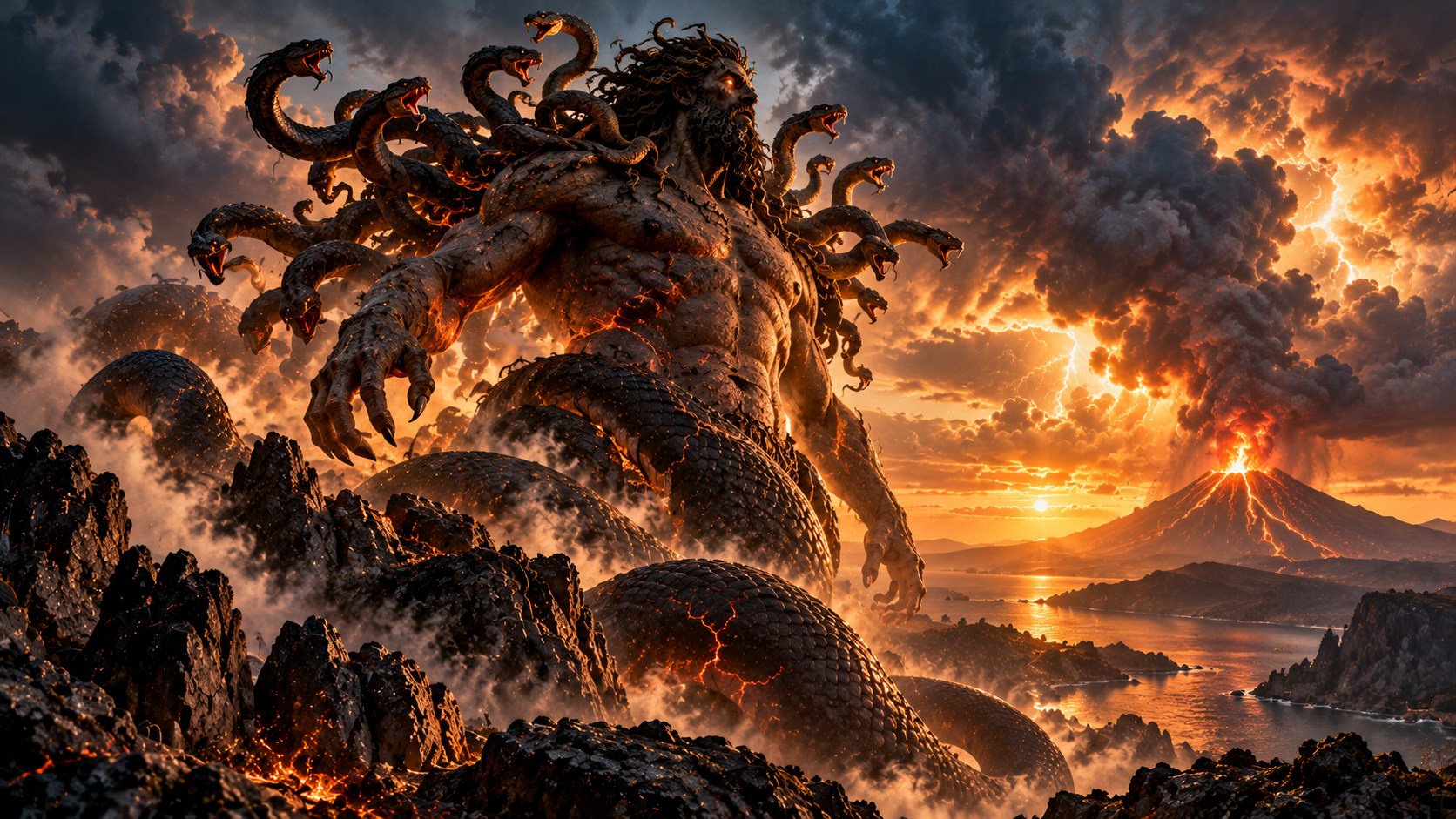
Illuyanka is a Hittite word meaning “snake” or “serpent”. It serves as the designation of the Storm-god’s adversary in stories preserved among the HittitesHittitesAncient people and kingdom of Anatolia, dominating much of Anatolia and northern Syria around 1650–1200 BCE.Glossary · Click to read the explanation, whose kingdom flourished in AnatoliaAnatoliaAnatolia is the region occupying the Asian part of present-day TurkeyGlossary · Click to read the explanation during the second millennium BCE. Modern accounts sometimes say “dragon”, but the surviving narrative does not supply a precise anatomical description. [8]
The two stories are known from cuneiformCuneiformWriting with wedge-shaped signs, developed from Mesopotamian recording traditions and used for several languages from the third millennium BCE.Glossary · Click to read the explanation texts collected by modern scholarship as CTH 321. This is a catalogue number, not the inventory number of one complete tablet. Editors compare several witnesses and fragments, including KBo 3.7, KUB 17.5, and KUB 17.6. Gary BeckmanGary BeckmanScholar of the Hittite language, Hittite religion and ancient Near Eastern history, associated with the University of Michigan.Glossary · Click to read the explanation argues that the composition’s linguistic features point to an Old Hittite stage, whereas most sufficiently preserved tablet copies can be dated to the Hittite Empire period. Neither the composition’s date nor the copies’ dates establish when the narrated events “happened”. [1][8]
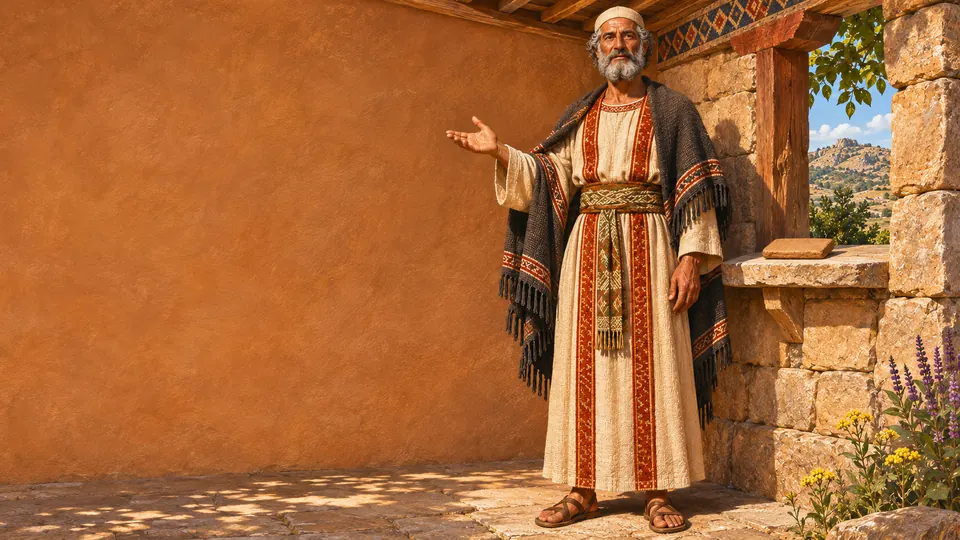
The text opens in the voice of Kella, a priest of the Storm-god at Nerik, a sacred city in northern Anatolia. It places the stories in the setting of the purulli festival, concerned with the land’s growth and protection. The tales thus belong to a religious and ritualRitualAn organised or distinguished practice meaningful to a community; it may leave traces, but its form alone does not reveal an associated doctrine.Glossary · Click to read the explanation setting, not to a historical report of a verifiable battle. [1][8]
First account: Inara’s feast and Hupasiya’s rope
The first confrontation takes place near a locality called Kiškilušša. The serpent defeats the Storm-god, who calls upon the other gods for help. InaraInaraGoddess in Hittite traditions who plans the feast enabling the serpent’s defeat in the first Illuyanka account.Glossary · Click to read the explanation, a goddess of Hittite tradition, prepares an abundant feast and seeks the help of a mortal man, HupasiyaHupasiyaInara’s human helper in the first Hittite Illuyanka account, who binds the serpent after the feast.Glossary · Click to read the explanation. He makes an intimate relationship with her a condition of his assistance; the account says that this condition is fulfilled before she hides him in preparation for the trap. [1][8]
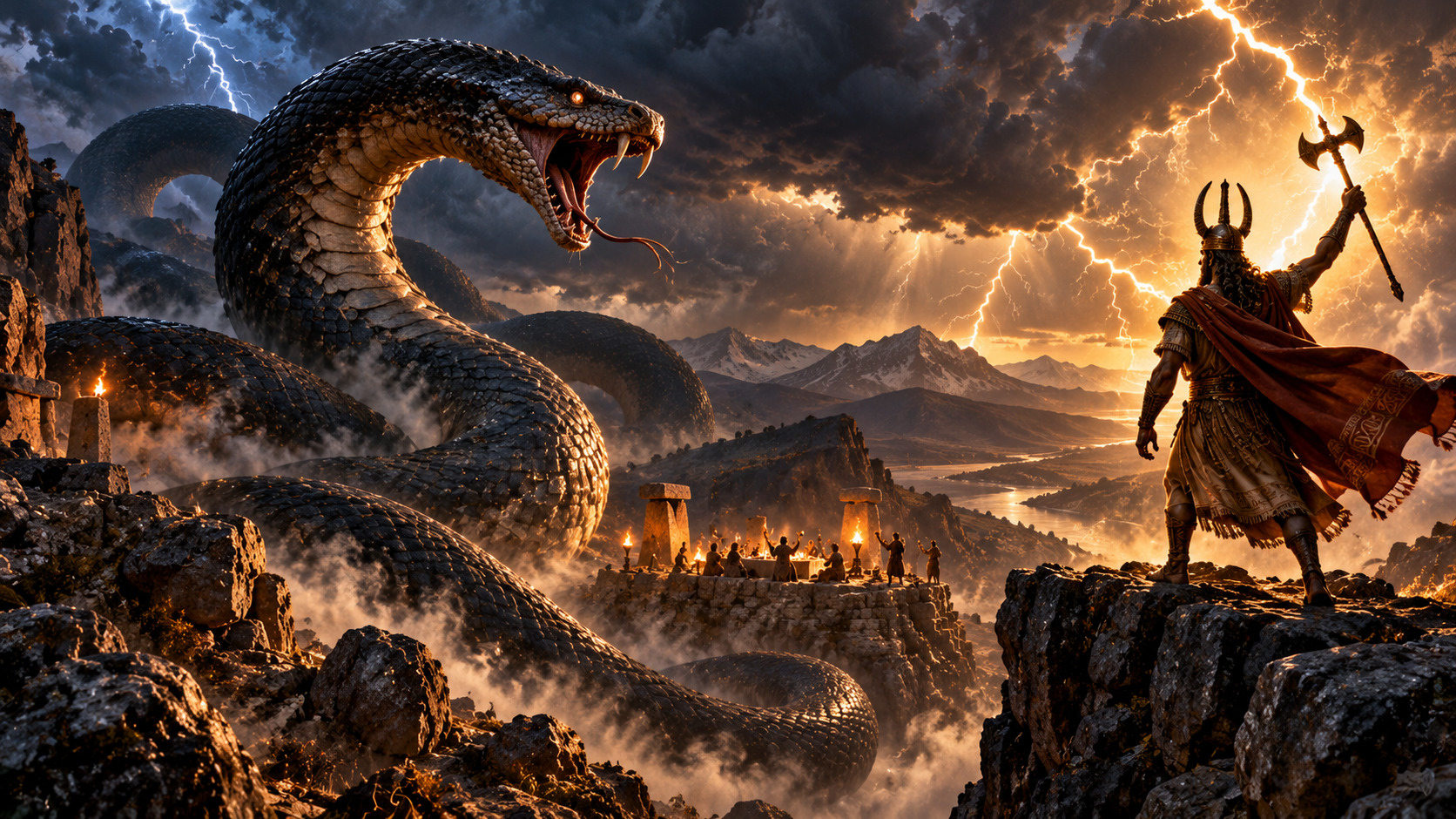
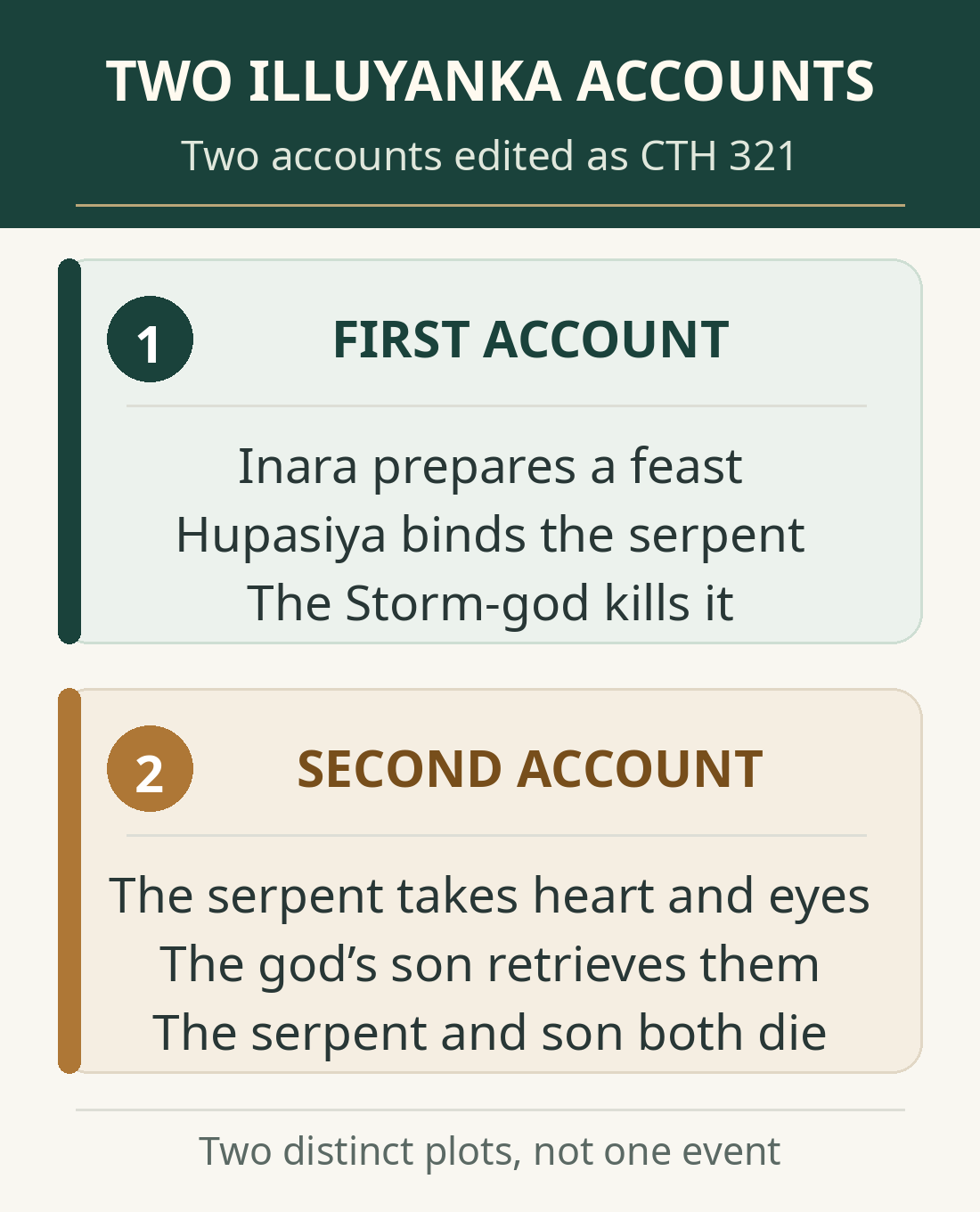
Inara invites the serpent out of its hole to eat and drink. It arrives with its offspring; after consuming the feast they cannot return below. Hupasiya then emerges and binds the serpent with a rope. Only then does the Storm-god arrive and kill it. The victory is made possible by the goddess’s plan and the mortal’s intervention, rather than by a solitary first blow from the god. [1][8]
Hupasiya after the victory
The account does not end with the serpent’s death. Inara builds a house on a rock, settles Hupasiya there, and forbids him to look through the window while she is away, warning that he would see his wife and children. After twenty days he looks out, sees his family, and asks to go home. The following lines are damaged, making his ultimate fate uncertain in the surviving wording. Some editors suspect a tragic conclusion, but the broken passage cannot support a fully narrated ending. [1][8]
Second account: the heart, the eyes, and the cost of victory
The other telling also begins with Illuyanka defeating the Storm-god. Here, however, the serpent takes the god’s heart and eyes. The god marries a poor man’s daughter and has a son. When grown, the son marries the serpent’s daughter. His father tells him to request the heart and eyes from his wife’s family. He receives them and returns them to the Storm-god, restoring his father’s ability to fight. This is not the sequel to Inara’s feast but a different plot with its own route to victory. [1][8]
The Storm-god goes to the sea to confront the serpent again. His son is on the serpent’s side through marriage and calls upon his father not to spare him. In the preserved account, the god kills both the serpent and his son. The recovery of divine strength has depended on the son’s help, yet victory costs the son his life. [1][8]
Two plots in one ritual setting
Both accounts begin with the Storm-god’s defeat and end with a victory that requires human assistance. But a feast and a rope in the first contrast with the recovery of heart and eyes through a marriage alliance in the second. Hupasiya and the god’s son have different fates, while damaged passages prevent certainty about every detail. Grouping these witnesses under CTH 321 does not mean that one continuous event included both confrontations. [1][8]
Beckman interprets their common emphasis on cooperation between humans and deities as meaningful within a festival concerned with the land’s renewal. That is a scholar’s interpretation, not a statement made explicitly by every line of the narrative. He also challenges an older reading implying that one version superseded the other: in his view the Hittite wording does not justify that conclusion. [8]
Comparing other traditions
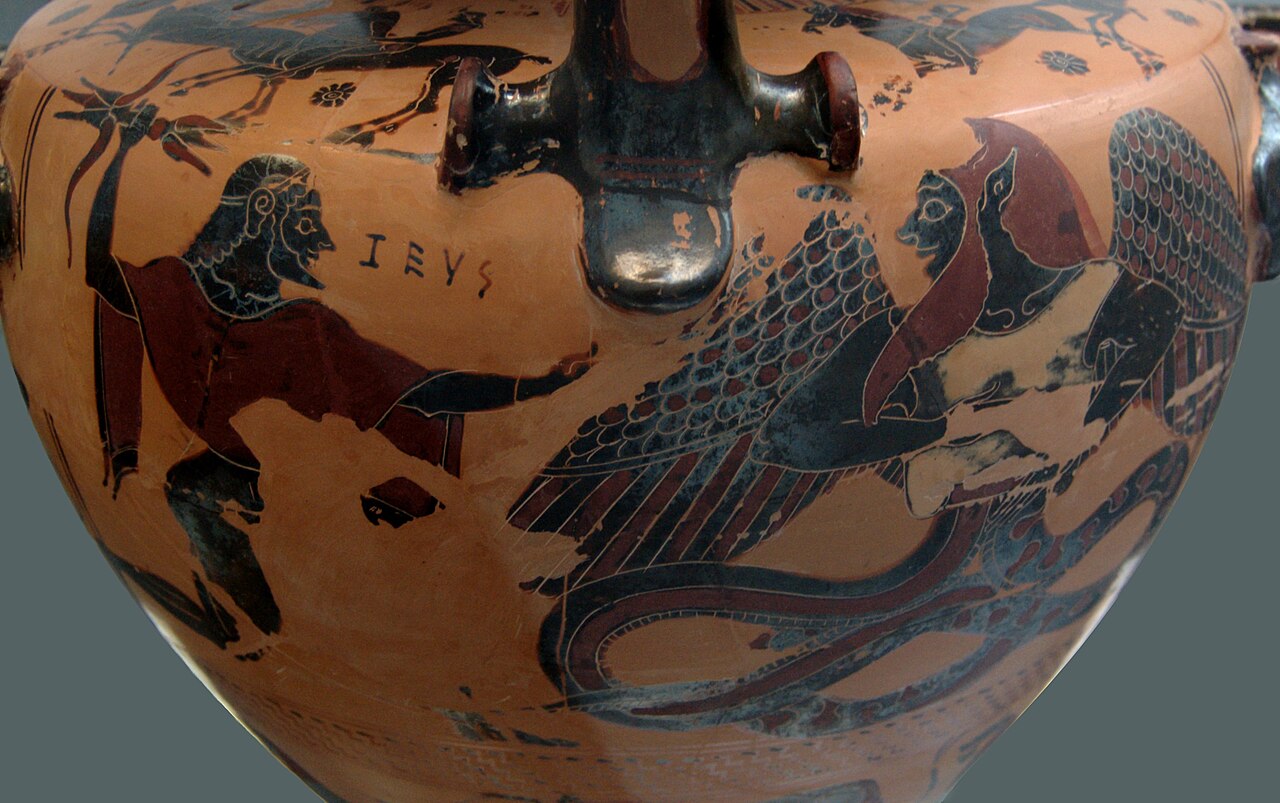
A Storm-god’s struggle with a serpent recalls the Greek battle between Zeus and TyphonTyphon / TyphoeusTyphon (Typhoeus), a serpentine adversary of Zeus in Greek myth; his defeat and punishment vary across Hesiod, Pindar, and the later Library.Glossary · Click to read the explanation, as well as other stories of gods confronting watery powers or monsters. Yet a shared type of opponent does not make the stories identical. Illuyanka’s mortal helpers, its purulli setting, and the second version’s marriage strategy deserve to be understood first within their Anatolian context. Arguments for historical contact or literary transmission require evidence about texts, chronology, and routes of interaction, not only a recurring combat image. [8]
For a fuller comparison, see Typhon and the storm-god battles: Illuyanka, Baal, and the limits of resemblance.
References and notes (2)
- TITUS, “CTH 321: Der Drachenkampf oder Illuyanka,” edited German translation by Anna Bauer, Felix Esser, Susanne Görke, Jürgen Lorenz, and Elisabeth Rieken (2005–2009); online TITUS version by Jost Gippert, 2010. The purulli opening, both narratives, and damaged passages were consulted; no independent examination of the original tablets. CTH 321, German edited translation, lines 1–101 (narratives), 102–128 (ritual and colophon), with relevant notes on §§ 1–25′. Return to the text ↑
- Gary Beckman, “The Anatolian Myth of Illuyanka,” Journal of the Ancient Near Eastern Society 14 (1982): 11–25. Consulted the introduction and witnesses, English translation, the distinction between composition and surviving copies, and concluding discussion of ritual, human–divine cooperation, and the alleged replacement of one account by the other. Beckman 1982, pp. 11–12, 18–21 (translation and date), 24–25 (interpretation; n. 87). Return to the text ↑
Suggest a correction · Suggest a source for this record
Cite this record
IL Archive, «Illuyanka», https://ilarchive.com/en/entities/illuyanka
Continue reading