Artifact · Tablet
The Pig List from Uruk (Berlin VAT 16773)
An object record bringing together its image, metadata, rights, and context.
- Timeline
- From 3200 BCE to 3000 BCE
- Region
- Mesopotamia
A small clay tablet from Uruk arranges 58 entries associated with pigs in ruled columns. A total on its edge and parallel entries on another clay fragment show how early scribes organized lists and counted their entries.
Estimated reading time: 4 min Published Last reviewed:
Share article
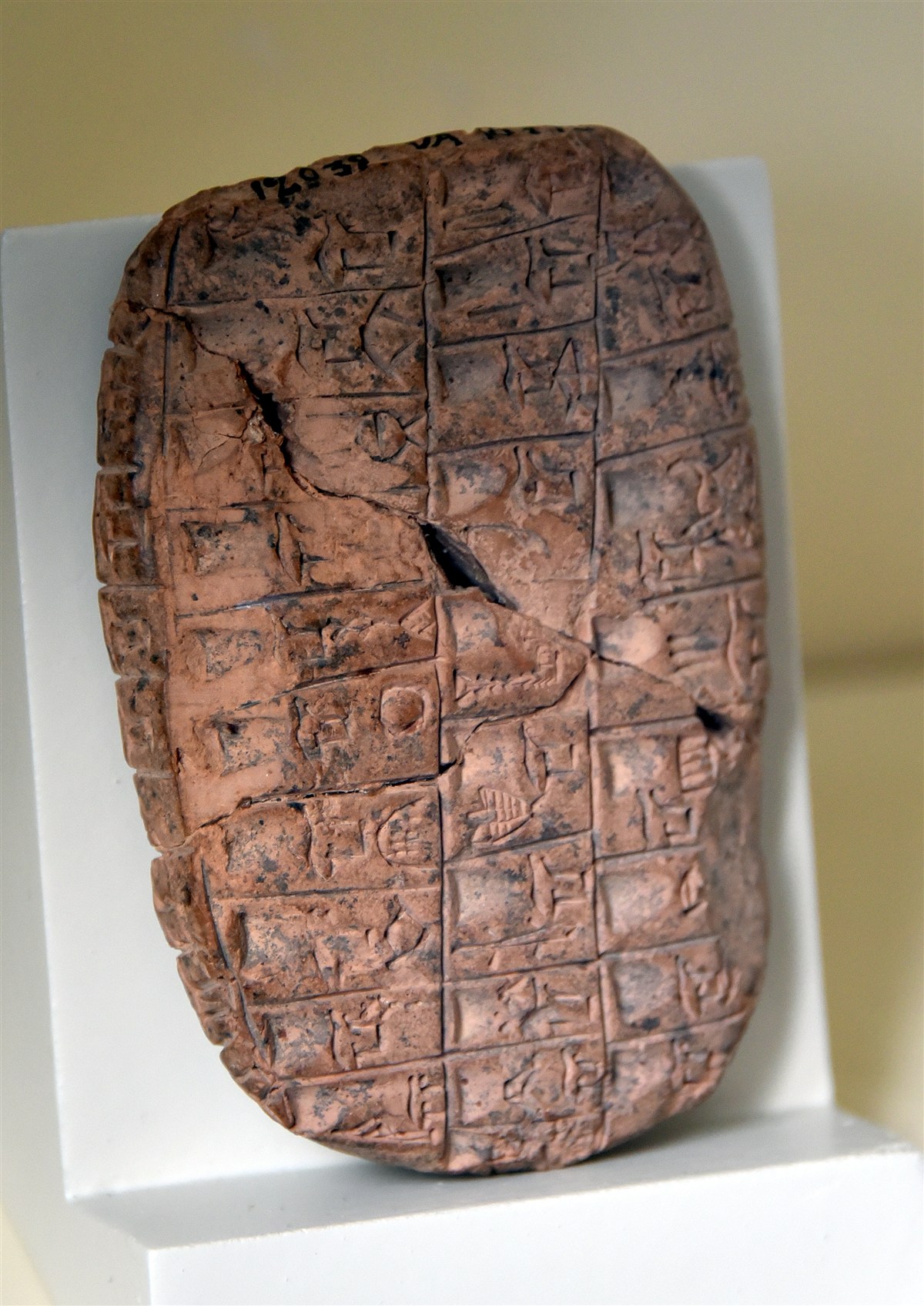
Photograph
Photograph by Osama Shukir Muhammed Amin, via Wikimedia Commons. CC BY-SA 4.0.
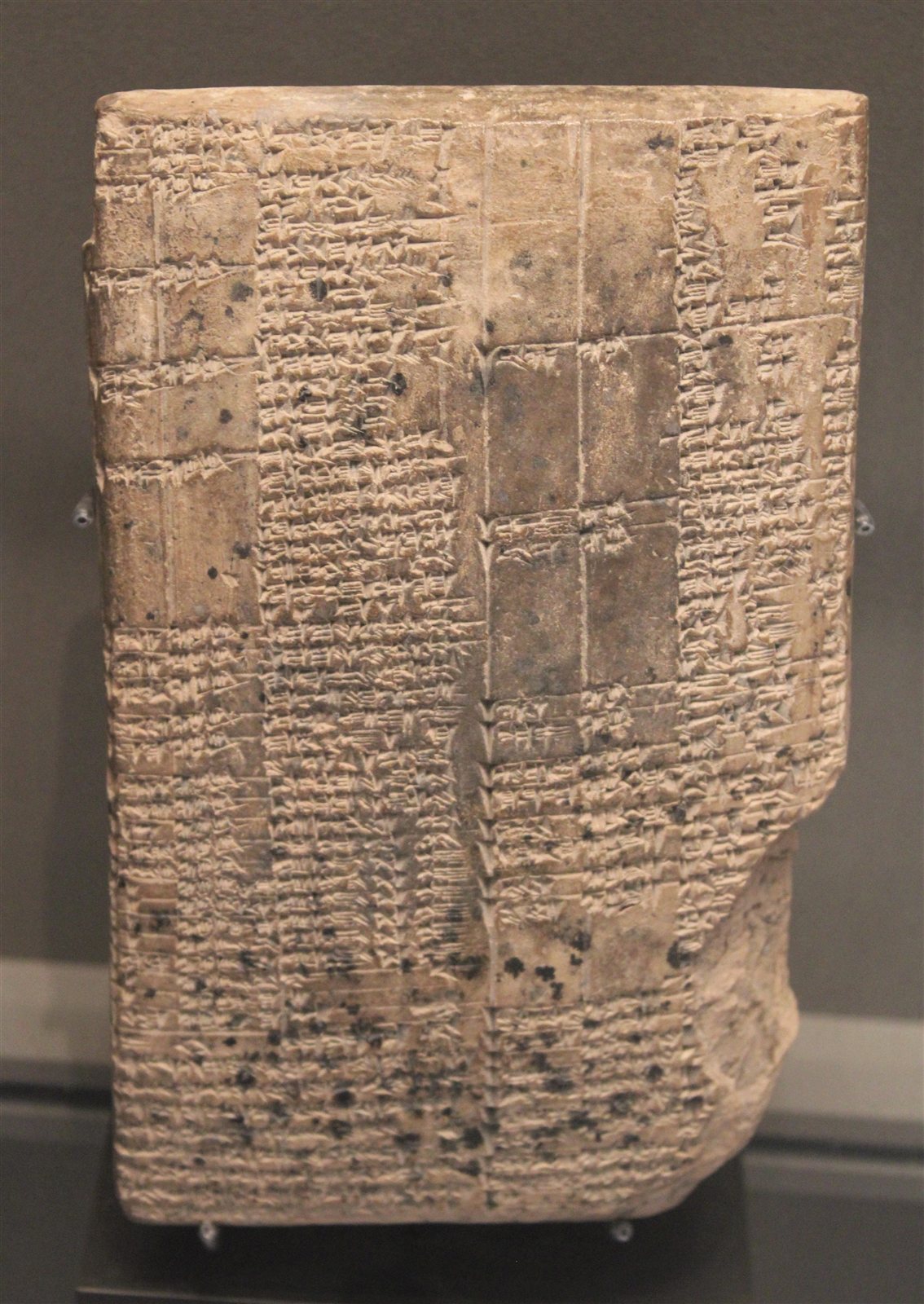
Berlin VAT 16773, one face of the clay tablet from Uruk with ruled columns of entries
License · Image sourceObject details
- Title
- The Pig List from Uruk (Berlin VAT 16773)
- Timeline
- From 3200 BCE to 3000 BCE
- Region
- Mesopotamia
- Rights
- CC BY-SA
Text
Introduction
A clay tablet from the Eanna precinctEanna at UrukAn archaeological precinct and institutional centre at Uruk associated with Inanna; its name does not fix every early building’s function.Glossary · Click to read the explanation at UrukUrukAncient city at Warka in southern Iraq, a major urban centre around 3200 BCE that preserved early writing and accounting tablets.Glossary · Click to read the explanation preserves one of the earliest kinds of written word list. Its 58 entries are associated with pigs. They are set out in compartments on both faces, with a total on the edge. The tablet is now in the Vorderasiatisches Museum in Berlin under inventory number VAT 16773. The excavation number is W 12139. [1][2][3]
A list from the Eanna precinct
The tablet is roughly rectangular with rounded corners. It is about 7.5 cm high and 5 cm wide. Berlin’s museum dates it to about 3300–3000 BCE. The CuneiformCuneiformWriting with wedge-shaped signs, developed from Mesopotamian recording traditions and used for several languages from the third millennium BCE.Glossary · Click to read the explanation Digital Library Initiative assigns it to Uruk III, which its catalogue places around 3200–3000 BCE. The excavation record places it above a temple wall of the older Uruk IVa layer. That find context is part of the evidence for the tablet’s place in the sequence of early writing at the site. [1][2][3]
The writing belongs to the early stage of cuneiformCuneiformWriting with wedge-shaped signs, developed from Mesopotamian recording traditions and used for several languages from the third millennium BCE.Glossary · Click to read the explanation usually called proto-cuneiformProto-cuneiformEarly southern Mesopotamian script (c. 3350–3000 BCE): clay tablets with counting systems and signs for commodities, people and offices, as well as lexical lists; not yet a full rendering of speech.Glossary · Click to read the explanation. The text has three columns on the obverse and three on the reverse. In the digital edition the obverse contains 30 entries and the reverse 28. The front columns contain 10, 11 and 9 entries respectively. The columns on the back contain 10, 10 and 8. The tablet’s rulings give each entry its own space, while the columns allow long groups of closely related signs to fit on a small writing surface. [1]
How the entries were formed
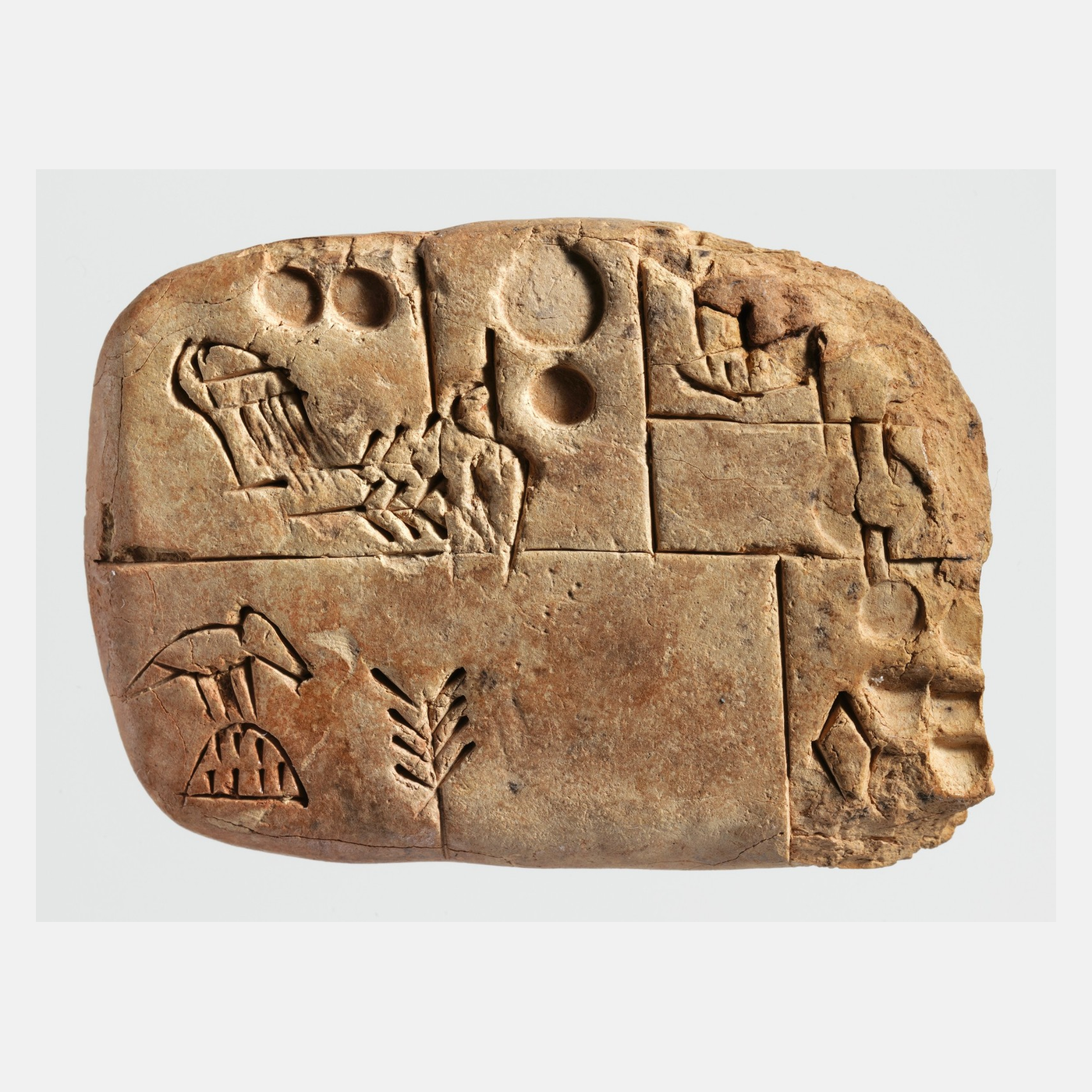
The edition uses the sign name `SZUBUR` for the recurring pig sign. The first entry in the first column gives that sign by itself after an initial numeral. The next two combine it with one and two instances of another mark identified as `N57`. Toward the end of the reverse, a related entry combines it with three such marks. Other entries put different signs next to the pig sign. These are patterns one can follow in the writing even when the spoken forms or precise meanings remain uncertain. [1][2][5]
Berlin describes the signs as possible designations for pigs. The list supplies written combinations. The distinctions those combinations made in speech or in practice are harder to recover. Niek Veldhuis explains that the earliest lexical lists usually present entries without glosses. He also notes that the capitalized names used to identify archaic signs in modern editions draw on later uses of the same signs. The labels help readers compare entries across tablets. [1][2][5]
A total on the edge and a parallel fragment
The edition records a repeated unit sign before each entry. On the left edge, it reads five tens and eight units. This is the same as the total number of entries on the two faces. A short statement of this kind, set apart from the main text, is called a colophon. Its position on the edge keeps the count separate from the entries. [1][6]
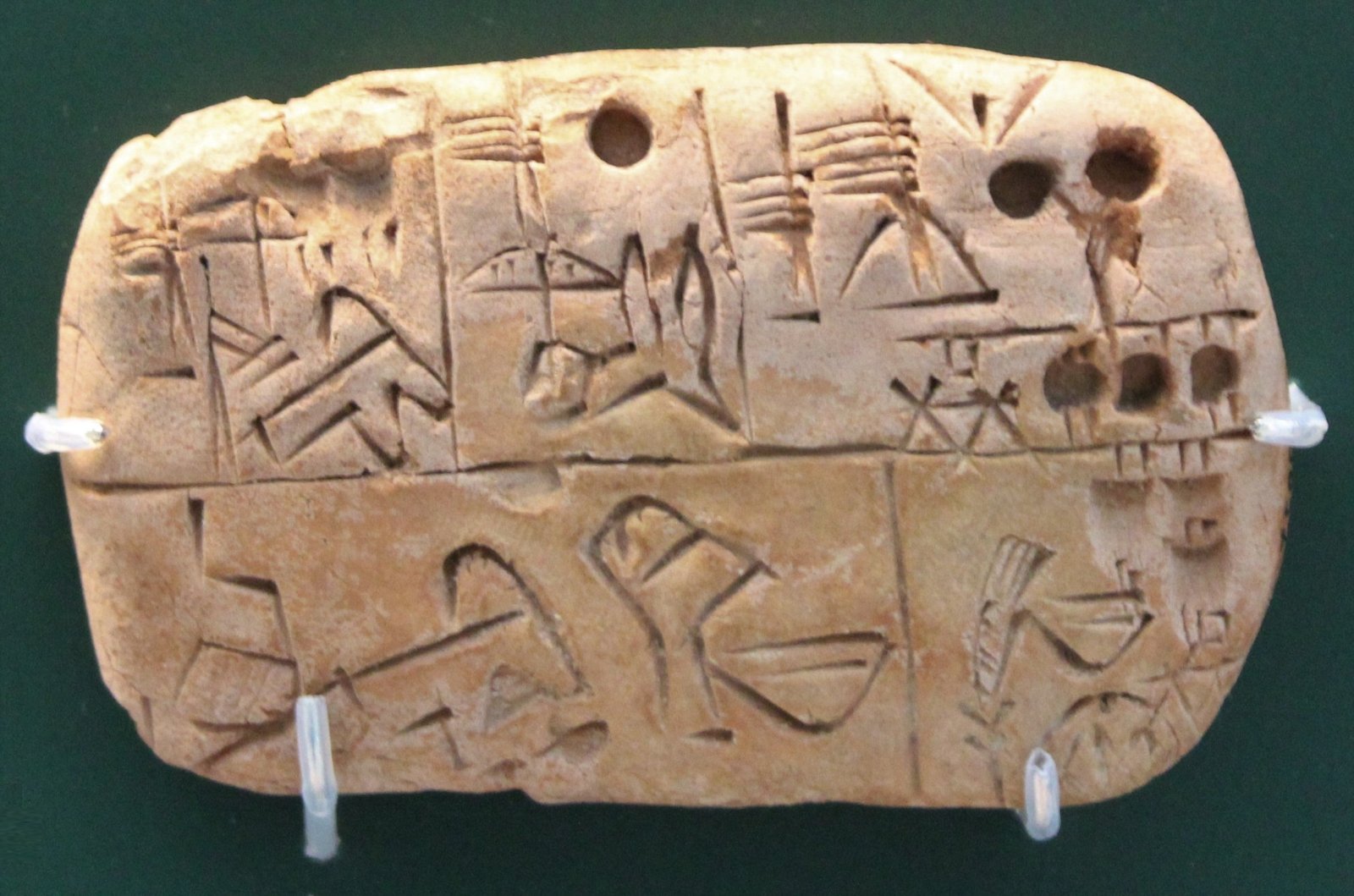
A second tablet from Uruk, W 20497, preserves part of a related list. It is held in the National Museum of IraqIraqIraq is a modern country encompassing much of ancient MesopotamiaGlossary · Click to read the explanation under number IM 134420. For example, the digital edition links the second entry on the Berlin tablet with the first preserved entry in the second column of the Baghdad fragment. These parallels let editors compare which sign groups were in circulation and how the lists were arranged on different pieces of clay. [1][4]
Quick answers
What is the Pig List from Uruk?
It is an early clay tablet with 58 written entries associated with pigs. Its inventory number is VAT 16773. [1][2]
How are its entries arranged?
There are three columns on each face and a total on the edge. The edition identifies 30 entries on the front and 28 on the back. [1]
Where was it found and where is it kept?
It came from the Eanna precinct at Uruk, modern Warka in Iraq. It belongs to the Vorderasiatisches Museum in Berlin. [1][2]
Is another copy known?
The fragment W 20497 in the National Museum of Iraq preserves parallel entries from Uruk. [1][4]
References and notes
- Cuneiform Digital Library Initiative, “ATU 3, pl. 036, W 12139,” P000014 Object catalogue, ATU 3 excavation note, obverse and reverse columns 1–3 and left edge. Inventory, context, 58 entries and colophon. Return to the text ↑
- Vorderasiatisches Museum, Staatliche Museen zu Berlin, “Clay Tablet with 58 Different Names for ‘Pig’,” VAT 16773 Museum object entry. Eanna, layer III, date range, rounded tablet and the museum’s interpretation of the entries. Return to the text ↑
- Staatliche Museen zu Berlin, Fleisch, exhibition checklist, 2018 VAT 16773 entry, PDF p. 2. Date, material and dimensions. Return to the text ↑
- Cuneiform Digital Library Initiative, “ATU 3, pl. 036, W 20497,” P000456 Object catalogue and preserved columns, particularly obverse ii 1. Parallel witness to the list, inventory IM 134420. Return to the text ↑
- Niek Veldhuis, “Ancient Mesopotamia,” in The Cambridge World History of Lexicography, Cambridge University Press, 2019 Pp. 13 and 18 n. 12. The earliest unglossed lists and conventions for transliterating archaic signs. Return to the text ↑
- Robert K. Englund, “Accounting in Proto-Cuneiform,” in The Oxford Handbook of Cuneiform Culture, Oxford University Press, 2011 Fig. 2.4a, printed p. 39. Numerical signs in the sexagesimal system, including N14 for ten and N1 for one (N01 in the CDLI edition). Return to the text ↑
Archive records may be reviewed and refined as better evidence or sources become available. Suggest a correction
Suggest a correction · Suggest a source for this record
Cite this record
IL Archive, «The Pig List from Uruk (Berlin VAT 16773)», https://ilarchive.com/en/artifacts/uruk-pig-list-vat16773
Continue reading