Study
Sons of God and Watchers: How a Brief Story Expanded
An extended study of a topic, with evidence and references.
- Timeline
- From 900 BCE to 430 CE
From four Genesis verses to angelic descent, teaching and giant spirits in Enoch: texts, manuscripts and limits of comparison with Mesopotamian sages.
Share article
Text
At the beginning of Genesis, four verses open a large door without walking through it. The “sons of ElohimElohimA Hebrew word with plural morphology, used for “gods” or for a singular deity according to context.Glossary · Click to read the explanation” marry human daughters, the NephilimNephilimTerm in Genesis and Numbers; it alone identifies neither a biological population nor every fallen angel.Glossary · Click to read the explanation are named, and ancient heroes appear. We learn neither the husbands’ names nor of a gathering of two hundred angels or a catalogue of knowledge descending from heaven. Those details appear in Enochic literature, where the story explains corruption, violence and harmful spirits before and after the Flood. [1]
This comparison asks neither whether angels actually did these things nor whether a doctrine is true. It asks how ancient texts formulate the problem, which details each witness contains, and what permits us to trace interpretation or transmission. Three levels must remain distinct: Genesis, the Enochic narrative, and modern comparisons with Mesopotamian traditions.
Four verses do not tell the entire story
Genesis 6 begins with human multiplication and the birth of daughters, followed by the “sons of Elohim” choosing wives among them. In verse 3, YHWHYahwehThe divine proper name written YHWH in the Hebrew Bible.Glossary · Click to read the explanation limits human days to one hundred and twenty years; whether this means a lifespan limit or a period before the Flood is not settled here. Verse 4 introduces the Nephilim alongside renowned ancient heroes. [1]
This concise formulation brings kinship, boundaries and power together. It does not call the characters WatchersWatchersDesignation for heavenly beings in Daniel and Enochic literature, covering an obedient holy watcher or a rebellious group according to context.Glossary · Click to read the explanation or describe their heavenly world in detail. Genesis then depicts human wickedness, a corrupt earth and pervasive violence, and announces the Flood. The sequence does not make all the subsequent Enochic details implicit in those four verses.
Nor should “sons of GodSons of GodA Hebrew expression for heavenly beings in texts such as Job; context determines its meaning, rather than biological descent or a fixed angelic roster.Glossary · Click to read the explanation” be read as a transparent modern explanation of what these beings are. It is the witness’s expression; identifying its referents belongs to the history of interpretation.
Nephilim: a word cannot establish a population’s origin
The word NephilimNephilimTerm in Genesis and Numbers; it alone identifies neither a biological population nor every fallen angel.Glossary · Click to read the explanation contributes to the story’s ambiguity. Genesis 6:4 says they were present in those days and “also afterward, ” alongside the sons of Elohim’s relations with women. That passage alone supplies neither a comprehensive definition nor a genealogy resolving every relationship between the Nephilim and the heroes. [1]
Numbers 13:32–33 places the word in the scouts’ frightening report about Canaan: they describe large people, associate the descendants of Anak with the Nephilim, and compare themselves to grasshoppers. This is speech by characters within a story, not a record of archaeological measurements. [2]
The word therefore cannot establish a biological species or extraterrestrials. Its customary translation as giants does not make it synonymous with every fallen angel. The Enochic story identifies giant offspring more explicitly, and that identification should be attributed to it.
Not every Watcher has fallen
Daniel 4 prevents a hasty identification. In the tree dream, a “watcher and a holy one” descends from heaven to announce a decision. A plural expression also refers to the decree of watchers and the word of holy ones. Its stated purpose is that humans recognize the Most High’s authority over kingship. This Watcher neither marries a woman nor opposes God. [3]
Calling a being a Watcher is thus insufficient to place it in Enoch’s rebellious group. In one context the term denotes a heavenly being executing judgment; in another it describes members who violated heaven’s order.
This distinguishes a category’s name from the conduct of particular members. Like a messenger fulfilling or betraying a commission, the role does not predetermine the moral outcome.
Which Enoch are we reading?
“1 EnochFirst EnochLayered collection of Jewish writings about heaven, evil and judgment.Glossary · Click to read the explanation” is a collection of writings, not a book composed at a single moment. Its opening section, chapters 1–36, is called the Book of the WatchersBook of the WatchersOpening section of1 Enoch, 1–36; includes the Watchers’ descent and transgression and Enoch’s journey.Glossary · Click to read the explanation. Annette Yoshiko Reed dates its composition around the third century BCE; that does not automatically date the rest of the collection. [4]
Enoch in Genesis 5:21–24 belongs to the antediluvian genealogy, walks with God, and is taken by God. Genesis does not there depict him writing the Watchers’ petition or visiting a heavenly palace. These roles emerge in the later narrative bearing his name. [19]
The character’s time within the story is not the text’s composition date. Attribution to Enoch does not make a manuscript antediluvian; conversely, a copy’s date need not equal the origin of every tradition it contains.
Qumran: evidence that the text existed, and its limits
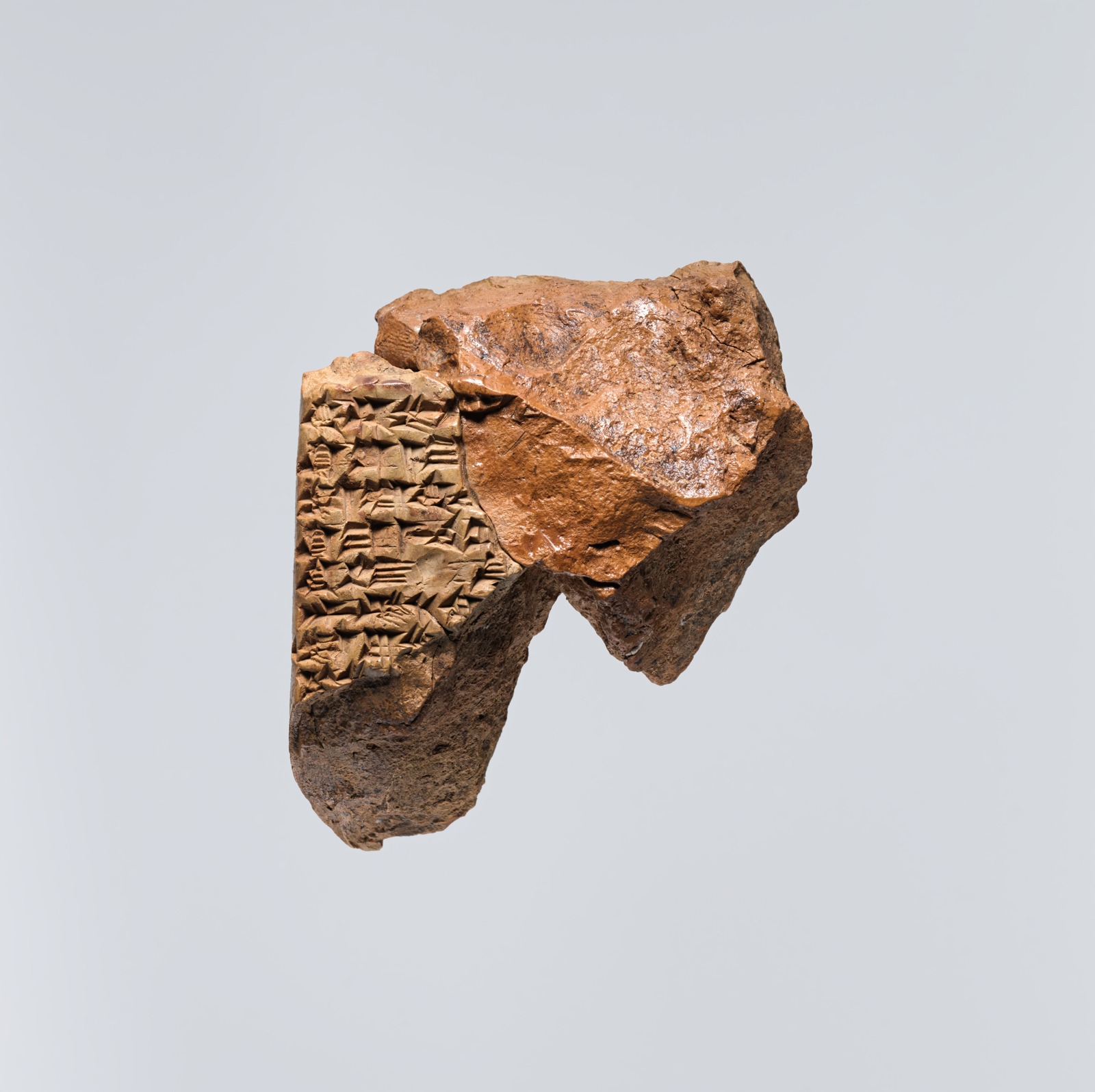
The official Dead Sea ScrollsDead Sea ScrollsJudaean Desert manuscripts, especially Qumran cave finds. Biblical copies and other works reveal textual diversity; a copy’s age is not the work’s initial date.Glossary · Click to read the explanation catalogue identifies 4Q201 as an AramaicAramaicA group of Northwest Semitic language varieties with a long history across the Near East.Glossary · Click to read the explanation text on parchment from Cave 4, with a script classified as Hasmonean. These are data about a material witness, not a hypothetical earlier oral story. [5]
Its existence confirms that Enochic literature was not entirely a late Christian creation. That differs from claiming to read every letter of a fragment or reconstruct the complete book from it. This study uses catalogue metadata and offers no independent Aramaic reading of the photograph.
We must also distinguish a tradition’s earliest proposed date, a particular manuscript’s age, and the complete form available in translation. Here the selected passages are read in Charles’s historical translation, with its brackets and textual difficulties; it is not presented as a photographic reproduction of 4Q201.
Descent to Hermon: a collective decision
In 1 Enoch 6 the characters are angels seeking human wives. Shemihazah fears bearing punishment alone if the others withdraw, so they pledge themselves together and confirm their decision by an oath. Two hundred then descend to Mount Hermon in Jared’s days. [6]
The scene becomes more than contact between two realms. It has initiative, a leader, hesitation and collective agreement. The mountain gives the story a memorable location, while its name is linked to the oath through a narrative explanation of names.
That is an explanation within the witness, not independent proof of the name Hermon’s historical etymology. Nor can the two hundred be read back into Genesis: this is a detail whose location in Enoch can be identified.
Offspring who consumed the earth
Chapter 7 continues with marriage, teaching and the birth of giants. The offspring consume human resources, then attack people when the human world can no longer feed them. The transgression extends to animals, blood and devouring, until the earth accuses the offenders. [7]
Bodily size alone is not central: power without obligation makes shared life impossible. The crisis begins with crossing the boundary between heaven and humanity, then becomes a crisis of food, violence and disintegrating order.
The enormous measurements in the translation should therefore be read within narrative language and with attention to textual differences, not used as historical measurements. The comparative value lies in the sequence of consumption, aggression and accusation, not in turning a height into an archaeological specimen.
Knowledge that increases the ability to harm
1 Enoch 8 describes teaching the manufacture of swords and weapons, metalworking, ornaments and beautifying the eyes. Other figures teach spells and their undoing and observation of stars, sun and moon. The story associates these teachings with corruption, error and human cries rising to heaven. [8]
The scene can be read as a question about knowledge and the limits of its use. Weapons magnify an aggressor’s power, while technique offers no guarantee of justice. But claiming that the story rejects all learning exceeds the text: Enoch himself receives knowledge and is recognized as a righteous scribe.
The narrative thus compares channels of knowledge, its bearers and its effects. This is IL Archive’s reading of the event sequence, not a fully developed philosophical theory announced by the text. Nor should every branch of modern science be projected onto the ancient list.
The complaint reaches heaven
In chapter 9 heavenly figures see bloodshed and convey to God the complaint of the dead and the oppressed world. Corrupt teaching, the Watchers’ relations with women and the giants’ birth enter the accusation. The crisis is no longer a private matter between the group and its children: it concerns the humans paying the price. [9]
Chapter 10 assigns different measures: warning NoahNoahNoah is the flood-story figure in Genesis and a prophet in the Qur’anGlossary · Click to read the explanation, binding and removing AzazelAsael / AzazelName forms in Enochic tradition associated with corrupting teaching and punishment; witness variation cautions against one fixed form and identity everywhere.Glossary · Click to read the explanation, setting the giants against one another, and binding Shemihazah and his associates until judgment. The description then turns to cleansing, peace and fertility, with blessing continuing in chapter 11. [10]
These distinct commands prevent reducing the narrative to one Flood treating every character alike. Noah has a route to safety, heavenly fathers a punishment, and offspring another fate. Narrative justice reorders the relationships that transgression has damaged.
Enoch writes the petition without overturning judgment
In chapters 12–14 Enoch is commissioned to address the Watchers. They ask him to write and present their petition: beings who crossed heaven’s boundary now need a human to carry their words. He reads the petition, receives a vision, and enters the description of palace, throne and fire. [11]
The narrative reversal is clear: heavenly beings have lost freedom of approach, whereas a human scribe is permitted to hear the decision. His access does not mean successful intercessionIntercessionMediation subject in the cited Quranic texts to permission and approval, not divine independence.Glossary · Click to read the explanation overturning judgment. The answer rejects the group’s request and bars its return to heaven.
The scene does not make Enoch a god competing with the throne’s occupant. His authority is that of an authorized envoy who sees, hears and writes, distinct from independently judging or deciding destinies.
Punished fathers and their children’s spirits
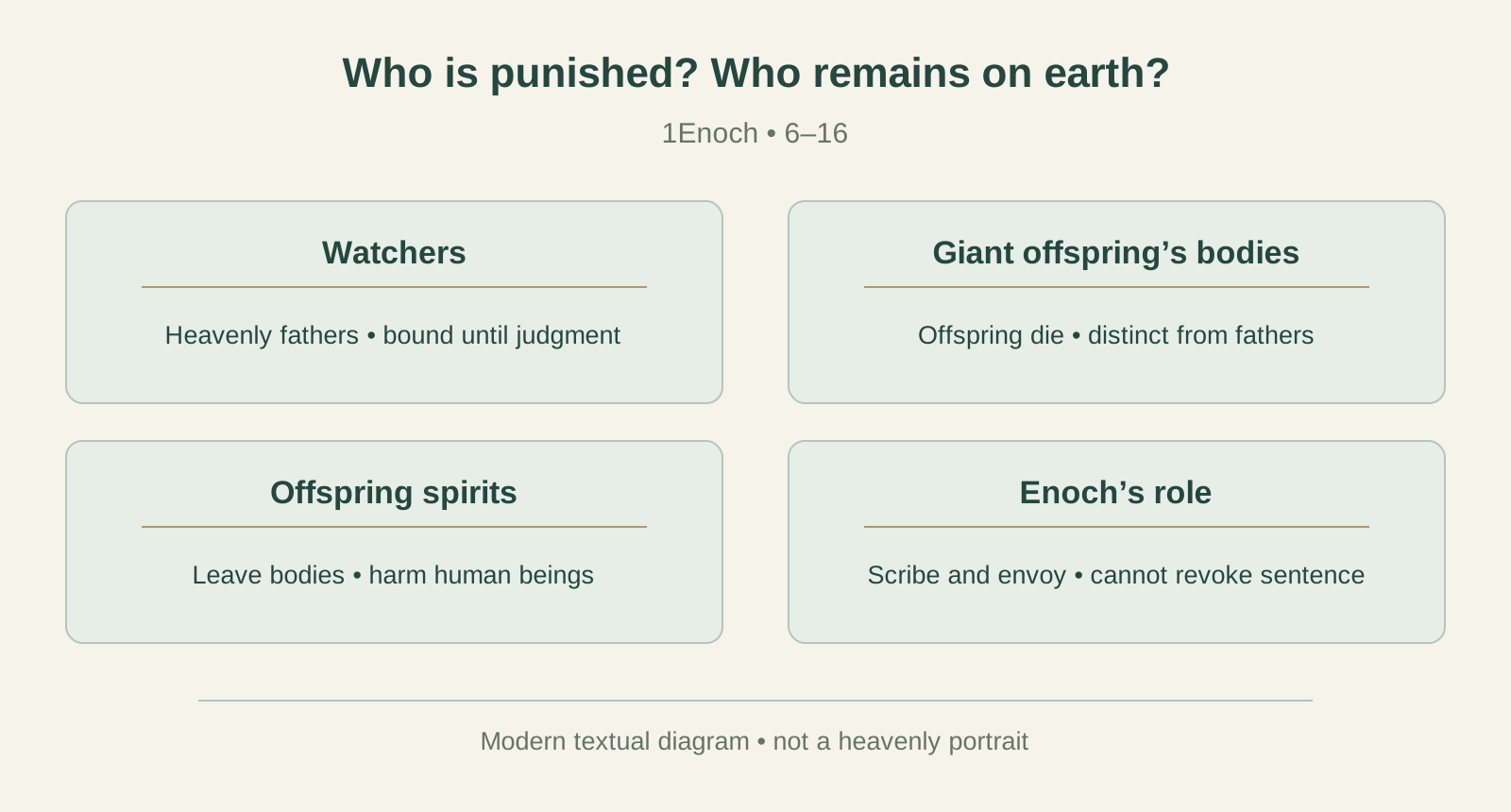
1 Enoch 15–16 explains persistent evil precisely. Giants originate from heavenly spirit mixed with human flesh. When their bodies die, harmful spirits emerge and remain on earth, oppressing and attacking people until final judgment. [12]
The passage does not simply say that every fallen angel became a free demon roaming among humans. Watchers, their offspring’s bodies, and spirits issuing from those offspring must be distinguished. Collapsing them under one name produces an inaccurate single origin story for Satan.
This also explains why eliminating the old generation is insufficient within the narrative: the body can die while the catastrophe’s effects continue to harm the world. It is a textual explanation of persistent evil, not independent evidence that such spirits exist.
Where does Mesopotamia enter?
Amar Annus proposes reading the Watchers as an inverted retelling of Mesopotamian sage traditions, the apkalluApkalluAkkadian word for sage; lists,images and roles require their own textual contexts.Glossary · Click to read the explanation: primordial knowledge becomes corrupting instruction, while Enoch rises. This is an attributed comparative model, not a tablet documenting a particular transmitter. [13]
Testing it requires comparing knowledge lists, the bearer’s role, narrative order, witness dates and possible contact. Differences in number, location and destiny may belong to reworking, but do not automatically prove it. Interpretation internal to Genesis may coexist with contact with a neighbouring culture; evidence should be examined before choosing a single cause.
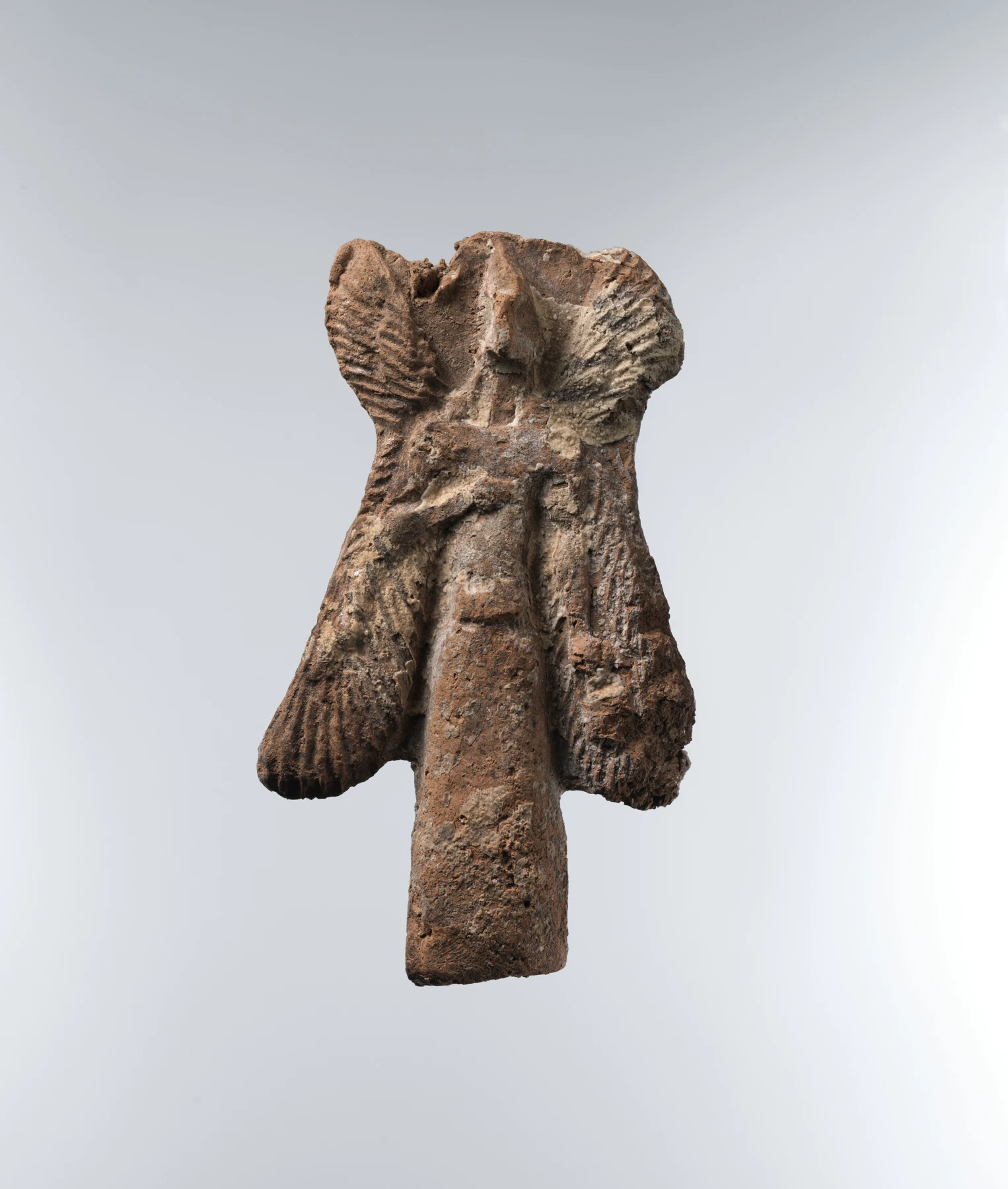
The cover is an Assyrian apkallu from Nimrud: comparative context, not an Enochic Watcher. [14] Wings or a composite body do not make an artifact a direct illustration of Genesis. The sage lists will be examined separately, so an arresting image does not substitute for textual analysis.
A quotation that can be identified
Jude provides a clearer case of textual transmission within later literature. Verses 14–15 attribute a saying to Enoch and describe the LordRabbTitle of lordship, ownership or care by context; applied to God in Lord of worlds.Glossary · Click to read the explanation’s coming with his holy company for judgment, closely resembling 1 Enoch 1:9. Here a named figure, closely related wording and a shared announcement structure are present, rather than a general similarity between angels. [15] [16]
Jude 6 mentions angels leaving their dwelling and kept in bonds and darkness until judgment. 2 Peter 2:4–5 places punishment of angels beside Noah’s deliverance and the Flood. These witness the circulation of related images; neither epistle thereby repeats every detail concerning metals, adornment and giants. [17]
Citing a particular saying also does not establish acceptance of all Enochic writings by every church. Using a passage, recognizing a tradition’s authority and defining an entire scriptural canon are distinct actions.
The reading that made the sons of God human
The characters’ identity did not settle into one interpretation. In City of God 15.22–23 AugustineAugustineFourth- and fifth-century Christian author describing his changing grasp of nonspatial divine presence.Glossary · Click to read the explanation reads the relationships as unions between Seth’s sons and Cain’s daughters, rejecting heavenly angels as the giants’ fathers in this story. He also discusses terminology, translations and the authority of writings attributed to Enoch. [18]
This witnesses Christian interpretation, not proof that it alone represents Genesis’s original meaning. It shows that the Watcher story did not become an uncontested shared doctrine for every later reader.
The distinction is substantial: Enoch explains some earthly evil through transgression by heavenly beings; the human interpretation emphasizes intermingling communities and abandoning righteousness. Preserving the difference is historically more accurate than combining them as “what religions say.”
What is known, and what remains open?
The results can be ordered without flattening degrees of evidence:
- Textually confirmed: Genesis contains a concise narrative; Enoch 6–16 supplies descent, instruction, punishment and giant spirits.
- Confirmed within its context: Daniel’s Watcher executes a holy decision and is not automatically a rebellious Enochic Watcher.
- Materially confirmed: Aramaic Enochic witnesses exist at Qumran; dating each unit’s composition is a separate task.
- Strong textual comparison: Jude 14–15 uses an Enochic saying close to 1:9.
- A proposal requiring assessment: reworking apkallu traditions in the Watcher story; neither a specific transmission route nor one-to-one identification is established.
Different details do not refute a possible historical relationship, but define what a hypothesis must explain. A Mesopotamian source’s earlier date alone cannot prove that every subsequent element was taken from it. [1] [6] [13]
Reading the story with historical care
We begin with what each witness says, then separate narrative and interpretation. This study reads selected Genesis, Numbers, Daniel, Jude and Peter passages, 1 Enoch 1 and 6–16 in a historical translation, and the specified Augustine passages. It uses Reed’s excerpt and selected sections of Annus’s article, not the complete book or paper. Catalogue data, image identity and rights were checked for the material witness. [4] [5] [14]
The result is neither a verdict on faith nor a ready-made claim that one religion copied another. It shows what a brief text can become as later communities reconsider evil, authority and knowledge: heavenly beings descend, power oversteps its limits, and a human scribe ascends to hear a decision its subjects cannot revoke. We can trace formulations and witnesses; unresolved questions remain visible to the reader.
References and notes
- Selected Hebrew passages. Genesis 6:1–13; Hebrew primary text Return to the text ↑
- Scouts’ report, especially32–33. Numbers 13:26–33; Hebrew primary text Return to the text ↑
- Five verses; English numbering. Daniel 4:13–17; English verse numbering; KJV Return to the text ↑
- Selected excerpt, not whole book. Annette Yoshiko Reed, Fallen Angels and the History of Judaism and Christianity (2005), publisher excerpt, printed pp.1–6 and opening7 Return to the text ↑
- Catalogue metadata; no independent Aramaic reading. Israel Antiquities Authority, 4Q201 catalogue; Cave 4, Aramaic, parchment, Hasmonean script Return to the text ↑
- Complete selected passage in historical translation. 1 Enoch 6:1–8; R. H. Charles historical translation Return to the text ↑
- Complete selected passage in historical translation. 1 Enoch 7:1–6; Charles Return to the text ↑
- Complete selected passage in historical translation. 1 Enoch 8; Charles Return to the text ↑
- Complete selected passage in historical translation. 1 Enoch 9:1–11; Charles Return to the text ↑
- Complete selected passage in historical translation. 1 Enoch 10–11; Charles Return to the text ↑
- Complete selected passage in historical translation. 1 Enoch 12–14; Charles Return to the text ↑
- Complete selected passage in historical translation. 1 Enoch 15–16; Charles Return to the text ↑
- Selected sections; attributed model. Amar Annus, Religions 15/9 (2024), 1024; DOI 10.3390/rel15091024, especially section2 Return to the text ↑
- Catalogue, original and rights. Metropolitan Museum, Apkallu figure, 54.117.26; ca.9th–8th century BCE Return to the text ↑
- Selected verses in historical translation. Jude 6–7, 14–15; KJV Return to the text ↑
- Chapter1, especially1:9. 1 Enoch 1, especially1:9; Charles Return to the text ↑
- Both complete verses. 2 Peter 2:4–5; KJV Return to the text ↑
- Selected22–23 passages, not whole book. Augustine, City of God XV.22–23; Marcus Dods historical translation Return to the text ↑
- Selected Hebrew genealogy. Genesis 5:18–24; Hebrew primary text Return to the text ↑
Suggest a correction · Suggest a source for this record
Cite this record
IL Archive, «Sons of God and Watchers: How a Brief Story Expanded», Edition 1, https://ilarchive.com/en/studies/watchers-genesis-and-enoch
Continue reading