Entity
Zababa
A reference page linking a name, group, or concept to the materials that discuss it.
- Names
- Zababa · Zamama
- Timeline
- From 2600 BCE to 255 BCE
- Region
- Mesopotamia
Zababa was the war god of Kish in ancient Iraq, honoured for more than two thousand years. What his temples, the kings who served him and the god lists tell us, and what is still unclear.
Estimated reading time: 5 min Published Last reviewed:
Share article
Text
Introduction
Zababa was the god of the city of Kish, in the middle of the land between the Tigris and the Euphrates, and above all a god of war. He was worshipped there from about 2600 BCE until the centuries after Alexander the GreatAlexander the GreatMacedonian king who lived from 356 to 323 BCE and became a hero of stories in different languages and traditions after his death.Glossary · Click to read the explanation. Kings rebuilt his temples, swore by his name and asked him to fight at their side.
Unlike many gods of ancient IraqIraqIraq is a modern country encompassing much of ancient MesopotamiaGlossary · Click to read the explanation, Zababa has no myth of his own that survives. We know him from temple hymns, royal inscriptions, god listsGod ListsTexts collecting divine names for preservation, teaching and classification, with varying theological organization.Glossary · Click to read the explanation, oaths and personal names. This card sets out what those sources say, and where they leave questions open.
A city god of Kish
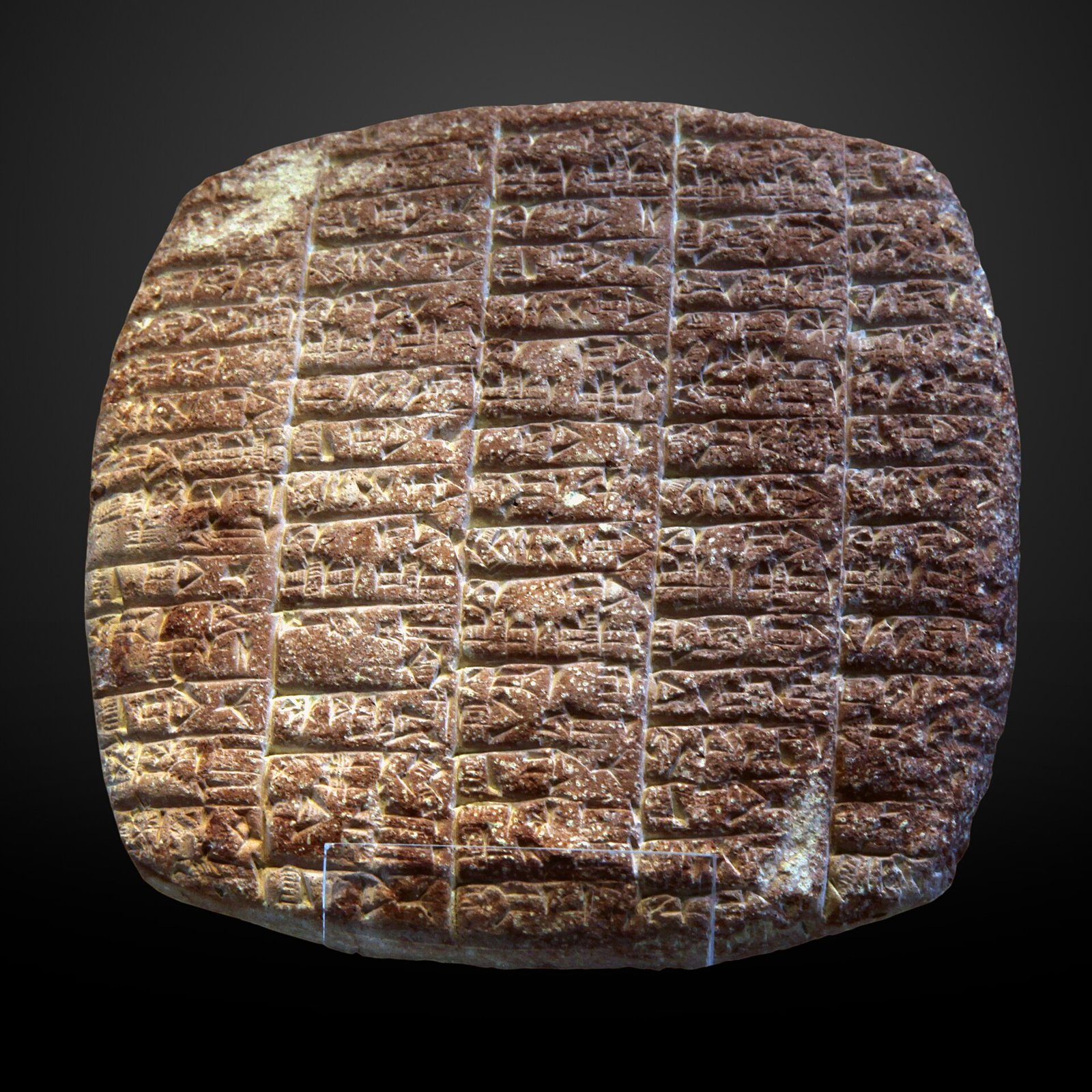
Every important city of ancient Iraq had its own god, a little as many towns today have a patron saint. For Kish this god was Zababa. The oldest mention of him, on a stone plaque from the Early Dynastic period, already names him at Kish. Hymns of about 2600 BCE that praise the shrines of the land greet the city with the words "Kish, butting bull: Zababa be praised!"[1] At that time Kish was powerful, and the god's name travelled with its fame as far as EblaEblaAncient city at Tell Mardikh, southwest of Aleppo, Syria. Its Palace G archives illuminate third-millennium BCE administration, language, and cult; the site has later occupation phases.Glossary · Click to read the explanation in Syria, where a scribe ended a list with "Zababa, king of Kish".[1]
A Sumerian collection of temple hymns, traditionally linked with Enheduanna, has eight lines for "the house of Zababa in Kish". It calls the god a warrior who has taken his seat in his house, and says to the temple: "Your right hand makes mountains tremble, your left thins out the enemy."[2]
In cuneiformCuneiformWriting with wedge-shaped signs, developed from Mesopotamian recording traditions and used for several languages from the third millennium BCE.Glossary · Click to read the explanation the name is written dZa-ba4-ba4; the small d stands for a sign placed before the names of gods, a little like a capital letter that marks a proper nameProper nameA name that identifies a particular person, place, group, or entity in context, unlike a common noun denoting a class. Spelling alone may not settle the distinction.Glossary · Click to read the explanation. The name seems to be neither Sumerian nor Semitic, so its meaning is unknown.[3] Older books read it Zamama, and that form is still found in early translations.[4]
The war god of Babylon's kings
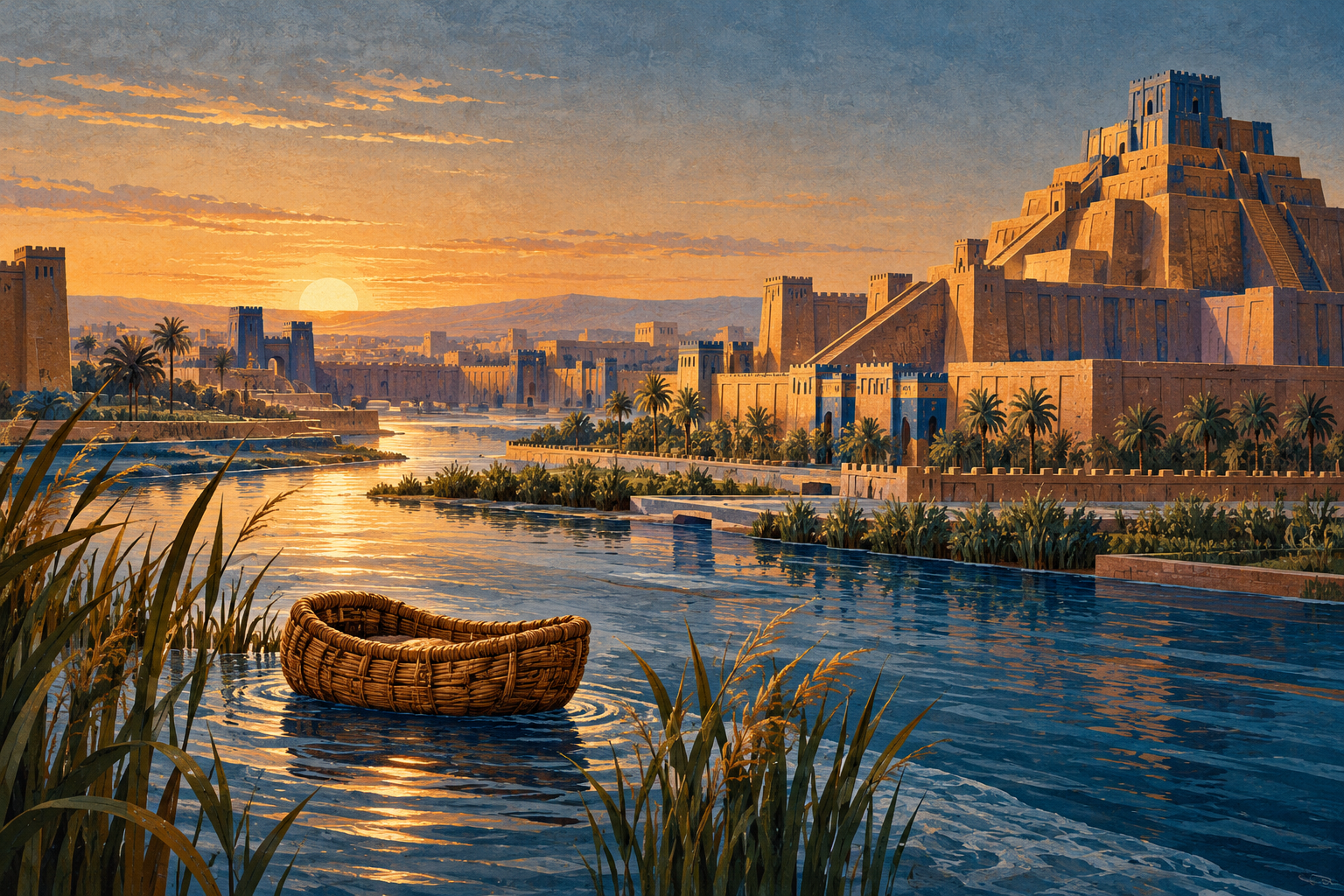
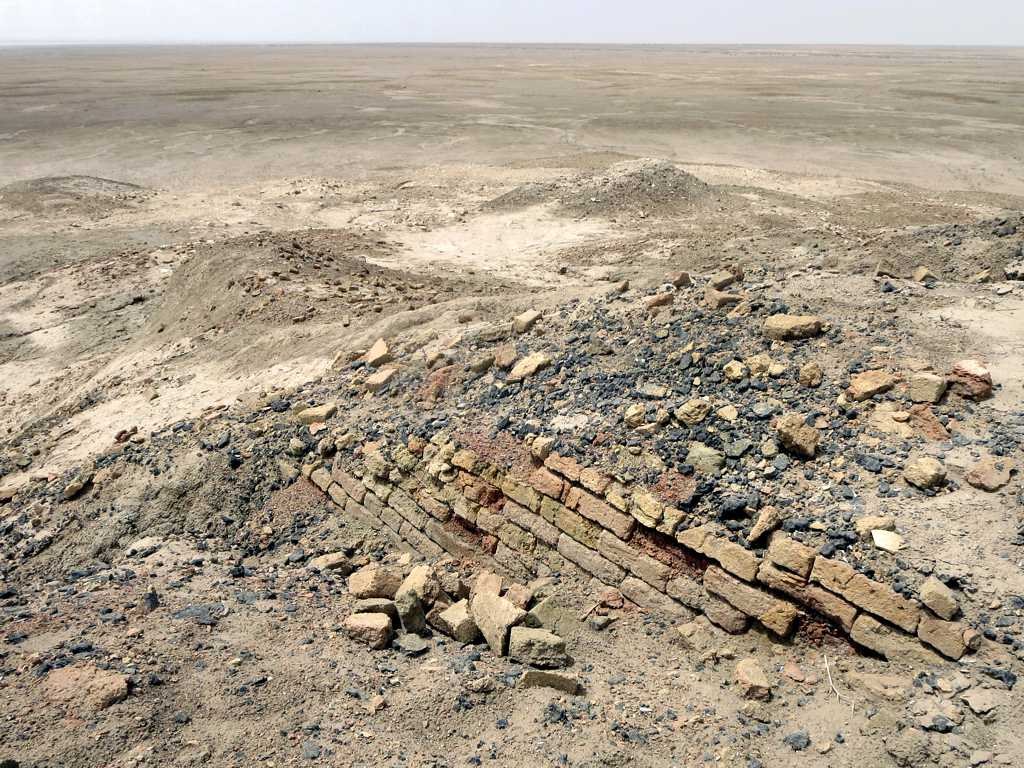
Zababa's greatest days came in the Old Babylonian period. Sumu-la-el of BabylonBabylonBabylon is an ancient city in central present-day Iraq, south of BaghdadGlossary · Click to read the explanation took Kish and built Zababa a shrine called Emeteursag, "the ornament of the hero". HammurabiHammurabiKing of Babylon in Mesopotamia, reigning around 1792–1750 BCE. A celebrated legal text preserved on a stele and cuneiform copies bears his name.Glossary · Click to read the explanation rebuilt it and raised a temple tower, a zigguratZigguratZiggurat: a monumental stepped or terraced cult structure of ancient Mesopotamia. Not every raised temple platform was a ziggurat, and the form and specific use of lost upper stages often remain uncertain.Glossary · Click to read the explanation, for Zababa and the goddess IshtarInanna / IshtarA prominent Mesopotamian goddess whose Sumerian name Inanna became associated with Akkadian Ishtar across diverse traditions. She was associated with desire, war, royal authority and Venus, while local forms and genealogies varied among texts.Glossary · Click to read the explanation; bricks with his inscription come from the mound of Tell al-Uhaymir, where the ziggurat still stands.[1] His son Samsu-iluna restored the tower and the city wall, and his inscription calls Zababa the "strong heir" of EnlilEnlilEnlil/Ellil: a major Mesopotamian god associated with destinies, kingship, and Ekur at Nippur, already prominent in third-millennium god lists. His name’s origin and cult beginnings remain debated.Glossary · Click to read the explanation.[1]
For Hammurabi, Zababa, and not Ninurta of Nippur, was the first war god, because Kish lay at the heart of his kingdom.[1] In the prologue of the Laws of HammurabiLaws of HammurabiAn eighteenth-century BCE Babylonian legal text in Akkadian, presenting property, family, labor and injury provisions within Hammurabi’s account of justice.Glossary · Click to read the explanation the king says that he "crowned E-me-te-ursag with glory", and in the curses at the end he calls on the god against any future king who spoils his monument:[4]
Laws of Hammurabi, epilogue, in the translation of L. W. King (1910).[4]
The god also shaped daily life in Kish. People took oaths "by Zababa and the king", court cases were heard in his temple, and the city had a cloister of women dedicated to him: a closed house with its own overseer and gatekeeper.[1][3] Names honouring Zababa were common among the people of Kish.[1][3]
Wife, family and symbols
Zababa was called a son of Enlil. In Old Babylonian Kish the goddess beside him in the temple was Ishtar; later his wife was Bau (also written Baba), the healing goddess who was once the wife of NingirsuNingirsuA major god of the Sumerian state of Lagash, invoked in Urukagina’s reform undertaking.Glossary · Click to read the explanation.[1][3] Ishtar is often called his consort, but the pairing may simply reflect that both were warlike gods of the same city.[3]
He had no stories of his own, but scholars describe him as a figure like Ninurta, the warrior son of Enlil. Like Ninurta he is "crusher of stones", and one god list calls him "a MardukMardukBabylon’s leading god, worshipped at Esagil and elevated in the Akkadian Enūma eliš. His symbols include a spade and mušḫuššu dragon. His earliest origins remain obscure; Nibiru is no evidence of a planetary homeland.Glossary · Click to read the explanation of battle".[1] In the curses on Babylonian boundary stones he is a war god of the second rank, named only together with Ninurta and Nergal.[1] His symbol on those stones is a staff topped by an eagle, and the star group of the Eagle was assigned to him; the lion and the lion-headed mace are also linked with him.[1][3]
From Kish to Babylon, Assur and Hatti
His cult lasted a very long time. A Kassite king, Kurigalzu, built for him at Kish and gave him an agate "eye" stone with an inscription, now in the Louvre. Nebuchadnezzar IINebuchadnezzar IIBabylonian king, 605–562 BCE, appearing in Daniel and independently attested in inscriptions and building remains.Glossary · Click to read the explanation carried out the last known work on his ziggurat and temple.[1] In Babylon a gate in the eastern wall, facing Kish, bore his name, and the road there was called "Zababa destroys his enemies".[1] In Assur, King SennacheribSennacherib, king of AssyriaAssyrian king, 704–681 BCE; part of Ahiqar’s story is set at his court.Glossary · Click to read the explanation made Zababa a son of the god Ashur and gave him a temple with Bau.[1][3]
The last written trace of his property at Kish dates from 310 BCE. Later his worship seems to have moved to Babylon: an astronomical diary records thieves breaking into the temple he then shared there with the goddess NinlilNinlilMesopotamian goddess and consort of Enlil, associated with Nippur, Tummal, destinies and royal ritual. Identified with Sud in literary tradition and known as Mulliltu/Mullissu in Akkadian and Assyrian contexts; her genealogies and roles vary by text and period.Glossary · Click to read the explanation, in 255 BCE.[1]
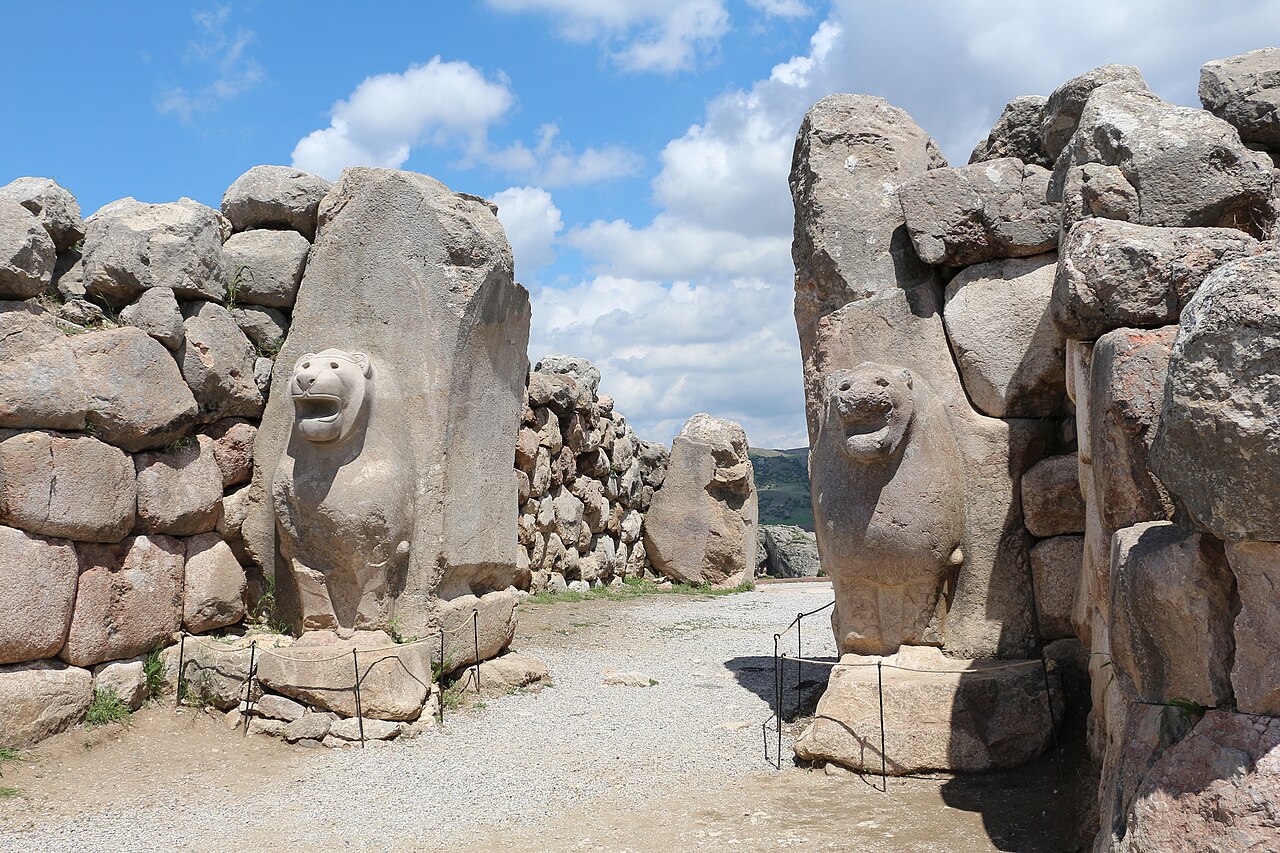
His name even crossed into AnatoliaAnatoliaAnatolia is the region occupying the Asian part of present-day TurkeyGlossary · Click to read the explanation. HittiteHittitesAncient people and kingdom of Anatolia, dominating much of Anatolia and northern Syria around 1650–1200 BCE.Glossary · Click to read the explanation scribes wrote "ZABABA" as a sign for several local war gods, most often Wurunkatte, "king of the land". There this war god could be shown standing on a lion with a weapon in his hand, and he is a hero in the Anatolian myth of InaraInaraGoddess in Hittite traditions who plans the feast enabling the serpent’s defeat in the first Illuyanka account.Glossary · Click to read the explanation.[5] Walther Sallaberger argues that this way of writing can only have reached the Hittites from Babylon under Hammurabi's dynasty.[1]
Zababa in the name of a king
In the Sumerian King List, one of the kings of Kish is Ur-Zababa, a name built on the god's name, and Sargon of AkkadSargon of AkkadSargon of Akkad was a historical third-millennium BCE ruler and founder of the Akkadian dynasty; royal accounts of his campaigns must be distinguished from later stories of his birth and rise.Glossary · Click to read the explanation is remembered as his cupbearer.[6] The Sumerian story of Sargon and Ur-ZababaSargon and Ur-ZababaFragmentarily preserved Sumerian composition depicting Sargon as Ur-Zababa’s cupbearer and naming his father La’ibum, distinct from the Akkadian birth legend.Glossary · Click to read the explanation tells of that service and of the king's fear of the young man. The god himself does not act in that story; he lives on only in the king's name.[7] When disaster fell on the land at the end of the Ur III period, a Sumerian lament says that "Zababa took an unfamiliar path away from his beloved dwelling".[8]
What is still open
References and notes (8)
- Walther Sallaberger, “Zababa. A”, Reallexikon der Assyriologie und Vorderasiatischen Archäologie 15, Berlin: De Gruyter 2016–2018, pp. 164–168 (online edition of the Bavarian Academy of Sciences) Whole entry, pp. 164–168: reading of the name; §1 the 3rd millennium (prisoner plaque, Zame hymns, Ebla colophon, temple hymn 35, Uhub); §2 Old Babylonian Kish (Sumu-la-el, Hammurabi, Samsu-iluna, oaths, cloister, Ishtar and Bau); §3 Kassite to Parthian times (Kurigalzu, Nebuchadnezzar II, end of the cult at Kish, transfer to Babylon); §4 war god in literature, curses and god lists; §5 the eagle; §6 Babylon, Assur, Ur and Hatti. Return to the text ↑
- The Electronic Text Corpus of Sumerian Literature (ETCSL), “The temple hymns”, t.4.80.1, English translation Lines 448–456, the hymn to the house of Zababa in Kish. Return to the text ↑
- Yağmur Heffron, “Zababa (god)”, Ancient Mesopotamian Gods and Goddesses, Oracc and the UK Higher Education Academy (CC BY-SA 3.0) Whole entry: functions, divine genealogy and syncretisms (Baba, Ištar, Ilaba), cult places (Kiš, Ur, Uruk, Assur), the nadītu cloister, time periods, iconography (lion, lion-headed mace, eagle-staff), name and spellings (Rubio 2010). Return to the text ↑
- The Code of Hammurabi, translated by L. W. King (1910), The Avalon Project, Yale Law School Prologue (“who firmly founded the farms of Kish, crowned E-me-te-ursag with glory”; “brother of the god Zamama”) and the epilogue curse naming Zamama. Return to the text ↑
- Alice Mouton, “Zababa. B. In Anatolien”, Reallexikon der Assyriologie und Vorderasiatischen Archäologie 15, Berlin: De Gruyter 2016–2018, pp. 168–169 Whole entry: the Akkadogram ZABABA for Anatolian war gods (Wuru(n)katte, Šulinkatte, Aštabi and others), cult towns, images (a god on a lion, a weapon), festivals (AN.TAḪ.ŠUM, KI.LAM), the myth of Inara. Return to the text ↑
- The Electronic Text Corpus of Sumerian Literature (ETCSL), “The Sumerian king list”, t.2.1.1, English translation Lines 244–296 (the kings of Kish with Ur-Zababa, son of Puzur-Suen; the kingship taken to Agade; Sargon, “the cupbearer of Ur-Zababa”). Return to the text ↑
- The Electronic Text Corpus of Sumerian Literature (ETCSL), “The Sargon legend”, t.2.1.4, English translation Whole translation, segments A and B (Ur-Zababa king of Kish, Sargon made cupbearer, the dream, the letter to Lugal-zage-si); the god Zababa appears only in the king's name. Return to the text ↑
- The Electronic Text Corpus of Sumerian Literature (ETCSL), “The lament for Sumer and Urim”, t.2.2.3, English translation Lines 115–122 (Kish and Hursag-kalama destroyed; Zababa leaves his dwelling; Bau laments). Return to the text ↑
Suggest a correction · Suggest a source for this record
Cite this record
IL Archive, «Zababa», https://ilarchive.com/en/entities/zababa
Continue reading