Person · Figure
Khufu, the King Who Built the Great Pyramid
- Names
- Cheops · Khufu
- Timeline
- From 2589 BCE to 2566 BCE
- Region
- Egypt
Khufu’s pyramid still stands at Giza, and a papyrus from his reign records deliveries of stone. A much later tale places him at the centre of a story about the next dynasty.
Estimated reading time: 5 min Published Last reviewed:
Share article
Text
Introduction
Khufu was a Fourth Dynasty ruler of EgyptEgyptEgypt lies mainly in northeastern Africa and includes the Sinai Peninsula in AsiaGlossary · Click to read the explanation, known to the Greeks as Cheops. Egypt’s Ministry of Tourism and Antiquities dates his reign to approximately 2589–2566 BCE. His tomb, the Great Pyramid at Giza, preserves the scale of his building project. Merer’s logbook, an administrative document from the end of the reign, records some of the journeys that brought stone to the site. [1][2][3]
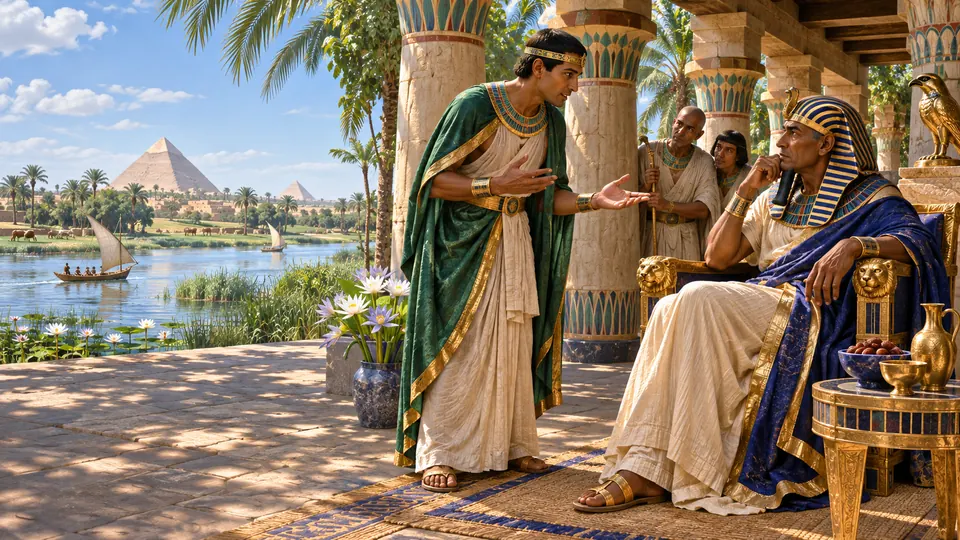
A much later source gives Khufu a different role. In the Westcar Papyrus he listens to stories and questions a man who can perform marvels. The papyrus belongs to the Seventeenth Dynasty in the dating of the Berlin museum that holds it. The tasks recorded by Merer belong to Khufu’s lifetime. The papyrus in Berlin shows how much later Egyptian writers could make the king a character in a story about royal succession. [3][4]
The royal tomb at Giza
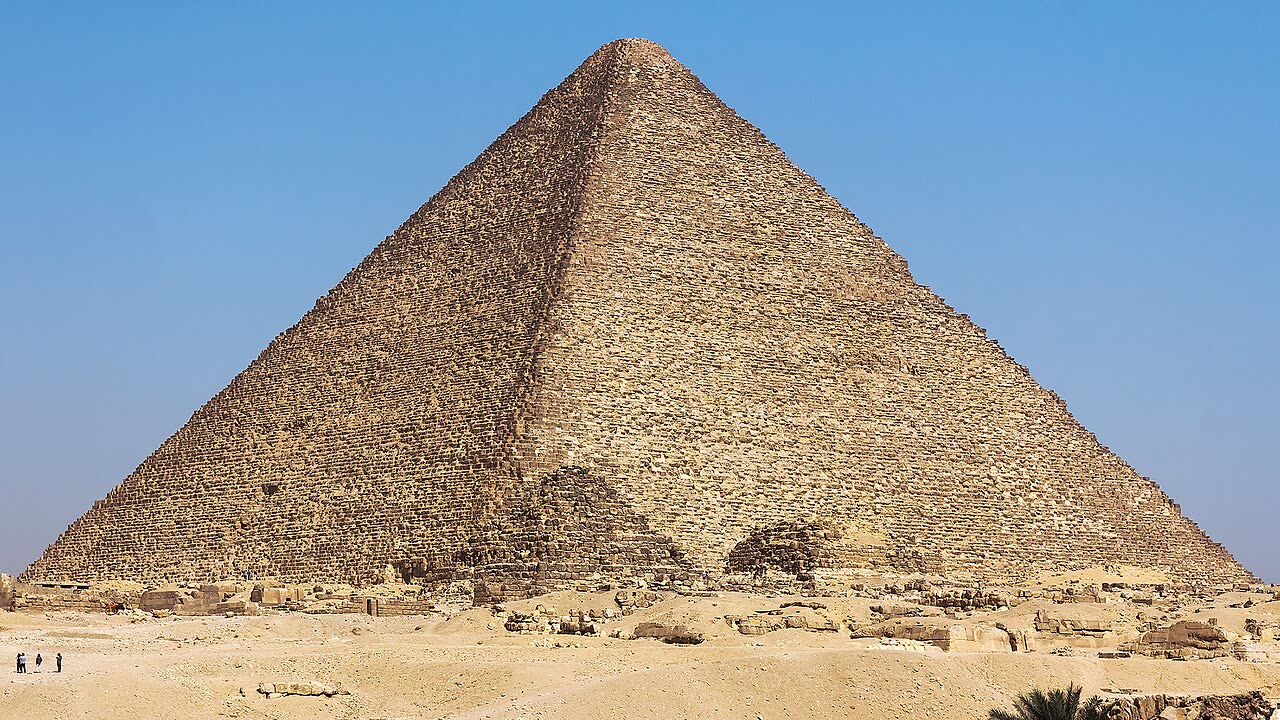
The Great Pyramid was originally 146.5 metres high. Its builders used local limestone for the body of the monument and covered the exterior with finer limestone from Turah. This outer layer is called the casing. One chamber was cut into the bedrock beneath the pyramid, and two more lie higher in the masonry. The upper room, called the King’s Chamber, contains the stone coffin. A steep passage known as the Grand Gallery leads toward that chamber. [1]
The Eastern and Western Cemeteries also formed part of the complex. They contained the tombs of relatives and officials of the king, including rows of mastabas, tombs with low, mostly rectangular structures above the burial. Egypt’s antiquities ministry notes that many of these structures went up during Khufu’s reign as the pyramid complex was taking shape. It places the tomb of Ankh-haf, a royal relative and administrator, in the Eastern Cemetery. [5]
The boats in Merer’s logbook
Pierre Tallet reports that papyrus fragments from the end of the reign were found in 2013 at the entrance to a storage gallery at Wadi el-Jarf, a port on the Red Sea. Some documents record deliveries of supplies. Others follow the work of a crew led by the inspector Merer. The place where the archive was found and the route in the logbook are distinct. The stone journeys ran between quarries at Tura and the king’s building project at Giza. [3]
In the sequence labelled B I, Tallet’s edition restores a day 25 entry that appears to describe Merer’s crew hauling stone at Tura South and spending the night there. The following day the loaded crew casts off and stays at a place called She-Khufu. On day 27 they sail to Akhet-Khufu with the stone and stay there overnight. They set out again the following morning and head upriver toward Tura South. Tallet reads Akhet-Khufu as the name of the pyramid and its complex. The entries give a view of transport in stages, with stops between loading and arrival. [1][3]
The same part of the logbook records two further days at Tura South. Another part opens with a trip to HeliopolisHeliopolis, ancient IunuHeliopolis is the Greek name of Egyptian Iunu, at Matariya in northern present-day CairoGlossary · Click to read the explanation to bring food while men were working at Tura. Tallet explains that the text follows a particular division of a work crew, called a phyle in the edition. Its tasks can be followed on shore and on the river. Tallet considers it likely that much of the fine limestone was intended for the pyramid’s casing, and allows for other uses at the site. The entries concern the work assigned to Merer’s crew. The full method of building the pyramid remains uncertain. [3][1]
The eastern cemetery and the papyrus offer two different kinds of evidence about Ankh-haf. In section B IV, the logbook names Ankhhaf as director of Ro-She Khufu in a broken entry about hauling with other workers. The Egyptian antiquities ministry identifies the owner of a large tomb in the Eastern Cemetery as Ankh-haf. It describes him as a royal relative and an administrator. Tallet discusses Ro-She Khufu as the entrance to a body of water associated with the pyramid complex. He treats its precise position as a question of how the ancient waterways and harbours were laid out. [3][5]
Khufu in the Westcar Papyrus
In the surviving story, Khufu’s son tells him about Djedi. The king wants information about the chambers of the sanctuary of ThothThothThoth is an Egyptian god of knowledge and writing, also associated with recording funerary judgment.Glossary · Click to read the explanation, since the tale says he wishes to make something similar for his own monument. Djedi is brought to court. One of his marvels is to restore a goose whose head has been cut off, and he foretells the birth of three children fathered by the sun god Re. The Berlin curator Verena Lepper reads the episode as part of a story that gives divine authority to the kings who follow the Fourth Dynasty. The historical evidence from the pyramid and the logbook belongs to the reign itself. Westcar attests to the later use of the king’s name in a story about the change of dynasty. [1][3][4][6]
One detail in the palace story makes the change in genre clear. The king sends for someone who can tell him about a sanctuary, and Djedi puts that information beyond the king’s immediate reach. In the tale it is bound to the children whose birth he predicts. The Berlin museum reads the narrative as a story about the dynastic transition, and the text gives it the form of a conversation at court. The logbook also names the king’s monument, but in brief entries about loading, sailing and where a crew stayed. [3][4][6]
References and notes (6)
- Egyptian Ministry of Tourism and Antiquities, The Great Pyramid Read the monument description, including the approximate reign dates, original height, construction materials, casing, internal rooms and limits of the evidence for construction. Return to the text ↑
- Egyptian Ministry of Tourism and Antiquities, Khufu Statue Read the collection description, including the king’s name in Greek, the Fourth Dynasty attribution and the approximate reign dates. Return to the text ↑
- Pierre Tallet, Les papyrus de la mer Rouge I. Le Journal de Merer (Papyrus Jarf A et B), 2017, Appendix I translated by Colin Clement Read the introduction and Appendix I, printed pp. 150–153, including Papyrus B, sections B I, B II and B IV, the restored day 25 entry, the route on days 26–28 and the discussion of the stone cargo, Ro-She Khufu and Ankhhaf. Return to the text ↑
- Staatliche Museen zu Berlin, Papyrus Westcar, P 3033, catalogue entry by V. Lepper Read the object details and curator’s description, including the Seventeenth Dynasty dating and the literary frame, Djedi’s wonder and the prophecy of the three children. Return to the text ↑
- Egyptian Ministry of Tourism and Antiquities, Eastern and Western Cemeteries Read the description of the two cemeteries, the mastabas and their dates, and the entry on Ankh-haf’s relationship to Khufu and role in administration. Return to the text ↑
- Mark-Jan Nederhof, Westcar Papyrus, transcription and English translation based on A. M. Blackman’s edition Read the editorial note and the translated passages at 6,24–7,8 and around 9,2 and 9,11–12 for Djedi’s introduction, the Thoth sanctuary and the prophecy. Return to the text ↑
Suggest a correction · Suggest a source for this record
Cite this record
IL Archive, «Khufu, the King Who Built the Great Pyramid», https://ilarchive.com/en/people/khufu