Period
The Iron Age in the Levant (c. 1200–586 BCE)
- Timeline
- From 1200 BCE to 586 BCE
- Region
- The Levant
After the Bronze Age crisis, city-states and kingdoms took shape across the Levant. Inscriptions record their dealings with Egypt, Assyria and Babylon. Pottery and radiocarbon dates illuminate the disputed beginnings of Israel and Judah.
Estimated reading time: 6 min Published Last reviewed:
Share article
Text
Introduction
Around 1200 BCE the great palace-states of the Bronze Age Near East fell or shrank. In the LevantThe LevantThe Levant is a regional name for lands along the eastern MediterraneanGlossary · Click to read the explanation, the eastern shore of the Mediterranean, what followed is called the Iron Age. This entry takes about 1200 BCE as its starting point and the Babylonian destruction of JerusalemJerusalemJerusalem is a city of religious importance in Judaism, Christianity and IslamGlossary · Click to read the explanation, conventionally dated to 586 BCE, as its endpoint in the south. [16][24][35]
Why "Iron Age", and how it is dated
The name comes from the metal. Archaeologists once divided prehistory into stone, bronze and iron ages by the material of tools and weapons. A study of well-dated contexts in the southern Levant found utilitarian iron in the late twelfth century BCE and widespread use once systematic production began in Iron IIA. Pottery and building sequences help distinguish the phases. [15][16]
Archaeologists distinguish Iron I from Iron II, often divided into IIA, IIB and IIC. In the southern Levant, one conventional scheme puts the start of Iron IIA around 1000–980 BCE. Boaretto and colleagues favoured a lower date around 920–900 BCE. Mazar and Bronk Ramsey reanalysed the radiocarbon dates, tested the effect of adding and excluding samples, and favoured a transition in the first half of the tenth century when they took the dates of late Iron I destruction layers into account. The ranges depend on how pottery phases at individual sites are matched and on which samples enter the model. [16][17][18]
After the collapse: Sea Peoples and Philistines
“Sea Peoples” is a modern collective name for groups named in Egyptian inscriptions. Merneptah’s Karnak account lists groups including the Sherden and Shekelesh in a Libyan coalition. In the following dynasty, Ramesses III’s Year 8 account at Medinet Habu names the Peleset and Tjeker among his opponents. The two accounts describe different episodes in a wider regional crisis. Merneptah’s separate victory stele from Thebes names “Israel” in its closing lines on Canaan. [19][20]
The Peleset are generally identified with the people the HebrewHebrewA Northwest Semitic language of the Canaanite group, encompassing Iron Age epigraphy, Biblical, Rabbinic, medieval and Modern Hebrew; its scripts and pronunciations changed over time.Glossary · Click to read the explanation Bible calls Philistines. Five cities are traditionally associated with them: Gaza, Ashdod, Ashkelon, Ekron and Gath. Early Iron Age levels at Ashkelon include pottery of Aegean inspiration. A 2019 study of ten individuals from Ashkelon across three periods found a European-related ancestry component in the early Iron Age sample. It was no longer detectable in the later sample. The study concerns Ashkelon, and the precise geographic origin of that component remains uncertain. The excavators date the city’s later destruction to Nebuchadnezzar II’s 604 BCE campaign. [21][22][23][53]
The north: Phoenician cities, Arameans and Luwian-speaking kings
On the coast, the PhoeniciansPhoeniciansCommunities of Levantine coastal cities known for Mediterranean contact during the first millennium BCE.Glossary · Click to read the explanation lived in city-states including TyreTyreTyre is a city on the coast of present-day southern Lebanon and an important ancient Phoenician centerGlossary · Click to read the explanation, Sidon, ByblosByblos / JbeilByblos, or Jbeil, is a coastal city in Lebanon north of Beirut.Glossary · Click to read the explanation and Arwad. Phoenician trade and settlement extended westward across the Mediterranean, from Cyprus to Iberia. The traditional founding date of Carthage is 814 BCE. [25][54] Their alphabet is described on its own page (see the Phoenician alphabet, record 1212, and the Ras ShamraUgaritAncient city and kingdom at Ras Shamra on the Syrian coast, flourishing between the fourteenth and early twelfth centuries BCE and preserving multilingual archives.Glossary · Click to read the explanation abecedary on this site).
Inland, Aramean dynasties ruled centres such as Damascus and Sam’al. Hazael of Damascus was active in the later ninth century BCE. The AramaicAramaicNorthwest Semitic language varieties documented since the early first millennium BCE, including Old and Imperial Aramaic, Syriac, Jewish dialects, and living Neo-Aramaic forms.Glossary · Click to read the explanation language spread across the region and was used alongside AkkadianAkkadianAn ancient East Semitic language written in cuneiform from the third millennium BCE; its varieties include Babylonian and Assyrian, and it served in international diplomacy.Glossary · Click to read the explanation under Assyrian rule. Carchemish used Luwian hieroglyphs, a writing tradition from the time of the HittiteHittitesAncient people and kingdom of Anatolia, dominating much of Anatolia and northern Syria around 1650–1200 BCE.Glossary · Click to read the explanation empire. In CiliciaCiliciaHistorical region on Anatolia’s southern coast in modern Türkiye, with plains and uplands connected to the Levant and Anatolian interior.Glossary · Click to read the explanation, some rulers commissioned inscriptions in both Luwian and Phoenician. [24][26][28][56]
The south: Israel, Judah and their neighbours
During Iron I, new villages appeared in the central highlands. Across the Jordan, Ammon, MoabAncient MoabAn ancient land and kingdom in present-day Jordan, with Mesha's ninth-century BCE inscription a major local witness.Glossary · Click to read the explanation and Edom took shape as kingdoms. The books of Judges, Samuel and Kings offer a literary account of the early monarchy. Inscriptions from Egypt, the Levant and Assyria provide evidence for particular rulers and events. [27][29][55]
- Shoshenq I of Egypt recorded a campaign on the Bubastite Portal at Karnak. A limestone fragment found at Megiddo also bears his royal names. He is commonly identified with Shishak in the account of a campaign in 1 Kings 14:25–26. [30][31][52]
- The Tel Dan Stele, a ninth-century BCE Aramaic victory inscription, preserves the earliest widely accepted reference outside the Hebrew Bible to the “House of David” (see the Tel Dan Stele on this site, record 1155). The phrase identifies a dynasty. Its territory is a separate question. [28]
- The Mesha SteleMesha SteleA ninth-century BCE Moabite royal basalt stele at the Louvre (AO 5066; KAI 181). Its inscription names Chemosh, Omri, Israel and YHWH (line 18). A proposed “House of David” reading in damaged line 31 is disputed.Glossary · Click to read the explanation is dated by the Louvre to about 830–805 BCE. In it, MeshaMesha, king of MoabNinth-century BCE king of Moab whose inscription recounts conflict, territorial recovery and construction.Glossary · Click to read the explanation of Moab describes Israel’s rule under OmriOmri, king of IsraelNinth-century BCE ruler of ancient Israel, named in the Mesha inscription's account of Moab's subjection.Glossary · Click to read the explanation and claims to have retaken territory from Israel (see the Mesha Stele, record 92). [29][32]
- Assyrian texts record Ahab of Israel among Shalmaneser III’s opponents at Qarqar in 853 BCE. The second register of the Black Obelisk records tribute from Jehu of Israel, dated to about 841 BCE (see record 1200). [33][34]
The northern kingdom of Israel, with its capital at SamariaSamaria: city and regionAncient city and administrative region; the city’s site is at Sebastia, northwest of Nablus in the West Bank.Glossary · Click to read the explanation, grew under the Omride dynasty in the ninth century and again under Jeroboam IIJeroboam II, king of IsraelAn eighth-century BCE northern king; Second Kings 14:25 links restored borders to the word of Jonah son of Amittai.Glossary · Click to read the explanation in the eighth. Accounts of the Assyrian conquest of Samaria around 722–720 BCE differ. The Babylonian Chronicle credits Shalmaneser V with ravaging Samaria, and Sargon IISargon IISargon II was an Assyrian king of the late eighth century BCE; ORACC dates his reign about 721–705 BCEGlossary · Click to read the explanation claims the city’s conquest in his own inscriptions. One version of Sargon’s account gives 27,290 deportees. Another gives 27,280. [32][37][49][57] For the southern kingdom of JudahKingdom of JudahJudah was an ancient southern Levantine kingdom centered on Jerusalem in the Iron AgeGlossary · Click to read the explanation, the scale of tenth-century JerusalemJerusalemJerusalem is a city of religious importance in Judaism, Christianity and IslamGlossary · Click to read the explanation and the evidence for the reigns of DavidDavid, the biblical kingRoyal figure in Samuel and Kings, cited here in an instance of “adversary” applied to a human.Glossary · Click to read the explanation and SolomonSolomonSolomon is the biblical king, David’s son, associated in Kings with Jerusalem and building the templeGlossary · Click to read the explanation remain debated. The excavators date the fortified settlement at Khirbet Qeiyafa to the late eleventh or early tenth century BCE and identify it as Judahite. Nadav Na’aman accepts an early tenth-century date for its foundation and disputes that affiliation. [35][38][39]
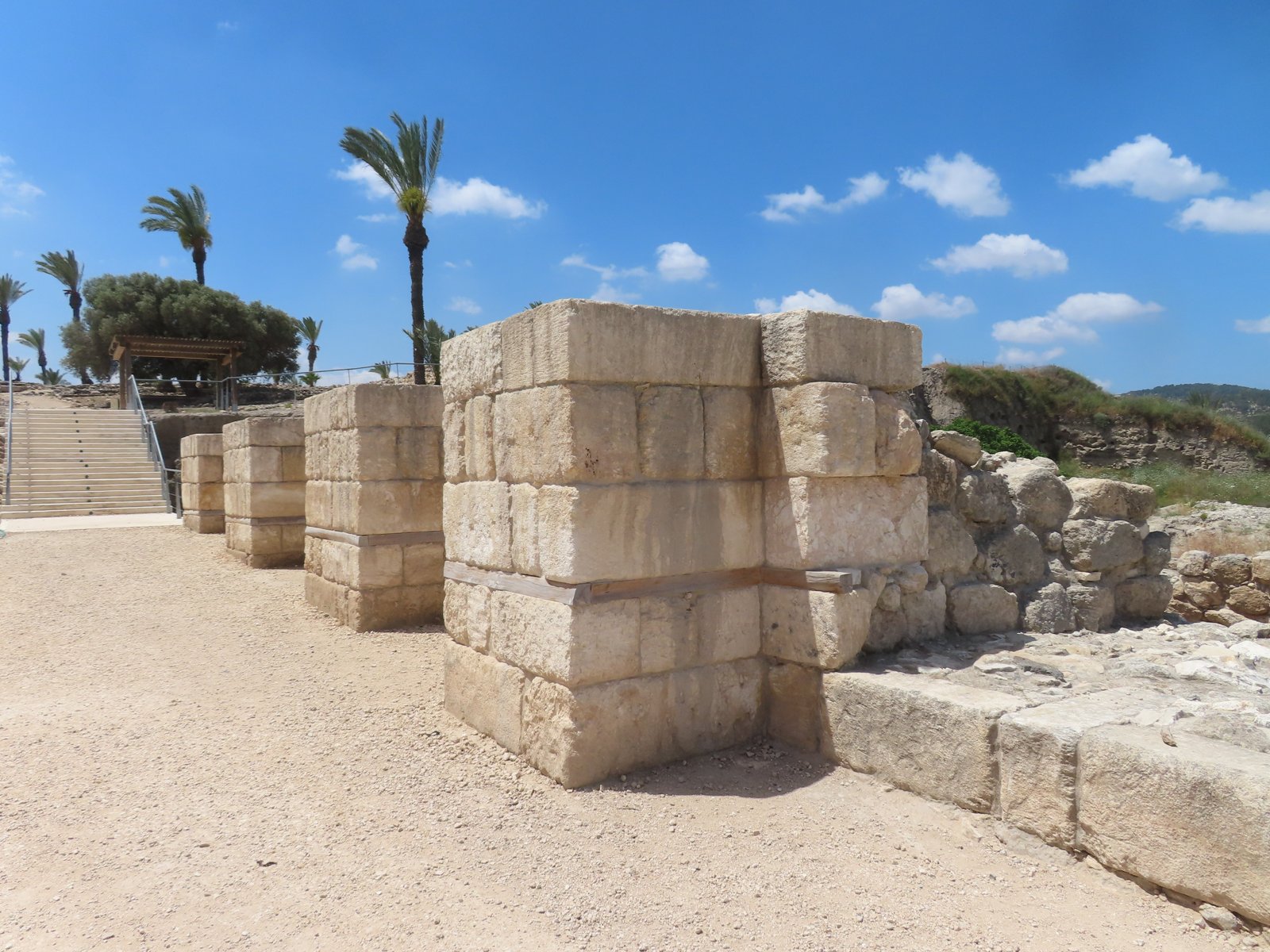
The six-chambered gate at Megiddo was once credited to Solomon. The 2018 excavations assigned its construction to Stratum VA–IVB and found that it was reused in Stratum IVA before a four-chambered gate replaced it. Finkelstein dates the construction to the first half of the ninth century BCE, in the Omride period. He assigns the nearby buildings generally identified as stables to the later eighth-century city. [40][41][42]
Assyria, Babylon and the end
From the mid-eighth century BCE, Tiglath-Pileser III annexed parts of the Levant and exacted tribute from other rulers. [50] In his account of the 701 BCE campaign, SennacheribSennacherib, king of AssyriaAssyrian king, 704–681 BCE; part of Ahiqar’s story is set at his court.Glossary · Click to read the explanation claims to have taken fortified towns of Judah, confined HezekiahHezekiah, king of JudahKing of Judah in the late eighth century BCE, named in Sennacherib’s Assyrian accounts of the 701 BCE campaign.Glossary · Click to read the explanation in Jerusalem and received tribute. [43] The palace reliefs from NinevehNineveh and KuyunjikNineveh is an ancient Assyrian city near Mosul in northern Iraq; Kuyunjik is one of its archaeological moundsGlossary · Click to read the explanation depict the conquest of Lachish (see the Lachish letters, record 1204, and the Siloam Tunnel Inscription, record 1157). [48] According to 2 Kings 23:29–30, King Josiah died at Megiddo in an encounter with Pharaoh Necho. [44] In 597 BCE, the Babylonian Chronicle records the capture of Jerusalem by Nebuchadnezzar IINebuchadnezzar IIBabylonian king, 605–562 BCE, appearing in Daniel and independently attested in inscriptions and building remains.Glossary · Click to read the explanation. [45][58] The later destruction, after a renewed revolt, is dated to 587 or 586 BCE and was accompanied by deportations (see the Babylonian exileBabylonian exileJudean deportations to Babylonia and the kingdom’s collapse in the early sixth century BCE; several phases, not everyone removed or returned at once.Glossary · Click to read the explanation). [35][36][46] Josephus, quoting an earlier account, gives thirteen years for Nebuchadnezzar’s siege of Tyre. [47] Under Persia the region changed again after 539 BCE, which is the subject of a later entry. [51]
Reading the evidence with care
The Hebrew Bible offers a literary account of the kingdoms, and royal inscriptions present events from the court’s perspective. Archaeological evidence depends on what survives and where excavations have taken place. At Megiddo, the order of the gates comes from the layers in which they were built and rebuilt. Their calendar dates also depend on the pottery sequence and radiocarbon evidence. [38][40][41]
Why it matters
The Iron Age is the setting of the texts and inscriptions that most readers know: the Hebrew Bible, the Assyrian annals, the Phoenician alphabet. Seeing the period as a mosaic of small kingdoms, each leaving its own kind of evidence, and noting where the dates are uncertain, is the first step in reading any of those sources fairly.
References and notes
- Wikipedia, 'Iron Age Levant' (secondary summary) First 100,000 of 186,091 characters: start of the Iron Age after c. 1200 BCE, northern and southern peoples, Assyrian and Neo-Babylonian rule; the last part was not read Return to the text ↑
- Wikipedia, 'Ammon' (secondary summary) First 100,000 characters: Ammon c. 11th century–332 BCE, Rabbah, Assyrian tribute, Moab and Edom in brief Return to the text ↑
- Radiocarbon dating of the Iron I/IIA transition: Boaretto, Sharon et al.; Mazar and Bronk Ramsey; Finkelstein and Piasetzky (Radiocarbon journal, 2005–2011) Web-search summary of these papers only (abstract-level); the full papers were not read Return to the text ↑
- Wikipedia, 'Sea Peoples' (secondary summary) First 100,000 of 245,738 characters: Egyptian sources, peoples named, origins debate, Late Bronze Age collapse, Peleset; the last part was not read Return to the text ↑
- Wikipedia, 'Philistines' (secondary summary) First 100,000 of 195,250 characters: origins, five cities, Assyrian and Babylonian end, Ashkelon excavations and 2019 DNA study; the last part was not read Return to the text ↑
- Wikipedia, 'Phoenicia' (secondary summary) First 100,000 of 319,298 characters: Iron Age city-states, trade, colonisation, Assyrian tribute, Tyre siege; the last part was not read Return to the text ↑
- Wikipedia, 'Arameans' (secondary summary) First 100,000 of 162,198 characters: first mentions, Aramean states, Hazael, spread of Aramaic, fall of Damascus; the last part was not read Return to the text ↑
- Wikipedia, 'Neo-Hittite states' (secondary summary) First 100,000 of 105,320 characters: Carchemish, Hamath, Sam'al, Tabal, Luwian hieroglyphs, Assyrian conquest; the last part was not read Return to the text ↑
- Wikipedia, 'Shoshenq I' (secondary summary) First 100,000 of 106,299 characters: Bubastite Portal list, dating c. 925 BCE, Megiddo fragment, Shishak identification and debates; the last part was not read Return to the text ↑
- Wikipedia, 'Kingdom of Judah' (secondary summary) First 100,000 of 192,619 characters: emergence debate, Tel Dan stele, Khirbet Qeiyafa; the last part was not read Return to the text ↑
- Wikipedia, 'Kingdom of Israel (Samaria)' (secondary summary) First 100,000 of 113,255 characters: Omride dynasty, Ahab, Mesha Stele, Jehu and the Black Obelisk, Jeroboam II, fall of Samaria; the last part was not read Return to the text ↑
- Wikipedia, 'Kingdom of Judah' (secondary summary) Same article, sections on Hezekiah and Sennacherib in 701 BCE, Josiah, the Babylonian conquest and the date of the destruction Return to the text ↑
- Wikipedia, 'Tel Megiddo' (secondary summary) First 100,000 of 154,138 characters: six-chambered gate, stables, Yadin versus Finkelstein dating, Josiah 609 BCE; the last part was not read Return to the text ↑
- Wikimedia Commons file page, 'Holy Land 2022 (1) P484 Megiddo main gate.jpg' File page read: description, author Fallaner, date 12 May 2022, licence CC BY-SA 4.0, size 5184 x 3888 Return to the text ↑
- Naama Yahalom-Mack and Adi Eliyahu-Behar, “The Transition from Bronze to Iron in Canaan: Chronology, Technology, and Context,” Radiocarbon 57, no. 2 (2015), 285–305. Publisher abstract, dates of the first utilitarian objects and the systematic production of iron. Return to the text ↑
- Israel Finkelstein and Eli Piasetzky, “Radiocarbon Dating the Iron Age in the Levant: A Bayesian Model for Six Ceramic Phases and Six Transitions,” Antiquity 84, no. 324 (2010), 374–385. Publisher abstract, ceramic phases and stratified samples from the late twelfth to mid-eighth centuries BCE. Return to the text ↑
- Elisabetta Boaretto, A. J. Timothy Jull, Ayelet Gilboa and Ilan Sharon, “Dating the Iron Age I/II Transition in Israel: First Intercomparison Results,” Radiocarbon 47, no. 1 (2005), 39–55. Pp. 39–41 and fig. 1, the conventional and lower dates and the comparison of results from Tel Dor and Tel Rehov. Return to the text ↑
- Amihai Mazar and Christopher Bronk Ramsey, “14C Dates and the Iron Age Chronology of Israel: A Response,” Radiocarbon 50, no. 2 (2008), 159–180. P. 159 and pp. 176–178 with fig. 4, alternative models, sensitivity to sample choices and evidence from end-of-Iron-I destruction deposits. Return to the text ↑
- Eric H. Cline, 1177 B.C.: The Year Civilization Collapsed (Princeton University Press, 2014), opening chapter. “Prologue: The Collapse of Civilizations,” Merneptah’s Karnak inscription and Ramesses III’s Year 8 record, quoted and discussed separately. Return to the text ↑
- University of Michigan, The Land of Israel / Palestine: Image Database, “Luxor: Merneptah Stele – overview.” Record and object photograph, Canaanite places named in the text and the separate reference to Israel. Return to the text ↑
- Lawrence E. Stager, Daniel M. Master and Adam J. Aja, Ashkelon 7: The Iron Age I (2020). Harvard Museum of the Ancient Near East publication record, summary of the Leon Levy Expedition’s final report on the early Iron Age settlement and decorated pottery. Return to the text ↑
- Michal Feldman et al., “Ancient DNA Sheds Light on the Genetic Origins of Early Iron Age Philistines,” Science Advances 5, no. 7 (2019), eaax0061. Abstract, results and discussion, ten individuals from three local time groups, early Iron Age European-related signal and its later disappearance below detectability. Return to the text ↑
- Lawrence E. Stager, “Ashkelon on the Eve of Destruction in 604 B.C.,” in Ashkelon 3: The Seventh Century B.C. (2011). Opening section on the destruction layer and the editors’ reading of the Babylonian Chronicle’s place name. Return to the text ↑
- Elizabeth Carter and Sarah Morris, “Crisis in the Eastern Mediterranean and Beyond: Survival, Revival, and the Emergence of the Iron Age,” in Assyria to Iberia at the Dawn of the Classical Age (Metropolitan Museum of Art, 2014). “Crisis, Collapse, or Game Change?” and the discussions of Carchemish and Aramean dynasties at Sam’al and Guzana. Return to the text ↑
- Metropolitan Museum of Art, “Western North Africa, 1000 B.C.–1 A.D.,” Heilbrunn Timeline of Art History. Chronology entry for 814 BCE, explicitly presented as the traditional date for the foundation of Carthage. Return to the text ↑
- A. R. Millard, “Assyrians and Arameans,” Iraq 45, no. 1 (1983), 101–108. Publisher extract, Aramaic annotations on cuneiform tablets and the coexistence of alphabetic Aramaic and cuneiform in the Neo-Assyrian empire. Return to the text ↑
- Avraham Faust, “Chronological and Spatial Changes in the Rural Settlement Sector of Ancient Israel during the Iron Age: An Overview,” Revue Biblique 122, no. 2 (2015), 247–267. Pp. 249–250, rural settlement in Iron I and the spread of new sites in the highlands. Return to the text ↑
- The Jewish Museum, “Tel Dan Stele,” exhibition record. Aramaic victory inscription of the ninth century BCE, “House of David,” and the proposed attribution to Hazael. Return to the text ↑
- Musée du Louvre, “Stèle de Mesha,” AO 5066, KAI 181. Date, discovery at Diban, language and inscription description. Return to the text ↑
- Shirly Ben-Dor Evian and Israel Finkelstein, “The Sheshonq Fragment from Megiddo: A New Interpretation,” Bulletin of the American Society of Overseas Research 390 (2023), 97–111. Institutional abstract, limestone fragment with the royal names, its findspot, and reconsideration of the original object type. Return to the text ↑
- 1 Kings 14:25–26, New International Version. The passage names Shishak and records a campaign in the reign of Rehoboam. Return to the text ↑
- Benjamin W. Porter, Against Moab: Interrogating the Archaeology of Iron Age Jordan (Cambridge University Press, 2025). Section on the Mesha Inscription, especially its lines 4–8, the Omride domination and Mesha’s account of retaking settlements. Return to the text ↑
- Center for Online Judaic Studies, “Kurkh Stele, 853 BCE.” Excerpts from Shalmaneser III’s inscription and object discussion, the Qarqar coalition and Ahab. Return to the text ↑
- British Museum, “The Black Obelisk of Shalmaneser III,” hosted on Google Arts & Culture. Second register and its inscription, tribute of Jehu around 841 BCE. Return to the text ↑
- Johanna Regev et al., “Radiocarbon Chronology of Iron Age Jerusalem Reveals Calibration Offsets and Architectural Developments,” Proceedings of the National Academy of Sciences 121 (2024), e2321024121. Abstract, excavated Iron Age contexts and the historically anchored 586 BCE destruction horizon used in the radiocarbon study. Return to the text ↑
- Klaus Koenen, “Zerstörung Jerusalems (587 v. Chr.),” Wissenschaftliches Bibellexikon im Internet (Deutsche Bibelgesellschaft, 2013). Sections 1.3 and 2.4, the first capture and the chronological evidence behind the 587 and 586 BCE datings of the later destruction. Return to the text ↑
- Grant Frame, The Royal Inscriptions of Sargon II, King of Assyria (721–705 BC), Royal Inscriptions of the Neo-Assyrian Period 2 (Eisenbrauns, 2021). Text 1, lines 12b–17a and note on line 15, and text 7, lines 23b–25a with variants of the reported deportation count. Return to the text ↑
- Yosef Garfinkel, Katharina Streit, Saar Ganor and Michael G. Hasel, “State Formation in Judah: Biblical Tradition, Modern Historical Theories, and Radiometric Dates at Khirbet Qeiyafa,” Radiocarbon 54, nos. 3–4 (2012), 359–369. Publisher abstract, early date for the fortified settlement and the excavation team’s attribution to Judah. Return to the text ↑
- Nadav Na’aman, “Was Khirbet Qeiyafa a Judahite City? The Case against It,” Journal of Hebrew Scriptures 17 (2017). Introduction and “The Detachment of Khirbet Qeiyafa from Its Natural Environment,” the early tenth-century foundation and objections to the political affiliation proposed by the excavators. Return to the text ↑
- Israel Finkelstein, Matthew J. Adams and Mario A. S. Martin, “Tel Megiddo – 2018,” Hadashot Arkheologiyot 133 (2021), final report. Area Z and fig. 5, construction of the six-chambered gate in VA–IVB, reuse in IVA and replacement by the four-chambered gate. Return to the text ↑
- Israel Finkelstein, “Megiddo of the Omride Dynasty,” Near Eastern Archaeology 88, no. 3 (2025), 204–211. Publisher abstract, historical attribution to the Omrides and first-half ninth-century date proposed for VA–IVB. Return to the text ↑
- Israel Finkelstein, “Horse Industry City: Eighth-Century BCE Megiddo,” Near Eastern Archaeology 88, no. 3 (2025), 212–220. University abstract, proposed dating and interpretation of the later complex associated with the breeding and training of horses. Return to the text ↑
- Daniel David Luckenbill, The Annals of Sennacherib, Oriental Institute Publications 2 (Chicago, 1924). Translation of the prism’s third-campaign account, col. iii, lines 18–49, Judah’s fortified towns, Hezekiah in Jerusalem and the tribute. Return to the text ↑
- 2 Kings 23:29–30, New American Bible, Revised Edition, published by the U.S. Conference of Catholic Bishops. Encounter with Pharaoh Neco and Josiah’s death at Megiddo. Return to the text ↑
- Babylonian Chronicle 5, “Jerusalem Chronicle,” BM 21946, translation adapted from A. K. Grayson by Jona Lendering. Reverse 11′–13′, second day of Addaru in Nebuchadnezzar II’s seventh year, capture of the city and its king. Return to the text ↑
- 2 Kings 25:1–12, New International Version. The account of the later siege, burning of the temple and houses, and deportations. Return to the text ↑
- Flavius Josephus, Against Apion 1.156, trans. William Whiston, Perseus Digital Library (Tufts University). The passage quoting the earlier Phoenician account of the thirteen-year siege of Tyre during Ithobal’s reign. Return to the text ↑
- British Museum, “Lachish relief: Stone panel from the South-West Palace of Sennacherib (Room 36, no. 10),” hosted on Google Arts & Culture. Object record, scene of captives leaving Lachish. Return to the text ↑
- Babylonian Chronicle 1, “From Nabû-Nasir to Šamaš-šuma-ukin,” translation adapted from A. K. Grayson by Jona Lendering. Column i 27–30, accession of Shalmaneser V and the entry on Samaria. Return to the text ↑
- Hayim Tadmor and Shigeo Yamada, The Royal Inscriptions of Tiglath-pileser III (744–727 BC) and Shalmaneser V (726–722 BC), Kings of Assyria, Royal Inscriptions of the Neo-Assyrian Period 1 (Eisenbrauns, 2011). Tiglath-pileser III text 27, lines 2b–7, and text 42, lines 1′–8′a, tribute from western rulers and annexation of parts of Syria and the southern Levant. Return to the text ↑
- Metropolitan Museum of Art, “Cyrus and the Judean Diaspora.” Cyrus’s capture of Babylon in 539 BCE and policies in the early Persian period. Return to the text ↑
- The Epigraphic Survey, Reliefs and Inscriptions at Karnak, Volume III: The Bubastite Portal, Oriental Institute Publications 74 (Chicago, 1954). Plates of Shoshenq I’s campaign monument and the rings carrying the names of places. Return to the text ↑
- Aren M. Maeir and Carl S. Ehrlich, “Excavating Philistine Gath: Have We Found Goliath’s Hometown?” Biblical Archaeology Review 27, no. 6 (2001), hosted by the Center for Online Judaic Studies. Archaeological and biblical evidence for the five cities traditionally associated with the Philistines. Return to the text ↑
- Metropolitan Museum of Art, “The Phoenicians (1500–300 B.C.),” Heilbrunn Timeline of Art History. Opening paragraphs on independent coastal cities, including Tyre, Sidon, Byblos and Arwad, and their Mediterranean trade and colonies. Return to the text ↑
- Avraham Faust and Zev I. Farber, “Edom, Moab, Ammon, and the Gilead,” in The Bible’s First Kings (Cambridge University Press, 2025). Chapter summary and archaeological regional framework for the Transjordanian kingdoms. Return to the text ↑
- Aslı Özyar, “Phoenicians and Greeks in Cilicia? Coining Elite Identity in Iron Age Anatolia,” in Assyria to Iberia: Art and Culture in the Iron Age (Metropolitan Museum of Art, 2016). Discussion of Cilician rulers’ hieroglyphic Luwian and Phoenician inscriptions, with examples from İncirli and Çineköy. Return to the text ↑
- 2 Kings 14:23–29, New American Bible, Revised Edition, published by the U.S. Conference of Catholic Bishops. Jeroboam II’s reign in Samaria and the report of territorial expansion. Return to the text ↑
- Cuneiform Digital Library Initiative, “Wiseman, Chronicles BM 021946,” P555785. Object metadata and the primary edition by D. J. Wiseman for the tablet that preserves the 597 BCE entry. Return to the text ↑
Suggest a correction · Suggest a source for this record
Cite this record
IL Archive, «The Iron Age in the Levant (c. 1200–586 BCE)», https://ilarchive.com/en/periods/iron-age-levant