Person
Omri, king of Israel
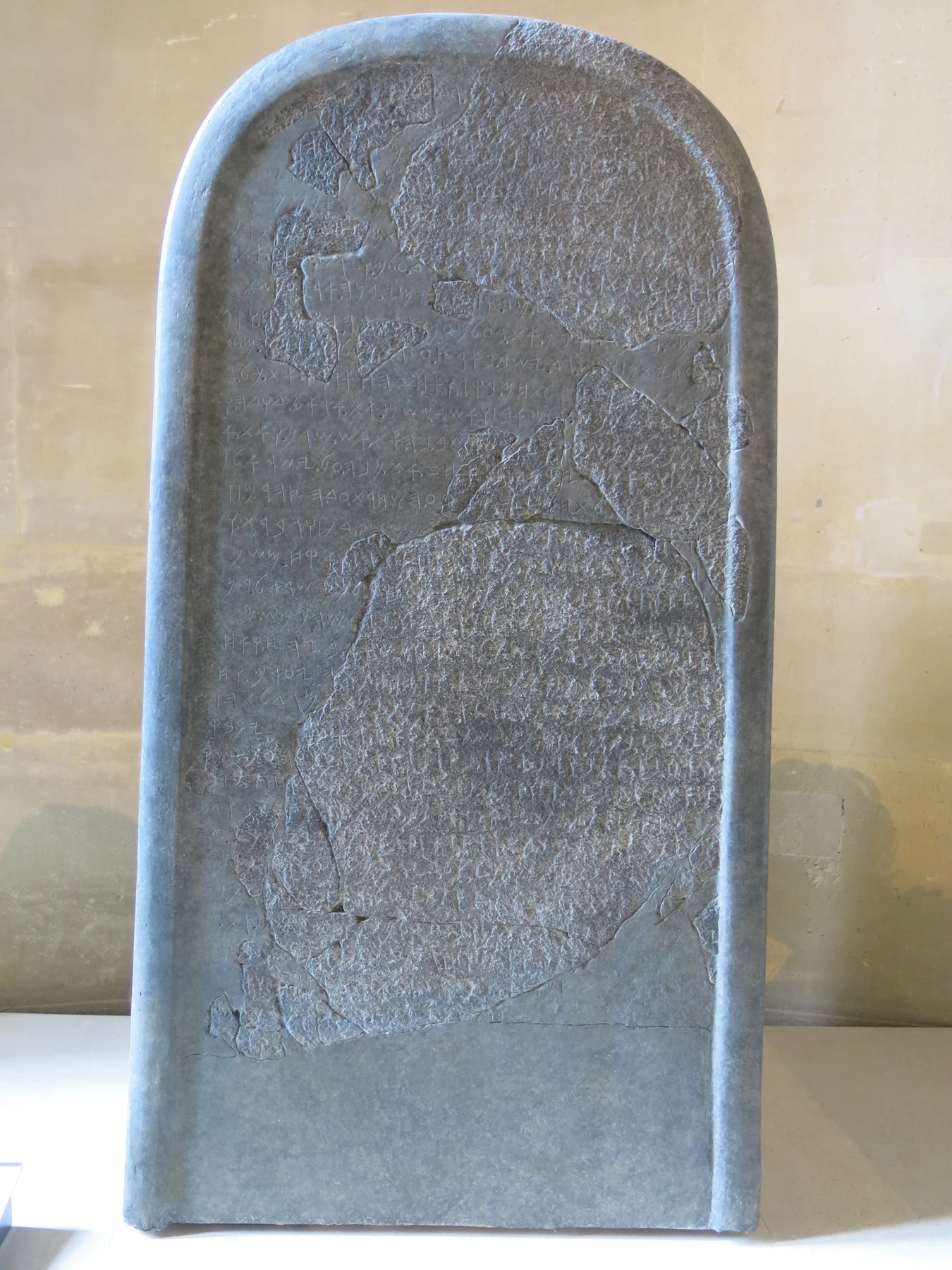
Ninth-century BCE ruler of ancient Israel, named in the Mesha inscription's account of Moab's subjection.
Last reviewed:
Text
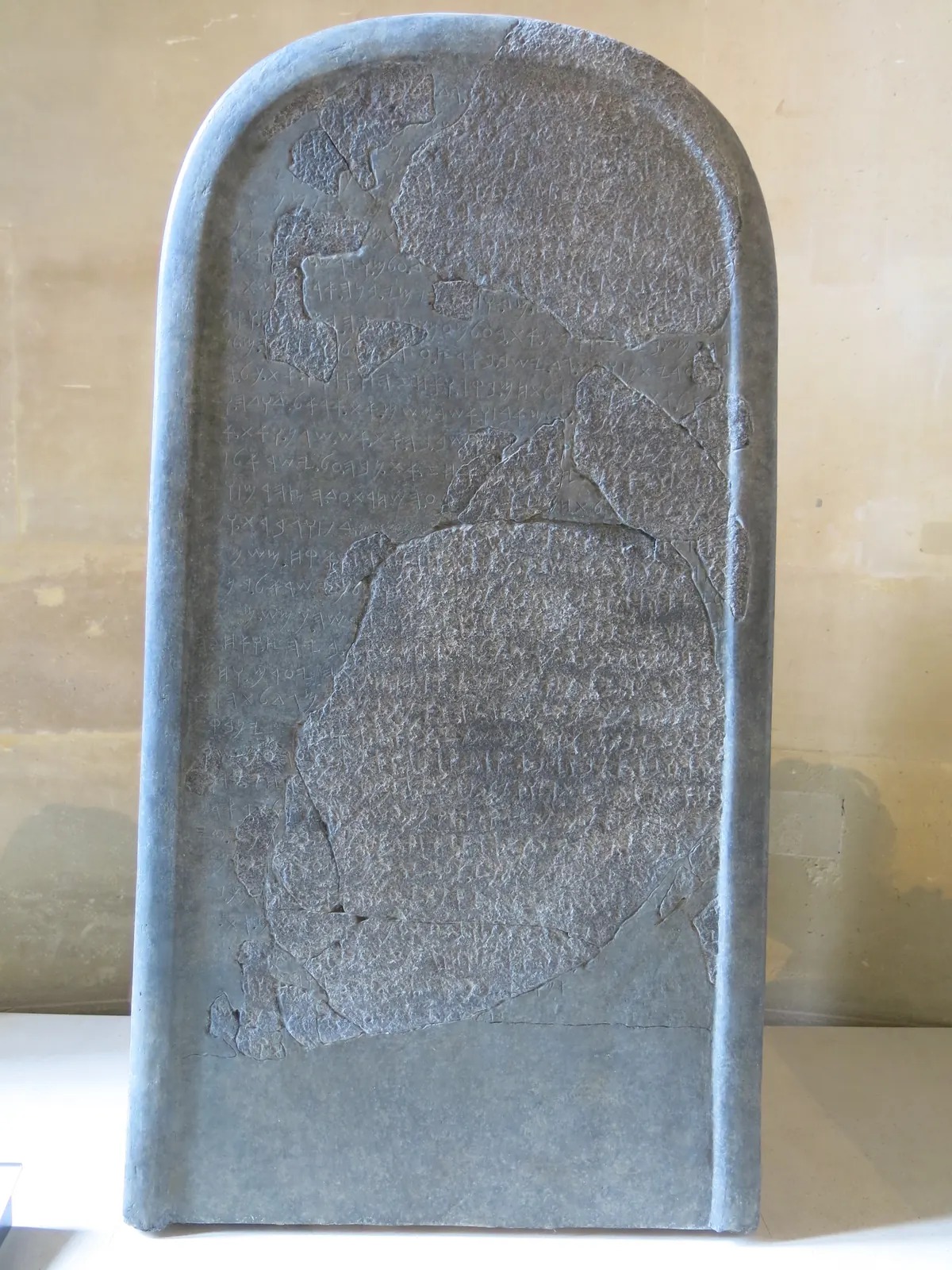
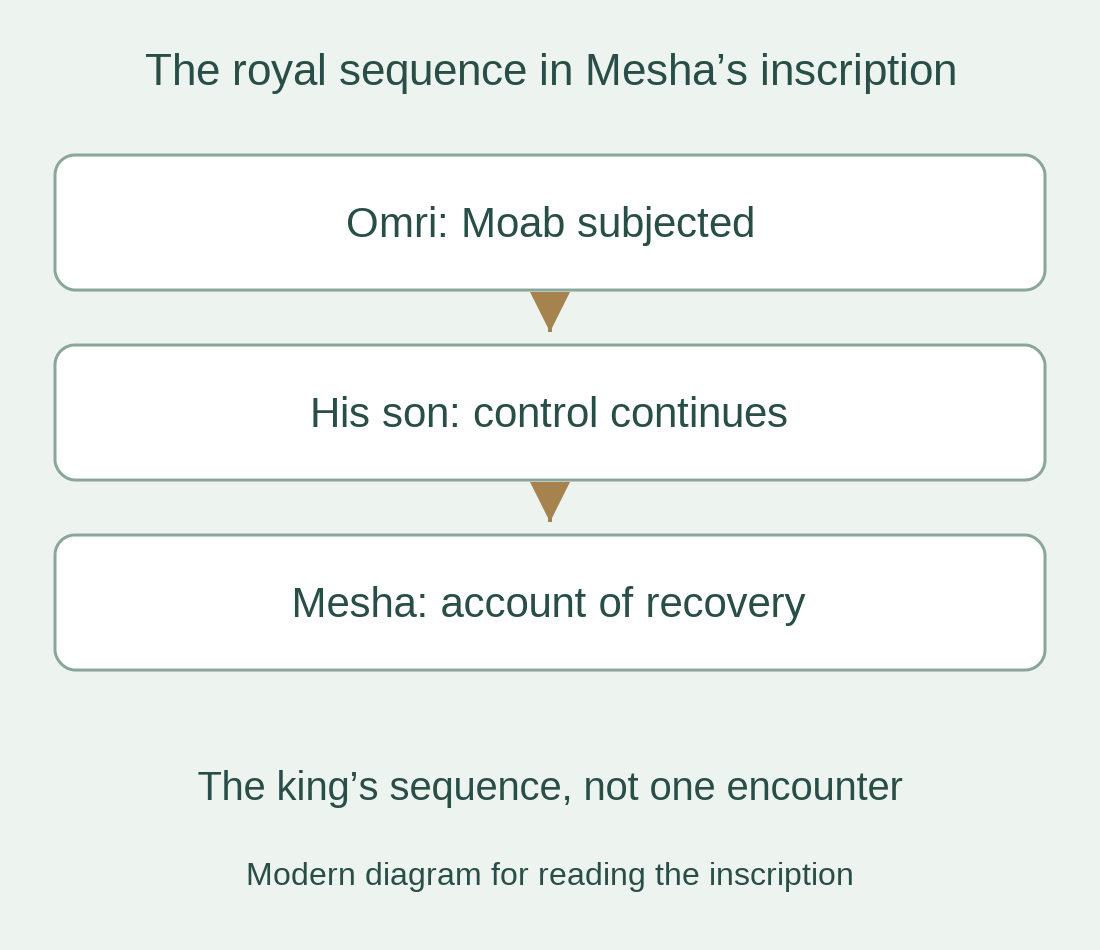
Omri was a ninth-century BCE king of ancient IsraelAncient IsraelName attested for a population on the Merneptah Stele around 1208 BCE, later for the northern Iron Age kingdom and for broader textual and religious identities; the senses are not identical.Glossary · Click to read the explanation. The Mesha inscriptionMesha SteleA ninth-century BCE Moabite royal basalt stele at the Louvre (AO 5066; KAI 181). Its inscription names Chemosh, Omri, Israel and YHWH (line 18). A proposed “House of David” reading in damaged line 31 is disputed.Glossary · Click to read the explanation names him as a ruler who subjected Moab, then moves to his successor and Mesha's recovery of territory.[1]
This is an external reference to the king within his Moabite opponent's account. Actions attributed to Omri should be distinguished from events placed under his successor, rather than compressing the stages into a single encounter between Omri and Mesha.[1][2]
References and notes
- K. C. Hanson, The Mesha Stele, published translation adapted from Albright 1969. Royal identity, conflict, named places and objects. Return to the text ↑
- Christine Hayes, The Deuteronomistic History: Response to Catastrophe, lecture 14, Open Yale Courses. Selected lecture discussion of Omri and Ahab, followed by Kings' sources and editorial framework; not a reading of the complete biblical books. Return to the text ↑
Suggest a correction · Suggest a source for this record
Cite this record
IL Archive, «Omri, king of Israel», https://ilarchive.com/en/people/omri-king-israel
Continue reading