Person
Mesha, king of Moab
Ninth-century BCE king of Moab whose inscription recounts conflict, territorial recovery and construction.
Last reviewed:
Text
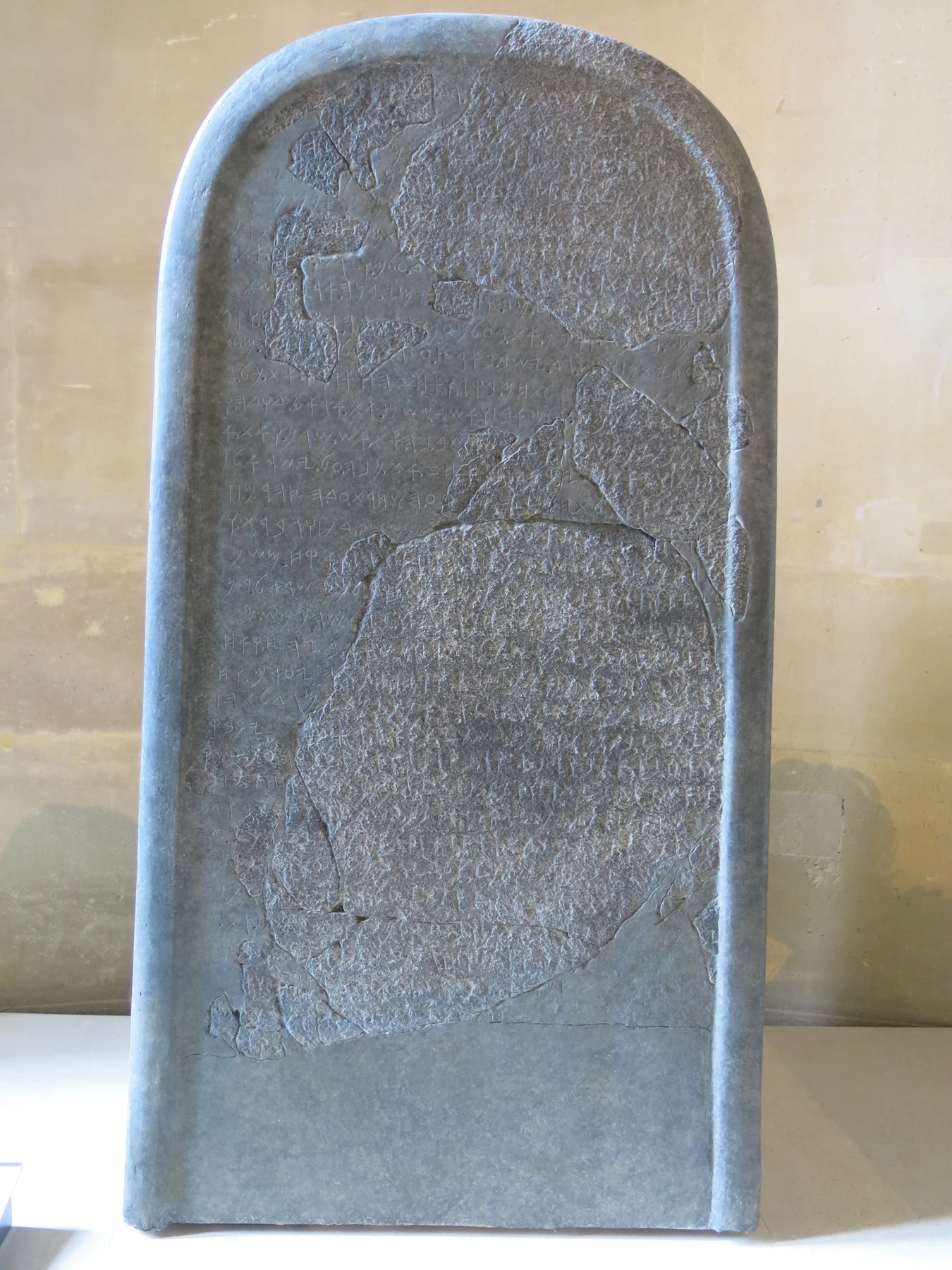
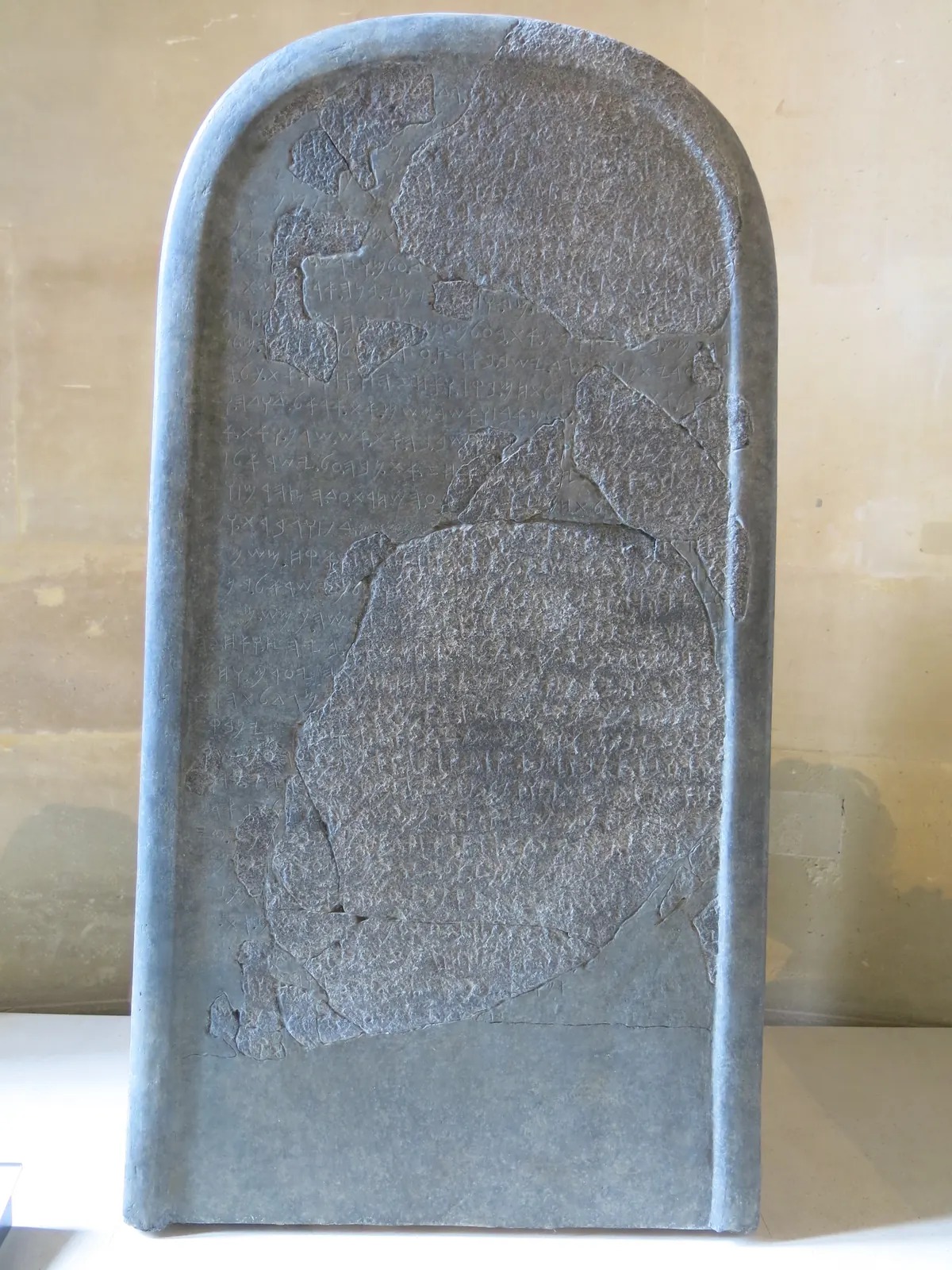
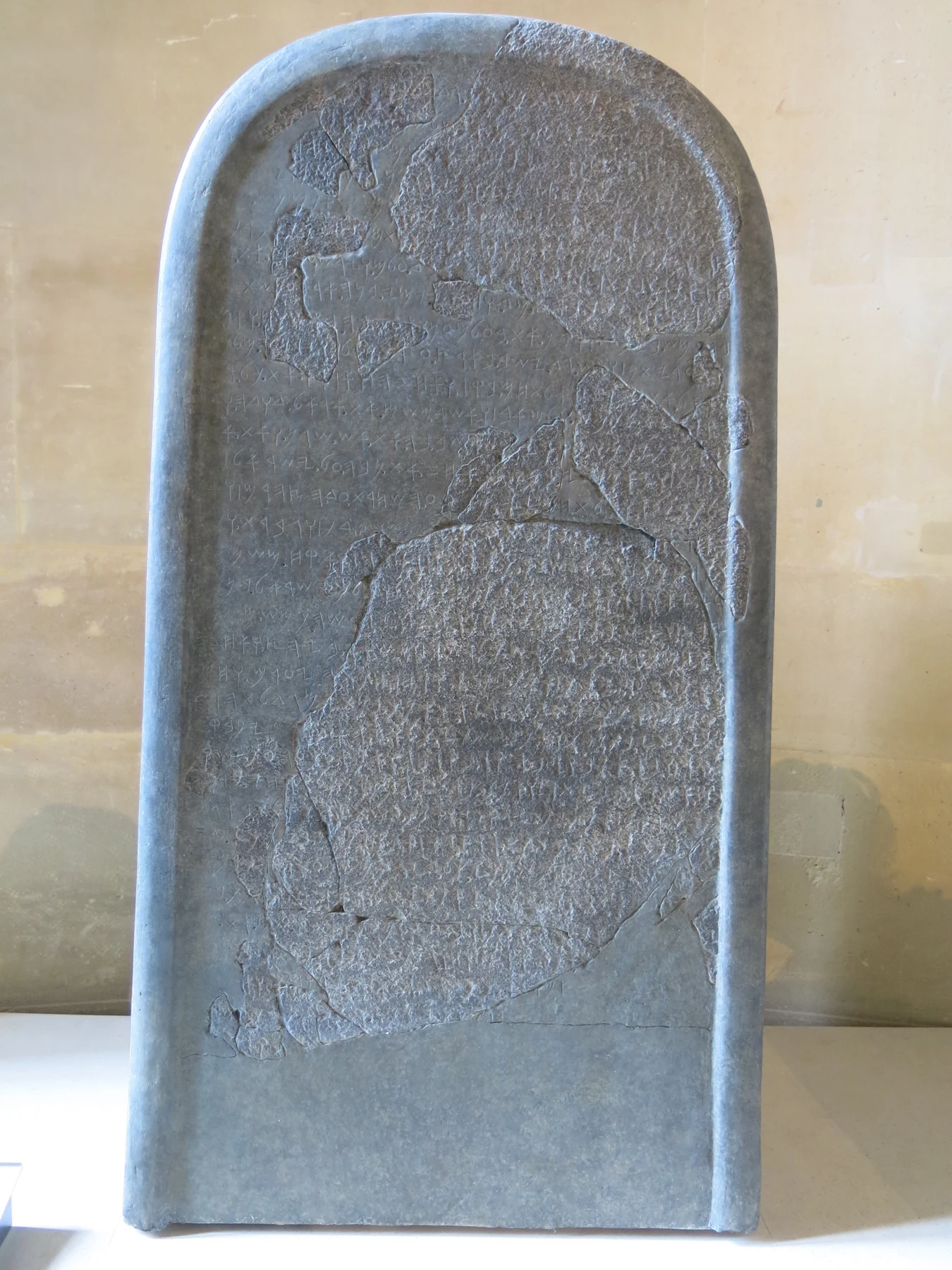
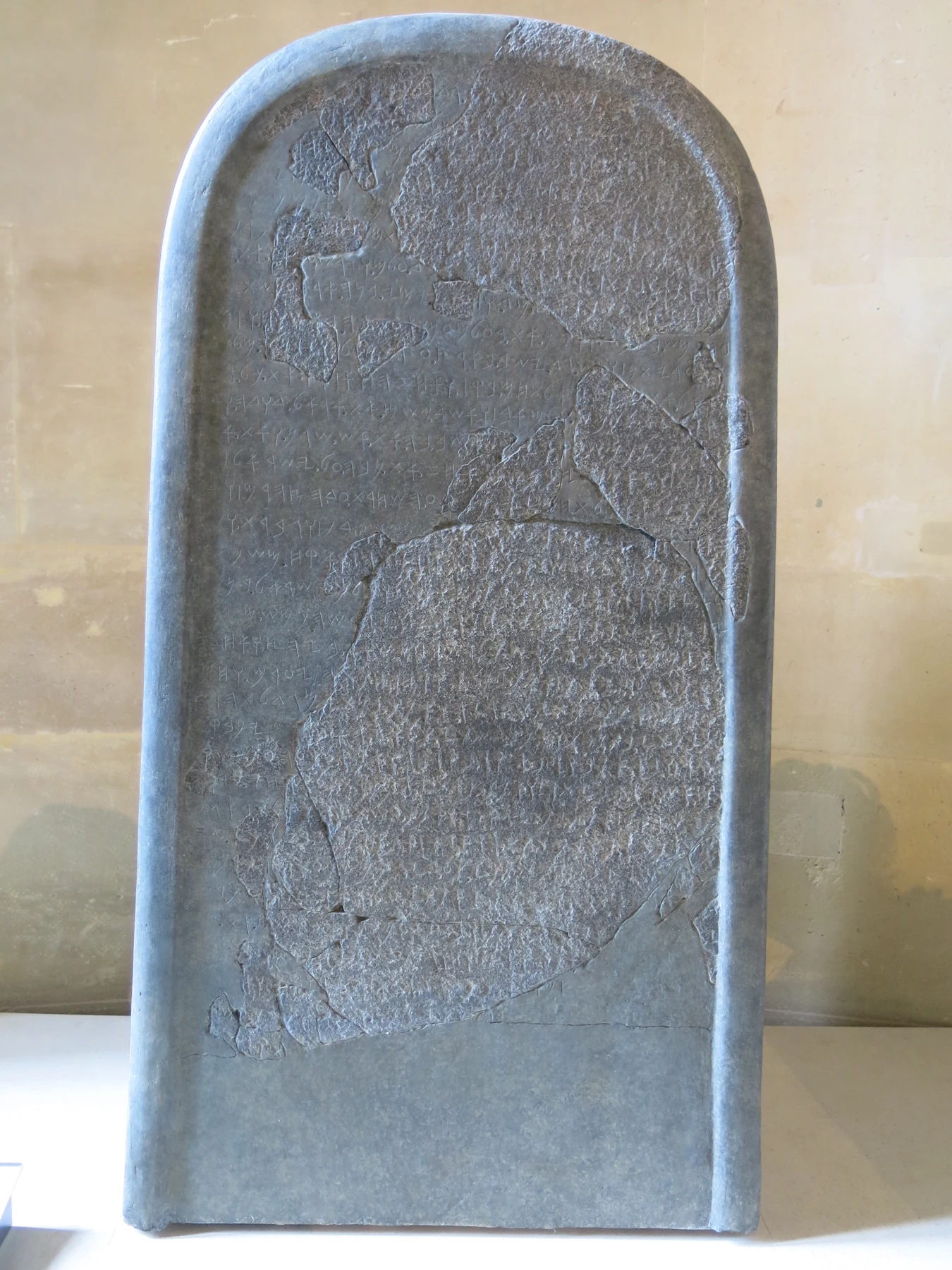
Mesha was a ninth-century BCE king of MoabAncient MoabAn ancient land and kingdom in present-day Jordan, with Mesha's ninth-century BCE inscription a major local witness.Glossary · Click to read the explanation. His inscriptionMesha SteleA ninth-century BCE Moabite royal basalt stele at the Louvre (AO 5066; KAI 181). Its inscription names Chemosh, Omri, Israel and YHWH (line 18). A proposed “House of David” reading in damaged line 31 is disputed.Glossary · Click to read the explanation identifies him as the son of an earlier king, describes territory recovered from Israel and building projects, and attributes success to ChemoshChemoshMajor Moabite deity in the ninth-century BCE Mesha Stele, credited with restoring territory and receiving war booty; also named in Hebrew texts from another perspective.Glossary · Click to read the explanation.[1]
Second Kings 3 names him in an account of a campaign against him. The inscription presents royal testimony in his voice, while the biblical narrative offers another perspective. The historical ruler is distinct from the stone bearing his text.[1][2]
References and notes
- K. C. Hanson, The Mesha Stele, published translation adapted from Albright 1969. Royal identity, conflict, named places and objects. Return to the text ↑
- 2 Kings 3, Hebrew text with the historical Jewish Publication Society translation. 3:4–27: Mesha, conflict, sacrifice and withdrawal. Return to the text ↑
Suggest a correction · Suggest a source for this record
Cite this record
IL Archive, «Mesha, king of Moab», https://ilarchive.com/en/people/mesha-king-moab
Continue reading