Entity
Esarhaddon’s Succession Treaty
A reference page linking a name, group, or concept to the materials that discuss it.
A 672 BCE Assyrian loyalty oath securing Ashurbanipal’s succession, with copies from Nimrud and Tell Tayinat.
Text
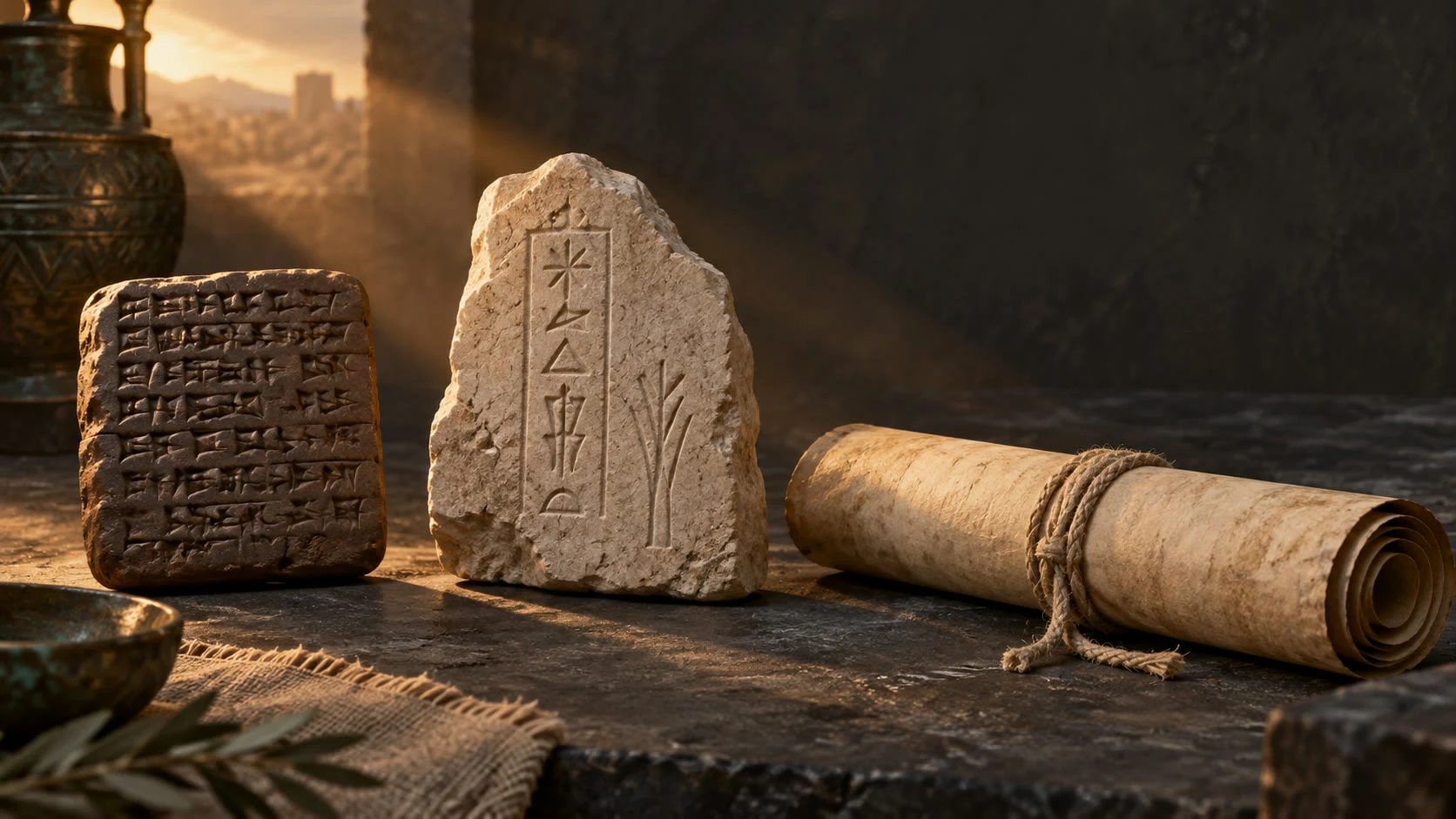
Esarhaddon obliged subjects to protect his son AshurbanipalAshurbanipalAshurbanipal was an Assyrian king of the seventh century BCE, reigning about 668–631 BCEGlossary · Click to read the explanation’s succession, report sedition and transmit allegiance to descendants. The oath invokes divine witnesses and many curses. Scholars compare provisions with Deuteronomy 13 and 28; Tell Tayinat proves western circulation, not a known JerusalemJerusalemJerusalem is a city of religious importance in Judaism, Christianity and IslamGlossary · Click to read the explanation copy. [3][4][10][12]
References and notes
- Esarhaddon Succession Treaty, SAA 2 no. 6, indexed passages cross-checked with scholarship; full digital edition could not be opened SAA 2 no. 6, Esarhaddon's Succession Treaty, primary edition and translation on ORACC Return to the text ↑
- Jacob Lauinger, Tell Tayinat copy; bibliographic and find record only, not the full article Jacob Lauinger, Esarhaddon's Succession Treaty at Tell Tayinat, JCS 64 (2012), bibliographic record Return to the text ↑
- C. L. Crouch, Israel and the Assyrians, selected pp. 49–89, 106–107, 178–180, not the whole book C. L. Crouch, Israel and the Assyrians (2014), especially chs. 2–3 and conclusion Return to the text ↑
- Gad Barnea, complete essay on blessings, curses and regional tradition Gad Barnea, Enforcing YHWH's Covenant with Blessings and Curses: Imperial Style, online scholarly essay Return to the text ↑
Research history
Substantive changes are retained here. Minor copy edits remain in the internal operational log.
-
Substantive record update
Suggest a correction · Suggest a source for this record
Cite this record
IL Archive, «Esarhaddon’s Succession Treaty», Edition 2, https://ilarchive.com/en/entities/esarhaddons-succession-treaty