Period
Kassite Babylonia (c. 1595–1155 BCE)
- Timeline
- From 1595 BCE to 1155 BCE
- Region
- Mesopotamia
The Kassite kings built a royal city near present-day Baghdad and exchanged letters and gifts with Egypt. Later king lists preserve the names of their earliest rulers, whose rise to power in Babylonia remains unclear.
Estimated reading time: 5 min Published Last reviewed:
Share article
Text
Introduction
After the fall of BabylonBabylonBabylon is an ancient city in central present-day Iraq, south of BaghdadGlossary · Click to read the explanation’s First Dynasty, kings with Kassite names eventually took power in Babylonia. Their dynasty became the longest-lived in the history of Babylon. Its history can be traced through royal inscriptions, administrative records, diplomatic letters and inscribed stone monuments. Evidence for the first kings is particularly sparse. [11][12]
Who were the Kassites?
The Zagros Mountains east of MesopotamiaMesopotamiaHistorical region associated with the Tigris and Euphrates: Uruk, Ur, Eridu, cuneiform, Sumer, Akkad, Babylon and Assyria, their languages and cults, and the limits of archaeological evidence.Glossary · Click to read the explanation are a proposed Kassite homeland. The origins of the Kassites remain uncertain. Their language is known from personal and divine names, bilingual word lists and words preserved in AkkadianAkkadianAn ancient East Semitic language written in cuneiform from the third millennium BCE; its varieties include Babylonian and Assyrian, and it served in international diplomacy.Glossary · Click to read the explanation texts, including terms for horses. Its relationship to any other known language remains unestablished. One formula for the ninth year of Samsu-iluna, HammurabiHammurabiKing of Babylon in Mesopotamia, reigning around 1792–1750 BCE. A celebrated legal text preserved on a stele and cuneiform copies bears his name.Glossary · Click to read the explanation’s successor, claims a victory over Kassite troops in the 18th century BCE. [13][14]
The dates and the early kings
The dates in the title follow a conventional periodization. The Hittite sack of Babylon, dated to 1595 BCE in the Middle Chronology and 1531 BCE in the Low Chronology, marks the end of the Old Babylonian period (record 1218) and the start of the Middle Babylonian period in this scheme. The precise date when Kassite rulers took power in Babylon remains uncertain. Babylonian King List A gives the Kassite dynasty 36 kings and a total of 576 years and nine months. This includes rulers placed before the dynasty’s rise in Babylon, and the earliest reigns are poorly documented. [11][12][24]
The First Sealand Dynasty ruled parts of southern Babylonia. Its administration is documented by an archive excavated at Tell Khaiber near Ur. The political sequence after the Hittite raid is poorly documented. The Metropolitan Museum of Art’s chronology places Kassite conquest of the southern cities around 1475 BCE. [11][25]
An inscription in the name of Agum-kakrime survives in two later copies from NinevehNineveh and KuyunjikNineveh is an ancient Assyrian city near Mosul in northern Iraq; Kuyunjik is one of its archaeological moundsGlossary · Click to read the explanation. It recounts bringing the statues of MardukMardukBabylon’s leading god, worshipped at Esagil and elevated in the Akkadian Enūma eliš. His symbols include a spade and mušḫuššu dragon. His earliest origins remain obscure; Nibiru is no evidence of a planetary homeland.Glossary · Click to read the explanation and Zarpanitu back from the land of Hana and reinstalling them in Esagila at Babylon. The date and authenticity of the composition remain disputed. [12][15]
One kingdom, two capitals
Kassite rulers extended their power across Babylonia. In a letter found at AmarnaAmarna / AkhetatenAmarna is the archaeological site of Akhetaten, Akhenaten’s fourteenth-century BCE capital in Middle Egypt, preserving royal boundary stelae, temples, houses and cemeteries.Glossary · Click to read the explanation, Burna-Buriash II calls himself king of Karduniash, a name for Babylonia. Babylon remained a cult centre for Marduk. The Kassite kings built temples for Babylonian gods and also honoured Shuqamuna and Shumaliya as patrons of the royal family. [11][13][19]
Kurigalzu I founded the royal city of Dur-Kurigalzu, now Aqar Quf near Baghdad. The Metropolitan Museum of Art places the foundation in the late 15th or early 14th century BCE. The city had a palace and temples, including the sanctuary of EnlilEnlilEnlil/Ellil: a major Mesopotamian god associated with destinies, kingship, and Ekur at Nippur, already prominent in third-millennium god lists. His name’s origin and cult beginnings remain debated.Glossary · Click to read the explanation with its mudbrick zigguratZigguratZiggurat: a monumental stepped or terraced cult structure of ancient Mesopotamia. Not every raised temple platform was a ziggurat, and the form and specific use of lost upper stages often remain uncertain.Glossary · Click to read the explanation. Stamped bricks in the ziggurat’s fired-brick staircase helped the first Iraqi excavators identify the site. A joint Iraqi–Italian survey of the district began in 2022. The expedition led by Nicolò Marchetti reports its first excavation and conservation season at Aqar Quf in 2024. [11][16][17][18][27]
Nippur, the old cult centre of Enlil, is especially well documented. Archaeologists recovered thousands of administrative records there from this period. Excavations at the EkurEkur: Enlil’s Temple at NippurEkur (“Mountain House”) was Enlil’s chief sanctuary at Nippur, present-day Iraq; the name may extend to its precinct. Hymns and royal inscriptions attest to its prestige and rebuilding across periods; it is not simply the ziggurat.Glossary · Click to read the explanation sanctuary also document Kassite rebuilding, including work on the ziggurat. [11][26]
Writing to the pharaoh: the Amarna letters
In the 14th century BCE, rulers of Egypt and other major Near Eastern kingdoms exchanged diplomatic letters in AkkadianAkkadianAn ancient East Semitic language written in cuneiform from the third millennium BCE; its varieties include Babylonian and Assyrian, and it served in international diplomacy.Glossary · Click to read the explanation. The archive at Amarna (record 215) preserves correspondence with the Babylonian kings Kadashman-Enlil and Burna-Buriash II, including letters about gifts and royal marriages. In letter 9, Burna-Buriash addresses the pharaoh as his brother, mentions a gift of two minas of gold and asks for more gold for work on a temple. Other letters record gifts of horses, chariots and lapis lazuli. [19][20]
Rivals: Assyria, the Hittites and Elam
The Kassite kings maintained diplomatic ties with the HittitesHittitesAncient people and kingdom of Anatolia, dominating much of Anatolia and northern Syria around 1650–1200 BCE.Glossary · Click to read the explanation and had ties by marriage to the ruling houses of Assyria and Elam. Relations with Assyria and Elam also brought periods of war. Tukulti-Ninurta I of Assyria defeated the Babylonian king Kashtiliash IV and took him prisoner to Assur. The Metropolitan Museum of Art dates the capture of Babylon to about 1225 BCE. The Kassite dynasty continued after this defeat. [11][12][13]
Kudurru: stones that carry land grants
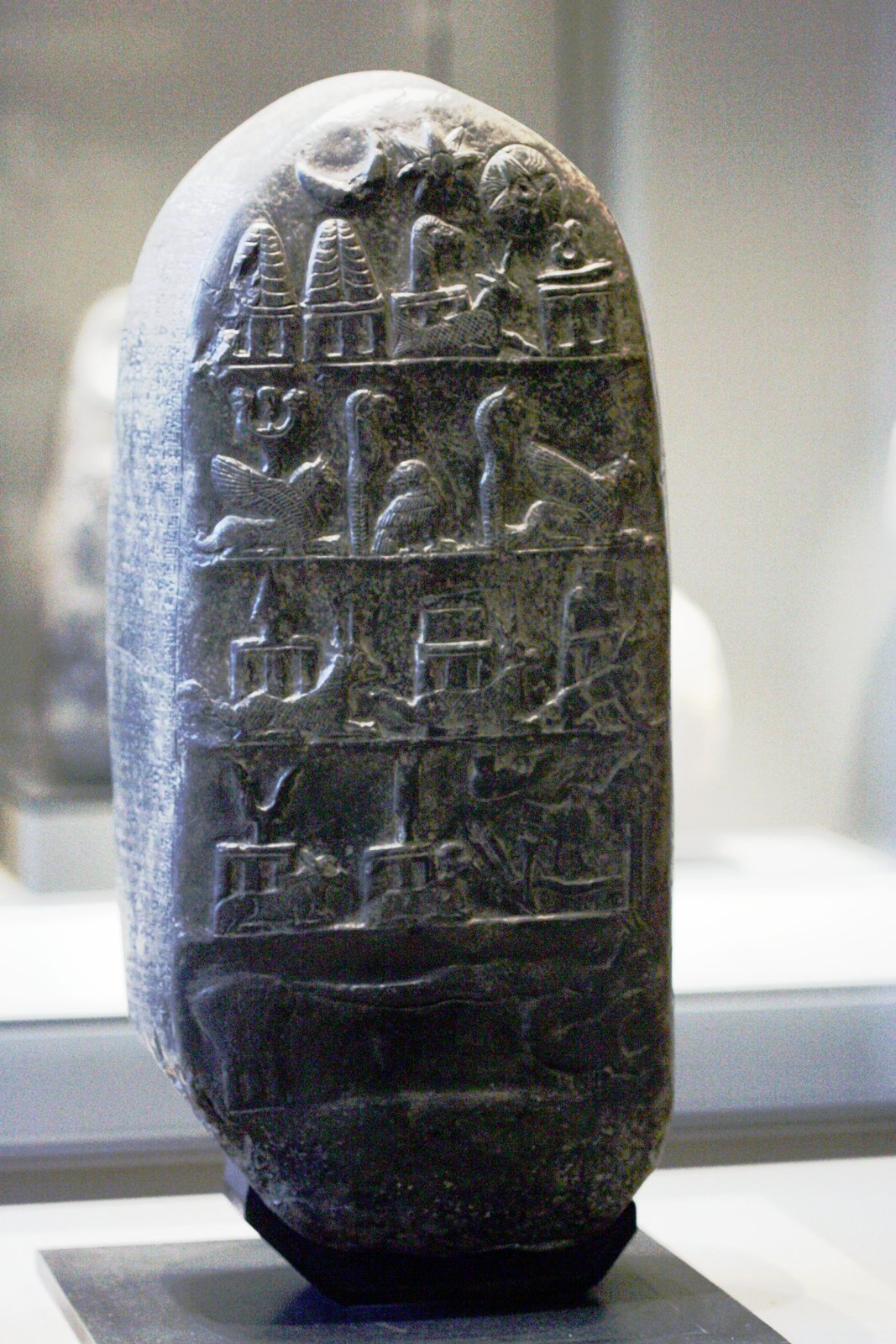
Many of the inscribed stones called kudurrus commemorate royal grants of land or other privileges. They may describe the boundaries of the land, name the recipient and call for divine sanctions against anyone who alters the grant. Their texts often call the stone a naru, or monument. Kathryn SlanskiKathryn SlanskiYale scholar of Mesopotamia, studying texts, images, inscribed monuments, law and authority.Glossary · Click to read the explanation argues that they are monuments recording rights, drawing on the inscriptions, the carved emblems and the recovery of some pieces in temple settings. [21]
Louvre Sb 22 is a limestone kudurru from the reign of Meli-Shipak II, dated by the museum to about 1186–1172 BCE. It records the king’s grant of land to his son Marduk-apla-iddin. The Louvre identifies the star, moon and solar disk as emblems of IshtarInanna / IshtarA prominent Mesopotamian goddess whose Sumerian name Inanna became associated with Akkadian Ishtar across diverse traditions. She was associated with desire, war, royal authority and Venus, while local forms and genealogies varied among texts.Glossary · Click to read the explanation, Sin and ShamashShamashMesopotamian god of the sun and justice, shown before Hammurabi on an eighteenth-century BCE stele preserved in the Louvre.Glossary · Click to read the explanation. Its catalogue records that the stone was taken from Babylonia to Susa as war booty in the 12th century BCE and found on the Susa acropolis in 1898. [22]
The end of the dynasty
Wars with Elam brought the Kassite dynasty to an end in the 12th century BCE. On the victory stele of Naram-Sin, a later Elamite inscription says that Shutruk-Nahhunte brought the monument from Sippar. It was found at Susa. Babylonian texts associate the removal of Marduk’s statue to Elam with the defeat of Enlil-nadin-ahi, the last Kassite king, in the time of Kutir-Nahhunte II. Brinkman’s chronology ends the dynasty in 1155 BCE. Ran Zadok places its end around 1150 BCE. The Second Dynasty of Isin later ruled Babylonia. [11][12][13][15][23]
Why it matters
The evidence for Kassite Babylonia varies across the centuries. Later king lists preserve the names of the earliest rulers. The letters from Amarna, the administrative records from Nippur and the carved kudurrus document particular relationships and transactions under later kings. A monument associated with Nazi-Maruttash (record 975) even tells how a damaged clay original was replaced by a stone copy. [11][12][19][21]
References and notes
- Wikipedia, 'Kassites' (secondary summary) First 100,000 of 118,711 characters: origin, language, first mentions, rise to power, rulers, horses, kudurru, Dur-Kurigalzu, Nippur, Amarna letters, neighbours, end of the dynasty; the final part was not read Return to the text ↑
- Wikipedia, 'Kassite dynasty of Babylon' (secondary summary) First 100,000 of 151,848 characters: chronology, king list, Burna-Buriash II, Kurigalzu II, Assyrian and Elamite conflicts, end of the dynasty, caveats on sources; the final part was not read Return to the text ↑
- Wikipedia, 'Agum II' (secondary summary) Page read via fetch summary: the Agum-kakrime inscription, Marduk statue, dating, authenticity debate Return to the text ↑
- Wikipedia, 'Middle Babylonian period' (secondary summary) Page read via fetch summary: Hittite sack, dark age, Sealand dynasty, unification, economy, diplomacy, decline; language and literature not covered by the page Return to the text ↑
- Wikipedia, 'Dur-Kurigalzu' (secondary summary) Page read via fetch summary: location, founding, ziggurat, layout, excavations, finds, current state Return to the text ↑
- Wikipedia, 'Amarna letters' (secondary summary) First 100,000 of 103,804 characters: language, EA 1-11 correspondents; marriage and gold details were not in the page Return to the text ↑
- Wikipedia, 'Kudurru' (secondary summary) Page read via fetch summary: definition, function, temple original and clay copy, contents, divine symbols and debate Return to the text ↑
- Wikipedia, 'Meli-Shipak II' (secondary summary) Page read via fetch summary: reign, kudurru Sb 22, findspot Susa, content (land grant to Marduk-apal-iddina I) Return to the text ↑
- Wikimedia Commons file page, 'Melischipak kudurru sb22 mp3h9108.jpg' File page read: description, author Rama, date, licence (CC BY-SA 2.0 FR), size, Louvre accession Sb 22, taken to Susa as war booty Return to the text ↑
- Wikipedia, 'Shutruk-Nakhunte' (secondary summary) Page read via fetch summary: reign, invasion of Babylonia about 1158 BCE, monuments carried to Susa, Naram-Sin stele inscription Return to the text ↑
- Elizabeth Knott, “The Middle Babylonian / Kassite Period (ca. 1595–1155 B.C.) in Mesopotamia,” Heilbrunn Timeline of Art History, Metropolitan Museum of Art (June 2016). Historical overview, First Sealand Dynasty, Kurigalzu I, administrative records and the Assyrian and Elamite wars. Return to the text ↑
- J. A. Brinkman, A Catalogue of Cuneiform Sources Pertaining to Specific Monarchs of the Kassite Dynasty, Materials and Studies for Kassite History 1 (Chicago, 1976). Preface and pt. I.B, chronology, King List A, Chronicle P and the transition to Isin II. Pt. II.D.b.3.1, pp. 97–98, the witnesses of the Agum-kakrime inscription. Return to the text ↑
- Ran Zadok, “Kassites,” Encyclopædia Iranica XVI, fasc. 2 (2013), 113–118. Origin, external relations, royal cults and the Kassite-language evidence. Return to the text ↑
- Cuneiform Digital Library Initiative, Mesopotamian Year Names, “Samsu-iluna” (Babylon). Regnal year 9, including the formula naming Kassite troops. Return to the text ↑
- Hanspeter Schaudig, Explaining Disaster: Tradition and Transformation of the “Catastrophe of Ibbi-Sîn” in Babylonian Literature, dubsar 13 (Münster, 2019). Ch. 4, esp. pp. 64–68, Agum-kakrime, the later copies and the Babylonian accounts of Marduk’s statue in Elam. Return to the text ↑
- Taha Baqir, “Iraq Government Excavations at ‘Aqar Qūf First Interim Report 1942–1943,” Iraq, supplement S1 (1944), 3–16. Open extract, 1942 soundings and stamped bricks in the fired-brick stairway. Return to the text ↑
- Republic of Iraq, “Archaeological site of Aqar Quf (ancient Dur-Kurigalzu),” Tentative List submission 6797, UNESCO World Heritage Centre. Description and comparison, Enlil’s sanctuary and the mudbrick monument. Iraq’s submission to the Tentative List. Return to the text ↑
- Nicolò Marchetti, “Aqar Quf 2024. The first season of archaeological excavations and conservation by the Iraqi-Italian Expedition,” conference abstract, ICAANE (2025). The excavation director’s account of the first renewed campaign, its excavation areas and conservation work. Return to the text ↑
- Cuneiform Digital Library Initiative, Amarna letter EA 009 (P270888), British Museum BM 029785. Object metadata and obverse lines 1–18, in particular lines 1–4 for the correspondents, 11–16 for the gold and temple work. Return to the text ↑
- Emma Perazzone Rivero, “Gift-exchange in the Amarna Letters: A Concise Study of the Letters from the Great Kings,” Trabajos de Egiptología 12 (2021), doi:10.25145/j.TdE.2021.12.07. “Babylonia,” discussion of the letters of Kadashman-Enlil and Burna-Buriash, figures 1–2 and notes on letters 7 and 9–11. Return to the text ↑
- Kathryn E. Slanski, “Classification, Historiography and Monumental Authority: The Babylonian Entitlement narûs (kudurrus),” Journal of Cuneiform Studies 52 (2000), 95–114. Pp. 95–97, the designation narû, temple contexts and the clay-to-stone copy described on a monument of Nazi-Maruttash (p. 96 n. 4). Return to the text ↑
- Musée du Louvre, “Kudurru de Meli-Shipak,” collection record Sb 22, also AS 6068. Description, inscriptions, materials and techniques, dates and discovery on the Susa acropolis. Return to the text ↑
- Musée du Louvre, “Stèle de Naram-Sin,” collection record Sb 4, also AS 6065. The Elamite inscription and the catalogue entry on the monument’s transfer from Sippar to Susa. Return to the text ↑
- Walther Sallaberger and Ingo Schrakamp, “Philological Data for a Historical Chronology of Mesopotamia in the 3rd Millennium,” in History & Philology, ARCANE III (Brepols, 2015). §1.3, p. 6, comparison of the dates assigned to the end of Babylon’s First Dynasty. Return to the text ↑
- Stuart Campbell, Robert Killick, Jane Moon, Dan Calderbank and Eleanor Robson, “Summary report on excavations at Tell Khaiber, an administrative centre of the Sealand period, 2013–2017,” Sumer 65 (2021), 15–46. Historical background, site location and excavated administrative archive. Return to the text ↑
- Donald E. McCown and Richard C. Haines, assisted by Donald P. Hansen, Nippur I: Temple of Enlil, Scribal Quarter, and Soundings, Oriental Institute Publications 78 (Chicago, 1967). Pp. 26–27, observations on Kassite rebuilding at the Ekur, including work on the ziggurat. Return to the text ↑
- Eleonora Mariani and Francesca Cavaliere, “Walking the Kassites: The ‘Aqar Qūf Survey and the Functional Organization of a Late Bronze Age Capital City,” Broadening Horizons 7 (2025). Conference abstract, Abu Ghraib Survey Project between October 2022 and January 2024, with work at Aqar Quf. Return to the text ↑
Suggest a correction · Suggest a source for this record
Cite this record
IL Archive, «Kassite Babylonia (c. 1595–1155 BCE)», https://ilarchive.com/en/periods/kassite-babylonia