Study
Balaam, Seer of the Gods: A Plaster Wall, a Council of Gods and the Book of Numbers
An extended study of a topic, with evidence and references.
- Timeline
- From 1400 BCE to 700 BCE
- Region
- The Levant
A seer named Balaam son of Beor appears on an inked plaster wall from Deir ʿAlla and in the Book of Numbers. What each witness says, how councils of gods were pictured at Ugarit, and where the names El and Shaddai enter.
Estimated reading time: 7 min Published Last reviewed:
Share article
Video
The Night the Gods Closed the Sky: Balaam and the Council of the Gods
More than twenty-seven centuries ago, someone wrote a vision on a plastered wall at Deir ʿAlla: the gods come to Balaam son of Beor at night, and a council orders the sky shut. We read the wall line by line, then set it beside Ugarit, the Book of Numbers and later traditions, and settle neither reading. Some scenes are AI-generated illustrations.
The YouTube player loads only when you press play. Watch on YouTube
Text
Introduction
Few figures from the ancient LevantThe LevantThe Levant is a regional name for lands along the eastern MediterraneanGlossary · Click to read the explanation are known both from an inscription and from scripture. Balaam son of BeorBalaam son of BeorA figure in Numbers whose path is blocked by the angel of Yahweh acting as his “adversary”.Glossary · Click to read the explanation is one of them. In the Book of Numbers he is a foreign seer hired to curse Israel. On fragments of plaster from Tell Deir ʿAlla, in the valley east of the river, in today's Jordan, written more than 2,700 years ago, he is "the man who saw the gods", to whom the gods came at night.
This study brings the evidence together in the order of our documentary film on Balaam: first the wall and its story, read on its own terms; then the councils of gods known from older texts, especially El's assembly at UgaritUgaritAncient city and kingdom at Ras Shamra on the Syrian coast, flourishing between the fourteenth and early twelfth centuries BCE and preserving multilingual archives.Glossary · Click to read the explanation; and only at the end the scriptures, where El, Elyon and Shaddai appear together in Balaam's own words. Throughout, it separates what the ancient texts say from what scholars reconstruct, and it sets the readings of believers and of historians side by side.
A text on a wall, in a dark room
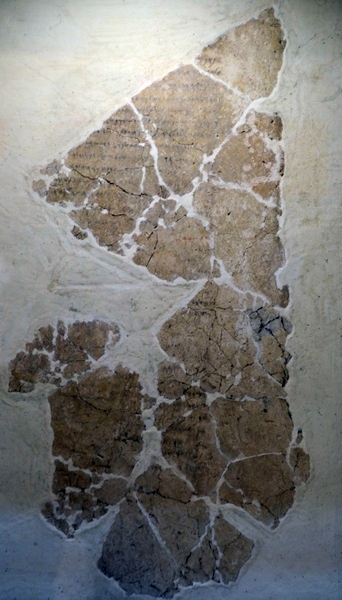
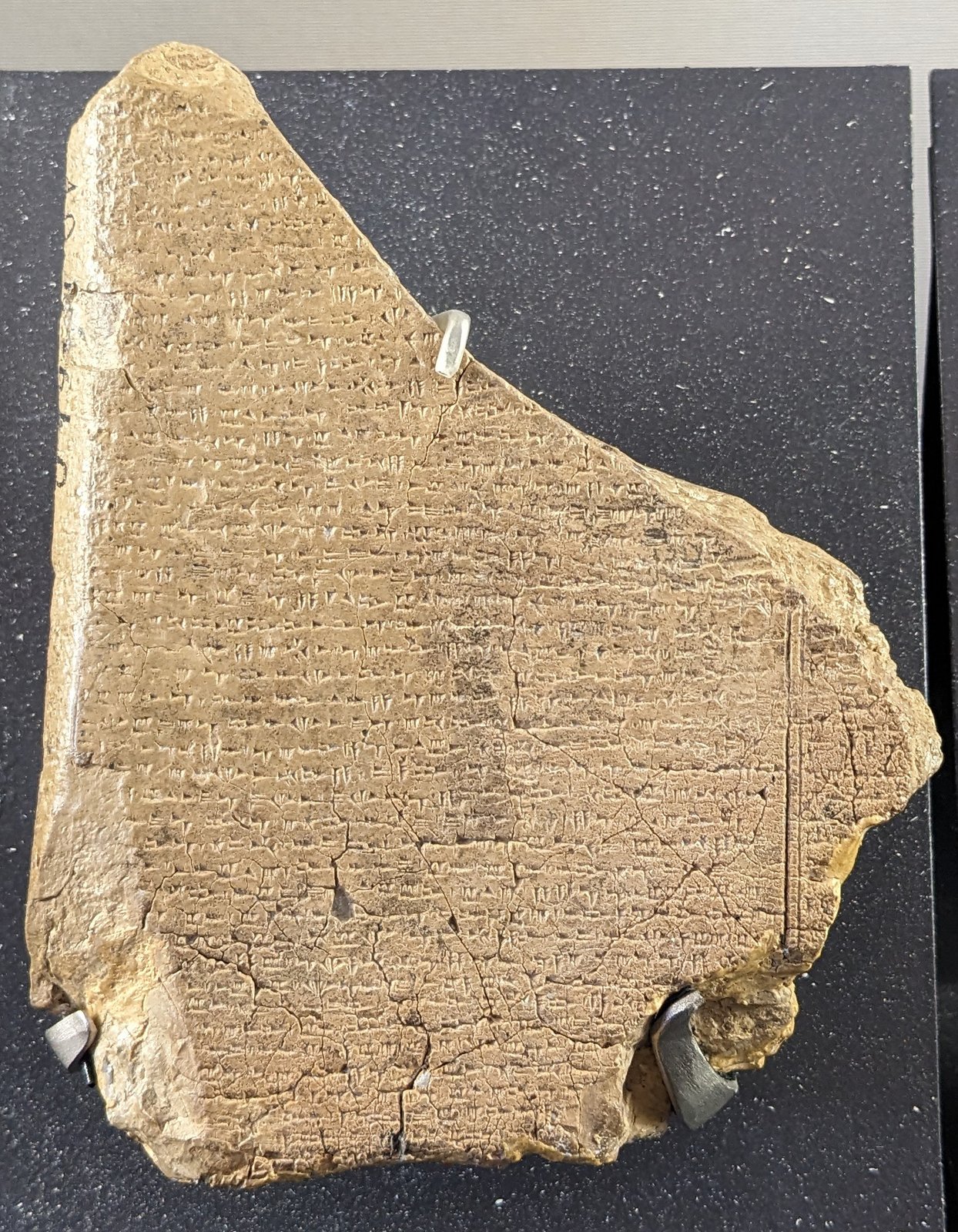
The Balaam text was written on pale plaster in black ink, with red for the title and some key passages. On 17 March 1967 a Dutch team led by H. J. Franken noticed the writing on fallen pieces of plaster at Tell Deir ʿAlla, a mound made of the ruins of many villages. Scholars date the writing, by the shapes of its letters and the layers around it, from about 800 to about 700 BCE. [1][2]
The text seems to have been displayed in a room with benches, at the centre of a large building of some forty rooms. The room had no windows; a lamp was found in its corner beside the writing, and a painted sphinx accompanied the text. One scholar suggests that someone read the text aloud there while people sat and listened, but this is a reconstruction. Our entries Tell Deir ʿAlla and The Deir ʿAlla Plaster Inscriptions describe the site and the object. [3]
The story on the wall
As Caquot and Lemaire read it, the text opens: "[Ins]cription of [Balaa]m [son of Be]or, the man who saw the gods. Behold, the gods came to him in the night." Their message is terrible. The next morning Balaam weeps; his people ask why, and he tells them that the gods have gathered and that the šdyn, "the Mighty Ones", have held an assembly. They tell a goddess, probably the sun: "Sew up, close the heavens with your cloud; let there be darkness there, and not brightness." Another recent reading has "Fasten the bolts of the heavens". Then come birds behaving strangely, and a world turned upside down. Our entry The Balaam Text of Deir ʿAlla follows the lines one by one. [2][4][5]
Martti Nissinen describes the whole as "literary prophecy": not a record of a spoken oracle, but a story that introduces a seer with an awesome message. Its picture of catastrophe, he writes, comes closer to the much later apocalyptic writings than to the ordinary prophecies of doom. [6]
How scholars rebuilt the wall
The plaster survived only as many fragments. Infrared photographs taken before the pieces were joined are themselves evidence, and the editors grouped the pieces into two "Combinations". Every reading therefore rests on three layers: the ink that survives, the place each fragment was given, and the letters editors supplied. The first major edition appeared in 1976; Caquot and Lemaire moved a fragment and renumbered the lines in 1977; and in 1985 Lemaire wrote that no complete line of Combination II had yet been restored in a way others accepted. The language is a local dialect, with features close both to Aramaic and to HebrewHebrewA Northwest Semitic language of the Canaanite group, encompassing Iron Age epigraphy, Biblical, Rabbinic, medieval and Modern Hebrew; its scripts and pronunciations changed over time.Glossary · Click to read the explanation and the other Canaanite languages. [1][2][4][6]
One question remains open in the plaster itself: whether it ever names El. In the second line, two letters, ʾl, can be read as the name El, as several scholars read them, or as the everyday word "these", as Caquot and Lemaire read them. Lemaire himself reads El in the more broken Combination II, where no line has an agreed reading. Scholars have not settled the question. [4][6]
A council of gods
The scene of the šdyn belongs to a picture known across the ancient Near EastAncient Near EastModern scholarly label for ancient societies of Mesopotamia, the Levant, Anatolia and Iran, sometimes extending to Egypt and other neighbours depending on the study; not one civilization or religion.Glossary · Click to read the explanation: the divine councilDivine councilA divine council is a religious and literary scene in which divine beings gather before a superior authority for discussion, commissioning or judgment; it is not identical to a pantheon list.Glossary · Click to read the explanation, a gathering of divine beings who receive news, deliberate and decide. Such a council is not a parliament and not one fixed institution. Each text gives it its own members and purpose. [7]
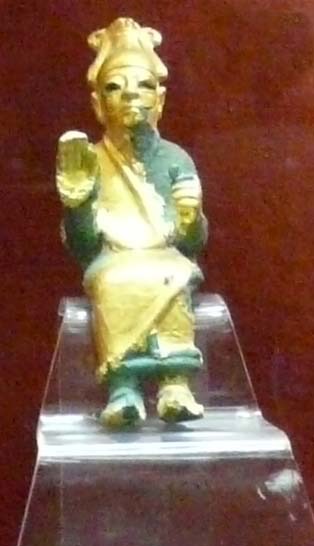
The richest older witness comes from UgaritUgaritAncient city and kingdom at Ras Shamra on the Syrian coast, flourishing between the fourteenth and early twelfth centuries BCE and preserving multilingual archives.Glossary · Click to read the explanation, a city on the Syrian coast whose clay tablets date from about the fourteenth to the twelfth century BCE. In their stories ElElEl is a senior deity in Late Bronze Age Ugaritic texts, portrayed as father of the divine family and a council authority, alongside his consort Athirat. This entry does not cover every linguistic use of El.Glossary · Click to read the explanation is father and king of the gods and head of their council. The tablets speak of "the assembly of the gods" and of "the sons of El", and one line reads "the assembly of El's sons". In a famous scene of the Baal CycleBaal CycleA group of Late Bronze Age Ugaritic religious texts recounting Baal’s conflicts, relationships with the gods and the building of his palace.Glossary · Click to read the explanation, the envoys of Yamm, the sea god, come to the gathered gods in El's presence and demand that Baal be handed over. The gods bow their heads in fear, El seems ready to agree, and Baal is angry. Parts of the tablet are damaged, so some details remain uncertain. [7][8]
In BabylonBabylonBabylon is an ancient city in central present-day Iraq, south of BaghdadGlossary · Click to read the explanation, the poem Enuma ElishEnuma ElishA seven-tablet Babylonian creation poem in Akkadian, recounting Marduk’s rise, victory over Tiamat, cosmic ordering and human creation, and culminating in praise through fifty names. Its composition date is debated; later manuscripts and recitation traditions preserve it.Glossary · Click to read the explanation shows another council: before MardukMardukBabylon’s leading god, worshipped at Esagil and elevated in the Akkadian Enūma eliš. His symbols include a spade and mušḫuššu dragon. His earliest origins remain obscure; Nibiru is no evidence of a planetary homeland.Glossary · Click to read the explanation faces TiamatTiamatTiamat is a primeval divine mother and watery figure in Enūma eliš who later opposes Marduk; he divides her body in making the cosmos. No Babylonian portrait of her is securely identified.Glossary · Click to read the explanation, he asks the great gods to meet in assembly and to give his word supreme authority, and they proclaim him supreme. Each council is different. At Ugarit the question is whether to hand over a god; in Babylon, whether to raise one up; on the Deir ʿAlla wall, the Mighty Ones decide to close the sky. [7]
The council of Deir ʿAlla and El's council at Ugarit are separated by centuries, by different languages and by different settings. Set side by side, they are two witnesses of one old picture, the gods in assembly. But each witness stays within its own limits: the comparison does not show that the council on the wall is the council of El, or that one text borrowed from the other. [2][7]
Shaddayin and Shaddai
The word šdyn resembles Shaddai, the name that stands beside El in the biblical title El ShaddaiEl ShaddaiA compound El name or title associated with ancestral narratives and identified with Yahweh in Exodus 6; Shaddai’s meaning and etymology remain uncertain.Glossary · Click to read the explanation. Caquot and Lemaire saw in it a plural of the biblical title. The resemblance is real and has long been discussed, but it does not identify these beings with one god. The meaning of Shaddai is itself uncertain: "Almighty" is an old, inherited translation, while scholars have also proposed derivations from words for "mountain" or "help". [4][9]
Seers of the region
Balaam's title belongs to a vocabulary known in the region. On the Aramaic stele of King Zakkur of Hamath, from about the same age, the god Baalshamin answers the king through go-betweens, the first of whom are usually translated "seers", from the same root ḥzh, "to see (a vision)". [6]
Balaam in the Book of Numbers
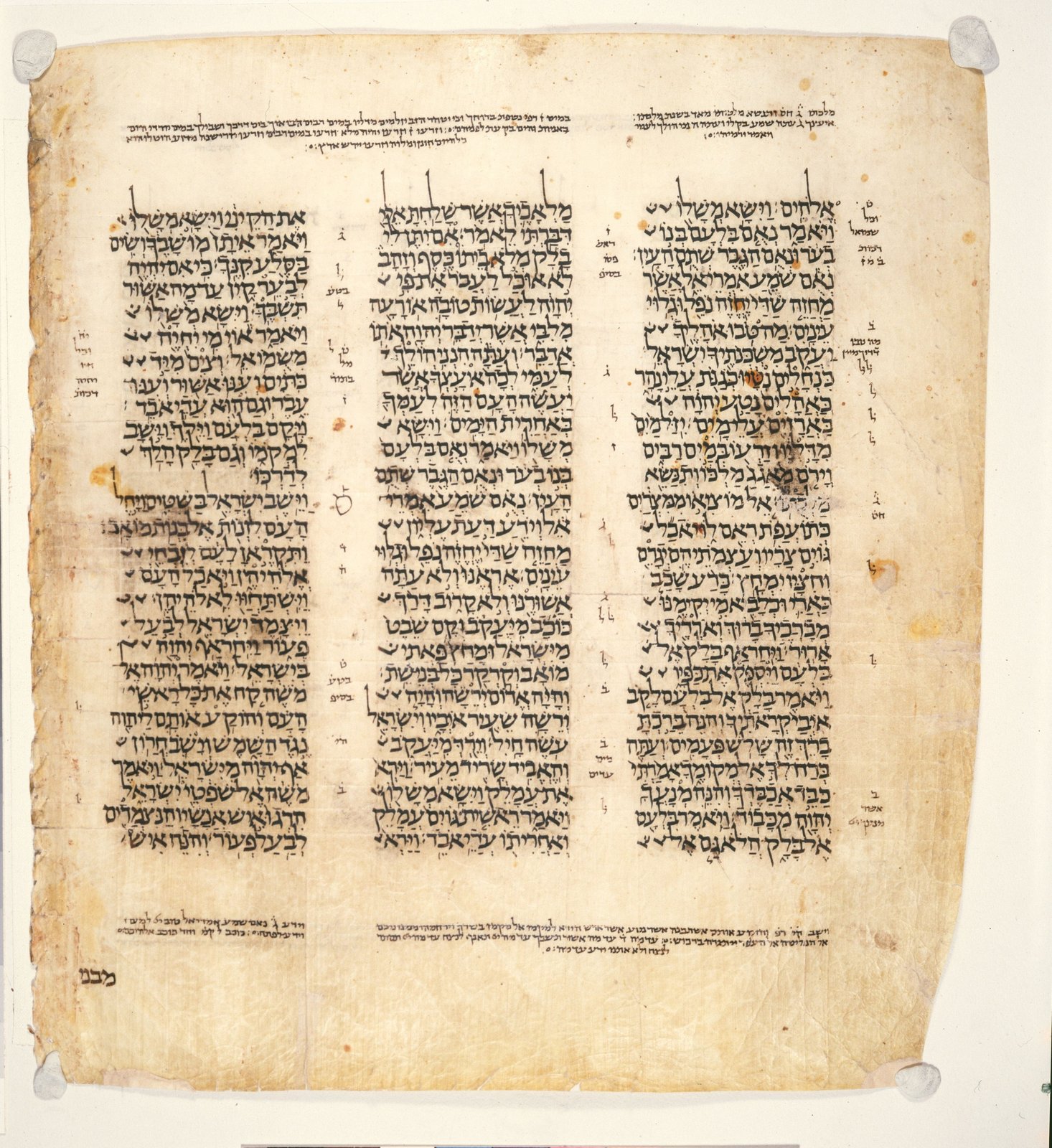
In Numbers 22–24, Balak, king of Moab, sends for "Balaam the son of Beor". God comes to Balaam at night (22:20). On the road his donkey sees an angel before he does, and in four poems the curse he was hired to speak becomes a blessing. Twice he describes himself in almost the same words: "the saying of him who hears the words of El, who sees the vision of Shaddai, fallen down, yet with opened eyes" (24:4), adding in 24:16 "and knows the knowledge of Elyon", the Most High. Here, in Balaam's own mouth, El, Elyon and Shaddai stand together as names or titles of the God who speaks to him, and the same oracles also use the four-letter name YHWHYahwehThe proper name of Israel’s deity, written יהוה (YHWH), the Tetragrammaton. Its exact ancient pronunciation is not directly preserved; texts and inscriptions witness its history.Glossary · Click to read the explanation. The verbs of vision in these lines come from the same root ḥzh as the plaster's title "the man who saw the gods". Our entry The Oracles of Balaam reads the chapters closely. [10]
What the comparison shows, and what it does not
The plaster and Numbers share a named figure, Balaam son of Beor, and link him with messages from the divine at night. That is a real connection between traditions about one man. It does not prove every scene of Numbers: the legible fragments do not mention Balak, the donkey or the angel. Nor does it show that either text copied the other, and the date of the wall does not tell us when Numbers was written. For believers, Numbers tells real events, given through revelation. For many historians, Balaam was a famous seer of the region, remembered both on a wall east of the river and in the scripture of Israel. This study shows both readings and settles neither. [2][10]
Later traditions remembered Balaam too. Other books of the Hebrew Bible recall the curse turned into a blessing and the counsel he gave at Peor; the New Testament letters use him as a warning; the rabbis called him both a prophet among the nations and "Balaam the wicked"; and many classical Muslim commentators identified him with the unnamed man of Qur'an 7:175–176, who was given God's signs and slipped out of them, while the verses themselves name no one. Our study Balaam in Later Traditions sets these memories side by side. [11]
References and notes
- André Lemaire, “Les inscriptions de Deir ʿAlla et la littérature araméenne antique”, Comptes rendus de l’Académie des Inscriptions et Belles-Lettres 129, no. 2 (1985), pp. 270–285 P. 270: the discovery on 17 March 1967 by the Dutch excavation directed by H. J. Franken; pp. 276–277: the state of Combination II and Lemaire’s readings of El there. Return to the text ↑
- IL Archive, “The Deir ʿAlla Plaster Inscriptions: Balaam, Evidence, and Restoration” (artifact record) and the sources it cites The sections on the discovery, the black and red ink, the infrared photographs, the three layers of evidence, the 1976 and 1977 editions, the language, the date and the limits of the comparison with Numbers. Return to the text ↑
- Timothy Hogue, “Texts, Architecture, and Ritual in the Iron II Levant”, Religions 16, no. 9 (2025), article 1178 (open access, CC BY 4.0) Section 3.2: the complex of some forty rooms, the bench-room without windows, the lamp, the sphinx and the proposed recitation (after Wearne 2018). Return to the text ↑
- André Caquot and André Lemaire, “Les textes araméens de Deir ʿAlla”, Syria 54, no. 3–4 (1977), pp. 189–208 Pp. 192–198: the arrangement of the fragments, lines 1–7 of Combination I, the šdyn and the comparison with Shaddai, and the reading “these” for ʾl. Return to the text ↑
- Bryan Elliff and Robert Coleman, “‘Fasten the Bolts of Heaven’: A New Interpretation of a Difficult Line of the Deir ʿAlla Plaster Texts (I.6)”, Semitica 65 (2023), pp. 33–52 Publisher’s abstract only: the reading “fasten the bolts of heaven” for line I.6. Return to the text ↑
- Martti Nissinen, Ancient Prophecy: Near Eastern, Biblical, and Greek Perspectives (Oxford University Press, 2017) Pp. 107–109: the stele of Zakkur and its “seers” (p. 107), the oracle “from El, presumably the supreme god” and the language (p. 108), “literary prophecy” (p. 109). Return to the text ↑
- IL Archive, “Divine council” (entity record) and the sources it cites The sections on the council as a type of scene, the Ugaritic episode of Yamm’s envoys (KTU 1.2 I) and the assembly in Enuma Elish. Return to the text ↑
- IL Archive, “From El’s Council to Yahweh’s Court” (study) and the sources it cites The sections on El’s assembly at Ugarit: pḫr ʾilm, bn ʾil, dr bn ʾil, KTU 1.65 line 3 mpḫrt bn ʾil, and the date range of the tablets. Return to the text ↑
- Aren M. Wilson-Wright, “The Helpful God: A Reevaluation of the Etymology and Character of (ʾēl) šadday”, Vetus Testamentum 69 (2019), pp. 149–166 Pp. 150, 154–160: Shaddai and its proposed etymologies (“mountain”, “help”). Return to the text ↑
- Hebrew Bible: Masoretic text and the 1917 JPS translation (The Holy Scriptures: A New Translation), as printed by Mechon-Mamre and Sefaria Num 22:5, 20; 23:8; 24:4, 16. Return to the text ↑
- IL Archive, “Balaam in Later Traditions” (study) and the sources it cites The whole study: the other biblical passages, the New Testament letters, the Sifre, Mishnah Avot 5:19, and Qur’an 7:175–176 with the commentaries of al-Tabari, al-Qurtubi and Ibn Kathir. Return to the text ↑
Suggest a correction · Suggest a source for this record
Cite this record
IL Archive, «Balaam, Seer of the Gods: A Plaster Wall, a Council of Gods and the Book of Numbers», https://ilarchive.com/en/studies/balaam-seer-of-the-gods
Continue reading