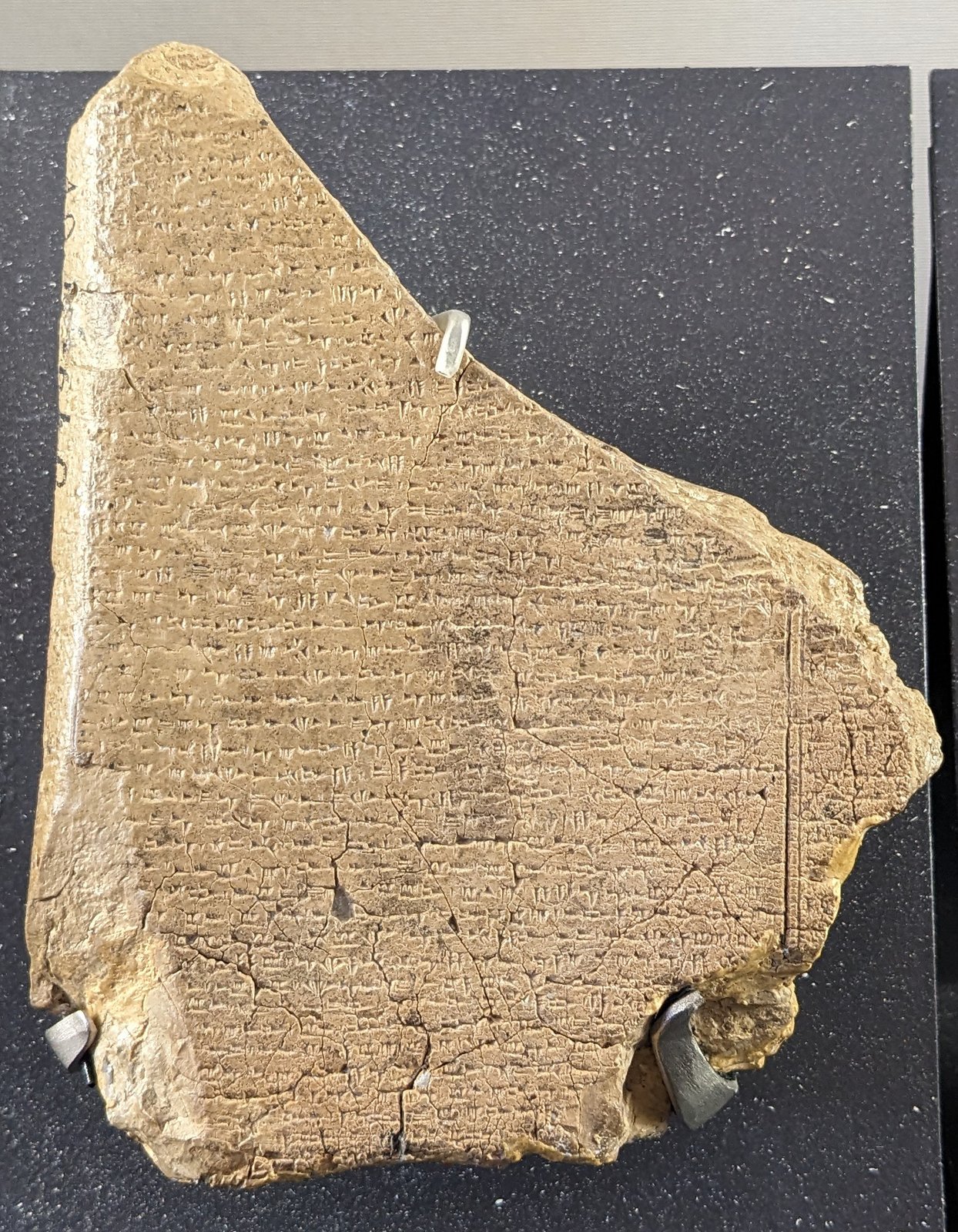
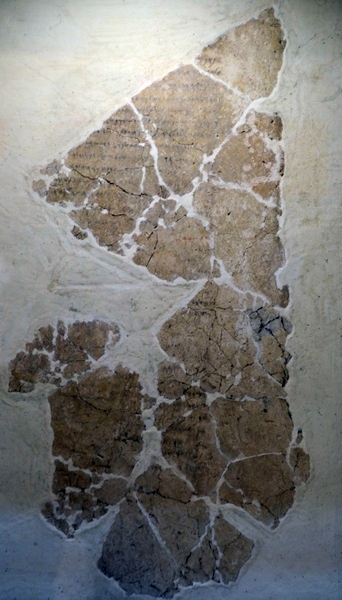
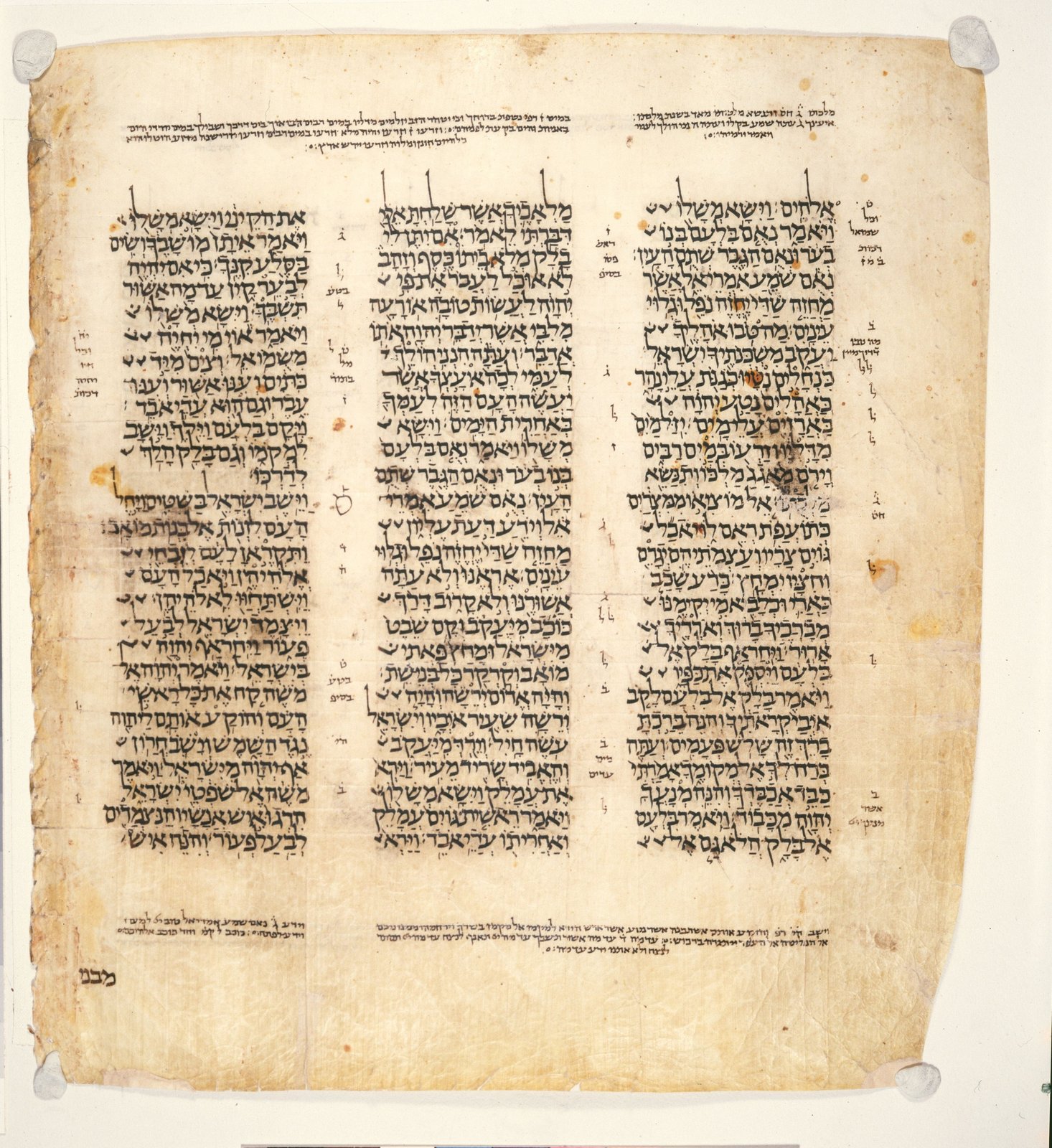
Ancient text
The Oracles of Balaam: Numbers 22–24
A text for line-by-line reading, with transliteration, translation, and resources.
- Region
- The Levant
In Numbers 22–24 a foreign seer, Balaam son of Beor, is hired to curse Israel and blesses it instead. His sayings bring together El, Elyon and Shaddai. A close reading of the chapters, and of what they can and cannot tell us.
Estimated reading time: 8 min Published Last reviewed:
Share article
Video
The Night the Gods Closed the Sky: Balaam and the Council of the Gods
More than twenty-seven centuries ago, someone wrote a vision on a plastered wall at Deir ʿAlla: the gods come to Balaam son of Beor at night, and a council orders the sky shut. We read the wall line by line, then set it beside Ugarit, the Book of Numbers and later traditions, and settle neither reading. Some scenes are AI-generated illustrations.
The YouTube player loads only when you press play. Watch on YouTube
Text
Introduction
Chapters 22–24 of the Book of NumbersBook of NumbersTorah book addressing daughters’ inheritance and tribal retention of land.Glossary · Click to read the explanation tell a story with an unusual hero: Balaam son of BeorBalaam son of BeorA figure in Numbers whose path is blocked by the angel of Yahweh acting as his “adversary”.Glossary · Click to read the explanation, a seer from outside Israel, whom a king hires to curse Israel. Each time he opens his mouth, a blessing comes out. The story is famous for a talking donkey, but its centre is four poems, the oracles, in which the seer also describes how he receives his visions.
This entry reads those chapters closely. It looks at the divine names in Balaam's words, especially El, Elyon and Shaddai, and at the vocabulary of seeing. It then explains why a wall text found east of the river in today's Jordan, the plaster inscription of Deir ʿAlla, makes these chapters especially interesting, and where that comparison stops. Believers and historians read these chapters in different ways; this entry sets out the text and both readings without deciding between them.
The story in brief
Balak son of Zippor, king of Moab, sends messengers "unto Balaam the son of Beor, to Pethor, which is by the River" (22:5). He wants Balaam to curse Israel. Balaam tells the messengers: "Lodge here this night, and I will bring you back word, as the LORD may speak unto me" (22:8). "And God came unto Balaam" (22:9). Later the text says it again: "And God came unto Balaam at night" (22:20). Balaam is allowed to go, but only to do what he is told. [1]
On the road, the angel of the LORD stands in the way "for an adversary against him" (22:22). The HebrewHebrewA Northwest Semitic language of the Canaanite group, encompassing Iron Age epigraphy, Biblical, Rabbinic, medieval and Modern Hebrew; its scripts and pronunciations changed over time.Glossary · Click to read the explanation word here, śāṭān, describes a blocking role carried out on behalf of the sender, not the later personal Devil. The donkey sees the angel three times before her rider does, and Balaam strikes her three times. Then the LORD opens the donkey's mouth and she speaks, and the LORD uncovers Balaam's eyes, and he sees the angel standing in the way (22:28, 31). In this story the seer depends on revelation even to see the danger in front of him. [1][2][3]
At the meeting with Balak, Balaam states the rule that governs everything that follows: "the word that God putteth in my mouth, that shall I speak" (22:38). [1]
Four oracles
The text then gives four poems, each introduced with the same formula, "and he took up his parable" (wayyiśśāʾ məšālô):
- 23:7–10, from the heights of Moab: "How shall I curse, whom God hath not cursed? And how shall I execrate, whom the LORD hath not execrated?" (23:8). In Hebrew the two lines place El and YHWHYahwehThe proper name of Israel’s deity, written יהוה (YHWH), the Tetragrammaton. Its exact ancient pronunciation is not directly preserved; texts and inscriptions witness its history.Glossary · Click to read the explanation side by side.
- 23:18–24: "God is not a man, that He should lie" (23:19). Here too the Hebrew word for God is El.
- 24:3–9: the "man whose eye is opened" (24:3) speaks of Israel's tents spread out like valleys and gardens.
- 24:15–24: a vision "not now… not nigh", which includes the image of "a star out of Jacob" (24:17), then short sayings on neighbouring peoples. [1]
Balak protests after the oracles and finally loses his temper (24:10), and the story ends simply: "And Balaam rose up, and went and returned to his place" (24:25). [1]
El, Elyon and Shaddai in Balaam's own words
The third and fourth oracles open with a self-description of the seer that is almost the same both times: "The saying of Balaam the son of Beor, and the saying of the man whose eye is opened" (24:3, 15). Then, in 24:4:
The fourth oracle, 24:16, adds one line: "and knows the knowledge of Elyon". The Hebrew text quoted is the received Masoretic textMasoretic TextThe Hebrew Bible’s transmission tradition combining its consonantal text, transmitted vocalization and accentuation, and Masorah notes. The consonantal text has ancient roots; surviving codices that bring these layers together in their Masoretic form are medieval.Glossary · Click to read the explanation, as printed by Mechon-Mamre; the English follows the older translation of the Jewish Publication Society (JPS) in modern spelling, with the divine names left in Hebrew instead of "God", "the Almighty" and "the Most High". [1]
Three names stand together here. ElElEl is a senior deity in Late Bronze Age Ugaritic texts, portrayed as father of the divine family and a council authority, alongside his consort Athirat. This entry does not cover every linguistic use of El.Glossary · Click to read the explanation can be the common Semitic word for "god" or the name of a particular deity known from older texts, such as those of UgaritUgaritAncient city and kingdom at Ras Shamra on the Syrian coast, flourishing between the fourteenth and early twelfth centuries BCE and preserving multilingual archives.Glossary · Click to read the explanation. ElyonEl ElyonA Hebrew expression meaning “God Most High.” Genesis 14 identifies its bearer with Yahweh, while the Most High’s identity in Deuteronomy 32 remains debated separately from its manuscript readings.Glossary · Click to read the explanation means "Most High" and can be a title rather than a separate god. ShaddaiEl ShaddaiA compound El name or title associated with ancestral narratives and identified with Yahweh in Exodus 6; Shaddai’s meaning and etymology remain uncertain.Glossary · Click to read the explanation is a name of uncertain meaning: "Almighty" is an old, inherited translation, and scholars have also proposed "mountain" or "help". In the text as it stands, all three are names or titles of the God who speaks to Balaam, and the same oracles also use the four-letter name YHWH (23:8). [1][4][5]
The vocabulary of seeing is just as striking. "Vision" (maḥăzēh) and "sees" (yeḥĕzeh) both come from the root ḥzh, "to see (in a vision)". The same root gives words for a seer in other texts of the region. On the stele of King Zakkur of Hamath, from roughly the same age, the god Baalshamin answers the king through go-betweens, the first of whom are usually translated "seers". [1][6]
A seer known outside the Bible
The plaster inscription found at Deir ʿAlla, in the valley east of the river, and dated by scholars to the eighth century BCE, also tells of "Balaam son of Beor", whose title there is usually translated "seer of the gods", from the same root ḥzh. On the wall, the gods come to him in the night, and a council of divine beings, the šdyn or "shaddayin", decides to darken the heavens. Our entry The Deir ʿAlla Plaster Inscriptions describes the object and its readings. [6][7]
The two texts can be set side by side. On the wall, the gods came to Balaam in the night. In Numbers, God comes to Balaam at night; there the Hebrew word for God, ElohimElohimA Hebrew word with plural morphology, used for “gods” or for a singular deity according to context.Glossary · Click to read the explanation, takes a verb in the singular, while on the wall the word means "gods". What the likeness means is left to each reader. [1][7]
The two texts share a named figure and link him with messages from the divine. That is a real connection between traditions about one man. It does not prove every scene of Numbers, it does not show that either text copied the other, and the date of the plaster does not tell us when Numbers was written. The legible fragments at Deir ʿAlla do not mention Balak, the donkey or the angel. The resemblance between šdyn and Shaddai has long been discussed, but it does not show that the beings of the plaster and the Shaddai of Numbers are one and the same. [6][7]
How old are the oracles?
Scholars disagree. One school reads the oracles as some of the oldest poetry in the Bible: Peter Craigie, for example, found "signs of archaic Hebrew" in them and classed them as "early poetic Hebrew". Alexander Rofé dates the speeches of Numbers 24 to the early monarchy, on the basis of their content, and the prose story around them to later centuries. [8][9]
Other indications point later, at least for parts of the poems. The notes of the New American Bible observe that the mention of Asshur, Assyria, in 24:22 "is not likely before the ninth or eighth centuries", and that the Hebrew of the last oracle "shows considerable disarray". The poems may therefore have grown over time. A firm date for the oracles, or for the chapters as a whole, cannot be drawn from the text alone. [10]
Rofé also notes a change in how Balaam is remembered: in the oldest layers he is a great seer, while later texts portray him more and more negatively. The passages below show both sides. [9]
Balaam elsewhere in the Hebrew Bible
Other books remember the episode in two ways. As a curse turned into a blessing: Deuteronomy 23:5–6 (23:4–5 in most English Bibles), Joshua 24:9–10 and Nehemiah 13:2 say that God would not listen to Balaam and turned the curse into a blessing, and Micah 6:5 asks the people to remember "what Balaam the son of Beor answered". And as a warning: Numbers 31:16 blames "the counsel of Balaam" for Israel's sin at Peor, and Numbers 31:8 and Joshua 13:22, which calls him "the soothsayer" (ha-qôsēm), report his death by the sword. Later Jewish, Christian and Islamic traditions about him are set out in our study Balaam in Later Traditions. [1]
What this text can and cannot tell us
The chapters are a narrative and a set of poems in Israel's scripture. For believers, they tell real events, given through revelation: God's word overrules a hired curse. For many historians, they are a literary work whose layers and date are debated, and which keeps the memory of a famous seer of the region, also known from a wall east of the river. Both readings start from the same words, and this entry settles neither. What the text shows clearly is a seer who receives revelation at night, who sees "fallen down, yet with opened eyes", and who speaks of El, Elyon and Shaddai together. [1][3][4]
References and notes
- Hebrew Bible: Masoretic text and the 1917 JPS translation (The Holy Scriptures: A New Translation), as printed by Mechon-Mamre and Sefaria Num 22:5, 8, 9, 20, 22, 28, 31, 38; 23:7–10, 18–24 (23:8, 19); 24:3–9, 15–25 (24:3, 4, 16, 17, 25); 31:8, 16; Deut 23:5–6 (Hebrew numbering); Josh 13:22; 24:9–10; Mic 6:5; Neh 13:2. Return to the text ↑
- IL Archive, “How ‘the adversary’ became Satan” (study) The section on Numbers 22:22 and the angel as an “adversary” (leśāṭān). Return to the text ↑
- IL Archive, “Documentary hypothesis” (entity record) The section on Balaam’s interrupted journey (Numbers 22:20–35). Return to the text ↑
- Aren M. Wilson-Wright, “The Helpful God: A Reevaluation of the Etymology and Character of (ʾēl) šadday”, Vetus Testamentum 69 (2019), pp. 149–166 Pp. 150, 154–160: Shaddai in the Hebrew Bible, including Numbers 24:4 and 24:16, and the proposed etymologies (“mountain”, “help”). Return to the text ↑
- IL Archive, “El Elyon” (entity record) and the sources it cites The sections on ʿelyon as a title, “Most High”, and its use beside El. Return to the text ↑
- Martti Nissinen, Ancient Prophecy: Near Eastern, Biblical, and Greek Perspectives (Oxford University Press, 2017) Pp. 107–109: the stele of Zakkur and its “seers” (p. 107), the Deir ʿAlla text, its title and its date (p. 108). Return to the text ↑
- André Caquot and André Lemaire, “Les textes araméens de Deir ʿAlla”, Syria 54, no. 3–4 (1977), pp. 189–208 Pp. 193–197: the title ʾš ḥzh ʾlhn, the night visit of the gods (ʾlhn) and the šdyn. Return to the text ↑
- Peter C. Craigie, “The Conquest and Early Hebrew Poetry”, Tyndale Bulletin 20, no. 1 (1969), pp. 76–94 Pp. 81–82: the oracles of Balaam among the early poems and their “signs of archaic Hebrew”. Return to the text ↑
- Alexander Rofé, “Balaam the Seer Is Recast as a Villain”, TheTorah.com, 14 July 2019 (adapted from Jerusalem Biblical Studies 1, 1979) Whole article: the dating of the speeches and of the prose story, and the change in Balaam’s image. Return to the text ↑
- New American Bible, Revised Edition, notes on Numbers 24, United States Conference of Catholic Bishops (online edition) Notes on Numbers 24:4, 24:22 and 24:23–24. Return to the text ↑
Archive records may be reviewed and refined as better evidence or sources become available. Suggest a correction
Suggest a correction · Suggest a source for this record
Cite this record
IL Archive, «The Oracles of Balaam: Numbers 22–24», https://ilarchive.com/en/texts/balaam-oracles-numbers
Continue reading