Sargon and the River Chapter 1
The Basket and the Orchard
In this excerpt from the Akkadian birth legend, Sargon recalls how the river carried him to Aqqi the water-drawer. Aqqi raises him as an adopted son and gives him work in his orchard. The episode follows the seven lines translated by Jonathan Valk.
SourcesTurn the pages with the arrows, the arrow keys or a swipe.
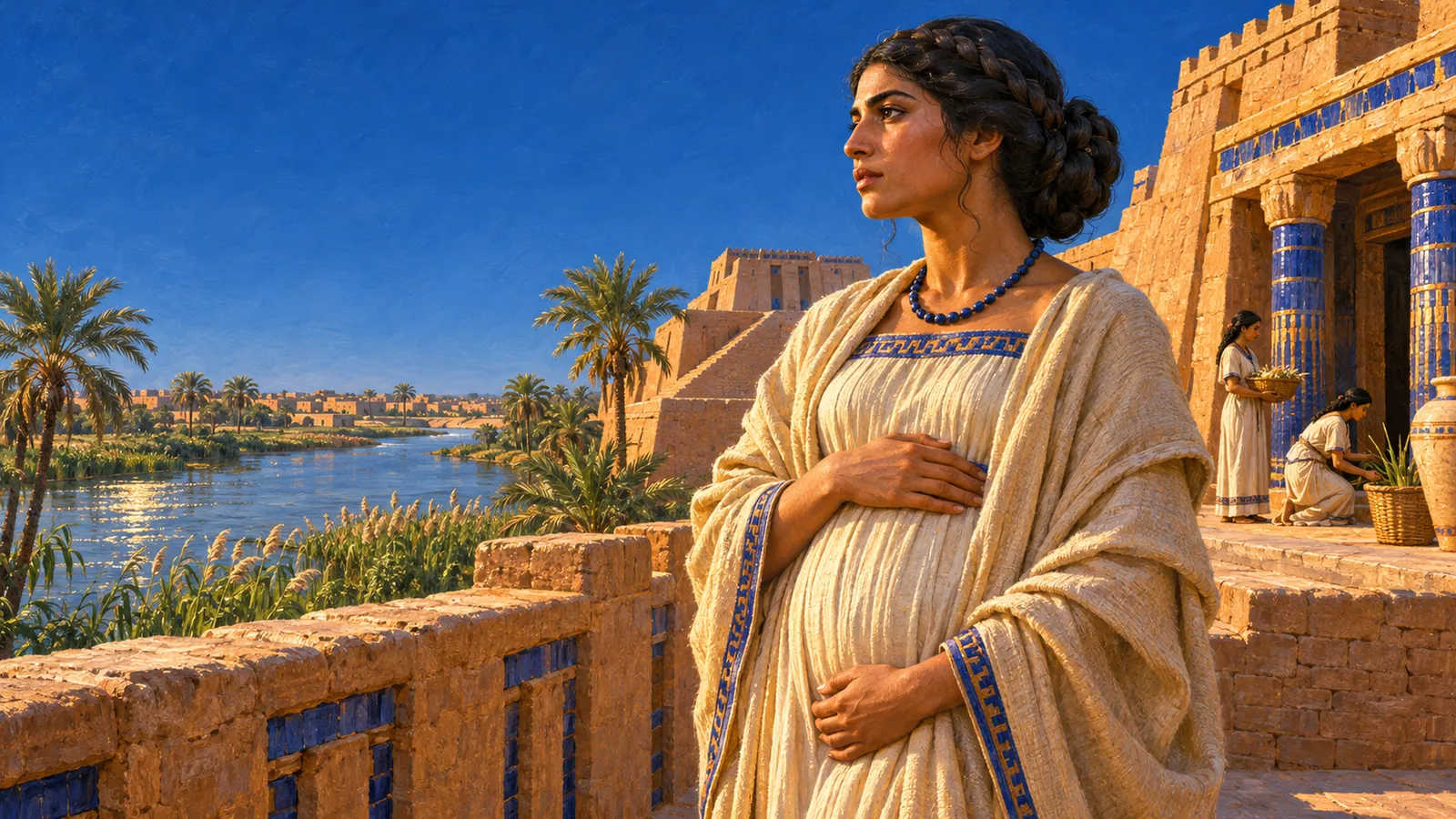
THE BIRTH LEGEND
In the Sargon Birth Legend excerpt translated by Jonathan Valk, Sargon speaks of his own conception and identifies his mother as an ēn-priestess.
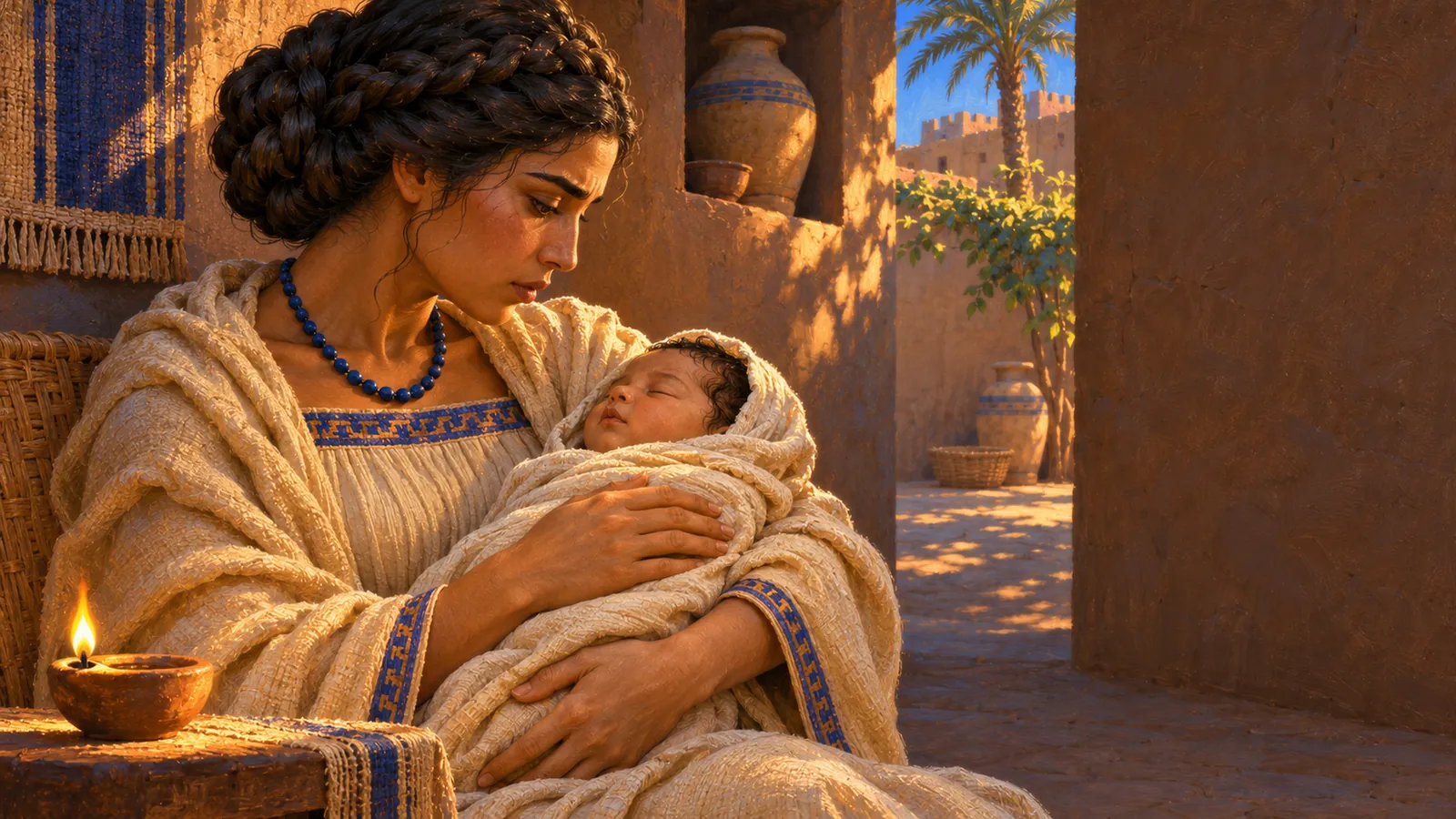
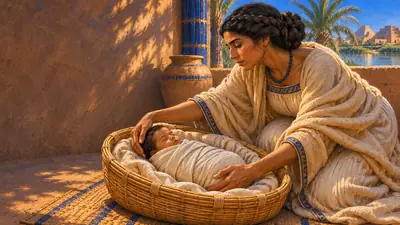
In the second part of the opening line, Sargon says that his mother gave birth to him in secret.
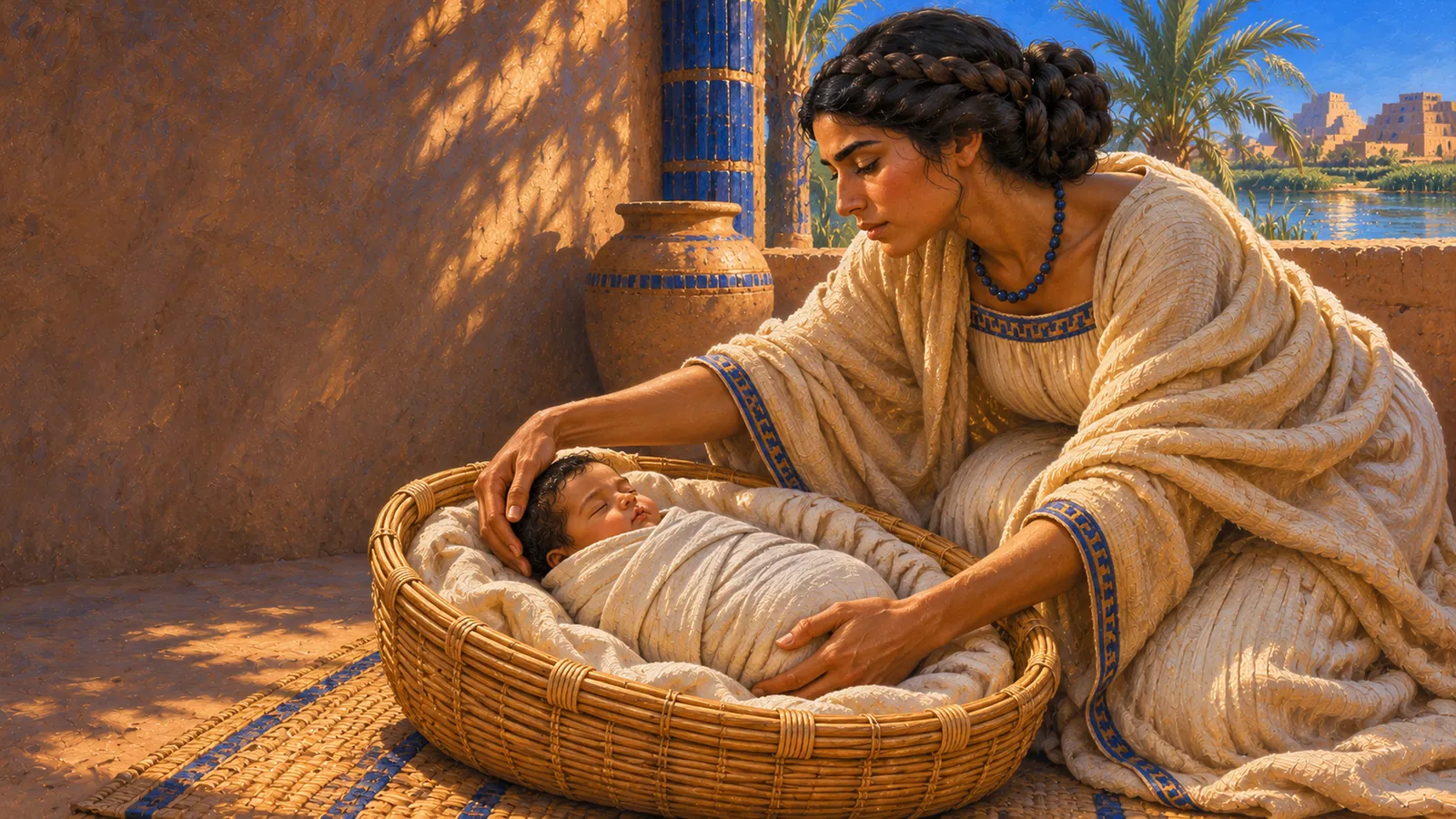
Sargon says that after he was born, his mother placed him in a basket made of reeds.
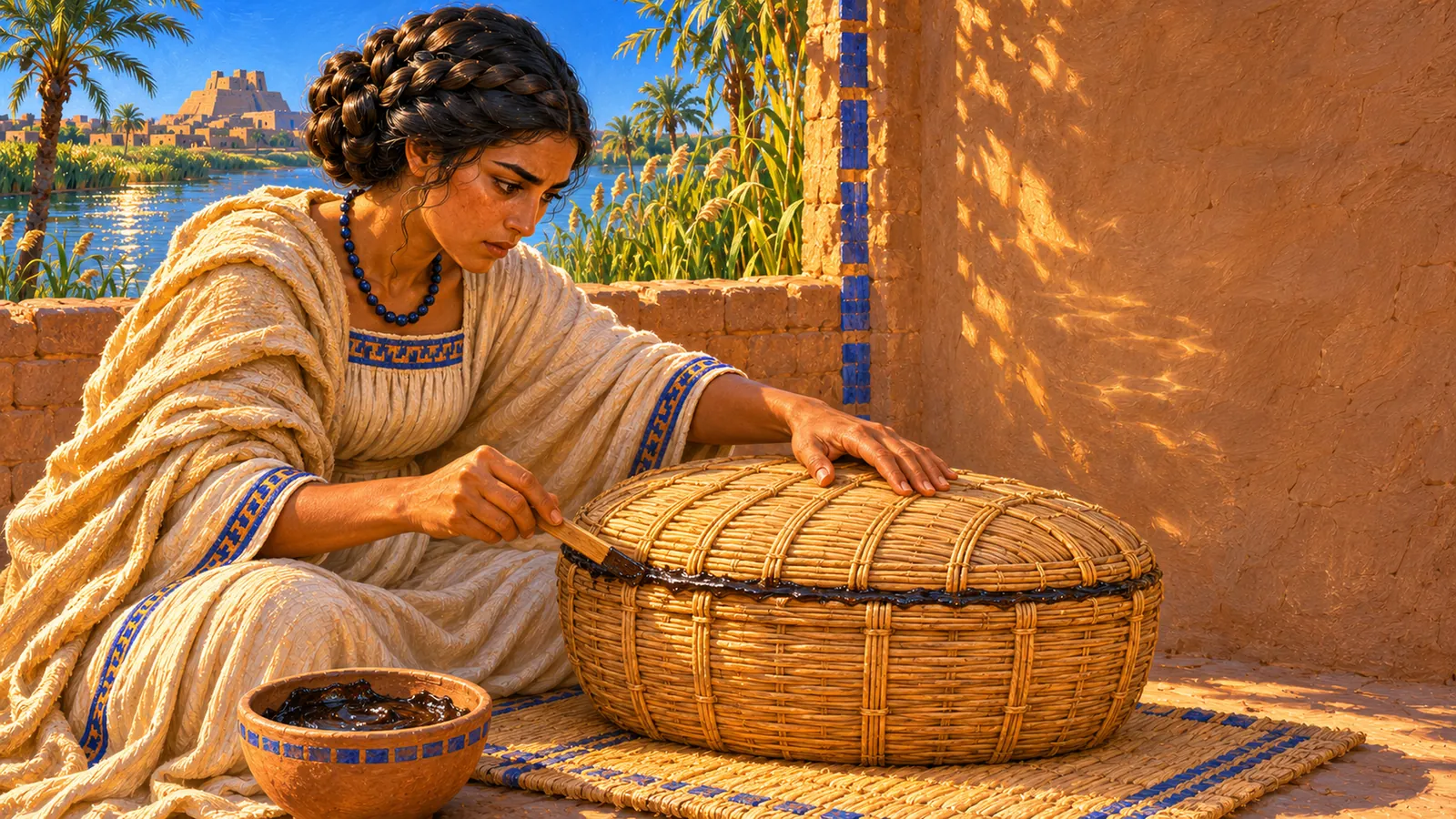
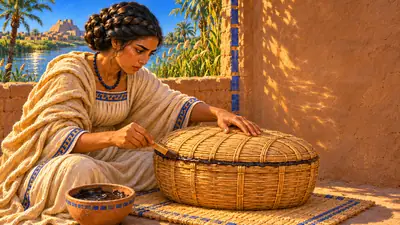
Sargon says his mother sealed the opening with bitumen. Valk’s note explains how the first-person wording of the line refers to the basket’s opening.
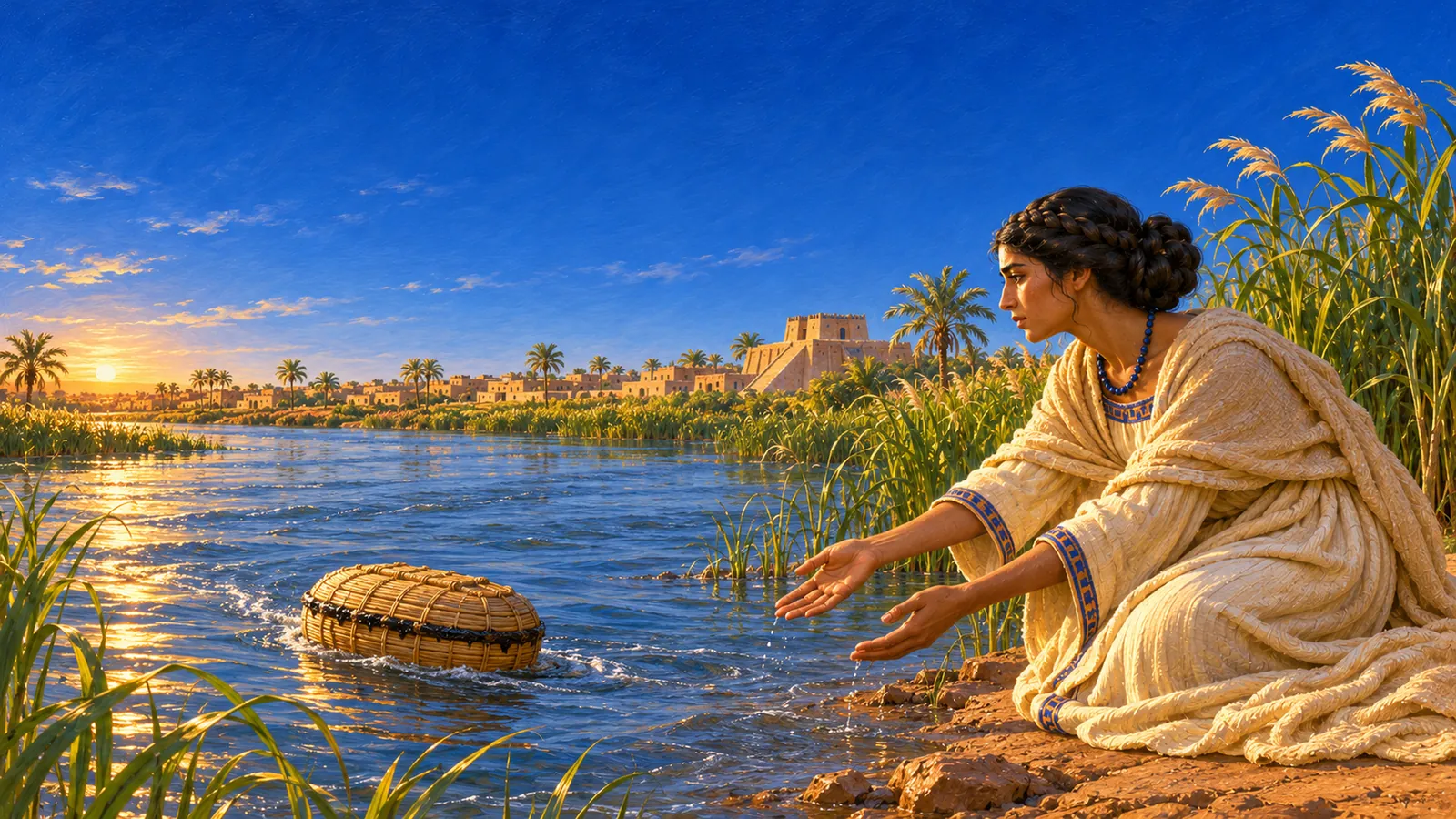
THE RIVER
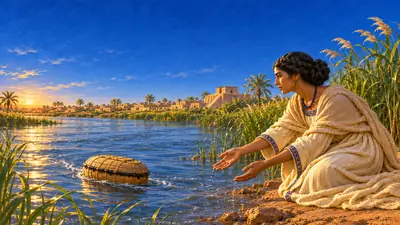
Sargon says his mother set him in the river. In his account, he was unable to escape from the water.
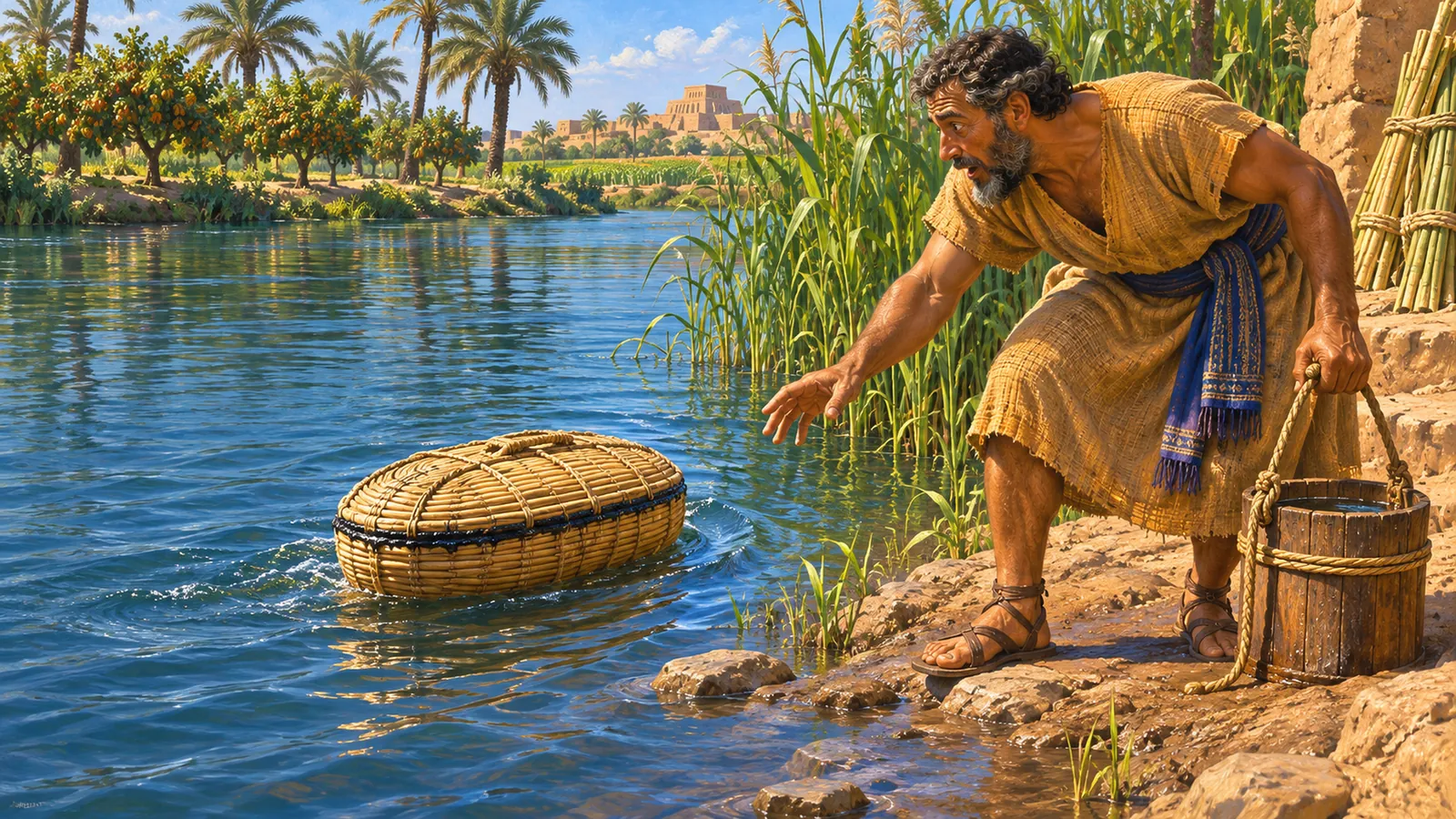
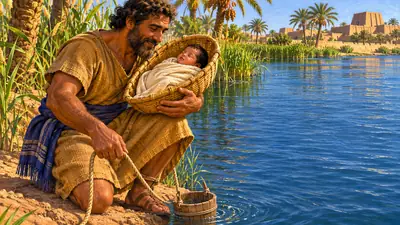
Sargon says the river carried him along and brought him to a man named Aqqi, whose work was drawing water.
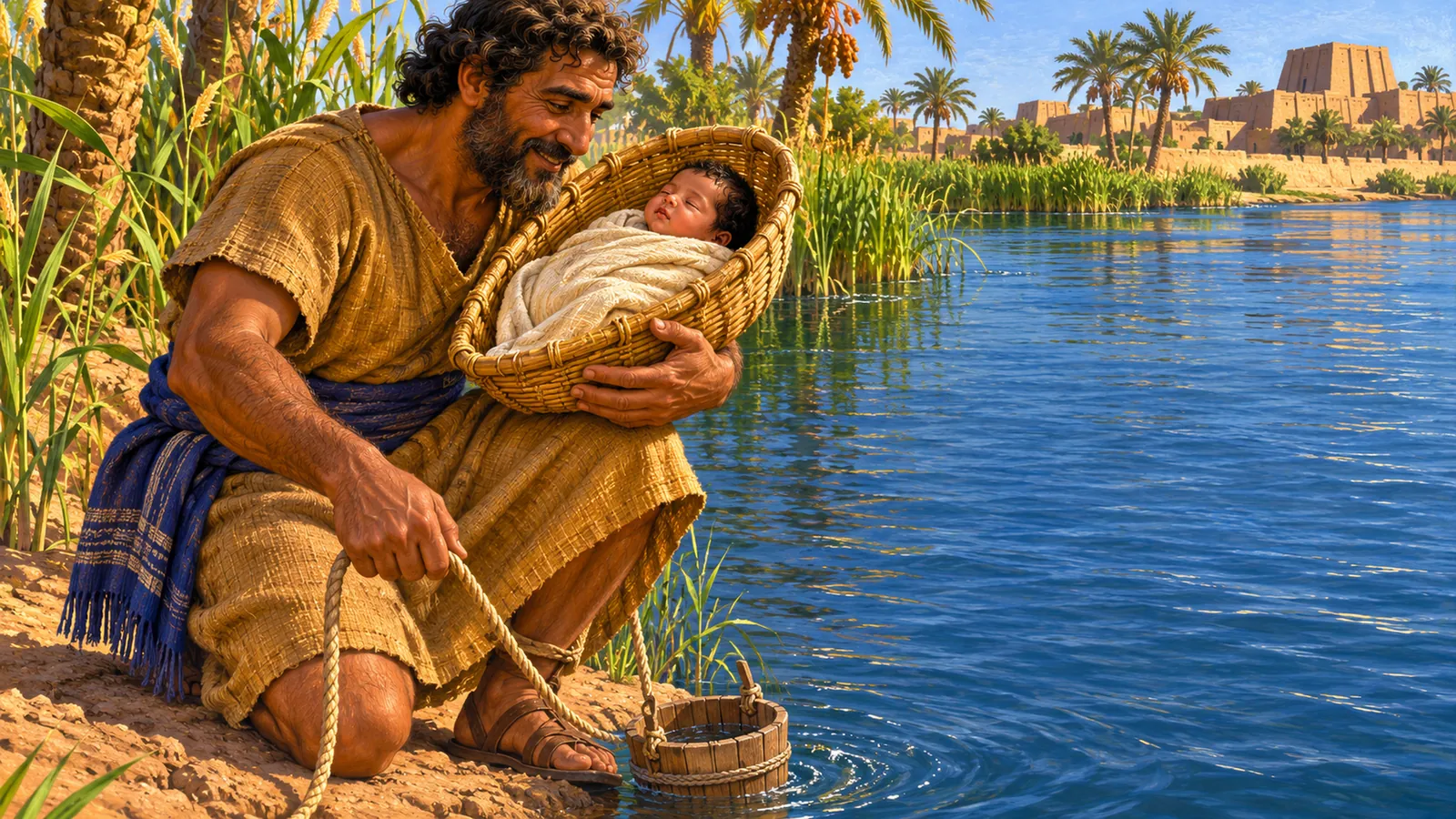
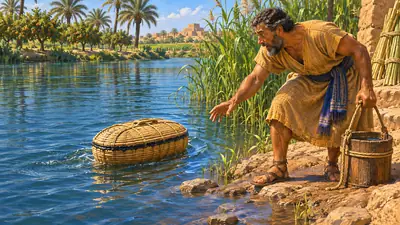
Sargon says that Aqqi lifted him up while lowering the bucket he used to draw water from the river.
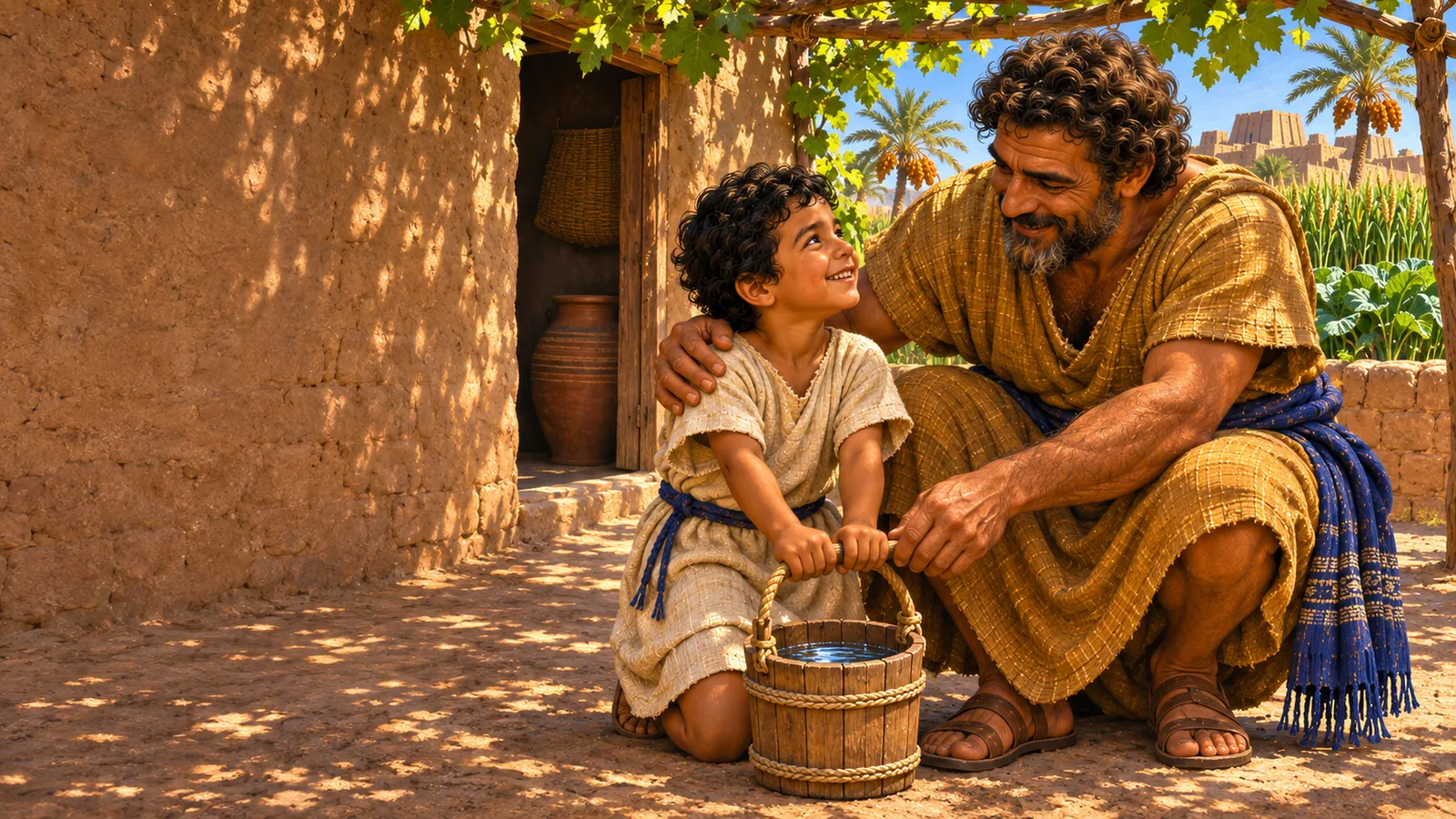
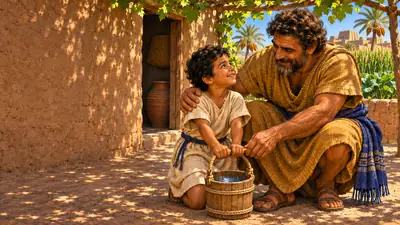
Sargon says that Aqqi the water-drawer raised him as his adopted son after lifting him from the river.
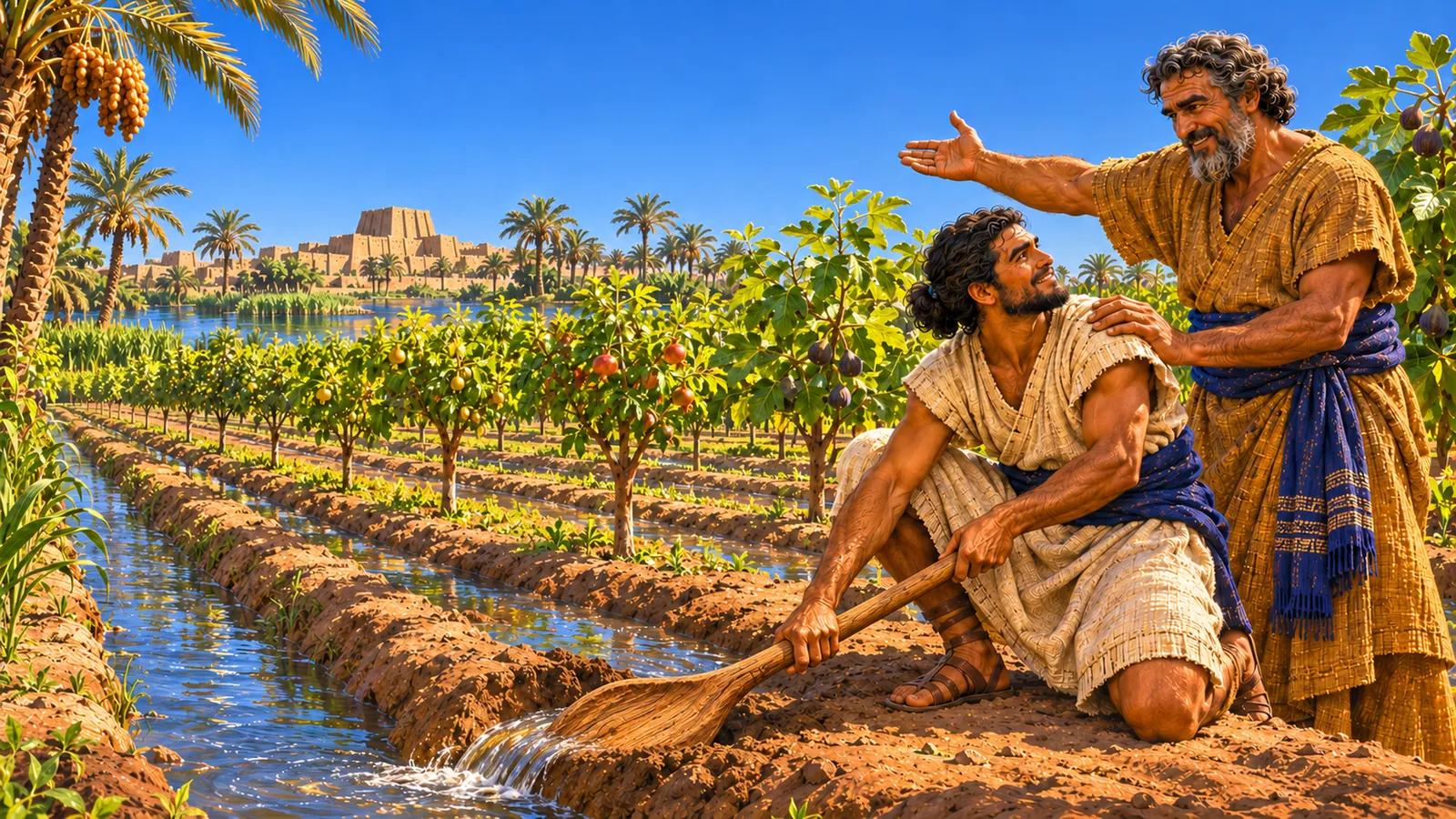
THE ORCHARD
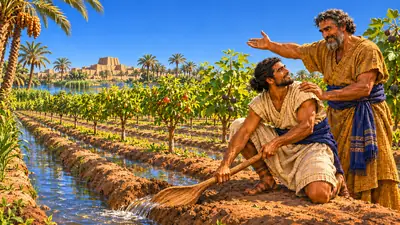
In the final line of the excerpt, Sargon says that Aqqi then gave him work as his orchard-cultivator.
End of chapter 1
All pages
Sources
738 of the Journal of the Economic and Social History of the Orient 59 (2016). Valk discusses the basket opening in note 161 and lists the editions used in note 162. The quoted selection leads from the secret birth to the orchard assignment. The CDLI record is a separate manuscript reference. The artwork shows unoccupied ancient riverbanks and ordinary work materials.
Editions consulted
- Jonathan Valk’s article, University of Helsinki institutional copy, p. 738
- Journal of the Economic and Social History of the Orient, Brill
- CDLI object record P365306 for a manuscript witness
Notes on this retelling
Pages 1–2, line 5. Jonathan Valk prints the Akkadian and an English translation on p. 738 of “They Enjoy Syrup and Ghee at Tables of Silver and Gold: Infant Loss in Ancient Mesopotamia,” *Journal of the Economic and Social History of the Orient* 59 (2016), pp. 695–749. The site reading begins at the first clause of numbered line 5. Sargon speaks in the first person. His mother, an ēn-priestess, conceives him and gives birth to him in secret. The two clauses form two scenes.
Pages 3–4, line 6 and note 161. The line first gives the reed basket and then says the opening is sealed with bitumen. Valk’s note explains that the possessive literally says “my” in the first person and that the word refers to the opening of the basket. The two clauses form two scenes.
Page 5, line 7. The mother sets Sargon in the river, from which he cannot escape in Valk’s translation. The river is unnamed in this excerpt.
Page 6, line 8. Sargon says the river carries him to Aqqi, whom the line calls a water-drawer.
Page 7, line 9. Aqqi lifts Sargon while lowering his bucket in Valk’s translation.
Page 8, line 10. Sargon says that Aqqi raises him as his adopted son.
Page 9, line 11. Aqqi puts Sargon to work as his orchard-cultivator. This is the final numbered line that Valk quotes on this page. His discussion of Ištar and kingship follows the quoted excerpt in surrounding prose and falls outside this reading.
Ancient lines behind each page
- Page 1: Valk 2016, p. 738, Sargon Birth Legend, line 5, opening clause
- Page 2: Valk 2016, p. 738, Sargon Birth Legend, line 5, closing clause
- Page 3: Valk 2016, p. 738, Sargon Birth Legend, line 6, first clause
- Page 4: Valk 2016, p. 738, Sargon Birth Legend, line 6, second clause and note 161
- Page 5: Valk 2016, p. 738, Sargon Birth Legend, line 7
- Page 6: Valk 2016, p. 738, Sargon Birth Legend, line 8
- Page 7: Valk 2016, p. 738, Sargon Birth Legend, line 9
- Page 8: Valk 2016, p. 738, Sargon Birth Legend, line 10
- Page 9: Valk 2016, p. 738, Sargon Birth Legend, line 11
Illustrations made with AI tools by IL Archive; the text is based on the ancient sources (see the sources at the end of each chapter).