Person · Traditionally attributed author
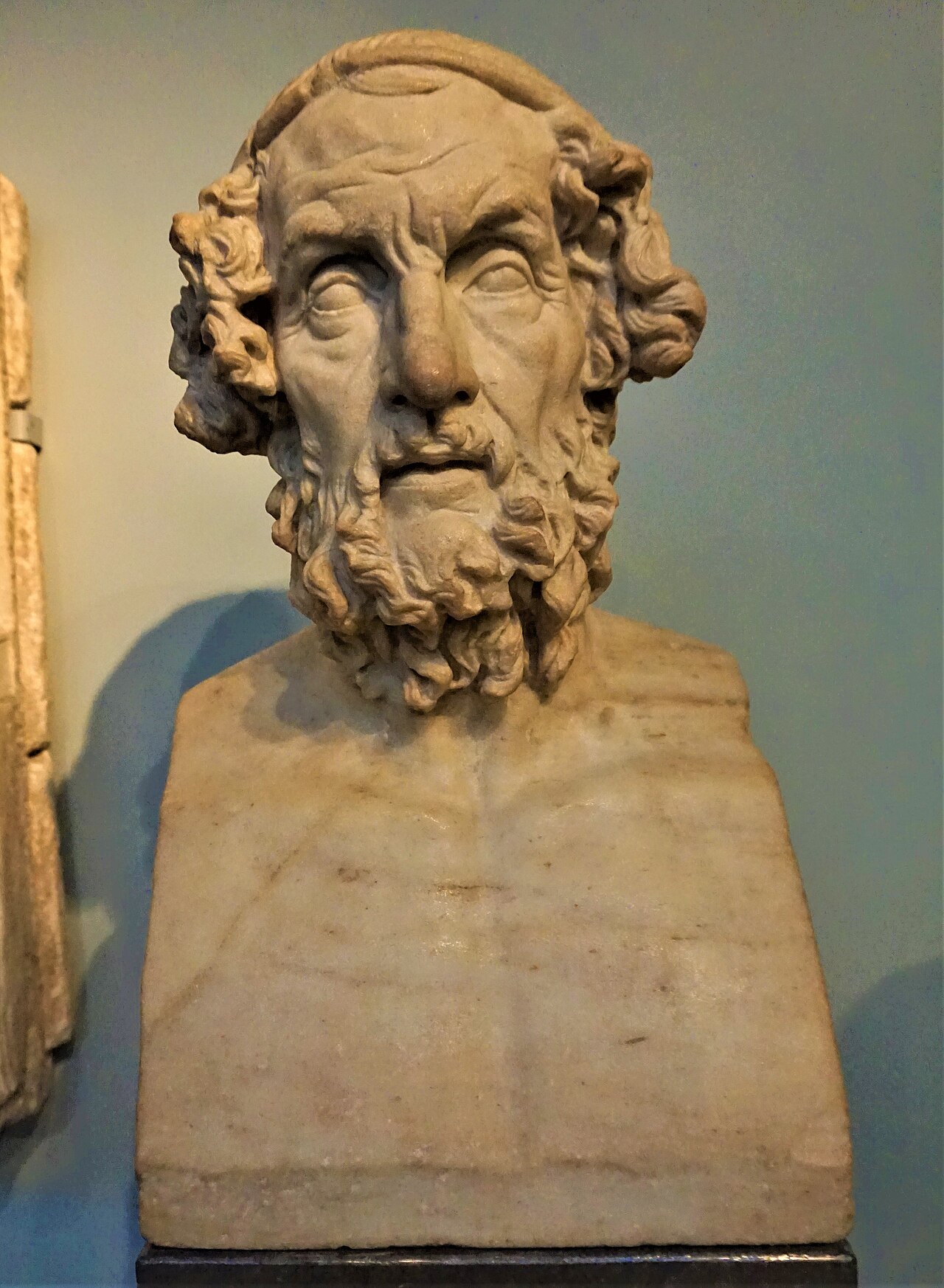
Homer
The name to which Greek tradition attributes the Iliad and Odyssey.
Metadata
These are descriptive fields, not conclusions.
- Edition
- 2
Text
The name to which Greek tradition attributes the IliadIliadGreek epic attributed to Homer, narrating a phase of the Trojan War.Glossary · Click to read the explanation and OdysseyOdysseyGreek epic attributed to Homer, following Odysseus’s return after the Trojan War.Glossary · Click to read the explanation. [1]
The epics’ known forms are commonly associated with the eighth and early seventh centuries BCE and an older oral tradition. Homer’s identity and exact compositional role remain debated; these dates concern the poems, not a secure biography. [1]
References and notes
- Deborah Steiner — Homeric poetry, publisher Introduction summary Introduction summary: traditional attribution,oral poetry and eighth–early seventh century BCE composition. Return to the text ↑
Research history
Substantive changes are retained here. Minor copy edits remain in the internal operational log.
-
Substantive record update
Suggest a correction · Suggest a source for this record
Cite this record
IL Archive, «Homer», Edition 2, https://ilarchive.com/en/people/homer