Ancient text
Hesiod’s Theogony
A text for line-by-line reading, with transliteration, translation, and resources.
Greek poem on divine generations and Zeus’s kingship; its surviving form does not identify all of Hesiod’s sources.
Metadata
These are descriptive fields, not conclusions.
- Edition
- 2
Text
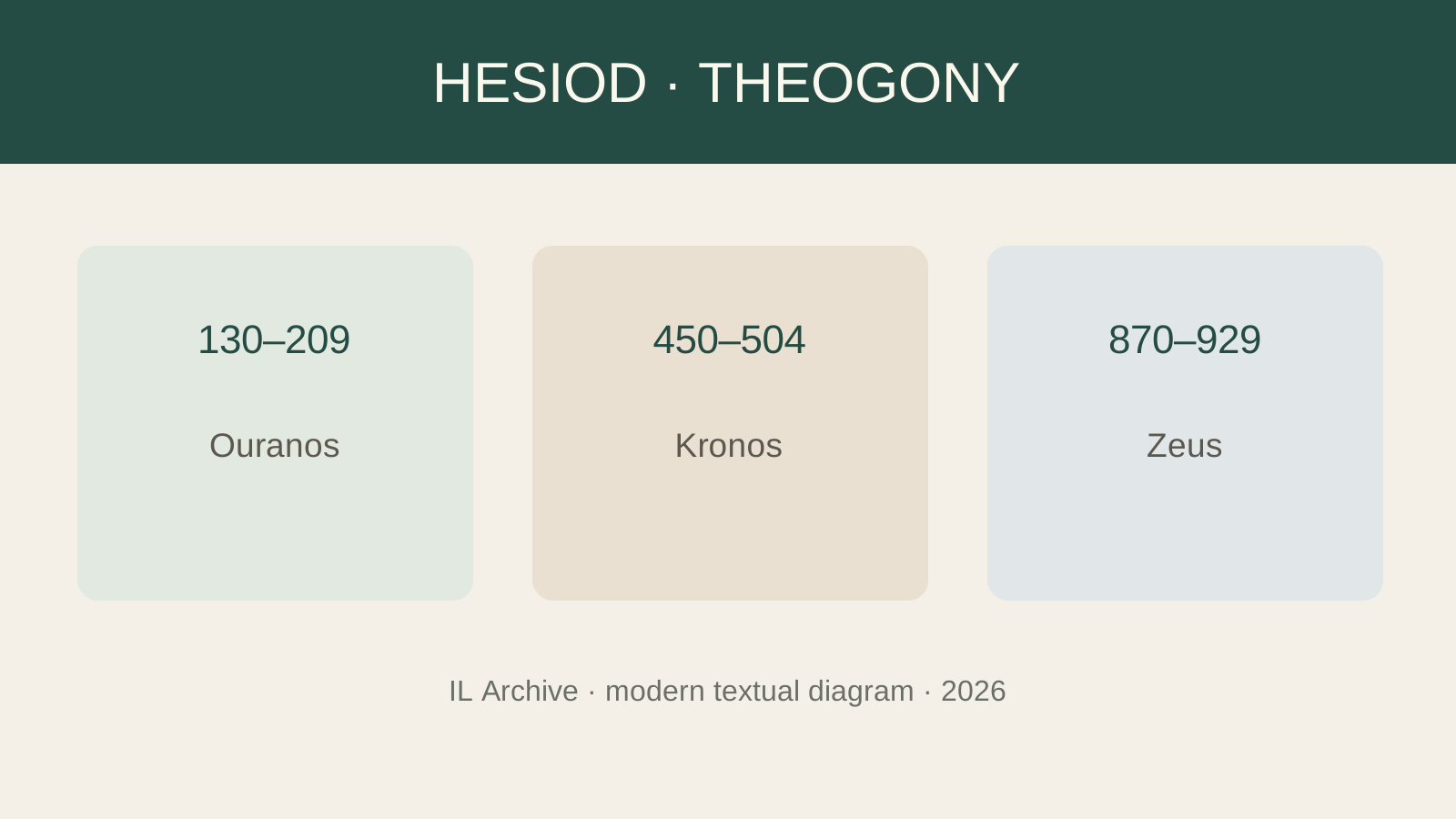
Lines 130–209 describe Gaia’s plan and KronosKronosGreek divine figure and Zeus’s father; Hesiod connects his reign with struggles between divine generations.Glossary · Click to read the explanation cutting off and throwing away Ouranos’s genitals. Lines 450–504 tell how Kronos swallows his children and a stone in place of ZeusZeusZeus is the sky god and leading deity in many Greek traditions. In the Iliad he presides over divine gatherings while others can still speak and object.Glossary · Click to read the explanation. The poem does not conflate the acts. [2][3][4][5]
Lines 870–929 portray Zeus’s kingship, his swallowing of Metis and Athena’s birth from his head. Comparing some of these scenes with the KumarbiKumarbiHurrian divine figure in Hittite CTH 344; challenges Anu and carries the storm god after swallowing his seed.Glossary · Click to read the explanation song is useful, but a direct transmission route is not documented. This modern diagram maps passages; it is not an ancient manuscript. [7][8][9]
References and notes
- Hesiod 130–174, Greek and historical translation. Theogony 130-174, Greek and Evelyn-White 1914 English Return to the text ↑
- Lines 175–209: Kronos cuts and throws the member away. Theogony 175-209, Greek and Evelyn-White 1914 English Return to the text ↑
- Lines 450–479: swallowed children and succession warning. Theogony 450-479, Greek and Evelyn-White 1914 English Return to the text ↑
- Lines 480–504: the stone and Zeus’s survival. Theogony 480-504, Greek and Evelyn-White 1914 English Return to the text ↑
- Lines 870–899: kingship and swallowing Metis. Theogony 870-899, Greek and Evelyn-White 1914 English Return to the text ↑
- Lines 900–929: Athena’s birth from the head. Theogony 900-929, especially 924-929, Greek and Evelyn-White 1914 English Return to the text ↑
- Van Dongen thesis: specified pages only, not the whole thesis; stone passage and proposed route. Erik van Dongen, Studying external stimuli to the development of the ancient Aegean, UCL doctoral thesis (2010): printed pp.45-51, 78-85, 140-145, 211-213, 240-246 (PDF pages one less than printed page numerals in displayed web extraction) Return to the text ↑
Research history
Substantive changes are retained here. Minor copy edits remain in the internal operational log.
-
Substantive record update
Archive records may be reviewed and refined as better evidence or sources become available. Suggest a correction
Suggest a correction · Suggest a source for this record
Cite this record
IL Archive, «Hesiod’s Theogony», Edition 2, https://ilarchive.com/en/texts/hesiod-theogony