Entity
Gaia
A reference page linking a name, group, or concept to the materials that discuss it.
Gaia is Earth in Hesiod’s Theogony and acts within the divine family. She makes Kronos’s sickle and helps Rhea save the infant Zeus.
Estimated reading time: 3 min Published Last reviewed:
Share article
Text
Introduction
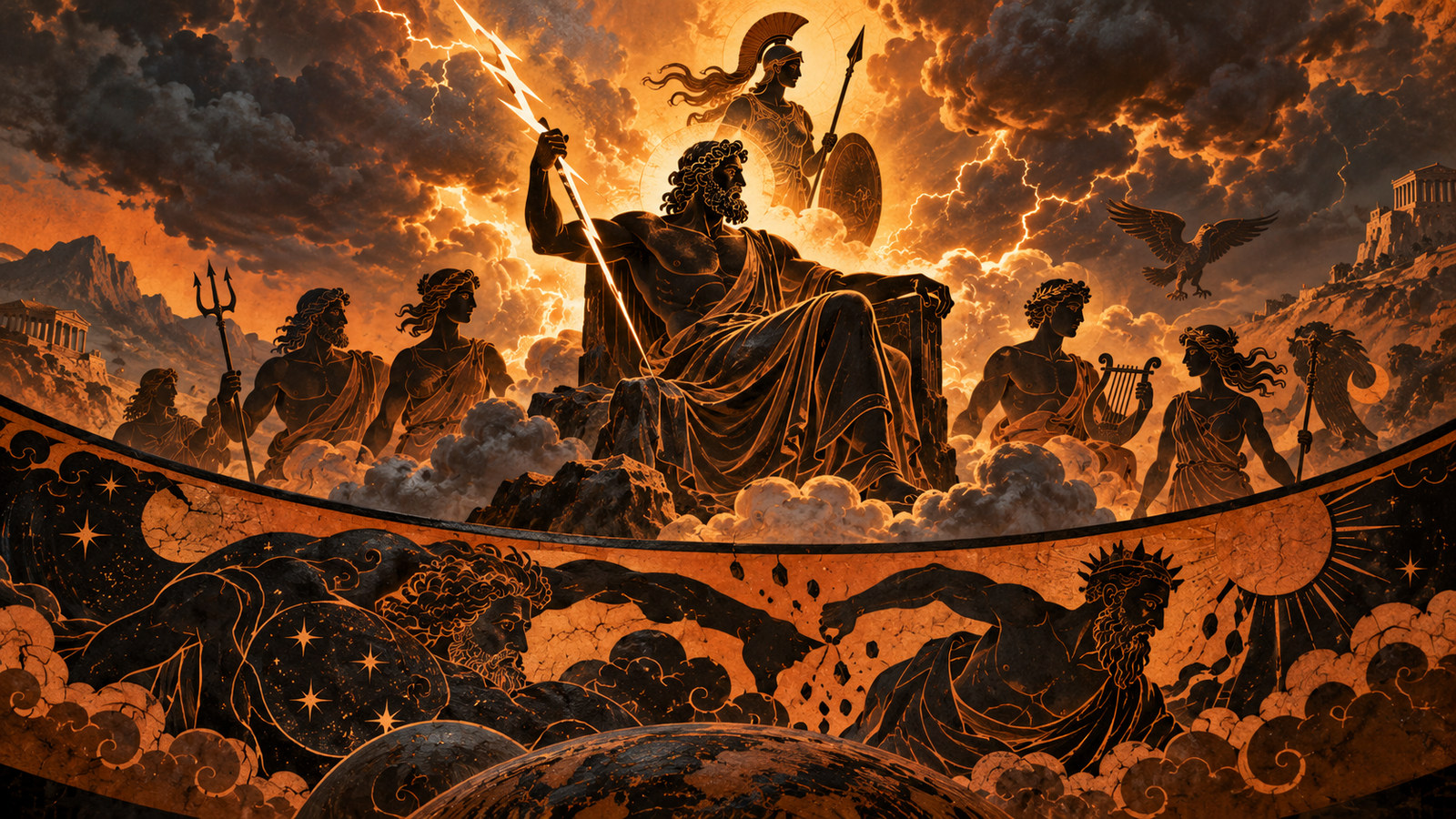
Gaia is Earth in the Greek poet HesiodHesiodGreek poet whose major work is generally dated to the late eighth or early seventh century BCE, including the Theogony.Glossary · Click to read the explanation’s TheogonyHesiod’s TheogonyGreek poem on divine generations and Zeus’s kingship; its surviving form does not identify all of Hesiod’s sources.Glossary · Click to read the explanation. She appears near the beginning of the world, brings forth Ouranos, or Heaven, and is the mother of several groups of gods. She also speaks, takes counsel and acts when one generation threatens the next. Her choices help explain how the poem moves from the first divine family to the generation of ZeusZeusZeus is the sky god and leading deity in many Greek traditions. In the Iliad he presides over divine gatherings while others can still speak and object.Glossary · Click to read the explanation. [1][2][3]
Earth and Heaven
In lines 116–129, Chaos appears first and Earth comes next. The poem describes her as a firm dwelling for the gods. Gaia brings forth Heaven to cover her and also gives rise to the mountains. The account treats Earth as both part of the world and a being who gives birth. A reader can follow the two roles together when the poem passes from the description of places to the troubles of the divine family. [1]
With Ouranos, Gaia becomes the mother of the Titans, including KronosKronosGreek divine figure and Zeus’s father; Hesiod connects his reign with struggles between divine generations.Glossary · Click to read the explanation and Rhea, and of the Cyclopes and the Hundred-HandersHundred-HandersBeings in Hesiod’s poem, shown in one scene leaving captivity and darkness for light.Glossary · Click to read the explanation. Ouranos hides his children within Earth. She is distressed by what he does and makes a sharp sickle. She then asks her children to help her. Kronos is the one who answers her, and Gaia tells him what to do and hides him in a place where he can wait for Ouranos. The tool and the plan come from Gaia. [2]
How Rhea protects Zeus
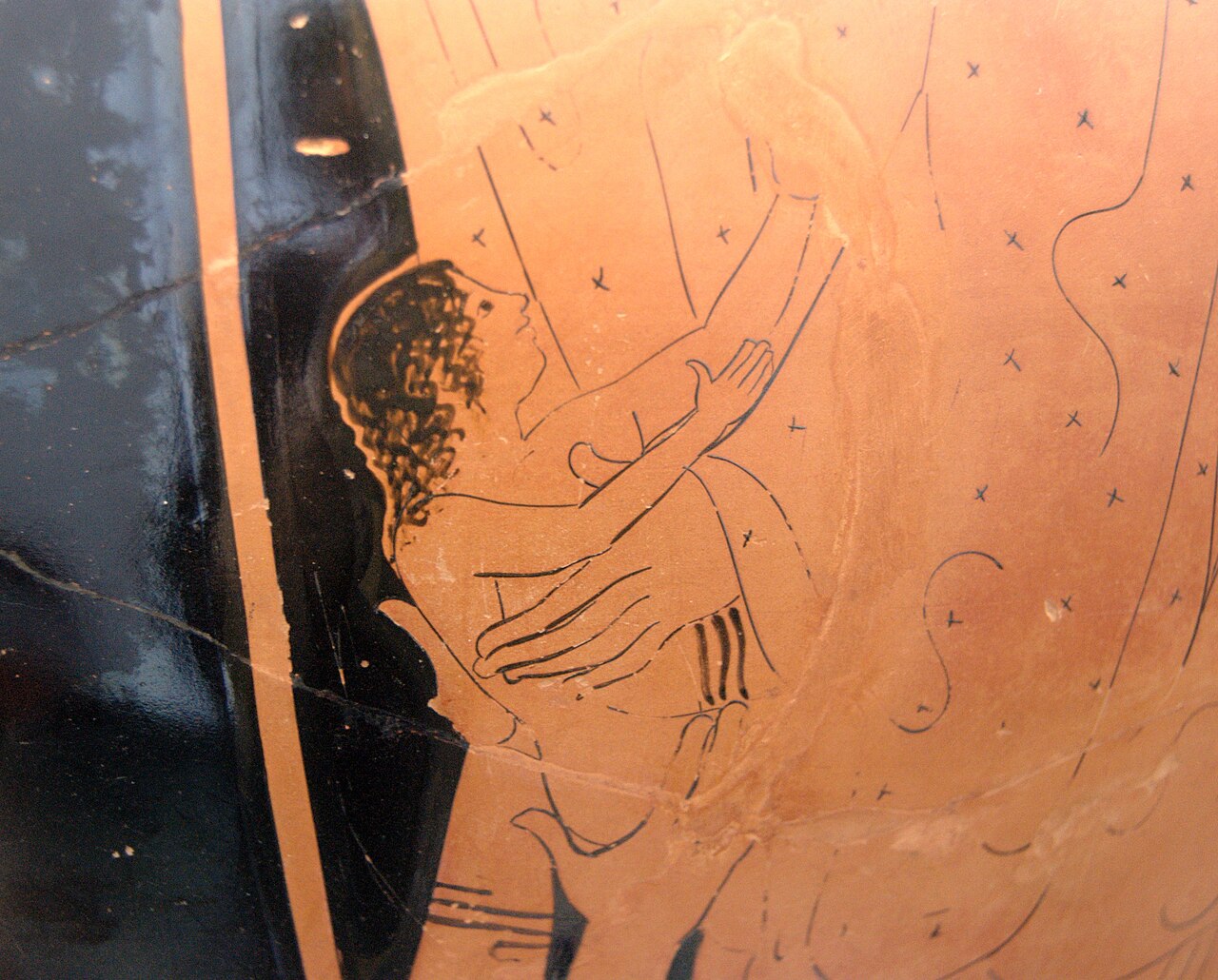
A later passage gives Gaia another part in a conflict between parents and children. Kronos swallows the children Rhea bears him because he has learned from Earth and Heaven that his own son is destined to overcome him. When Rhea is about to give birth to Zeus, she appeals to both her parents for a way to save the child. They send her to Lyctus in CreteCreteGreek island in the eastern Mediterranean, associated in Hesiod with hiding the infant Zeus.Glossary · Click to read the explanation, and Earth receives Zeus and hides him. The account gives Rhea the appeal and Gaia the task of sheltering the child. [3]
These episodes place Gaia on both sides of a generation. She is the parent of Kronos and Rhea, and Rhea’s child depends on her help. Counting only the successive male holders of power gives a short sequence beginning with Ouranos. Counting the divine family from its beginnings includes Earth as an earlier figure and makes her actions visible in both changes of rule. [1][2][3]
Reading the succession alongside a Hittite poem
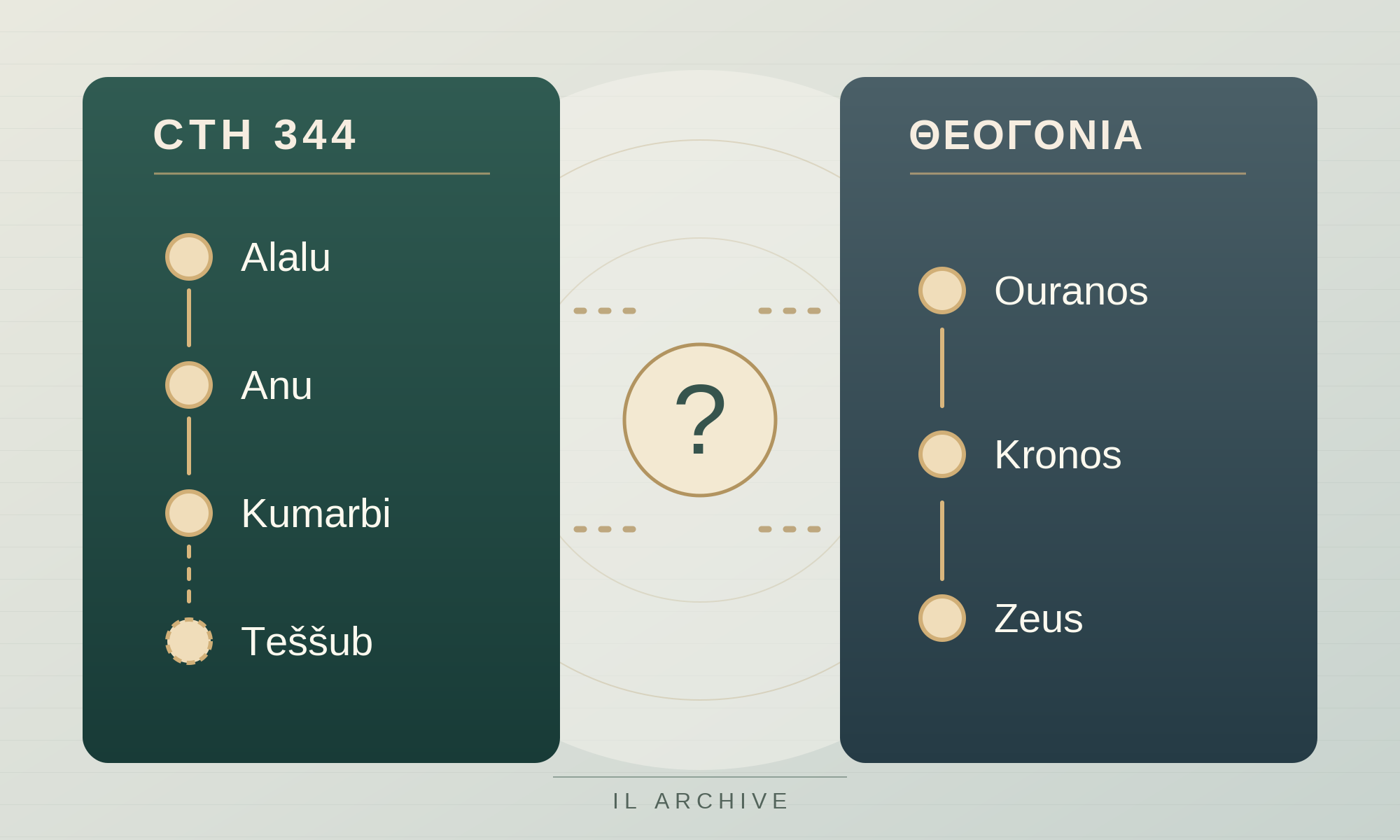
The Hittite text catalogued as CTH 344 also tells of changes in heavenly kingship, with AlaluAlaluFirst heavenly ruler in the surviving Kumarbi song; defeated by Anu, he flees to the dark earth.Glossary · Click to read the explanation, Anu and KumarbiKumarbiHurrian god in Hittite songs from Hattusha; he overthrows Anu and carries the storm god. A study of CTH 344, contested genealogy, and Greek parallels.Glossary · Click to read the explanation in its opening sequence. The attack on Anu gives a specific point of comparison with the Greek struggle between Kronos and Ouranos. The Hittite passage distributes the roles differently. Reading the two side by side invites attention to who plans the change, who suffers it and who cares for the next generation. For Hesiod those questions repeatedly lead back to Gaia, including at the moment Rhea seeks help for Zeus. [4][2][3]
References and notes (4)
- Hesiod, Theogony 100–129, trans. Hugh G. Evelyn-White Primary translation, vv. 116–129, emergence of Earth and birth of Heaven and the hills. Return to the text ↑
- Hesiod, Theogony 130–174, trans. Hugh G. Evelyn-White Primary translation, Gaia’s children, Ouranos’s treatment of them, her making the sickle and the plan with Kronos. Return to the text ↑
- Hesiod, Theogony 450–479, trans. Hugh G. Evelyn-White Primary translation, the children of Rhea and Kronos, the prophecy, Rhea’s appeal to her parents and refuge for Zeus in Crete. Return to the text ↑
- TITUS, Corpus of Hittite Mythological Texts, CTH 344, translation Opening sequence in the German translation, lines 8–41, Alalu, Anu, Kumarbi and the attack on Anu. Return to the text ↑
Suggest a correction · Suggest a source for this record
Cite this record
IL Archive, «Gaia», https://ilarchive.com/en/entities/gaia-greek-goddess
Continue reading