Entidad · Contextual definition
Shu y Tefnut
Página de referencia que vincula un nombre, grupo o concepto con los materiales que lo tratan.
Traducción automática. Lea el original en inglés.
Shu y Tefnut son una pareja divina egipcia asociada respectivamente con el aire y la humedad
Última revisión:
Texto
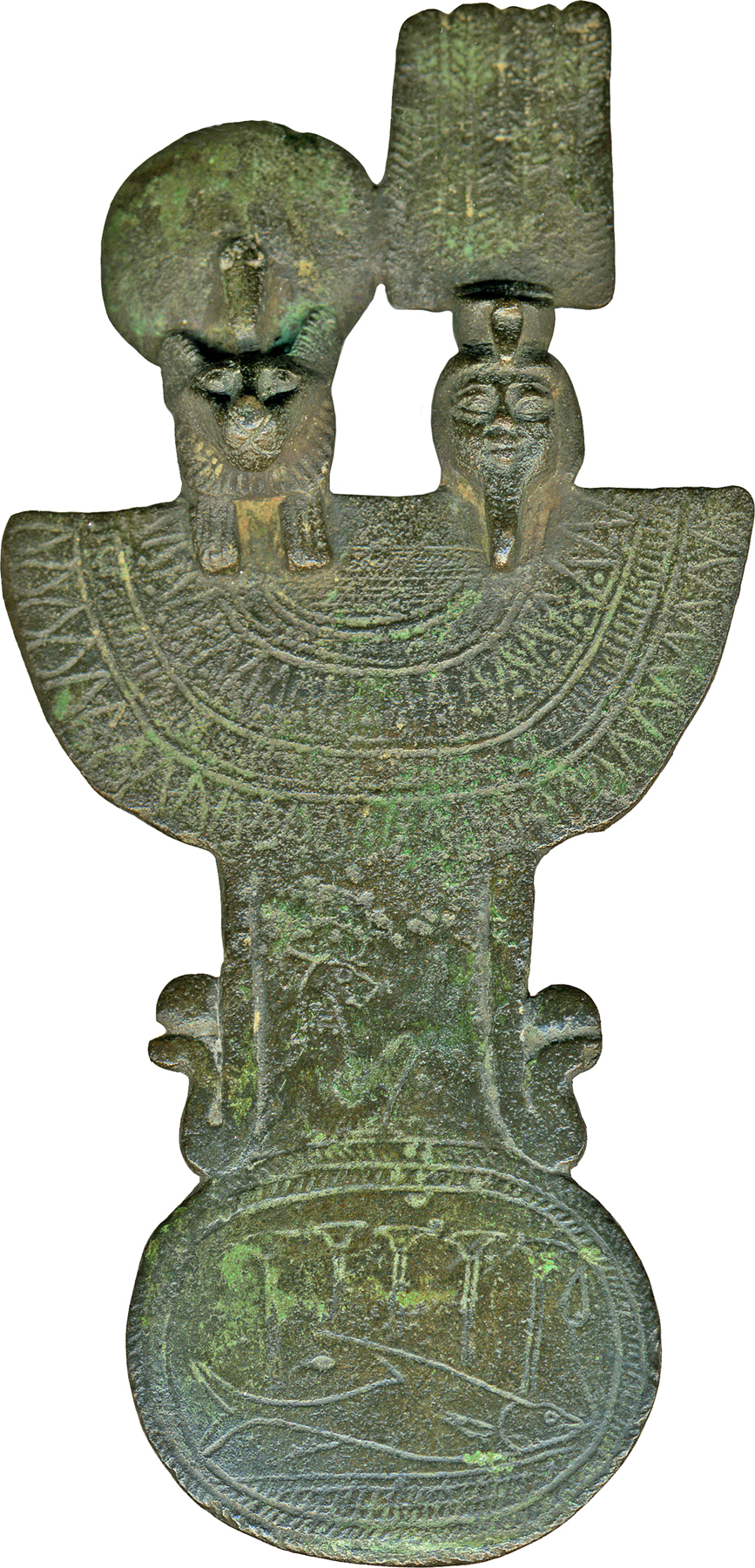
Shu y Tefnut son una pareja divina egipcia asociada respectivamente con el aire y la humedad. [1]
Las tradiciones sobre la creación los sitúan entre las deidades que surgen de AtumAtumAtum is an Egyptian creator god associated with HeliopolisGlosario · Pulse para leer la explicación. El Walters Museum conserva un objeto con sus cabezas fechado entre 664 y 380 a. n. e.; la fecha de ese objeto no coincide con el origenOrígenesChristian exegete and theologian from Alexandria (c. 185–253), known for biblical textual comparison, commentaries and On First Principles. His works survive in Greek and through later translations and quotations.Glosario · Pulse para leer la explicación de su culto.
Referencias y notas
- Walters Art Museum, Menat with the Heads of the Deities Shu and Tefnut, 54.1515, 664–380 BCE. Description and source metadata Volver al texto ↑
Proponer una corrección · Proponga una fuente para este registro
Citar este registro
IL Archive, «Shu y Tefnut», https://ilarchive.com/es/entities/shu-and-tefnut