Persona
Hythem Sidky
Researcher in Quranic manuscripts, reading traditions and written and oral transmission.
Variantes del nombre: Hythem Sidky
Contexto y fuentes →Una herramienta de lectura
Definiciones breves de nombres, conceptos y lugares. Abra un registro para leer su contexto, sus fuentes y los materiales relacionados.
1047 definiciones
Persona
Researcher in Quranic manuscripts, reading traditions and written and oral transmission.
Variantes del nombre: Hythem Sidky
Contexto y fuentes →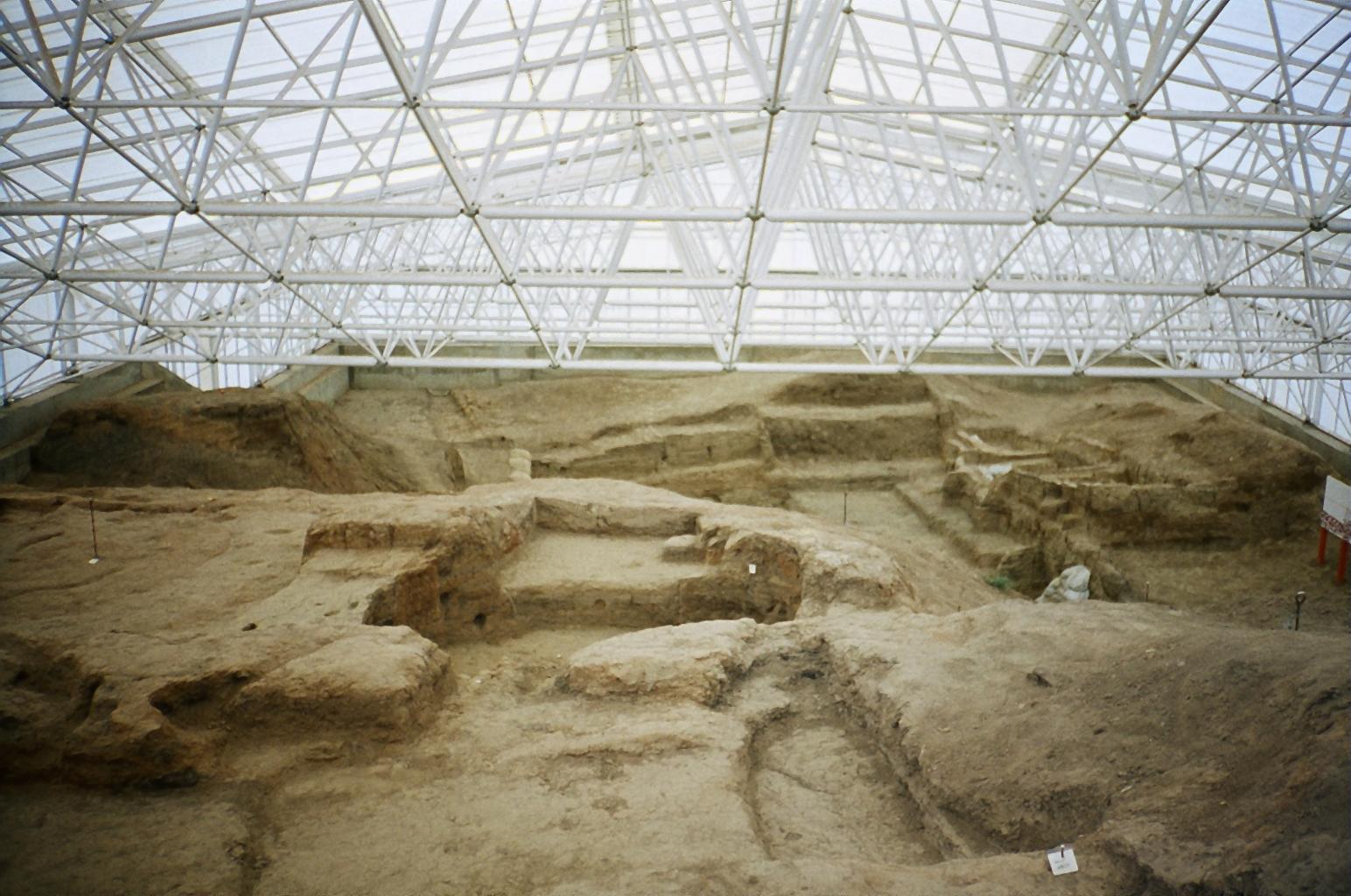
The south area at Çatalhöyük in 2003, under a modern shelter, during the project Ian Hodder directed. Not his portrait and not the houses while they were occupied
Persona
An archaeologist who directed the Çatalhöyük project from 1993 to 2018 and read its buildings as houses of dwelling and memory, not necessarily separate temples.
Variantes del nombre: Ian Hodder
Contexto y fuentes →Persona
Archaeologist studying social organization, identity and village life, including Neolithic communities.
Variantes del nombre: Ian Kuijt
Contexto y fuentes →
The Whiteknights campus of the University of Reading, with the Humanities and Social Sciences building, 10 November 2007. A view of the university associated with Ian Rutherford’s work
Persona
Specialist in Greek literature and religion at the University of Reading, studying contacts with Anatolia and Egypt.
Variantes del nombre: Ian Rutherford
Contexto y fuentes →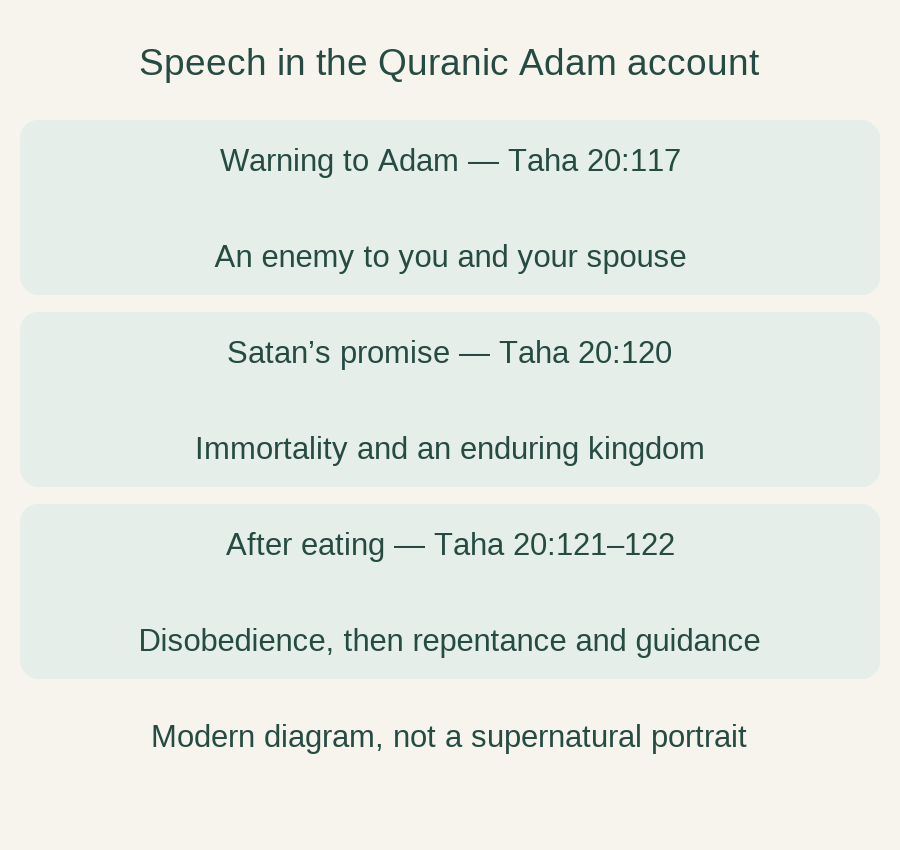
Modern diagram distinguishing the warning, Satan’s promise and the narrated aftermath of eating; not a portrait of Iblis
Entidad
Iblis names the figure who refuses to prostrate before Adam in the Quran; Taha places the promise of immortality on Satan’s lips in the temptation scene.
Variantes del nombre: Iblis in the Quran
Contexto y fuentes →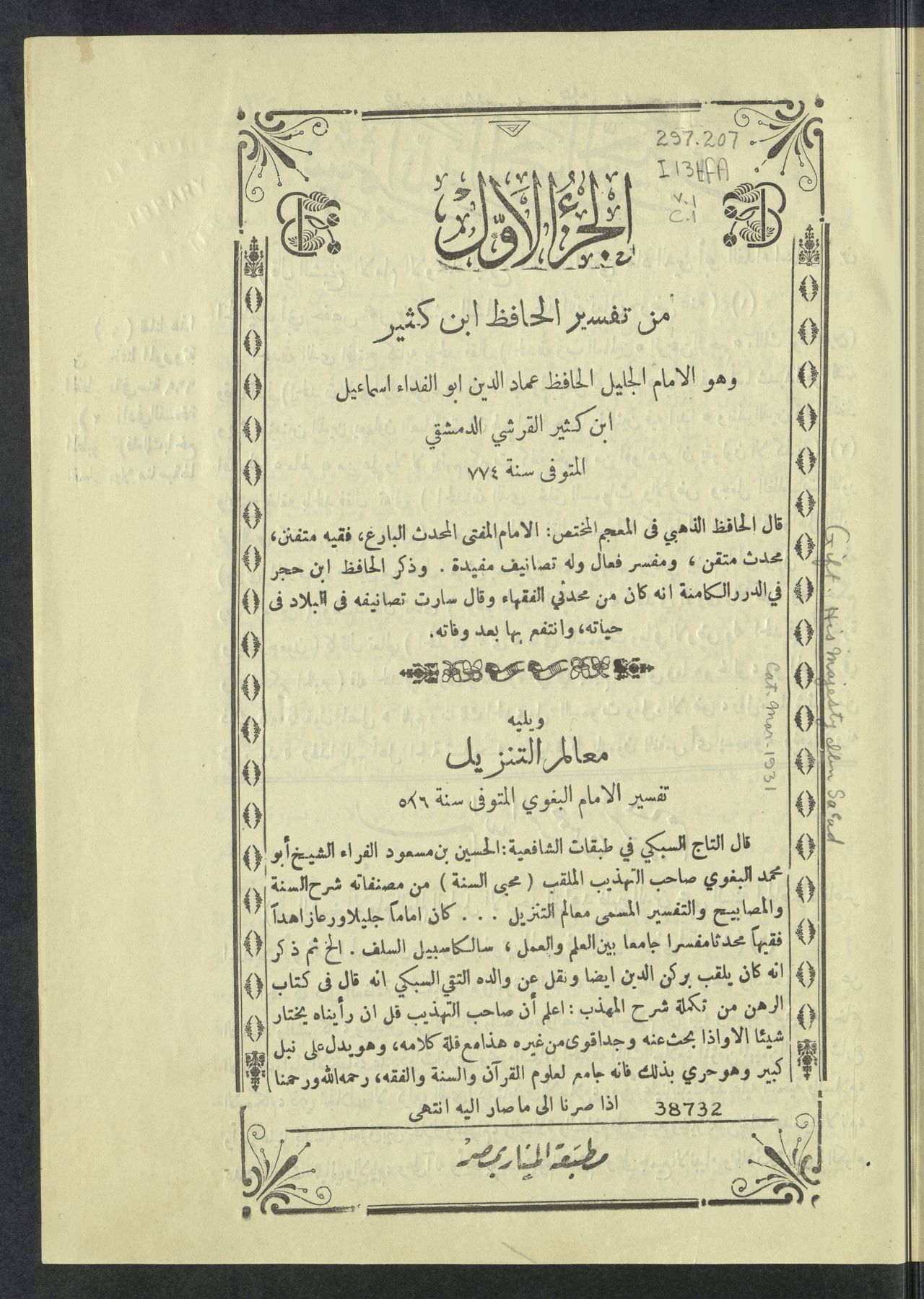
Title page of volume 1 of the Egyptian al-Manar printing of Ibn Kathir's commentary, 1343–1347 AH/c. 1924–1928 CE; a later printed edition, not a fourteenth-century image
Persona
Syrian Qur'anic exegete and historian (c. 1301–1373 CE) who favors Ishmael in his reading of the sacrifice account.
Variantes del nombre: Isma'il ibn 'Umar Ibn Kathir
Contexto y fuentes →Persona
Hanbali Muslim scholar (1263–1328) based in Damascus, who wrote on interpretation, law and theology; modern research considers his influence on identifying Abraham's son in the sacrifice story.
Variantes del nombre: Taqi al-Din Ibn Taymiyya, Ibn Taymiyyah
Contexto y fuentes →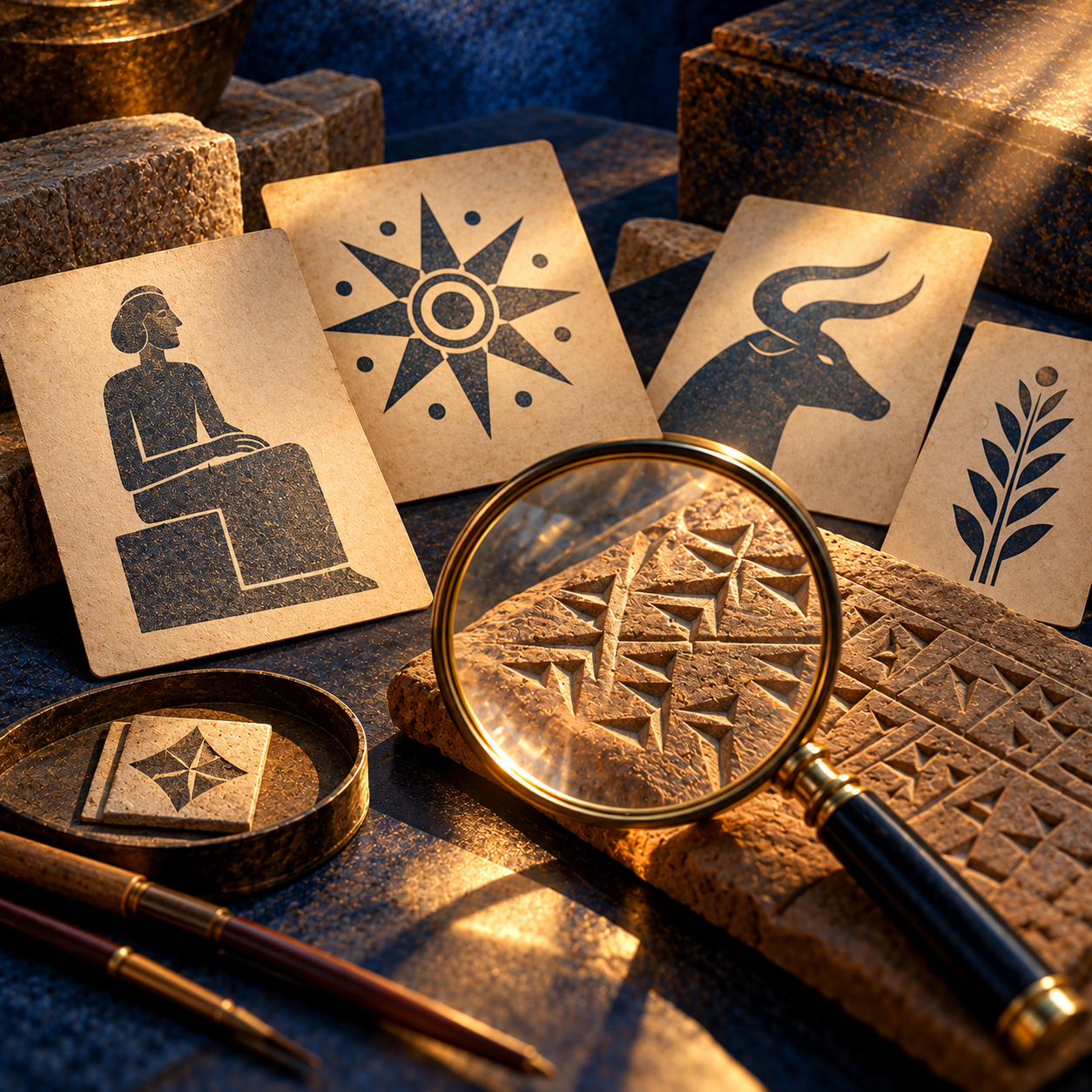
Contemporary AI-generated interpretive image of examining ancient imagery: stylized symbols and a fictional tablet under a magnifier. Neither an ancient object nor a verified reconstruction or genuine cuneiform text
Entidad
Study of represented subjects, figures and attributes through comparison and context, distinguishing observation from tentative identification.
Variantes del nombre: iconography, iconographic analysis
Contexto y fuentes →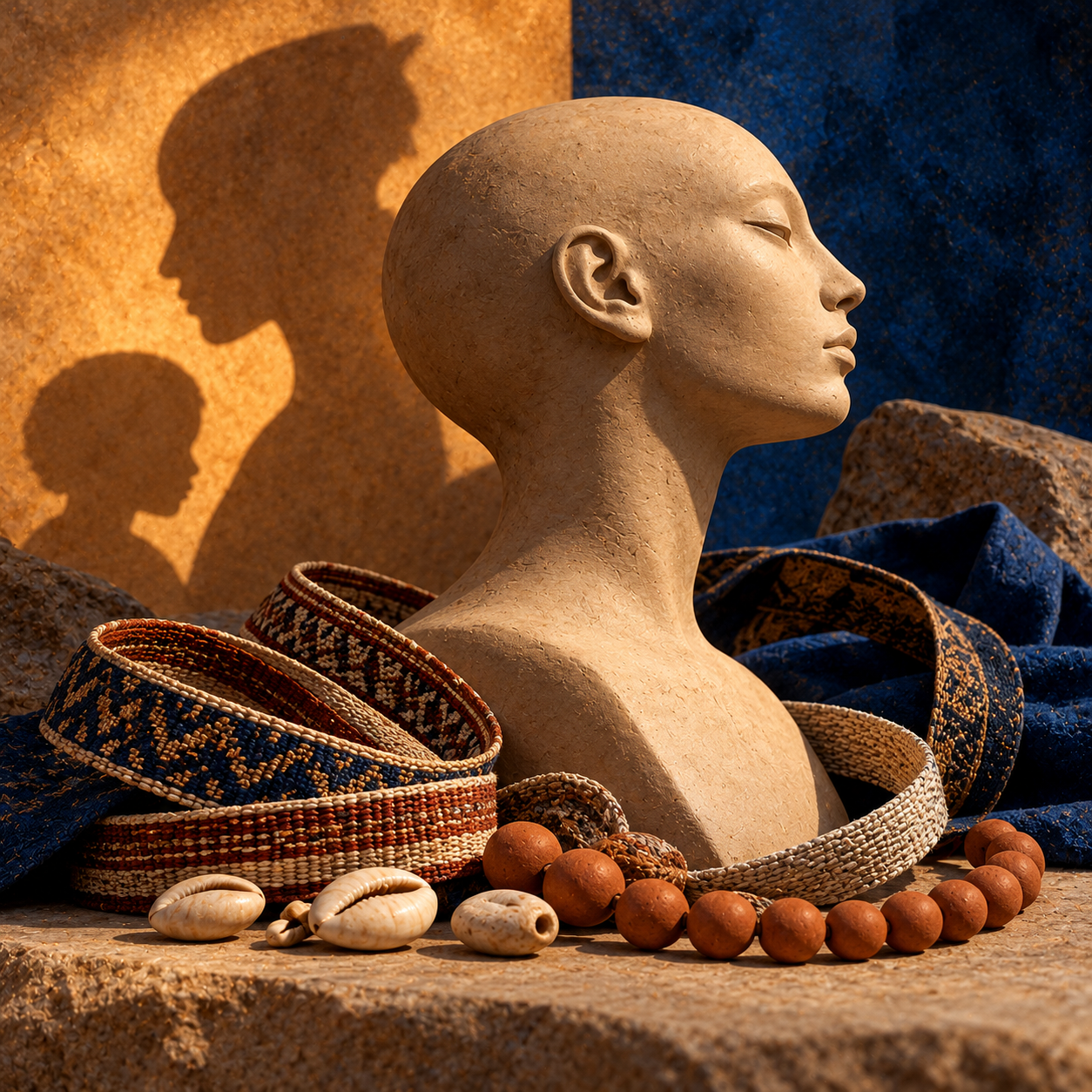
Modern AI-generated conceptual cover: a symbolic clay head, shadows, woven bands and imagined objects evoke embodiment; not an ancient object or a verified reconstruction
Entidad
An interpretive framework for bodily practices, appearances and experiences through which belonging and difference are negotiated; skeletal form alone does not disclose meaning.
Variantes del nombre: embodied identity, bodily identity
Contexto y fuentes →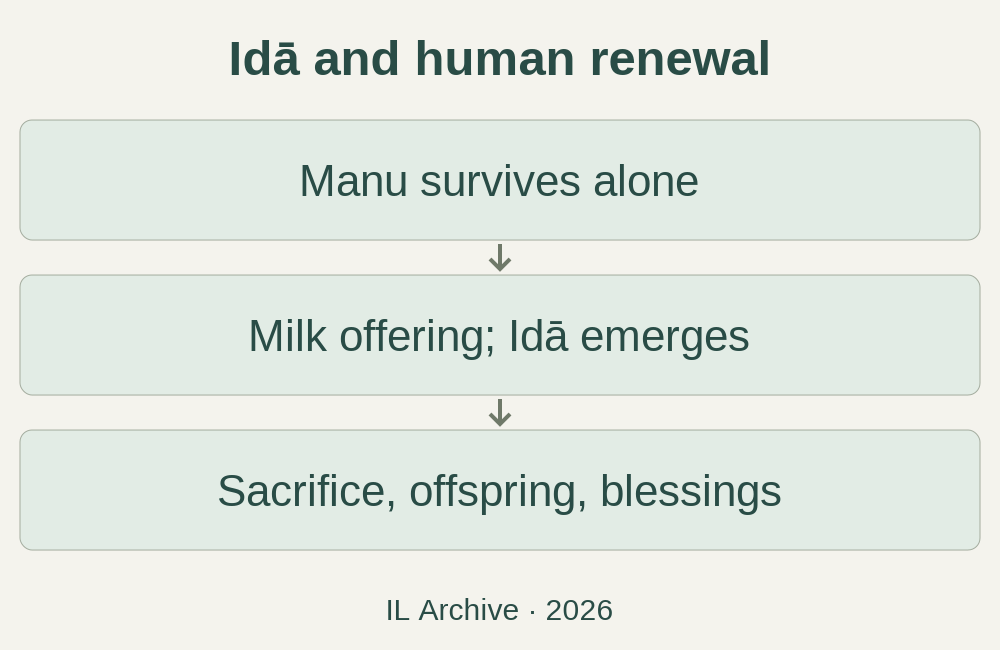
Modern explanatory diagram of narrative sequence and relationships, not a manuscript reproduction or portrait
Entidad
Female figure arising from Manu’s post-flood offering in the Śatapatha Brāhmaṇa.
Variantes del nombre: Idā, sacrifice and human renewal, Ida, Iḍā
Contexto y fuentes →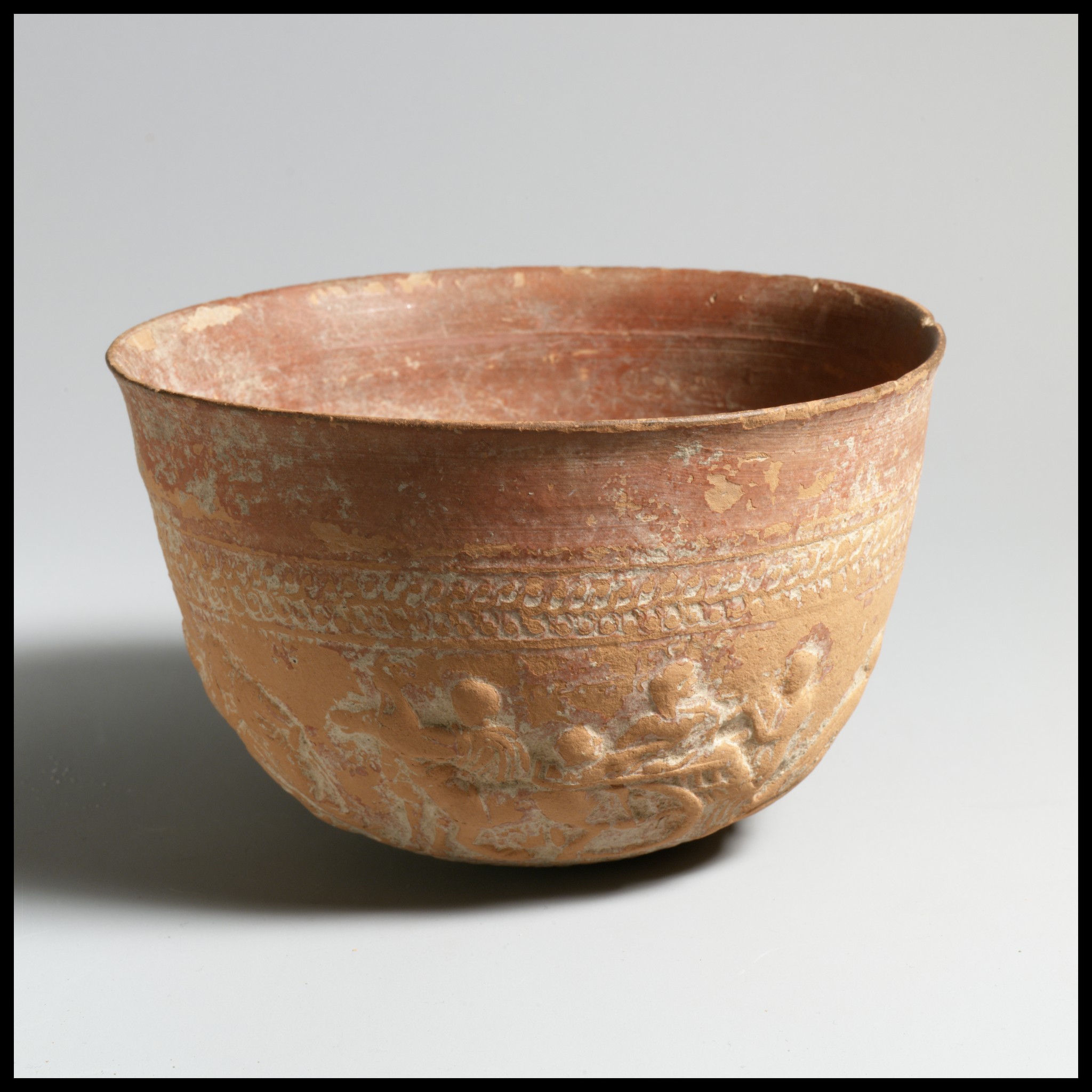
Second-century BCE Boeotian bowl with scenes from Iphigenia at Aulis, The Met 31.11.2. It does not show the deer substitution in Iphigenia among the Taurians
Persona
Mythic and dramatic daughter of Agamemnon. In Iphigenia among the Taurians, Artemis rescues her at the altar and substitutes a deer.
Variantes del nombre: Iphigeneia
Contexto y fuentes →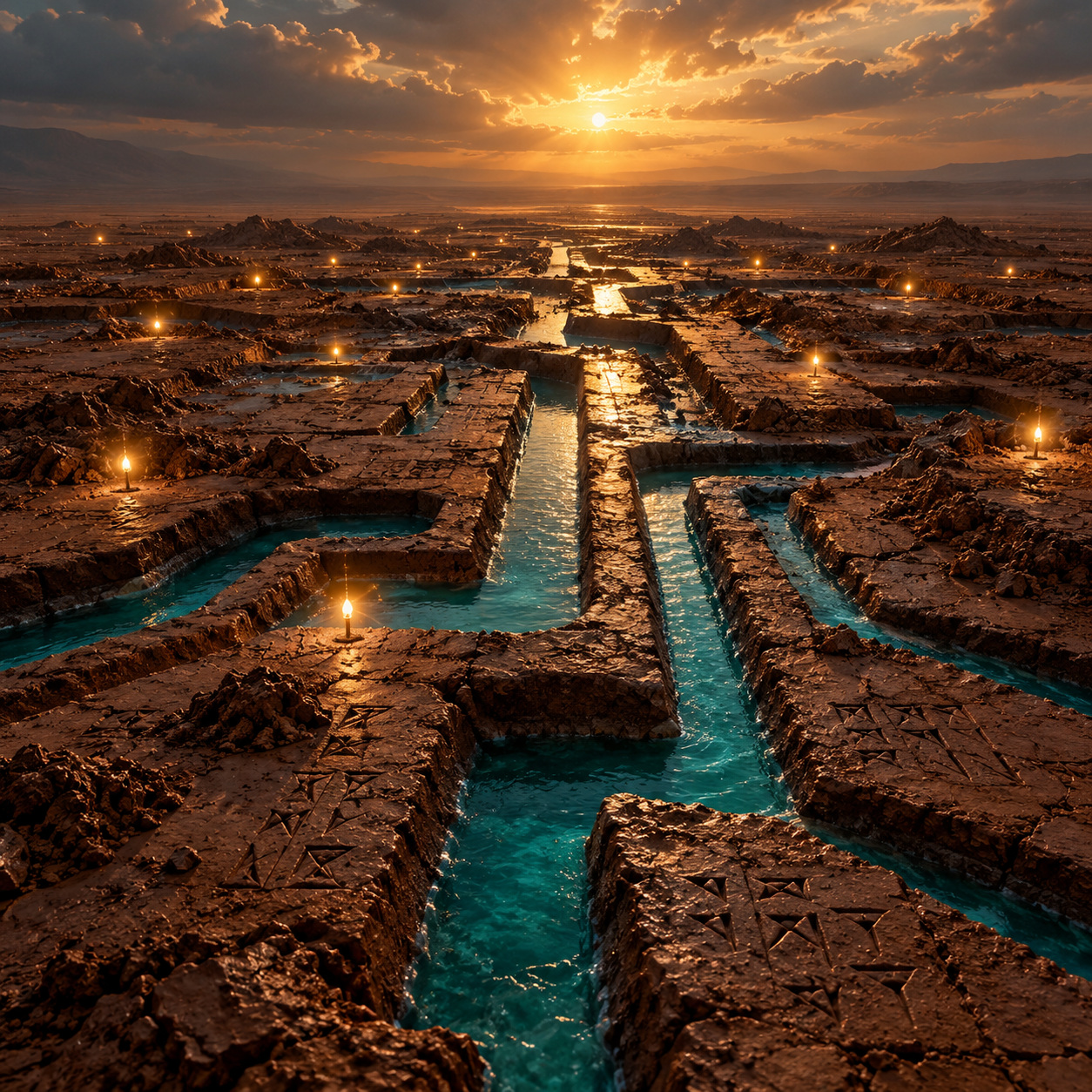
Modern AI-generated expressive cover imagining canals and earthworks at sunset, inspired by the labour episode in Atrahasis. Not a photograph of an archaeological site, a god or an historical event, nor a verified reconstruction
Entidad
Collective of deities called Igigi or Igigū in Akkadian sources from the Old Babylonian period onward. They labour and rebel in Atrahasis; their numbers and relation to the Anunnaki vary by text.
Variantes del nombre: Igigi, Igigu, Igigū
Contexto y fuentes →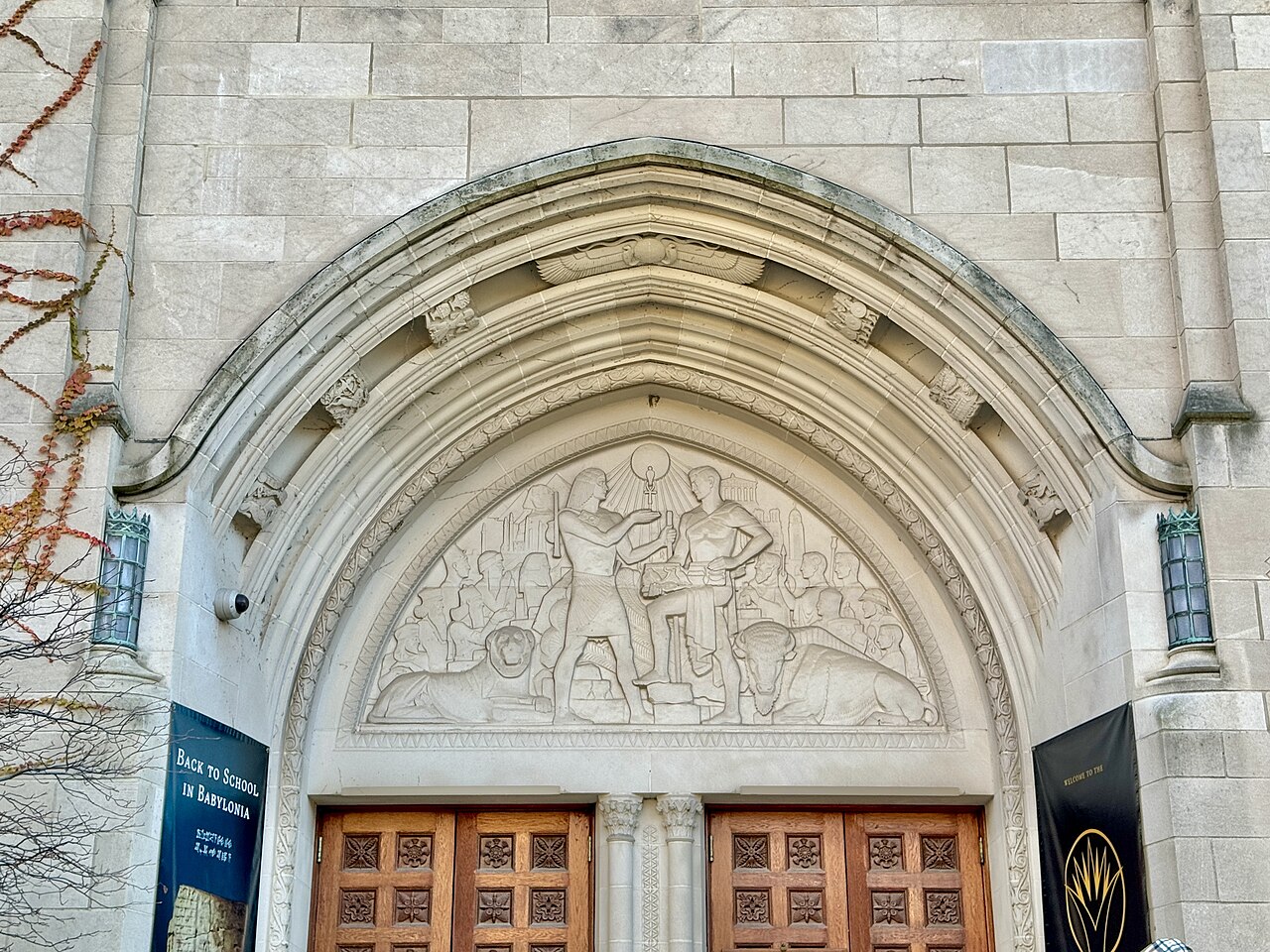
Detail of the entrance and modern architectural relief at the Institute for the Study of Ancient Cultures, University of Chicago, on 11 November 2023. The institute moved into this building in 1931; Ignace J. Gelb’s work was associated with the institution from 1929. The relief belongs to the twentieth-century architecture
Persona
University of Chicago Assyriologist (1907–1985), studying ancient languages, writing and personal names, including Amorite names.
Variantes del nombre: Ignace Gelb, Ignace J. Gelb
Contexto y fuentes →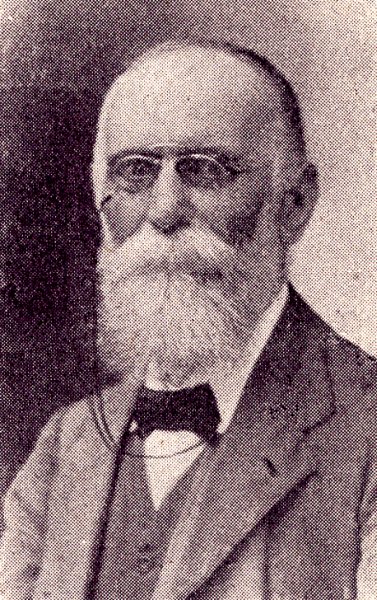
Historical portrait of Ignazio Guidi (1844–1935), from Wikimedia Commons. The file record credits the Italian Chamber of Deputies but does not identify the artist. CC BY 3.0
Persona
Italian scholar (1844–1935) who edited Syriac forms of the Sleepers story and translated one into Italian.
Variantes del nombre: Ignazio Guidi, Guidi
Contexto y fuentes →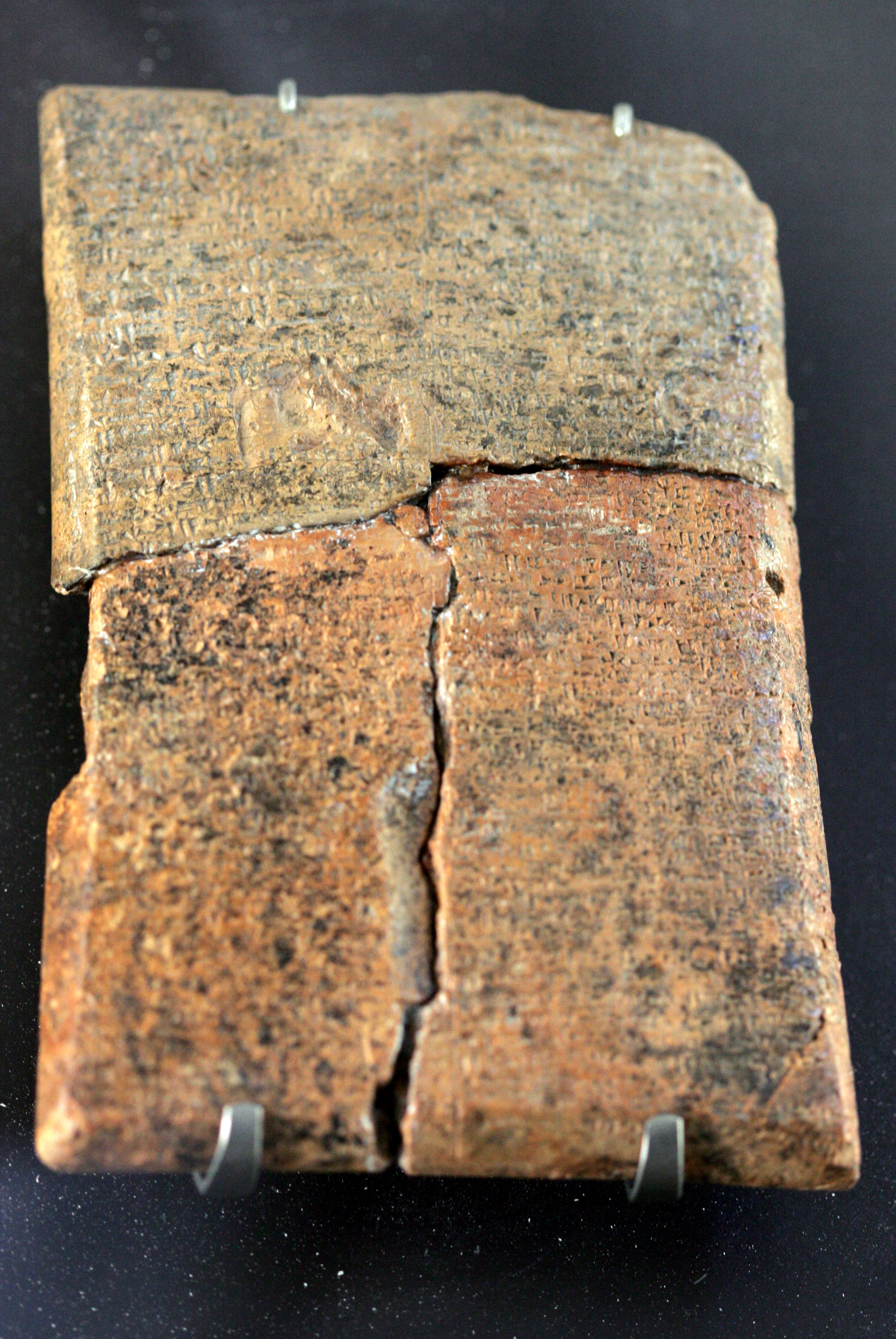
A tablet of the Tale of Aqhat, Louvre AO 17323, catalogued as KTU 1.19, from Ras Shamra; museum dating 1400–1200 BCE. Context for literature attributed to Ilimilku, not his portrait or the damaged colophon on KTU 1.17
Entidad
Ugaritic scribe associated with the Baal Cycle, Kirta and Aqhat; handwriting and colophons aid attribution. His work alone does not date the traditions’ origins.
Variantes del nombre: Ilimilku, Ili-milku, Ilumilku
Contexto y fuentes →
Contemporary imaginative depiction of Illuyanka confronting the Storm-god, inspired by the two Hittite accounts. It is neither an ancient artifact nor a documented reconstruction of a particular passage
Entidad
Illuyanka, Hittite for “serpent,” opposes the Storm-god in two CTH 321 accounts. In one, Inara and Hupasiya help trap it; in the other, the god’s son retrieves his stolen heart and eyes.
Variantes del nombre: Illuyanka
Contexto y fuentes →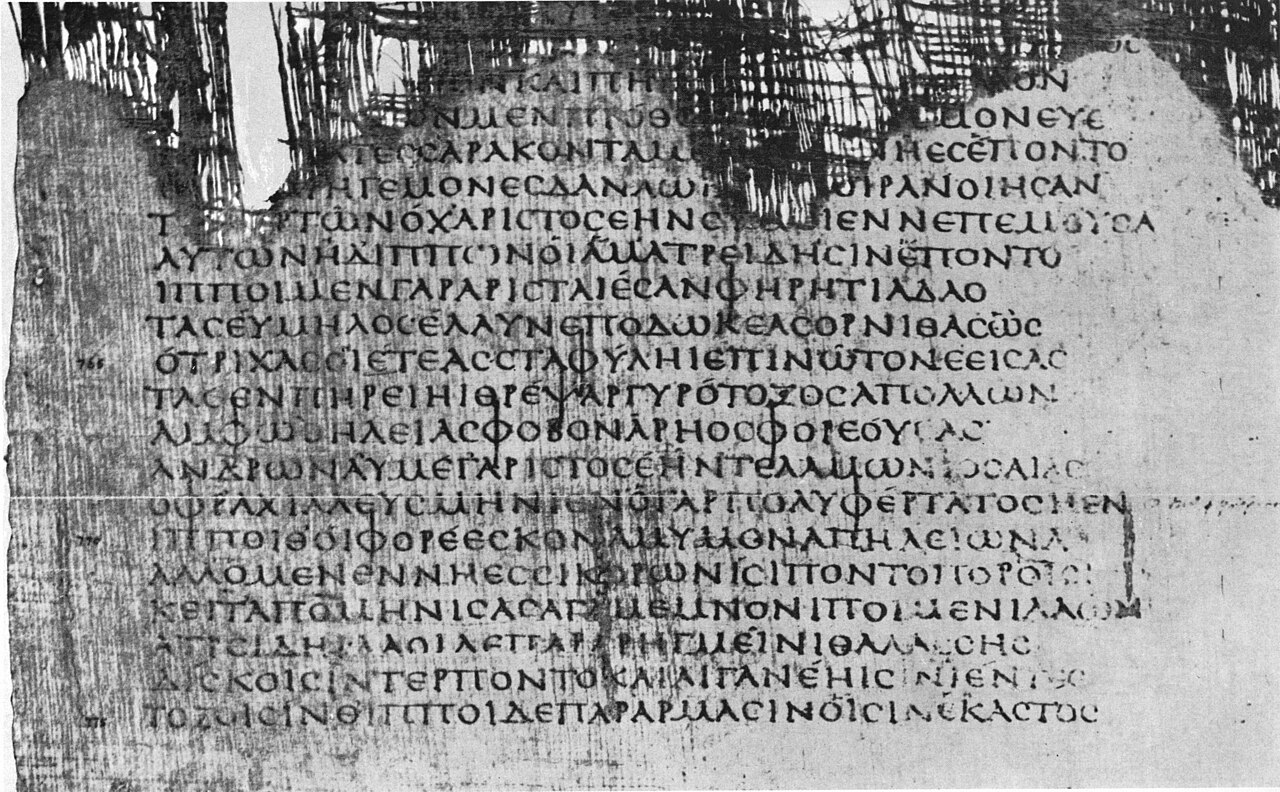
Fragment of the Hawara papyrus preserving Iliad 2.757–775, about 150 CE. A witness to the epic’s transmission in the Roman period; its date is not the date of composition
Entidad
Greek epic attributed to Homer, narrating a phase of the Trojan War.
Variantes del nombre: Iliad
Contexto y fuentes →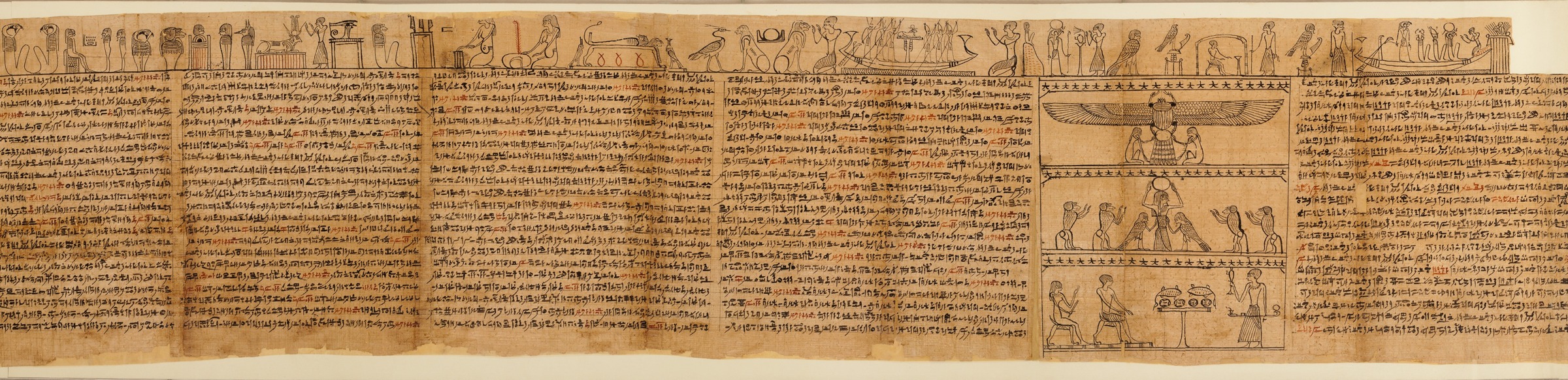
Photographed section of the Book of the Dead papyrus of Imhotep, priest of Horus, about 332–200 BCE. Columns of hieratic writing and funerary images; Metropolitan Museum 35.9.20a–w. Not a portrait of its owner or the entire scroll
Persona
A priest of Horus for whom a Book of the Dead papyrus was prepared in the early Ptolemaic period, about 332–200 BCE; his manuscript combines texts and images to secure an afterlife.
Variantes del nombre: Imhotep priest of Horus
Contexto y fuentes →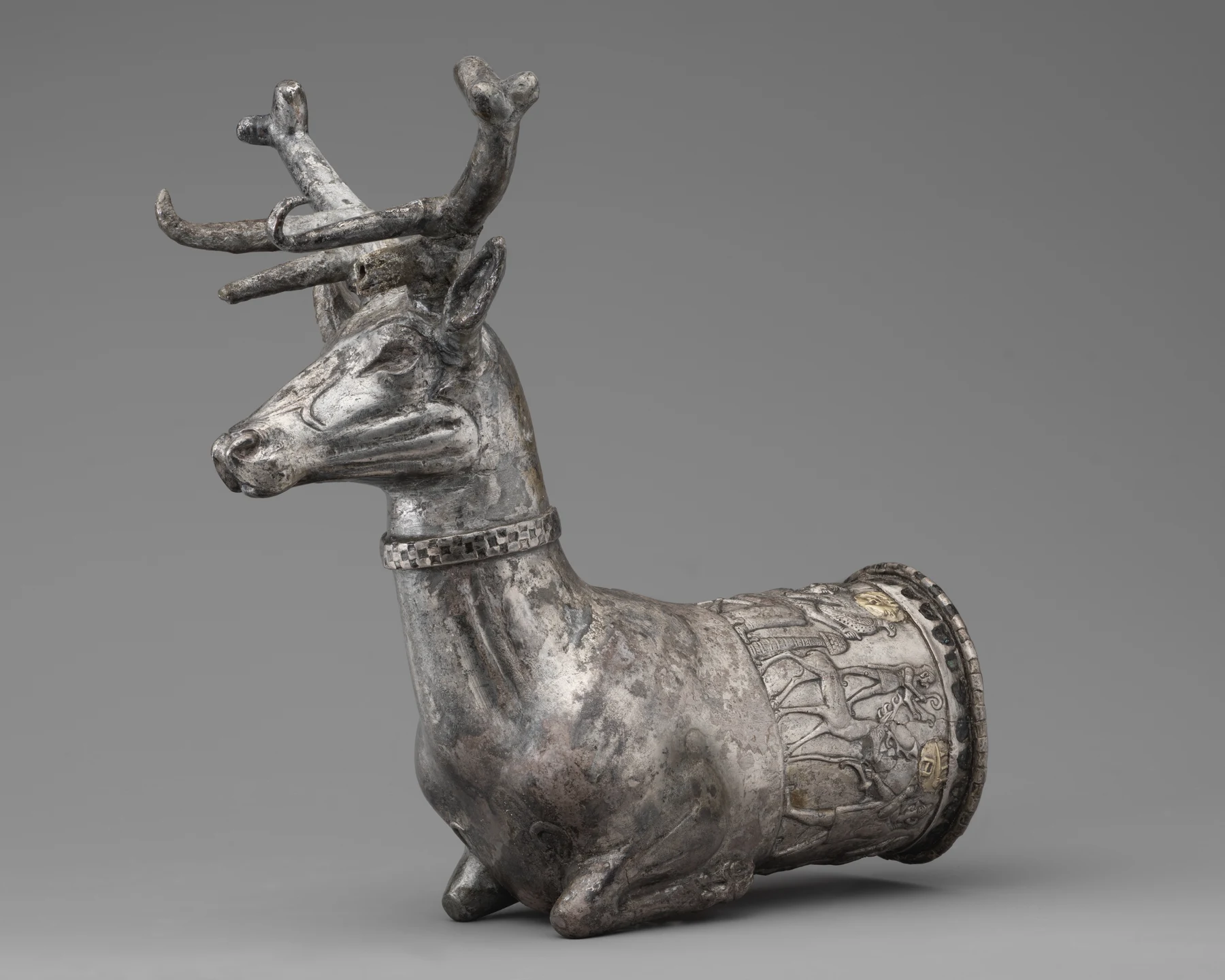
Hittite silver vessel with gold inlay and a stag-shaped forepart, central Anatolia, ca. 14th–13th century BCE. The Metropolitan Museum of Art, 1989.281.10. Its religious frieze has no firmly established specific function; it is not direct evidence of Levitical impurity law
Entidad
A religious status regulating contact with the sacred, especially in Leviticus and Numbers. Causes, duration, and remedies vary by context; it does not necessarily imply sin, disease, or diminished dignity.
Variantes del nombre: ritual impurity
Contexto y fuentes →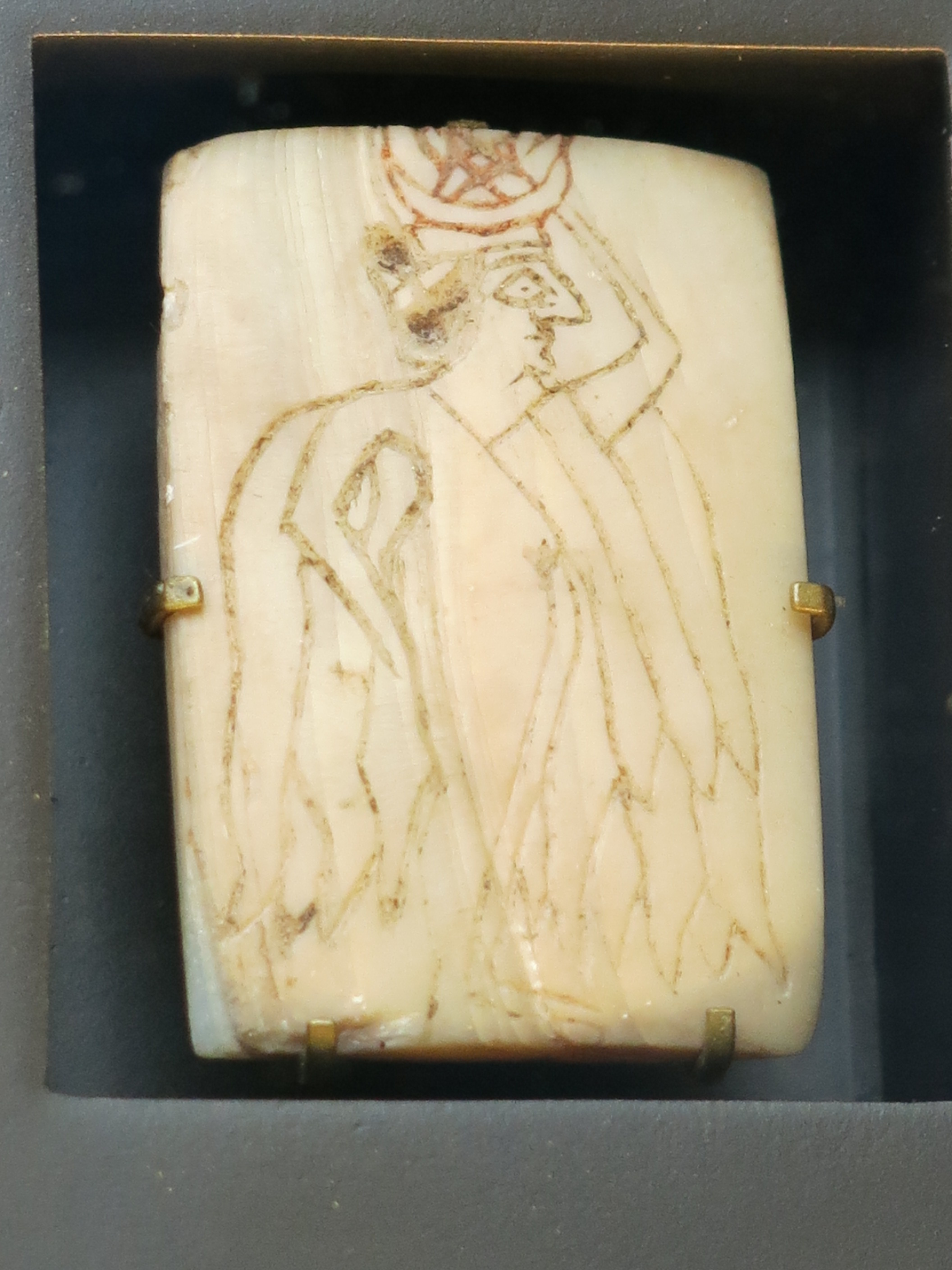
Shell inlay from Ishtar’s temple at Mari, ca. 2500–2400 BCE, depicting Ishtar with a star and crescent according to the Louvre identification. Louvre, AO 18962. Modern photograph of an ancient object
Entidad
A prominent Mesopotamian goddess whose Sumerian name Inanna became associated with Akkadian Ishtar across diverse traditions. She was associated with desire, war, royal authority and Venus, while local forms and genealogies varied among texts.
Variantes del nombre: Inanna, Inana, Ishtar, Ištar
Contexto y fuentes →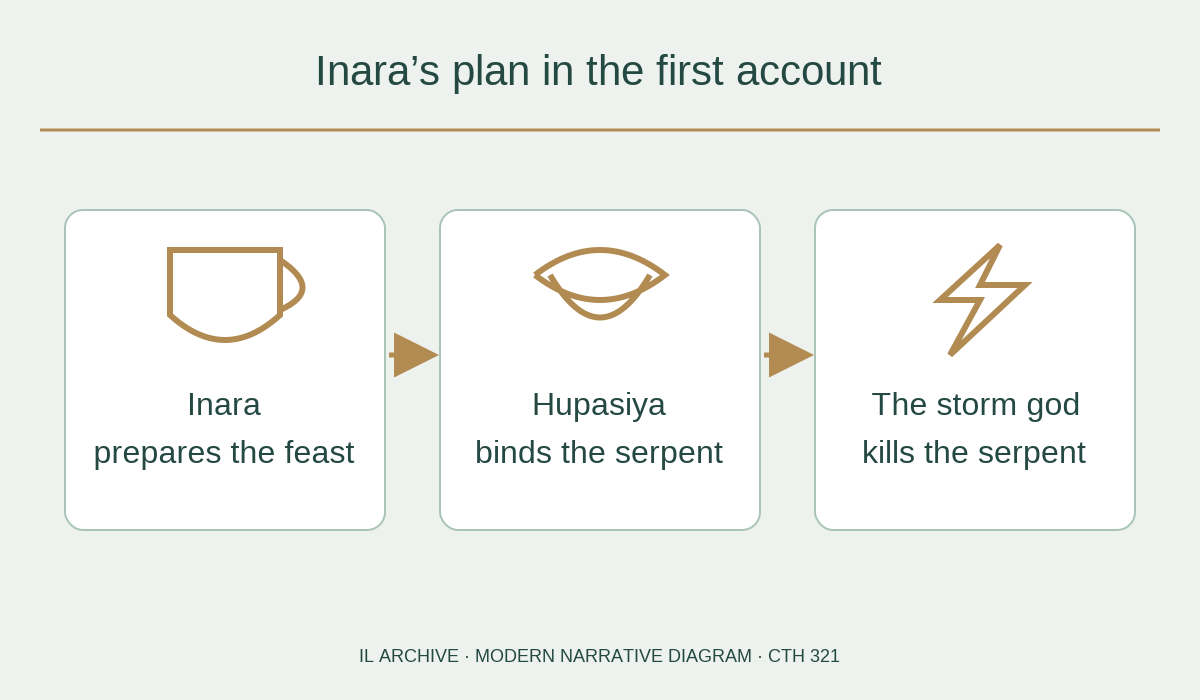
Modern narrative diagram of Inara, Hupasiya and the storm god cooperating in the first Illuyanka account. Arrows show successive roles in the story; not an artifact or a reconstruction of divine appearances
Entidad
Goddess in Hittite traditions who plans the feast enabling the serpent’s defeat in the first Illuyanka account.
Variantes del nombre: Inara
Contexto y fuentes →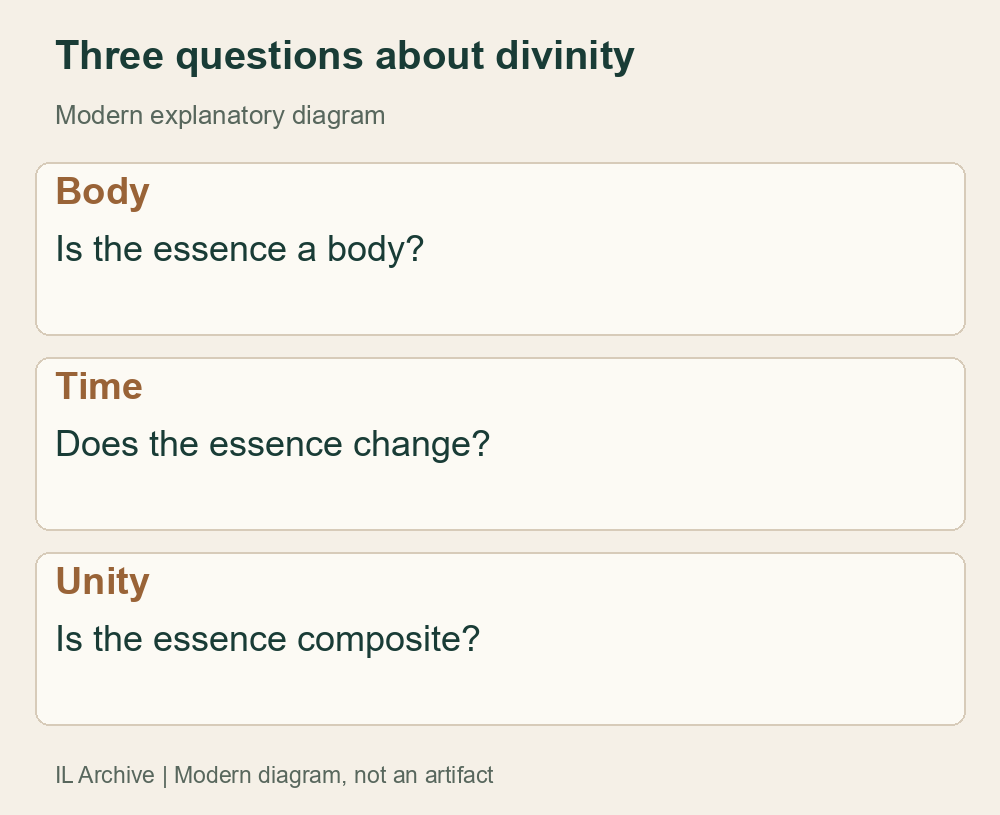
Three distinct axes, not one historical transition or a doctrine shared by every school
Entidad
The denial that divine essence is an extended body with parts or spatial occupation; distinct from invisibility and simplicity, with the meaning of body and place varying by school.
Variantes del nombre: Divine incorporeality, incorporeality, divine bodilessness
Contexto y fuentes →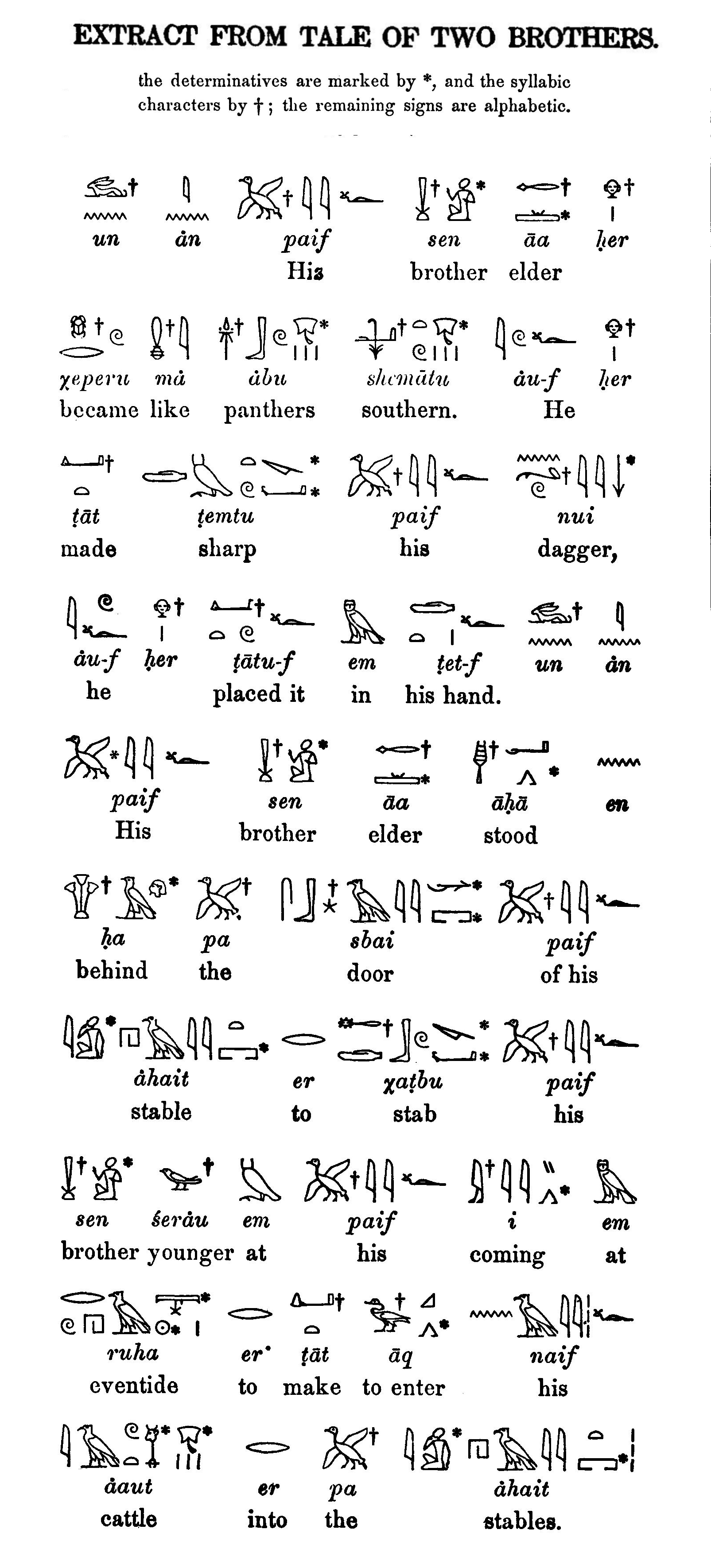
Printed Two Brothers excerpt in Wallis Budge’s Egyptian Language, 1889, pp. 38–39: educational hieroglyphic transcription with English glosses of the armed elder brother. Not a photograph of the hieratic papyrus or Inena’s signature
Persona
Egyptian scribe of the late Nineteenth Dynasty, credited by the British Museum with the Two Brothers papyrus around 1215 BCE.
Variantes del nombre: Inena, the D’Orbiney scribe, Inena
Contexto y fuentes →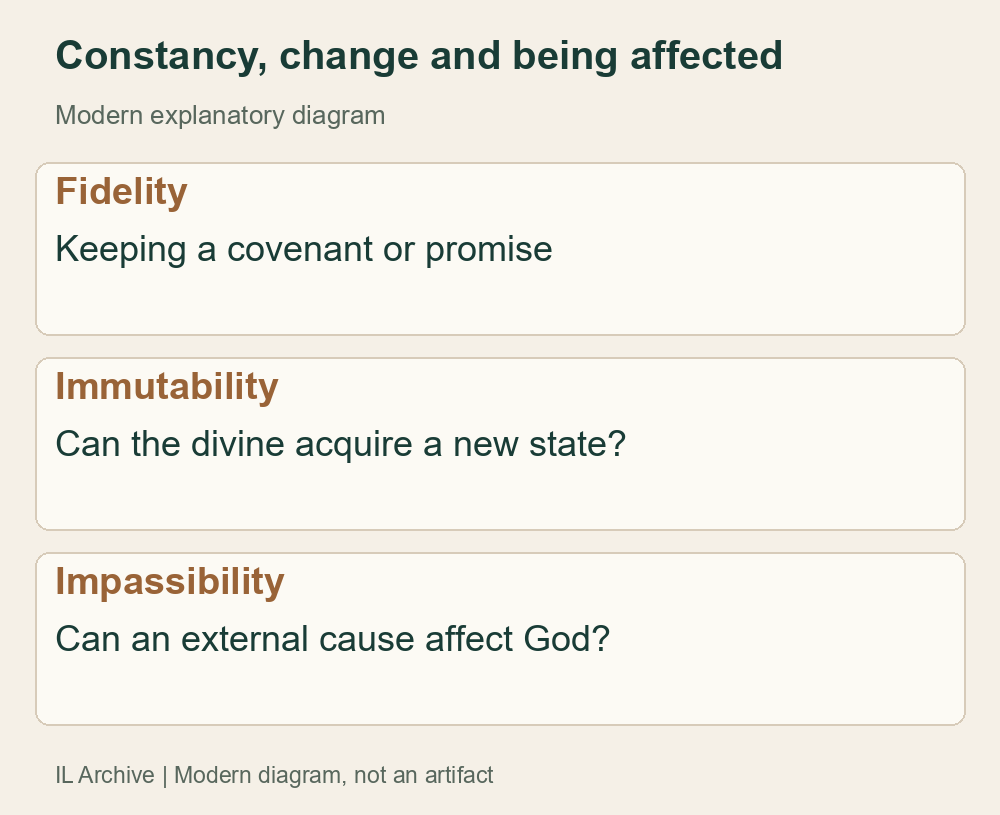
Modern conceptual distinction; connecting the levels requires argument, and terminology alone does not deny love or providence
Entidad
The philosophical and theological question of whether divine being, knowledge or will can change; distinct from faithfulness, impassibility and timelessness.
Variantes del nombre: divine immutability, immutability of God
Contexto y fuentes →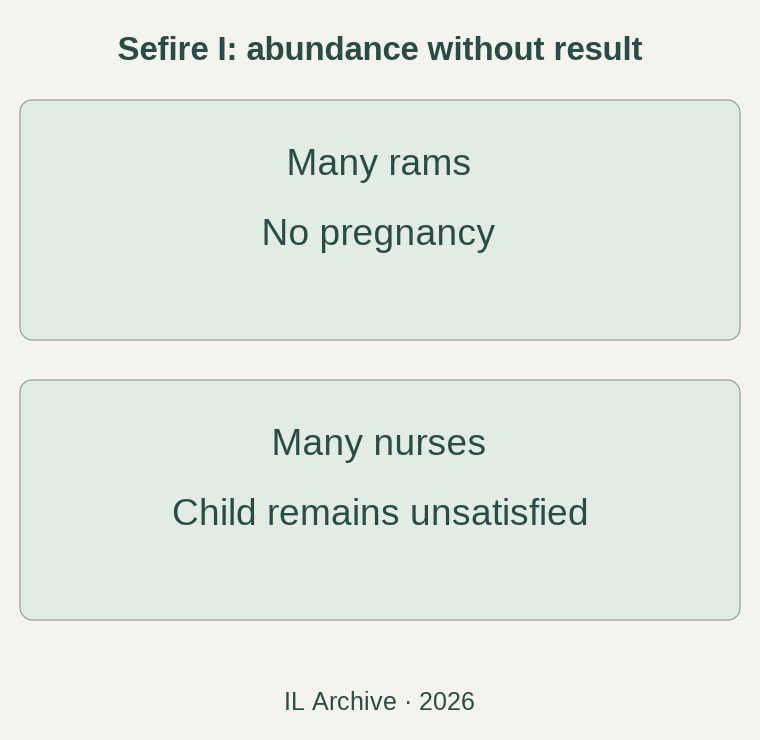
Modern diagram of the curse pattern in SefireI21–22 as quoted in translation; not a photograph of the stele or a historical scene
Texto antiguo
Eighth-century BCE Aramaic treaty inscription whose curses include abundant effort without its result.
Variantes del nombre: Sefire I
Contexto y fuentes →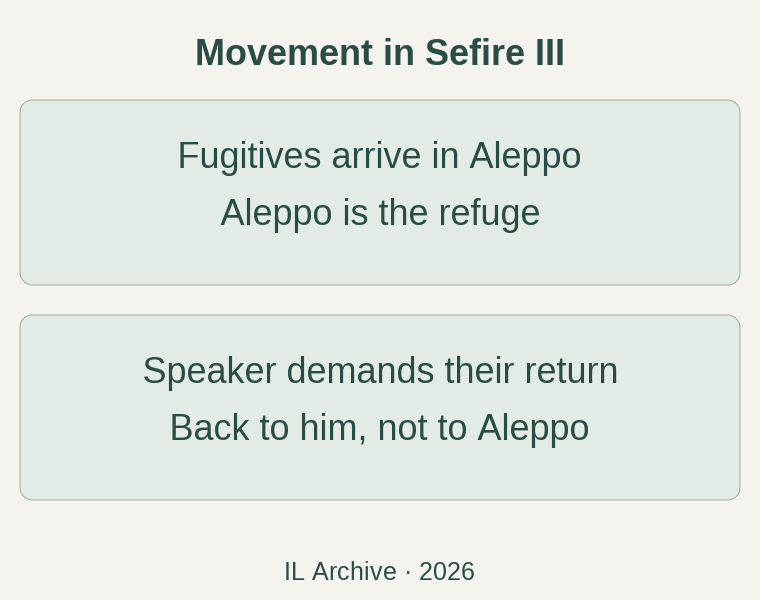
Modern diagram of the specified cases or direction of action, not an artifact photograph or portraits and not reconstruction of documented practice
Texto antiguo
Eighth-century BCE Aramaic treaty inscription addressing political obligations and fugitives.
Variantes del nombre: Sefire III inscription
Contexto y fuentes →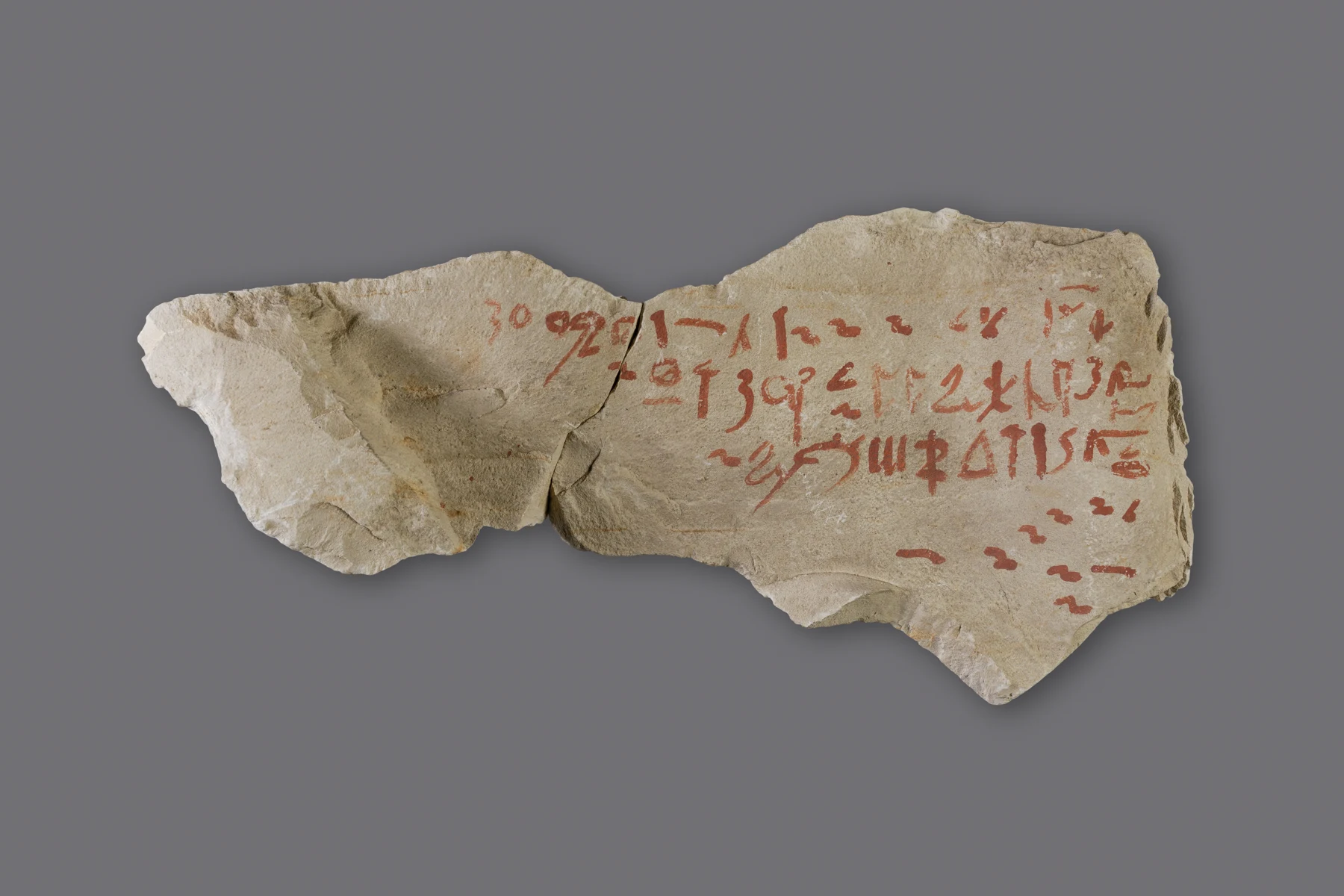
Limestone ostracon in hieratic preserving the opening of the Instruction of Amenemope in Persian-period Egypt (525–404 BCE). Metropolitan Museum of Art, 26.3.165, from Deir el-Bahri, Thebes; a later witness, not an authorial manuscript
Texto antiguo
An Egyptian thirty-chapter instruction on speech, justice, and professional ethics, preserved in papyrus EA 10474 and later scribal exercises; examines specific Proverbs 22:17–23:11 parallels and their limits.
Variantes del nombre: Instruction of Amenemope, Wisdom of Amenemope
Contexto y fuentes →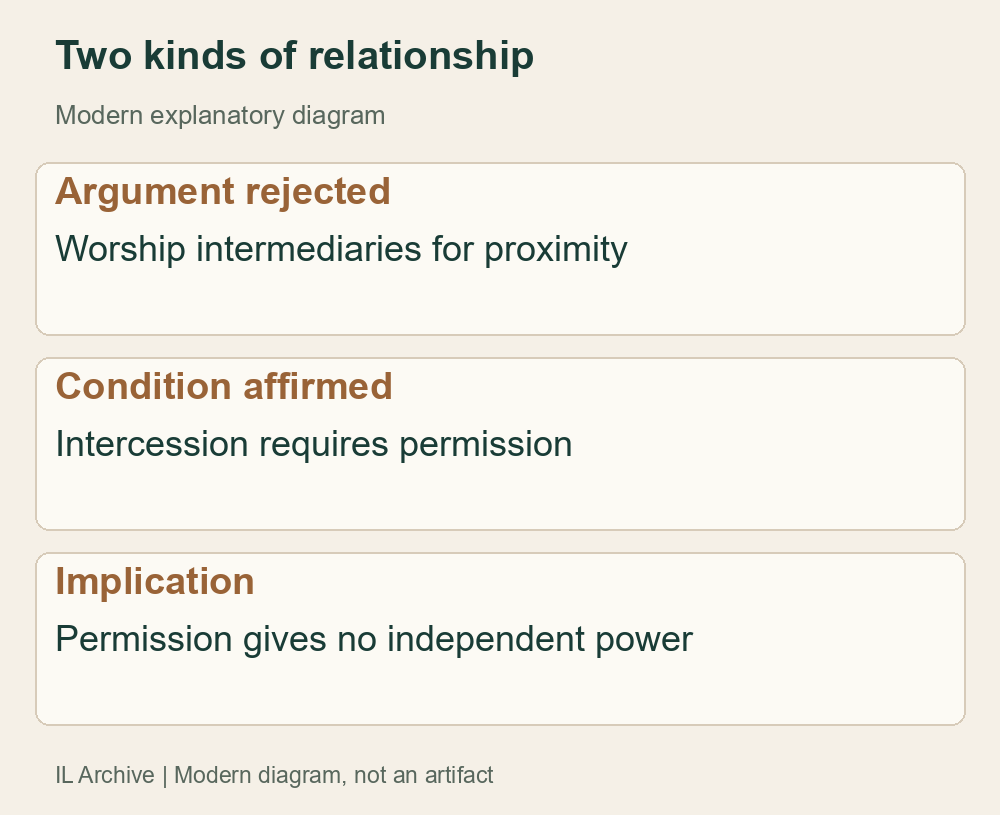
Modern explanatory diagram by IL Archive: distinguishes worship of intermediaries for proximity (Q 10:18; 39:3) from intercession conditional on permission (Q 2:255; 21:28). Not an ancient artifact or a statement about every school
Entidad
An appeal made to God by an intercessor on another’s behalf; its actors, conditions, and acceptability differ by text and tradition. Not a synonym for every mediation, prayer, or tawassul.
Variantes del nombre: intercession, religious intercession
Contexto y fuentes →
The Tigris in Baghdad, Iraq, on the evening of 29 December 2021. A modern river and city view illustrating the present geographical setting of Mesopotamia
Yacimiento
Iraq is a modern country encompassing much of ancient Mesopotamia
Variantes del nombre: Iraq, modern Iraq
Contexto y fuentes →Persona
Late-second-century Christian writer who mentioned the child Jesus and a teacher.
Variantes del nombre: Irenaeus of Lyon
Contexto y fuentes →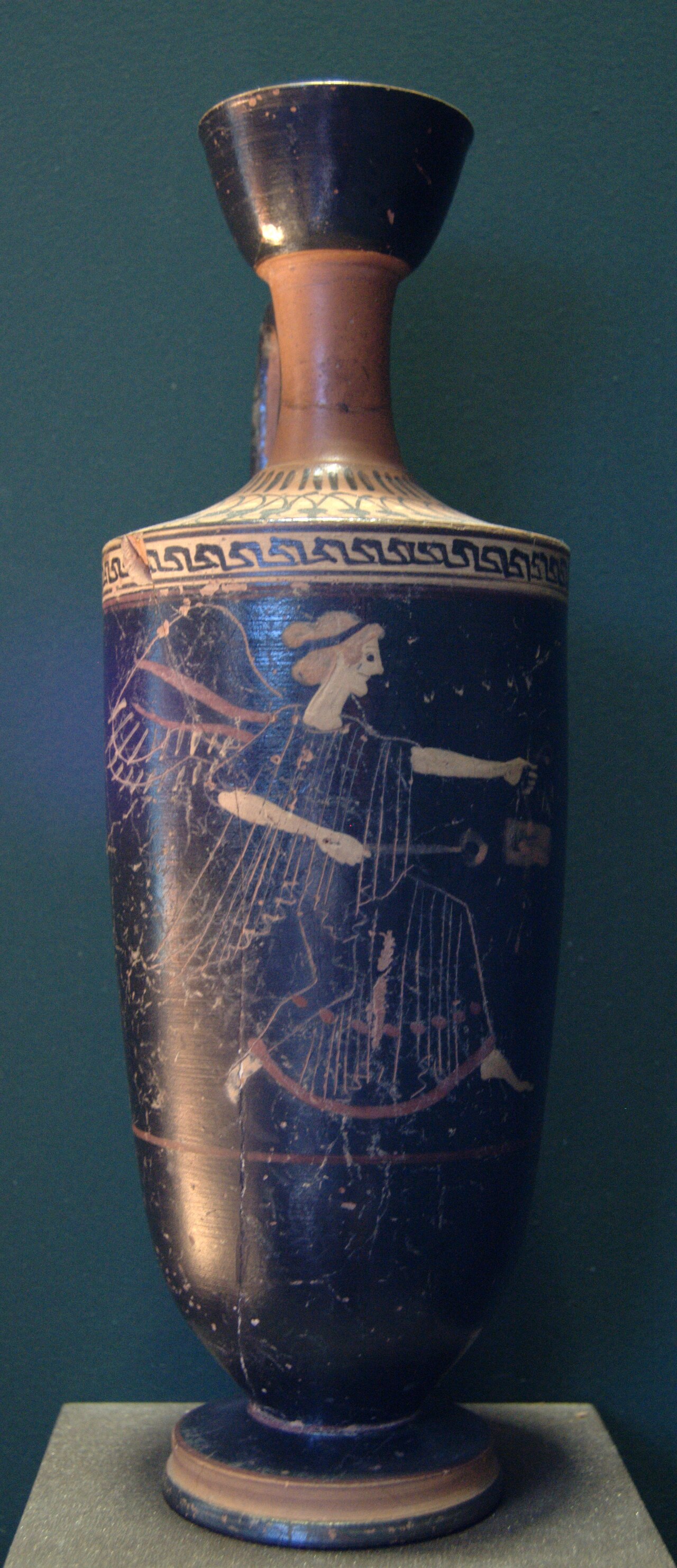
Winged Iris on a Greek vase, about 500–490 BCE; Louvre L 43. An ancient representation of the divine messenger named in the Iliad
Entidad
Greek divine messenger who conveys Zeus’s command to Poseidon in the Iliad.
Variantes del nombre: Iris
Contexto y fuentes →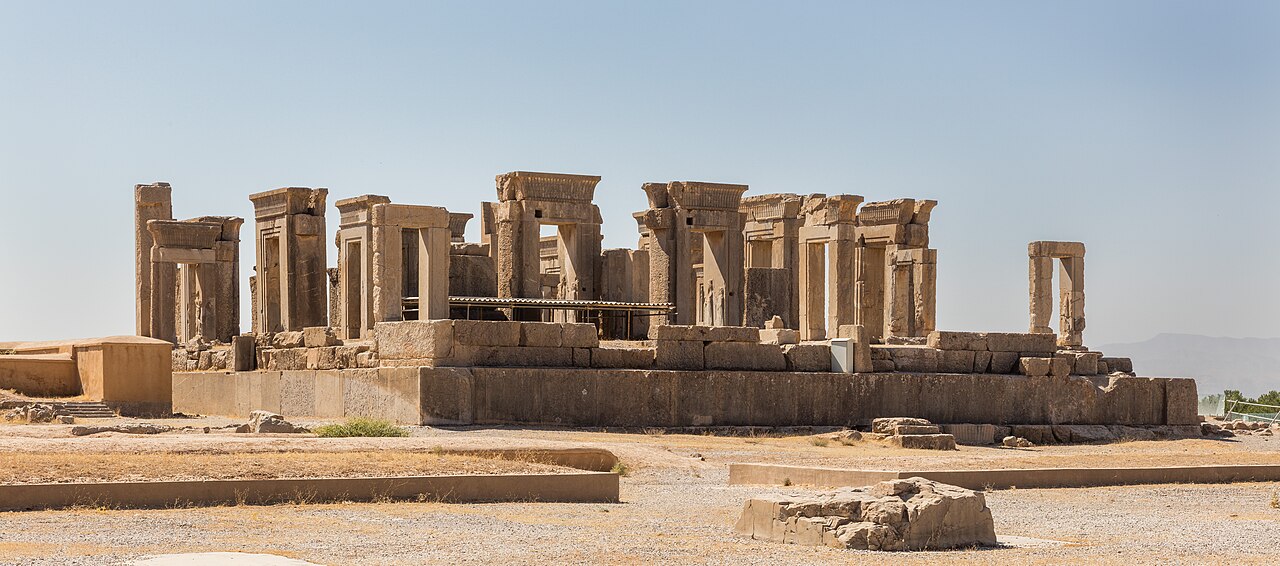
Ruins of Darius’s palace at Persepolis in southwestern Iran, 24 September 2016. They belong to the Achaemenid period; construction of the site’s complex began around 518 BCE. This is one ancient Iranian site, distinct from Susa mentioned in the definition
Yacimiento
Iran is the modern country containing Shush, ancient Susa
Variantes del nombre: Iran
Contexto y fuentes →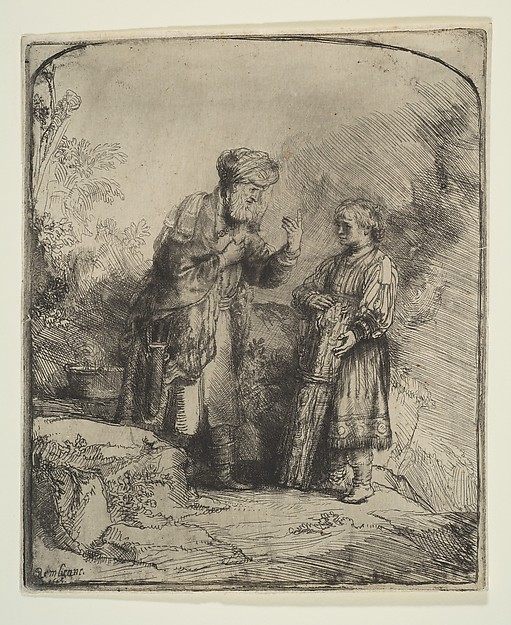
Rembrandt's etching Abraham and Isaac, 1645, The Met 29.107.26. A dialogue imagined by the artist centuries after the text
Persona
Son of Abraham and Sarah in Genesis; named explicitly in Genesis 22's sacrifice episode, while named after the unnamed-son scene in Qur'an 37.
Variantes del nombre: Yitzhak, Ishaq
Contexto y fuentes →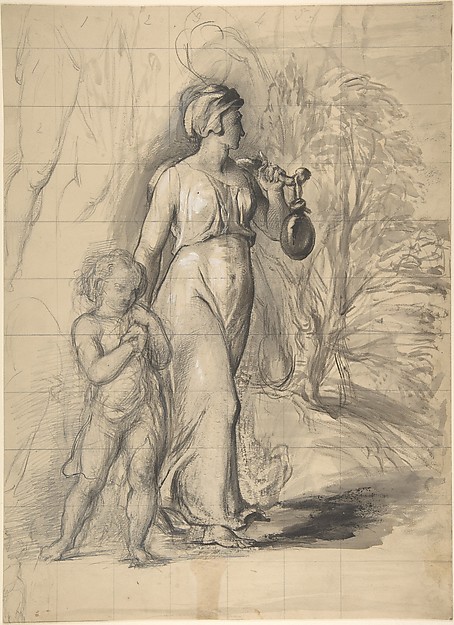
George Richmond's Hagar and Ishmael in the Wilderness, 1829–33, The Met 2002.119a,b. Later artistic reception of Genesis, not a historical likeness
Persona
Son of Hagar and Abraham in Genesis; later Muslim interpretation identified him with the unnamed son in Qur'an 37's sacrifice scene.
Variantes del nombre: Ismail, Yishmael
Contexto y fuentes →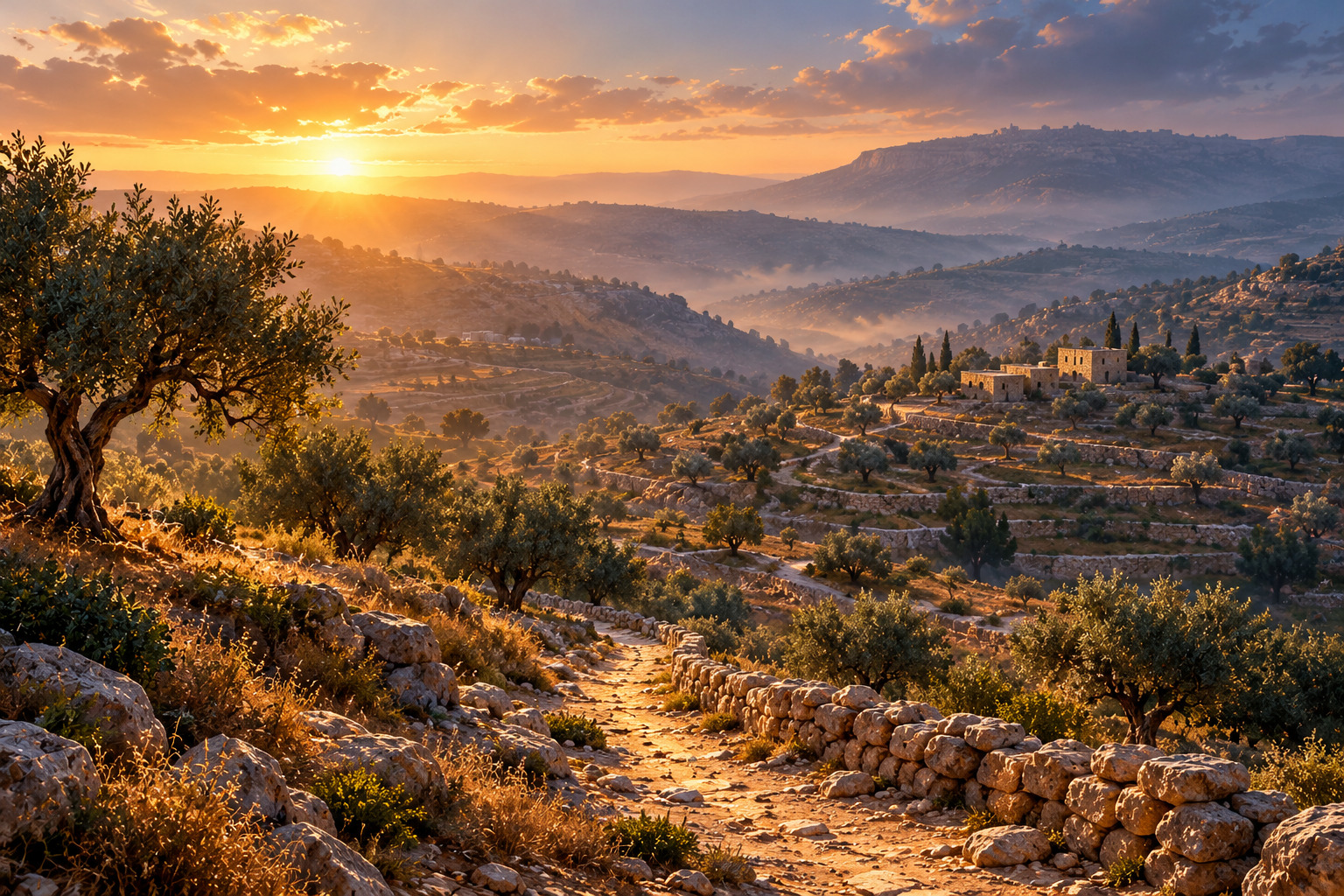
Modern conceptual depiction of southern Levantine highlands, evoking the setting discussed in research on early Israel; neither archaeological photography nor a verified reconstruction of any settlement or period
Entidad
Name attested for a population on the Merneptah Stele around 1208 BCE, later for the northern Iron Age kingdom and for broader textual and religious identities; the senses are not identical.
Variantes del nombre: Israel, ancient Israel
Contexto y fuentes →Persona
Roman historian (1965–2026) and coauthor of a study of rings bearing a Solomonic formula.
Variantes del nombre: Ittai Gradel
Contexto y fuentes →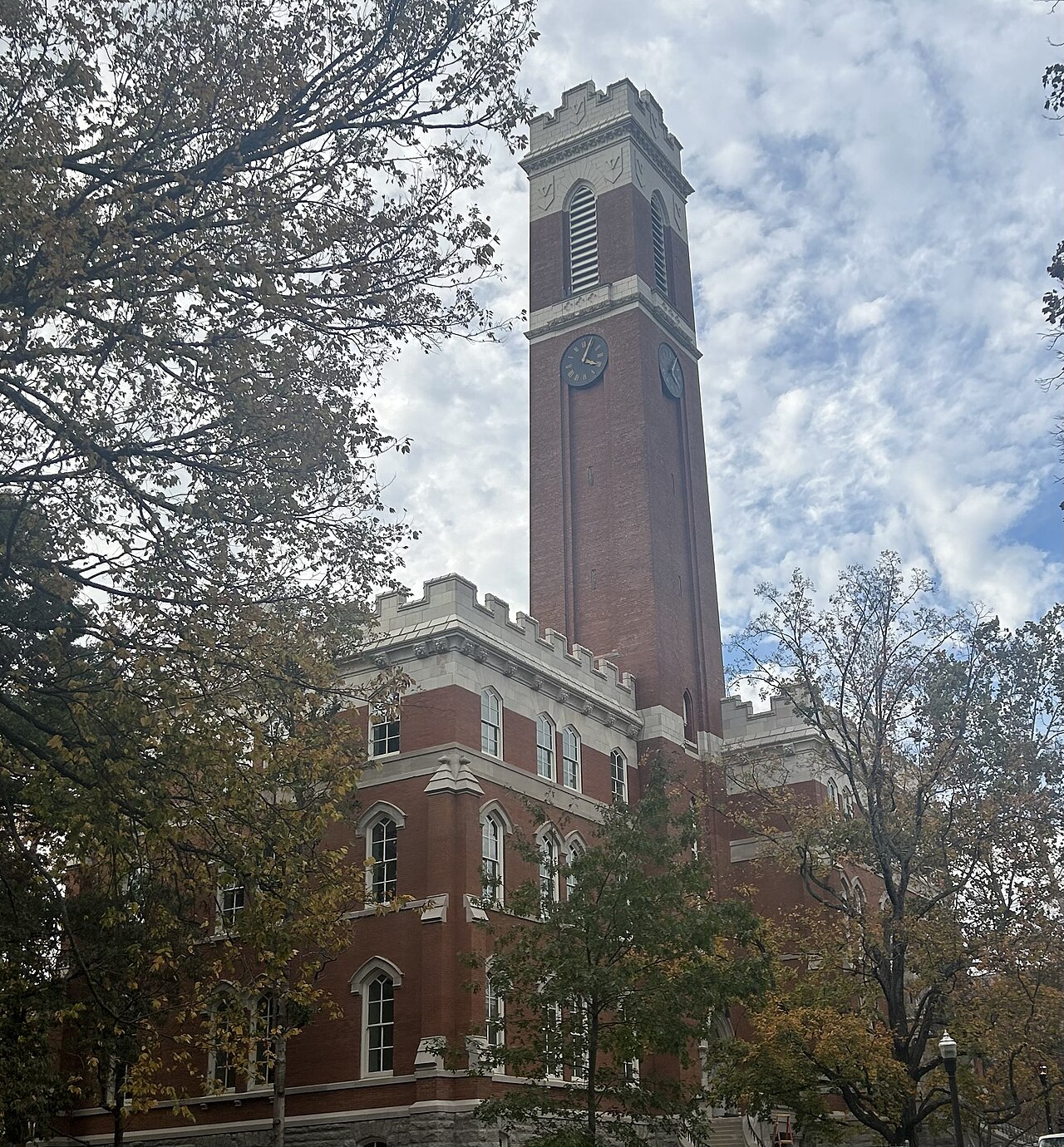
Kirkland Hall at Vanderbilt University in Nashville, Tennessee, on 26 October 2023. The photograph shows part of the institution associated with Jack M. Sasson’s work in biblical studies and Assyriology
Persona
Hebrew Bible and ancient Near Eastern cultures scholar, Vanderbilt professor emeritus, also specializing in Mari’s archives.
Variantes del nombre: Jack Sasson, Jack M. Sasson
Contexto y fuentes →Persona
Hebrew Bible scholar at Emory University studying Sabbath formation and Mesopotamian relationships.
Variantes del nombre: Jacob L. Wright
Contexto y fuentes →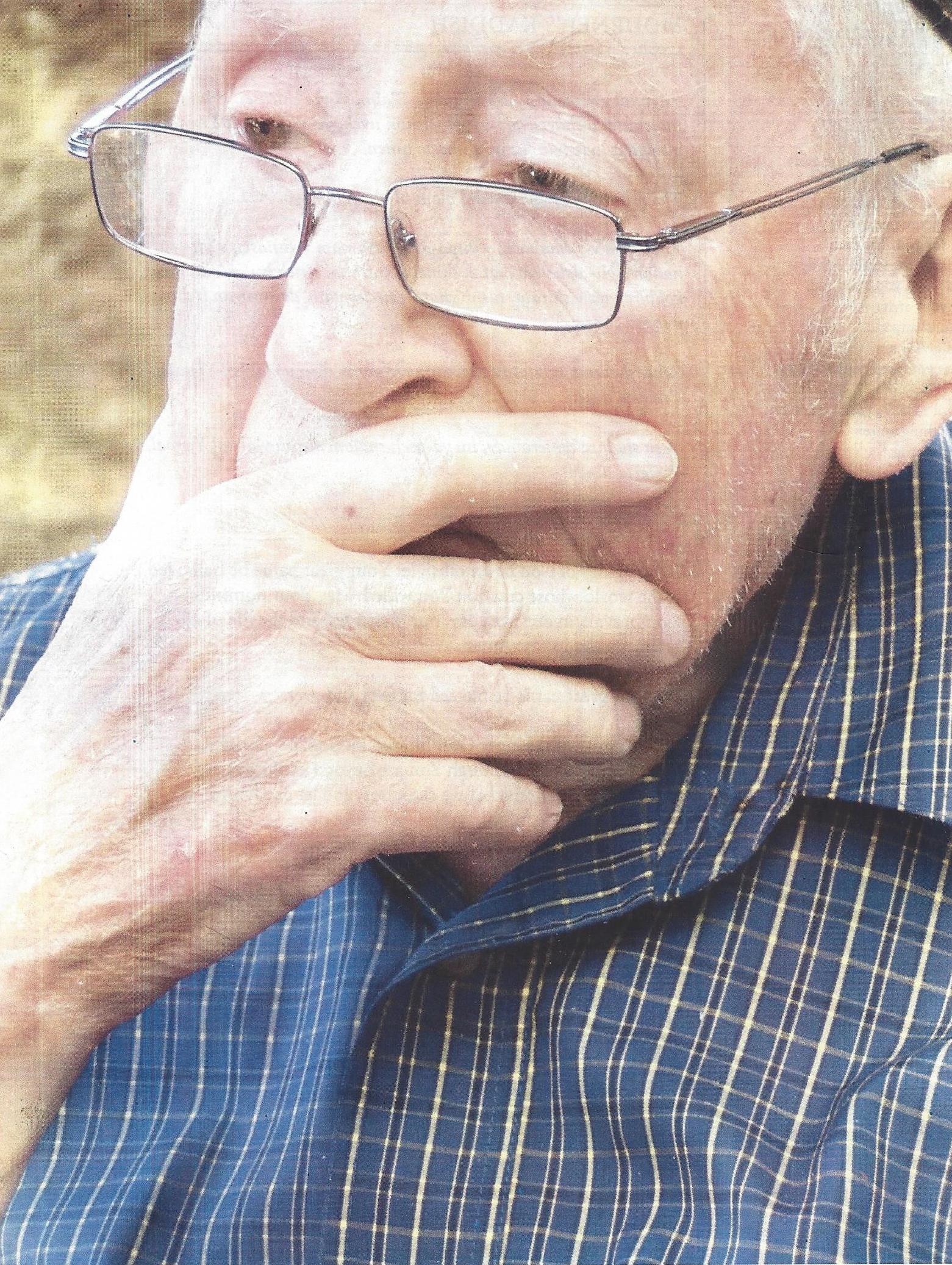
Jacob Milgrom, the Hebrew Bible scholar known for his research on Leviticus, offerings and purity. The source record dates this portrait to 13 September 1995 and credits Dr. Jo Milgrom
Persona
Jewish biblical scholar (1923–2010), noted for studies of Leviticus, priestly traditions, purity and offerings.
Variantes del nombre: Jacob Milgrom
Contexto y fuentes →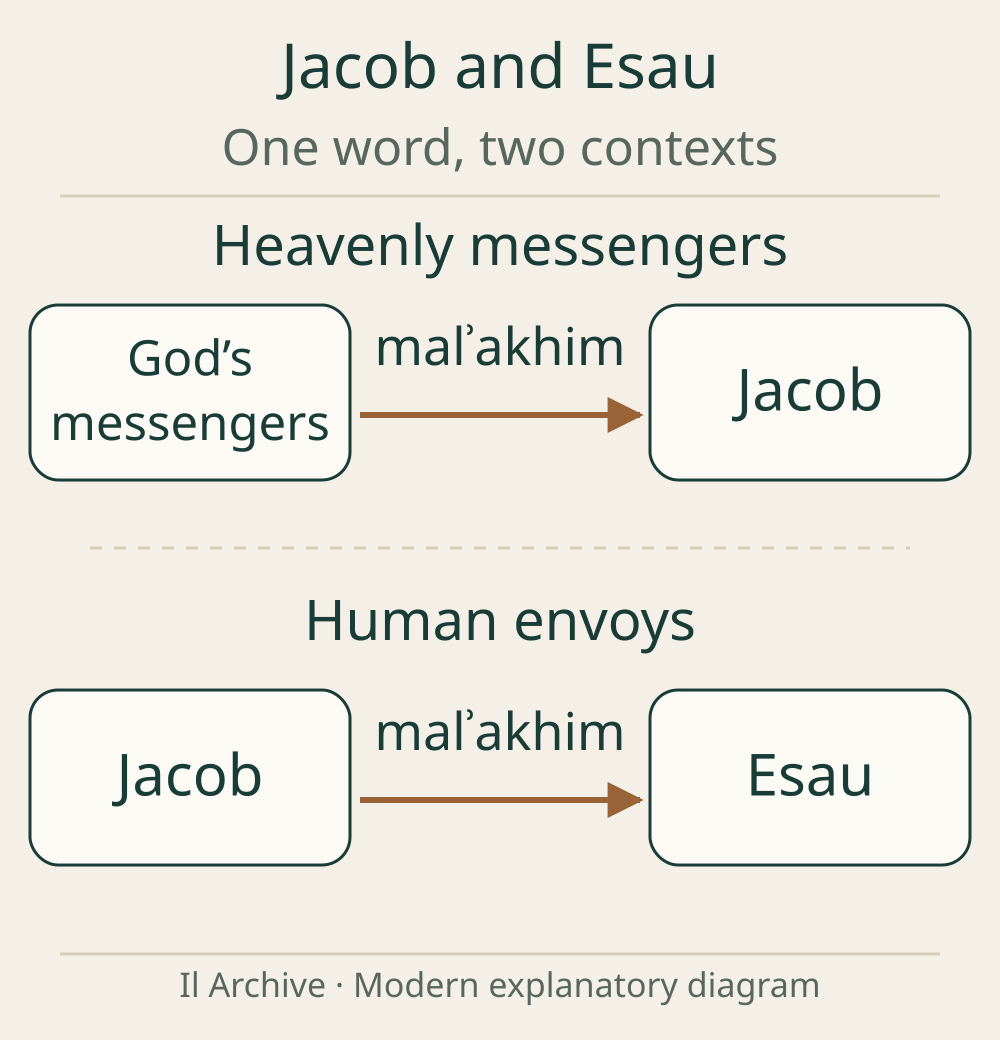
Modern linguistic diagram of Genesis 32:2 and 4 in Hebrew numbering (1 and 3 in common translations): the same word, malʾakhim, for God’s messengers and Jacob’s envoys to Esau. Arrows show the direction of communication, not a geographic route or portraits
Persona
Genesis figure, son of Isaac and brother of Esau; he encounters heavenly messengers and sends human envoys.
Variantes del nombre: Jacob son of Isaac
Contexto y fuentes →